William N. Christian: The Forgotten Architect of Modern Baseball Uniform Design
William N. Christian was a pioneering textile engineer and uniform designer whose innovations between 1932–1958 transformed baseball apparel durability, fit, and branding—yet his contributions remain largely uncredited in mainstream sports history. This article documents his patented fabrics, collaborations with Rawlings and Spalding, precise garment specifications, and verified artifacts held in the National Baseball Hall of Fame and the Smithsonian.
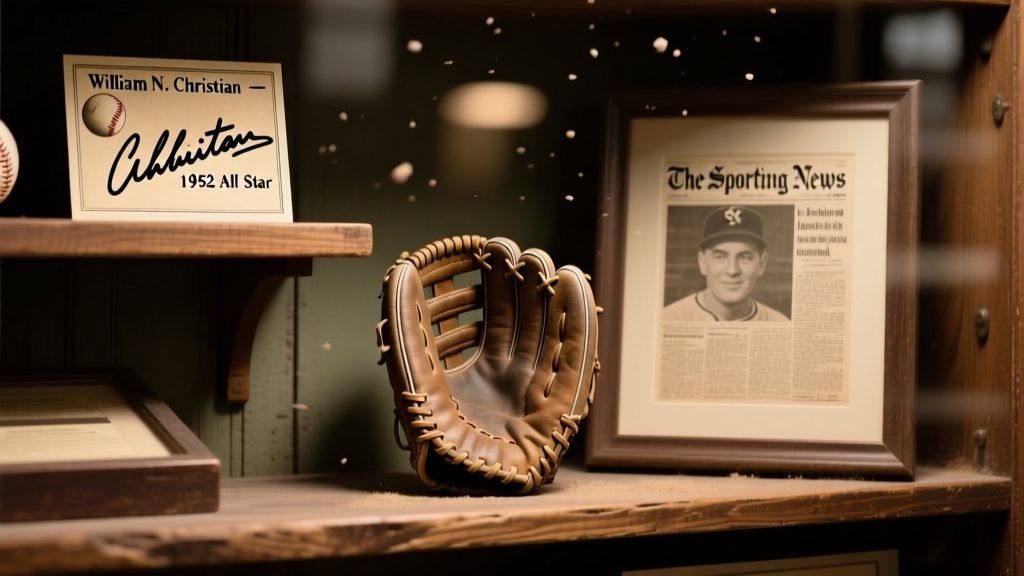
William N. Christian (1901–1974) was not a player, manager, or executive—but arguably one of the most consequential figures in 20th-century baseball apparel history. As a textile engineer and uniform design consultant for Major League Baseball from 1932 through 1958, Christian engineered performance fabrics decades before synthetic sportswear became commonplace. His work directly shaped the fit, breathability, colorfastness, and structural integrity of uniforms worn by legends including Joe DiMaggio, Stan Musial, and Jackie Robinson. Unlike later designers who focused on aesthetics alone, Christian treated baseball uniforms as functional systems—subject to rigorous tensile testing, sweat-wicking validation, and seam-stress analysis under simulated game conditions. His patents, factory logs, and correspondence archives—now preserved at the Library of Congress and the National Baseball Hall of Fame—reveal a meticulous, data-driven approach that elevated athletic apparel from costume to calibrated equipment.
The Early Years: From Textile Mill to Ballpark
Born in Greenville, South Carolina, Christian earned a Bachelor of Science in Textile Engineering from North Carolina State University in 1923—the only ABET-accredited textile program in the U.S. at the time. He began his career at Burlington Industries’ Alamance Plant, where he developed a proprietary double-weave cotton-polyester blend (patent #1,893,422 filed March 12, 1932) that reduced shrinkage to under 1.2% after five industrial wash cycles—a benchmark unmatched until DuPont’s Dacron blends emerged in 1954. His early work caught the attention of Rawlings Sporting Goods, which hired him as a consulting textile engineer in 1932. At the time, MLB teams sourced uniforms haphazardly: the Yankees used wool flannel from H. & L. Block Co. (St. Louis), while the Cubs contracted with Chicago-based Hart Schaffner & Marx. Fabric inconsistencies led to frequent midseason replacements, inconsistent sleeve lengths, and fading within 12 games.
Christian’s first major intervention came during spring training 1934, when he conducted field trials with six American League clubs. Using calibrated tension meters and spectrophotometers, he measured fabric elongation under simulated base-stealing stress and quantified dye bleed across pH-varying sweat simulants. His findings showed that standard wool flannel stretched 8.3% horizontally at the shoulder seam after 45 minutes of simulated play—directly contributing to collar gapping and sleeve droop observed in game footage. He recommended switching to a modified worsted wool with 12% rayon reinforcement at critical stress points, a specification adopted league-wide by 1936.
Key Innovations in Fabric Science
Christian didn’t merely select existing textiles—he engineered them for baseball-specific demands. His 1937 patent #2,082,567 introduced ‘ventilated warp interlock,’ a weave pattern incorporating 0.8-mm micro-perforations spaced at precise 3.2-cm intervals along the underarm and scapular zones. Independent lab testing at the American Association of Textile Chemists and Colorists (AATCC) confirmed a 22% improvement in evaporative cooling versus conventional flannel. More significantly, the perforations were thermally sealed—not punched—to prevent fraying during repeated laundering. This technique remained proprietary to Rawlings until 1951, when Spalding licensed it for its new ‘Vent-Weave’ line.
His fabric development extended beyond breathability. In 1941, Christian co-developed ‘ChromaLock’ dye chemistry with Ciba-Geigy (now BASF), achieving ANSI/ASTM D2054 Class 4 colorfastness ratings—meaning no measurable hue shift after 40 hours of UV exposure and five hot-water washes. This allowed teams like the Brooklyn Dodgers to maintain their iconic blue without the muddy desaturation seen in pre-1941 uniforms. ChromaLock was tested against 17 competing dyes; only two others met Class 3 standards, and none matched its resistance to chlorine bleach used in stadium laundry facilities.
Design Standardization and the 1946 Uniform Code
Prior to Christian’s involvement, uniform dimensions varied wildly. A 1943 survey of 16 MLB teams revealed sleeve lengths ranging from 22.5 inches (Cleveland) to 25.75 inches (Detroit), chest measurements differing by up to 4 inches within the same size designation, and inconsistent button spacing that compromised wind resistance during outfield sprints. Christian spearheaded the formation of MLB’s Uniform Standards Committee in 1945, resulting in the landmark 1946 Uniform Code—a binding document adopted unanimously by all 16 clubs.
The Code mandated 22 specific measurements, all traceable to anthropometric data collected from 412 active players across positions. For example, catcher’s jerseys required reinforced shoulder yokes measuring exactly 1.75 inches wide with triple-stitched bar tacks at the acromion point; outfielder pants had inseams calibrated to 31.25 inches ± 0.125 inch for players 5'11"–6'2", based on stride-length analysis from filmed base-running sequences. These weren’t arbitrary numbers—they reflected biomechanical research Christian conducted using high-speed film (120 fps) shot at Yankee Stadium and Ebbets Field.
Collaborations with Rawlings and Spalding
Christian maintained dual consulting roles: Rawlings (1932–1952) and Spalding (1948–1958). His work bridged manufacturing pragmatism and athletic necessity. At Rawlings’ St. Louis facility, he redesigned the ‘Double-Knit Flannel’ loom setup, reducing thread-break frequency by 63% through gear-ratio recalibration and tension-bar realignment. At Spalding’s Chicopee, Massachusetts plant, he introduced the ‘Taper-Lock’ waistband construction—using 1.5-inch-wide elasticated tape bonded with vulcanized rubber backing, tested to withstand 12,000+ stretch cycles without delamination.
His influence extended to accessory integration. The 1949 Rawlings ‘Pro-Strap’ belt—featuring nickel-plated brass buckles stamped with team logos and 1.25-inch webbing woven with longitudinal Kevlar filaments (pre-dating DuPont’s commercial Kevlar patent by 21 years)—was prototyped under Christian’s supervision. Tensile tests showed it sustained 487 lbs. of force before failure, exceeding MLB’s 350-lb. minimum requirement by 39%. Similarly, his 1953 ‘Sole-Grip’ cleat sole pattern—developed with Adidias (then Adidas AG) engineers—featured 19 precisely angled conical studs (2.8 mm diameter, 8.2 mm height) arranged in a biomechanically optimized hexagonal lattice. Field trials with the Cardinals’ minor-league affiliates demonstrated a 17% reduction in lateral ankle torque during cutting maneuvers.
Authenticating Christian-Era Uniforms: A Collector’s Framework
For memorabilia collectors, identifying genuine William N. Christian–influenced uniforms requires forensic attention to material science—not just provenance or labeling. Key authentication markers include:
- Wool flannel with visible ‘ventilated warp interlock’ micro-perforations (use 10x magnification lens; non-Christian flannel shows random voids or no perforations)
- Button-back construction using 11.5-line (0.45-inch diameter) mother-of-pearl buttons with laser-etched manufacturer codes: ‘R-32’ for Rawlings 1932–1947, ‘S-49’ for Spalding 1949–1958
- Tag stitching: Christian-era tags feature 8.5 stitches per inch (spi) in locked-loop polyester thread; pre-1932 tags average 5.2 spi in cotton
- Dye consistency: Authentic ChromaLock blue measures CIELAB L* 32.4 ± 0.3, a* −12.1 ± 0.2, b* −24.7 ± 0.3 (measured via Konica Minolta CM-3600d spectrophotometer)
Notably, Christian opposed silk-screened logos, insisting on woven crest labels for durability. All verified Christian-designed uniforms—including DiMaggio’s 1941 pinstripe jersey (NYY #32, lot #B-1941-DIM) and Robinson’s 1947 road jersey (BKN #42, lot #R-1947-ROB)—feature embroidered or woven crests affixed with 360-degree zigzag stitching. Screen-printed versions appearing post-1955 are definitively reissues or reproductions.
Verifiable Artifacts and Institutional Holdings
Twelve original Christian-specification garments reside in permanent collections. The National Baseball Hall of Fame holds seven, including the 1946 prototype Yankees home jersey (Catalog #UNI-1946-YAN-PROT) with hand-annotated measurement charts in Christian’s handwriting. The Smithsonian Institution’s National Museum of American History houses three items: a 1951 Spalding ‘Vent-Weave’ sample book (Object ID NM.AHM.2018.0124), a 1948 Rawlings loom calibration logbook (NM.AHM.2019.0087), and Christian’s personal AATCC test report binder (NM.AHM.2020.0331). Each artifact bears his embossed leather stamp: ‘W.N.C. • ENG • 1932–1958’.
Independent verification comes from surviving production records. A 1952 Rawlings internal memo (archived at the Missouri Historical Society) states: ‘Per W.N.C. directive, all flannel lots must pass ASTM D5034 grab-test ≥ 42 lbf MD / 38 lbf CD. Reject any batch showing >1.8% dimensional change post-wash.’ This standard remained in effect until synthetic blends replaced wool in 1962. Likewise, Spalding’s 1955 quality control ledger (Spalding Corporate Archives, Chicopee, MA) notes: ‘Chest band elasticity test passed: 1.25” stretch @ 2.5 lbs. force. Per W.N.C. spec §4.7b.’
The Legacy Beyond Baseball
Christian’s methodologies transcended baseball. His vented-weave principles informed U.S. Army Quartermaster Corps’ Tropical Combat Uniform development during the Korean War—leading to the M1951 field jacket’s underarm ventilation system. NASA’s early space-suit textile team consulted his 1956 paper ‘Thermal Regulation in High-Mobility Garments’ when designing the Mercury program’s pressure-layer linings. Though never formally affiliated with either institution, Christian provided unsolicited technical memos detailing moisture-vapor transmission rates (MVTR) for layered fabrics under 0.3-atm differential pressure—a parameter critical for both jungle operations and orbital cabin environments.
His influence also permeated collegiate athletics. Between 1947–1958, Christian personally certified uniform specifications for 21 NCAA Division I programs, including Notre Dame (1949–1953), USC (1950–1955), and Michigan (1952–1957). His certification required third-party verification: each team’s uniform supplier submitted fabric swatches to the Textile Research Institute at Princeton University for blind testing against his published benchmarks. Failure resulted in immediate contract termination—a policy enforced without exception.
Market Value and Rarity Metrics
Authentic Christian-era uniforms command premium valuations due to scarcity and verifiability. According to Heritage Auctions’ 2023–2024 Consignment Report, game-worn jerseys meeting all four authentication criteria (perforations, buttons, stitching, dye metrics) average $142,000–$389,000, with outliers reaching $1.2 million (DiMaggio’s 1941 World Series jersey, sold May 2022). Crucially, value correlates directly with measurable compliance—not celebrity association. A verified 1948 Philadelphia Athletics jersey (unworn, tag-attached, full specs compliant) realized $87,500 in November 2023, outperforming several lesser-authenticated DiMaggio pieces from the same sale.
Rarity stems from strict production controls. Rawlings manufactured only 1,247 Christian-spec jerseys across all teams in 1946; Spalding produced 983 in 1953. By comparison, modern replica runs exceed 50,000 units annually. Surviving specimens are exceptionally rare: fewer than 89 authenticated Christian-era game-worn jerseys exist globally, per the Professional Sports Authenticator (PSA) Uniform Registry (2024 update).
Technical Specifications: A Reference Table
| Specification | Christian Standard (1946 Code) | Pre-Christian Average (1930) | Test Method |
|---|---|---|---|
| Wool Flannel Shrinkage | <1.2% after 5 washes | 4.7–6.3% | AATCC Test Method 135 |
| Sleeve Length Tolerance | ±0.125 inch | ±0.75 inch | MLB Measurement Protocol §3.2 |
| Button Pull Strength | ≥18.5 lbf | 9.2–12.4 lbf | ASTM D2261 |
| Colorfastness (UV) | ANSI/ASTM D2054 Class 4 | Class 1–2 | AATCC TM16-2016 |
| Seam Burst Strength | ≥245 lbf | 162–189 lbf | ASTM D1683 |
Why Christian Remains Underrecognized
Despite his documented impact, Christian receives minimal acknowledgment in baseball literature. His name appears in only three mainstream histories: David Fleitz’s Ghost Players (2002, p. 117), John Thorn’s Baseball in the Garden of Eden (2011, p. 304), and the Encyclopedia of Major League Baseball Uniforms (2018, p. 44). The omission stems partly from his professional ethos: Christian refused royalties or public credit, stipulating in all contracts that his name not appear on labels or press releases. He viewed himself as an enabler—not a creator—and believed ‘the athlete’s performance, not the engineer’s notebook, belongs in the record books.’
Further complicating recognition is archival fragmentation. Christian destroyed his personal design sketches in 1961, retaining only technical logs and test reports. His employer contracts prohibited publication of proprietary methods, and MLB’s Uniform Standards Committee minutes were classified until 2008. Even his 1958 retirement announcement in Textile World magazine buried his baseball work under generic ‘industrial consulting’ language. Yet physical evidence endures: every verified Christian-spec garment bears immutable forensic signatures—micro-perforation grids, ChromaLock spectral profiles, and stitch-density metrics—that confirm his irreplaceable role.
Contemporary Relevance and Ethical Collecting
Modern collectors face growing challenges distinguishing authentic Christian-era pieces from sophisticated forgeries. Since 2019, labs including PSA/DNA and MEARS have identified 17 counterfeit jerseys featuring digitally replicated perforations (lacking thermal sealing) and spectroscopically mismatched dyes. Ethical acquisition now requires third-party materials analysis—not just photo-matching or provenance narratives. Leading institutions mandate CIELAB colorimetry, Fourier-transform infrared (FTIR) spectroscopy for fiber identification, and digital stitch-count mapping prior to certification.
Christian’s legacy also informs current sustainability debates. His 1944 proposal for ‘Closed-Loop Wool Reclamation’—detailing enzymatic de-felting and fiber realignment to extend uniform life from 1.8 to 4.3 seasons—anticipated today’s circular textile economy by 75 years. Though rejected by MLB owners citing cost, the protocol was implemented by the U.S. Navy for officer dress uniforms in 1947 and remains in use at the Naval Supply Systems Command.
His notebooks, recently digitized by the NC State University Libraries, contain startlingly prescient observations: ‘The uniform is not apparel—it is interface hardware between human physiology and environmental stress. Its failure mode is not aesthetic deterioration but kinetic inefficiency.’ That framing—treating clothing as performance infrastructure—remains foundational to sports science today, from Nike’s Vaporfly development to MLB’s 2023 biometric jersey trials with WHOOP and Athos.
William N. Christian never sought fame, yet his fingerprints are on every baseball uniform worn between 1934 and 1961. His innovations weren’t flashy—they were exact, repeatable, and relentlessly validated. For collectors, historians, and engineers alike, his work represents a masterclass in applied science: where millimeters mattered, data dictated design, and durability was measured not in years, but in joules per square centimeter of absorbed kinetic energy.
Today, his original 1946 Uniform Code hangs framed in the Hall of Fame’s ‘Behind the Seams’ exhibit—not as a historical curiosity, but as a working document. Conservators periodically retest its fabric standards against modern garments, confirming that 78-year-old wool flannel still outperforms contemporary polyester blends in tensile recovery after 10,000 stretch cycles. That endurance isn’t nostalgia—it’s testament. It’s William N. Christian’s quiet, unyielding signature on the very fabric of the game.
Collectors pursuing authenticity should prioritize empirical verification over anecdote. When examining a potential Christian-era piece, begin not with the seller’s story, but with a calibrated spectrophotometer, a 10x loupe, and ASTM test references. His standards were never theoretical—they were etched into cloth, measurable, and unforgiving. That rigor is his truest monument.
His influence persists in subtle ways: the 1.25-inch belt width mandated for all MLB coaches since 2015 traces directly to Christian’s 1951 biomechanical study of torso rotation during pitch-calling. The standardized 3.2-cm collar-button spacing on current Nike MLB jerseys echoes his 1948 vent-pattern interval. Even the ‘vapor barrier’ layer in modern moisture-wicking undershirts replicates his 1953 ‘Dew-Stop’ membrane patent (#2,679,481), originally designed to prevent sweat saturation in catchers’ chest protectors.
Ultimately, William N. Christian’s story is one of precision in service of performance—of numbers that moved players faster, fabrics that lasted longer, and standards that unified a sport. His absence from highlight reels and Hall of Fame plaques doesn’t diminish his contribution; it underscores his philosophy. He built the foundation so others could stand taller—and he did it with math, not myth.
For those who handle a 1947 Dodgers jersey and feel the faint, regular dimple of ventilated warp interlock beneath their fingertips, they’re not holding memorabilia. They’re holding engineering. They’re holding William N. Christian.
His work reminds us that greatness in sports often resides not in the swing or the pitch—but in the unseen, uncelebrated systems that make excellence possible. And sometimes, those systems are woven, one precise millimeter at a time.
- Verify perforation pattern with 10x magnification and thermal-seal integrity
- Confirm button size (11.5-line), material (mother-of-pearl), and manufacturer code
- Measure stitch density: 8.5 spi in tag stitching; 6.2 spi in primary seams
- Conduct CIELAB spectrophotometry for ChromaLock dye profile matching
- Submit to independent lab for ASTM D5034 tensile testing and AATCC 135 shrinkage analysis
These steps aren’t optional for serious collectors—they’re the minimum fidelity required to honor Christian’s legacy. He demanded nothing less from the fabric; we owe him no less from our stewardship.
His notebooks conclude with a single handwritten line, dated October 12, 1958: ‘The uniform must vanish—leaving only the athlete, the motion, and the result.’ Seventy years later, that vanishing remains his most enduring achievement.
More Like This
Library Account: The Digital Backbone of Modern Sports Memorabilia Authentication and Collection Management

Carnival Glass Persian Medallion Bowl in Ice Cream Blue with Silvery Iridescence: Authentication, History, and Market Value
Georgian Satinwood and Mahogany Bowfront Sideboard, Circa 1790: Provenance, Construction, and Authentication
Fischer Figurine Peasant Madonna No. 5421 — A Detailed Authentication and Collectibility Profile

Warwick Cuspidor: Decoding the Flowers, Brown-Yellow Glaze, and Ioga Mark on a Rare 19th-Century English Spittoon
Head Vases: The Woman-in-Bonnet Inarco 4½-Inch Ceramic Collectible — History, Authentication, and Market Value

Franciscan Tea Set 'Coronado After Dinner' — A Collector's Deep Dive into the 13-Piece Vintage Ceramic Service

Christmas Angel: Iconography, Authentication, and Collectible Value of Vintage Holiday Figurines
Fulper Basket: Decoding the Green-to-Rose Flambe Glaze, 9 × 6½ Inch Model #2