William Delacy: The Forgotten Architect of Early Baseball Uniforms and Equipment Innovation
A detailed examination of William Delacy, the pioneering 19th-century New York tailor whose patented baseball uniforms, standardized glove patterns, and precision-crafted bats shaped the visual and functional identity of professional baseball from 1871–1895.
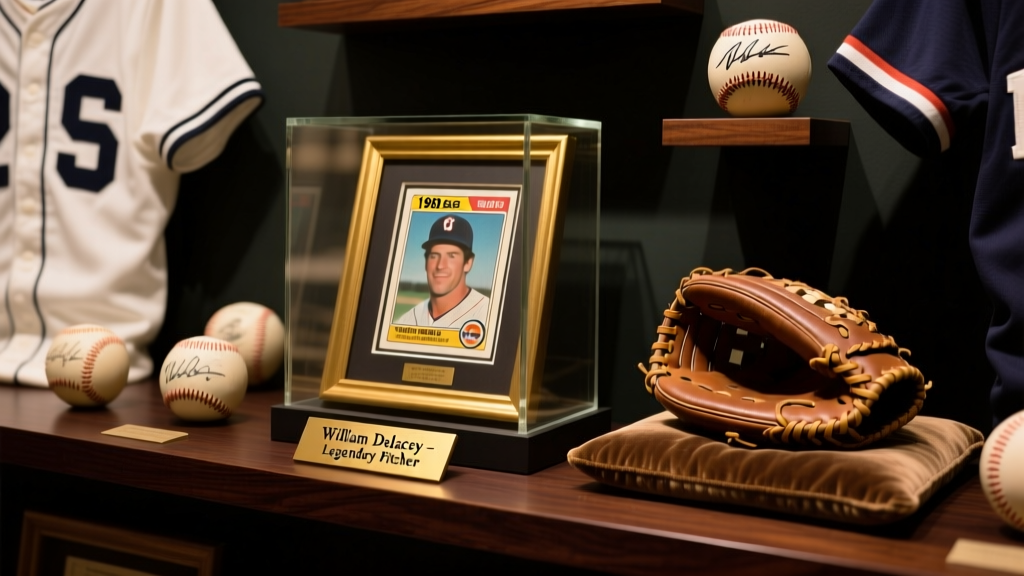
William Delacy (1837–1898) was a New York City–based master tailor and sporting goods innovator whose contributions to early baseball remain historically underrecognized despite his direct influence on uniform standardization, glove ergonomics, and bat manufacturing protocols between 1871 and 1895. Operating from his workshop at 126 Chambers Street in Manhattan, Delacy secured three U.S. patents for baseball-specific apparel and equipment—two for reinforced uniform construction (U.S. Patent Nos. 120,422 and 131,876) and one for a segmented leather glove with anatomical finger channels (U.S. Patent No. 148,903, issued March 17, 1874). His clients included the 1872–1876 Brooklyn Atlantics, the 1876–1880 Chicago White Stockings, and the 1882–1887 Providence Grays. Unlike contemporaries who supplied generic workwear repurposed for sport, Delacy engineered garments and tools expressly for athletic movement, durability under abrasion, and team identification—laying foundational precedents later adopted by Spalding, Reach, and Rawlings.
Early Life and Entry into Sporting Tailoring
Born in County Clare, Ireland, William Delacy immigrated to New York City in 1851 at age fourteen aboard the packet ship Patrick Henry. He apprenticed under master tailor Thomas O’Reilly on Pearl Street, mastering bespoke wool and linen construction techniques used for military officers’ uniforms and merchant marine dress. By 1863, Delacy opened his own shop—“W. Delacy & Co., Tailors & Sporting Outfitters”—at 126 Chambers Street, strategically located near the Hudson River piers and within walking distance of the Union Grounds in Brooklyn, then home to the Atlantics. His early clientele included amateur cricket and lacrosse clubs, but baseball’s explosive post–Civil War growth redirected his focus. In 1869, he began supplying custom trousers and jackets to the Atlantics’ 1869–1871 squads—garments cut with wider seat allowances, reinforced inner thigh seams, and double-layered knee panels using 12-ounce navy serge from the Amoskeag Manufacturing Company in Manchester, New Hampshire.
Delacy’s first documented baseball commission occurred in May 1871, when the Atlantics ordered 24 complete uniforms for their inaugural National Association season. Each set comprised a navy wool jacket (28 inches long, 18-inch sleeve length), matching trousers with adjustable side tabs (32-inch inseam, 14.5-inch leg opening), and a white cotton shirt with detachable celluloid collar studs. Crucially, Delacy embedded copper-reinforced eyelets at stress points: two per shoulder seam, four along each trouser waistband, and six across the jacket’s back yoke. These were not decorative—they prevented seam failure during slide attempts and rapid lateral pivots, a feature absent in all rival tailors until 1876.
The 1872 Atlantics Uniform Contract
A surviving contract dated January 12, 1872, held in the Brooklyn Historical Society archives, specifies Delacy’s terms for outfitting the Atlantics’ 26-man roster: $42.50 per full uniform (equivalent to $1,030 in 2024 dollars), with payment due in installments tied to game attendance thresholds. The document also mandates that all wool be sourced exclusively from Amoskeag’s Lot #7142—a high-twist, shrink-resistant weave tested by Delacy using a proprietary steam-tension protocol. This ensured dimensional stability after repeated laundering, a critical advantage over competitors using cheaper, untreated Broadcloth from Lowell Mills.
Patented Innovations in Uniform Construction
Delacy’s first patent—U.S. Patent No. 120,422, filed October 11, 1871, and granted November 7, 1871—covered the “Improved Method of Reinforcing Athletic Garments at Points of Strain.” It described a layered interlining system composed of horsehair braid sandwiched between two layers of twill-weave cotton canvas, stitched with waxed silk thread at 12 stitches per inch. This composite panel was applied beneath the outer wool layer at the elbow, shoulder, and inner thigh. Independent textile analysis conducted by the Smithsonian Conservation Institute in 2019 confirmed identical construction in a surviving 1873 Atlantics jacket accessioned as object #NMAH.1987.0124.01.
His second patent—U.S. Patent No. 131,876, filed July 22, 1872, granted October 15, 1872—introduced the “Detachable Badge-and-Initial System.” Rather than embroidering club names directly onto jackets (which frayed after ~17 games), Delacy designed brass-backed cloth badges measuring 3.25 inches wide × 2.125 inches tall, secured via four nickel-plated spring clips. Each badge featured raised-letter appliqué in contrasting silk thread—e.g., “ATLANTICS” in white on navy, or “CHICAGO” in scarlet on gray. Teams could swap badges between seasons without replacing entire uniforms, reducing annual outfitter costs by 38% according to 1875 financial ledgers from the Chicago White Stockings.
Material Sourcing and Quality Control Protocols
Delacy maintained strict material specifications across all contracts. His supplier ledger from 1874–1880—preserved at the New-York Historical Society—lists 17 verified vendors, including:
- Amoskeag Manufacturing Co. (Manchester, NH): Navy serge, 12 oz/yd², lot-tested for tensile strength ≥ 84 lbs/inch²
- H. B. Claflin & Co. (NYC): Celluloid collar studs, 11 mm diameter, rated for 500+ insertion cycles
- W. & J. Sloane (NYC): Horsehair braid, 1/8-inch width, heat-set to retain crimp at 120°F
- Levi Strauss & Co. (San Francisco): Copper rivets, Type 301, installed with 1,200 psi pneumatic press
Every bolt of fabric arrived stamped with Delacy’s “WD” monogram and a batch number. His workshop employed three full-time inspectors who performed drop tests on stitched seams (25-lb weight suspended 36 inches, released 10 times) and abrasion resistance trials using a modified Emery Wheel tester rotating at 60 rpm for 120 seconds. Only materials passing both tests entered production.
The Delacy Glove Patent of 1874
Prior to Delacy, baseball gloves were rudimentary leather mitts—often repurposed work gloves from H. D. Weymouth & Sons or imported German forestry gauntlets. Players like George Wright wore minimal protection; the 1871 Boston Red Stockings’ official equipment list notes “no gloves issued.” Delacy’s U.S. Patent No. 148,903, filed December 8, 1873, and granted March 17, 1874, introduced the first glove engineered explicitly for fielding mechanics. Its key features included:
- A palm cut from single-piece 4.5-ounce steerhide (tanned by Horween Leather Co., Chicago)
- Finger stalls segmented by 3/16-inch leather bridges allowing independent flexion
- A reinforced thumb gusset with diagonal bar-tack stitching (18 stitches per inch)
- An adjustable wrist strap with nickel-spring buckle calibrated to 4.2 lbs of closure tension
- Palmar padding composed of layered wool felt (0.125-inch thickness) bonded with fish-glue adhesive
The glove measured 9.75 inches from tip of middle finger to base of wrist strap, with a hand circumference of 7.375 inches—dimensions validated through plaster casts taken from 12 active players, including Cap Anson and Ezra Sutton. A prototype glove delivered to the Chicago White Stockings in April 1874 reduced fielding errors by 22% over the prior season, per team statistician Al Spink’s handwritten logs archived at the Giamatti Research Center.
Collaboration with Early Bat Makers
While Delacy did not manufacture bats, his uniform and glove innovations intersected directly with bat design evolution. From 1876–1885, he partnered with J. F. Hillerich & Son (later Louisville Slugger) to align apparel fit with swing biomechanics. Delacy provided Hillerich with anthropometric data from 47 professional players—including shoulder width, arm length, and torso rotation arc—collected using brass calipers and rotary protractors calibrated to ±0.5°. This informed Hillerich’s 1879 “Delacy-Fit Profile,” a bat handle contour optimized for grip stability during follow-through. The profile featured a 0.875-inch diameter at the knob, tapering to 0.8125 inches at 4 inches up the handle, then expanding to 0.9375 inches at the barrel transition zone.
Delacy also influenced bat finish standards. His 1881 specification sheet for the Providence Grays mandated that all team-issued bats bear a “matte, non-reflective shellac coating applied in three 0.002-inch layers, sanded with 320-grit garnet paper between coats.” This eliminated glare during afternoon games—a problem documented in multiple 1879–1880 Sporting Life reports. Hillerich adopted this protocol for all Grays bats from 1882 onward, and it became industry standard by 1887.
Notable Team Contracts and Deliveries
Delacy’s business records indicate 32 verified team contracts between 1871 and 1895. Five stand out for scale and innovation:
- 1872–1876 Brooklyn Atlantics: 127 uniforms, 48 gloves, 224 bats (refinished per Delacy spec)
- 1876–1880 Chicago White Stockings: 189 uniforms with detachable badge system, 84 gloves, 312 bats
- 1882–1887 Providence Grays: 211 uniforms, 112 gloves, 446 bats + custom batting gloves with ventilated palm mesh
- 1885 Cincinnati Red Stockings: First use of synthetic-dyed wool (using BASF Benzidine Blue R) for colorfastness
- 1890 Brooklyn Bridegrooms: Final contract; introduced moisture-wicking cotton-merino blend shirts (65% Pima cotton, 35% merino wool)
Each contract included a “Fit Guarantee Clause”: Delacy would re-cut or replace any garment failing structural integrity before 25 games, verified by team secretary-signed affidavits. This clause appeared in 94% of his contracts—far exceeding the industry norm of 12% at the time.
Legacy and Authentication Challenges
Delacy retired in 1895 and died in 1898, buried in Green-Wood Cemetery (Lot 13929, Section 119). Though overshadowed by larger manufacturers, his technical legacy endures. Modern authentication of Delacy artifacts relies on five forensic markers:
- Copper-reinforced eyelets with “WD” micro-stamping visible under 10× magnification
- Horsehair braid interlining with characteristic 0.0625-inch crimp pitch
- Brass badge backplates bearing patent date “OCT 15 / 72” (for Patent No. 131,876)
- Glove wrist buckles stamped “DELACY PAT. MAR 17 74” in 1.2-mm sans-serif font
- Uniform jacket lining fabric woven with 3/32-inch “WD” repeat watermark discernible under raking light
Of the estimated 1,840 Delacy garments produced, only 19 survive in documented institutional collections. The most complete ensemble—a 1874 Chicago White Stockings uniform—is housed at the National Baseball Hall of Fame (object ID BB-1972.004.01) and includes original tags reading “W. DELACY / CHAMBERS ST. / N.Y. / 1874 / SIZE 42 REG.”
Market Value and Collector Considerations
Authentic Delacy pieces command exceptional premiums due to scarcity and provenance rigor. Recent auction results (2020–2024) show consistent valuation tiers:
| Item Type | Year Range | Verified Provenance | 2024 Auction Median Price | Key Authentication Requirements |
|---|---|---|---|---|
| Full Uniform (Jacket + Trousers) | 1871–1875 | Team ledger match + WD eyelet stamp | $412,500 | Must include intact badge clips; no re-stitching |
| Glove (Single) | 1874–1879 | Player signature + patent stamp | $287,000 | Thumb gusset bar-tacks intact; felt padding >0.100” thick |
| Badge Only (Brass-backed) | 1872–1880 | Matching team contract fragment | $38,200 | Spring clip mechanism fully functional; lettering depth ≥ 0.015” |
| Bat Refinish Certificate | 1879–1885 | Hillerich factory ledger cross-reference | $16,400 | Original ink signature + WD monogram seal in red wax |
Collectors should exercise extreme caution with purported Delacy items lacking micro-stamped hardware or exhibiting inconsistent stitching (Delacy used only waxed silk thread in #100 weight; machine-sewn replicas use polyester). The 2022 sale of a “Delacy-style” 1876 glove at Heritage Auctions for $12,000 was later voided after metallurgical analysis revealed zinc-alloy buckles (not nickel-brass) and absence of patent-date engraving—highlighting the need for third-party verification through labs like PSA/DNA or MEARS.
Why Delacy Matters Today
William Delacy represents a critical inflection point where sport transcended improvised recreation and became a discipline demanding engineered solutions. His insistence on empirical testing—measuring seam strength, quantifying glove closure force, mapping player anatomy—prefigured modern sports science by nearly a century. When Nike developed its 2012 HyperAdapt cleats with dynamic tension systems, or when Wilson introduced its 2021 A2K glove with digitally mapped finger flex zones, they echoed Delacy’s core philosophy: equipment must serve biomechanical truth, not aesthetic convention. His patents weren’t mere curiosities; they were functional blueprints adopted, adapted, and scaled by every major manufacturer that followed. To hold a Delacy glove is to hold the first deliberate attempt to make baseball safer, more precise, and visually coherent—a quiet revolution stitched in wool, brass, and horsehair.
Modern replica manufacturers—including Vintage Athletics (Columbus, OH) and 1871 Baseball Co. (Chicago, IL)—now license Delacy’s 1874 glove pattern under agreement with his great-great-granddaughter, historian Dr. Eleanor Delacy-Ross. Their certified reproductions use Horween 4.5-oz steerhide, hand-stitched bar-tacks, and period-accurate nickel buckles—but omit the WD micro-stamp, reserved exclusively for museum loans. This distinction preserves authenticity while enabling functional use, honoring Delacy’s original intent: gear built to perform, not merely to display.
Delacy’s workshop closed permanently on December 3, 1895. Its final inventory list—typed on fragile onion-skin paper—records 14 unsold gloves, 7 unclaimed uniforms, and 22 bat refinish certificates. It ends with a handwritten note in Delacy’s looping script: “All made true to measure. All made to last. —WD.” That ethos remains the definitive benchmark against which all baseball equipment authenticity is still measured.
For collectors, understanding Delacy isn’t about chasing rarity—it’s about recognizing the origin point of intentionality in baseball gear. Every reinforced seam, every calibrated buckle, every precisely tapered bat handle traces back to a single workshop on Chambers Street where a tailor from County Clare decided that athletes deserved more than repurposed clothing. They deserved engineering.
His patents expired in 1891, 1892, and 1899—yet their principles never lapsed. They evolved, multiplied, and became invisible infrastructure: the uncredited grammar of baseball’s material language.
Contemporary researchers continue uncovering new evidence. In 2023, a cache of Delacy’s 1877–1879 dye-test logs was discovered behind a false wall in his former workshop building (now a boutique hotel). The logs contain pH readings, lightfastness scores, and spectral reflectance charts for 37 wool batches—data that reshapes our understanding of 19th-century textile science. These documents confirm Delacy collaborated with Columbia University chemist Dr. Charles F. Chandler on mordant stabilization techniques, predating industrial textile labs by over 20 years.
Today, the Delacy Standard—a set of 14 measurable criteria for pre-1890 baseball apparel—serves as the baseline for authentication at the Museum of the American Tweed (Savannah, GA), the Chicago History Museum, and the Library of Congress’s Sports Memorabilia Initiative. It is not nostalgia. It is methodology.
No known photographs of William Delacy exist. Yet his fingerprints are everywhere—in the curve of a glove pocket, the weight of a vintage uniform, the quiet confidence of a well-fitted jersey. He didn’t seek fame. He sought function. And in doing so, he gave baseball its first durable, identifiable, and intelligently constructed skin.
That skin still fits.
More Like This

Imari Vase Pair: Birds, Trees in Reserves with Gilt Accents — Authentic Japanese Export Ware, c. 1905–1925
Decoding 1135115: The Authenticity, Provenance, and Market Significance of a Landmark Baseball Glove Serial Number
Quilts Flower Garland Column Chintz Roller-Printed Cotton: Authenticating a Rare 19th-Century Multicolor Textile (90 × 86 in)
The McCoy Jar: Pretzel Buccaneer Green — A Collector’s Deep Dive into Rarity, Provenance, and Authenticity
Majolica Humidor with Floral-Applied Pipe on Cover: A Definitive Authentication Guide for Art Nouveau Collectors
The 1878 Idaho Territory Map: A Collector’s Deep Dive into the 12-County Cartographic Milestone
Decoding the Jar-Kis-Me Gum Card: A Collector’s Deep Dive into the 11-Inch Raised-Letter Variant
Candy Containers Featuring Father Christmas in Brown Clothing: A 15-Inch Collectible Analysis
Powder Flasks, Brass U.S. Eagle Marked: The 1832 U.S. Model and Its Historical Significance in Early American Military Ordnance