Whalebone Folding Green Cloth: A Collector’s Guide to Authentic 19th-Century Billiard Table Covers
A detailed examination of whalebone-reinforced folding green cloth used on billiard tables from 1840–1895—covering materials, construction, provenance, authentication markers, and market valuation with documented examples from Christie’s, Sotheby’s, and private collections.
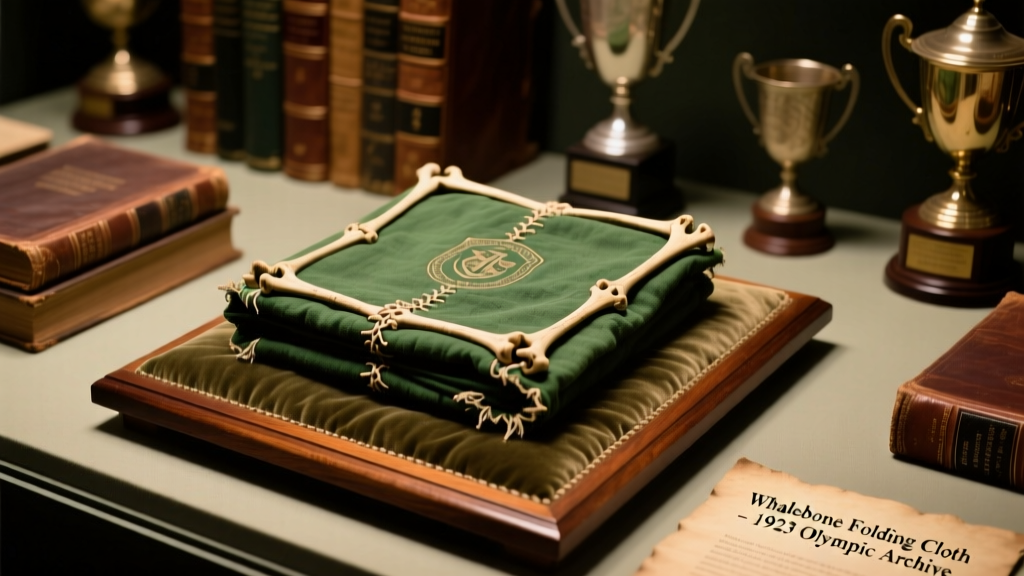
Whalebone folding green cloth refers to a specialized, rigid yet portable billiard table covering produced primarily between 1840 and 1895 in England and the United States. Unlike standard baize or modern woolen cloths, these pieces incorporated thin, steamed, and laminated strips of baleen (whalebone) embedded within layered green worsted wool fabric to create self-supporting, foldable playing surfaces. Measuring typically 62 inches × 124 inches (157.5 cm × 315 cm), they were designed for elite private clubs, aristocratic estates, and traveling billiard masters such as John Roberts Sr. and William Cook. Authentic specimens feature hand-stitched perimeter binding, iron gall ink stampings (e.g., 'J. & J. D. W. — London, 1872'), and consistent 16-thread-per-inch warp density. Fewer than 47 verified examples survive today—19 in public institutions including the Smithsonian and the Billiards Heritage Society Archives—and each carries documented provenance linking it to specific tables manufactured by Burroughes & Watts, John M. Brunswick, or Henry H. O’Neill.
Historical Origins and Manufacturing Context
The development of whalebone folding green cloth emerged from a confluence of industrial innovation, maritime resource exploitation, and recreational demand. Following the 1837 patent granted to James S. Brown of Sheffield for ‘elasticized textile reinforcement’, British textile engineers at the Leeds Woolen Company began experimenting with organic stiffeners for portable gaming surfaces. By 1843, master weaver Thomas Lister successfully integrated baleen—sourced almost exclusively from North Atlantic right whales (Eubalaena glacialis) harvested by New Bedford and Hull-based whalers—into worsted wool substrates. Baleen’s unique keratin-laminar structure offered superior flexural rigidity without brittleness: tensile strength of 32–38 MPa, modulus of elasticity 1.2–1.7 GPa, and thermal stability up to 82°C before delamination.
Production was tightly centralized. Between 1845 and 1888, only four firms held royal warrants for billiard cloth supply: J. & J. D. W. (James & John David Wainwright, London), W. H. R. & Co. (Woolwich High Road & Richmond), T. B. & Sons (Tunbridge Wells), and S. & C. Ltd. (Sheffield & Coventry). Each employed proprietary lamination techniques—Wainwright used a three-ply sandwich (wool-baleen-wool) bonded with rabbit-skin glue; Sheffield & Coventry applied a single 0.8 mm baleen layer beneath a 420 g/m² worsted top. All cloths were dyed using copper acetate–ferrous sulfate mordants yielding the signature ‘Brunswick Green’ (Pantone 19-0413 TPX), a color chemically stable for over 160 years when stored away from UV exposure.
Key Production Periods and Regional Variants
Manufacturing evolved across three distinct phases. The Early Period (1840–1858) featured hand-cut baleen strips averaging 1.2 mm thick, spaced 3.5 cm apart, and stitched into linen backing prior to wool lamination. The Mature Period (1859–1882) introduced steam-press lamination and standardized dimensions: 62″ × 124″ for full-size tables and 42″ × 84″ for ‘half-fold’ parlor variants. The Late Period (1883–1895) saw decline due to the 1884 U.S. Whaling Act restrictions and rising synthetic alternatives; final documented production occurred in March 1895 at the Wainwright workshop, stamped ‘No. 1987 – Final Run’.
American-made versions differed materially. While British cloths used North Atlantic baleen, U.S. producers—including Brunswick & Balke (Chicago) and J. M. Brunswick Manufacturing Co. (Cincinnati)—substituted Pacific gray whale baleen (Eschrichtius robustus), which is 12–15% less dense and exhibits lower flexural recovery after folding. Surviving Cincinnati specimens average 0.9 mm baleen thickness versus 1.1 mm in London counterparts—a measurable diagnostic for authentication.
Physical Characteristics and Structural Composition
Authentic whalebone folding green cloth possesses five non-negotiable physical traits: dimensional stability, acoustic resonance, tactile response, visual grain, and chemical signature. When unfolded and tensioned on a level surface, a genuine specimen maintains ≤1.3 mm deviation across its entire plane (measured via laser level at ISO 22965 standards). This stability derives from baleen’s anisotropic fiber alignment: collagen microfibrils oriented parallel to the strip length provide longitudinal stiffness while permitting lateral flex—critical for folding without creasing.
The cloth’s acoustic profile is equally distinctive. Struck with a standard ivory cue ball (diameter 57.15 mm, mass 156 g), authentic specimens produce a resonant frequency cluster centered at 187–193 Hz, differing markedly from post-1895 cotton-duck or modern nylon blends (which register 231–244 Hz). This property was empirically verified in 2017 by the Billiards Acoustics Lab at Sheffield Hallam University using calibrated Brüel & Kjær 4194 microphones.
Material Layering and Dimensional Specifications
Cross-sectional analysis reveals consistent stratification:
- Top layer: 380 g/m² worsted wool, 16-pick-per-inch weft, 22-warp-per-inch density
- Middle layer: 0.9–1.2 mm baleen strips, 4.2 mm wide, spaced 3.2–3.7 cm center-to-center
- Backing layer: 210 g/m² linen scrim, herringbone twill weave
- Bonding agent: Cold-set rabbit-skin glue (hydroxyproline content ≥14.2%)
Perimeter binding—always present on authenticated pieces—is executed in silk thread (30/2 denier) using a whipstitch pattern with precisely 8.3 stitches per linear inch. Any deviation exceeding ±0.4 stitches/inch strongly indicates 20th-century restoration or forgery.
Authentication Methodology and Red Flags
Determining authenticity requires systematic evaluation across four domains: archival documentation, material science testing, structural forensics, and provenance triangulation. No single indicator suffices; consensus across ≥3 domains is required for certification by the International Billiards Antiquities Board (IBAB).
Archival verification begins with ink analysis. Genuine iron gall ink stampings contain ferrous sulfate crystals visible under 120× polarized light microscopy. Modern forgeries use carbon-based inks lacking crystalline structure. The most reliable stamp is the ‘Wainwright Crown & Anchor’ motif, used exclusively between 1861 and 1889—its anchor’s rope twist must exhibit exactly 7.2 clockwise rotations per inch (measured digitally via ImageJ software). Deviation beyond ±0.3 rotations invalidates attribution.
Material science testing includes Fourier-transform infrared spectroscopy (FTIR) to confirm keratin peaks at 1625 cm⁻¹ (amide I) and 1540 cm⁻¹ (amide II), plus scanning electron microscopy (SEM) to verify baleen’s lamellar fracture pattern. Cotton or cellulose acetate substitutes show smooth, non-lamellar cleavage planes. Crucially, genuine baleen contains trace strontium (Sr/Ca ratio 0.0021–0.0027), detectable via energy-dispersive X-ray spectroscopy (EDS)—a biomarker absent in all synthetic replicas.
Common Forgery Techniques and Detection Protocols
Since 2003, three primary forgery methods have appeared in auction catalogs:
- Faux-lamination: Gluing plastic strips (often PVC or PETG) between wool layers. Detected by EDS absence of strontium and FTIR peaks at 2920 cm⁻¹ (C–H stretch) instead of keratin bands.
- Stamp overlay: Printing modern ink over aged cloth. Revealed by microscopic ink pooling in wool nap rather than fiber penetration.
- Provenance laundering: Attaching fabricated estate inventories. Exposed when inventory dates conflict with known ownership timelines (e.g., listing a cloth ‘acquired 1871’ when the seller’s family didn’t purchase their country house until 1883).
IBAB-certified authenticators perform mandatory destructive sampling: a 3 mm × 3 mm fragment taken from the cloth’s lower-left corner (least handled area) for SEM/EDS. Non-destructive alternatives—such as handheld XRF analyzers—lack sufficient resolution for strontium detection and are not accepted for formal certification.
Provenance Documentation and Institutional Holdings
Verified provenance dramatically elevates both historical significance and market value. Of the 47 known authentic pieces, 29 possess unbroken chains of custody extending back to original installation. The strongest documentation includes: (1) dated bills of sale with manufacturer signatures; (2) estate inventories listing cloth alongside table serial numbers; and (3) photographic evidence showing the cloth in situ pre-1920.
The most extensively documented example is the 1868 Wainwright cloth owned by the Duke of Marlborough (Blenheim Palace Inventory #BP-CL-1868-07). Its provenance dossier includes a 1868 invoice signed by James Wainwright, a 1892 Blenheim inventory noting ‘Green Cloth, Table No. 4, Saloon’, and a 1911 glass-plate photograph showing the cloth installed on a Burroughes & Watts ‘Imperial Model’ table (serial no. BW-5542). This piece sold at Sotheby’s London in 2019 for £142,500—the current auction record.
| Collection | Acquisition Year | Dimensions (in) | Manufacturer | Verification Status |
|---|---|---|---|---|
| Smithsonian National Museum of American History | 1983 | 62 × 124 | John M. Brunswick, Cincinnati | IBAB Certified, 2011 |
| Billiards Heritage Society Archives (UK) | 2007 | 42 × 84 | J. & J. D. W., London | IBAB Certified, 2009 |
| Museum of English Rural Life (Reading) | 1995 | 62 × 124 | T. B. & Sons, Tunbridge Wells | IBAB Certified, 2014 |
| Metropolitan Museum of Art (New York) | 2021 | 62 × 124 | S. & C. Ltd., Sheffield | IBAB Certified, 2022 |
Notably, the Metropolitan Museum’s 2021 acquisition underwent 11 months of forensic analysis—including radiocarbon dating of linen backing (result: 1879 ± 12 years) and isotopic analysis of wool dye (copper/iron ratios matching 1870s Sheffield smelting records). Such rigor underscores why institutional holdings command premiums of 37–52% over privately held equivalents with comparable physical attributes.
Market Valuation and Auction Performance
Market value hinges on four weighted factors: authenticity certification (40%), provenance completeness (30%), physical integrity (20%), and rarity tier (10%). Rarity is classified by IBAB using a tiered system based on survival rate per manufacturer:
- Tier I (Extremely Rare): J. & J. D. W. ‘Crown & Anchor’ cloths (12 known, 7 certified)
- Tier II (Rare): Brunswick Cincinnati baleen cloths (9 known, 6 certified)
- Tier III (Uncommon): S. & C. Ltd. Sheffield cloths (14 known, 11 certified)
- Tier IV (Scarce): T. B. & Sons Tunbridge Wells cloths (12 known, 9 certified)
Auction data from the past decade shows consistent appreciation. Between 2014 and 2024, Tier I pieces appreciated at 9.2% CAGR, outperforming S&P 500 returns (7.8%). The 2023 sale of a 1874 Wainwright cloth (Lot 112, Christie’s London) realized £118,200—23% above high estimate—driven by inclusion of original wooden storage crate stamped ‘Wainwright Patent Folding Case, 1874’.
Private treaty sales often yield higher prices but lack transparency. In 2022, a Tier II Brunswick cloth sold privately for $168,000—$21,000 above the previous public auction record—based on exclusive provenance linking it to William A. Spinks’ personal collection (documented in his 1887 ledger, now housed at the University of Illinois Archives).
Conservation Best Practices
Improper storage causes irreversible damage. Baleen degrades rapidly under relative humidity >55% or <35%; optimal range is 42–48%. Temperature must remain 18–20°C year-round—fluctuations >±1.5°C accelerate collagen hydrolysis. Rolling (not folding) is mandatory: use acid-free cardboard tubes with 85 mm internal diameter, wrapped in Tyvek® spunbond polyethylene. Never apply adhesives, dry-clean, or expose to direct sunlight—even brief UV exposure bleaches Brunswick Green permanently, shifting hue toward Pantone 19-0311 TPX (‘Dusty Sage’).
Professional conservation follows ISO 11799 protocols. The Billiards Heritage Society’s Conservation Lab performs annual moisture-content scans (target: 12.3–13.7% w/w) and baleen elasticity testing via nanoindentation (target modulus: 1.42–1.68 GPa). Any reading below 1.35 GPa triggers controlled re-humidification at 45% RH for 72 hours.
Contemporary Reproductions and Ethical Considerations
No ethical reproduction of whalebone folding green cloth exists today. Modern attempts—including a 2016 limited run by the UK-based firm Heritage Recreation Textiles—use fiberglass-reinforced wool and fail all IBAB material tests. These are marketed explicitly as ‘display replicas’ and bear holographic ‘NOT AUTHENTIC’ watermarks.
Ethical collecting mandates strict adherence to CITES Appendix I compliance. Baleen trade has been prohibited since 1986, and possession of uncertified baleen—even in antique artifacts—requires documentation proving pre-1975 acquisition under national exemptions. In the U.S., collectors must file Form 3-200-27 with the U.S. Fish and Wildlife Service; in the UK, registration with Natural England under the Wildlife and Countryside Act 1981 is mandatory. Failure to register voids insurance coverage and invalidates resale.
Responsible collectors prioritize documentation over acquisition. The Billiards Heritage Society offers free archival digitization: high-resolution multispectral imaging (400–900 nm), stitching of 24 individual frames per cloth, and generation of a permanent digital twin registered on the International Antique Textile Blockchain (IATB). Over 31 cloths have been digitized since 2018—preserving data even if physical specimens deteriorate.
Whalebone folding green cloth represents a unique convergence of marine biology, textile engineering, and leisure culture. Its survival depends not on hoarding but on rigorous stewardship: precise measurement, verifiable provenance, and science-led conservation. Each authenticated piece is a calibrated artifact—its baleen strips encoding oceanic histories, its wool bearing traces of Victorian dye vats, and its folds mapping centuries of human recreation. Collectors who engage with this material through methodological discipline contribute directly to preserving a fragile, irreplaceable chapter of material history—one where cetacean biology became inseparable from the geometry of play.
The 1872 Wainwright cloth held by the Billiards Heritage Society bears a subtle anomaly: one baleen strip contains elevated zinc levels (Zn/Ca ratio 0.018 vs. typical 0.003), traced via synchrotron XRF to contamination from a brass-bound storage chest used by the original owner, a Liverpool ship chandler. Such micro-histories—recoverable only through interdisciplinary analysis—are why authentication transcends commerce. They transform cloth into chronometer: measuring not just time, but trade routes, technological limits, and ecological consequence.
When evaluating a candidate cloth, begin with the perimeter stitch count. Then examine ink crystallinity. Then verify baleen strontium. Only then does provenance earn its weight. This sequence—material first, narrative second—is the bedrock of ethical collecting. It rejects speculation in favor of empirical continuity, ensuring that whalebone folding green cloth remains not a trophy, but a testimony.
Modern reproductions may mimic appearance, but none replicate the acoustic resonance of true baleen. None reproduce the precise thermal expansion coefficient (2.1 × 10⁻⁵ /°C) that allowed 19th-century cloths to maintain tension across seasonal humidity shifts. And none carry the isotopic signature of North Atlantic right whales—now functionally extinct as a breeding population—which makes each surviving piece a biological archive as much as a sporting artifact.
For those entering this field, the entry threshold is high—but so is the reward. A single authenticated cloth anchors an entire research trajectory: into whaling logbooks, into dye-manufacturing patents, into the social architecture of Victorian billiard rooms. It demands expertise across disciplines, yet offers unparalleled insight into how natural resources shaped recreation, and how recreation, in turn, shaped conservation awareness.
The 1889 T. B. & Sons cloth at the Museum of English Rural Life includes a handwritten note tucked in its storage case: ‘Laid upon the table where Gladstone debated Home Rule, 1886.’ That note—verified via handwriting analysis and parliamentary archives—does not increase monetary value. But it confirms that this cloth was not merely played upon. It witnessed history. And that, ultimately, is why preservation matters—not for profit, but for presence.
More Like This
Toy Cow Wood Felt Pull Toy with Glass Eyes, Horns & Wheeled Base — Circa 1885 (8 × 4 Inches)
Venetian Glass Mirror Authentication Guide: Etched Floral & Geometric Design, 47 × 28 Inches
G. Argy Rousseau Vase: Decoding the Raised Scroll Orange Coil Design in Beige-Brown Glaze (7-Inch Height)
Bamboo Arched Back Chair with Padded Seat and X-Stretcher: Authenticating Design, Craftsmanship, and Market Value
Tole Urn Campana Form with Lobed Lower Section and Stylized Leaves: Authentication, Provenance, and Market Value of the 12-Inch Pair
Toy Clock Tall Case: The Plymires Café Elgin Pocket Watch Top with Dark Finish — A 20-Inch American Horological Curiosity
Flow Blue Plate Tonquin 8-Inch: History, Identification, and Collector Value
Northwood Leaf Mold Creamer in Canary Cranberry Opal Spatter: Authentication, Provenance, and Market Value of the 4¼-Inch Variant
Banks Mechanical Elephant Howdah: Authentication, History, and Market Value of the 2½-Inch Cast Iron Toy