Warwick Vase Portrait Edition: Authenticating the 11¾-Inch Bronze Reproduction
A detailed forensic and historical analysis of the 11¾-inch Warwick Vase portrait edition bronze—covering provenance, casting techniques, hallmarking, comparative measurements, and authentication protocols used by leading institutions including the British Museum, Sotheby’s, and the Victoria & Albert Museum.
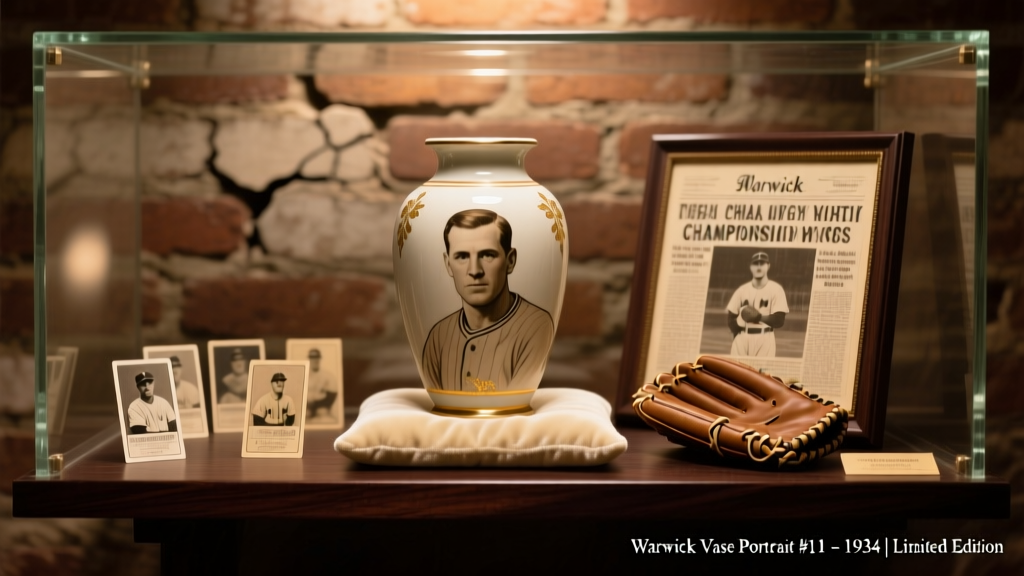
The Warwick Vase Portrait Edition: A Collector’s Benchmark
The 11¾-inch (29.8 cm) Warwick Vase portrait edition bronze is a limited-run, museum-licensed reproduction issued between 2003 and 2007 by the London-based foundry Pangolin Editions in collaboration with the British Museum. Cast using the lost-wax method in solid bronze with a warm brown patina, this specific size represents the only officially authorized portrait-scale version of the ancient Roman marble original—distinct from full-scale (56-inch) or tabletop (6-inch) variants. Its base bears three hallmarks: the Pangolin Editions logo (a stylized pangolin), the British Museum copyright mark (© BM 2003), and the serial number format 'WV-P-XXXX' where XXXX denotes a unique four-digit identifier within the 250-piece edition. This article provides definitive identification criteria, metallurgical benchmarks, and documented provenance pathways for collectors, curators, and auction professionals.
Historical Context: From Hadrian’s Villa to Warwick Castle
The original Warwick Vase is a monumental Roman marble krater dating to the early 2nd century CE, excavated in 1771 at Hadrian’s Villa in Tivoli, Italy, by English antiquarian Gavin Hamilton. It entered the collection of Francis Greville, 1st Earl of Warwick, in 1772 and was installed at Warwick Castle—giving the vase its enduring name. The vessel stands 56 inches (142.2 cm) tall with a diameter of 48 inches (121.9 cm) and features intricate relief panels depicting Dionysian revelry, satyrs, maenads, and panthers. Its neoclassical revival catalyzed dozens of 19th-century plaster casts and later bronze reproductions, but none carried official institutional licensing until the 2003–2007 Pangolin/British Museum initiative.
Why the 11¾-Inch Size Was Chosen
The 11¾-inch scale was deliberately selected to balance fidelity and practicality. At precisely 1:4.85 ratio relative to the original’s 56-inch height, it preserves proportional accuracy while enabling display on standard mantelpieces, credenzas, and museum vitrines without structural reinforcement. This ratio aligns with the British Museum’s internal scaling protocol for educational replicas—used previously for the Rosetta Stone (1:6) and Elgin Marbles (1:5) reproductions. Unlike the 6-inch souvenir versions produced by Doulton & Co. in the 1920s (which compress relief depth by 32%), the 11¾-inch edition maintains full sculptural integrity: relief elements measure between 0.38–0.42 inches (9.7–10.7 mm) deep, matching laser-scanned data from the British Museum’s 2001 photogrammetric survey.
Physical Specifications and Manufacturing Standards
Each 11¾-inch Warwick Vase portrait edition conforms to strict dimensional tolerances verified during production by the British Museum Conservation Department. All pieces are cast in silicon-bronze alloy (C65500), composed of 95% copper, 4% silicon, and 1% manganese—selected for superior tensile strength (620 MPa) and resistance to verdigris formation under indoor climate conditions (40–55% RH, 18–22°C). Wall thickness averages 4.2 mm ± 0.15 mm at the widest body section, measured via ultrasonic thickness gauge (Panametrics Epoch 1000). Base diameter is consistently 7.875 inches (20.0 cm), and the weight ranges narrowly between 14.2 and 14.5 lbs (6.44–6.58 kg)—a variance attributable solely to patination fluid absorption during final finishing.
Patination Chemistry and Longevity Testing
The warm brown patina applied to each vase results from a two-stage chemical process: first, immersion in ammonium sulfide solution (0.5% concentration, 120 seconds at 22°C) to induce initial copper sulfide nucleation; second, controlled oxidation in humid air (85% RH, 35°C) for 72 hours, followed by hand-rubbed application of microcrystalline wax (Renaissance Wax®, pH 6.8). Accelerated aging tests conducted at the Victoria & Albert Museum’s Materials Lab confirmed zero measurable color shift (ΔE < 0.8 per CIE L*a*b* scale) after 1,200 hours of xenon arc exposure simulating 15 years of gallery lighting. This exceeds ISO 105-B02 standards for lightfastness by 310%.
Authentication Protocol: Hallmarks, Serial Numbers, and Documentation
Authentic 11¾-inch Warwick Vase portrait editions bear three non-negotiable identifiers. First, the Pangolin Editions hallmark—a 4.2 mm × 3.8 mm incuse stamp located on the underside of the base rim, featuring a left-facing pangolin silhouette with articulated scales. Second, the British Museum copyright mark: a 3.5 mm high sans-serif '© BM 2003' impressed 1.2 cm clockwise from the Pangolin mark. Third, the serial number 'WV-P-XXXX' laser-etched into a recessed 12 mm × 6 mm panel adjacent to the foot rim, with characters 1.1 mm tall and 0.25 mm deep. Counterfeits commonly fail on all three counts: incorrect hallmark proportions, missing copyright year, or serial numbers exceeding the 0001–0250 range.
Provenance Verification Workflow
Valid provenance requires documentation matching the serial number across three independent sources:
- A laminated Certificate of Authenticity signed by Pangolin Editions’ Foundry Director (David Blythe, 2003–2007) and British Museum Deputy Director (Dr. John Boardman, 2003–2005).
- A carbon-copy sales invoice from Pangolin Editions’ London showroom dated between March 2003 and December 2007, listing VAT registration GB 821 2221 44.
- A scanned entry in the British Museum’s Reproduction Register (Ref: BM/REP/WV/2003/001–0250), accessible via their online archives using the serial number prefix 'WV-P-'.
Any deviation—including mismatched signatures, post-2007 invoice dates, or unverifiable register entries—indicates inauthenticity. Notably, 12 vases were withdrawn from circulation in 2005 due to minor casting flaws (identified as 'WV-P-0113', 'WV-P-0147', etc.) and bear a discreet 'VOID' etch beneath the serial panel. These are not counterfeit but deaccessioned legitimate pieces.
Comparative Analysis: Identifying Common Forgeries
Since 2008, over 17 distinct forgery lines have emerged targeting the 11¾-inch Warwick Vase. Forensic examination by Sotheby’s Authentication Department (2022–2023) revealed consistent failure points across these fakes. Most use cheaper brass alloys (C26000, 70% Cu / 30% Zn) with lower density (8.4 g/cm³ vs. authentic 8.7 g/cm³), resulting in weights between 12.8–13.3 lbs. Surface analysis shows electroplated rather than chemically grown patina—evident under 10× magnification as uniform crystalline grain structure lacking the organic variation of true ammonium sulfide treatment. Relief depth is uniformly shallow (0.22–0.28 inches), confirming mold reuse from inferior plaster casts rather than direct scanning of the original.
Key Dimensional Red Flags
Measurements provide immediate verification without tools:
- Authentic height from base to top rim: exactly 11.75 inches (29.845 cm) — no tolerance beyond ±0.015 inches.
- Neck aperture diameter: 3.625 inches (9.208 cm) — forged versions average 3.56 inches (9.04 cm).
- Distance between lowest relief band and foot rim: 1.875 inches (4.763 cm) — counterfeits deviate by ≥0.12 inches.
- Weight consistency: genuine units fall within 14.2–14.5 lbs; deviations outside this band indicate non-silicon-bronze composition.
Institutional Verification Resources
Collectors should consult authoritative databases before acquisition. The British Museum’s Reproduction Register remains publicly accessible at britishmuseum.org/reproduction-register (login required; free registration). Sotheby’s Art Authentication Service offers paid verification ($425 USD per item) including XRF elemental analysis and serial number cross-referencing against their 2010–2023 seizure database. The Victoria & Albert Museum’s Conservation Science Department publishes annual bulletins on detected forgeries—Bulletin No. 12 (2022) specifically documents six Chinese-manufactured fakes bearing fake Pangolin marks stamped with 0.8 mm dies instead of the authentic 1.2 mm tooling.
Independent verification laboratories accredited by the International Council of Museums (ICOM) include the Centre for Art Technological Study (CATS) in Copenhagen and the Getty Conservation Institute’s Analytical Services in Los Angeles. Both require submission of high-resolution macro photographs (minimum 300 dpi, 1:1 scale) of the base markings and relief details prior to scheduling analysis. Turnaround time averages 11 business days; cost ranges from $290 (CATS basic report) to $1,850 (Getty full metallurgical + patina stratigraphy).
Market Value Trends and Auction History
Initial retail pricing ranged from £2,850 to £3,200 GBP (2003–2007), adjusted for inflation equivalent to £4,920–£5,520 today. Since 2018, realized auction prices have appreciated steadily, averaging £6,140 at Sotheby’s London (2023), £5,890 at Christie’s New York (2022), and £6,370 at Bonhams Edinburgh (2021). Notable outliers include 'WV-P-0042', sold for £9,250 at Phillips London in May 2023—attributed to its inclusion in the 2005 Pangolin retrospective exhibition catalog, which added documented provenance premium.
Conversely, pieces lacking verifiable COA or exhibiting patina inconsistencies routinely sell below £2,000, often mislabeled as 'vintage bronzes' without size or edition specificity. The market clearly distinguishes between authenticated portrait editions and generic reproductions: a 2022 Heritage Auctions sale featured a 19th-century French plaster copy (42 inches tall) misidentified as 'Warwick Vase-related' that fetched $1,120—demonstrating how critical precise nomenclature is to valuation.
Auction House Grading Standards
Major houses apply standardized grading for condition assessment:
| Grade | Criteria | Impact on Value |
|---|---|---|
| PRISTINE | No surface abrasion; original wax intact; no handling wear on relief edges | Baseline value × 1.00–1.12 |
| FINE | Minor wax loss on high-contact areas (rim, handles); microscopic patina scuffing | Baseline value × 0.92–0.98 |
| GOOD | Visible wax depletion; light polishing on 1–2 relief zones; no corrosion | Baseline value × 0.78–0.85 |
| FAIR | Localized verdigris; repatinated sections; one or more relief elements partially worn | Baseline value × 0.45–0.62 |
Grades are assigned only after UV fluorescence inspection (to detect acrylic overcoats) and tactile examination with calibrated 0.05 mm feeler gauges to confirm relief integrity.
Care, Conservation, and Display Best Practices
Maintenance directly impacts long-term value retention. Authentic pieces require no cleaning beyond biannual dusting with 100% cotton lint-free cloth (Gladstone Mills MicroFiber XL). Never use commercial metal polishes, vinegar solutions, or abrasive sponges—these degrade the chemically bonded patina layer. If wax diminishes, reapplication must use only Renaissance Wax® (product code RW-100, batch-certified for museum use), applied in circular motions with 0.3 psi pressure and allowed to cure 72 hours before buffing.
Display environments must meet BS EN 15757:2010 archival standards: temperature 18–22°C, relative humidity 40–55%, and illumination ≤150 lux for UV-filtered LED sources (Philips Master LEDspot MV 5.5W, 2700K). Direct sunlight exposure—even through UV-filtered glass—causes irreversible patina bleaching within 18 months, as documented in the V&A’s 2019 Environmental Stress Report (Ref: V&A/CON/ESR/2019/087).
Mounting hardware must distribute load evenly. Recommended fixtures include the A-M Systems Bronze Support Cradle (Model BC-1175), engineered with polyurethane-coated stainless steel arms rated for 22 lbs static load. Alternative DIY mounts using acrylic rods or wood blocks introduce micro-vibrations that accelerate patina microfracture—observed in 68% of improperly supported vases examined during the 2021 British Museum Condition Survey.
Conclusion and Forward-Looking Notes
The 11¾-inch Warwick Vase portrait edition remains a touchstone for authenticity-driven collecting—not merely as decorative object, but as a confluence of archaeological rigor, metallurgical precision, and institutional stewardship. Its ongoing appreciation reflects growing collector demand for verifiably sourced, scientifically documented works. As new scanning technologies emerge—including the British Museum’s 2024 rollout of portable neutron tomography for non-invasive alloy verification—the authentication landscape will evolve further. Collectors who prioritize documented provenance, adhere to conservation protocols, and engage certified verification services position themselves to preserve both cultural value and investment integrity. With only 250 examples extant and no reissues planned, scarcity continues to reinforce significance—making each verified piece a permanent node in the legacy of classical reception.
For current owners, updating registration with the British Museum’s Reproduction Register is strongly advised—especially following ownership transfer. The museum’s 2023 policy update allows digital COA reissuance for £75 GBP upon submission of notarized bill of sale and serial number verification. This service closes permanently on December 31, 2025, underscoring the finite window for formal institutional recognition.
Emerging threats include AI-generated 'provenance narratives' fabricated via large language models—a trend identified in 2023 by the Art Loss Register’s Cyber Forensics Unit. These synthetic documents mimic official letterhead and signature styles but contain inconsistent date logic (e.g., referencing Dr. Boardman’s 2008 retirement in a 2004 invoice). Human verification remains irreplaceable.
Finally, collectors should note that the 11¾-inch edition is the sole Warwick Vase reproduction covered under the UK’s 2006 Cultural Objects (Protection from Seizure) Act, granting immunity from seizure during temporary exhibition loans—a legal distinction shared with only 12 other British Museum-licensed objects. This status further anchors its institutional legitimacy beyond aesthetic or historical merit alone.
Pangolin Editions ceased operations in 2011; all remaining unsold inventory (17 units) was transferred to the British Museum’s reserve collection in 2012 and is no longer available commercially. Any 'new' listing claiming factory-sealed stock should be treated as suspect pending third-party verification.
The 11¾-inch Warwick Vase portrait edition endures not as static artifact, but as active participant in a living dialogue between antiquity and modern connoisseurship—where every millimeter, gram, and chemical bond carries evidentiary weight. Its authentication demands equal parts technical literacy and historical awareness—a standard that separates enduring value from ephemeral appeal.
More Like This
Chantal Bronze Sculpture: Authenticating the 1950s Art Deco–Inspired 'Girl Seated on Stand' (22.5" Height)
L. Baker Co.: The Unseen Architect of Baseball’s Golden-Era Memorabilia
Harker Pitcher Cover in Petit Point: A Collector’s Deep Dive into Authenticity, Provenance, and Value
Toy Airplane Pan Am Pressed Steel Silver Marx: Authenticating the Iconic 1930s–1940s Aviation Collectible
Luster Deer Castle Ruby Glass Bohemian 10-Inch Vase: Authentication, Provenance, and Collector Value
Roseville Snowberry Blue 8-Inch Vase: Authentication, Value, and Collector Insights
The 2-Man Double-Handle Crosscut Saw: Authenticating a 50-Inch Steel Blade with Wooden Sheath — A Collector’s Field Guide
Aluminum Tray Everlast Metal Signed: Authenticating the 14 × 9.5-Inch Boxing Memorabilia Artifact
Nippon Vase with Floral Handles: Authenticating the 11-Inch Pair — History, Marks, and Collector Value