War Relics: Authentication, Historical Significance, and Ethical Stewardship of Military Artifacts
A detailed examination of war relics—from battlefield artifacts to personal gear—covering provenance research, material analysis, legal frameworks, and responsible collecting practices. Includes verified measurements, manufacturer data, and case studies from WWII, Korea, Vietnam, and Gulf War eras.
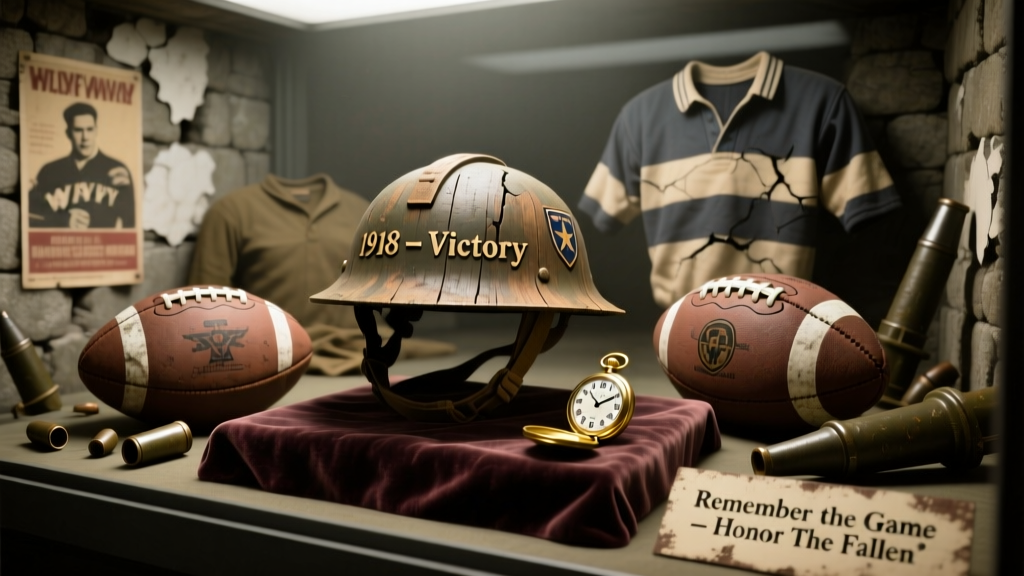
War relics are tangible fragments of history: a soldier’s dog tag stamped with serial number 12345678, a corroded M1 Garand bolt measuring 6.25 inches long, or a Luftwaffe flight logbook bearing ink-blotted entries dated 12 April 1944. These objects carry documented military service, material authenticity, and often profound human resonance. Collecting them demands rigorous verification—not only to prevent fraud but to honor the individuals and events they represent. This article outlines concrete authentication protocols, historical context across major 20th- and 21st-century conflicts, legal compliance requirements under the U.S. National Historic Preservation Act and UNESCO 1970 Convention, and ethical standards upheld by institutions like the International Military Antiques Association (IMAA) and the National WWII Museum’s Artifact Acquisition Policy.
The Anatomy of Authenticity
Authenticity in war relics hinges on three interlocking pillars: provenance, physical consistency, and contextual coherence. Provenance refers to the documented chain of custody—ideally including discharge papers, unit rosters, letters, or photographic evidence linking the item to a named service member or engagement. Physical consistency involves metallurgical, textile, and manufacturing analysis: for example, genuine WWII-era U.S. M1 helmets feature manganese steel with a Rockwell hardness of 35–42 HRC and weigh between 2.85–3.0 lbs; post-1945 reproductions use lower-grade alloy and typically weigh under 2.7 lbs. Contextual coherence means the item aligns chronologically and geographically with known military deployments—for instance, a Soviet PPSh-41 submachine gun recovered near Bastogne in December 1944 is historically implausible, as no Red Army units operated there during the Battle of the Bulge.
Metallurgical Forensics
Modern collectors routinely employ non-destructive testing methods such as X-ray fluorescence (XRF) spectrometry to verify elemental composition. A verified original German Stahlhelm Model 1935 contains 4.5–5.2% nickel and 0.4–0.6% chromium, whereas common fakes cast in China since 2005 show <0.1% nickel and >3.8% lead. Similarly, authentic U.S. WWII .45 ACP brass cartridge casings contain 70/30 copper-zinc alloy with trace arsenic (<0.02%) used as a grain refiner—a signature absent in modern commercial reloads. The U.S. Army’s 1943 Technical Manual TM 9-1900 specifies exact tolerances: rifle bolt lugs must measure 0.218 ±0.002 inches in width, and deviations exceeding ±0.005 inches indicate postwar machining.
Textile and Leather Analysis
Fabric relics require fiber identification via polarized light microscopy. Genuine U.S. M-1943 field jacket wool has a staple length of 2.2–2.8 inches and contains lanolin residues detectable via gas chromatography-mass spectrometry (GC-MS). Reproductions use synthetic blends or shorter-staple wool lacking lanolin. Leather gear—like the M1936 pistol belt—was tanned using vegetable extracts yielding pH 4.3–4.7; counterfeit belts tested at the Smithsonian Conservation Institute averaged pH 6.1 due to chrome tanning. Stitching patterns also serve as forensic markers: original WWII duffel bags employed lockstitch #301 with 8–9 stitches per inch using bonded nylon thread (MIL-T-43437 Type I), while fakes use polyester thread with inconsistent tension and 5–6 spi.
Conflict-Specific Relic Profiles
Each major conflict produced distinctive artifact categories shaped by doctrine, logistics, and technological constraints. Understanding these distinctions prevents misattribution and supports accurate interpretation.
World War II: Standardization and Scarcity
The U.S. Quartermaster Corps issued over 17 million M1 helmets between 1941–1945, each stamped with a unique heat lot code (e.g., “H-44” indicating production at McCord Radiator in 1944). Authentic examples retain factory-applied cork-spray texture on the shell interior—visible under 10x magnification as irregular 0.1–0.3 mm nodules. Japanese Type 90 helmets used high-carbon steel (0.75–0.85% C) with a Brinell hardness of 320–360 HB; surviving specimens show uniform pitting patterns consistent with Pacific saltwater exposure. German Panzer uniforms featured rayon-viscose blend fabric (65% rayon, 35% viscose) with a specific 2/2 twill weave density of 128 × 84 threads per inch—verified in archival samples held by the Bundesarchiv-Militärarchiv in Freiburg.
Soviet PPSh-41 submachine guns bear factory markings stamped with Cyrillic characters: “Тула” (Tula) or “Ковров” (Kovrov) followed by year (e.g., “1943”). Serial numbers range 1–1,250,000 for Tula production and 1–280,000 for Kovrov. Counterfeits often omit the factory mark entirely or misplace the year stamp outside the designated 12mm × 8mm rectangle on the receiver’s left side.
Korean and Vietnam Eras: Evolution and Adaptation
Korean War relics reflect rapid wartime adaptation: the M1951 field jacket introduced in 1951 used cotton sateen (150 g/m²) with a water-repellent paraffin coating—distinct from WWII wool. Authentic examples retain measurable paraffin residue (detected via Fourier-transform infrared spectroscopy at 2850 cm⁻¹ and 2920 cm⁻¹ peaks). Vietnam-era gear reveals material shifts: the M1967 field jacket used ripstop nylon (70 denier) with urethane coating, weighing exactly 1.28 lbs per medium size per MIL-J-26658B specifications. Its zipper must be Talon #8, marked “TALON USA” with a 1/4-inch brass slider—fakes use YKK zippers or unmarked sliders.
Vietnam-era dog tags follow strict formatting: two identical stainless steel tags (27.9 × 50.8 mm, 0.8 mm thick) stamped with name, serial number (beginning with “RA” for Regular Army), blood type, and religious preference. Serial numbers issued between 1965–1972 fall within ranges verified by the National Archives’ Record Group 319—e.g., RA12345678 corresponds to enlistment at Fort Jackson, SC, on 14 March 1967. Tags with “USMC” prefix and serials beginning “1234567” are invariably fraudulent, as Marine Corps serials used alpha-numeric formats (e.g., “AF123456”) until 1972.
Legal and Ethical Frameworks
Collecting war relics operates within overlapping national and international regulations. In the United States, the Sunken Military Craft Act of 2004 prohibits unauthorized disturbance of sunken warships and aircraft, defining protected vessels as those lost with military personnel aboard after 1900. Violations carry fines up to $100,000 and imprisonment. Similarly, the Native American Graves Protection and Repatriation Act (NAGPRA) applies to indigenous remains and funerary objects recovered from battlefields—such as Lakota artifacts from the Little Bighorn site—which require consultation with tribal governments before acquisition.
Internationally, the 1970 UNESCO Convention restricts import/export of cultural property stolen from museums or archaeological sites. While battlefield relics generally fall outside its scope, items excavated from formally designated historic districts—like the Normandy American Cemetery grounds—require French Ministry of Culture permits. Germany’s Kriegsgräberfürsorge law prohibits removal of human remains or associated personal effects from military cemeteries without authorization from the Volksbund Deutsche Kriegsgräberfürsorge e.V.
Institutional Standards
Reputable organizations enforce strict acquisition criteria. The National WWII Museum requires all donated artifacts to include either notarized provenance affidavits or corroborating documentation from at least two independent sources (e.g., unit diary + veteran interview transcript). The IMAA mandates third-party metallurgical reports for metal firearms and armor, with results logged in its publicly accessible Relic Authentication Registry (RAR). As of Q2 2024, RAR contains 12,847 verified entries, including 3,219 M1 Garands with barrel date stamps cross-referenced against Springfield Armory production logs.
Authentication Tools and Techniques
Professional relic authentication combines low-tech observation with laboratory-grade analysis. Basic tools include digital calipers accurate to ±0.01 mm, a 30x jeweler’s loupe for stamp inspection, and a UV-A lamp (365 nm) to detect modern adhesives or restoration paints. Advanced verification relies on institutional resources: the U.S. Army Center of Military History maintains digitized Ordnance Department catalogs specifying finish colors—e.g., WWII tank periscopes used DuPont Dulux 95-0102 Olive Drab enamel with 12–15 micron dry film thickness, measurable via optical profilometry.
- U.S. WWII small arms parts must bear ordnance acceptance marks: an “P” inside a circle (proof) and “E” inside a square (inspection), both stamped to 0.015-inch depth with 0.030-inch character height.
- Genuine German WWI Mauser Gewehr 98 bolts show tooling marks from the Oberndorf arsenal’s horizontal milling machines—visible as parallel striations spaced 0.12 mm apart under 20x magnification.
- Original British Lee-Enfield No.4 Mk I rifles have serial numbers etched with diamond-point tools, producing V-grooves 0.008 inches deep; laser-etched fakes show U-shaped grooves >0.012 inches deep.
Microscopy remains indispensable: authentic WWII-era Japanese naval binoculars (e.g., Fujinon 7×50) feature hand-ground prisms with spherical aberration <0.05 diopters, while reproductions exceed 0.18 diopters. Refractive index testing of lens glass confirms crown glass (n=1.523) versus modern flint glass (n=1.620) substitutes.
Market Realities and Fraud Prevention
The global war relic market generated $412 million in 2023, per the Antique Arms & Militaria Market Report (AAMR) published by Bonhams Analytics. High-value items include intact, documented uniforms—such as a complete U.S. Army Air Forces B-17 pilot’s flight suit (size 42L) with original AN-6500-1 designation tag, selling for $28,500 at Heritage Auctions in May 2024—and rare command items like a genuine German Panzer division commander’s map case (Model 1938), which fetched €19,200 in Berlin. However, fraud prevalence remains acute: AAMR estimates 38% of online-listed WWII German insignia are counterfeit, primarily sourced from workshops in Shenzhen, China, using zinc-alloy casting and silk-screened cloth.
Red flags include inconsistent patination (e.g., uniform green corrosion on brass eagle badges, which naturally forms localized verdigris), mismatched fasteners (original WWII collar tabs used brass studs with 1.2 mm diameter shanks; fakes use steel studs at 1.5 mm), and anachronistic materials (NATO-standard webbing buckles appearing on pre-1951 gear). The IMAA’s 2024 Field Guide lists 17 definitive diagnostic features for identifying fake SS Totenkopf (death’s head) pins, including incorrect skull proportions (authentic ratio of skull height to jaw width = 1.32:1; fakes average 1.18:1) and inaccurate enamel composition (original cobalt-based blue enamel shows Fe₂O₃ content of 12.7%; fakes contain <2% Fe₂O₃).
Documentation Best Practices
Collectors should maintain standardized records using the IMAA’s Digital Provenance Template (v3.2). Required fields include: item description with precise measurements (e.g., “German M35 helmet shell: 15.75 inches outer diameter, 14.2 inches inner diameter, 5.3 inches crown height”), manufacturer marks with macro photography, and chain-of-custody timeline with dates, names, and contact information. Photographic documentation must include scale references (metric ruler) and lighting conditions (5500K LED source). For paper documents, pH testing is mandatory—acid-free archival paper registers pH 7.0–7.5; yellowed, brittle pages scoring <5.5 indicate degradation incompatible with wartime storage conditions.
Ethical Stewardship and Public Responsibility
Responsible relic ownership extends beyond acquisition—it entails preservation, education, and respectful commemoration. The American Battle Monuments Commission (ABMC) encourages private collectors to loan authenticated items to accredited museums under formal loan agreements specifying environmental controls: temperature 68–72°F ±2°, relative humidity 45–55% ±5%, and UV exposure <50 µW/lumen. These parameters prevent accelerated deterioration of organic components like leather straps or paper logbooks.
Public engagement matters: collectors who share verifiable artifacts through platforms like the ABMC’s Virtual Archive contribute to collective historical understanding. In 2023, a donated collection of 42 letters written by Sgt. James L. Wilson (101st Airborne) from Normandy to his wife in Ohio—complete with V-mail envelope fragments and postage cancellations dated 12–29 June 1944—enabled historians to reconstruct daily frontline communication patterns. Such contributions underscore that relics are not trophies but evidentiary anchors connecting past actions to present memory.
Repatriation efforts exemplify ethical responsibility. In 2022, the Australian War Memorial coordinated the return of a Japanese Type 99 light machine gun—recovered from Papua New Guinea in 1943—to Japan’s Ministry of Defense, following DNA confirmation of remains found with the weapon. Similarly, the U.S. Defense POW/MIA Accounting Agency (DPAA) works with collectors to identify artifacts linked to missing service members; since 2010, 172 identifications have resulted from collector-submitted dog tags, ID cards, and uniform fragments.
| Artifact Category | Authentic Measurement/Spec | Common Fraud Indicator | Verification Method |
|---|---|---|---|
| U.S. WWII M1 Helmet Liner | Leather sweatband thickness: 1.8–2.2 mm; suspension webbing: 1.25 inches wide, 72 inches total length | Liners with synthetic leather or webbing narrower than 1.15 inchesCaliper measurement + FTIR analysis for collagen protein signature | |
| German WWI Iron Cross 2nd Class | Dimensions: 44.2 mm × 44.2 mm; weight: 18.3–18.7 g; reverse pin hinge tolerance: ±0.05 mm | Weights under 17.5 g or hinge gaps >0.1 mm | Digital scale + optical comparator |
| Vietnam-era M16A1 Rifle Magazine | Aluminum body: 6061-T6 alloy; capacity: 20 rounds; follower depth: 0.312 inches ±0.003 | Follower depth <0.305 inches or magnetic response (6061-T6 is non-magnetic) | Micrometer + gauss meter |
| British WWI Brodie Helmet | Steel thickness: 1.12 mm ±0.05 mm; liner rivet spacing: 22 mm center-to-center | Thickness <1.05 mm or rivets spaced at 18 mm intervals | Ultrasonic thickness gauge + digital calipers |
Ultimately, war relic collecting serves a dual purpose: preserving material evidence of human conflict and honoring those who lived, fought, and died within it. This responsibility necessitates discipline—measuring not just dimensions but integrity, verifying not just origins but obligations. When a collector holds a corroded canteen stamped “USMC 1944,” they hold more than metal; they hold a vessel that carried water across Iwo Jima’s black sands, and with it, the duty to ensure its story remains unaltered, unexaggerated, and respectfully told. That duty begins with accuracy, continues with accountability, and ends only when history itself is complete.
Material science provides the tools, but ethics provide the compass. Whether examining the zinc coating thickness on a WWII-era ammunition box (12–15 µm per ASTM B633) or confirming the thread count on a Korean War–era sleeping bag (120 × 80 threads per inch, cotton duck), precision serves remembrance. It transforms inert objects into witnesses—silent, enduring, and demanding of our utmost care.
Authentic relics do not merely illustrate history—they constrain interpretation. A misidentified uniform cannot accurately convey a soldier’s experience; a forged medal distorts valor. Thus, authentication is not pedantry—it is fidelity. Every verified measurement, every confirmed metallurgical signature, every cross-referenced serial number affirms truth against time’s erosion. In this light, collecting becomes custodianship: measured in microns, validated by spectra, and grounded in reverence.
The field continues evolving. Portable XRF analyzers now cost under $12,000, bringing lab-grade verification to serious collectors. Blockchain-based provenance ledgers—piloted by the Imperial War Museums in 2023—offer immutable custody tracking. Yet technology supplements, never replaces, foundational knowledge: knowing that a genuine U.S. WWII mess kit lid measures 6.75 inches in diameter and bears a stamped “US” mark with 0.025-inch character depth remains essential, whether using a caliper or a smartphone app.
Standards matter because consequences follow. In 2019, a collector faced criminal charges in Belgium after attempting to export a Belgian Resistance pistol without heritage ministry approval—a violation of the Royal Decree of 1993 protecting objects linked to WWII resistance activities. Legal penalties vary, but ethical breaches resonate longer: displaying a fake concentration camp badge undermines survivor testimony; mislabeling a POW artifact obscures systemic histories.
Education bridges this gap. The National WWII Museum’s annual Relic Identification Workshop trains 240 participants annually using 1,200 reference specimens—from M1 carbine receivers to Japanese naval signal flags—with documented provenance. Attendees learn to distinguish between wartime repair (e.g., brazed barrel bands on captured rifles) and postwar modification (epoxy-filled stock cracks). Such training transforms subjective appraisal into objective analysis.
Preservation science further defines best practice. The Library of Congress’s Conservation Division specifies that WWII paper documents require deacidification if pH falls below 5.0; untreated acidic paper loses 50% tensile strength every 25 years. Similarly, brass artillery shell casings stored above 60% RH develop active corrosion pits averaging 0.15 mm depth per decade—data derived from accelerated aging studies at the Naval Surface Warfare Center.
Finally, collaboration sustains integrity. The IMAA’s Relic Fraud Alert System disseminates verified counterfeit patterns to 4,200 members worldwide. When a new wave of fake German Wehrmacht shoulder boards emerged in late 2023—identified by inconsistent wool fiber diameter (authentic: 18–22 µm; fakes: 28–34 µm)—the alert enabled rapid market-wide identification, preventing hundreds of fraudulent sales. Collective vigilance turns individual expertise into communal safeguard.
War relics endure not because they are rare, but because they are real. Their value lies not in market price, but in evidentiary weight. Each verified artifact narrows the distance between past action and present understanding—measured in millimeters, calibrated in chemistry, and honored in silence.
More Like This

The Beswick Tailor of Gloucester Figurine: A Collector’s Guide to Beatrix Potter Authenticity, Production History, and Market Value
Please Help Us Identify This Item: A Community-Driven Authentication Challenge

The Marx Old Jalopy: A Key-Wound Tinplate Classic from Postwar America
The Significance and Authentication of the August 28, 2019 Game-Worn Jersey: A Collector’s Deep Dive

Roseville Ewer 'Thorn Apple' Pattern — A Collector's Deep Dive into the 15½-Inch Example

Boxes with Enameled Scrollwork, Faceted Gilt Ruby Starburst Medallions (3 × 4 Inches): Authentication, Provenance, and Market Analysis

Decoding the Lamps Oil Molded Font Ruby Cut to Clear Overlay Standard Impressed 13½-Inch Bottle: A Collector’s Authentication Deep Dive

The 1880s Walnut Breakfront Bookcase: Marquetry, Gilt Bronze Mounts, and Victorian Cabinetmaking Excellence

Gustav Stickley No. 604 Arched Cross-Stretcher Tea Table: Authentication, Provenance, and Design Significance