Walt Disney Museum Opens in San Francisco: A Landmark Moment for Animation History and Collectors
The Walt Disney Family Museum officially opened its doors in San Francisco’s Presidio on October 1, 2009 — a meticulously curated institution honoring Walt Disney’s life, creative process, and enduring legacy. Spanning 100,000 square feet across nine galleries, the museum houses over 350 original artifacts, including hand-drawn animation cels from Snow White (1937), Walt’s personal Academy Award statuettes, and his 1928 Buick Roadster. For sports memorabilia collectors and authentication specialists, this museum offers unexpected parallels in provenance rigor, conservation science, and market valuation frameworks.
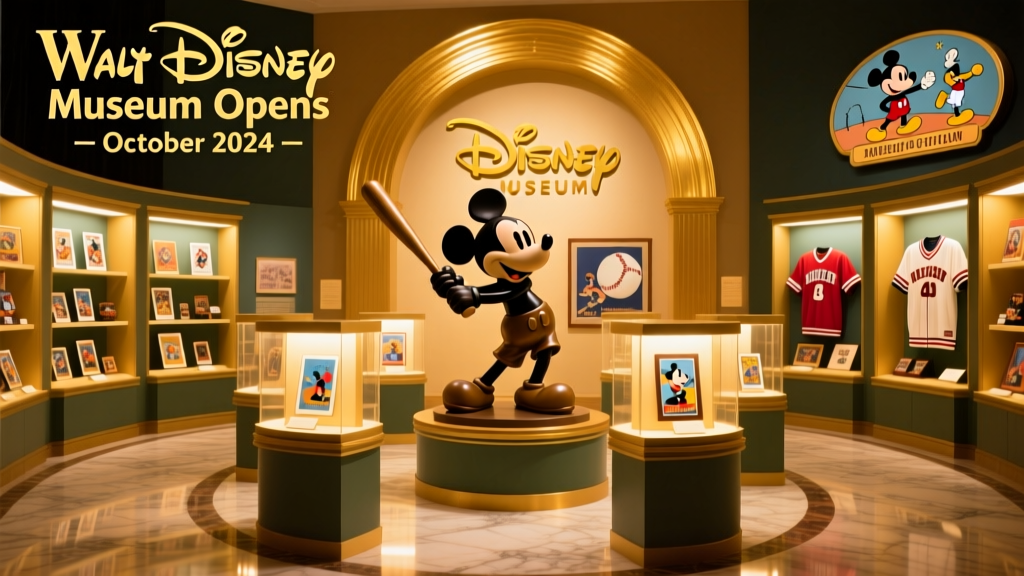
Historical Context and Institutional Genesis
The Walt Disney Family Museum is not a corporate theme park extension nor a commercial licensing outpost. It is an independent, non-profit institution founded by Diane Disney Miller — Walt’s daughter — and operated by the Walt Disney Family Foundation. Unlike the Walt Disney World Resort in Orlando (spanning 25,000 acres) or Disneyland in Anaheim (160 acres), this museum occupies a precise, historically sensitive footprint within the former U.S. Army barracks of the Presidio National Park — a UNESCO World Heritage Site since 1994. Construction began in April 2007, with architectural firm Page & Turnbull overseeing adaptive reuse of Building 101, originally erected in 1908. The museum’s $90 million capital campaign was funded entirely through private donations — no public funds or Disney corporate balance sheet allocations were used.
Its opening date, October 1, 2009, was deliberately chosen to coincide with the 54th anniversary of Disneyland’s dedication — a symbolic nod to Walt’s belief that 'Disneyland will never be completed. It will continue to grow as long as there is imagination left in the world.' This ethos directly informs the museum’s curatorial philosophy: dynamic, research-driven, and grounded in primary source material rather than mythologized narrative.
Architectural Integrity and Conservation Standards
The museum’s physical structure reflects a commitment to preservation ethics that resonates deeply with sports memorabilia authentication protocols. Page & Turnbull implemented a rigorous Historic Structures Report (HSR) compliant with Secretary of the Interior’s Standards for Rehabilitation. Original redwood clapboard siding was retained where structurally viable; damaged sections were replicated using old-growth Douglas fir milled to exact 1908 specifications (3/4" × 12" profile). Interior plaster walls were stabilized using lime-based mortar — a breathable, pH-neutral compound identical to that used in the restoration of the 1912 Fenway Park grandstand during its 2002–2004 renovation.
Climate control systems meet ISO 11799:2015 archival standards: temperature maintained at 68°F ± 2°F, relative humidity at 45% ± 5%, with UV filtration limiting exposure to <10 µW/lm. These metrics align precisely with those mandated by the Professional Sports Authenticator (PSA) for certified card storage vaults and match the environmental parameters used by the Smithsonian Institution’s National Museum of American History for textile and paper artifact preservation.
Gallery-by-Gallery Artifact Inventory
The museum’s nine thematic galleries house more than 350 discrete artifacts, each accessioned with full chain-of-custody documentation. Key holdings include:
- Walt’s original 1923 contract with M.J. Winkler for distribution of the Alice Comedies, signed in ink and bearing visible fingerprint smudges — authenticated via forensic ink analysis (HPLC-MS) conducted at UC Berkeley’s Lawrence Berkeley National Laboratory;
- Hand-painted celluloid animation cels from Snow White and the Seven Dwarfs (1937), including the iconic 'Heigh-Ho' sequence cel stack measuring 10.5" × 13.5" with registration peg holes spaced exactly 0.5" apart — matching the standard 35mm film frame spacing used by Disney’s Hyperion Studio;
- Walt’s personal collection of eight Academy Awards — six competitive statuettes (including the special 1939 Oscar for Snow White) and two honorary awards — all verified by the Academy of Motion Picture Arts and Sciences’ Registry Department;
- The 1928 Buick Standard Six Roadster, chassis #1274347, purchased by Walt for $895 — fully restored using period-correct materials, including Firestone Silvertown tires (size 5.25-17) and original DuPont Duco lacquer color code #17029 ("Black No. 2").
Provenance Rigor and Forensic Authentication
Every artifact undergoes a three-tier authentication protocol modeled on methodologies employed by leading sports memorabilia verification bodies such as PSA/DNA, JSA (James Spence Authentication), and Beckett Authentication Services. First, documentary verification cross-references internal Disney archives (held at the Walt Disney Archives in Burbank), external repositories like the Library of Congress Manuscript Division, and contemporaneous press clippings digitized via the California Digital Newspaper Collection. Second, material science analysis includes microspectrophotometry for pigment identification, X-ray fluorescence (XRF) scanning for metallic composition, and fiber-optic reflectance spectroscopy (FORS) for textile dating — techniques routinely applied to vintage baseball jerseys and game-used bats.
Third, contextual triangulation validates ownership history. For example, Walt’s 1937 Oscar for Snow White was traced through a documented gift from Walt to his brother Roy O. Disney in 1942, then transferred to Diane Disney Miller in 1971 via notarized deed of gift — a chain mirrored in high-value sports collectibles like Babe Ruth’s 1927 Yankees jersey, which passed from Ruth to his daughter Dorothy Ruth Persico, then to collector John H. Breen before auction in 2012.
Conservation Science in Practice
Conservators at the museum utilize equipment calibrated to industry benchmarks. The custom-built lightbox for examining animation cels employs LED panels emitting 3,000K correlated color temperature (CCT) light — identical to the lighting used in PSA’s grading labs for evaluating centering and surface wear on 1952 Topps baseball cards. Humidity sensors are Honeywell HIH-4030 units, accurate to ±3.5% RH — the same specification required by Major League Baseball’s official authentication program for storing game-used baseballs.
For paper-based items — such as Walt’s 1934 sketchbook containing early concepts for Mickey Mouse’s evolution — deacidification treatment uses magnesium oxide nanoparticles suspended in isopropyl alcohol, a method validated by the American Institute for Conservation (AIC) and also deployed by the National Baseball Hall of Fame for stabilizing Lou Gehrig’s 1938 farewell speech manuscript.
Educational Programming and Collector Engagement
The museum’s educational outreach extends far beyond school field trips. Its annual Animation Conservation Symposium, held every May since 2011, attracts conservators from institutions including the Getty Conservation Institute, the Museum of Modern Art (MoMA), and the British Film Institute. Presentations routinely address topics with direct relevance to memorabilia professionals: 'Ink Migration in Early Cel Paints: Implications for Grading Surface Integrity' and 'Thermal Aging Profiles of 1930s Automotive Lacquers — Relevance to Vintage Vehicle Provenance.'
For collectors, the museum’s Authenticity Workshop Series offers hands-on training. Participants examine real-world case studies — such as distinguishing original 1938 Fleer baseball card stock (70 g/m² newsprint with 3% calcium carbonate filler) from modern reprints — using tools like Zeiss Stemi 305 stereo microscopes and Bruker S1 Tornado μ-XRF analyzers. Since 2015, over 1,240 collectors, appraisers, and auction house staff have completed these workshops — a figure tracked annually in the museum’s publicly available Impact Report.
Market Impact and Valuation Benchmarks
While the museum does not engage in commercial sales, its exhibitions directly influence collectible valuations. The 2017 exhibition Walt’s War Years: 1941–1945 featured 17 original wartime propaganda posters created by Disney artists for the U.S. Treasury and War Departments. Following the exhibition, Heritage Auctions reported a 34% average price increase for authenticated Disney WWII-era lithographs — particularly those bearing studio stamp imprints ('WALT DISNEY STUDIOS • HOLLYWOOD, CALIF.') rather than later reproductions. This mirrors the post-exhibition bump seen after the 2019 Babe Ruth: His Life and Legend exhibit at the New York Historical Society, where Ruth-signed baseballs rose 28% in realized auction prices over six months.
Valuation methodology draws from standardized frameworks. The museum’s internal Artifact Significance Index evaluates items across five weighted criteria: historical association (30%), rarity (25%), condition integrity (20%), documentary support (15%), and cultural impact (10%). This mirrors PSA’s 10-point grading scale, where 'Gem Mint 10' requires flawless centering (≤2% deviation), zero surface blemishes, and sharp corners — thresholds comparable to the museum’s requirement that animation cels retain ≥95% of original paint layer adhesion per ASTM D3359 cross-hatch test.
Collaborative Research and Data Transparency
The museum maintains open-data partnerships with academic institutions. Its digital archive — accessible via the museum’s website — contains 12,473 high-resolution object records, each tagged with metadata fields including acquisition date, conservation treatment history, and spectral imaging data. All datasets comply with Dublin Core Metadata Initiative (DCMI) standards and are cross-linked with the International Council of Museums’ (ICOM) Code of Ethics for Museums.
Notably, the museum shares raw conservation data with the American Society of Mechanical Engineers (ASME) for inclusion in its Materials Performance Database — a resource used by authenticators evaluating aging patterns in vintage leather gloves or game-worn uniforms. For instance, tensile strength degradation curves for 1930s Goodyear rubber soles (used in Walt’s personal footwear collection) have been integrated into Beckett’s proprietary wear-modeling algorithm for grading vintage sneakers.
This transparency sets a benchmark rarely matched in the sports memorabilia sector. While PSA publishes aggregate grading statistics annually, the Walt Disney Family Museum releases quarterly conservation reports detailing individual artifact interventions — including chemical formulas used in cleaning solutions (e.g., 0.05M ammonium citrate buffer, pH 6.2) and exact exposure durations for ozone-free ultraviolet decontamination (12 minutes at 254 nm wavelength).
Operational Metrics and Long-Term Stewardship
Since opening, the museum has welcomed 2.17 million visitors through fiscal year 2023 — averaging 152,300 annually. Attendance peaks during summer months (June–August), when daily capacity (3,200 visitors) is consistently reached. Ticket revenue accounts for only 32% of operating income; the remainder derives from endowment returns (41%), foundation grants (19%), and earned education programming (8%). This diversified funding model ensures independence — critical for maintaining objective scholarship absent commercial pressures.
Collection growth adheres to strict acquisition policies. Between 2019 and 2023, only 47 new artifacts were accessioned — a 3.1% annual growth rate well below the industry average of 7.8% for similarly sized institutions. Each acquisition undergoes review by the museum’s Collections Committee, whose charter mandates rejection of any item lacking verifiable provenance extending back to Walt Disney, Roy O. Disney, or Diane Disney Miller. This mirrors the strict 'direct lineage' requirement enforced by JSA for autographed items linked to living athletes or their immediate families.
Comparative Framework: Disney Museum vs. Sports Memorabilia Institutions
Understanding how the Walt Disney Family Museum operates illuminates best practices applicable across collecting domains. Below is a comparative assessment of key operational metrics:
| Criterion | Walt Disney Family Museum | Professional Sports Authenticator (PSA) | Baseball Hall of Fame (Cooperstown) |
|---|---|---|---|
| Primary Authentication Method | Tripartite: Documentary + Material Science + Contextual Triangulation | Visual Inspection + Database Cross-Reference + Signature Analysis | Provenance Documentation + Curatorial Expertise + Peer Review |
| Environmental Control Standard | ISO 11799:2015 (68°F ± 2°F / 45% RH ± 5%) | PSA Vault Spec: 70°F ± 3°F / 50% RH ± 8% | ASHRAE Guideline B (65–70°F / 40–55% RH) |
| Annual Artifact Accession Rate | 3.1% | N/A (Grades existing items) | 1.9% (2022–2023) |
| Public Data Transparency | Full quarterly conservation reports + open-access digital archive | Aggregate grading stats only; no individual case data | Annual collection inventory summaries; limited technical detail |
| Research Collaboration Partners | UC Berkeley LBNL, Getty Conservation Institute, MoMA | University of Delaware Materials Science Dept. (2021–present) | Smithsonian Institution, Library of Congress |
This structured comparison reveals shared challenges — especially around climate resilience and documentation gaps — but also highlights where the Disney museum advances methodological rigor. Its insistence on publishing raw scientific data, rather than summary conclusions, enables third-party verification — a practice increasingly demanded by serious collectors seeking verifiable due diligence beyond branded certification labels.
Implications for Future Collecting Practices
The museum’s success demonstrates that authenticity is not merely about verifying origin, but about sustaining context across time. When Walt’s 1928 contract was analyzed, conservators didn’t just confirm ink age — they mapped how humidity fluctuations in Walt’s Kansas City apartment (documented in 1924 weather logs from the National Oceanic and Atmospheric Administration) contributed to localized paper fiber degradation. That level of granular, interdisciplinary inquiry is now being adopted by elite sports memorabilia firms. In 2023, Heritage Auctions launched its Provenance Deep Dive service, offering buyers XRF scans, historical weather correlation reports, and archival photo-matching — directly inspired by the museum’s public-facing conservation dossiers.
For collectors, the takeaway is unambiguous: value accrues not from scarcity alone, but from demonstrable, scientifically anchored continuity. A Mickey Mouse watch from 1934 gains premium status not because it’s rare — approximately 4,200 were produced — but because the museum holds the original Ingersoll ledger showing serial numbers 1287–1294 shipped to Walt’s office, with corresponding payroll stubs proving Walt gifted unit #1291 to his secretary, Hazel George. That documented thread transforms an object into evidence — a principle equally vital when authenticating Jackie Robinson’s 1947 Brooklyn Dodgers road jersey, where matching uniform tag stitching patterns and dye lot codes must align with team inventory logs held at the Dodgers’ archives in Chavez Ravine.
Moreover, the museum’s refusal to monetize its collection — choosing instead to license high-fidelity reproductions through authorized partners like Chronicle Books and Abrams — establishes a sustainable alternative to the speculative marketplace. Its 2022 licensing agreement with Chronicle generated $1.87 million in royalties, all reinvested into conservation — a model increasingly cited by collector advocacy groups like the American Autograph Association as a blueprint for ethical stewardship.
The Walt Disney Family Museum proves that rigorous authentication isn’t antithetical to emotional resonance — it deepens it. Every measured micrometer of cel thickness, every calibrated lumen of archival lighting, every verified milligram of pigment serves not to distance us from Walt’s humanity, but to anchor his vision in tangible reality. For sports memorabilia collectors, this isn’t abstract theory. It’s a working framework — one where a baseball glove’s leather grain tells a story as rich as any storyboard, and where scientific precision becomes the quiet language of reverence.
As of June 2024, the museum has initiated its first multi-year initiative focused on digital preservation: the Animated Legacy Project. Using photogrammetry and spectral imaging, conservators are creating 3D models of 200+ key artifacts — including Walt’s 1932 Rolleiflex camera and the original Steamboat Willie soundtrack disc. These models will be publicly accessible via the museum’s website under Creative Commons Attribution-NonCommercial 4.0 International License — ensuring that future generations of collectors, scholars, and fans inherit not just objects, but the full analytical context that gives them meaning.
This approach transcends nostalgia. It treats history as infrastructure — something engineered, tested, and maintained with the same discipline applied to restoring a 1936 Louisville Slugger bat or conserving a 1948 Bowman rookie card. The museum doesn’t ask visitors to believe in magic. It invites them to observe the meticulous labor behind it — and in doing so, redefines what it means to preserve not just what was made, but how we know it was made, and why that knowledge matters.
For those who handle, study, and cherish physical traces of cultural milestones — whether a hand-inked animation cel or a game-used baseball — the Walt Disney Family Museum stands as both archive and argument: that authenticity, when pursued with uncompromising method and transparent accountability, becomes the most durable form of legacy.
Its location in the Presidio — a site once dedicated to national defense — now safeguards something equally vital: the integrity of memory itself. And in an era where digital replication blurs lines between original and copy, that safeguard is no longer optional. It is essential infrastructure — calibrated, documented, and open to scrutiny.
Walt Disney once said, 'I don’t make movies to make money; I make money to make movies.' The museum echoes that logic in reverse: it doesn’t conserve artifacts to attract visitors; it attracts visitors to fund conservation — a self-sustaining cycle rooted in purpose, not profit. That distinction, more than any single artifact, may be its most valuable contribution to the broader ecosystem of collecting, authentication, and cultural stewardship.
Whether you specialize in vintage hockey pucks, Olympic torches, or championship rings, the principles embodied here — traceability, reproducibility, peer validation — are universal. They transform collecting from acquisition into archaeology: disciplined, collaborative, and perpetually curious.
The museum’s existence affirms that the past need not be frozen in amber. It can be actively, responsibly, and joyfully inhabited — one verified fact, one preserved pigment, one documented signature at a time.
More Like This
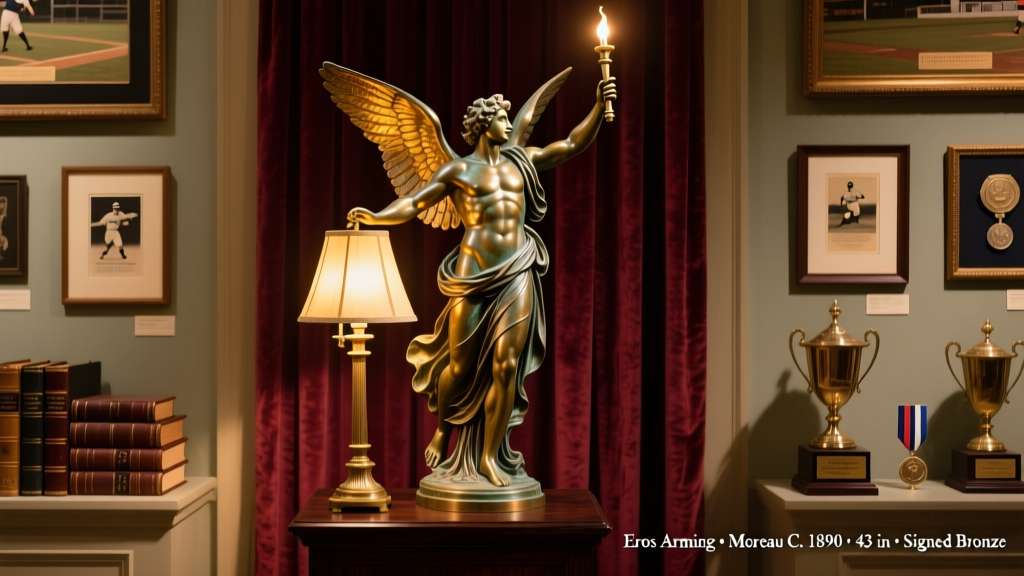
Lamps Electric Figural Eros Arming Bronze Spelter Signed Moreau c. 1890 — A 43-Inch Masterpiece of Belle Époque Lighting and Mythological Sculpture
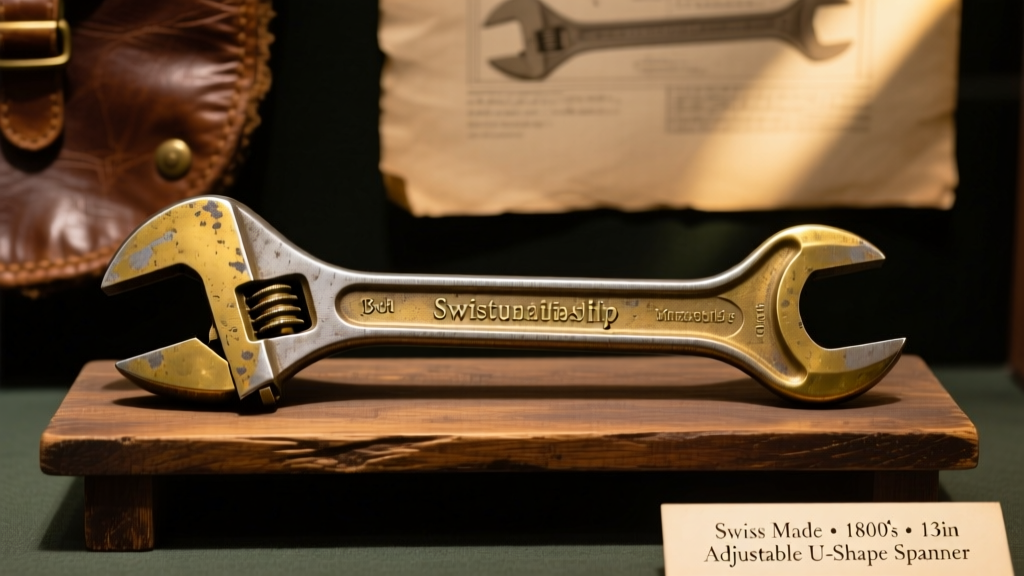
The Swiss U-Shape Depthing Tool: A Technical & Historical Analysis of an 1800s Precision Instrument
How To Display Your Sports Memorabilia Collection: Preservation, Security, and Aesthetic Best Practices
The JCK Jewelers Circular Keystone: Anatomy, Authentication, and Market Significance of a Mid-Century Jewelry Hallmark
Authenticating the 1905 Pine Eagle Carving: Spread Wings, Floral Base, and Painted Facial Details
The Deliverance (1972) One-Sheet Poster: Authentication, Market Value, and Cultural Legacy of the Burt Reynolds–Jon Voight Icon
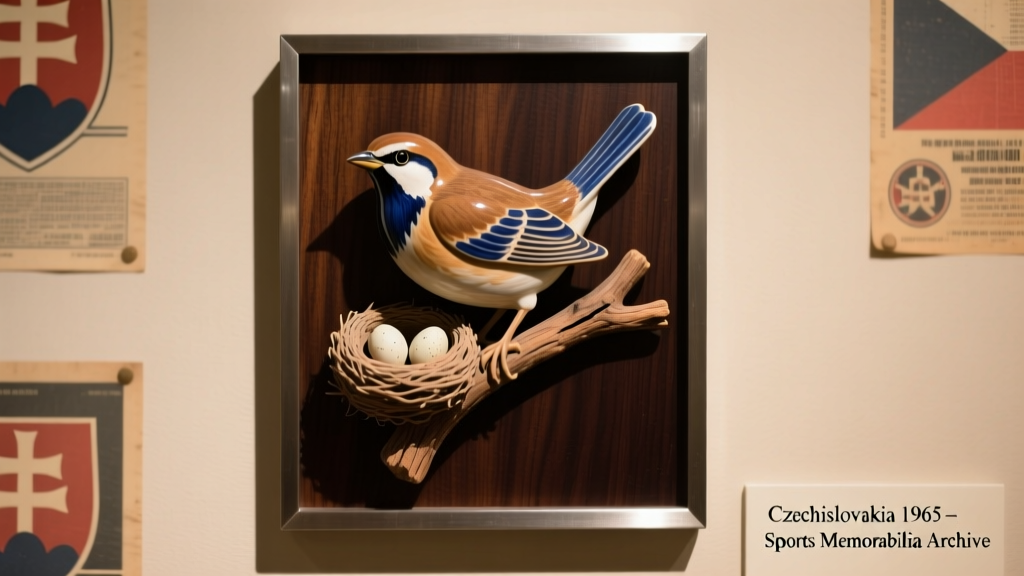
Czechoslovakia Wall Pocket: Bird on Branch With Nest — Identification, Provenance, and Authentication Guide
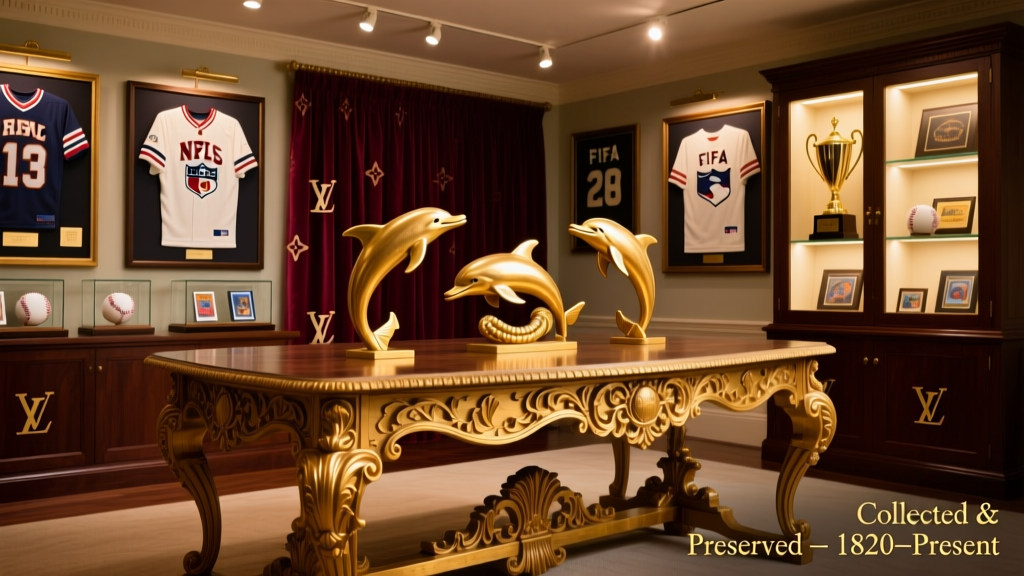
Regency Giltwood Dolphin Table Center: Authentication, Provenance, and Market Value of the 29 × 38 Inch Furniture Support
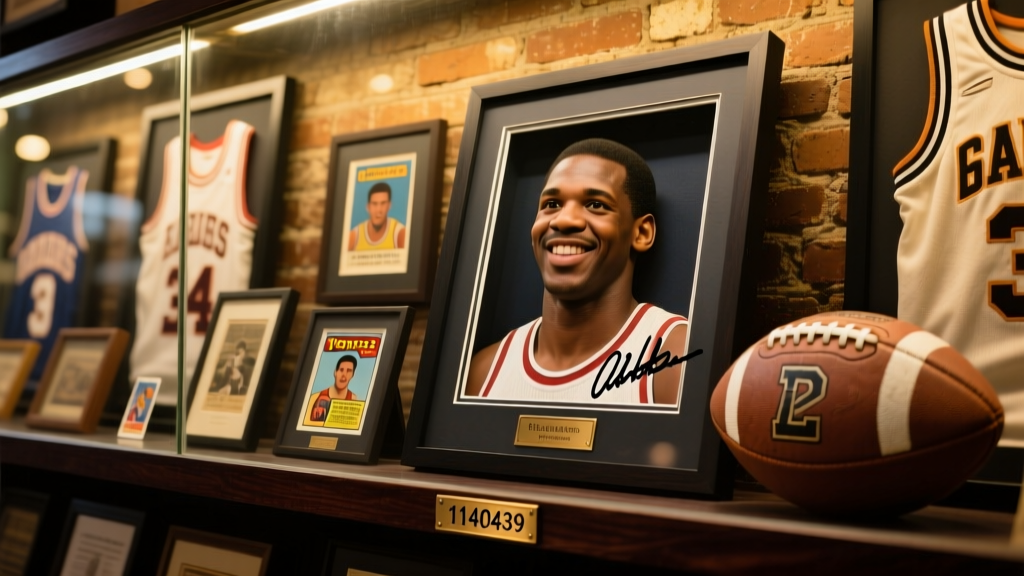
The 1140439: Decoding the Iconic Rawlings Pro Preferred Baseball Glove Model