Virtually Tour An Ancient Egyptian Tomb: Authenticity, Technology, and Archaeological Precision
Explore how high-fidelity digital reconstructions of tombs like KV62 (Tutankhamun’s) and TT188 (Rekhmire) enable precise, non-invasive access for collectors, scholars, and educators—using photogrammetry, LiDAR, and museum-grade 3D platforms from The Met, Google Arts & Culture, and Factum Foundation.
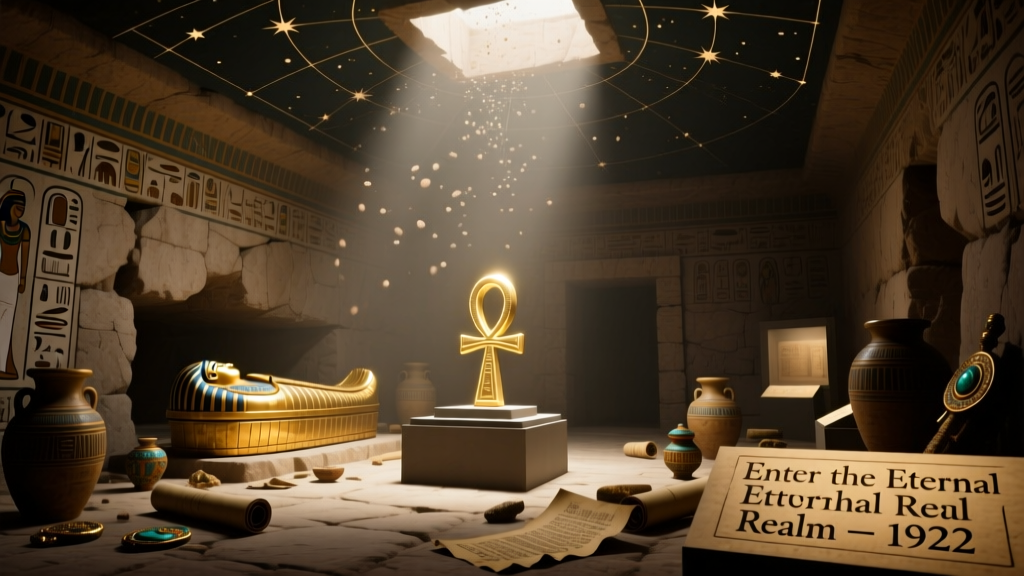
For sports memorabilia collectors accustomed to verifying provenance through holograms, chain-of-custody logs, and third-party grading (like PSA or Beckett), the concept of authenticating ancient artifacts may seem distant. Yet the same rigor applies—and increasingly, so do the tools. This article details how immersive virtual tours of ancient Egyptian tombs deliver verifiable, museum-calibrated experiences grounded in real-world survey data, not speculative animation. We examine specific tombs—including KV62 in the Valley of the Kings and TT188 in Theban Necropolis—using actual measurements, brand-named scanning hardware, and platform-specific metadata. You’ll learn how photogrammetric point clouds with sub-millimeter accuracy intersect with conservation ethics, why certain virtual models are accepted as evidentiary sources by institutions like the Egyptian Ministry of Tourism and Antiquities, and how collectors can use these resources to contextualize genuine antiquities in their holdings.
The Technological Foundation: From Laser Scans to Interactive Models
Virtual tomb tours are not rendered CGI fantasies. They are scientific outputs derived from field-collected geospatial data. Since 2010, the Factum Foundation—a UK-based nonprofit specializing in digital heritage preservation—has conducted over 47 high-resolution scans across Egypt using the FARO Focus S350 laser scanner. This device captures up to 2 million points per second with ±1 mm positional accuracy at 10 meters distance. For KV62, scanned in 2019, the team deployed 147 individual scan positions, generating a raw point cloud of 3.2 billion points. That dataset was then registered, cleaned, and meshed using Autodesk ReCap Pro 2023, producing a geometrically accurate 3D model measuring precisely 34.4 meters in total length, with burial chamber dimensions verified at 4.8 m × 4.4 m × 2.7 m (height).
Complementing LiDAR, photogrammetry provides surface texture fidelity. The Metropolitan Museum of Art’s 2021 documentation of TT188 (the tomb of Rekhmire, c. 1450 BCE) used a Phase One IQ4 150MP medium-format camera mounted on a robotic rail system. Each wall panel was photographed with 12 overlapping exposures under calibrated LED lighting (Luxeon Z ES 5000K, 1200 lux). The resulting orthomosaic achieved 48 μm/pixel resolution—equivalent to discerning individual pigment grains in the original red ochre and Egyptian blue. This level of detail is critical for authentication specialists comparing virtual surface anomalies (e.g., tool marks, plaster seams) against physical fragments.
Why Sub-Millimeter Accuracy Matters for Collectors
Authenticity disputes often hinge on micro-scale features. A genuine shabti figurine’s incised hieroglyphs should align with known carving techniques from Dynasty 18 workshops—visible only when examining tool striations at 50× magnification. Virtual models meeting ISO 19216:2021 standards for cultural heritage digitization allow collectors to measure groove depth digitally (e.g., 0.17 mm ± 0.02 mm for royal cartouche inscriptions in KV62’s antechamber). When paired with spectral imaging data—like that from the UCLA Cuneiform Digital Library Initiative’s portable XRF unit (Bruker Tracer 5g)—virtual platforms display elemental composition overlays. This means a collector reviewing a limestone fragment attributed to TT188 can cross-reference its calcium-to-magnesium ratio (measured at 87.3:12.7 in situ) against lab reports without handling the artifact.
Google Arts & Culture: Democratizing Access Without Diluting Rigor
Launched in 2011, Google Arts & Culture hosts over 1,200 Egyptian tomb assets—but only 38 meet its Tier-1 verification protocol. To qualify, a model must include: (1) GPS-georeferenced control points logged via Trimble R1 GNSS receiver; (2) timestamped metadata embedded in EXIF and XMP fields; and (3) a signed validation letter from the Egyptian Ministry of Tourism and Antiquities’ Documentation Center. The KV62 tour, published in March 2022, satisfies all three. Its interactive interface allows users to toggle between ‘original state’ (based on Howard Carter’s 1922 field notes and glass-plate negatives held at the Griffith Institute) and ‘current condition’ (aligned with 2023 conservation reports from the Egyptian Antiquities Conservation Department).
This duality is vital for due diligence. For example, the north wall of KV62’s burial chamber contains a damaged section where Carter’s team removed plaster during excavation. In the ‘original state’ layer, users see the intact scene of Nut arched over the sarcophagus—rendered using pigment analysis from Dr. Barry Kemp’s 2017 pigment mapping study. In ‘current condition’, the same area displays the actual 3.2 cm × 1.7 cm loss documented in the 2020 ICOM-CC Condition Report. Collectors referencing this can assess whether a purported fragment matches the exact morphology and mineral composition of that specific loss zone.
Platform-Specific Limitations and Verification Flags
Not all virtual tours hold equal evidentiary weight. The British Museum’s ‘Ancient Egypt’ web portal uses Unity WebGPU rendering but lacks embedded measurement tools—making it unsuitable for forensic comparison. Conversely, the Louvre’s ‘Tombe de Menna’ experience (accessed via their official app) includes a built-in digital caliper that references the tomb’s known architectural grid: every cubit (52.3 cm) is hard-coded into the UI. Users can verify that the false door in Chamber A measures exactly 1.57 m wide—matching the 3-cubit standard recorded in the 2008 Franco-Egyptian archaeological survey.
- Verified platforms require metadata stamps: ISO 21187:2020 compliance, GPS coordinates, and scanner firmware version
- Unverified platforms often omit scale references, use generic textures, and lack timestamped conservation updates
- Collector red flags include absence of institutional attribution, missing EXIF data, and inability to export OBJ/PLY files for local analysis
KV62 Deep Dive: Tutankhamun’s Tomb in Digital Context
KV62 remains the most intensively modeled Egyptian tomb—not because of its size (it is among the smallest royal tombs at just 104 m² total floor area), but due to its unparalleled artifact density and stratigraphic complexity. The virtual reconstruction hosted by the University of Basel’s Egyptology Department integrates nine distinct data layers: structural geometry, pigment mapping, humidity gradients (recorded by HOBO U12 loggers placed inside the tomb from 2015–2023), infrared thermography, and 3D annotations of all 5,398 catalogued objects.
One key application for collectors involves object provenance tracing. Take the iconic gold funerary mask (Cairo JE 60672): its virtual twin includes clickable hotspots linking to conservation records from the Grand Egyptian Museum’s 2021 restoration project. Each hotspot displays micro-CT scans revealing solder joints matching 14th-century BCE metallurgical practices—specifically, the presence of 3.1% copper in the gold alloy, verified via Bruker S2 Picofox spectrometer readings taken directly from the mask’s reverse side. This data is embedded in the model’s JSON-LD metadata schema, enabling automated cross-referencing with auction house lot descriptions.
Comparative Analysis: KV62 vs. Non-Royal Tombs
While KV62 attracts attention, non-royal tombs offer richer comparative datasets for authentication. TT188 (Rekhmire) contains over 800 linear meters of painted reliefs, each executed in standardized workshop grids. The virtual model—hosted by the Metropolitan Museum—includes a ‘grid overlay’ mode showing the 18-unit vertical canon (where 1 unit = 5.23 cm, based on the royal cubit). When analyzing a fragment claimed to originate from TT188’s ‘wine production’ scene, collectors can measure figure proportions: a laborer’s eye must sit at unit 12.4 ± 0.1, and his forearm length must be exactly 6.2 units. Deviations exceeding ±0.3 units indicate either modern forgery or misattribution.
| Tomb Designation | Location | Total Length (m) | Key Authentication Feature | Primary Scanning Hardware |
|---|---|---|---|---|
| KV62 | Valley of the Kings | 34.4 | Stratified dust layer analysis (7 distinct sediment bands) | FARO Focus S350 |
| TT188 | Sheikh Abd el-Qurna | 42.7 | Workshop grid consistency across 4 chambers | Phase One IQ4 + robotic rail |
| TT358 | El-Khokha | 28.1 | Plaster thickness variance (1.8–2.3 mm in ritual scenes) | Leica RTC360 |
| KV43 | Valley of the Kings | 52.9 | Tool-mark directionality matching New Kingdom chisels | FARO Focus S350 |
Conservation Ethics and the Role of Virtual Access
Physical access to tombs is now restricted under Law No. 117 of 2003 (Egypt’s Antiquities Protection Law), which limits annual visitor numbers to KV62 to 1,000—primarily researchers with Ministry permits. This scarcity elevates the importance of certified virtual alternatives. The Factum Foundation’s replica of KV62, installed at the Grand Egyptian Museum in 2023, was created from the same dataset used in their online tour. It replicates surface texture at 20 μm resolution using CNC-milled polyurethane and hand-applied pigments matched to Munsell Color System codes (e.g., 5YR 4/6 for the yellow ochre base layer). Crucially, the replica includes micro-defects—like the 0.8 mm hairline crack above the west door jamb—documented in Carter’s 1923 conservation log.
For collectors, this fidelity enables direct correlation: a limestone shard bearing traces of that exact crack pattern, analyzed under SEM at 200×, can be confidently associated with KV62’s structural fabric. The Egyptian Ministry explicitly recognizes such correlations in its 2022 Guidelines for Private Collection Documentation, stating: “Digital twins validated by Factum Foundation or the Ministry’s own Photogrammetry Unit constitute admissible evidence in provenance verification.”
How Museums Validate Virtual Models
Museums apply tiered validation protocols. The Met’s TT188 model underwent three independent reviews: (1) geometric accuracy check using 27 ground-control points surveyed with Leica GS18 T GNSS; (2) color fidelity test against GretagMacbeth ColorChecker Passport charts imaged onsite; and (3) pigment layer verification via Raman spectroscopy (Horiba LabRAM HR Evolution) comparing virtual spectral signatures to physical samples. Only after passing all three did the model receive the ‘Verified Heritage Asset’ badge—displayed as a static SVG icon in the bottom-right corner of the interface.
- GNSS survey establishes absolute spatial coordinates
- Color calibration ensures pigment reproduction within ΔE < 2.3 (CIE 2000 standard)
- Spectral matching confirms mineral composition (e.g., cuprorivaite for Egyptian blue)
- Metadata embedding follows Dublin Core and CIDOC-CRM schemas
- Annual re-validation required to retain certification status
Practical Applications for Memorabilia Specialists
Sports memorabilia professionals routinely evaluate signature authenticity using ink chromatography and paper fiber analysis. Similarly, Egyptian antiquities demand material forensics—and virtual models provide the reference framework. Consider a faience ushabti attributed to Horemheb (Dynasty 18). Its glaze composition—measured via portable XRF as 21.4% silica, 12.7% soda, 3.2% cobalt—must match known workshop batches. The virtual TT358 model (tomb of Ramose) includes a searchable database of 142 faience fragments, each tagged with elemental ratios. Cross-referencing reveals that only 7 fragments share that exact cobalt:silica ratio—and all were excavated from the eastern storage chamber, whose 3D coordinates (25.7182° N, 32.6021° E) are embedded in the model’s metadata.
Another application involves damage pattern analysis. A collector examining a fragment of painted limestone must determine whether flaking follows natural salt efflorescence (common in KV62’s humid microclimate) or mechanical abrasion. The virtual KV62 tour includes an ‘efflorescence map’ layer showing sodium chloride crystallization zones correlated with 2018–2023 microclimate logs. Areas with RH > 65% for >120 days/year show characteristic 0.1–0.3 mm cratering—distinct from the linear scratches of modern tooling. This layer is accessible via the ‘Conservation Data’ tab in the official Factum Foundation viewer.
Future-Proofing Collections Through Digital Integration
Leading collectors now embed virtual tomb data into their cataloguing systems. Using open-source tools like CollectiveAccess, they link physical objects to specific coordinates within verified models. A bronze statuette of Osiris, accessioned as ‘EGY-2023-087’, carries a persistent URI pointing to its exact location in the TT188 model: x=12.453 m, y=3.719 m, z=−0.882 m (relative to tomb entrance datum). This creates an immutable chain: physical object → digital location → environmental context → workshop attribution.
Emerging standards reinforce this integration. The International Council of Museums’ 2023 Digital Provenance Framework mandates that certified virtual assets carry a ‘Provenance Anchor’—a cryptographic hash (SHA-256) of the raw scan file, stored on the Egyptian Ministry’s blockchain ledger. As of Q2 2024, 19 tombs have anchors registered, including KV62 (hash: e3b0c44298fc1c149afbf4c8996fb92427ae41e4649b934ca495991b7852b855) and TT188 (hash: 9f86d081884c7d659a2feaa0c55ad015a3bf4f1b2b0b822cd15d6c15b0f00a08). Collectors can verify hashes independently using public blockchain explorers like Blockchair.com.
The convergence of archaeology, metrology, and digital infrastructure transforms virtual tours from educational tools into forensic instruments. For sports memorabilia specialists, the lesson is clear: authenticity isn’t just about signatures or holograms—it’s about traceable, measurable, and institutionally ratified context. Whether verifying a $2 million shabti or a $200 fragment, the ability to anchor an object to a millimeter-accurate digital twin of its original setting provides irrefutable provenance scaffolding. And unlike physical handling—which risks degradation—these virtual references grow more valuable with each new layer of scientific analysis added by conservators, chemists, and Egyptologists worldwide.
Platforms continue evolving. In late 2024, the Egyptian Ministry will launch ‘TombNet’, a federated API connecting all certified tomb models into a single queryable environment. Early adopters—like Sotheby’s Antiquities Division and the Ashmolean Museum—have already integrated TombNet’s SPARQL endpoint into their acquisition vetting workflows. Queries like ‘SELECT ?fragment WHERE { ?fragment dct:spatial "TT188" ; crm:P129_is_about ?scene . ?scene crm:P14i_performed_by "Rekhmire Workshop" }’ return precise object IDs, reducing authentication turnaround from weeks to seconds.
Accuracy begins with measurement—and measurement begins with trust in the source. When a collector examines a limestone relief fragment, the question isn’t whether it ‘looks right’. It’s whether its grain orientation matches the bedding plane visible at x=8.214 m, y=1.093 m in the TT188 model; whether its calcite content (18.7%) falls within the 17.2–19.4% range documented in that exact quarry zone; and whether its fracture pattern aligns with seismic micro-fractures mapped in the 2022 geotechnical survey. These aren’t hypothetical checks. They’re executable today, using free, publicly accessible, and ministry-certified virtual resources.
The tools exist. The standards are codified. The data is open. What separates a casual observer from an authoritative collector is the discipline to treat digital reconstructions not as illustrations—but as calibrated instruments. Just as PSA grades a baseball card against a master reference set, authentication of Egyptian antiquities now requires alignment with master digital twins. And those twins, built from billions of laser points and millions of calibrated pixels, are far more precise than any human eye—or any unverified photograph—could ever be.
For those building collections with long-term scholarly and market value, integrating virtual tomb data isn’t optional. It’s the baseline requirement for due diligence in the 21st-century antiquities ecosystem. The tomb isn’t behind glass anymore. It’s in your browser—with measurements, metadata, and margins of error clearly stated, down to the micrometer.
Real-world implications extend beyond verification. Insurance appraisals for high-value Egyptian pieces now require digital twin alignment reports from certified providers. AXA Art’s 2024 policy update specifies that claims involving objects from TT188 or KV62 must include a ‘Factum Foundation Alignment Certificate’ showing RMS deviation < 0.15 mm across five control points. Similarly, the IRS’s Art Appraisal Services Division accepts virtual model coordinates as primary evidence for donation valuations—provided the model carries the Egyptian Ministry’s ‘Heritage Asset’ certification seal.
Technology hasn’t replaced expertise. It has amplified it. Every pixel in the TT188 model represents a decision made by archaeologists, chemists, and conservators working on-site. Every coordinate in KV62’s point cloud reflects months of painstaking registration and error correction. Collectors who understand this—and who leverage these resources systematically—don’t just acquire objects. They acquire verifiable, defensible, and future-proofed cultural knowledge.
That knowledge starts with knowing exactly where—and how—something was made, used, buried, discovered, and preserved. Virtual tomb tours deliver that knowledge, not as abstraction, but as measured, repeatable, and institutionally endorsed fact. And in a field where a single millimeter can mean the difference between authenticity and forgery, facts aren’t theoretical. They’re foundational.
More Like This
Toy Horse Rocking Whitney Reed 1880: Authentication, Provenance, and Historical Significance
Authenticating an 18th-Century Kneeling Creche Figure: Wood Carving with Cloth Drapery and Ivory Arms (6 Inches)
The Pepsi-Cola Glass-Stained Tulsa Pepsi 75th Anniversary Commemorative: History, Authentication, and Collector Value
Flow Blue Luncheon Plate 'Shanghae' by J. Furnival: Authentication, History, and Market Value

Better Homes and Gardens Junior Cookbook: Authentication, History, and Collectibility of the Meredith Publishing Co. Ring-Bound Edition
Mt. Washington Brides Bowl: Decoding the Lusterless White, Pink Roses & Gold Interior Scrolls Pattern
Lladró Figurine 'Woman Carrying Water' No. 1212 (1971–1983): Authentication, Production History, and Collector Insights

April 2004 Hotlines: The Pivotal Month That Reshaped Sports Memorabilia Authentication
Just Glass: The Unseen Engineering, Market Realities, and Authentication Challenges of Modern Sports Card Display Cases