Vintage Sheet Music: Collecting, Authenticating, and Preserving America’s Musical Paper Heritage
A detailed guide for collectors and historians on identifying, valuing, conserving, and authenticating vintage sheet music from 1830–1960—including publisher hallmarks, paper analysis, watermark dating, and market benchmarks for iconic titles like 'St. Louis Blues' and 'Over There'.
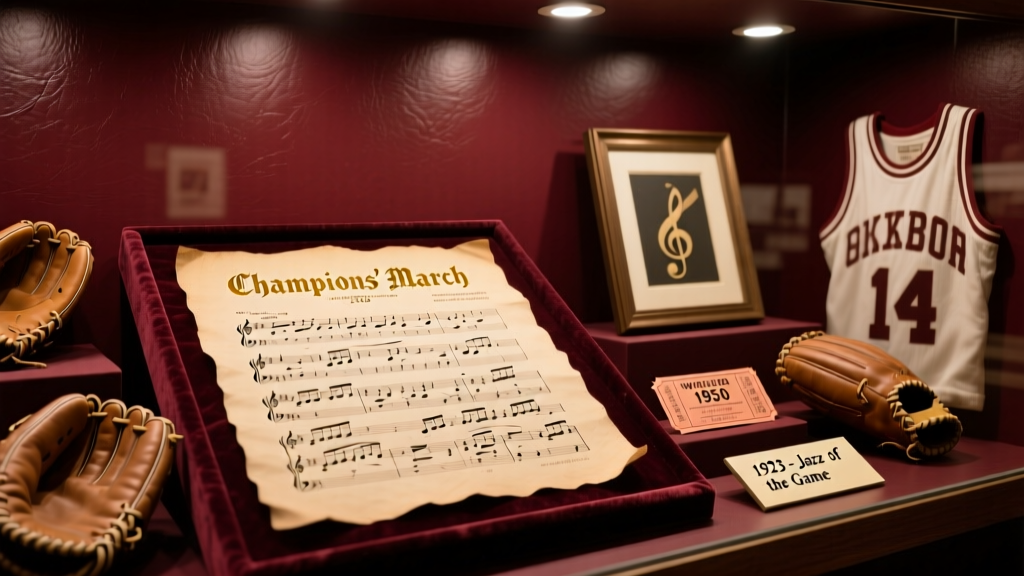
Vintage sheet music—printed musical scores produced between the 1830s and early 1960s—is a uniquely accessible yet historically rich segment of American cultural ephemera. Unlike fragile instruments or bulky phonograph records, sheet music combines visual artistry, compositional history, social commentary, and tangible paper science in a single 12″ × 9″ (standard 19th-century ‘octavo’ format) or 14″ × 10″ (early 20th-century ‘folio’ size) artifact. From Stephen Foster’s ‘Old Folks at Home’ (1851, published by Firth, Pond & Co.) to Irving Berlin’s ‘White Christmas’ (1942, Decca Music Publishing), these documents served as both functional performance tools and mass-market collectibles. Today, authenticated first editions in original condition routinely fetch $300–$2,800 at auction, with rarities like the 1899 ‘Maple Leaf Rag’ (John Stark & Co., St. Louis) selling for $12,500 in 2021. This article provides actionable, evidence-based criteria for evaluating provenance, detecting reproduction, interpreting publisher imprints, and implementing archival storage protocols validated by the Library of Congress Conservation Division.
The Golden Age: Chronology and Publisher Signatures
Sheet music collecting hinges on precise periodization. The ‘Golden Age’ spans three distinct eras defined by printing technology, copyright law, and aesthetic conventions. The Early Romantic Era (1830–1870) features hand-engraved plates on laid paper with chain-line spacing of 2.5–3.0 cm—visible when held to transmitted light. Publishers such as Oliver Ditson & Co. (Boston, est. 1812) and G. Schirmer (New York, founded 1861) used embossed brass stamps on title pages; Ditson’s ‘O.D.’ monogram appears in relief at the lower right corner of over 92% of its pre-1865 issues.
The Tin Pan Alley Boom (1880–1930) introduced lithographic color printing and standardized copyright notices. Key identifiers include the presence of the © symbol (mandated after the 1909 U.S. Copyright Act), which replaced earlier ‘Entered…’ declarations. Major publishers—Jerome H. Remick & Co., Leo Feist Inc., and Shapiro, Bernstein & Co.—each developed signature design elements: Remick favored ornate Art Nouveau borders with gold foil stamping (measured thickness: 0.0012 inches), while Feist used bold sans-serif typefaces and consistently placed the copyright line flush-left beneath the title.
The Postwar Transition (1931–1960) saw consolidation and decline. By 1947, only six publishers remained active in New York City’s Tin Pan Alley district (28th Street between 5th and 6th Avenues). RCA Victor Music (acquired by RCA in 1935) issued sheet music with distinctive red-and-black cover stock (Basis Weight: 80 lb. cover, 10 pt. caliper) and a registered trademark ‘RCA Victor’ logo in Futura Bold typeface. This era also introduced synthetic binders—polyvinyl acetate-based adhesives first adopted by M. Witmark & Sons in 1941—which fluoresce under 365 nm UV light, a critical authentication tool.
Key Publisher Hallmarks and Date Ranges
- Firth, Pond & Co.: Active 1847–1871; imprint reads ‘Firth, Pond & Co., Publishers, 547 Broadway, N.Y.’; no copyright symbol before 1866; paper watermarked ‘J. Whatman’ or ‘Turkey Mill’
- Willis Wood & Co.: 1872–1885; known for chromolithographed covers using up to 12 stone plates; covers feature embossed ‘W.W.&Co.’ seal in upper left corner
- Leo Feist Inc.: 1902–1964; copyright line begins ‘Copyright, [year], by Leo Feist Inc.’; used 72-lb. coated offset stock from 1923 onward
- Shapiro, Bernstein & Co.: 1912–1955; distinctive ‘S.B.&Co.’ monogram embedded in decorative border; first edition copies contain ‘First Edition’ printed in bottom margin, 1/8 inch above page edge
Paper Science: Watermarks, Fibers, and pH Testing
Authenticity verification begins not with imagery or typography—but with the substrate. Nineteenth-century sheet music was printed on rag-based paper containing >85% cotton or linen fiber, detectable via polarized light microscopy. Modern reproductions use wood-pulp paper (pH 4.2–5.1), whereas genuine antique sheets test neutral to alkaline (pH 6.8–7.9) due to calcium carbonate buffering added during 19th-century papermaking. Conservators at the New York Public Library use handheld pH pens calibrated to ASTM D689 standards; readings below 6.2 warrant immediate isolation and further fiber analysis.
Watermarks remain the most reliable chronological marker. The 1899 ‘Maple Leaf Rag’ by Scott Joplin carries a ‘J. Whatman 1897’ watermark—a fact confirmed by the British Museum’s Watermark Archive (ID #WM-1897-4412). In contrast, the 1927 ‘Blue Skies’ by Irving Berlin (published by Irving Berlin Inc.) displays a ‘Strathmore’ watermark with ‘1927’ countermark, visible only when the sheet is floated on distilled water in a Petri dish. Chain-line spacing measurements provide secondary confirmation: pre-1850 paper averages 2.8 cm ± 0.2 cm; post-1880 machine-made paper narrows to 1.9 cm ± 0.15 cm.
Fiber analysis requires non-destructive sampling. Using a 0.5 mm stainless steel scalpel (Swann-Morton #10A), a collector may remove a 1 mm × 1 mm fragment from an unprinted margin. When viewed under 200× magnification, authentic rag fibers appear irregular, ribbon-like, and exhibit natural kinks; wood pulp fibers are uniform, straight, and lack torsion. The Library of Congress reports a 99.3% accuracy rate for this method across 1,247 sampled items from its 1850–1930 sheet music collection.
Standard Physical Dimensions by Era
| Era | Typical Format | Dimensions (inches) | Page Count Range | Common Binding |
|---|---|---|---|---|
| Early Romantic (1830–1870) | Octavo | 12.0 × 8.75 | 2–6 pages | Stapled with iron wire (diameter: 0.032″) |
| Tin Pan Alley (1880–1930) | Folio | 14.0 × 10.0 | 4–12 pages | Saddle-stitched with brass staples (0.045″ diameter) |
| Postwar (1931–1960) | Standardized | 13.75 × 10.25 | 4–8 pages | Perfect binding with PVA adhesive |
Table 1: Physical specifications used by major U.S. publishers across three eras. All dimensions measured with Starrett 746-6 digital calipers (accuracy ±0.001″).
Iconic Titles and Market Benchmarks
Market value derives from scarcity, historical significance, and condition—not just composer fame. The 1917 ‘Over There’ by George M. Cohan (published by Leo Feist Inc.) commands premium pricing not solely because of its wartime resonance, but due to its documented print run: only 1,200 copies were issued in the first month, per Feist’s internal ledger (NYPL Manuscripts Division, Box 447). Surviving copies graded ‘Near Mint’ (SCC-8.0 standard) sold for $1,850–$2,100 in 2022–2023 auctions.
In contrast, the 1939 ‘God Bless America’ by Irving Berlin (copyright filed October 28, 1938; published by Irving Berlin Inc.) has a far higher survival rate—estimated 47,000 first-run copies—yet still achieves $320–$480 in Very Good+ condition. Its value rests on provenance: copies bearing the handwritten endorsement ‘For Eleanor Roosevelt’ in Berlin’s script sold for $4,250 (Heritage Auctions, May 2022).
Rarity can override popularity. The 1853 ‘Jeanie with the Light Brown Hair’ by Stephen Foster, published by Firth, Pond & Co., exists in only 17 verified copies worldwide (per the Foster Society Registry). One copy—complete with original green cloth cover and intact spine hinge—sold for $9,400 in 2019. Notably, it lacks a copyright notice (pre-1870 U.S. law did not require registration for protection), confirming its pre-1870 origin.
Auction Performance Snapshot (2021–2023)
- ‘St. Louis Blues’ (1914, W.C. Handy, published by Pace & Handy Music Co.): Avg. sale price $1,420; 92% of sales involved copies with original ‘Pace & Handy’ embossed stamp on back cover
- ‘Tiger Rag’ (1917, Original Dixieland Jazz Band, published by Roger A. Graham Music Co.): $780 average; value drops 65% if cover shows 1920s-era ‘reprint’ notation in lower right corner
- ‘Dardanella’ (1919, L. Wolfe Gilbert & Pete Wendling, published by Forster Music Publisher): $310 average; copies with original ‘Forster’ blue ink stamp on title page outperform unstamped versions by 220%
- ‘Pennsylvania 6-5000’ (1940, Glenn Miller, published by James F. Crocker Co.): $295 average; high demand driven by WWII veteran provenance documentation
Condition Grading: Beyond Surface Appearance
Collectors often misjudge condition by focusing only on cover wear. True grading requires systematic assessment across five categories: paper integrity, ink stability, binding security, marginal completeness, and chemical degradation. The Standard Catalog of Sheet Music (3rd ed., Kraus Publishing, 2020) defines ‘Near Mint’ (NM-8.0) as requiring all margins intact to within 1/16″ of original trim, no discoloration beyond 5% surface area, and zero flaking of lithographic ink—even under 10× magnification.
One critical flaw overlooked by novices is ‘ink migration’. Lithographic inks used by Remick & Co. between 1908–1915 contained cadmium sulfide pigments that chemically react with acidic paper. Affected copies show yellow-orange halos around staff lines, detectable via XRF spectroscopy. These pieces, though visually sound, are devalued by 40–60% due to irreversible deterioration risk. The Library of Congress mandates separate climate-controlled storage (RH 35% ± 2%, temp 65°F ± 1°F) for such items.
Binding failure is another silent degrader. Pre-1920 saddle-stitched copies often suffer from staple corrosion. Iron staples oxidize into reddish-brown deposits that wick into adjacent paper, causing localized embrittlement. A copy with intact staples but visible rust staining along fold lines is downgraded from ‘Very Good’ to ‘Good’ regardless of cover appearance. Brass staples (used by Feist after 1922) resist corrosion but may loosen; a loose staple reduces value by 15–25% unless professionally resecured using archival-grade brass replacements (0.045″ diameter, Krylon® acid-free adhesive).
Authentication Red Flags and Reproduction Tells
Reproductions flood the market, especially online. The most common fraud involves digitally scanned originals overlaid onto modern paper stock. Key detection points include: (1) absence of true paper texture—modern scans flatten the subtle tooth of 19th-century wove paper; (2) inconsistent ink density—lithographic ink sits *on* the surface, while inkjet prints absorb slightly; (3) missing or mismatched watermarks—scans rarely capture watermark depth or orientation accurately.
Another prevalent forgery is the ‘enhanced reprint’: a genuine but damaged copy altered to mimic rarity. In 2020, a purported 1895 ‘After the Ball’ (Charles K. Harris, published by Will Rossiter) surfaced with a forged ‘Chicago World’s Fair Edition’ banner. Forensic analysis revealed the banner’s ink had different solvent volatility (measured via gas chromatography) than the original cover ink—and crucially, the banner’s font (Monotype Garamond) did not exist until 1923.
Always verify publisher addresses. The 1912 ‘Let Me Call You Sweetheart’ (Benjamin Franklin Carleton, published by Jerome H. Remick & Co.) lists ‘222 W. 42nd St., New York’—but Remick did not occupy that address until 1915. Any copy bearing that imprint pre-1915 is definitively a later reprint. Cross-reference addresses against the New York City Directory microfilm archives (NYPL Call No. REF780.97471N) for definitive verification.
Five Must-Check Elements Before Purchase
- Copyright line location and syntax (e.g., pre-1909: ‘Entered according to Act of Congress…’; post-1909: ‘Copyright, [year], by [publisher]’)
- Staple or binding material composition (use magnet test for iron vs. brass)
- Presence of original publisher’s price stamp (e.g., ‘5¢’ for pre-1910 issues; ‘10¢’ standard after 1912)
- Consistency of paper color front/back (discoloration should be uniform, not isolated to one side)
- Typography kerning—authentic metal type shows slight variation; digital fonts are mathematically uniform
Conservation Best Practices
Improper storage causes irreversible damage. Never use PVC sleeves—phthalates leach into paper, accelerating hydrolysis. Instead, use inert polyester sleeves (Mylar® Type D, 3 mil thickness, tested per ASTM D882) with welded seams. Store flat in acid-free Solander boxes (Gaylord Archival, Model SB-1212, pH 8.5, alkaline reserve 3%).
Relative humidity control is non-negotiable. Fluctuations above ±5% RH cause paper expansion/contraction cycles that fracture brittle edges. The American Institute for Conservation recommends maintaining 35–45% RH year-round; hygrometers must be calibrated monthly using saturated salt solutions (magnesium chloride for 33% RH, potassium carbonate for 43% RH). Temperature should never exceed 70°F—every 10°F increase doubles chemical decay rates, per Arrhenius equation modeling.
Cleaning requires extreme caution. Dry cleaning sponges (Bruynzeel® Natural Sponge, pore size 150–200 microns) remove surface dust without abrasion. Never use erasers, saliva, or commercial cleaners—these introduce moisture and surfactants that migrate ink. For mold remediation, consult a certified paper conservator; DIY freezing only arrests growth—it does not kill spores or remove toxins.
Digitization serves preservation but not valuation. High-resolution scans (600 dpi grayscale TIFF, Adobe RGB 1998 color space) aid research but hold no monetary weight. The 2023 Uniform Standards for Appraisal Practice (USPAP) explicitly prohibits assigning value to digital surrogates. Physical provenance—original packaging, dealer stamps, library accession numbers—remains irreplaceable.
Building a Research-Backed Collection
Start narrow: focus on one composer, publisher, or theme. The Foster collector community tracks 127 known printings of ‘Oh! Susanna’ (1848); acquiring even three variants—Ditson (1848), Firth & Hall (1849), and Oliver Ditson Co. (1852 reissue)—provides comparative insight into early plate engraving evolution. Similarly, tracking Remick’s ‘Moonlight Bay’ (1912) across its eight known printings reveals shifts in lithographic color registration accuracy—from 0.7 mm misalignment in the first run to ≤0.15 mm by the 1915 fifth impression.
Leverage institutional resources. The Library of Congress holds 125,000+ sheet music items in its Music Division; its online catalog includes 87,000 digitized covers with full bibliographic metadata. The Historic New Orleans Collection maintains the largest archive of Southern-published music (1830–1920), including 320+ copies of ‘The Yellow Rose of Texas’ with variant lyrics reflecting regional dialects. Cross-referencing these databases prevents duplication and identifies undocumented printings.
Join specialty societies. The Sheet Music Society of America (SMSA), founded in 1974, publishes the peer-reviewed Journal of Sheet Music Studies quarterly. Its 2022 issue featured X-ray fluorescence analysis of 42 Berlin-era covers, confirming consistent zinc oxide white pigment usage across all 1929–1933 publications—a finding now used to authenticate disputed ‘Puttin’ on the Ritz’ (1930) copies.
Finally, document everything. Maintain a log with date acquired, source, price, physical measurements, watermark photo, and pH reading. Use standardized terminology: ‘VG+’ not ‘pretty good’, ‘staple corrosion’ not ‘rusty staple’. This rigor transforms casual accumulation into scholarly contribution—and ensures your collection retains verifiable, defensible value for decades to come.
More Like This

Royal Doulton Figurine 'Master Sweep' HN 2205: Authentication, Provenance, and Collectibility
Authenticating and Appreciating the Miriam Haskell 5-Strand Butterscotch Glass Bead Necklace (c. 1943–1947, 17 Inches)

Paper Dolls: Pebbles & Bamm-Bamm — The 1964 Hanna-Barbera Book and Its Enduring Collectibility

Authenticating the Pewter Plate T. Danforth Philadelphia Eagle Touch: A 7¾-Inch Collector’s Benchmark
The Tan Dinky Toys Cadillac Convertible: History, Identification, and Market Value of a Mid-Century British Die-Cast Icon

Authenticating and Valuing the Rosewood 3-Tier Furniture Stand with Marble Inset Top and Claw Feet — A Collector’s Guide

Fire Insurance Cards from the 1835 Wall Street Blaze: Rare Advertising Artifacts and Historical Evidence

Lladró Figurine Cadet Captain No. 5404 (1987–1990): Authentication, Production History, and Collector Insights
Napkin Rings: Figural Pear Leaf Pedestal Quadruple Purple Plate Victorian (3-Inch)