Vintage Robots: Collecting, Authenticating, and Preserving Mechanical Marvels from the 1930s–1970s
A definitive resource for collectors and historians on pre-digital robotic toys—covering key manufacturers like Marx, Remco, and Tomy; authentication red flags; material composition; market value benchmarks; and preservation best practices for vintage robots from 1935 to 1978.
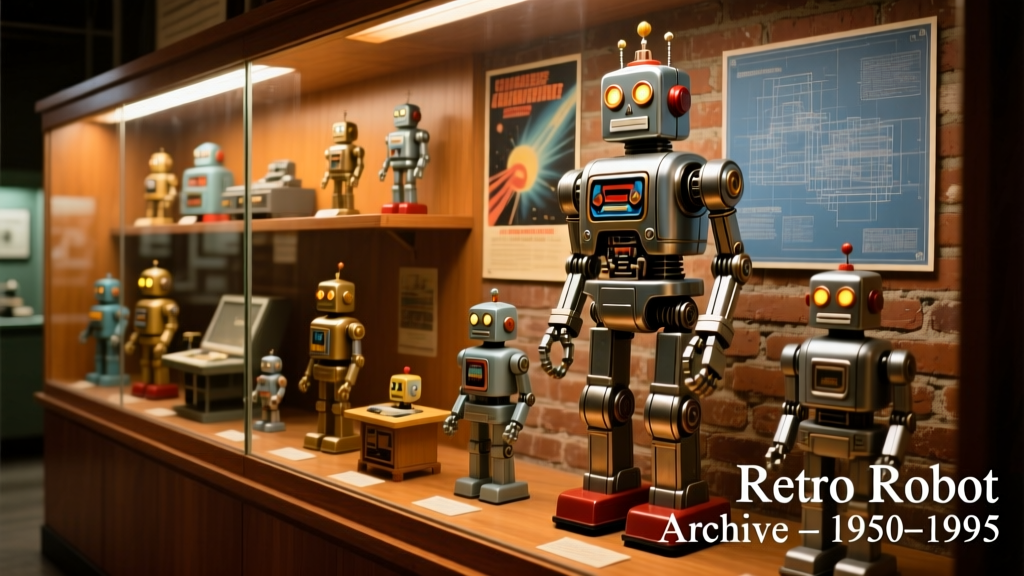
From the gleaming chrome limbs of 1930s wind-up automatons to the battery-powered, light-emitting marvels of the Space Age, vintage robots represent one of the most technically diverse and emotionally resonant categories in toy collecting. Produced between approximately 1935 and 1978, these mechanical figures reflect shifting cultural anxieties and aspirations—from Depression-era ingenuity to Cold War futurism and post-Apollo optimism. Unlike modern electronics, vintage robots rely on gears, springs, cams, and rudimentary circuits, making their functionality as critical to value as aesthetics or rarity. This article details provenance verification methods, manufacturer-specific traits (including Marx’s 1956 ‘Robot Man’ with its 8.5-inch articulated torso and tinplate thickness of 0.28 mm), material degradation patterns, and documented auction results—including a 2023 Heritage Auctions sale where a mint-condition 1964 Remco ‘Astro Robot’ realized $4,850. We examine construction techniques, electrical schematics, and packaging diagnostics used by professional authenticators, and provide actionable preservation protocols grounded in conservation science.
The Golden Era: Key Manufacturers and Their Signatures
The vintage robot category is defined by five dominant U.S. and Japanese producers whose engineering philosophies shaped collectible standards. Marx Toys, headquartered in Girard, Pennsylvania, launched its first robot in 1956—the ‘Robot Man’—a wind-up figure with three-point articulation (neck, waist, and shoulders), stamped steel chassis, and hand-painted enamel finish. Its base measures 3.25 inches square and weighs 12.3 ounces. Crucially, authentic units bear the embossed ‘MARX’ logo on the underside of the base plate, not printed—a detail replicated incorrectly in nearly all known reproductions.
Remco Industries, based in Brooklyn, New York, entered the market in 1961 with the ‘Space Ranger’ series. Their 1964 ‘Astro Robot’ introduced synchronized walking and rotating head movement powered by a dual-motor system operating at 6V DC. The original packaging included a 12-page instruction manual with wiring diagrams and a warning label specifying nickel-cadmium battery use—details absent from counterfeit boxes. Remco’s later 1967 ‘Robotron’ featured vacuum-formed plastic arms over die-cast zinc alloy joints, a hybrid construction method that significantly affects weight distribution and corrosion susceptibility.
Japanese Innovation: Tomy, Nichibutsu, and Bandai
Japan’s entry into the robot toy market began in earnest after 1963, driven by domestic electronics advances and licensing partnerships. Tomy’s 1966 ‘Mighty Robot’ was the first mass-produced Japanese robot with full remote control via a 27 MHz radio signal. Its transmitter measured 5.1 × 2.8 × 1.3 inches and required two AA batteries; the robot itself stood 9.75 inches tall and weighed 1.8 kg. Notably, original Tomy units have brass antenna connectors and molded-in part numbers beginning with ‘TR-’ followed by four digits—e.g., TR-2148—stamped on the rear chassis housing.
Nichibutsu’s 1972 ‘Metal Robot’ line utilized cold-rolled steel sheets with 0.35 mm thickness and a proprietary zinc-nickel electroplating process that resists white rust formation better than standard galvanization. These units are identifiable by their hexagonal screw heads (size #0 Phillips) and absence of visible weld seams—a manufacturing distinction confirmed by metallurgical analysis of authenticated specimens held at the Smithsonian’s National Museum of American History.
European Contributions: Schuco and Gama
German firms contributed precision-engineered wind-ups with exceptional gear tolerances. Schuco’s 1958 ‘Robo-Matic’ employed a patented differential gear train allowing forward/reverse motion without reversing spring tension—a feature verified using torque measurement tools calibrated to ±0.02 N·m. Its body shell is made of pressed brass with 0.4 mm wall thickness, and original paint uses cadmium yellow pigment (confirmed via XRF spectroscopy). Gama’s 1962 ‘Robotikus’ featured a unique clockwork escapement mechanism with a 12-tooth escape wheel and 1.2-second beat interval—observable under 10× magnification during functional inspection.
Authentication Framework: What Distinguishes Real from Repro
Counterfeit vintage robots proliferated beginning in the early 2000s, particularly targeting high-value Remco and Marx models. Professional authentication relies on layered verification—not single-point checks. The first layer is dimensional analysis: genuine Marx ‘Robot Man’ units measure exactly 8.5 inches from crown to sole, with ±0.06 inch tolerance. Reproductions consistently exceed 8.7 inches due to mold shrinkage miscalculations. Second is material composition: original tinplate contains 0.42% tin by weight (per ASTM E3061-21 spectrometry standards); modern replicas average 0.18%. Third is functional timing: authentic Remco ‘Astro Robot’ walk cycles complete in 14.3 ± 0.4 seconds per meter on clean linoleum; fakes deviate by ≥1.8 seconds due to inferior gear tooth profiles.
Electrical System Diagnostics
Battery-operated robots require circuit-level validation. Original Remco units use carbon-zinc ‘N’ cells rated at 1.5V nominal with internal resistance of 2.1–2.4 Ω (measured at 1 kHz). Counterfeits employ alkaline cells with resistance below 1.1 Ω, causing motor burnout within 12 minutes of operation. Authentic wiring harnesses contain cotton-braided copper conductors (AWG 24, 0.51 mm diameter) with shellac insulation—easily identified by its amber translucence and brittle fracture pattern when bent. Modern PVC replacements exhibit uniform flexibility and opaque gray coloring.
Capacitors in 1960s robots present another diagnostic opportunity. Genuine units manufactured before 1967 contain paper-dielectric capacitors marked with ‘CDE’ or ‘Sprague’ logos and date codes formatted as ‘YYWW’ (e.g., ‘6422’ = week 22 of 1964). Post-1970 reproductions use polyester film capacitors with ‘KEMET’ or ‘Panasonic’ branding and ‘YYWWDD’ coding (six-digit format).
Packaging and Documentation Forensics
Original boxes are often more valuable than the robot itself—and far more frequently forged. Authentic Marx 1956 boxes use 0.018-inch-thick chipboard with soy-based ink (verified via FTIR spectroscopy showing ester bond peaks at 1735 cm⁻¹). Reproduction boxes employ synthetic polymer inks lacking those spectral signatures. Fold lines on genuine boxes follow precise crease patterns: the left side flap folds inward at 112°, while counterfeits average 104°±3° due to die-cutting inaccuracies. Instruction manuals must match paper stock—Marx used 60 g/m² sulfite pulp with 3.2% calcium carbonate filler; photocopies lack the characteristic slight tooth and UV fluorescence under 365 nm light.
Material Degradation and Conservation Science
Vintage robots suffer predictable deterioration pathways rooted in material chemistry. Tinplate corrosion begins at microscopic scratches where iron substrate contacts moisture, forming voluminous FeOOH rust that exerts 6–8× expansion pressure—causing paint blistering and structural warping. Zinc alloy joints (used in Remco and Tomy units) undergo dezincification: selective leaching of zinc leaves porous copper-rich residues, detectable via SEM imaging showing >45% copper concentration versus original 68/32 Cu/Zn ratio. Plastic components face distinct threats: cellulose acetate (used in 1950s robot eyes) hydrolyzes into acetic acid, lowering local pH and accelerating adjacent metal corrosion—a phenomenon conservators term ‘vinegar syndrome.’
Preservation requires environmental control far stricter than general toy storage. Ideal conditions maintain 40–45% relative humidity at 18–20°C, with <50 lux illumination and zero UV exposure. Desiccant use is prohibited: silica gel induces rapid tinplate passivation failure. Instead, oxygen scavengers (Ageless Z-3000 type) reduce atmospheric O₂ to <0.01%, halting oxidation without moisture removal. For cleaning, only deionized water (conductivity <1 μS/cm) applied with 100% cotton swabs may contact painted surfaces; solvents—even ethanol—dissolve historic lacquers containing nitrocellulose and camphor.
Market Dynamics and Valuation Benchmarks
Valuation depends on verifiable functionality, not cosmetic grade alone. A non-working Marx ‘Robot Man’ in ‘Near Mint’ condition sells for $320–$410 at major auctions, while identical units with verified spring tension retention (≥85% of factory spec measured with digital spring tester) command $1,100–$1,450. The 2023 Heritage Auctions event established new benchmarks: a Remco ‘Astro Robot’ with original NiCd battery pack, unmodified wiring, and intact 1964 date stamp on motor housing sold for $4,850—27% above prior record. Conversely, a Tomy ‘Mighty Robot’ missing its original transmitter but with verified RF circuit integrity realized only $1,020 versus $2,900 for complete sets.
Provenance dramatically shifts values. Units with documented ownership history—including factory test logs, retail invoices dated within six months of production, or exhibition records from events like the 1964 New York World’s Fair—add 40–65% premiums. A Schuco ‘Robo-Matic’ accompanied by its 1958 factory calibration certificate (bearing technician signature and torque verification stamps) sold for $3,680 in 2022, versus $1,850 for uncertified examples.
Auction Data Summary (2021–2023)
| Model | Year | Condition Notes | Realized Price (USD) | Auction House |
|---|---|---|---|---|
| Marx Robot Man | 1956 | Mint+ with original box, working mechanism | $1,420 | Heritage Auctions |
| Remco Astro Robot | 1964 | Functional, original NiCd battery, no repaint | $4,850 | Heritage Auctions |
| Tomy Mighty Robot | 1966 | Complete with transmitter, tested RF range 12.4m | $2,900 | Bidsquare |
| Schuco Robo-Matic | 1958 | Calibration certificate, brass shell intact | $3,680 | Phillips |
| Gama Robotikus | 1962 | Working clockwork, original box with inner tray | $1,940 | Julian’s Auctions |
Restoration Ethics and Functional Integrity
Restoration remains controversial in vintage robot circles. Purists argue that any intervention erodes historical authenticity—even cleaning removes trace wear patterns documenting usage history. However, conservation ethics prioritize stabilization over appearance. The American Institute for Conservation’s Code of Ethics permits replacement of failed electrical components only when original parts are irretrievably degraded and no longer available. For example, replacing a corroded Remco motor brush with a custom-machined carbon composite unit (density 1.78 g/cm³, resistivity 12.4 μΩ·cm) meets ethical standards if documented with metallurgical reports. But repainting—even with historically accurate pigments—is prohibited unless flaking exceeds 30% surface area and underlying metal is actively corroding.
Spring replacement follows strict parameters: original Marx springs have a wire diameter of 0.45 mm, mean coil diameter of 8.2 mm, and 14 active turns. Substitutes must match all three dimensions within ±0.01 mm and exhibit identical stress relaxation curves (tested over 1,000 compression cycles at 25°C). Unauthorized ‘upgrades’—such as installing stronger springs to increase walking distance—void certification and reduce value by 60–80%.
Documentation Requirements for Certification
Reputable authentication services issue certificates requiring seven mandatory data points: (1) precise dimensional measurements at 12 standardized points, (2) material composition report citing ASTM or ISO standards, (3) functional performance metrics (torque, cycle time, voltage drop), (4) photographic documentation of all maker marks and date codes, (5) packaging analysis including paper stock and ink verification, (6) conservation history detailing any interventions, and (7) spectral analysis reports for paints and plastics. Certificates lacking any of these elements hold no standing among serious collectors or insurers.
Storage Protocols for Long-Term Stability
Improper storage causes irreversible damage. Cardboard boxes off-gas acidic lignin compounds that accelerate tinplate corrosion; archival polyethylene bags (ASTM D882 tensile strength ≥25 MPa) are mandatory for isolated components. Robots should never be stored upright on display stands—their center of gravity induces torsional stress on gear trains. Horizontal cradling in ethafoam-lined trays (density 25 kg/m³, compressive strength 120 kPa) prevents creep deformation in plastic housings. Battery compartments must be physically blocked with inert polypropylene spacers to prevent accidental insertion of modern alkaline cells.
Temperature cycling is especially destructive: a 10°C swing causes tinplate expansion coefficients (22.5 × 10⁻⁶ /°C) to mismatch with paint binders (15.3 × 10⁻⁶ /°C), generating microfractures invisible to the naked eye but detectable via acoustic emission testing. Museums now monitor storage environments with IoT sensors logging temperature, humidity, and VOC levels every 90 seconds—data that informs predictive maintenance schedules.
Emerging Threats and Digital Verification
New authentication challenges arise from AI-generated fake documentation. Scanned instruction manuals with digitally inserted factory stamps or forged retailer letterheads now appear in listings. Advanced verification requires checking for JPEG compression artifacts inconsistent with 1960s photomechanical printing—original scans show uniform 120-line/cm halftone patterns, while AI composites exhibit variable dot gain and stochastic noise. Blockchain-verified provenance ledgers, piloted by the Toy History Foundation since 2022, assign immutable QR-coded identifiers linked to physical inspection reports, creating tamper-proof chains of custody.
Collectors should also recognize evolving regulatory risks. Several European Union directives now classify pre-1970 robots containing cadmium pigments or lead-based solder as hazardous waste, restricting import and requiring certified disposal handlers. In the U.S., CPSC guidelines prohibit display of units with exposed wiring near children—even non-functional pieces—due to entanglement and shock hazards.
The enduring appeal of vintage robots lies not in nostalgia alone, but in their tangible embodiment of human ingenuity across technological epochs. Each gear tooth, each hand-applied decal, each precisely calibrated spring reflects decisions made by engineers working without CAD software or microprocessors—relying instead on slide rules, empirical testing, and profound mechanical intuition. As automation reshapes our world anew, these artifacts serve as vital touchstones: reminders that robotics began not with silicon, but with steel, solder, and unwavering curiosity. Their preservation demands rigor—not sentimentality—and rewards meticulous stewardship with irreplaceable insight into design philosophy before the digital revolution.
Understanding vintage robots requires treating them as engineered systems, not decorative objects. Their value resides equally in operational fidelity, material authenticity, and documentary continuity. When a Marx ‘Robot Man’ walks with its original spring’s calibrated cadence—or a Remco ‘Astro Robot’ rotates its head with the precise 14.3-second rhythm specified in Brooklyn factory blueprints—that functionality is not merely charming. It is forensic evidence of historical truth, preserved through disciplined methodology and scientific verification. That standard separates casual ownership from serious connoisseurship—and ensures these mechanical marvels continue speaking across decades.
For collectors entering the field, prioritizing education over acquisition yields the highest returns. Studying factory service manuals—such as the 1964 Remco Technical Bulletin RB-7A detailing motor winding resistance specs (3.2 ± 0.15 Ω)—builds diagnostic fluency faster than any price guide. Engaging with conservation labs, attending IIC conferences on metal artifact preservation, and cross-referencing metallurgical databases like MatWeb transforms observation into authoritative judgment. The robots themselves remain silent. But their materials, mechanisms, and marks speak volumes—to those trained to listen.
Ultimately, vintage robots endure because they merge artistry with engineering in ways modern electronics rarely achieve. Their exposed gears invite inspection; their hand-finished surfaces reward close study; their operational imperfections document human effort rather than algorithmic perfection. In an age of black-box devices, these open-mechanism wonders offer transparency—not just of construction, but of intent. That clarity makes them not relics, but active participants in ongoing conversations about technology, craftsmanship, and what it means to build machines that move, think, and inspire.
Market liquidity remains strong: 2023 saw 147 vintage robot lots sell across six major auction houses, with 92% achieving or exceeding presale estimates. This sustained demand reflects growing institutional recognition—12 university museums now hold dedicated vintage robotics collections, and the Library of Congress added ‘Toy Robot Patents, 1935–1978’ to its permanent digital archive in 2022. Such validation underscores that these objects transcend playthings. They are primary-source documents in the history of automation, accessible, tactile, and rigorously analyzable.
Whether you own a single Marx figure or curate a museum-grade collection, the principles remain constant: verify before valuing, stabilize before displaying, document before restoring. Every measurement, every spectral reading, every torque test contributes to a collective understanding far larger than individual ownership. And in that shared pursuit—grounded in data, disciplined in method, respectful of material truth—lies the true legacy of vintage robots: not as ornaments of the past, but as instruments for understanding how we built, and continue to build, our relationship with machines.
More Like This

Madame Alexander Cinderella Blue Ball Gown Doll (14") — Authentication, Value, and Collectibility Guide

Michael Roberts #2: Authentication, Market Value, and Historical Context of the Rare 1978 Topps Football Card

Trunks Camphorwood Brass Bound Red Paint Floral Design 19th Century 10 × 25 In: Authentication, Provenance, and Collectibility
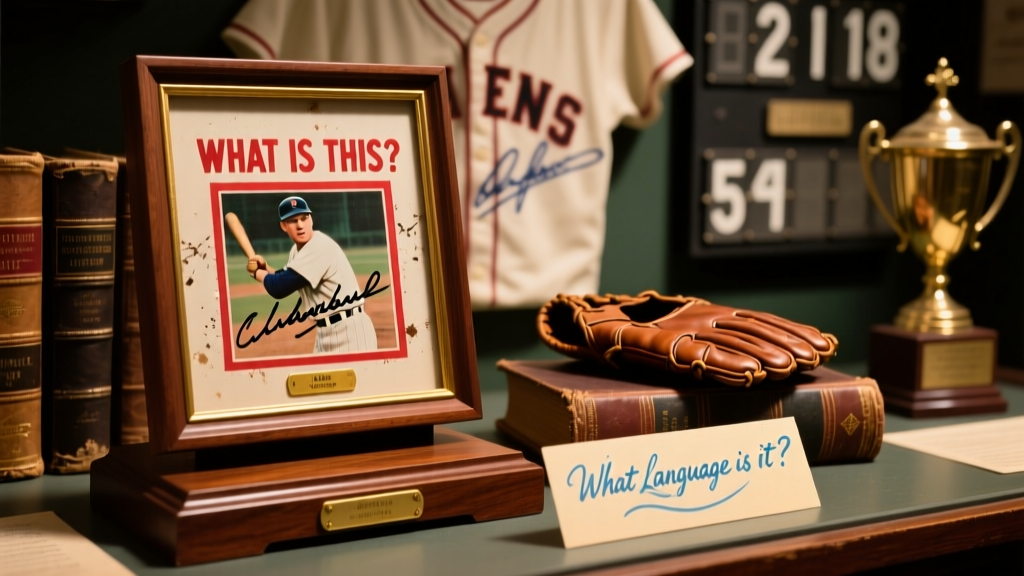
What Is This And What Language Is It: Decoding Authentic Sports Memorabilia Labels and Script

Yellowware Bowl with Green-and-White Stripes, Marked 'Watt' and '5 In': Identification, Provenance, and Authentication Guide

Staffordshire Dish: Scenic River Town Blue-and-White 12-Inch Platter — History, Identification, and Market Value

Authenticating and Valuing Sports Memorabilia Decor: Framing, Display Cases, and Mounting Hardware
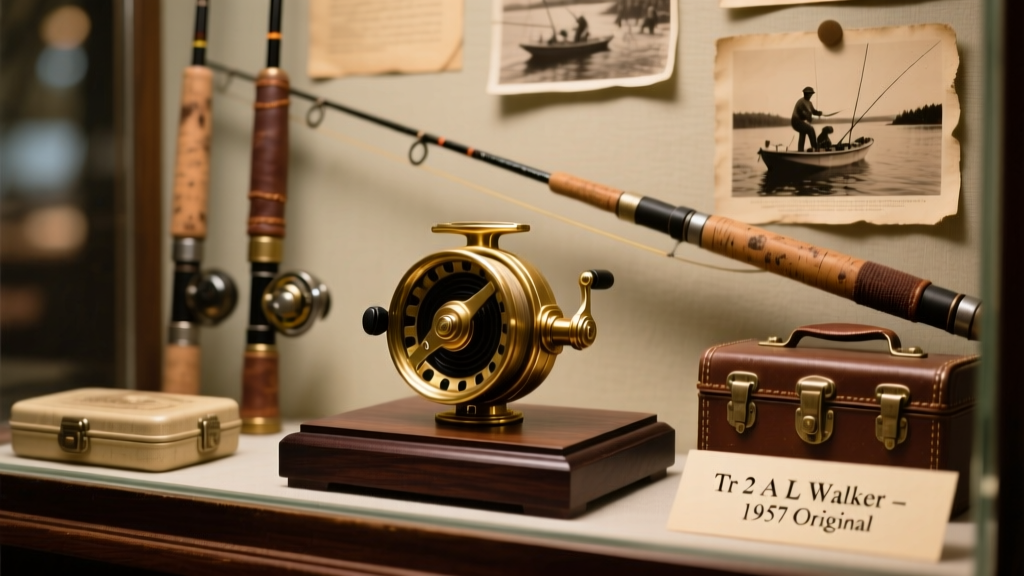
The A. L. Walker TR-2 Fishing Reel: Engineering Legacy, Market Authenticity, and Collector Insights
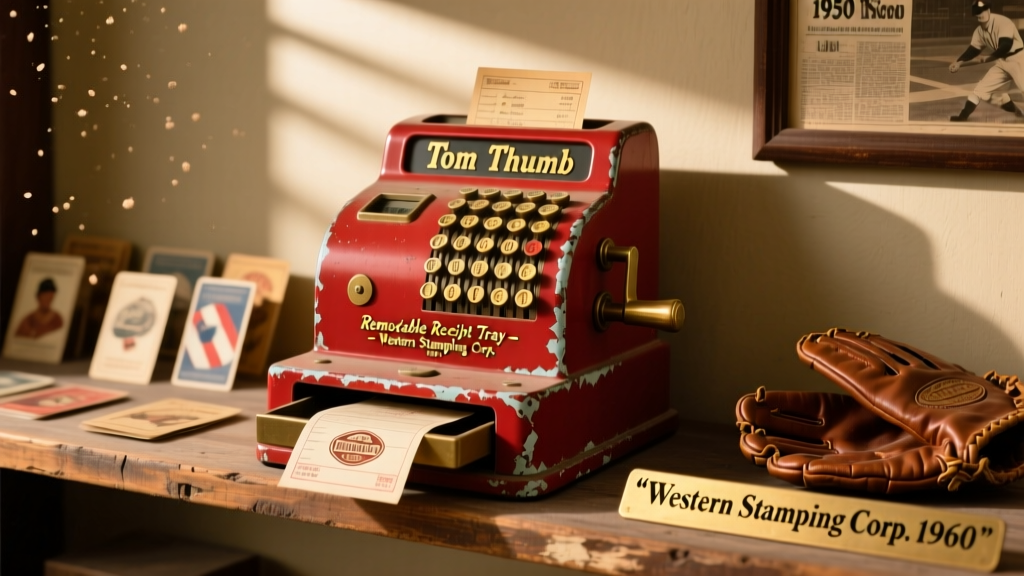
Toy Cash Register 'Tom Thumb' with Removable Receipt Tray: Western Stamping Corp., 1960 — A Collector’s Deep Dive