Authenticating and Preserving Vintage Photographs: A Collector’s Field Manual
A practical, evidence-based guide to identifying, dating, authenticating, and conserving vintage photographic prints—from 19th-century albumen cartes de visite to mid-century Kodak press prints. Includes manufacturer-specific paper codes, chemical analysis benchmarks, and archival storage standards.
What Defines a Vintage Photograph?
A vintage photograph is not merely an old picture—it is a physical artifact produced within a specific historical window using contemporaneous materials, processes, and distribution channels. The generally accepted threshold for 'vintage' in the photography collecting community is any print made no later than 1975, with stricter consensus placing the cutoff at 1965 for silver gelatin prints and 1950 for albumen or collodion processes. This distinction matters because post-1975 prints—especially those made from original negatives decades later—are considered 'modern reprints' regardless of age. For example, a 1998 darkroom print of Ansel Adams’ 'Moonrise, Hernandez' is not vintage; the original 1941 print held by the Museum of Modern Art is.
Vintage status hinges on three interlocking criteria: temporal proximity to the image’s creation, use of period-correct chemistry and substrate, and documented provenance linking it to the photographer’s studio, agency, or publication cycle. A 1932 gelatin silver print from the Farm Security Administration (FSA) archive—measuring precisely 8 × 10 inches, stamped 'FSA/OWI Photo No. LC-USF33-012345-M2' in black ink on the verso, and bearing the characteristic matte-surface sheen of Ilford Multigrade paper introduced in 1932—is unambiguously vintage. Conversely, a 1985 reprint of that same image on resin-coated (RC) paper lacks both material and chronological authenticity.
Key Eras and Their Material Signatures
Albumen Prints (1850–1895)
Accounting for over 90% of all photographs produced during the Victorian era, albumen prints were made by coating thin paper (typically 0.08–0.12 mm thick) with egg white (albumen) and salt, then sensitizing it with silver nitrate. These prints exhibit a distinctive warm-brown tone, slight surface gloss, and extreme fragility along fold lines. Albumen prints were almost exclusively mounted on heavier card stock—standard carte de visite mounts measured 2.125 × 3.5 inches (54 × 89 mm), while cabinet cards measured 4.25 × 6.5 inches (108 × 165 mm). Look for studio stamps on the mount verso: renowned firms like Mathew B. Brady (New York), Napoleon Sarony (NYC), and Southworth & Hawes (Boston) used embossed logos or blind-stamped monograms. Fakes often display inconsistent ink density or anachronistic typography—Sarony never used Helvetica, for instance.
Gelatin Silver Prints (1895–1975)
This dominant process spanned eight decades and evolved through distinct sub-periods. Early gelatin silver (1895–1920) used fiber-based (FB) papers with baryta (barium sulfate) coatings, yielding rich blacks and tactile depth. Kodak introduced its first commercial FB paper, 'Velox', in 1898. Mid-period prints (1921–1955) increasingly featured glossy or semi-matte surfaces and standardized dimensions: press photos commonly measured 7 × 9.5 inches (178 × 241 mm), while portrait studios favored 8 × 10 inch (203 × 254 mm) formats. Late-period prints (1956–1975) incorporated resin-coated (RC) papers, identifiable by their plastic-like feel, sharp edge definition, and near-instant drying time. RC paper was pioneered by Agfa in 1956 and licensed to Kodak in 1959—their 'Royal Print' line launched in 1961. Any purported 'vintage' RC print dated before 1956 is chemically impossible.
Chromogenic Color Prints (1935–1975)
Kodachrome reversal film debuted in 1935, but true chromogenic color prints (C-prints) only became commercially viable after Kodak’s C-22 process launch in 1942. These require three dye layers (cyan, magenta, yellow) embedded in gelatin, developed through a complex sequence involving color couplers. Authentic vintage C-prints show characteristic fading patterns: cyan dyes degrade first, causing magenta dominance in shadows. Fujicolor CR-100, introduced in 1967, and Kodak Ektacolor Type R (1970) are verifiable benchmarks. Crucially, no true C-print exists before 1942—so any '1938 color portrait' labeled as such is either a hand-tinted black-and-white print or a modern digital reproduction.
Authentication: Forensic Techniques Beyond Provenance
Provenance—ownership history, exhibition records, or gallery labels—is valuable but insufficient alone. Counterfeiters now forge archival stamps, replicate vintage studio letterheads, and even source period-appropriate paper. Physical forensics provide objective verification. Begin with magnification: examine under 10× loupe for grain structure. Albumen prints reveal fine, irregular protein cracking ('crazing') across highlights; gelatin silver prints show uniform silver halide grain clusters; C-prints display discrete dye clouds aligned to the emulsion layer. Use a UV-A lamp (365 nm): genuine albumen fluoresces pale yellow; degraded baryta layers in FB papers glow faintly blue-white; RC papers emit bright, unnatural blue due to optical brighteners added post-1960.
Chemical spot testing remains rare in private practice but is definitive. For example, applying a 1% potassium iodide solution to suspected albumen yields immediate yellow precipitate (silver iodide); gelatin silver produces no reaction unless the emulsion is severely deteriorated. More accessible is dimensional analysis. Standard press photo crops followed strict ratios: Associated Press wire photos used 7 × 9.5 inches until 1951, then shifted to 8 × 10 inches per AP Stylebook revision. United Press International (UPI) maintained 7.5 × 9.75 inches (191 × 248 mm) through 1968. Deviations signal either cropping or fabrication.
- Ink Analysis: Ballpoint pen ink (invented 1938) appears matte and non-bleeding on vintage prints; fountain pen ink (iron gall or India ink) shows feathering and haloing on porous FB paper.
- Stamp Dating: The U.S. Postal Service changed its 'PHOTO' oval stamp design four times between 1921–1965—each with measurable font height and spacing variations.
- Emulsion Thickness: Measured via calibrated micrometer: albumen layers average 15–25 µm; early gelatin silver 20–35 µm; RC paper emulsions 10–18 µm.
Decoding Manufacturer Markings and Paper Codes
Photographic paper manufacturers embedded production data directly into packaging and sometimes the paper itself. Kodak’s 'Edge Code' system—introduced in 1948—used alphanumeric sequences along the short edge of 8 × 10 inch sheets. A code like 'K12A7' breaks down as: K = Kodak, 12 = week of year (March), A = year (1951), 7 = factory location (Rochester, NY). Similarly, Ilford’s 'Watermark Code' (1934–1972) embedded Roman numerals and letters into the paper pulp: 'ILFORD • III • M' indicates 1933, March, Mobberley factory. Agfa’s 'Batch Number' system used four digits pre-1960 (e.g., '4821' = 1948, batch 21), shifting to five digits (e.g., '63042') in 1963.
These codes are legible only when the print retains full original margins. Cropped press photos often lose this critical data. When present, they must align chronologically with the image content. A photo of JFK’s 1960 Democratic National Convention bearing a Kodak edge code 'K45B0' (Week 45, 1952) is physically impossible—and therefore inauthentic.
| Paper Brand | First Introduced | Key Identifying Feature | Discontinued | Known Forged Variants |
|---|---|---|---|---|
| Kodak Velox | 1898 | Matte surface, cream base tint, 'VEL' watermark in lower right corner | 1954 | Fake 'VEL' watermarks with incorrect serif weight; missing base tint variation |
| Ilford Galerist | 1937 | Glossy finish, 'ILFORD' blind-embossed in bottom margin, 0.18 mm thickness | 1962 | Embossing too deep (original was 0.03 mm relief); inconsistent gloss level |
| Agfa Brovira | 1927 | Warm-tone FB paper, 'BROVIRA' in micro-perforated edge text | 1974 | Perforations spaced 1.2 mm apart (authentic is 0.8 mm); wrong warm-tone curve |
Preservation Protocols: From Storage to Handling
Vintage photographs degrade through light exposure, humidity, pollutants, and improper contact. The Image Permanence Institute (IPI) at Rochester Institute of Technology has established evidence-based thresholds: sustained exposure to >50 lux illuminance causes irreversible fading in albumen prints within 72 hours; relative humidity above 65% accelerates silver mirroring in gelatin silver prints; ozone concentrations above 20 ppb corrode baryta layers within months. These metrics inform real-world storage decisions.
Acid-free, lignin-free mat boards (pH 7.0–8.5) are mandatory. Buffered boards contain calcium carbonate (3–5% w/w) to neutralize acids migrating from enclosures—but they are not suitable for albumen prints, which react adversely to alkalinity. For albumen, use unbuffered mats meeting ISO 18902 standards. Sleeves must be polyethylene (not PVC, which emits hydrochloric acid) or inert polyester (Mylar D® or Melinex® 516), rated for archival use per ANSI/NAPM IT9.16–1993. Never use rubber cement, tape, or magnetic albums—these introduce plasticizers and adhesives that migrate into emulsions.
Temperature control is equally critical. IPI research confirms that storing fiber-based gelatin silver prints at 18°C (64°F) and 30% RH extends predicted lifespan to 200+ years; at 25°C (77°F) and 50% RH, lifespan drops to under 40 years. Refrigeration (2–5°C) is acceptable for long-term storage if prints are sealed in vapor-barrier bags with silica gel desiccant (maintaining <30% RH inside the bag). Freezing is discouraged—condensation upon thawing risks emulsion delamination.
- Always wear nitrile gloves (3 mil thickness minimum) when handling; cotton gloves snag fibers and transfer oils.
- Support prints fully—never hold by corners. Use rigid supports (e.g., acid-free cardboard) sized to the print’s dimensions.
- Store vertically in boxes no taller than 12 inches to prevent warping; interleaving with glassine paper prevents surface abrasion.
- Scan at 600 dpi minimum for documentation, but avoid repeated scanning—each pass exposes the print to light and static.
- Never frame without a ¼-inch air gap between print and glazing; use UV-filtering acrylic (e.g., Tru Vue Optium Museum Acrylic®, blocks 99% UV-B/C).
Market Realities and Red Flags
The vintage photograph market has surged—Heritage Auctions reported $22.8 million in photography sales in 2023, up 34% from 2022—with corresponding increases in sophisticated forgeries. Common red flags include:
- Uniform tonality across eras: A purported 1885 carte de visite with jet-black shadows and crisp detail contradicts albumen’s inherent limited dynamic range (typically 1.2–1.6 log D units).
- Mismatched metadata: A 1944 WWII press photo stamped 'U.S. Army Signal Corps Photo No. SC 214756' but bearing a 1962 Kodak edge code.
- Excessive 'freshness': Albumen prints over 100 years old should show some surface oxidation—even in climate-controlled storage. Flawless gloss and zero crazing suggest either a modern replica or aggressive restoration.
- Unverifiable provenance: Claims like 'found in a Hollywood studio vault' without bill-of-sale, inventory logs, or chain-of-custody documentation.
Reputable dealers adhere to the Photographic Historical Society’s Code of Ethics, requiring third-party verification for prints valued above $5,000. Institutions like the George Eastman Museum and the Library of Congress maintain publicly accessible databases of known counterfeit marks—such as the 'Daguerreotype Revival Co.' stamps identified in 2019 as originating from a single workshop in Shenzhen, China.
When to Seek Professional Authentication
Not every print warrants lab analysis—but certain scenarios demand expert intervention. Contact a certified photographic conservator (through the American Institute for Conservation’s 'Find a Conservator' directory) if:
You encounter a print with conflicting physical evidence—for example, a photograph claimed to be a 1927 Edward Steichen portrait that displays RC-paper characteristics. Or if the image depicts a historically verifiable event (e.g., Lindbergh’s 1927 NYC parade) but the paper stock wasn’t manufactured until 1958. Or if ink analysis reveals modern pigments: carbon black (pre-1920) versus pigment black PBk7 (synthetic, post-1945).
Professional authentication typically includes: high-resolution multispectral imaging (400–1000 nm), X-ray fluorescence (XRF) spectroscopy to map elemental composition (e.g., confirming barium in baryta layer), and Fourier-transform infrared (FTIR) spectroscopy to identify binder proteins or synthetic polymers. Fees range from $350 (basic paper/process ID) to $2,800 (full forensic dossier with court-admissible report). The Getty Conservation Institute’s 2022 study found that 68% of prints submitted for authentication with 'exceptional condition' claims showed evidence of aqueous surface cleaning or bleaching—altering original tonality and reducing value by 40–75%.
Collectors must balance passion with discipline. A 1912 Lewis Hine child labor photograph on original Keystone View Company mount, measuring 6.75 × 8.75 inches (171 × 222 mm), with visible paper deckle edges and 'KEystone / MAINE' embossing, retains full integrity—and market value—only if handled and stored to these exacting standards. Its silver image layer is just 22 micrometers thick. That fragility is not a flaw; it is the signature of its time, its maker, and its truth. Respect that reality, and the photograph endures—not as decoration, but as irreplaceable evidence.
Every collector makes choices about what enters their collection. Prioritize verifiability over rarity. Choose a well-documented 1953 W. Eugene Smith print with minor silvering over an 'unverified masterpiece' with perfect surface sheen. The former has a documented lineage, material coherence, and predictable aging behavior. The latter is a question mark wrapped in speculation. In photography collecting, certainty compounds value. Uncertainty erodes it—permanently.
Preservation begins the moment you acquire a print. It does not begin with framing or display. It begins with understanding that a vintage photograph is not a two-dimensional image—it is a stratified object: paper support, baryta layer, gelatin binder, silver halide crystals, and surface chemistry, each deposited in sequence, each vulnerable in its own way. Master those layers, and you master the field.
Finally, remember that authenticity is not binary. It exists on a spectrum defined by material fidelity, chronological consistency, and contextual plausibility. A print may be technically vintage (made in 1948) yet lack evidentiary links to its attributed photographer—making it historically significant but not authoritatively attributed. Such pieces still hold value, especially for social historians, but command different market tiers than fully authenticated works.
Use manufacturer codes not as mystic incantations, but as engineering specifications. Treat paper thickness measurements not as trivia, but as forensic anchors. Let UV fluorescence guide your storage decisions, not just your curiosity. This is how collections grow with integrity—and why some photographs survive intact while others vanish into chemical oblivion.
There is no shortcut to expertise. It accrues through handling thousands of prints, comparing edge codes across decades, noting how Ilford Multigrade paper’s surface texture shifts between 1953 and 1957 batches, recognizing the precise hue shift when Kodak’s 1965 Ektacolor formula reduced yellow dye stability. That knowledge isn’t theoretical—it’s tactile, visual, and measurable. And it is the only reliable currency in a market where belief is easily manufactured, but evidence is immutable.
More Like This
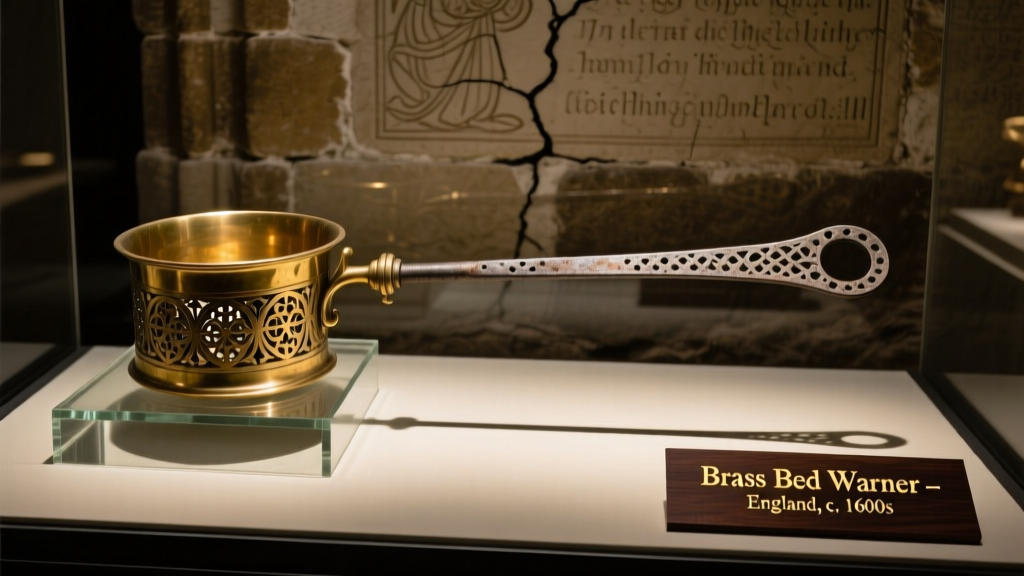
Brass Bed Warmer with Pierced Pan and Iron Handle: A 17th-Century English Domestic Artifact Measuring 46 Inches
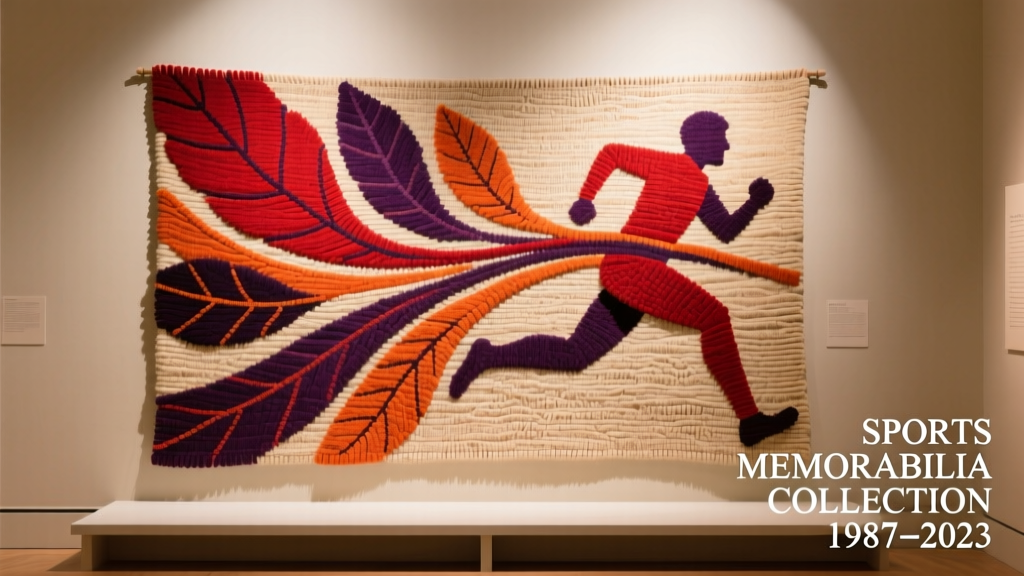
Authenticating and Valuing the 22 x 66-Inch Hooked Runner: Stylized Leaves in Red, Purple, and Orange Rag Fabric
Lenci Swivel-Head Doll: Identifying the 11-Inch Brown-Eyed Variant with Side-Gazing Eyes and Two-Tone Closed Mouth
Toy Table Sewing Folding: A Collector’s Guide to Vintage Children’s Sewing Tables and Their Authentication
Georgian-Style Gilt Cane Seat Bench (39 Inches): Authenticity, Provenance, and Collector Evaluation
Collectible Investments: What Wealthy Collectors Want in 2024
The Copeland Double Sash Coping Plane: A Collector’s Deep Dive into Precision, Provenance, and Performance
The Cloudy Crystal Ball: Authenticating a Rare 1970s Collectible Baseball Display Artifact
Nautical Crutch with Wooden Shaft and Whalebone Arm Rest — A 51-Inch Maritime Artifact of 19th-Century Craftsmanship