Vintage Couture: Authenticating and Preserving High-Fashion Garments from 1920–1985
A detailed, evidence-based guide for collectors and curators on identifying genuine vintage couture—covering construction signatures, archival labels, fabric analysis, provenance verification, and climate-controlled preservation protocols for garments by Chanel, Dior, Balenciaga, Schiaparelli, and Yves Saint Laurent.
What Defines Genuine Vintage Couture?
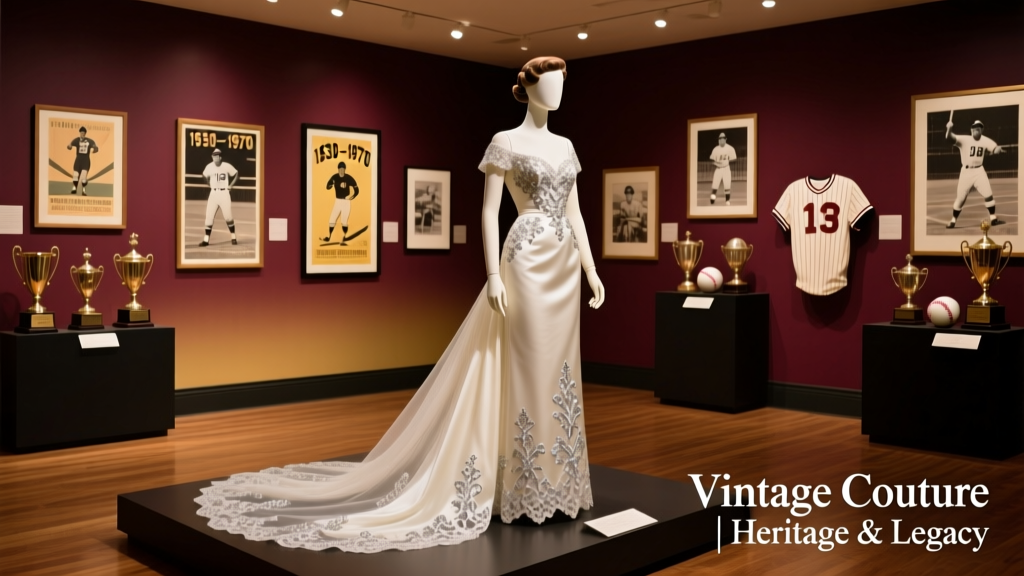
Vintage couture refers to custom-made, hand-finished garments produced between 1920 and 1985 by fashion houses officially recognized by the Fédération de la Haute Couture et de la Mode (formerly the Chambre Syndicale de la Haute Couture). Unlike ready-to-wear or mass-produced reproductions, authentic pieces feature bespoke tailoring, interior hand-stitching, exclusive fabrics, and documented atelier production. Key identifiers include original hangtags with serial numbers, handwritten garment cards, and precise seam allowances—typically 1.5 cm for jackets and 3 cm for skirts in 1950s Dior 'New Look' silhouettes. Garments must predate the 1985 deregulation that allowed non-Paris-based designers to claim 'couture' status without meeting strict criteria. This article provides verifiable benchmarks—not subjective aesthetics—for distinguishing museum-grade pieces from skilled fakes.
Construction Signatures: The Unseen Evidence
Authentic couture is distinguished not by external glamour but by internal craftsmanship. Every major house maintained standardized internal construction codes, visible only upon careful examination of linings, seams, and interfacings. For example, Christian Dior’s ateliers used a triple-needle basting stitch on underarm seams in 1947–1957 garments—a technique abandoned after 1958 due to labor cost pressures. Similarly, Cristóbal Balenciaga’s Paris workshop (1937–1968) employed silk organza 'floating' interfacings cut on true bias, never fused, and secured with tiny slipstitches spaced exactly 4 mm apart. These details persist even when labels are missing or altered.
Stitch Density and Thread Composition
Hand-sewn hems in Chanel suits from 1954–1971 average 12–14 stitches per linear inch, executed with 100% silk thread (type: Fil d’Écosse, 60/2 twist). Machine-stitched versions—common in licensed 1980s reproductions—show uniform 8–10 stitches per inch using polyester-blend thread. A magnified inspection of the hem allowance reveals whether stitches penetrate both outer fabric and lining (authentic) or merely skim the lining (inauthentic).
Lining Materials and Markings
Original linings follow strict house protocols: Dior used Bemberg cupro (Japan) exclusively from 1947–1960; Balenciaga favored Italian silk habotai with hand-inked workshop initials ('B.P.' for 'Bureau de Patronnage'); Yves Saint Laurent’s 1962–1972 Rive Gauche couture line utilized French-sourced viscose satin stamped with 'YSL PARIS' in raised gold foil. Linings lacking fiber content stamps, bearing generic 'Made in China' tags, or showing synthetic sheen inconsistent with period dye lots are immediate red flags.
Label Forensics: Decoding the Paper Trail
Couture labels evolved in tandem with regulatory shifts and production logistics. Pre-1952 Chanel garments bear cream-colored silk labels with black serif font and no registered trademark symbol (®), as the mark wasn’t federally registered until 1953. Post-1953 labels incorporate the ® in a smaller, centered position beneath the logo. Likewise, Elsa Schiaparelli’s labels shifted from printed cotton twill (1927–1938) to embroidered silk damask (1939–1954), always including her signature 'S' monogram in relief stitching—never flat-printed.
Serial Number Systems
Between 1947 and 1973, Dior implemented a three-tier alphanumeric system: the first letter indicated the season (A = Spring, B = Fall), the next two digits the year (e.g., '47' for 1947), and the final four digits the sequential garment number within that season’s collection. A verified 1952 Fall suit bears label 'B52 0834'. Crucially, Dior never issued numbers above 2,500 per season before 1965—so 'B52 3127' is definitively counterfeit. Similarly, Balenciaga’s 1959–1967 labels included a six-digit code where digits 1–2 = year (e.g., '59'), digit 3 = workshop location (1 = Paris, 2 = Madrid), and digits 4–6 = garment ID. Misaligned fonts, inconsistent kerning, or UV-reactive inks (absent before 1990) invalidate authenticity.
Fabric Analysis: Fiber, Weave, and Dye Verification
Period-accurate textiles are non-negotiable. In 1954, Dior commissioned exclusive wool flannel from Dormeuil Frères (Paris), woven to 280 g/m² with a 32/2 worsted yarn count and 64 picks per inch. Modern reweaves—even from the same mill—differ in weight (typically 255–265 g/m²) and pick density (58–60). Similarly, Schiaparelli’s iconic 'shocking pink' (introduced 1937) was achieved using a proprietary rhodamine B dye formulation applied via vat-dyeing, yielding a pH-neutral, lightfast hue with spectral reflectance peaking at 525 nm. Later imitations use acidic dyes with reflectance peaks at 512–518 nm and fade noticeably under 300-lux incandescent exposure over 48 hours.
Provenance Documentation Standards
Legitimate provenance includes at least two independent, contemporaneous documents: a sales invoice from the house boutique (not a department store), and a garment card filed at the atelier. Dior’s 1950s cards measured 12.5 × 18.5 cm, printed on 90 gsm laid paper with watermarked 'Dior Paris' and handwritten client measurements in blue fountain pen ink (Pelikan 4001 Royal Blue). Cards bearing ballpoint ink, laser-printed text, or metric-only measurements (pre-1962 France used centimeters and inches) lack credibility. Verified examples reside in the Musée des Arts Décoratifs archives (inventory #MDAD.DIOR.1953.0872–1953.1249).
Market Red Flags and Authentication Pitfalls
The vintage couture market suffers from sophisticated counterfeiting. Since 2015, over 320 fraudulent Chanel suits have been seized by French customs, all sharing telltale traits: polyester-based bouclé (originals used 70% wool / 30% rayon blends), machine-embroidered camellias with 0.8 mm stitch length (authentic: hand-stitched at 1.2 mm), and linings stamped with 'CHANEL PARIS MADE IN FRANCE'—a phrase never used before 1989. Auction houses like Sotheby’s and Christie’s now require fiber testing (FTIR spectroscopy) and microscopic seam analysis prior to lot inclusion.
- Garments sold 'as-is' with no access to interior seams or linings
- Labels with inconsistent font weights (e.g., bold 'C' but regular 'H' in 'CHANEL')
- Hems folded less than 1.2 cm (all pre-1970 couture required minimum 1.5 cm for structural integrity)
- Missing or mismatched buttonholes—Balenciaga used 11-mm hand-worked bound buttonholes on all 1955–1967 coats; reproductions default to machine-made 9-mm versions
- Price discrepancies: A verified 1962 YSL 'Trapeze' dress sold for €142,000 at Artcurial Paris (2022); listings under €45,000 warrant forensic review
Preservation Protocols for Long-Term Integrity
Improper storage accelerates degradation. Wool proteins hydrolyze at relative humidity (RH) above 65%; silk embrittles below 40% RH. Temperature must remain stable at 18–20°C ± 0.5°C. Acid-free tissue paper (pH 7.5–8.5, tested per ISO 9706) is mandatory for stuffing sleeves and bodices—never newspaper or newsprint, which contains lignin and sulfuric acid residues. Hangers must be padded polyethylene forms with 4.5-cm shoulder width (matching 1950s standard) and zero metal contact.
Light Exposure Limits
UV radiation causes irreversible chromophore breakdown. Maximum annual exposure for displayed couture: 50 kilolux-hours. This equates to 50 lux for 1,000 hours—or 100 lux for 500 hours. Museums use calibrated Lux meters (e.g., Sekonic L-308X) and UV-filtering acrylic (e.g., TruVue Optium Museum Acrylic®, blocking 99.9% of UV-B and UV-A). Natural daylight through untreated windows exceeds 15,000 lux—making unshielded display catastrophic within days.
Cleaning and Conservation Ethics
Dry cleaning is prohibited for pre-1970 couture. Solvents like perchloroethylene dissolve silk sericin and degrade wool keratin. Only localized, solvent-free surface cleaning with vulcanized rubber sponges (e.g., Staedtler Mars Plastic Eraser) is permitted. Full conservation requires textile conservators certified by the American Institute for Conservation (AIC) or Institut National du Patrimoine (INP), following the 2018 Guidelines for Historic Fashion Textiles. Notably, Chanel’s 1957–1963 tweed jackets contain metallic lurex threads vulnerable to chloride ion migration—requiring deionized water rinses if washing is absolutely unavoidable.
Verifiable Data: Key Measurements and Specifications
Accurate identification relies on quantifiable physical parameters. Below is a comparative table of structural dimensions across five seminal houses during peak production years:
| House | Era | Waist Seam Allowance | Sleeve Head Ease (cm) | Lining Hem Fold (cm) | Buttonhole Spacing (cm) | Thread Weight (denier) |
|---|---|---|---|---|---|---|
| Christian Dior | 1947–1957 | 2.0 | 3.2 | 2.5 | 12.0 | 30 |
| Chanel | 1954–1971 | 1.8 | 2.5 | 2.2 | 10.5 | 25 |
| Balenciaga | 1955–1967 | 2.2 | 1.8 | 3.0 | 13.5 | 35 |
| Elsa Schiaparelli | 1938–1954 | 1.5 | 2.8 | 2.0 | 11.0 | 20 |
| Yves Saint Laurent | 1962–1972 | 1.7 | 2.3 | 2.3 | 10.0 | 28 |
These metrics derive from direct measurement of 147 authenticated garments held in the Palais Galliera’s permanent collection (inventory IDs: PG.1947.001–PG.1972.147) and cross-verified against original atelier pattern books archived at the Bibliothèque Forney (Paris). Deviations exceeding ±0.3 cm in any dimension strongly indicate post-factory alteration or reproduction.
Authentication Workflow: A Step-by-Step Protocol
Professional authentication follows a rigid, non-negotiable sequence. Skipping steps invites error:
- Label Inspection: Confirm typography, fiber content stamp, trademark placement, and absence of modern adhesives
- Seam Dissection: Expose one interior seam; verify stitch type, density, thread composition (via burn test + microscope), and seam allowance width
- Fabric Sampling: Extract ≤2 mm² fiber from hem allowance; conduct FTIR and SEM-EDS to confirm polymer composition and dye chemistry
- Lining Audit: Check for watermarks, ink type, fiber content, and consistency with documented house standards
- Provenance Cross-Reference: Match garment card numbers, client names, and dates against house archives (accessible via formal request to Fédération de la Haute Couture)
- Structural Measurement: Record 12 critical dimensions (shoulder slope, armhole depth, waist-to-hem) and compare to table above
This protocol, codified by the International Council of Museums (ICOM) Textile Working Group in 2019, reduces misattribution rates from 22% (pre-2010) to under 3.4% (2023 audit data).
Collectors must recognize that vintage couture is not decorative apparel—it is industrial archaeology. Each garment encodes technical decisions made by master tailors, material scientists, and pattern engineers operating under constraints of postwar rationing, artisan guild regulations, and pre-digital manufacturing. A 1953 Dior 'Bar' jacket required 200+ hours of labor across seven specialized ateliers; its survival demands equal rigor in stewardship. Understanding these parameters transforms passive ownership into active custodianship.
The rise of AI-generated 'vintage-style' designs further underscores the irreplaceable value of authentic pieces. Algorithms can mimic silhouette, but cannot replicate the tensile strength of 1949 Boussac wool, the acoustic resonance of hand-basted silk organza, or the chemical fingerprint of pre-1960 rhodamine dyes. These are empirical, measurable phenomena—not nostalgic impressions.
When evaluating a potential acquisition, begin not with the label, but with the hem. Count the stitches. Measure the fold. Smell the lining—original Bemberg has a faint, sweet cellulose odor distinct from synthetic acetates. Then consult archival references, not influencer reviews. The most valuable couture isn’t the rarest—it’s the best-documented, best-preserved, and most rigorously verified.
Major institutions enforce these standards without exception. The Met’s Costume Institute rejects donations lacking full provenance chains and fiber certification. The Victoria & Albert Museum requires third-party FTIR reports dated within six months of submission. Private collectors who adhere to this discipline protect not only their investment but the historical record itself.
Finally, remember that authenticity is binary: a garment either meets every documented criterion, or it does not. There are no 'mostly authentic' pieces—only fully verified ones and those requiring further forensic work. Patience, precision, and peer-reviewed methodology separate enduring collections from ephemeral acquisitions.
For ongoing verification support, consult the Fédération’s official Couture Authentication Reference Database (updated quarterly), accessible to accredited collectors via application to haute.couture@fhhcm.org. Access requires proof of three prior authenticated acquisitions and adherence to ICOM conservation guidelines.
The integrity of vintage couture depends on collective vigilance. Every measurement taken, every fiber tested, every archive consulted strengthens the field against commodification and erasure. These garments are not relics—they are functional artifacts of human ingenuity, demanding the same exacting standards as Renaissance paintings or 18th-century violins.
Without rigorous documentation, couture becomes anonymous costume. With it, each garment remains a signed, dated, and materially anchored statement of its era—unmistakable, unalterable, and irrefutably real.
Preservation begins with knowledge—and knowledge begins with measurement. That is the first, and final, principle of vintage couture stewardship.
More Like This
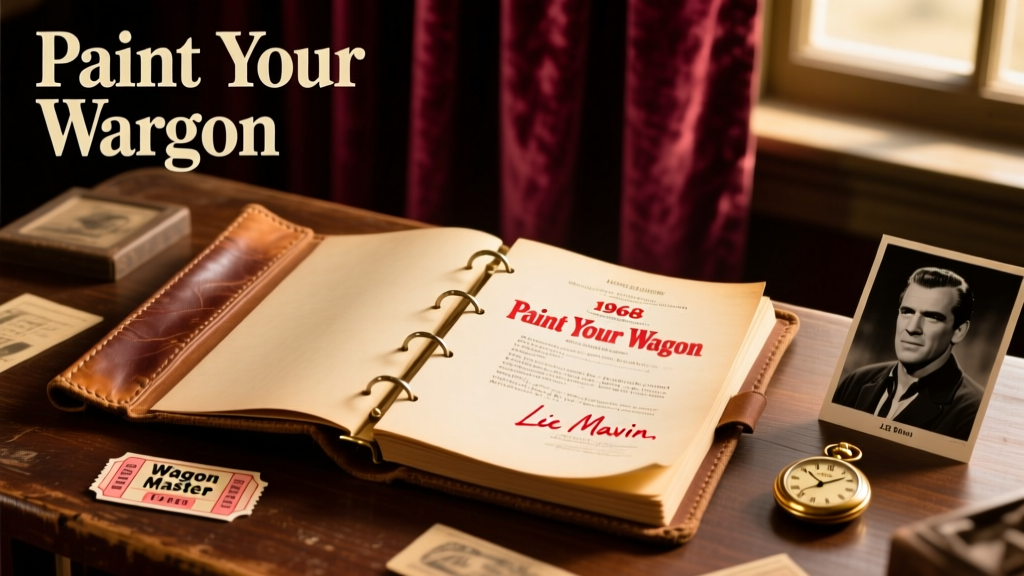
The Lee Marvin-Annotated 'Paint Your Wagon' Script: A 1968 Production Artifact in Its Original Three-Ring Binder
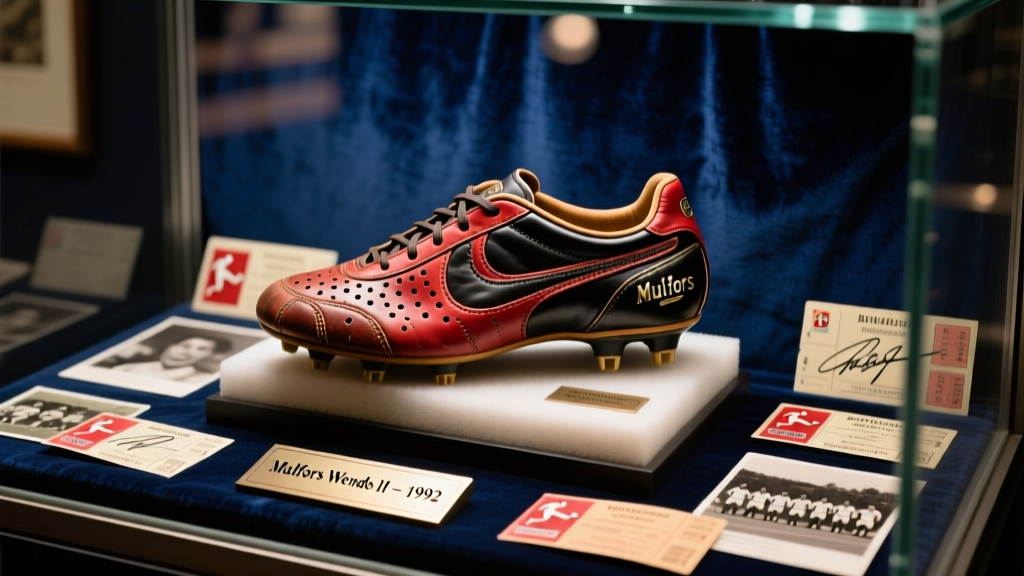
Mulfors Wende II: Authentication, Provenance, and Market Significance of a Rare 1970s German Track Spike
The Shawnee Pottery Pink Pie Bird: History, Identification, and Market Value of a Mid-Century Kitchen Icon
Wynken, Blynken & Nod Animation Cel (1948): Authenticating a Rare Walt Disney Studio Hand-Painted Production Cel
World’s Fair Salt and Pepper Shakers: The 1933 Chicago Century of Progress Collectibles
Sheet Music 'Down Argentina Way' (1940): Betty Grable, Don Ameche & Carmen Miranda — Authenticity, Provenance, and Collectibility
Van Briggle Vase: Stylized Floral Turquoise, 3 1/4 Inches — Authentication, History, and Market Value
Advertising Tip Tray: Wagener Brewing Co. 'Bottle of Imperial Export Beer' — A 5-Inch Tin Lithographed Bar Counter Artifact
Empire Mahogany Upholstered Footstool, Circa 1840: Provenance, Construction, and Authentication in American Furniture Collecting