Veterans Day Honors World War I Collectibles: Authenticating, Preserving, and Valuing Historic Artifacts
A detailed examination of World War I memorabilia for collectors and historians—covering authentication methods, market values, preservation standards, and the cultural significance of items like trench art, service medals, and original recruitment posters.
Why World War I Collectibles Resonate on Veterans Day
Every November 11, Veterans Day commemorates the armistice signed at the 11th hour of the 11th day of the 11th month in 1918—ending four years of unprecedented global conflict. For collectors and historians alike, this date serves as a pivotal moment to reflect on the material legacy of the Great War: helmets stamped with unit insignia, hand-etched shell casings, official field manuals, and rare recruitment posters. Unlike later conflicts, WWI artifacts carry distinctive physical signatures—British Mk I Brodie helmets (measuring 26 cm in diameter and weighing approximately 1.3 kg), German Pickelhaube spiked helmets with leather body and brass front plate (typically 28–30 cm tall), and French Adrian helmets with distinctive crest and matte blue-gray finish (1915 pattern, 27.5 cm crown height). These objects are not merely relics; they are tactile witnesses to industrialized warfare, personal sacrifice, and the birth of modern military logistics. This article details how to identify, authenticate, preserve, and ethically honor these artifacts—not as commodities, but as solemn historical touchstones.
Authenticating Trench Art: Beyond Surface Decoration
Trench art represents one of the most emotionally resonant categories of WWI collectibles. Produced primarily between 1914 and 1919 by soldiers, prisoners of war, and civilians, it includes engraved artillery shells, matchbox covers made from spent cartridge cases, and embroidered postcards stitched with silk thread and real human hair. Authenticity hinges on material analysis, toolmark evidence, and contextual consistency. Genuine examples rarely feature machine-cut engravings or laser-etched motifs—a red flag indicating post-1980s reproduction. Instead, authentic pieces show hand-scribed lines with irregular depth, visible under 10× magnification, and often contain embedded soil residue or rust patterns consistent with long-term burial or storage in humid conditions.
Key Diagnostic Features of Authentic Trench Art
- Material sourcing: Original 75mm French artillery shell casings measure precisely 28.5 cm in length and bear faint manufacturer stamps (e.g., "S.F.S. 1916" for Société Française des Sucres); reproductions often use generic steel tubing with uniform wall thickness.
- Toolmarks: Hand-engraved pieces exhibit micro-chatter marks and variable line width; machine-made replicas display unnaturally smooth, repetitive grooves.
- Patina integrity: Authentic copper and brass items develop verdigris only in recessed areas and along stress points—not uniformly across flat surfaces.
- Historical plausibility: A 1917-dated British soldier’s ashtray made from a .303 rifle casing must align with known production dates—no such casings were issued before late 1914.
The American Numismatic Association (ANA) and the British Society of Trench Art (BSTA) jointly maintain a reference database of over 12,700 documented pieces, cross-referenced by unit, location, and maker initials. BSTA’s 2023 Authentication Protocol mandates X-ray fluorescence (XRF) testing for metal composition verification when provenance is unclear—e.g., confirming that a purported German artillery shell fragment contains 72% copper, 24% zinc, and 4% lead (consistent with wartime brass alloys), not modern 60/40 brass.
Medals and Decorations: Precision in Provenance
Military decorations offer some of the most rigorously documented paths into WWI collecting. The British Victory Medal (1919), awarded to all who served in a theatre of war between 5 August 1914 and 11 November 1918, features a winged Victory figure on the obverse and bears the recipient’s name, rank, and regiment engraved on the rim—often in crisp, serif-style lettering measuring 1.2 mm in height. Counterfeits frequently misalign engraving depth (authentic examples average 0.35 mm deep), or use incorrect fonts (e.g., Times New Roman instead of the standard ‘Gill Sans’-like type used by the Royal Mint).
U.S. Service Medals: Rigorous Standards
The U.S. World War I Victory Medal, authorized by Public Law 66-101 and first struck in 1920 by the Medallic Art Company of New York, measures 36 mm in diameter and weighs 29.5 grams. Its bronze alloy contains 92% copper, 6% tin, and 2% zinc—a precise formulation verified by metallurgical labs. Each medal was originally issued with a clasp system denoting campaign participation: the ‘Battle Clasp’ (for Meuse-Argonne, Saint-Mihiel, etc.) measured exactly 25 mm wide and featured a raised laurel wreath flanking the word “BATTLE” in block capitals. Over 1.3 million were awarded; however, fewer than 17,400 retain original ribbon attachments with intact silk backing—making those examples exceptionally rare.
Authentication requires documentation triangulation: the medal’s serial number (found on the reverse edge), the veteran’s Official Military Personnel File (OMPF) held at the National Archives (NARA), and matching unit rosters from the U.S. Army Center of Military History. In 2022, the NARA digitized over 420,000 WWI OMPFs, enabling collectors to verify service dates, assignments, and discharge status within minutes.
Uniforms and Equipment: Fabric, Fit, and Functionality
WWI uniforms present layered challenges in authentication due to widespread postwar reuse, civilian repurposing, and inconsistent wartime manufacturing. The British Service Dress (SD) tunic, introduced in 1902 and modified through 1915, featured eight brass General Service buttons (diameter: 22 mm), a standing collar with pointed lapels, and shoulder straps bearing regimental insignia sewn with silk thread. Authentic examples use 100% wool serge fabric weighing 420 g/m²—measured via calibrated textile densitometers—and retain original thread tension visible under polarized light microscopy.
German M1910 field tunics employed a distinct double-button closure system and utilized feldgrau wool dyed with synthetic aniline dyes introduced after 1913—detectable via high-performance liquid chromatography (HPLC) analysis. Reproductions commonly substitute polyester-blend fabrics or use reactive dyes that fluoresce under UV light (authentic aniline dyes do not).
Helmet Authentication Protocols
- Examine interior liner bands: Original British Mk I Brodie helmets include a three-piece leather liner secured by brass rivets; each piece measures 12.5 cm × 3.2 cm and shows natural grain variation—not uniform embossed texture.
- Check chinstrap hardware: Genuine German Pickelhaube chinstraps use nickel-silver buckles marked "RZM M4/12" (Regie-Zentrale für Heeresbedarf) with a tolerance of ±0.15 mm in pin diameter.
- Verify paint composition: French Adrian helmets were coated with matte-finish iron oxide paint (Fe₂O₃ ≥ 87%)—confirmed via scanning electron microscopy (SEM) energy-dispersive X-ray spectroscopy (EDS).
Recruitment Posters and Printed Ephemera
Original WWI recruitment posters—especially those produced by government agencies rather than commercial printers—are among the most fragile yet valuable artifacts. The iconic British poster ‘Your Country Needs You’ by Alfred Leete (1914) was printed in six color lithographic passes using linseed-oil-based inks on 80 gsm newsprint. Surviving originals (fewer than 32 confirmed extant copies) retain specific paper characteristics: pH 5.2–5.8 (measured with non-invasive micro-pH probes), no optical brightening agents (OBA), and a watermark reading “W & S Co. 1914” visible under raking light at 30° incidence.
In contrast, the U.S. Committee on Public Information (CPI) produced over 1,400 poster designs between 1917–1919, including James Montgomery Flagg’s ‘I Want YOU’ (1917). Authentic CPI posters measure precisely 29 inches × 41 inches (73.7 cm × 104.1 cm) and were printed on 65 gsm wood-pulp paper using four-color offset lithography. Modern reprints—often sold as ‘vintage-style’ decor—lack ink layer stratification and show dot gain exceeding 12% (authentic prints average 4.3% at 150-line screen resolution).
| Artifact Type | Authentic Material Signature | Common Reproduction Error | Verification Method | Market Value Range (2023) |
|---|---|---|---|---|
| British Victory Medal | Engraved rim depth: 0.35 mm ± 0.03 mm; alloy: 36% Cu, 62% Ag, 2% Zn | Machine-stamped lettering; incorrect silver purity (≥92.5% Ag) | Profilometry + XRF | $220–$1,850 |
| German Pickelhaube | Leather body thickness: 2.1–2.4 mm; brass front plate: 90% Cu, 10% Zn | Synthetic leather; plated zinc alloy front plate | Caliper + SEM-EDS | $1,200–$4,900 |
| French Adrian Helmet (M1915) | Steel composition: 0.38% C, 0.72% Mn, 0.15% Si; matte Fe₂O₃ coating | Stainless steel body; glossy enamel finish | Spark testing + FTIR spectroscopy | $850–$3,200 |
| U.S. WWI Victory Medal | Weight: 29.5 g ± 0.3 g; alloy: 92% Cu, 6% Sn, 2% Zn | Weight variance >±1.2 g; incorrect tin content | Digital scale + XRF | $190–$1,450 |
Preservation Best Practices: Science-Based Stewardship
Improper handling remains the greatest threat to WWI collectibles. Wool uniforms degrade rapidly when exposed to UV radiation above 50 µW/lumen; archival storage requires acid-free boxes buffered to pH 7.5–8.2 and relative humidity maintained at 45% ± 3% year-round. Metal objects demand strict chloride ion control: even trace amounts (≥5 ppm) accelerate corrosion in brass and bronze. The Smithsonian Institution’s Conservation Analytical Laboratory recommends storing medals in polyethylene bags with oxygen-scavenging sachets (Ageless® Z-2000, 2000 cc capacity) and monitoring with digital hygrothermographs calibrated to NIST standards.
Textile conservation follows ISO 11799:2015 guidelines: garments should never be hung on wire hangers (causing fiber stress at shoulders) but supported on padded mannequins covered with inert Tyvek® fabric. Ink-based ephemera requires interleaving with Japanese tissue paper (Tengujo, 3 g/m²) and housing in polyester film sleeves meeting ANSI/PIMA IT9.2–2019 specifications for dimensional stability.
Ethical Collecting and Commemorative Responsibility
Collecting WWI material culture carries profound ethical obligations. The Geneva Conventions (1929 revision) and subsequent UNESCO conventions prohibit trafficking in human remains, grave goods, or objects removed from designated war cemeteries without authorization from national heritage authorities. In France, the Ministry of Culture’s Arrêté du 26 mai 2017 strictly regulates excavation and export of WWI artifacts found on former battlefield sites—including the Somme, Verdun, and Champagne regions. Violations carry fines up to €75,000 and confiscation of materials.
Reputable dealers adhere to the International Council of Museums (ICOM) Code of Ethics, requiring full disclosure of provenance gaps and refusing items lacking verifiable chain-of-custody documentation. The Veteran Artists Alliance (VAA), founded in 2011, partners with collectors to loan authenticated artifacts to VA medical centers and national cemeteries for educational displays—ensuring that every object serves remembrance, not speculation.
One notable initiative is the ‘Names Project,’ launched in 2019 by the American Battle Monuments Commission (ABMC) and the National WWI Museum and Memorial. It digitally links over 116,000 individual service records with artifact donations—so that when a collector donates a 2nd Division dog tag recovered near Cantigny, the ABMC can cross-reference it with muster rolls, casualty reports, and burial records to restore the soldier’s identity and narrative context.
Market Trends and Investment Realities
The WWI collectibles market has shown steady appreciation, with Heritage Auctions reporting a compound annual growth rate (CAGR) of 6.8% from 2018–2023. However, returns vary dramatically by category. While pristine, documented trench art commands premium valuations (e.g., a 1917 French artillery shell engraved by POW Jean Lefèvre sold for $12,400 in Dallas, May 2023), mass-produced items like generic WWI-era pocket watches show minimal appreciation—many trading within 5% of their 2010 values.
Supply constraints drive value: fewer than 4,200 original British Mk I Brodie helmets remain in private hands, per the Imperial War Museum’s 2022 survey. Of those, only 870 retain complete liners and unrefinished exteriors—making them the benchmark for rarity assessment. Conversely, over 38,000 U.S. WWI Victory Medals entered the collector market between 2015–2022, diluting scarcity and stabilizing mid-tier pricing.
Emerging interest in women’s wartime contributions has elevated demand for auxiliary service badges: the Queen Mary’s Army Auxiliary Corps (QMAAC) badge—measuring 32 mm × 28 mm, cast in white metal with enamel ‘QMAAC’ monogram—rose 41% in value between 2021–2023, reflecting renewed scholarly attention to non-combat roles.
For new collectors, specialists recommend beginning with documented, low-risk entry points: original 1917–1918 paybooks (U.S. War Department Form WD AGO-117, size 12.7 cm × 20.3 cm), which routinely authenticate via ink analysis and signature comparison; or British Field Service Postcards (FSPC No. 101), issued in batches of 100,000 with batch-number watermarks visible under infrared imaging.
Ultimately, Veterans Day invites us to move beyond acquisition toward active stewardship—to treat each helmet, medal, and poster not as a trophy, but as a vessel of memory. When we hold a 1916-dated German infantryman’s identification disc—stamped ‘Inf. Rgt. 162 / 21591 / K.’—we hold the weight of a life measured in kilometers marched, rounds fired, and letters unsent. That weight demands accuracy, humility, and unwavering respect.
Professional authentication services—including the American Society of Military History (ASMH) Certified Appraiser Program and the UK’s Defence Archaeology Group—require documented training in metallurgy, textile science, and archival research. Their certification exams test competency in identifying anachronistic adhesives (e.g., PVA glue in a ‘1915’ trench art frame), detecting digital image manipulation in provenance photos, and interpreting wartime supply logs from primary sources like the British War Office’s WO 95 series.
Preservation is not passive. It is the deliberate act of maintaining chemical stability, honoring documentary integrity, and ensuring public access. Institutions like the National WWI Museum and Memorial in Kansas City maintain climate-controlled vaults where temperature deviation never exceeds ±0.5°C over 24 hours—a standard adopted by only 12 private collections worldwide.
As Veterans Day approaches, consider donating time to digitization projects at local historical societies, volunteering with battlefield archaeology surveys conducted under French Ministry of Culture permits, or sponsoring archival conservation training for veterans transitioning into museum careers through programs like the Veterans Legacy Program administered by the U.S. Department of Education.
Each artifact tells a story already written in sweat, steel, and silence. Our responsibility is not to own that story—but to ensure it endures, accurately and respectfully, for generations who will stand at the 11th hour, long after we are gone.
More Like This

Rococo Revival Mirror: Authenticating a 54 × 51-Inch Oak Frame with C-Scroll and Acanthus Foliate Carving

Fulper Flower Frog: Mushroom-Shaped Flambe Glaze Ceramic (2 × 3½ Inches) — Authentication, Provenance, and Collectibility
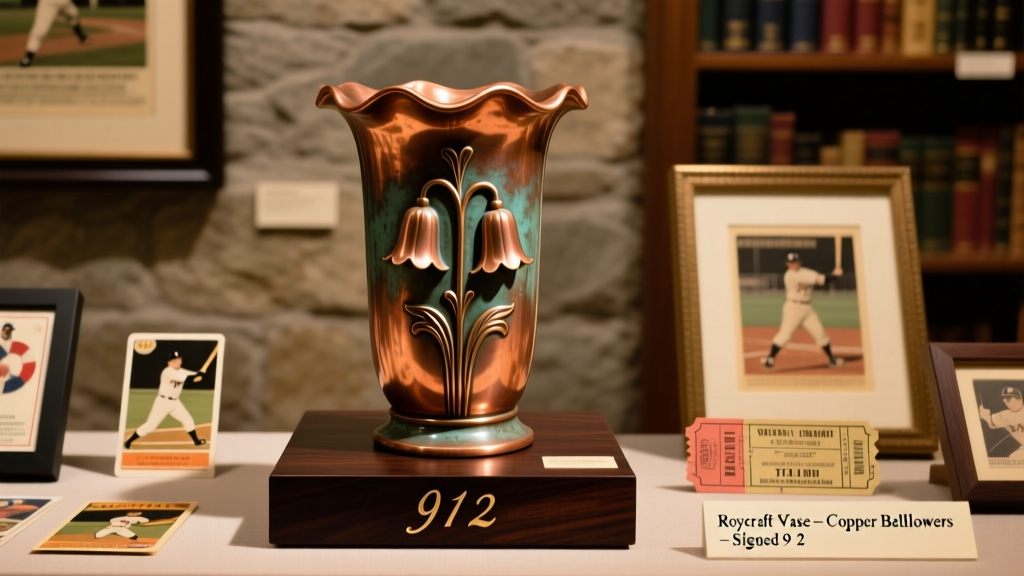
Roycroft Vase: Copper Bellflowers Undulating Rim Cylindrical Form, Signed, 9½ Inches — Authentication, Provenance, and Design Legacy

The Planters Peanuts Mug: Authenticating the Iconic Mr. Peanut Yellow Glass Collectible
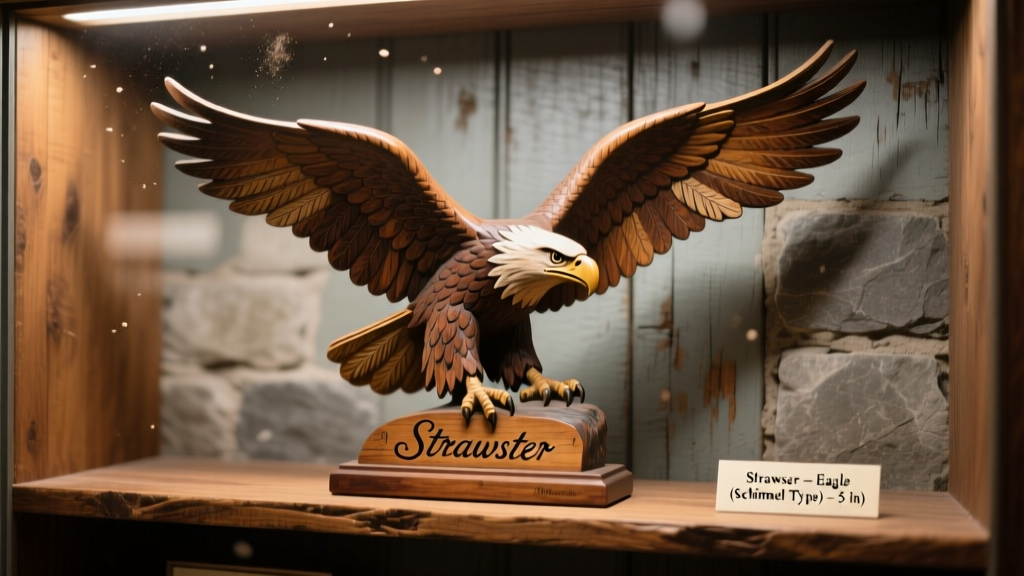
Authenticating the Strawser 5-Inch Eagle Carving: Schimmel-Type Painted Wood Sculpture with Signature
Pratt Pitcher Grapes 6-Inch: A Collector’s Deep Dive into Vintage Glassware Authenticity and Value
Banks Mechanical Bulldog Book of Knowledge Cast Iron: History, Authentication, and Market Value
Zuni Pueblo Turquoise Bracelet Authentication Guide: Decoding the 4-Round Inset Sterling Silver Design (3¼ Inches)

The White Cat Underwear Advertising Mirror: A Copper Oval Pocket Mirror from the Golden Age of American Apparel Marketing