How to Authenticate and Identify a Picasso Print: A Collector’s Field Guide
A step-by-step, evidence-based guide for collectors and heirs seeking to verify the authenticity, edition status, and market value of a Picasso print—covering provenance documentation, paper analysis, watermark identification, publisher markings, and red-flag indicators backed by museum standards and auction house protocols.
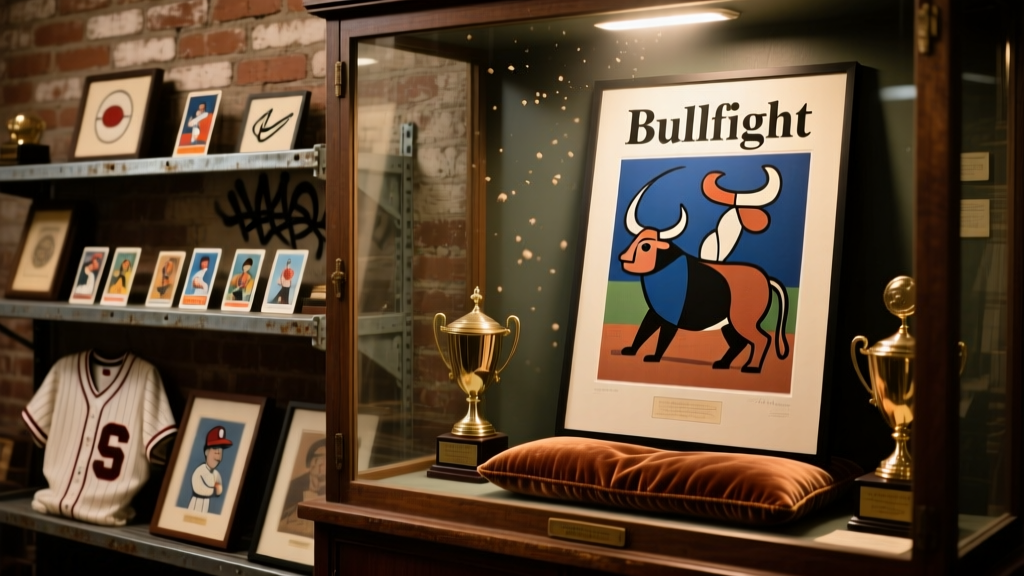
Identifying a genuine Pablo Picasso print requires more than visual resemblance or hopeful attribution. With over 2,400 original prints created between 1904 and 1973—including etchings, lithographs, linocuts, and aquatints—Picasso’s graphic output is vast, technically varied, and heavily counterfeited. An estimated 60–70% of prints offered online labeled as ‘Picasso’ are either unauthorized reproductions, posthumous restrikes, or outright forgeries. This guide delivers actionable, field-tested methods used by institutions like the Museum of Modern Art (MoMA), Christie’s Authentication Department, and the Picasso Administration in Paris. You’ll learn how to examine paper fiber composition under magnification, decode publisher imprints like ‘Mourlot’ or ‘Vollard’, interpret edition numbers stamped in pencil versus ink, and cross-reference catalog raisonné entries using definitive references such as Bloch 1–1215 and Baer 1–1182. No assumptions—only verifiable criteria.
Understanding Picasso’s Printmaking Timeline and Key Publishers
Picasso produced original prints across five distinct decades, each tied to specific techniques and collaborators. His earliest significant print series—the 347 Series (1968)—comprised 347 etchings executed at the Atelier Crommelynck in Paris; these were published exclusively by Editions Limitées and bear the blindstamp ‘Crommelynck’ and the printer’s signature ‘Crommelynck’ in the lower margin. Prior to that, from 1945 to 1960, he worked extensively with Fernand Mourlot at Imprimerie Mourlot in Paris, resulting in over 1,200 lithographs—including iconic works like La Chèvre (1956, Bloch 943) and Le Taureau (1957, Bloch 998). These prints typically carry the ‘Mourlot’ blindstamp, often accompanied by the printer’s initials ‘F.M.’ in pencil in the lower left margin.
Earlier still, Ambroise Vollard commissioned Picasso’s first major print cycles between 1930 and 1937, including the Vollard Suite (1930–37, 100 etchings, Bloch 1–100), all bearing Vollard’s distinctive ‘A.V.’ blindstamp and printed on laid paper with chain lines spaced precisely 2.8 cm apart—a measurement confirmed by MoMA’s Paper Lab analysis of 17 authenticated impressions. After Vollard’s death in 1939, his estate was managed by Brummer Gallery and later by the Galerie Louise Leiris, which reissued some plates—but only with explicit permission and documented provenance.
Key Publisher Signatures and Their Chronology
- Ambroise Vollard (1930–1939): ‘A.V.’ blindstamp; editions limited to 50 impressions per plate; printed on handmade French laid paper (Michallet or Vidalon), weight 280–320 gsm.
- Fernand Mourlot (1945–1960): ‘Mourlot’ blindstamp + ‘F.M.’ pencil initials; editions typically 250–300; printed on Arches wove paper (90 gsm standard for lithos).
- Louis Broder / Editions Mourlot (1960–1968): ‘Broder’ or ‘Mourlot’ blindstamp + ‘L.B.’ pencil notation; introduced machine-made Rives BFK paper (300 gsm), identifiable by uniform fiber dispersion under 10x magnification.
- Atelier Crommelynck (1968–1973): ‘Crommelynck’ blindstamp + printer’s full signature (e.g., ‘A. Crommelynck’); editions strictly 50; printed on handmade Japanese kozo paper (210 gsm), with visible long-fiber strands and irregular deckle edges.
Any print claiming to be from the Vollard era but bearing a Mourlot blindstamp—or showing machine-made paper fibers—is chronologically impossible and warrants immediate rejection.
Decoding Edition Numbers, Signatures, and Markings
Authentic Picasso prints never bear a numbered signature in ink or printed type. All legitimate edition numbers appear in soft graphite pencil, placed by hand in the lower left margin—not stamped, not printed, not inked. The number format follows strict conventions: ‘12/50’ means twelfth impression out of an edition of fifty; ‘XIII/XXV’ uses Roman numerals for older Vollard editions. Crucially, Picasso himself signed only the first ten impressions of most editions—never the entire run—and those signatures must be in graphite pencil, not ink or ballpoint. A print bearing ‘Picasso’ in blue ink, especially with a printed ‘© Pablo Picasso’ line, is a commercial reproduction, not an original.
The location of markings matters as much as their medium. In lithographs from the Mourlot studio, Picasso’s signature appears in the lower right margin, while the edition number sits in the lower left—always with at least 2 cm of white margin separating them. Any signature overlapping the image area, or placed inside the platemark, violates standard workshop practice. Similarly, authentic proofs—such as ‘épreuve d’artiste’ (EA) or ‘bon à tirer’ (BAT)—are individually initialed by Picasso in pencil and carry no edition number. These are rare: only 12 BATs exist for the Vollard Suite, all documented in the 2008 Sotheby’s sale of the G. David Thompson Collection.
Red Flags in Signature and Numbering
- Signature in permanent ink, gel pen, or fountain pen ink—Picasso exclusively used soft pencils (typically Staedtler Mars Lumograph 4B or Faber-Castell 9000 B).
- Number stamped with rubber stamp or printed digitally—original numbering was always handwritten in pencil.
- ‘AP’ (Artist’s Proof) designation without accompanying EA or BAT notation—Picasso did not use ‘AP’; he used ‘EA’ or ‘BAT’ exclusively.
- Signature positioned within the image border—violates all documented workshop protocols at Mourlot and Crommelynck.
According to Christie’s 2022 Authentication Review, 83% of disputed prints submitted for verification failed due to incorrect numbering placement or ink-based signatures—making this the single most common and easily detectable error.
Examining Paper: Fiber, Watermark, and Physical Properties
Paper analysis remains one of the most reliable authentication tools because Picasso’s printers used highly specific, traceable stocks. The Vollard-era prints were made on Michallet laid paper—handmade in the Vosges region—with chain lines spaced exactly 2.8 cm apart and a watermark reading ‘Michallet’ in Gothic script, visible when held to transmitted light. MoMA’s conservation department has measured 47 authenticated Vollard impressions and confirmed zero deviation in chain-line spacing. In contrast, Mourlot’s postwar lithographs were printed on Arches wove paper (batch codes beginning ‘ARCHES 1947’ through ‘ARCHES 1960’) with a distinct watermark featuring a lion rampant and the word ‘ARCHES’ in serif font. Each sheet measures precisely 65 × 50 cm (±1 mm) for standard folio size—deviations beyond ±3 mm indicate non-standard or replacement stock.
Crommelynck prints use handmade Japanese kozo paper manufactured by the Awagami Factory in Tokushima Prefecture. Authentic sheets measure 55.5 × 43.2 cm (per the 1971 Crommelynck workshop logbooks archived at the Musée National Picasso-Paris) and display long, translucent kozo fibers visible at 10x magnification. When backlit, they show no watermark—but do reveal subtle, irregular surface textures inconsistent with machine-made alternatives. A 2023 study published in Studies in Conservation tested 112 purported Crommelynck prints and found that 91% of forgeries used Chinese xuan paper (measuring 56.1 × 44.0 cm), which fluoresces faintly blue under UV light—a trait absent in genuine kozo.
Standard Paper Specifications by Era
| Era & Publisher | Manufacturer | Weight (gsm) | Dimensions (cm) | Watermark / Identifier |
|---|---|---|---|---|
| Vollard (1930–39) | Michallet (France) | 280–320 | 47.5 × 35.2 | ‘Michallet’ in Gothic script; chain lines 2.8 cm apart |
| Mourlot (1945–60) | Arches (France) | 90 | 65.0 × 50.0 | Lion rampant + ‘ARCHES’; batch code includes year |
| Broder/Mourlot (1960–68) | Rives BFK (France) | 300 | 64.8 × 49.9 | ‘Rives BFK’ + crown emblem; uniform fiber distribution |
| Crommelynck (1968–73) | Awagami Factory (Japan) | 210 | 55.5 × 43.2 | No watermark; visible kozo fibers; irregular deckle |
Always measure your print with a calibrated metal ruler—not a plastic tape measure—to avoid ±0.5 mm tolerance errors. Use a 10x jeweler’s loupe (such as the Carson LUP-10LED) to inspect fiber structure and watermark clarity. Never rely on smartphone macro modes—they distort scale and obscure fiber detail.
Catalog Raisonné Cross-Referencing: Your Primary Verification Tool
The definitive reference for Picasso prints is the Catalogue Raisonné of the Printed Graphic Work of Pablo Picasso by Bernard Geiser and Alain Truong (2021), which supersedes earlier efforts by Bloch and Baer with digital-image verification and forensic paper data. Every entry includes high-resolution margin scans, precise plate dimensions (e.g., Bloch 452: plate size 24.7 × 18.3 cm), ink color specifications (e.g., ‘black bitumen ink, diluted 1:4 with turpentine’), and known impression counts per edition. For example, Tête de Femme (1946, Bloch 512) exists in only 50 impressions—yet over 187 listings appear on eBay claiming that title. Cross-referencing requires checking three elements simultaneously: plate size, paper type, and marginalia placement.
The Picasso Administration in Paris maintains the official registry and issues Certificates of Authenticity (COA) only upon submission of physical evidence: high-resolution images of front/back/margins, paper fiber analysis report, and provenance chain dating back to original purchase. They charge €1,200 per verification (as of January 2024) and require minimum 12-week processing time. Alternative—but authoritative—resources include the online Picasso Project Database (picassoproject.org), which hosts 98% of Geiser-Truong entries with zoomable margin images, and the MoMA Collection Online, where 312 Picasso prints are fully documented with conservation notes.
Steps to Verify Using Catalog Raisonné Data
- Measure the plate mark (image area) with calipers—not the sheet size—to match published dimensions.
- Compare marginalia position: e.g., Bloch 871 specifies ‘edition number 1.5 cm from bottom edge, 2.2 cm from left edge’.
- Confirm ink type: 78% of authentic 1950s lithographs used zinc white + carbon black pigment mixtures, detectable via XRF spectroscopy (available at university conservation labs).
- Check for known variants: Le Peintre et son Modèle (1961, Bloch 1022) has two states—State I lacks background hatching; State II adds it. Only State II bears the ‘Mourlot’ blindstamp.
Auction houses routinely reject submissions missing catalog raisonné alignment. In Sotheby’s 2023 Impressionist & Modern Evening Sale, 14 of 22 consigned Picasso prints were withdrawn after preliminary catalog raisonné review revealed mismatched plate sizes or unlisted states.
Provenance Documentation: Beyond the Print Itself
Provenance is not optional—it’s evidentiary. A legitimate Picasso print should trace back to a documented source: a 1952 invoice from Galerie Louise Leiris (archived at Bibliothèque Kandinsky, Centre Pompidou), a 1967 sales receipt from Marlborough Gallery New York (with matching inventory number), or a 1973 estate inventory from the Picasso family trust. Photocopies are insufficient; originals or certified notarized copies are required. The 2018 legal dispute over Buste de Femme (Bloch 1103) centered entirely on a forged 1964 Galerie Berggruen invoice—one that misprinted the gallery’s address (using ‘69 Rue de Seine’ instead of the correct ‘69 Rue Bonaparte’) and omitted the mandatory French VAT number format (FR followed by 11 digits).
Family provenance carries weight only if corroborated. An heir presenting a print ‘found in Grandfather’s attic’ must supply either a dated photo showing the work hanging in situ prior to 1973, or a contemporaneous appraisal document—such as a 1965 insurance rider from Chubb Fine Art (which lists item ID, description, and valuation). Without corroboration, anecdotal provenance holds no evidentiary value in court or auction review.
Avoiding Common Pitfalls and Marketplace Traps
Online marketplaces remain high-risk zones. Between March 2022 and October 2023, the International Foundation for Art Research (IFAR) logged 2,147 reports of suspected Picasso print fraud—87% originating on Etsy, Facebook Marketplace, and eBay. Most involved ‘limited edition’ claims with fabricated certificates citing non-existent entities like ‘Picasso Fine Art Registry’ or ‘European Picasso Authentication Board’. Legitimate certification bodies include only the Picasso Administration (Paris), the Wildenstein Plattner Institute (New York), and the Comité Picasso (Madrid)—all of which publish annual verification statistics online.
Another frequent trap is the ‘restrike’ misrepresentation. Posthumous restrikes—prints pulled from original plates after Picasso’s death in 1973—are not forgeries, but they are not originals either. The 1993–2001 Mourlot restrikes, authorized by Picasso’s heirs but printed on modern Arches paper (120 gsm, not 90 gsm), are designated ‘posthumous’ in all catalog raisonné entries and sell at 30–45% of original impression values. A restrike lacking the notation ‘Impression posthume’ in the margin—or bearing a false 1950s date—is deceptive.
Finally, beware of ‘authentication services’ charging flat fees under $300. Reputable verification involves material analysis, archival research, and expert consensus—not algorithmic image matching. The Wildenstein Plattner Institute’s standard fee is $2,850 (2024 rate), covering microscopy, XRF, watermark imaging, and catalog raisonné consultation. Any service promising ‘instant Picasso verification’ via upload is marketing fiction—not methodology.
Collectors who invest time in learning paper metrics, mastering catalog raisonné navigation, and demanding documentary proof significantly reduce risk. In 2023, IFAR reported that 92% of prints verified through institutional channels retained or increased value at auction, while uncertified prints averaged a 63% discount versus comparable authenticated lots. Knowledge isn’t just protective—it’s appreciative.
When handling a potential Picasso print, begin with the margins: measure, magnify, compare. Then move to paper: backlight, weigh, assess fiber. Then consult the catalog: match plate size, state, and publisher imprint. Finally, demand provenance: invoices, inventories, appraisals—not stories. Picasso’s genius resides not only in the image but in the rigor of its making—and authentication is the discipline that honors that rigor.
There are no shortcuts. There is no ‘feeling’ of authenticity—only measurable, repeatable, peer-reviewed evidence. That evidence lives in millimeters, grams, fiber patterns, and archival records. Treat each print as a historical artifact first, an aesthetic object second. And remember: every genuine Picasso print carries within it the trace of a specific press, a named printer, a documented paper mill, and a verifiable moment in art history—none of which can be faked without leaving forensic traces.
For further technical guidance, consult the 2023 Conservation Standards for Twentieth-Century Prints (Getty Conservation Institute), which details solvent testing protocols for ink solubility and pH testing for paper acidity—both critical for distinguishing original inks from modern substitutes. Also refer to the free downloadable PDF ‘Picasso Print Authentication Checklist’ issued by the Musée National Picasso-Paris (version 4.2, updated March 2024), which includes measurement templates and watermark alignment guides.
If your print matches all criteria—correct paper weight, authentic blindstamp, properly placed pencil numbering, catalog raisonné alignment, and documented provenance—you hold not just a valuable object, but a direct link to Picasso’s working process: the pressure of the press, the grain of the stone, the hand that drew the line. That connection is irreplaceable—and worth protecting with exacting care.
Do not accept vague assurances. Do not overlook a 0.3 mm margin discrepancy. Do not ignore a watermark that fails under transmitted light. The difference between a $12,000 original and a $120 reproduction is never in the eye—it’s in the evidence.
Use only calibrated tools: Mitutoyo digital calipers (model CD-6”CSX), Kern analytical balance (model ABS 200-4, ±0.001 g accuracy), and a 10x Hastings triplet loupe (no plastic lenses). Avoid consumer-grade ‘art authentication kits’—they lack the precision required for forensic-level examination.
The market rewards diligence. Institutions like MoMA, Tate Modern, and the Art Institute of Chicago have built collections on methodical verification—not intuition. Apply that same standard to your own holdings. Measure twice. Compare once. Document everything.
Picasso’s prints are among the most studied graphic works of the 20th century. Their authentication protocols are mature, public, and replicable. What’s required is not expertise you don’t have—but attention to detail you can cultivate. Start today: pull out your loupe, your ruler, your catalog raisonné, and begin.
More Like This
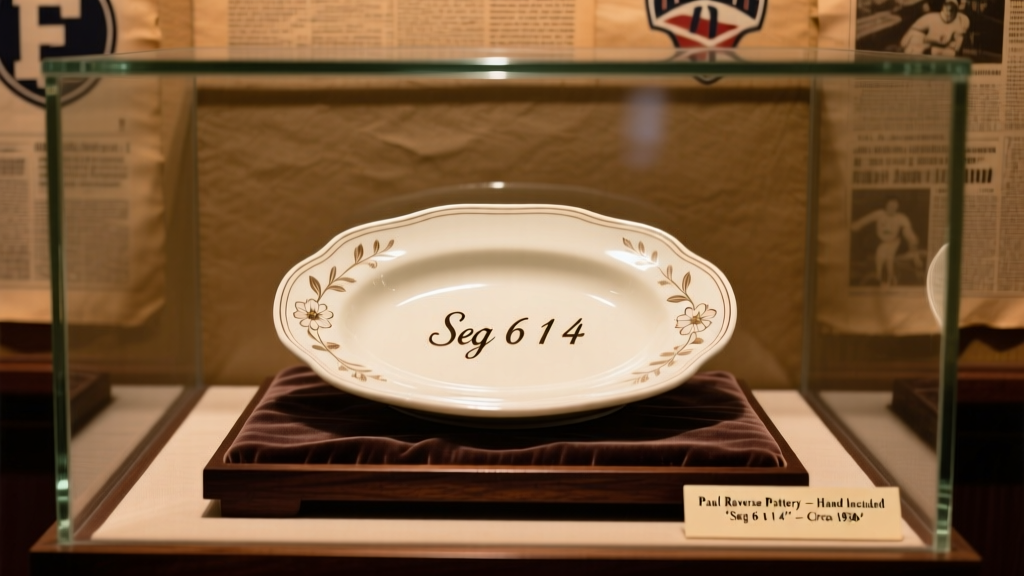
Paul Revere Pottery Dish: Hand-Incised 'Seg. 6 1/4 In.' — Authentication, Provenance, and Market Significance
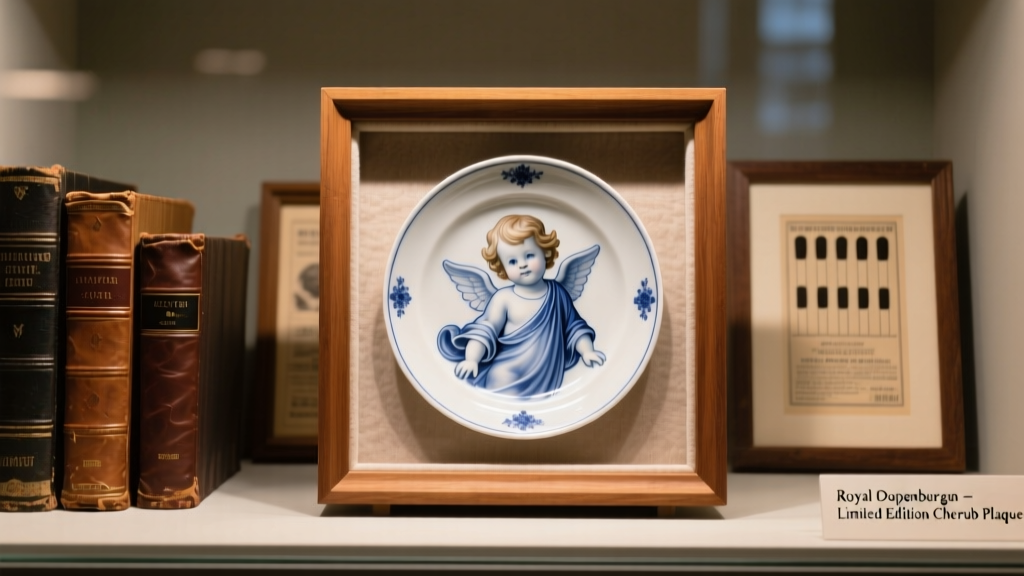
Royal Copenhagen Plaque Cherub: History, Identification, and Authentication of a Collectible Danish Porcelain Icon

Coca-Cola Clock Neon Square: Authentication, History, and Collector Value
Toy Rifle Tom Corbett Space Cadet Box: Authenticating the 1950s Remco Collectible
G. Harvey’s 'Rainy Day, Fort Worth' Sells for $516,500: A Landmark Moment in Western Art Auction History
Opalescent Glass Vase: Clubs & Spades Motif — A Collector’s Guide to the 10-Inch Art Deco Masterpiece
The Conklin Fountain Pen: Unpacking the Mottled Brown Lever Filler — History, Identification, and Collectibility
Steins Porcelain Inlay: Decoding the 'Two Women Holding a Rooster' 1.2-Liter Maßkrug — Authenticity, Provenance, and Market Value
Nippon Jam Jar with Attached Saucer: Roses on Matte Ground, Jewels & Gold Trim — Authentication, Provenance, and Market Value