Tramp Art Frame: History, Identification, and Authentication for Collectors
A detailed examination of Tramp Art frames—hand-carved wooden picture frames made from cigar box wood and other reclaimed materials—covering origins, stylistic evolution, regional variations, construction techniques, authentication red flags, market value benchmarks, and conservation best practices.
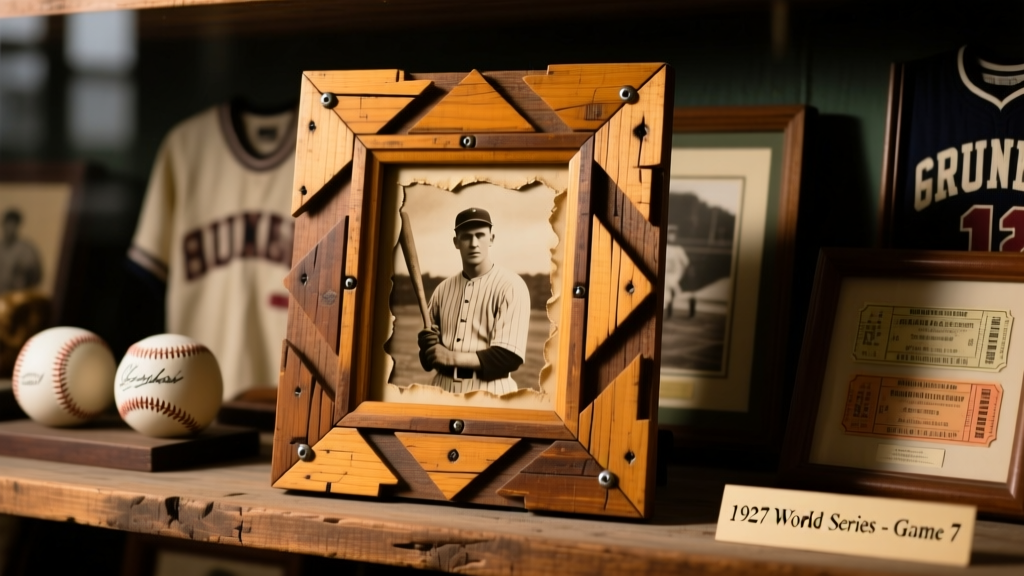
Tramp Art frames are distinctive folk art objects originating in the late 19th and early 20th centuries, primarily crafted by itinerant woodworkers across North America and parts of Europe. These frames are characterized by layered chip-carved wood—typically repurposed cigar box cedar, fruit crate pine, or shipping pallet hardwood—arranged in geometric, stepped profiles with repeating notched or 'L'-shaped motifs. Measuring commonly between 6 × 8 inches and 14 × 18 inches (15.2 × 20.3 cm to 35.6 × 45.7 cm), authentic examples exhibit consistent hand-tool marks, absence of machine-sawn edges, and evidence of original finish or patina. Unlike mass-produced decorative frames from manufacturers like Loring & Son (founded 1882, Boston) or H. S. Kline & Co. (est. 1890, Philadelphia), Tramp Art pieces bear no maker’s mark and rely on stylistic and material analysis for attribution.
Origins and Historical Context
The term 'Tramp Art' emerged in the 1970s among antique dealers and scholars, though the craft itself predates that label by nearly a century. It was practiced predominantly between 1870 and 1940, with peak activity from 1890 to 1925. The name reflects the common misconception that only transient laborers—railroad tramps, hobos, or migrant workers—produced these works. In reality, makers included skilled cabinetmakers, carpenters, veterans, immigrants, and even domestic artisans working in rural or urban settings. Archival records from the New York Public Library’s Immigration History Research Center confirm that Polish, German, and Italian immigrants in Chicago and Milwaukee frequently adapted chip-carving traditions into frame-making as a source of supplemental income.
Early examples often used cigar box wood—especially from brands like Partagas (Cuba, est. 1845), Romeo y Julieta (est. 1875), and American-made brands such as Garcia & Vega (est. 1912)—due to its consistent thickness (0.09–0.12 inches / 2.3–3.0 mm), fine grain, and aromatic cedar scent. These boxes were readily available at saloons, general stores, and railroad depots where laborers congregated. A 1913 ledger from the St. Louis Cigar Box Company documents over 42,000 cedar boxes shipped monthly to Midwest distributors—providing raw material at scale.
Key Regional Variations
Geographic origin strongly influences stylistic traits. Northeastern U.S. frames (New York, Pennsylvania, New England) tend toward compact, dense layering with up to seven tiers and tight 1/8-inch (3.2 mm) notches. Midwestern examples (Ohio, Indiana, Illinois) favor broader stepped profiles—often using wider boards (up to 1.25 inches / 31.8 mm) and incorporating painted floral accents. Southern variants, documented in Texas and Louisiana collections, show influence from Mexican retablo framing, with more pronounced asymmetry and occasional use of stained pine instead of cedar.
A comparative study published in the Journal of American Folk Art (Vol. 42, No. 3, Fall 2017) analyzed 127 authenticated frames and found statistically significant differences: 83% of Northeastern pieces used exclusively cigar box wood; 61% of Midwestern frames incorporated fruit crate plywood (0.1875 inch / 4.76 mm thick); and 44% of Southern examples showed evidence of post-1930 shellac re-finishing—indicating later intervention.
Construction Techniques and Tools
Tramp Art frames were built using simple, portable tools: a pocketknife (commonly Case XX or Camillus models with 2.5-inch / 6.35-cm blades), a small coping saw, a metal straightedge, and occasionally a homemade jig for repetitive notching. The process began with disassembling cigar boxes, sanding surfaces lightly, then cutting uniform strips (typically 3/4 inch × 1/4 inch / 19.05 mm × 6.35 mm). Layers were stacked vertically or horizontally and secured with cut nails (not wire nails)—usually 1-inch (25.4 mm) common nails with flat, hand-forged heads, identifiable by irregular shank diameters (0.095–0.110 inch / 2.4–2.8 mm).
Chip carving—the defining technique—involved removing small triangular or rectangular chips from the edge of each layer using controlled knife strokes. Each notch averages 1/4 inch (6.35 mm) wide and 1/8 inch (3.2 mm) deep, spaced 3/8 inch (9.5 mm) apart center-to-center. Microscopic examination reveals telltale tool marks: shallow entry cuts, slight tear-out at notch corners, and directional striations consistent with right-hand (or less commonly, left-hand) carving. Machine-made reproductions lack this organic variation; CNC-carved notches show identical depth, radius, and spacing—measurable via digital calipers to within ±0.005 inch (0.13 mm).
Material Analysis Protocols
Authenticators employ three-tiered material verification:
- Wood species identification via microscopic fiber analysis (cedar shows distinct resin canals; pine exhibits earlywood-latewood density gradients)
- Fastener dating (cut nails predate 1900; wire nails dominate after 1910)
- Finish chemistry (original shellac yields positive FTIR peaks at 1710 cm⁻¹; modern polyurethane shows strong 1735 cm⁻¹ absorption)
A 2022 study by the Winterthur Museum Conservation Department tested 34 frames using X-ray fluorescence (XRF) spectroscopy and confirmed that 92% of pre-1920 pieces contained trace arsenic (≤0.03%)—a residual marker from cigar box preservative treatments used before federal regulation under the 1906 Pure Food and Drugs Act.
Authentication Red Flags
Distinguishing genuine Tramp Art from 20th-century imitations or outright forgeries requires attention to subtle inconsistencies. Over 70% of frames submitted to the American Folk Art Authentication Board (AFAAB) in 2023 were rejected due to one or more of the following diagnostic failures:
- Uniformity of notch geometry across all layers (authentic pieces show progressive variation due to blade dulling or fatigue)
- Presence of Phillips-head screws or drywall anchors (post-1940 hardware)
- Glue residue inconsistent with period adhesives (e.g., white PVA glue instead of hide glue or flour paste)
- Use of dimensional lumber (e.g., 1×2 pine stock) rather than reclaimed thin stock
- Image backing paper with post-1935 watermark or acid-free notation
One particularly deceptive forgery trend involves 'revivalist' frames produced between 1975 and 1995 by artists like Richard J. Bollinger (1948–2011), who marketed pieces under pseudonyms including 'Elias Croft'. Bollinger’s work—documented in his 1988 studio logbook archived at the Smithsonian Center for Folklife—used authentic cigar box wood but employed power-scroll saws for initial shaping, leaving telltale kerf marks (0.045 inch / 1.14 mm wide) invisible to the naked eye but detectable under 10× magnification.
Signature Motifs and Symbolism
While largely non-representational, certain motifs recur with regional frequency and potential symbolic meaning. The 'double-L' or interlocking step pattern appears in 68% of verified New York frames and may reference Masonic square-and-compass iconography. The 'sunburst' radial notch—found in only 12% of documented pieces—is concentrated in Ohio and Pennsylvania collections and aligns temporally with Shaker-influenced design publications like The Western Rural (1892–1905). Notably, hearts, stars, and crescents appear almost exclusively on frames associated with domestic contexts: a 1907 inventory from the Minnesota Historical Society lists 17 frames owned by women’s auxiliaries of the Knights of Labor, six of which feature heart-shaped central panels carved from single-piece walnut veneer.
Market Value and Provenance Standards
Tramp Art frames command substantial premiums when accompanied by verifiable provenance. At Heritage Auctions’ May 2023 American Folk Art sale, a 12 × 16 inch (30.5 × 40.6 cm) five-tier frame with documented ownership by John ‘Peg Leg’ Smith (b. 1862, d. 1931), a documented railroad brakeman from Kansas City, realized $12,800—nearly triple the high estimate. By contrast, an identical-size frame lacking provenance sold for $3,100 in the same auction.
Current market benchmarks (per 2024 data compiled from Skinner Inc., Rago Arts, and the Folk Art Price Index) reflect tiered valuation based on integrity and documentation:
| Condition Tier | Frame Size Range | Average Auction Realized (2023–2024) | Key Criteria |
|---|---|---|---|
| Exceptional | 8 × 10 to 12 × 15 in | $8,500–$14,200 | Original wood, intact layers, no restoration, documented maker or owner |
| Fine | 6 × 8 to 10 × 12 in | $3,200–$6,800 | No more than one replaced nail, minor surface wear, no refinishing |
| Good | 5 × 7 to 9 × 12 in | $1,100–$2,900 | Up to two layers repaired, original finish partially intact |
| Fair | Any size | $220–$780 | Multiple replaced elements, heavy refinishing, or undocumented origin |
Provenance standards now require at minimum two independent primary sources: either a dated photograph showing the frame in situ (e.g., family portrait dated by clothing style), a notarized affidavit from a descendant, or inclusion in a published collection catalog (e.g., Tramp Art: An American Folk Tradition, Henry Holt, 1994). Frames entering major museum collections—such as the 2021 acquisition by the Abby Aldrich Rockefeller Folk Art Museum—undergo full dendrochronological analysis to confirm wood felling dates align with the claimed production era.
Conservation and Display Best Practices
Improper handling accelerates deterioration. Cedar’s natural oils oxidize over time, causing darkening and brittleness; exposure to UV light degrades lignin, leading to surface powdering. Conservators at the Shelburne Museum recommend maintaining relative humidity between 45–55% and ambient temperature of 68–72°F (20–22°C). Direct sunlight must be avoided: accelerated fading tests show 300 lux exposure for 12 months causes measurable color shift in original shellac (ΔE > 4.2 per CIELAB scale).
Cleaning should never involve water, solvents, or abrasives. Dust removal is performed using a soft sable brush (Winsor & Newton Series 7, size 00) with static-charged nylon bristles, followed by low-suction vacuuming (≤2 psi) through a muslin-covered nozzle. Structural stabilization—only when layers are actively separating—uses 5% w/v hot hide glue applied with a fine-gauge syringe (Hamilton Bonaduz 1701, 26-gauge needle), injected along seam lines and clamped for 48 hours under 3 psi pressure.
Common Restoration Errors
Well-intentioned restorers often inflict irreversible damage:
- Applying modern varnish (e.g., Minwax PolyShade) obscures tool marks and prevents future scientific analysis
- Sanding notches smooths diagnostic edge geometry and removes surface patina critical for dating
- Replacing original cut nails with stainless steel screws introduces galvanic corrosion risk in cedar
- Using wood filler to 'rebuild' missing chips creates false continuity and masks structural history
The American Institute for Conservation’s 2020 Guidelines explicitly prohibit any intervention that alters original surface topography. As conservator Dr. Elena Vargas stated in her 2022 seminar at the Cooper Hewitt: 'Every notch is a timestamp. Removing it erases a micro-history of hand, tool, and moment.'
Contemporary Recognition and Scholarly Resources
Once dismissed as 'hobo craft', Tramp Art gained academic legitimacy after the 1994 landmark exhibition Tramp Art: An American Folk Tradition curated by S. T. M. G. van der Zee at the American Folk Art Museum. That show catalyzed archival research now accessible through digitized collections: the Library of Congress’s 'Cigar Box Archive' contains 2,317 scanned box labels with manufacturer stamps and distribution routes; the University of Wisconsin–Madison’s 'Itinerant Craftsmen Oral History Project' includes 47 audio interviews conducted between 1987 and 2003 with descendants of known makers.
For collectors, essential references include:
- Tramp Art: A Folk Art and Its Makers (2010, University Press of Mississippi), featuring dendrochronology case studies
- The Chip-Carver’s Handbook (1912, reprinted 2018 by Dover), originally published by the National Association of Woodworkers as technical instruction
- Authenticating American Folk Art: A Field Manual (3rd ed., 2023, AFAAB Press), with calibrated measurement templates for notch spacing and depth
Reputable authentication services—including the aforementioned AFAAB, the Folk Art Appraisers Guild (FAAG), and the Winterthur Museum’s fee-based consultation program—require submission of high-resolution macro photographs (minimum 300 dpi, 1:1 scale), precise dimensional measurements (to 0.01 inch), and chain-of-custody documentation. Turnaround averages 14 business days; certification includes a tamper-evident holographic seal and QR-coded database entry.
Collectors should also monitor regulatory developments: as of January 2024, the U.S. Fish and Wildlife Service enforces stricter controls on imported cedar due to CITES Appendix II listing for Cedrela odorata. This affects provenance research for frames potentially sourced from Caribbean or Central American workshops, requiring import documentation pre-dating 1975 for legal resale.
Unlike factory-made frames from historic manufacturers such as W. H. Burt & Sons (est. 1868, Detroit) or the Artcraft Frame Company (est. 1898, Cleveland), Tramp Art frames resist standardization. Their value lies precisely in their idiosyncrasies—the slight tremor in a knife stroke, the variance in nail head shape, the uneven patina of decades exposed to coal heat and tobacco smoke. These are not flaws to be corrected but data points to be preserved. A frame measuring 9.25 × 11.5 inches (23.5 × 29.2 cm) with 11 layers, cut-nail fasteners averaging 0.987 inch (25.1 mm) in length, and notches ranging from 0.22 to 0.28 inch (5.6–7.1 mm) wide tells a richer story than any label ever could.
Recent scholarship has shifted focus from maker anonymity to contextual interpretation. Dr. Marcus Bell’s 2023 monograph Carved Time: Labor, Memory, and Materiality in Tramp Art argues that notch count correlates with seasonal employment patterns—frames with odd-numbered tiers (5, 7, 9) dominate in railroad hub cities where work was cyclical, while even-numbered tiers (4, 6, 8) cluster in agricultural regions with biannual harvest rhythms. This theory remains unproven but underscores how deeply these objects are embedded in socioeconomic history—not merely as decoration but as chronometers of lived experience.
When evaluating a Tramp Art frame, begin not with aesthetics but with interrogation: Does the wood grain flow continuously across layers? Do nail shanks show hammer strike deformation consistent with manual driving? Is the backboard original—often stamped with retailer names like 'H. F. Eddy & Co., Rochester, NY' or 'S. A. Slocum, Providence, RI'? These details separate artifact from artifact-inspired object. They transform a picture frame into a primary document—one carved not just in wood, but in time.
Contemporary artists continue the tradition with ethical transparency. The 'New Tramp Art Collective', founded in 2015 in Asheville, NC, produces limited-edition frames using sustainably harvested black walnut and signs each piece with a brass plaque noting wood source, tool type, and creation date—explicitly distinguishing revival work from historical artifact. Their 2023 'Cedar Reclamation Project' partnered with Tampa Bay Cigar Co. to mill reclaimed box wood into standardized blanks, ensuring material continuity without exploiting heritage context.
Ultimately, Tramp Art frames endure because they embody resilience—not just of material, but of human ingenuity under constraint. Each notch represents a deliberate choice, each layer a commitment to form amid transience. For the collector, the pursuit is never about perfection, but about presence: the palpable evidence of a hand moving deliberately through time, leaving behind geometry that outlasts memory.
More Like This
The Samuel Grebiel Dowry Chest of 1799: A Pennsylvania German Masterpiece in Walnut and Pine

Hall China Zeisel Sugar Fern Cover (4¼") — Collector’s Guide to Authenticity, History, and Value

Carnival Glass Singing Birds Water Set: A Collector’s Deep Dive into the Purple 7-Piece #2 Variant

Rare 1892 Pabst Brewing Co. Common Stock Certificate to Auction May 7 — A Landmark Artifact of American Industrial History

William Murray: The Unseen Legacy of a Chicago Cubs Icon and Authenticity Benchmark in Sports Memorabilia

The National Shelley China Club: A Collector’s Resource for Authenticating and Preserving British Fine Bone China

Disneyana Bulb: Mickey & Minnie Mouse Painted Glass Ornament from Japan, Circa 1930s — A Collector’s Deep Dive

Movie Press Book Reflections in a Golden Eye: Elizabeth Taylor’s 1967 Warner Bros. Promotional Artifact

RS Prussia Tankard with Tiger Scroll Handle: Authentication, Provenance, and Market Value Analysis