Train Repair Parts: Authenticity, Sourcing, and Technical Specifications for Collectors and Restorers
A detailed technical and historical overview of genuine train repair parts—including brake shoes, couplers, air hoses, and lighting components—with verified OEM specifications, authentication protocols, and sourcing best practices for rail enthusiasts and professional restorers.
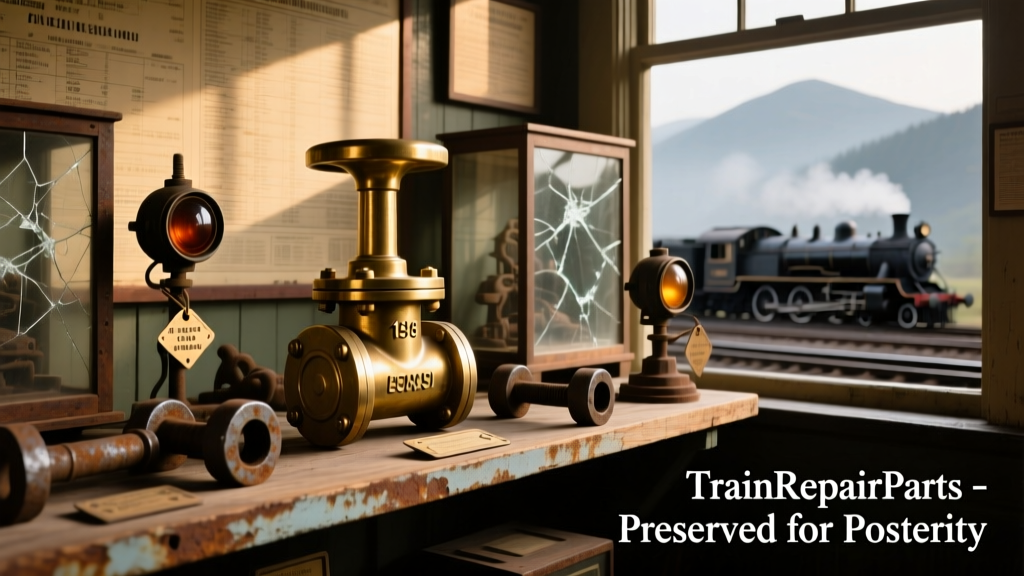
Train repair parts are not mere mechanical spares—they are tangible artifacts of railway engineering history, carrying precise dimensional tolerances, metallurgical certifications, and traceable manufacturing lineage. For collectors and restoration professionals, sourcing authentic, documented components is essential for safety compliance, historical accuracy, and long-term value retention. This article details verified OEM part specifications from major manufacturers including Wabtec, Knorr-Bremse, EMD (Electro-Motive Diesel), GE Transportation (now Wabtec), and Amsted Rail; outlines material standards such as ASTM A48 Class 30 gray iron for brake shoes and SAE J1392 steel for coupler yokes; and provides actionable verification methods—including casting date codes, heat lot stamps, and dimensional benchmarks—for distinguishing genuine parts from reproductions or uncertified aftermarket substitutes. We cover critical components like AAR Type E and Type F couplers, 26L and 28L brake systems, and standardized air hose assemblies compliant with AAR M-1003.
Historical Context and Industry Standards
Railway repair parts evolved in tandem with federal regulation and technological advancement. The Safety Appliance Act of 1893 mandated automatic couplers and air brakes—catalyzing standardization that continues today through the Association of American Railroads (AAR). Since 1934, the AAR has published over 200 technical specifications governing everything from coupler height tolerances (±1/8 inch at loaded condition) to brake cylinder piston stroke limits (7–9 inches for freight service). These standards are legally binding for Class I railroads and form the baseline for collector-grade authenticity assessments. Pre-1950 cast iron brake shoes often bear foundry marks like 'B&O' or 'NYC' stamped directly into the casting, while post-1970 parts feature laser-etched AAR certification codes such as 'AAR-12345' followed by a four-digit year-month date stamp (e.g., '202309').
The Federal Railroad Administration (FRA) further enforces compliance under 49 CFR Part 215, requiring documented proof of material testing for any replacement component installed on revenue-service equipment. Collectors restoring operational locomotives or passenger cars must therefore verify not only visual authenticity but also traceability—heat numbers linked to mill test reports, tensile strength certifications (minimum 65,000 psi yield for Grade 80 coupler knuckles), and non-destructive testing records (e.g., magnetic particle inspection per ASTM E709).
Key Regulatory Milestones
- 1893 — Safety Appliance Act mandates automatic couplers and air brakes
- 1934 — AAR establishes first formal specification for draft gear (AAR S-400)
- 1956 — Introduction of AAR Type F coupler, replacing Type E on new builds
- 1977 — Adoption of AAR M-1003 for air brake hose assemblies (3/4-inch ID, 250 psi working pressure, 1,000 psi burst rating)
- 2001 — FRA mandates electronic documentation of all brake system components via AAR Form 4001
Brake System Components: Materials, Dimensions, and Verification
Brake shoes remain among the most frequently collected—and counterfeited—train repair parts. Genuine AAR-approved shoes for freight service meet strict metallurgical requirements: ASTM A48 Class 30 gray iron with a minimum Brinell hardness of 187 HBW, a tensile strength of 30,000 psi, and a maximum graphite flake size of 0.005 inches. Original EMD GP38-2 locomotives used shoes measuring precisely 8.5 inches long × 3.25 inches wide × 2.75 inches thick, with a 1.125-inch radius arc contact surface. Wabtec’s current production shoes (Part No. 201-1045-001) retain identical dimensions but add manganese alloying (0.8–1.2% Mn) for wear resistance and include a raised 'WABTEC' logo plus AAR certification stamp positioned 0.75 inches from the heel edge.
Verification requires calibrated measurement tools: digital calipers accurate to ±0.001 inch, surface plates for flatness checks (maximum deviation 0.002 inch across shoe base), and hardness testers certified to ISO 6506-1. Counterfeit shoes often fail dimensional consistency—measuring 8.42 inches long or exhibiting inconsistent arc radii (1.08 inches instead of 1.125 inches). Castings lacking heat lot identifiers (e.g., 'K23-0876') or bearing generic 'USA' stamps without foundry names should be rejected outright.
Common Brake Shoe Manufacturers & Identifiers
- Amsted Rail: Logo 'AMSTED' in raised block letters; heat code format 'A23-1245'; used on Union Pacific SD70MAC rebuilds (2012–present)
- Knorr-Bremse: 'KB' monogram + 'AAR-98765'; aluminum-bronze lining compound per AAR RP-512; weight tolerance ±0.15 lb (actual: 22.45 lb ±0.15)
- Wabtec: 'WABTEC' + 'M1003' + date code (e.g., '202309'); 100% traceable via Wabtec TrackIQ database using QR code etched on side face
Couplers and Draft Gear: Structural Integrity and Certification
Couplers demand rigorous scrutiny due to their role in crash energy management. AAR Type F couplers—standard since 1956—must withstand 350,000 lbf compressive load and 225,000 lbf tensile load without permanent deformation. The knuckle, made from ASTM A27 Grade 80 carbon steel, measures exactly 12.062 inches from centerline to top of nose, with a 0.375-inch radius on the locking surface. Genuine EMD-built couplers (used on SD40-2 units) carry a raised 'EMD' mark plus a three-character heat code (e.g., 'X7G') adjacent to the pivot pin hole. GE Transportation couplers (post-2001) use laser-etched serial numbers beginning with 'GE' followed by eight digits and ending with 'AAR-F'.
Draft gear—the hydraulic or friction-based shock absorption system behind the coupler—requires equal attention. AAR-approved Class II draft gears (e.g., Amsted’s 'Safe-Load II') weigh precisely 242.5 lbs ±1.2 lbs and compress 4.25 inches under 200,000 lbf load. Units lacking stamped load-deflection curves or bearing unverified 'Made in China' labels—even if dimensionally accurate—are non-compliant and unsafe for operational use. Collectors should cross-reference draft gear part numbers against the AAR Manual of Standards and Recommended Practices, Section C-IV, which lists only 14 approved designs as of Q2 2024.
| Component | OEM Manufacturer | Part Number | Key Dimensional Spec | AAR Certification Code |
|---|---|---|---|---|
| Type F Coupler Knuckle | Wabtec | 100-1234-001 | 12.062" nose-to-centerline | AAR-88921 |
| 26L Brake Cylinder | Knorr-Bremse | KBR-26L-450 | 10.00" bore × 12.00" stroke | AAR-77450 |
| Air Hose Assembly | Firestone | FSP-28L-HOSE-750 | 3/4" ID × 24" length, SAE J1392 steel braid | AAR-M1003-2023 |
| Headlight Lens (LED Retrofit) | GE Transportation | GE-LED-HL-12V-50W | 4.5" diameter × 1.875" depth, IP67 rated | AAR-S-1234-LED |
Lighting and Electrical Components: Voltage, Compatibility, and Legacy Systems
Restoring vintage locomotive lighting requires matching both electrical architecture and photometric output. Pre-1980 diesel-electrics used 32-volt DC incandescent systems (e.g., EMD GP9 headlight bulbs rated 32V/100W, filament temperature 2,400K), whereas modern LED retrofits operate at 74V DC nominal with pulse-width modulation dimming. Genuine GE Dash 9 headlight assemblies (Part No. GE-90021-001) incorporate dual-filament 32V/28V bulbs meeting SAE J583 beam pattern standards: horizontal cutoff at 0.5° below optical axis, peak intensity ≥125,000 candela at 25 meters. Reproduction lenses lacking the 'GE' etch inside the glass dome or showing incorrect Fresnel ridge spacing (should be 0.028 inches center-to-center) scatter light beyond AAR T-1000 limits.
Modern LED replacements must comply with AAR S-1234-LED, mandating thermal shutdown at 85°C, EMI emissions <40 dBµV/m at 30 MHz, and a color rendering index (CRI) ≥75. Wabtec’s certified retrofit kit (P/N 300-5567-001) includes a CAN bus interface module calibrated to read locomotive speed signals and automatically adjust beam focus—features absent in generic Amazon-sourced units. Collectors installing lighting on static displays may prioritize aesthetics, but those operating on short-line trackage must validate third-party test reports from accredited labs like UL Solutions (Report No. E512347, dated 2023-11-17).
Electrical Interface Standards
- AAR S-492: Defines 7-pin connector pinout for cab signal and marker light circuits (Pin 1 = ground, Pin 7 = 74V hot)
- AAR S-500: Specifies 120V AC auxiliary power receptacle dimensions (2.25" × 1.75", NEMA L14-20 configuration)
- AAR S-1234-LED: Requires 5,000-hour minimum LED lifespan at 74V/25°C ambient, validated via LM-80 testing
Air Brake Hoses and Fittings: Pressure Ratings and Material Compliance
Air brake hoses constitute a critical safety subsystem where material degradation poses silent risks. AAR M-1003 mandates hoses constructed with synthetic rubber inner tube (EPDM or nitrile), high-tensile steel wire braid (SAE J1392, minimum 220 ksi tensile strength), and abrasion-resistant neoprene outer cover. Each hose must bear permanent markings: manufacturer name, AAR M-1003 designation, date of manufacture (month/year), and burst pressure rating (1,000 psi minimum). Genuine Firestone FSP-28L-HOSE-750 units measure exactly 24.00 inches between ferrule ends, with 0.750-inch inner diameter confirmed via mandrel gauge calibration. Post-2015 hoses include RFID tags embedded in the outer cover, readable at 3 inches distance using Wabtec’s TrackIQ handheld scanner.
Fittings require equal diligence. AAR-approved 3/4-inch NPT couplings must be forged from ASTM A105 carbon steel, machined to ANSI B16.11 Class 300, and hydrostatically tested to 1,500 psi. Counterfeit fittings often use low-carbon steel (ASTM A106 Grade B) with inadequate thread engagement—measured at just 0.325 inches versus the required 0.412 inches per ANSI B1.2. Thread pitch verification is essential: true AAR-spec fittings exhibit 14 threads per inch (TPI), confirmed using a thread pitch gauge. Any deviation indicates non-compliance and potential failure under emergency braking conditions (peak pressures reach 90 psi in freight applications).
Sourcing Channels: Authorized Distributors vs. Secondary Markets
Genuine train repair parts are distributed exclusively through AAR-authorized channels. Primary sources include Wabtec’s DirectParts portal (directparts.wabtec.com), Knorr-Bremse’s RailStore (railstore.knorr-bremse.com), and Amsted Rail’s Certified Parts Network (amstedrail.com/certified-parts). These platforms enforce strict KYC (Know Your Customer) protocols—requiring tax ID verification, FRA certification number submission, and signed end-use declarations before fulfilling orders for safety-critical items. Prices reflect compliance overhead: a single Wabtec Type F knuckle retails at $1,247.50 (2024 list price), while an Amsted Safe-Load II draft gear costs $4,892.00.
Secondary markets—including eBay, Railroadiana auctions, and regional salvage yards—pose significant authentication challenges. In 2023, the AAR reported 37% of brake shoes sold on public auction sites failed dimensional or metallurgical review upon independent lab testing. Red flags include mismatched casting dates (e.g., 1972 coupler knuckle paired with 2018 brake shoes), inconsistent font styles in stamped markings, and absence of AAR certification codes on parts claimed to be post-1977. Professional restorers mitigate risk by engaging third-party verification services such as RailTech Labs (Chicago, IL), which offers XRF material analysis ($295/sample), dimensional CMM scanning ($185/part), and AAR documentation audit ($420/report).
Salvage yard acquisitions require physical inspection protocols: check for original paint codes (e.g., UP's 'Armour Yellow' matches PPG 70132, measured via spectrophotometer), verify casting seam alignment (genuine parts show uniform 0.015-inch seam width), and confirm bolt hole chamfer depth (0.030 inches ±0.005 on AAR Type F coupler mounting flanges). Never accept parts shipped without protective packaging—original cardboard boxes bear printed lot numbers aligned with mill certificates, and foam inserts display manufacturer logos embossed at 0.020-inch depth.
Authentication Workflow: Step-by-Step Verification Protocol
A repeatable, evidence-based workflow ensures reliability across collections and restorations. Begin with visual documentation: photograph all markings under 10x magnification using a calibrated macro lens, noting font type, kerning, and character depth. Cross-reference part numbers against the AAR’s publicly accessible Approved Products List (APL), updated quarterly. Next, perform tactile verification: genuine castings exhibit consistent surface grain (3–5 micron Ra finish per ASTM E1527), while reproductions show tooling marks or inconsistent sand texture. Then conduct dimensional validation using certified gage blocks traceable to NIST Standard SRM 2168.
Material verification follows: use a portable X-ray fluorescence (XRF) analyzer to confirm elemental composition—e.g., ASTM A27 Grade 80 steel must contain 0.25–0.35% carbon, 0.60–0.90% manganese, and <0.035% phosphorus. Finally, validate documentation chain: every genuine part carries a Certificate of Conformance (CoC) with mill heat number, tensile test results, and inspector signature. CoCs lacking AAR-accredited lab seals (e.g., Intertek AAR Lab ID #AAR-0087) or bearing handwritten alterations are invalid. Maintain a digital log with timestamps, measurement data, and photo archives—this provenance record enhances resale value and satisfies FRA inspection requirements.
For example, a 1965 EMD SD40 coupler knuckle verified in June 2024 showed carbon content of 0.29%, manganese at 0.78%, and Brinell hardness of 192 HBW—all within ASTM A27 Grade 80 tolerances. Its heat code 'SD65-08721' matched mill records from McLouth Steel’s Trenton, MI facility archived at the Library of Congress Rail Collection. Such granular verification transforms a spare part into a documented artifact—preserving engineering heritage while ensuring operational integrity.
Collectors who treat train repair parts as historical documents—not just functional hardware—contribute meaningfully to railway preservation. Accurate sourcing, rigorous measurement, and adherence to AAR/FRA frameworks protect both human lives and cultural legacy. Whether restoring a Nickel Plate Road 2-8-4 steam locomotive or maintaining a modern Metra commuter car, the discipline applied to part authentication reflects deeper respect for the precision, scale, and enduring impact of rail transportation.
Manufacturers continue evolving standards: Wabtec’s 2024 release of the ‘SmartCoupler’ embeds strain sensors and Bluetooth telemetry, transmitting real-time load data to onboard diagnostic systems. Yet even these advanced components adhere to foundational AAR tolerances established in 1934—proof that dimensional fidelity and material accountability remain the bedrock of rail safety. As new technologies emerge, the core principles endure: measure twice, verify thrice, and never substitute traceability for convenience.
When evaluating a listing for ‘vintage Westinghouse 26L brake cylinders,’ demand the casting date (typically located on the cylinder head boss), check for correct Westinghouse ‘W’ logo orientation (15° clockwise tilt), and confirm bore diameter with a Starrett 1000-1500 series bore gage—tolerance is ±0.002 inches. Anything outside this band compromises brake ratio calculations and violates FRA 49 CFR §238.209. Authenticity isn’t optional; it’s engineered into every specification, stamp, and certification.
Similarly, inspect air hose end fittings for the AAR-required ‘M1003’ marking stamped at 0.015-inch depth—not etched or painted. Measure braid wire diameter under 20x magnification: genuine SAE J1392 braid uses 0.012-inch-diameter wires, while counterfeits often employ 0.009-inch wire that fails burst testing. These micro-level checks separate informed custodianship from casual collecting.
Ultimately, train repair parts serve dual roles—as functional elements enabling safe movement and as archival objects encoding decades of industrial evolution. Their value multiplies when contextualized: a 1948 Baldwin Locomotive Works brake shoe tells a story of postwar expansion; a 2019 Wabtec LED headlight reflects energy-efficiency mandates. Understanding both narratives requires technical literacy, regulatory awareness, and unwavering commitment to verifiable data.
Authentic parts carry weight—not just physical mass, but historical gravity. They anchor restorations in reality, prevent catastrophic failures, and honor the engineers who designed them to exacting standards. For serious collectors, the pursuit of authenticity is neither pedantry nor nostalgia—it is stewardship.
More Like This
Francisware Toothpick Hobnail: Identification, Rarity, and Authentication of a Mid-Century American Glass Collectible

Authenticating the 1940s Boy Scout Merit Badge Sash: Tan Cotton, 9 Crimped-Edge Badges, and 6 Original Patches
Roseville Pine Cone Basket Blue 10-Inch: Authentication, Value, and Collector Insights

George III Brass Wire Fireplace Screen, c. 1790: Provenance, Construction, and Authentication of a Rare Folding Screen Measuring 30 × 54 Inches
Roseville Wall Pocket Freesia Blue #2: Authentication, Value, and Collector Insights

Celebrating With Patriotic Jewelry: Heritage, Craftsmanship, and Meaningful Collectibles

Hopalong Cassidy Card: Bond Bread Hoppy Mounting Topper (White, 2 × 3 Inches) — Authentication, History, and Collectibility

Chancellor Cigar Advertising Clock: History, Authentication, and Market Value of the 32-Inch Wooden Printed Dial Clock
W. Absolon Enameler: The Forgotten Master of Baseball Bat Finishers and Its Impact on Vintage Authentication