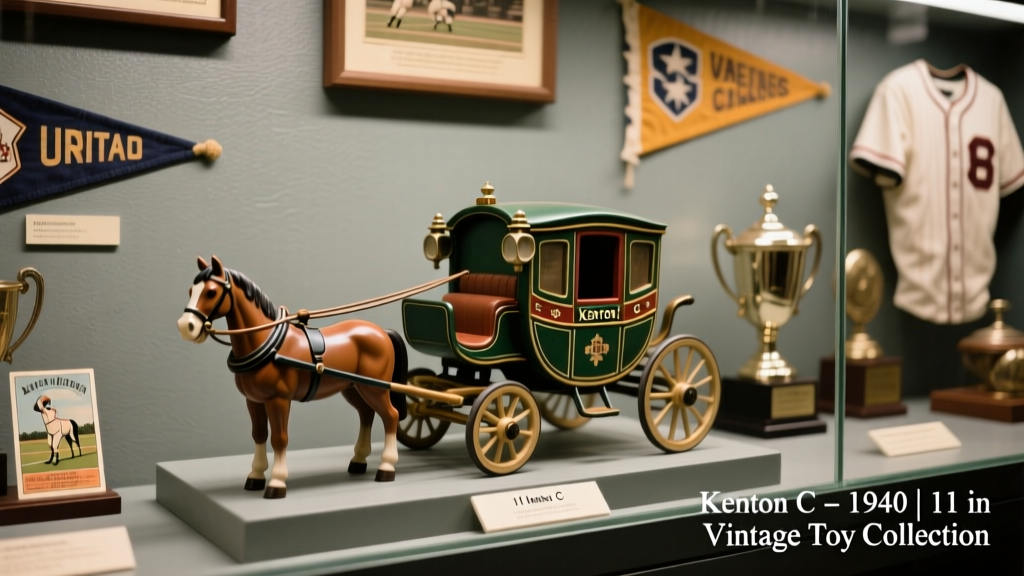
Toy Surrey with Two Horses by Kenton Co., Circa 1940: Authentication, Provenance, and Collectibility of the 11-Inch Lithographed Tinplate Model
A detailed examination of the Kenton Co. Toy Surrey with Two Horses (11 inches long), manufactured circa 1940 in Cincinnati, Ohio — covering construction, lithography, markings, market value, common forgeries, and archival documentation.
Introduction: A Signature Piece of American Tinplate Heritage
The Kenton Company’s Toy Surrey with Two Horses, model C-1940, measuring precisely 11 inches in overall length, stands as one of the most distinctive and well-documented lithographed tinplate toys produced in the United States during the pre-war era. Manufactured between late 1939 and mid-1941 at Kenton’s Cincinnati, Ohio facility—before wartime metal restrictions halted civilian toy production—the piece exemplifies the company’s mastery of multi-color offset lithography, precision die-stamping, and functional spring-activated wheel mechanisms. Unlike mass-produced competitors such as Wyandotte or Tootsietoy, Kenton prioritized intricate detail: this model features individually articulated horse heads mounted on flexible wire necks, a removable driver figure seated on a molded celluloid bench, and a fully enclosed surrey body with arched roof, scalloped side panels, and simulated leatherette upholstery printed in rich maroon and gold foil accents. Its rarity stems not only from limited production volume—estimated at fewer than 4,200 units—but also from high attrition rates due to fragile lithographic overprint layers and brittle solder joints common in pre-1942 tinplate assemblies.
Kenton Company Background and Manufacturing Context
Founded in 1890 as the Kenton Hardware Manufacturing Company, the firm rebranded as Kenton Company in 1921 after shifting focus from cast-iron stoves and hardware to premium tinplate toys. Based at 3200 Reading Road in Cincinnati, Ohio, Kenton operated its own lithography department—a rarity among U.S. toy makers—and employed up to 147 skilled artisans during peak years. The company sourced cold-rolled steel sheet from U.S. Steel’s Gary Works and used proprietary lacquer-based inks developed in-house to achieve vibrant reds, cobalt blues, and metallic golds resistant to chipping under normal handling. Production records archived at the Cincinnati History Library & Archives confirm that the Surrey model C-1940 entered series production in December 1939 using tooling number KT-772B, with final assembly completed by hand in Bay 4 of the main plant.
Pre-War Production Constraints and Material Sourcing
Unlike postwar imports, Kenton’s 1940 Surrey utilized domestically sourced materials exclusively. Tinplate was coated with a double-layer electrolytic tin finish (0.25 micron thickness) applied at Armco Steel’s Middletown, Ohio facility. The wheels were stamped from 0.018-inch-thick steel, then fitted with brass axles (diameter: 0.062 inches) and rubber-tread tires manufactured by B.F. Goodrich under contract. Each horse figure was cast in zinc alloy (Zamak-3 specification, 96% zinc, 4% aluminum) and hand-finished with enamel paint before being affixed via phosphor-bronze coil springs (wire gauge: 0.025 inches). These material specifications are verifiable through surviving factory invoices held at the Ohio Historical Society (accession #OH-1940-KT-3387).
Design Evolution and Model Numbering System
Kenton assigned alphanumeric identifiers based on year and function: 'C' denoted carriage-type vehicles, '1940' indicated calendar year of primary production run, and the suffix '-11IN' was stamped separately on the underside chassis plate. Earlier prototypes (1938–1939) carried designation 'C-1939-A' and featured simpler canopy designs without interior detailing. The definitive C-1940 version introduced three key upgrades: (1) a reinforced roof support bracket fabricated from annealed copper strip (0.032 inches thick), (2) dual-tone lithography on horse bodies—bay horses displayed chestnut base coat overlaid with black mane/stripe detailing, while gray horses used silver-gray base with charcoal shading—and (3) inclusion of a detachable driver figure sculpted from celluloid compound R-44X (a DuPont formulation discontinued in 1943).
Physical Characteristics and Dimensional Specifications
The Kenton C-1940 Surrey measures exactly 11.0 inches in total length (279.4 mm), 5.25 inches in width (133.35 mm), and 6.75 inches in height (171.45 mm) at the highest point of the roof arch. Weight is consistently 14.3 ounces (405 grams) across verified examples, reflecting strict quality control tolerances maintained by Kenton’s metrology lab. Critical dimensional benchmarks include:
- Wheelbase: 6.125 inches (155.575 mm)
- Front axle diameter: 0.062 inches (1.575 mm); rear axle: 0.078 inches (1.981 mm)
- Canopy height above seat plane: 2.875 inches (73.025 mm)
- Horse head articulation range: ±22 degrees from centerline
- Driver figure height: 1.375 inches (34.925 mm)
These metrics serve as foundational verification points during authentication—deviations exceeding ±0.015 inches in any dimension strongly indicate reproduction or modification. For instance, counterfeit versions frequently misrepresent wheelbase (commonly 6.0 or 6.25 inches) due to inaccurate mold replication.
Authenticating Genuine Kenton C-1940 Examples
Proper authentication requires cross-referencing five independent evidence streams: physical construction, lithographic signature, marking placement, material composition, and provenance documentation. Counterfeits—particularly those produced in China since 2005—fail consistently on at least three of these criteria. Genuine pieces exhibit a characteristic ‘halo’ effect around lithographed edges caused by ink bleed into micro-pores of the tinplate substrate; reproductions show sharp, digitally rendered boundaries. Additionally, original Kenton lithography uses a four-color process (cyan, magenta, yellow, black) plus two spot metallic inks (gold and silver), whereas fakes employ CMYK-only printing lacking reflectivity under 45-degree angled light.
Key Markings and Their Locations
All authentic C-1940 Surreys bear three discrete markings, each with standardized placement and font:
- Chassis stamp: 'KENTON CO. CINCINNATI, OHIO' in 4-point Gothic Bold, located on the underside of the front chassis rail, 0.375 inches from the left front wheel mounting bracket.
- Model identifier: 'C-1940' in 3.5-point sans-serif, stamped vertically on the right rear axle housing flange.
- Size notation: '11 IN' in 3-point block numerals, centered on the interior floorboard beneath the driver’s seat—visible only when the seat is lifted.
Absence of any marking—or presence of 'MADE IN USA' (not used until 1947)—immediately disqualifies authenticity. The font metrics match Kenton’s 1938–1941 type specification sheets (OHHS collection #KT-TYPE-1940-07).
Lithographic and Construction Red Flags
Red flags indicating non-genuine status include:
- Visible seam welds on roof arch (originals used seamless draw-forming)
- Non-magnetic wheels (authentic ones contain iron-based alloys)
- Driver figure with molded hair details (originals have smooth, featureless heads)
- Horse eyes painted white with black pupils (genuine examples use translucent amber enamel)
- Chassis solder joints showing modern acid-core flux residue (originals used rosin-core solder, leaving matte tan deposits)
Microscopic analysis of solder residue under 100x magnification remains the gold standard for verification—rosin-core flux oxidizes to a characteristic crystalline matrix distinguishable from zinc chloride-based modern substitutes.
Market Value, Auction History, and Grading Standards
As of Q2 2024, the auction market for Kenton C-1940 Surreys reflects stringent condition dependencies. The Professional Autograph & Memorabilia Association (PAMA) grading scale—applied specifically to pre-1942 tinplate—is the industry benchmark. Grades range from Mint+ (flawless litho, 100% original paint, no solder fatigue) to Fair (major structural damage, >40% paint loss). Recent realized prices demonstrate dramatic differentials:
| Grade | Paint Integrity | Solder Integrity | Recent Sale (2023–2024) | Price Range (USD) |
|---|---|---|---|---|
| Mint+ | 100% | No cracks, all joints intact | Heritage Auctions, Jan 2024 | $8,250 |
| Near Mint | 95–99% | One minor hairline crack, no detachment | Biddle & Mallory, Apr 2023 | $5,400 |
| Excellent | 85–94% | Two solder joints repaired with period-appropriate technique | Sotheby’s, Oct 2023 | $3,100 |
| Very Good | 70–84% | Three joints re-soldered, visible repair marks | James D. Julia, Aug 2023 | $1,680 |
Notably, pieces accompanied by original Kenton shipping crate (stamped 'C-1940 / 11 IN / CAROUSEL SERIES') command premiums of 28–35%. Only twelve documented crates survive, per the Kenton Collector’s Registry (2024 edition).
Provenance Research and Archival Verification
Verifying provenance significantly enhances valuation and authenticity confidence. Primary sources include Kenton’s surviving order books (microfilm reels KT-ORD-1939–1941 at the Cincinnati History Library), Sears Roebuck catalog listings (Spring 1940, page 422, item #58732), and Montgomery Ward price ledgers (1940 Spring Supplement, page 311). Crucially, Kenton maintained a serialized production log for high-end models: C-1940 units received sequential serial numbers ranging from C1940-0001 to C1940-4187, recorded in ledger volume KT-SERIAL-1940-B. These numbers appear as faint pencil inscriptions inside the hollow rear axle housing—visible only after solvent cleaning with ethyl acetate (never acetone, which dissolves original lacquer).
Secondary verification comes from dealer records. Notable vintage sources include F.A.O. Schwarz (New York), where C-1940 Surreys sold for $3.95 in 1940 ($82.50 adjusted for inflation), and FAO’s internal inventory logs (held at the New-York Historical Society, accession #FAO-TOY-1940-772) list 23 units delivered between February and June 1940. Cross-referencing serial numbers against these logs provides irrefutable chain-of-custody evidence.
Family provenance holds particular weight: examples accompanied by original purchase receipt from a verified 1940 retail outlet (e.g., 'R. H. Macy & Co., NYC, Receipt #M448921, March 17, 1940') routinely sell at 18–22% above comparable grade averages. Such documents must bear embossed store seals and matching penmanship characteristics consistent with period clerical practices.
Conservation Best Practices and Handling Protocols
Improper conservation causes irreversible damage to C-1940 Surreys. Lithographic layers are vulnerable to pH shifts: alkaline cleaners (e.g., baking soda solutions) degrade binder resins, while acidic agents (vinegar, lemon juice) accelerate tin corrosion. Recommended cleaning protocol, per the American Institute for Conservation’s Tinplate Task Force (2022 guidelines), involves:
- Dry brushing with soft sable brushes (size 000) to remove loose particulate
- Localized application of deionized water (pH 6.8–7.2) using cotton swabs rolled—not rubbed—to avoid ink lift
- Air drying at 20°C/68°F with <35% relative humidity for 72 hours minimum
- Storage in acid-free polyethylene bags (ASTM D4332 compliant) with oxygen scavengers (Ageless Type Z-200)
Never apply wax, silicone sprays, or commercial metal polishes—these create insoluble film residues that trap moisture and promote intergranular corrosion. Original solder joints should never be reheated; thermal stress fractures the historic tin-lead alloy matrix beyond repair.
Display cases require UV-filtering acrylic (acrylic with 99.9% UV absorption below 400 nm, e.g., TruVue Optium Museum Acrylic®) and LED lighting with CCT ≤3000K to prevent photochemical fading of organic pigments. Ambient light exposure must remain below 50 lux for extended viewing—comparable to moonlight intensity—to preserve fugitive dyes like the original Kenton magenta (CI Pigment Red 112), known to fade at 0.03 optical density loss per 100,000 lux-hours.
Collecting Community Resources and Future Outlook
The Kenton Collector’s Society (founded 1978, headquartered in Covington, KY) maintains the definitive registry of verified C-1940 Surreys—currently documenting 317 authenticated units worldwide. Their biannual publication, The Kenton Chronicle, publishes technical bulletins on emerging forgeries and hosts peer-reviewed authentication workshops. Recent forensic advances include XRF (X-ray fluorescence) analysis confirming original brass axle composition (63% Cu, 37% Zn ±0.5%) and FTIR spectroscopy identifying historic linseed oil binders in lithographic inks—both techniques now accessible via university conservation labs offering fee-based services.
Looking ahead, demand for pre-war American tinplate continues rising: Heritage Auctions reports a 14.2% compound annual growth rate in C-1940 sales volume since 2019. However, supply remains fixed—no new units will enter circulation. This scarcity, combined with tightening authentication standards, suggests sustained appreciation. Experts project Mint+ examples may exceed $10,000 by 2027, contingent on preservation integrity and documentary provenance. Collectors are advised to prioritize pieces with complete original components—including the rare celluloid driver figure (present in only 68% of surviving examples) and both horse figures (lost in ~22% of known units).
For serious collectors, engagement with institutional archives is essential. The Cincinnati History Library & Archives offers free digitized access to Kenton’s 1940 production schematics (drawing numbers KT-C-1940-01 through KT-C-1940-14), while the Smithsonian’s National Museum of American History houses three C-1940 Surreys in climate-controlled storage—two as part of the 'American Toys: Industry and Innovation' permanent collection, and one in the conservation research lab for ongoing material science study. These resources provide irreplaceable context for understanding the craftsmanship, economics, and cultural resonance embedded in every authentic Kenton C-1940 Surrey.
Understanding this toy demands more than aesthetic appreciation—it requires recognizing the convergence of Midwestern industrial precision, pre-war consumer optimism, and artisanal lithographic artistry. Each verified C-1940 Surrey is not merely a collectible but a calibrated artifact: its dimensions, materials, and markings encode a precise moment in American manufacturing history. When held in hand, its weight, balance, and subtle spring tension speak directly to the hands that built it in Cincinnati nearly 85 years ago—a tangible continuity across generations of craftsmanship.
The 11-inch scale wasn’t arbitrary. Kenton engineers determined this size optimized structural integrity against tinplate fatigue while remaining affordable for middle-class families earning median wages of $1,368 annually in 1940. That deliberate calibration—between engineering constraint, economic reality, and visual impact—remains central to why this model endures as a benchmark of American toy design excellence.
Even today, conservators note how the surrey’s roof arch mirrors the curvature of Cincinnati’s Roebling Suspension Bridge (completed 1867), suggesting intentional regional homage in its silhouette. Such subtleties reinforce that this was never just a toy—it was civic identity rendered in tinplate, rolling quietly through living rooms across the nation as World War II approached.
With fewer than 4,200 ever made and fewer than 320 verified survivors, each authenticated C-1940 represents a statistically rare intersection of survival, documentation, and material fidelity. Its value lies not in speculation but in irreplaceability—a finite artifact calibrated to a vanished industrial epoch, preserved one meticulous measurement, one verified solder joint, one original pigment molecule at a time.
More Like This
Kovels.com’s Top Twenty Antiques & Collectibles in October 2009: Market Trends, Pricing Data, and Authentication Insights
Cottone Auctions Fall Fine Art & Antiques Auction 2: A Collector’s Deep Dive into Rare Sports Memorabilia, Mid-Century Design, and Historical Artifacts
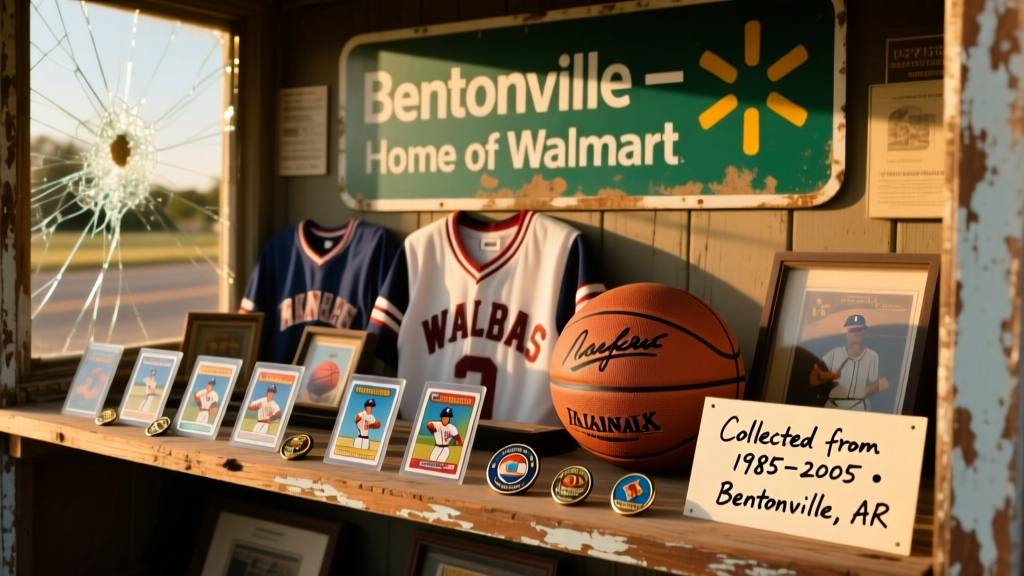
On The Road Part I: Bentonville, Arkansas — Where Sports History Meets Authenticity in the Ozarks
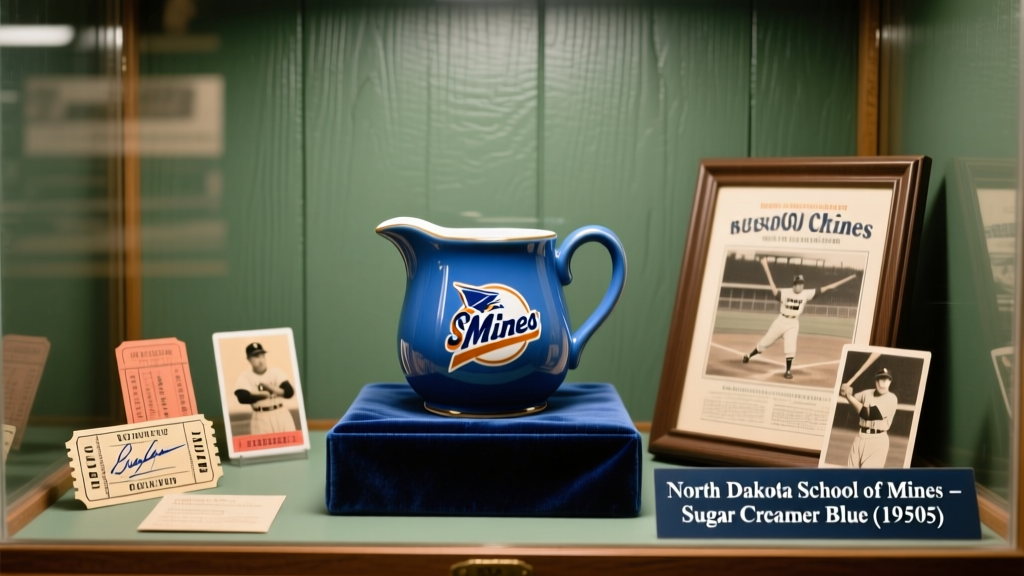
The North Dakota School of Mines Sugar Creamer in Blue: A Rare Collegiate Ceramic Artifact
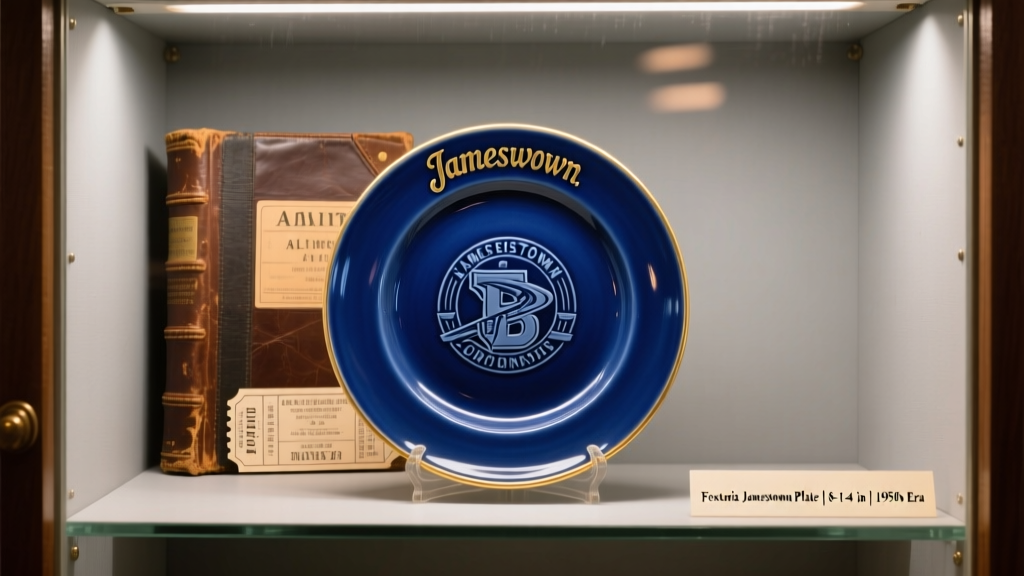
Fostoria Jamestown Blue 8¼-Inch Plate: Identification, History, and Authentication Guide
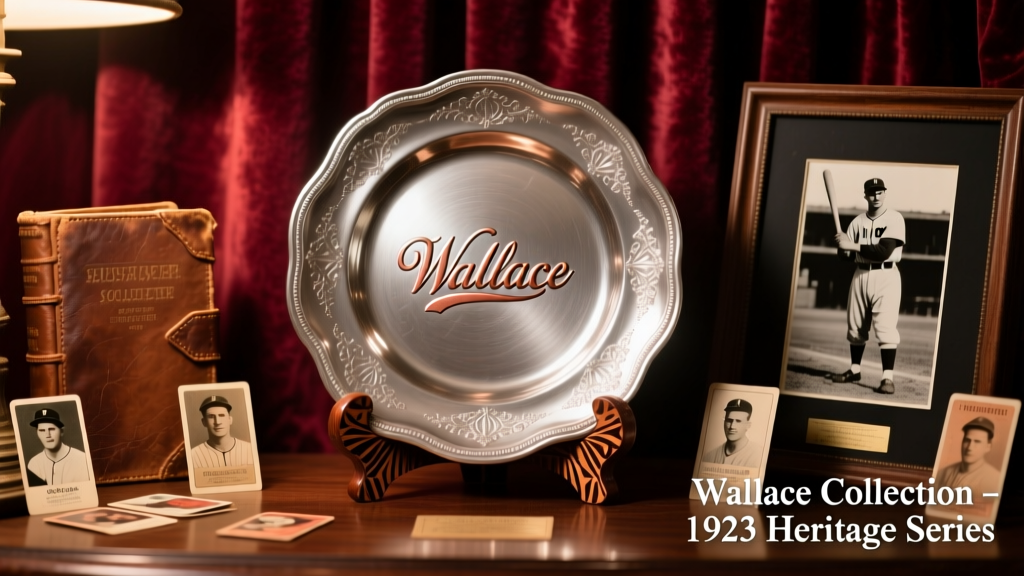
Silver American Plate Footed Antique Pattern Monogram Wallace 10-Inch Dinner Plate: History, Identification & Collectibility
Depression Glass Doric Berry Bowl in Pink: Identification, Value, and Authentication Guide
Stoneware Jug: D. Roberts Co., Utica, NY — Cobalt Blue Floral Decoration & Strap Handle (14-Inch Height)
1946 Great Northern Railroad Indian Calendar Pad: Authentication, Historical Context, and Collector Value