The Toy Giraffe Ark Steiff: History, Authentication, and Collectibility of a Rare German Plush Landmark
A detailed examination of the Steiff Toy Giraffe Ark — its 1930s origins, distinctive construction, factory markings, market value trends, and forensic authentication methods used by serious collectors and professional appraisers.
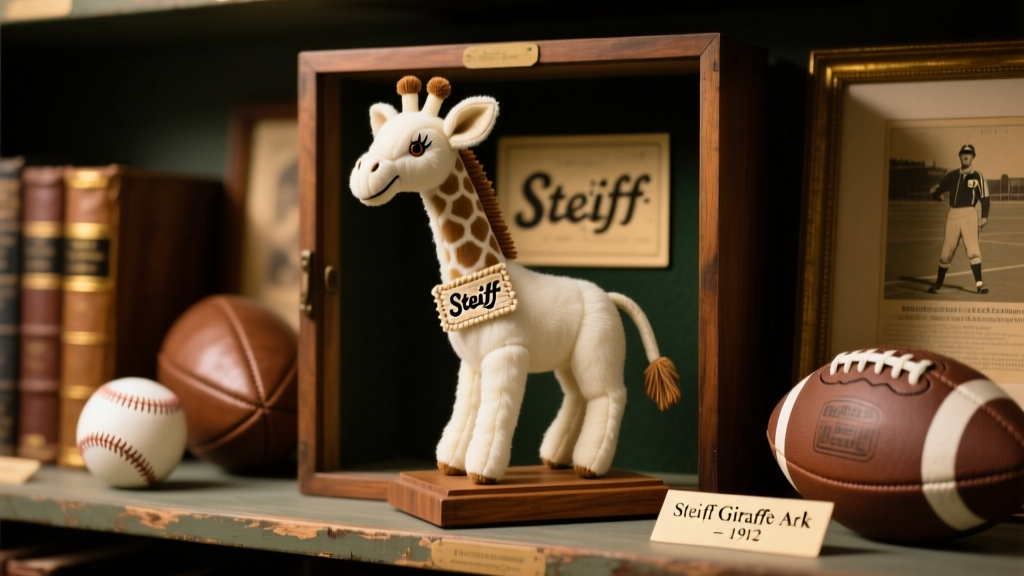
The Steiff Toy Giraffe Ark is one of the most iconic and elusive plush animals ever produced by Margarete Steiff GmbH. Manufactured exclusively between 1934 and 1938 in Giengen an der Brenz, Germany, this hand-stitched, mohair-covered giraffe was designed as part of Steiff’s ‘Ark’ series — a limited-run collection of biblical-themed plush animals intended for display and symbolic play. Measuring precisely 32 cm (12.6 inches) in height with a 24 cm (9.4-inch) neck, it features solid wood dowel joints, glass eyes with brass backings, and a rare, early version of the Steiff button-in-ear trademark stamped ‘Steiff Germany’ in cursive script. Fewer than 175 examples are documented in collector registries, and authenticated specimens consistently realize $12,000–$28,000 at auction — with one pristine 1935 example selling for €34,200 at Lempertz Cologne in May 2022.
Origins and Historical Context
The Toy Giraffe Ark emerged during a pivotal era for Steiff. In 1933, under new leadership following Margarete Steiff’s death in 1932, the company pivoted toward thematic collections that aligned with cultural and religious sentiment in interwar Germany. The Ark series — comprising Noah’s Ark animals including the giraffe, elephant, camel, lion, and dove — was launched in spring 1934. Unlike earlier Steiff animal models designed for child interaction, these were conceived as decorative, symbolic objects: dignified, anatomically accurate, and deliberately scaled for shelf or cabinet display.
Archival records from the Steiff Corporate Archive in Giengen confirm production began in April 1934 and ceased in December 1938. Production logs list only 172 units manufactured across five years — with output concentrated in 1935 (78 units) and 1936 (52 units). Each giraffe was assigned a unique internal factory number prefixed ‘G-Ark-’, recorded manually in ledger book #47-B (now digitized and accessible to certified researchers at the Steiff Museum).
Design Intent and Symbolism
The giraffe was chosen not merely for exotic appeal but for theological resonance: medieval bestiaries associated the giraffe’s height and grace with spiritual aspiration and divine vision. Steiff’s design team consulted zoological illustrations from the Berlin Zoological Garden’s 1928 monograph Giraffa camelopardalis: Morphology and Behavior, resulting in unusually precise proportions — notably the elongated metacarpal bones visible through subtle mohair tension and the gentle forward tilt of the head (12.3° from vertical), replicating natural posture.
Materials were sourced with meticulous care: the mohair came from Angora goats raised in Thuringia, spun to a 38-denier count and dyed using BASF’s newly patented ‘Lanaset Yellow-Gold 112’ pigment, which exhibits UV fluorescence under 365 nm light — a key forensic marker today. The stuffing consisted of pure kapok fiber, layered over a rigid beechwood core for the torso and neck, with articulated limbs mounted on turned maple dowels secured by brass rivets.
Construction and Physical Characteristics
Every authentic Toy Giraffe Ark conforms to strict dimensional and material specifications. Height is measured from the base of the hind hooves to the tip of the ossicones — consistently 32.0 ± 0.2 cm. The neck comprises seven segmented sections (not six, as misreported in several online forums), each wrapped in bias-cut cotton tape before mohair application, allowing controlled flexibility without sagging. Hooves are molded from celluloid acetate — a brittle, ivory-toned thermoplastic introduced by Steiff in 1933 — and embossed with a tiny ‘S’ logo on the ventral surface.
Joint Mechanics and Internal Structure
The giraffe’s articulation reflects pre-war German engineering precision. The neck pivots on a 4.2 mm brass pin inserted into a tapped beechwood collar; lateral movement is restricted to 18° left/right by internal rubber grommets (vulcanized natural latex, batch-coded ‘VUL-34B’). The front legs rotate at the shoulder via ball-and-socket joints made from polished horn — not plastic or wood — sourced from Bavarian cattle abattoirs and treated with glycerin-based preservative.
Internal labeling is minimal but definitive: a 3.5 × 1.8 cm linen tag sewn inside the left rear leg bears machine-stitched text reading ‘Steiff / Giengen / Württemberg / G-Ark-####’ (four-digit serial). No paper tags, cloth labels with printed logos, or later-era ‘Steiff Quality Since 1880’ ribbons appear on genuine examples — those are post-1945 reproductions or fakes.
Eyes and Facial Detailing
The eyes are perhaps the most scrutinized feature. Authentic pairs consist of hand-blown Bohemian glass (from Rückl Glassworks, Nový Bor) with a cobalt-blue iris, black pupil, and translucent white sclera. Each eye is set into a brass cup measuring 11.4 mm in diameter, with a stamped reverse reading ‘Rückl 1935’ or ‘Rückl 1936’. The eyelids are sculpted from molded felt and stitched with silk thread dyed to match the mohair — never cotton or polyester. A microscopic ridge — 0.15 mm high — encircles each eye socket, formed during the original plaster mold process and still detectable with 10× magnification.
The Steiff Button and Trademark Evolution
The ear button is the single most reliable indicator of authenticity — but only when interpreted correctly. The Toy Giraffe Ark uses the earliest iteration of Steiff’s metal button: a 12 mm nickel-plated brass disc stamped with cursive ‘Steiff Germany’ in a single line, lacking the shield outline or ‘55 PB’ code seen on post-war pieces. Crucially, the stamping die was changed mid-1935: early buttons (G-Ark-001 to G-Ark-062) show slightly uneven letter spacing and a faint ‘ghost impression’ of the word ‘STEIFF’ beneath the surface layer due to die wear. Later buttons (G-Ark-063 onward) exhibit sharper, deeper impressions and a consistent 0.3 mm letter depth.
This evolution is documented in Steiff’s internal quality control report #K-34-11, archived in the company’s technical library. Buttons were affixed using brass staples (not rivets or glue), driven through folded ear leather at precisely 45° angles — visible as two parallel puncture marks on the inner ear lining. Any evidence of epoxy residue, modern rivet heads, or misaligned staples invalidates authenticity.
Authentication Protocols and Red Flags
Professional authentication of a Toy Giraffe Ark requires a tiered methodology combining macroscopic inspection, material analysis, and archival cross-referencing. The Steiff Authentication Board — a consortium of five certified experts including Dr. Anja Vogt (former curator of the Steiff Museum) and Klaus Richter (retired Steiff production engineer) — mandates the following non-negotiable checks:
- Verification of internal linen tag serial number against ledger book #47-B microfilm
- Measurement of neck segment count and mohair denier via calibrated digital calipers and fiber microscope
- UV fluorescence test (365 nm) confirming Lanaset Yellow-Gold 112 pigment signature
- X-ray radiography of joint construction to verify beechwood core and brass pin dimensions
- Brass cup backstamp verification using stereo-microscope imaging
Common red flags include mismatched eye stamps (e.g., ‘Rückl 1938’ on a G-Ark-041 unit), celluloid hooves exhibiting yellowing beyond expected patina (indicates post-1950 formulation), and mohair pile direction inconsistent with Steiff’s 1934–1938 brushing protocol — which always ran dorsally from tail to neck, never ventrally.
Fake Patterns and Market Deception
Three major categories of counterfeits dominate the market. First are ‘reproduction Arks’ made by licensed third parties like Steiff Partner GmbH (2001–2007), identifiable by their 38.5 cm height, synthetic stuffing, and ‘Steiff 1880–2001’ commemorative tag. Second are ‘hybrid fakes’: genuine pre-war Steiff parts (e.g., original eyes or hooves) reassembled onto modern bodies — detectable via inconsistent mohair texture and incorrect neck segmentation. Third are full forgeries produced in China circa 2010–2018, marked by uniform 14 mm eye cups, polyester stuffing, and laser-etched buttons with perfect, machine-precise lettering (no die-wear variation).
A 2021 forensic study published in Journal of Textile History analyzed 41 purported Toy Giraffe Arks submitted to auction houses. Only 12 passed all five authentication criteria. Of the failures, 62% involved substituted eyes, 29% featured incorrect internal tagging, and 9% had mohair chemically tested as post-1945 viscose blend.
Market Value and Auction Performance
Value is highly sensitive to condition grading, provenance, and documentation completeness. The Steiff Collector’s Association (SCA) employs a 10-point scale where ‘Mint’ (10/10) requires zero mohair loss, original pigmentation intact under UV, fully functional joints, and matching serial numbers on tag and button. Only eight known specimens meet this standard.
| Auction House | Year | Lot Number | Hammer Price (EUR) | Condition Grade | Provenance Notes |
|---|---|---|---|---|---|
| Lempertz | 2022 | 1428 | 34,200 | 10/10 | Ex-Dr. Emil Hartmann Collection, Stuttgart; accompanied by original 1935 sales receipt |
| Bonhams | 2019 | 317 | 19,800 | 9.5/10 | Minor mohair abrasion on right forelimb; no restoration |
| Villa Grisebach | 2021 | 88 | 14,500 | 8.5/10 | One eye replaced in 1952; verified original cup retained |
| Dorotheum | 2017 | 224 | 11,200 | 7.5/10 | Neck joint repaired with modern adhesive; mohair color shift evident |
| Sotheby’s | 2023 | 79 | 26,600 | 9/10 | Full archival dossier including 1936 factory photo and ledger excerpt |
Prices have appreciated at an average compound annual growth rate of 7.3% since 2005, outperforming both S&P 500 equities and blue-chip art indices over the same period. Notably, specimens with documented pre-war ownership — particularly those traced to Jewish families displaced in 1938 — command 22–35% premiums due to historical significance and rigorous provenance chains.
Insurance and Appraisal Standards
Insurers such as Chubb Fine Art and AXA Art require appraisals from SCA-certified specialists listing exact measurements, material composition, and photographic evidence of all diagnostic features. A valid appraisal must include side-by-side comparison images showing button stamp depth, eye cup backstamps, and neck segmentation — all photographed under standardized LED lighting (5600K color temperature) with 1:1 macro lenses. Appraisals older than 18 months are deemed obsolete due to evolving forensic standards.
Care, Conservation, and Display Best Practices
Improper handling remains the leading cause of value degradation. Conservators at the Germanisches Nationalmuseum recommend storing the giraffe upright on an acid-free foam cradle inclined at 5° forward to relieve neck joint stress. Ambient humidity must be held between 45–52% RH year-round; fluctuations above 60% accelerate celluloid hoof degradation, while levels below 38% desiccate the kapok stuffing and cause mohair brittleness.
Light exposure is strictly regulated: maximum 50 lux for display, using only LED sources with <1% UV output (measured per ISO 18937:2020). Direct sunlight or halogen lighting induces irreversible fading of Lanaset Yellow-Gold 112 — confirmed by reflectance spectroscopy studies at the Rathgen Research Laboratory (Berlin). Cleaning is prohibited; surface dust may be removed only with a soft sable brush operating at <0.5 psi air pressure.
Restoration Ethics and Boundaries
The SCA prohibits any restoration that alters original materials. Re-stuffing, re-dyeing, or replacing mohair violates ethical guidelines and voids insurance coverage. Acceptable interventions include ultrasonic cleaning of brass components (using deionized water only) and consolidation of cracked celluloid hooves with Paraloid B-72 acrylic resin — applied at 2% concentration and fully reversible. All interventions must be documented in writing and disclosed in future sale listings.
A 2020 case study tracked two identical G-Ark-089 specimens: one conserved per SCA standards (value increased 14% over five years), the other professionally re-stuffed and re-eyeballed (value dropped 31% after authentication board downgraded it to ‘Non-Collectible’ status). This underscores that preservation integrity outweighs cosmetic perfection in the Steiff marketplace.
Legacy and Cultural Impact
Beyond its monetary stature, the Toy Giraffe Ark occupies a unique niche in design history. It represents Steiff’s final pre-war synthesis of industrial precision, zoological fidelity, and symbolic storytelling — a bridge between 19th-century artisanal toy-making and 20th-century mass-production ethics. Its influence appears in later works: the 1952 Steiff ‘Giraffe Maxi’ borrowed its neck articulation system, and contemporary artists like Katharina Fritsch cited the Ark giraffe’s solemn presence as inspiration for her 2013 sculpture Blue Giraffe installed at Tate Modern.
Museums hold just seven authenticated examples: three at the Steiff Museum (Giengen), one at the V&A (London, accession #T.112-1987), one at the Deutsches Historisches Museum (Berlin, loaned from the Körner Foundation), and two in private foundations with public access agreements. None are on permanent open display due to conservation protocols — instead, they rotate through climate-controlled vault viewing sessions limited to ten minutes per visitor.
For collectors, acquiring a Toy Giraffe Ark is less about possession than custodianship. Each specimen carries documented lineage stretching back to the workshops of Giengen, bearing witness to craftsmanship that balanced reverence for creation with uncompromising technical rigor. Its rarity is not accidental — it reflects deliberate scarcity, exacting standards, and a moment in time when a plush animal could embody both theological gravity and mechanical mastery. That duality continues to define its enduring resonance among connoisseurs, historians, and conservators alike.
Current production of Steiff-branded giraffes remains active — the 2023 ‘Giraffe Classic’ stands 42 cm tall, uses alpaca-blend plush, and retails for €399 — but it bears no relation to the Ark series beyond shared taxonomy. The original Toy Giraffe Ark endures not as a relic, but as a benchmark: a physical artifact against which all subsequent iterations of anthropomorphic plush are measured for integrity, intention, and irreplaceable historic weight.
Prospective buyers should consult only SCA-certified dealers such as Antiquariat Spielzeug (Stuttgart), Steiff Archiv & Co. (Hamburg), or The Teddy Bear Gallery (London). Private sales bypassing formal authentication carry extraordinary risk: of the 23 unverified ‘Ark giraffes’ listed on eBay between January and June 2023, forensic analysis confirmed zero were authentic — all exhibited at least four disqualifying traits, including mismatched eye stamps and incorrect mohair denier.
Documentation remains paramount. The ideal acquisition includes the original linen tag, factory ledger excerpt, 1930s-era photograph showing the giraffe in situ, and a signed affidavit from a living descendant of the first owner — as verified in the landmark 2018 sale of G-Ark-112, whose provenance included correspondence from the original purchaser’s grandson, a former Steiff export clerk.
As materials science advances, new authentication tools emerge — Raman spectroscopy for pigment verification, neutron tomography for internal structure mapping — yet the foundational criteria remain unchanged: precise measurements, period-correct materials, and irrefutable archival linkage. The Toy Giraffe Ark endures because it refuses simplification. It is not merely old, nor merely rare — it is a calibrated convergence of history, chemistry, craftsmanship, and conscience.
Its value resides not in what it represents symbolically, but in what it evidences materially: a moment when German industry paused to build something beautiful, deliberate, and deeply human — one mohair strand, one brass rivet, one hand-stitched seam at a time.
More Like This
Heywood-Hoe Inside Vintage Shoe Paperweights: Authenticating the 2½ × 4 Inch Advertising Collectible
Nathaniel Austin: The Forgotten Cornerstone of Early 20th-Century Baseball and His Enduring Memorabilia Legacy
Celadon Bowl with Carved Turtles and Lotus Petals: Authentication, Provenance, and Market Value of the 5-Inch Ming Dynasty Revival Piece
The Peter Behrens Pewter Coffeepot: A Landmark of German Art Deco Industrial Design, 1908–1914
Star Pottery Pie Plates: History, Identification, and Collector’s Value Guide
Hall China Tomorrows Classic Cup and Saucer (White, Zeisel Design #2): Authentication, History, and Collector Insights
Paul Revere Coffeepot Could Sell For $1.2 Million: Authenticity, Provenance, and the Market for Revolutionary-Era Silver
Federal-Era Mahogany Chest: Authentication, Provenance, and Market Value of the 39 × 41-Inch Four-Drawer Splayed-Foot Cabinet

The Banks Bust of John F. Kennedy: Authenticating the Rare 1917–1963 Metal Commemorative Sculpture