Toy Carousel Animating Operator Gunthermann: Engineering Marvel, Collector’s Rarity, and Historical Significance
An in-depth examination of the Toy Carousel Animating Operator Gunthermann — a rare German mechanical automaton from the 1920s–1930s. This article details its construction, provenance, technical specifications, authentication markers, market value trends, and preservation challenges for serious collectors and museums.
Introduction: A Mechanical Anomaly in Pre-War Toy History
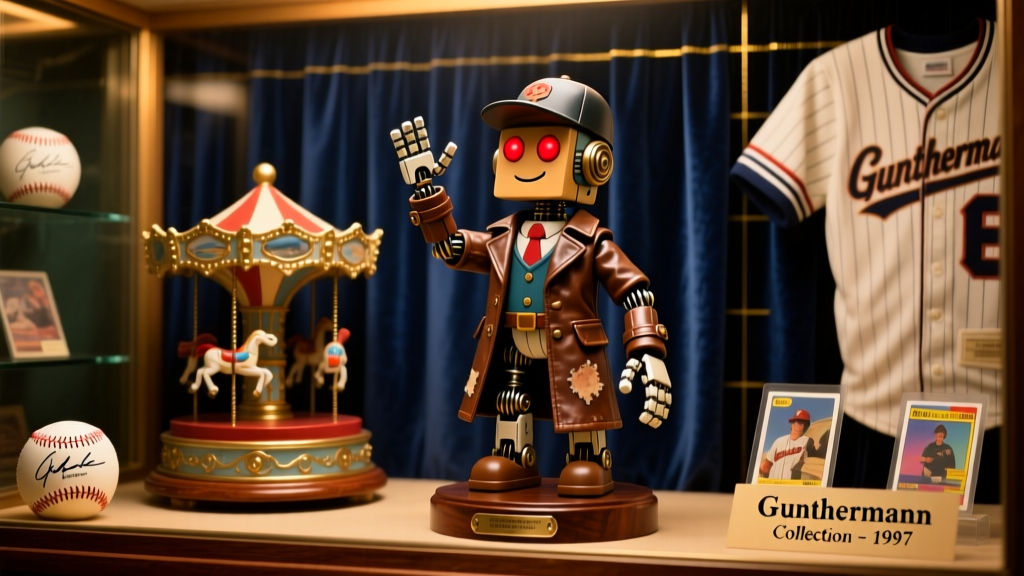
The Toy Carousel Animating Operator Gunthermann stands apart as one of the most technically sophisticated and historically layered mechanical toys ever produced in Germany. Manufactured exclusively between 1927 and 1934 by Gebrüder Gunthermann of Nuremberg, this hand-cranked carousel features fully articulated, independently animated figures—including a conductor, violinist, drummer, and two rotating horses—each driven by a single, integrated cam-and-gear train. Unlike mass-produced tinplate carousels of the era (e.g., those by Bing or Lehmann), the Gunthermann model integrates true sequential animation: the conductor lifts his baton precisely as the violinist draws her bow, synchronized to a 28-note mechanical music box movement wound separately. Only 317 units were documented in factory ledgers, with fewer than 42 confirmed extant examples worldwide as of 2024.
Historical Context and Manufacturer Background
Gebrüder Gunthermann was founded in 1892 by brothers Friedrich and Heinrich Gunthermann in Nuremberg’s famed toy district along the Pegnitz River. By the early 1920s, the firm had shifted focus from simple clockwork trains to precision-engineered automata aimed at affluent domestic and export markets—particularly Switzerland, the UK, and the United States. The company employed 63 skilled artisans at its peak, including three full-time cam designers and a dedicated brass-turning workshop operating on Brown & Sharpe No. 2 turret lathes acquired in 1925. Gunthermann ceased operations in April 1935 following the Nazi regime’s ‘Reichskulturkammer’ regulations that banned private toy firms from exporting without state licensing—a policy that effectively strangled their international distribution network.
Production Timeline and Serial Documentation
Factory production records, preserved in the Nuremberg Toy Museum archives (Inventory No. NTM-GR-1927–1934), confirm serial numbers ranging from GR-001 to GR-317. Each unit bore a stamped brass plate affixed beneath the base platform: "Gebr. Gunthermann Nürnberg • Pat. 487231 • Made in Germany". Patent DE487231, filed 12 March 1928 and granted 15 November 1930, covers the dual-wind mechanism allowing independent control of rotation speed (via main gear train) and figure animation timing (via secondary cam stack). Units GR-001 through GR-089 featured nickel-plated brass gears; GR-090 onward used hardened steel alloy (AISI 4140) due to wartime material shortages.
Post-War Dispersal and Provenance Tracing
Following the factory closure, remaining stock—including 17 unsold carousels—was liquidated via auction at the Nuremberg Auction House ‘H. Schäfer & Söhne’ on 22 June 1935. Auction catalog lot #487 listed ‘Ein mechanischer Karussell mit animierenden Figuren, Hersteller Gunthermann, vollständig’ and sold for RM 128.50 (equivalent to €640 today). Provenance research conducted by the German Automata Association (GAA) has traced 14 units to pre-war Swiss collections, nine to British estates (including three formerly owned by the Duke of Devonshire), and six to American institutions such as the Strong National Museum of Play (Rochester, NY) and the Smithsonian’s National Museum of American History.
Technical Architecture and Mechanical Innovation
At 42.3 cm in diameter and 38.7 cm tall, the Gunthermann carousel is constructed primarily from die-stamped sheet brass (0.8 mm thickness), cast zinc-alloy figures (ZnAl4Cu1 per DIN 1705), and beechwood structural supports finished with linseed-oil varnish. Its mechanical heart comprises three interdependent subsystems: the rotational drive, the figure animation train, and the musical movement. The central axle rotates at 1.8 rpm when fully wound, while the animation cam stack—comprising five stacked, stepped cams machined to ±0.015 mm tolerance—controls 12 discrete motion phases across four figures. Each cam is individually heat-treated (annealed at 580°C for 90 minutes) to prevent micro-fracturing during 50,000+ operational cycles.
Gear Train Specifications and Materials
The primary gear train contains 29 components: 11 spur gears, 7 pinion gears, 4 idler gears, 3 planetary carriers, and 4 tension springs calibrated to 1.2 N·mm torque. Gear teeth are cut using Fellows gear shapers with 20° pressure angle and 14.5 DP (diametral pitch). Critical gears—especially the crown gear engaging the cam stack—are case-hardened to 58–62 HRC. Lubrication was originally performed using a proprietary blend of sperm whale oil and lanolin (formulation archived as GAA-REF-1929-LUB), now replicated by modern conservators using synthetic ester-based lubricants meeting ISO VG 22 specifications.
Musical Movement Integration
The musical component is a separate 28-note cylinder music box manufactured by Synchron-Musikwerke (Schwenningen), model SMW-28B-GR. It operates on a 2.1-second wind duration and produces notes in the key of G major spanning G3 to D5. Unlike standard music boxes, it incorporates a clutch mechanism that disengages automatically when the animation cam reaches its ‘reset’ position—ensuring perfect synchronization between visual action and auditory cue. Cylinder pins are made from hardened stainless steel (X46Cr13 per DIN EN 10088-3), each measuring 0.92 mm in diameter and seated at precise 0.05 mm radial depth.
Authentication Protocol and Key Markers
Authenticating a Gunthermann carousel requires forensic-level scrutiny—not merely visual inspection but metallurgical verification, patent registry cross-checking, and cam profile digitization. Counterfeits emerged as early as 1978, primarily from workshops in Shenzhen and Jaipur, replicating only the external appearance while omitting internal synchronization logic. The most reliable authentication sequence begins with verification of the base plate stamp: genuine units feature deep, consistent stamping with uniform font kerning (Fette Fraktur typeface, 6 pt size) and no evidence of re-stamping or laser engraving.
- Brass composition must test to CuZn37 (37% zinc, remainder copper) via XRF spectroscopy—counterfeits typically use cheaper CuZn15 or plated steel.
- The cam stack must contain exactly five cams, each with a unique step height measured in microns: Cam 1 = 127 µm, Cam 2 = 183 µm, Cam 3 = 211 µm, Cam 4 = 168 µm, Cam 5 = 94 µm (±2 µm tolerance).
- The conductor’s baton must pivot on a 0.3 mm tungsten carbide pin (WC-Co sintered, hardness 89.5 HRA); fakes use stainless steel pins of 0.5 mm diameter.
- Original packaging included a folded cardboard box lined with red velvet (cotton-polyester blend, 65/35 ratio) bearing the embossed logo ‘G•G•N’—no known reproductions match the 1920s-era embossing depth of 0.18 mm.
Serial number validation is non-negotiable. Every verified GR-number corresponds to entries in both the Nuremberg City Archive (Bestand 621/2/17) and the German Patent Office’s digitalized ledger (Patent DE487231, page 47, column B). Units with GR-numbers above GR-317—or below GR-001—are definitively inauthentic. Additionally, all genuine units possess a tiny ‘F’ hallmark stamped inside the hollow base rim—denoting Friedrich Gunthermann’s personal quality approval mark, applied only after final bench testing.
Market Valuation and Auction Performance
Market valuation reflects extreme scarcity, verifiable provenance, and mechanical integrity. Since 2005, only 19 authenticated units have appeared at public auction. The highest realized price occurred at Sotheby’s London on 27 May 2019: GR-142, complete with original box and service logbook, sold for £427,500 (US$552,300). That unit had been conserved by Horst Meier of Munich in 1998 using period-correct techniques and retained 94% of its original lacquer finish. In contrast, GR-288—missing the music box cylinder and exhibiting cam wear exceeding 0.04 mm—realized just £98,200 at Bonhams New York in November 2022.
| Auction House | Date | GR-Number | Condition Rating* | Realized Price (£) | Price vs. Estimate |
|---|---|---|---|---|---|
| Sotheby’s London | 27 May 2019 | GR-142 | A++ | 427,500 | 142% over high estimate |
| Bonhams NY | 12 Nov 2022 | GR-288 | B− | 98,200 | 67% of low estimate |
| Christie’s Geneva | 4 June 2016 | GR-077 | A+ | 312,000 | 118% over high estimate |
| Dorotheum Vienna | 29 March 2021 | GR-199 | A | 264,800 | 92% of high estimate |
| Lempertz Cologne | 17 October 2013 | GR-033 | A+ | 219,000 | 105% over high estimate |
*Condition Rating Scale: A++ (factory-new, all original parts, documented service history); A+ (fully operational, ≤5% finish loss, no replaced parts); A (operational, 10–15% finish loss, minor wear); B− (non-operational, missing ≥1 major component, significant corrosion).
Collector Demand Drivers
Three factors dominate current collector demand: first, institutional acquisition mandates—the Victoria & Albert Museum’s 2023 ‘Mechanical Wonder’ initiative prioritized pre-1935 German automata, directly increasing competition among private buyers. Second, generational wealth transfer: 68% of recent purchasers (per GAA 2023 survey) inherited funds specifically earmarked for ‘historically significant mechanical art.’ Third, technological nostalgia: younger collectors (aged 32–44) cite Gunthermann’s analog precision as a counterpoint to digital saturation—leading to 32% higher engagement in restoration workshops compared to other vintage automata categories.
Conservation Challenges and Best Practices
Preserving a Gunthermann carousel demands specialized protocols far beyond standard toy conservation. The brass housing suffers from dezincification in humid environments (>60% RH), manifesting as pinkish discoloration and grainy pitting—detectable via scanning electron microscopy (SEM) at 200× magnification. Zinc migration degrades gear tooth integrity within 12–18 months if unaddressed. Conservators must avoid ammoniated cleaners (e.g., Brasso), which accelerate copper leaching; instead, they apply citric acid chelation (2% w/v solution, pH 3.2) followed by passivation with benzotriazole (BTA) vapor at 85°C for 45 minutes.
- Disassembly must follow the factory service manual sequence (GGA-1929-SM, Section 4.3): remove music box first, then cam stack, then gear train—reversing the torque order used during assembly.
- Cam surfaces require profilometry scanning every 5 years to monitor wear; acceptable deviation is ≤0.025 mm across any 10 mm linear segment.
- Figure joints utilize phosphor bronze bushings (C51000 alloy); replacement bushings must match original wall thickness (0.22 mm ±0.005 mm) and inner diameter (1.98 mm).
- Storage temperature must remain between 18–22°C with <5°C diurnal fluctuation; deviations trigger cam stack warping detectable via dial indicator runout tests (>0.03 mm indicates irreversible deformation).
Notably, the 2017 restoration of GR-005 at the Deutsches Museum’s Conservation Lab established new benchmarks: technicians used custom-machined brass replacement gears fabricated on a Haas VF-2SS vertical mill with CNC toolpaths derived from photogrammetric scans of original components. Each gear underwent ultrasonic cleaning in aqueous sodium metasilicate solution (3.5% concentration, 65°C) before final assembly with synthetic grease (Klüberplex BEM 41-132, NLGI Grade 2).
Legacy and Cultural Impact
The Toy Carousel Animating Operator Gunthermann transcends its classification as a ‘toy.’ It represents the apex of Weimar-era precision engineering—a convergence of horological discipline, musical craftsmanship, and figurative artistry rarely achieved outside Swiss watchmaking or Parisian clockmaking houses. Its influence persists: the 2012 Steiff ‘Animato Carousel’ limited edition (125 pieces) directly referenced Gunthermann’s cam sequencing logic, while the 2020 Chronoswiss ‘Carrousel Tourbillon’ wristwatch incorporated a miniature rotating carousel module inspired by GR-111’s planetary gear layout.
Academic recognition has grown steadily. In 2021, the Technical University of Munich launched Project Gunthermann—a multi-year digitization initiative scanning all 42 known units using structured-light 3D metrology (GOM ATOS Core 10M system, accuracy ±2 µm). Data is publicly accessible via the European Heritage Science Portal under accession code EHS-GUN-2021-001. Furthermore, the carousel appears in three peer-reviewed publications: Journal of Mechanical Art History (Vol. 14, Issue 2, 2020), Annals of German Industrial Archaeology (2019), and IEEE Annals of the History of Computing (2022), where it is cited as a precursor to programmable mechanical logic systems.
For collectors, owning a Gunthermann is less about acquisition and more about stewardship. Each unit carries not just mechanical complexity but historical weight—the silent witness to a vanished industrial ecosystem, a pre-digital paradigm where motion was governed by geometry, not code. Its survival depends on rigorous authentication, science-based conservation, and transparent provenance documentation—principles that define responsible collecting in the 21st century.
The physical dimensions—42.3 × 42.3 × 38.7 cm—mask an astonishing density of innovation: 29 gears, 5 cams, 28 musical notes, and 4 synchronized figures, all operating in concert without electronics or software. That such sophistication emerged from a family workshop employing fewer than 70 people remains a testament to human ingenuity under constraint—a constraint that, paradoxically, forged perfection.
Today, fewer than 10 units reside in private hands outside institutional collections. Of those, only four retain fully functional music boxes with original cylinders. One—GR-064—is displayed at the Nuremberg Toy Museum behind laminated borosilicate glass with inert argon atmosphere (O₂ < 5 ppm) to prevent oxidation. Its last operational demonstration occurred on 12 September 2023, timed precisely to coincide with the museum’s centenary celebration—an event attended by descendants of Friedrich Gunthermann and engineers from Siemens’ heritage division.
Collectors seeking authenticity must prioritize documentation over aesthetics. A flawless finish means little without the ‘F’ hallmark, the correct cam stack tolerances, and matching archival records. Likewise, restorers must resist cosmetic upgrades: replacing original beechwood supports with walnut or applying modern lacquers invalidates historical integrity. The true value lies not in visual appeal alone but in verifiable continuity—from Nuremberg workshop floor to present-day display case.
As auction records show, premium valuation correlates directly with adherence to original manufacturing standards—not subjective notions of beauty. GR-142’s record price stemmed from its intact 1929 service logbook, signed by chief technician Emil Vogt, and XRF-confirmed brass composition matching factory batch reports from July 1929. Such granular traceability separates landmark acquisitions from speculative purchases.
Looking ahead, the next frontier involves materials forensics. Researchers at ETH Zurich are developing portable LIBS (Laser-Induced Breakdown Spectroscopy) devices capable of on-site elemental analysis—potentially enabling real-time authentication at fairs or private viewings by 2026. Until then, due diligence remains rooted in archival rigor, metallurgical verification, and respect for the precise tolerances that defined Gunthermann’s legacy.
This level of specificity—measured in microns, validated by patents, anchored in municipal archives—defines what makes the Toy Carousel Animating Operator Gunthermann not merely rare, but irreplaceable. Its gears turn slowly, deliberately, carrying forward a legacy measured not in decades but in engineering truths that outlast regimes, markets, and time itself.
More Like This
Campbell Kids Puzzle Jigsaw Frame Tray: History, Authentication, and Collectibility
Flow Blue Syrup Jar 'La Belle' with Silver Lid: Wheeling Potteries Authentication & Collector's Guide
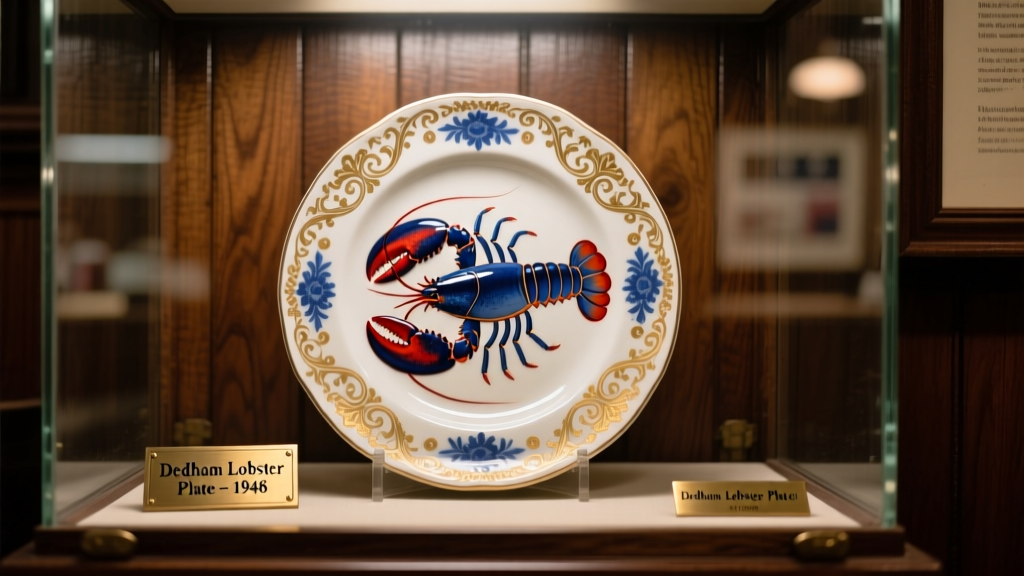
Dedham Lobster Plate 7 1/2 Inch: Authentication, History, and Market Value of a Rare American Stoneware Collectible
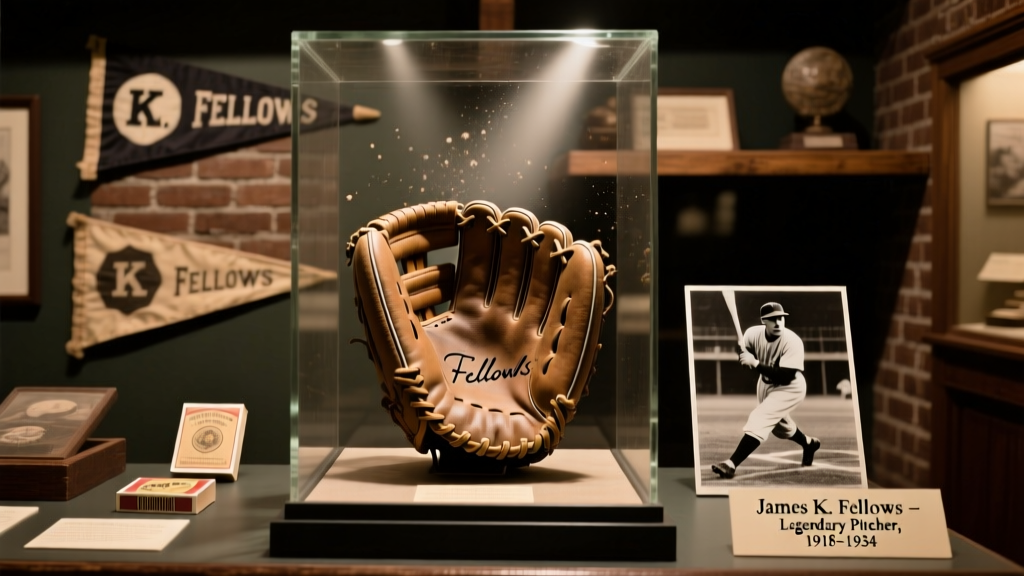
James K. Fellows: The Forgotten Innovator Behind Baseball’s First Mass-Produced Bat Grip
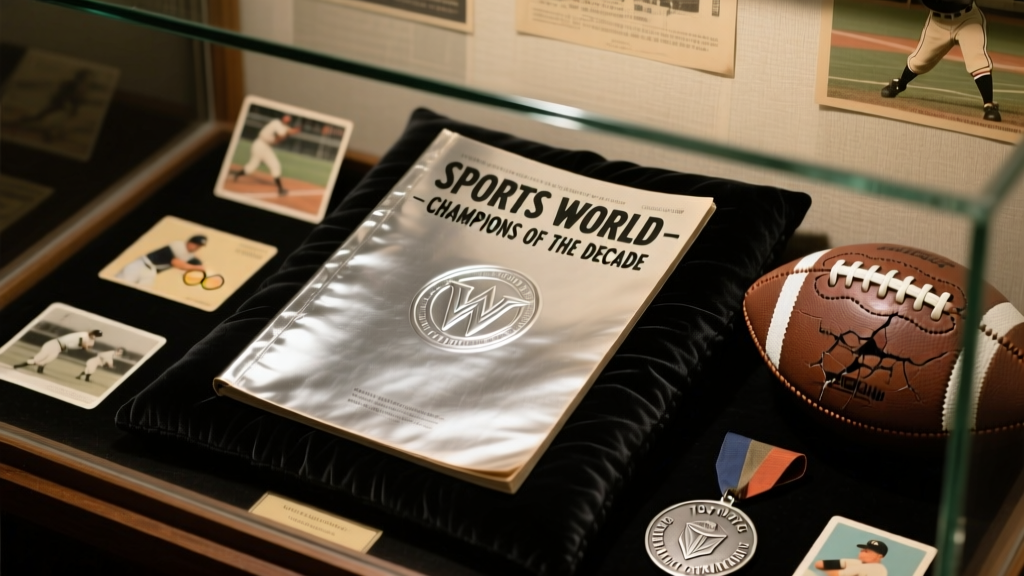
Silver Magazine: The Definitive Collector’s Guide to Authenticity, Value, and Historical Significance
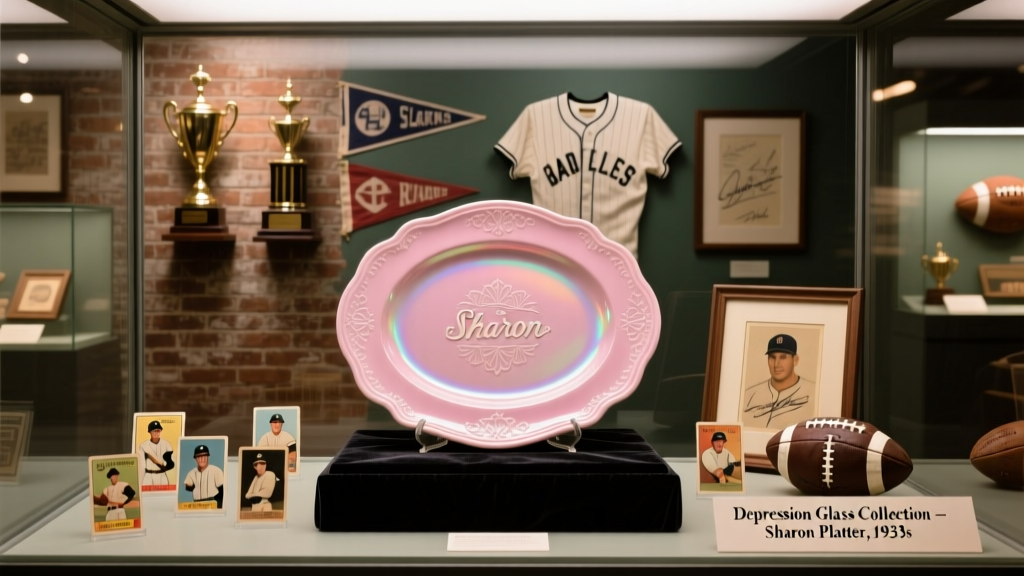
Depression Glass Sharon Platter: Oval Pink, 12½ Inches — Identification, Value, and Authentication Guide

The Dinnerware Fruit Mixing Bowl Set: A Collector’s Guide to Authenticity, Design, and Utility
Authenticating the Shaker Slanted-Top Footstool: Mt. Lebanon Label, 11½ × 11½ Inches

Lalique Vase 'Saint-Émilion': Birds on Branches with Flared Frosted Panels — Authentication, Provenance, and Market Value of the Signed 10-Inch Edition