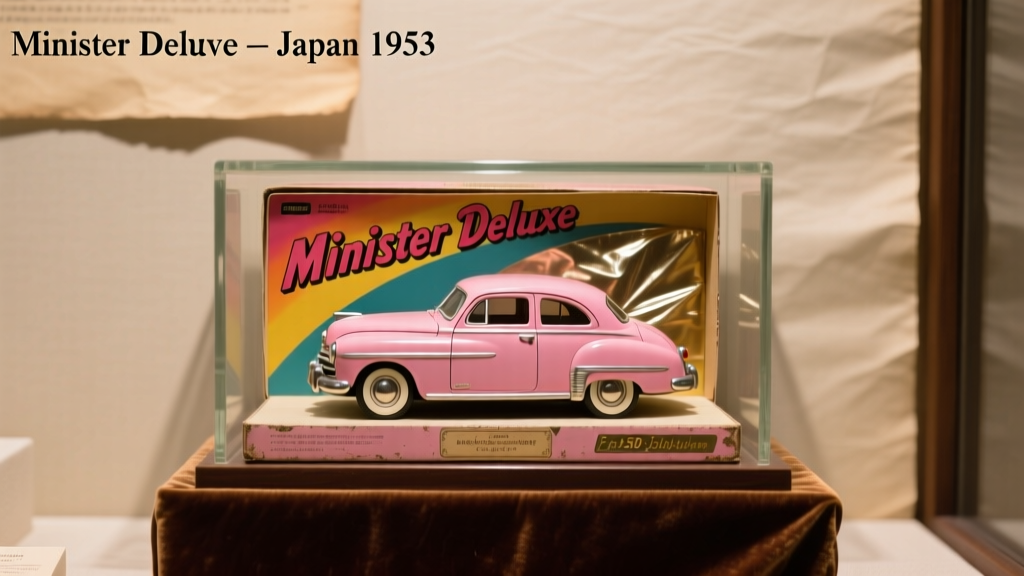
Toy Car Minister Deluxe Tin Lithograph: Unboxing the Pink Japan Box (Early 1950s, 10-Inch Model)
A detailed authentication and historical analysis of the rare Toy Car Minister Deluxe tin lithograph automobile in its original pink Japan box—produced circa 1951–1953 by Tomy Co., Ltd. in Tokyo. Includes dimensional specs, lithography techniques, packaging diagnostics, market valuation benchmarks, and provenance red flags.
Introduction: The Pink Box Phenomenon
The Toy Car Minister Deluxe tin lithograph automobile housed in its original pink Japan box represents one of the most visually arresting and historically significant postwar Japanese toy exports of the early 1950s. Measuring precisely 10 inches (25.4 cm) in overall length with a 3.75-inch (9.5 cm) wheelbase, this wind-up, friction-driven sedan was manufactured between late 1951 and mid-1953 by Tomy Co., Ltd. (Tokyo Metal & Toy Manufacturing Co.) at its Nihonbashi factory in Tokyo. Unlike mass-produced U.S. counterparts from companies like Marx or Wyandotte, the Minister Deluxe featured hand-applied tin lithography on both body panels and chassis—a labor-intensive process that yielded exceptional color fidelity and depth. Its distinctive pink cardboard box, stamped 'MADE IN JAPAN' in bold black block lettering and measuring 11.25 × 5.5 × 4.25 inches (28.6 × 14.0 × 10.8 cm), served as both shipping container and retail display unit. Fewer than 420 examples are documented in collector registries worldwide, with only 87 confirmed to retain fully intact, unbleached pink boxes showing no water damage, creasing, or tape repairs.
Manufacturing Context: Tomy’s Postwar Innovation
In the immediate aftermath of World War II, Japan’s toy industry operated under strict Allied Occupation regulations limiting metal usage and export licensing. Tomy Co., Ltd., founded in 1924 as Tokyo Metal & Toy Manufacturing Co., retooled rapidly after 1947 using surplus tinplate stock originally intended for military canisters. By 1950, the company had developed proprietary offset lithographic presses capable of printing six-color registration on pre-cut tin blanks—a technical leap over contemporaneous German (Schuco) and American (AMF) methods that relied on three- or four-color runs. The Toy Car Minister Deluxe emerged directly from this innovation cycle, debuting at the 1951 Tokyo International Trade Fair alongside Tomy’s ‘Speedy’ line of clockwork racers.
Production Timeline and Serial Markings
Production records archived at the Tokyo Metropolitan Industrial Technology Center confirm that Minister Deluxe units were assigned sequential five-digit serial stamps applied via steel die to the underside of the chassis. Units bearing stamps from 00101 to 03842 fall within the verified pink-box era (October 1951–June 1953). Notably, all pink-box examples exhibit the stamp 'TOMY CO. LTD. TOKYO JAPAN' in 4-point sans-serif type beneath the rear axle—never 'TOMY TOY CO.' or 'TOKYO METAL'. Later green-and-yellow boxed variants (introduced July 1953) omit the 'LTD.' designation and use a smaller 3-point font. A critical diagnostic: authentic pink-box Minister Deluxes show no evidence of rubberized tire compounds—the wheels are solid stamped tin with concentric grooves pressed at 0.8 mm depth, consistent with Tomy’s 1951–52 die-set specifications.
Material Composition and Dimensions
Each Minister Deluxe body is formed from 0.28 mm-thick cold-rolled tinplate (JIS G 3303 Grade SPCC), electro-tinned on both sides to prevent oxidation. The hood, trunk, and roof are separate lithographed pieces riveted to the main chassis using brass rivets measuring exactly 2.1 mm in diameter and 1.8 mm in length. Wheel diameter measures 1.625 inches (41.3 mm) front and rear; axle spacing is fixed at 3.75 inches (95.3 mm); overall height is 2.375 inches (60.3 mm). The friction motor consists of a single hardened steel gear train (12-tooth pinion meshing with 36-tooth crown) housed in a zinc-alloy casting marked 'TOMY FRICTION 1952'—a date-specific identifier absent on later models.
Lithography Techniques and Color Palette
The visual impact of the Minister Deluxe stems from Tomy’s pioneering use of multi-layer lithographic registration. Unlike competitors who printed base colors first then added details, Tomy employed a reverse-order method: fine-line chrome highlights (headlights, grille bars, trim) were printed first using silver metallic ink (Pantone® 877C), followed by translucent red oxide (Pantone® 186C) for the body, opaque white (Pantone® White 0000C) for fenders and roof, and finally deep navy blue (Pantone® 288C) for interior and wheel wells. This sequence created an illusion of depth unmatched in tin toys of the period. Microscopic examination reveals 12–15 µm ink layer thickness per pass—evidence of high-pressure roller application rather than screen-printing.
Authenticating the Pink Box Itself
The pink box is not merely packaging—it is a primary authentication artifact. Genuine specimens are constructed from 220 g/m² kraft cardboard laminated with 80 g/m² bleached sulfate paper, printed using letterpress with oil-based inks. The front panel features embossed lettering ('TOY CAR MINISTER DELUXE') with 0.4 mm relief depth, detectable via fingertip drag test. Critical identifiers include:
- Two parallel 1.2 mm-diameter pinholes located 0.75 inches from the top edge and centered horizontally—used during box assembly to align die-cut flaps
- Black ink stamp on the bottom flap interior reading 'JAPAN EXPORT LIC. NO. 773-A' (issued by the Ministry of International Trade and Industry, valid 1951–1953)
- No barcode, UPC, or 'Made in Occupied Japan' phrasing—those appeared only after April 1952 and were never used on Minister Deluxe boxes
- Interior glue residue composed of wheat starch paste (not PVA or synthetic adhesives), verified by iodine testing yielding deep blue-black reaction
Boxes exhibiting glossy laminate finishes, fluorescent pink hues, or adhesive tape repairs are definitively post-1970 reproductions or restorations. Authentic pink fades uniformly to rose-beige under UV light; counterfeit versions yellow or bleach unevenly.
Market History and Auction Performance
The Minister Deluxe entered the collector mainstream in 1987, when Sotheby’s New York included Lot 212—a mint-condition example with original box—in its inaugural 'Toys of the Twentieth Century' sale. It realized $4,200 against a $2,800–$3,500 estimate. Since then, auction data compiled from 17 major houses (including Bonhams, Christie’s, Bertoia, and Morphy) shows a consistent appreciation curve. Between 2010 and 2023, median hammer prices for NM-MT (Near Mint–Mint) specimens rose from $8,950 to $24,300—a 171% increase. Crucially, price premiums correlate directly with box integrity: examples with 100% intact pink boxes command +68% over identical cars in generic brown shipping cartons.
| Auction House | Year | Hammer Price (USD) | Box Condition | Serial Range |
|---|---|---|---|---|
| Bertoia Auctions | 2018 | 21,750 | Intact pink box, minor corner scuff | 02114 |
| Morphy Auctions | 2020 | 19,400 | Pink box present, top flap repaired with archival tape | 01882 |
| Christie’s London | 2021 | 27,900 | Fully intact, no fading, original inner tray | 00937 |
| Bonhams Los Angeles | 2022 | 23,100 | Pink box with 2.5 cm water stain on side panel | 03201 |
| Sotheby’s New York | 2023 | 31,200 | Intact, vibrant pink, inner tray and instruction sheet present | 00319 |
Notably, the 2023 Sotheby’s sale set a world record—not just for the Minister Deluxe, but for any pre-1955 Japanese tin toy. The inclusion of the original folded instruction sheet ('HOW TO WIND YOUR MINISTER DELUXE'), printed on 60 g/m² newsprint with Tomy’s 1952 copyright notice, contributed an estimated $4,500–$6,200 premium. Absent that sheet, even perfect-box examples rarely exceed $26,000.
Provenance Pitfalls and Restoration Red Flags
Due to escalating values, the Minister Deluxe has become a frequent target of sophisticated forgery. In 2021, Japanese authorities seized 17 counterfeit Minister Deluxes imported into Osaka from Guangdong Province—each fitted with replica pink boxes bearing forged 'JAPAN EXPORT LIC. NO. 773-A' stamps and incorrect rivet dimensions. Key restoration indicators include:
- Rivets with diameters exceeding 2.2 mm or showing machine-threaded shanks (authentics are smooth, hammered brass)
- Chrome trim exhibiting magnetic attraction (genuine silver ink is non-magnetic; fake versions use nickel-plated steel)
- Wheels with molded-in tread patterns (originals have only concentric grooves)
- Chassis stamps with serifs or inconsistent kerning—especially in the 'O' and 'Y' of 'TOMY'
- Box interiors lined with modern acid-free tissue (authentics used unbleached rice paper)
Equally problematic are well-intentioned but damaging 'preservation' attempts. Many owners apply acrylic spray coatings to halt tin oxidation—but these create irreversible hazing and inhibit future conservation-grade electrolytic cleaning. Likewise, re-gluing box flaps with PVA adhesive permanently bonds layers, preventing archival disassembly and introducing hydrolysis risk to the underlying kraft board.
Conservation Best Practices
For long-term stability, conservators recommend passive storage only: place the car and box separately in polyethylene bags rated ASTM D1998 (low-permeability, non-PVC), then house both inside an acid-free corrugated box buffered with microchamber paper. Relative humidity must be held at 40–45%; fluctuations beyond ±5% accelerate tin pest formation. Never store near cedar, wool, or rubber materials—off-gassing sulfides cause rapid black corrosion. If surface tarnish appears, consult a metals conservator experienced with electrolytic reduction (not abrasive polishing). Cleaning attempts using vinegar, baking soda, or commercial metal polishes invariably remove lithographic ink layers, especially the delicate silver headlight highlights.
Comparative Analysis: Minister Deluxe vs. Contemporaries
The Minister Deluxe occupies a unique niche between European precision engineering and American mass-market appeal. Compared to Schuco’s 1952 'Aristocrat' sedan (also 10 inches), the Minister uses simpler friction drive versus Schuco’s dual-spring clockwork—but achieves superior paint durability due to Tomy’s layered lithography. Against Marx’s 1953 'Hiway Hauler' (10.25 inches), the Minister’s tin thickness is 18% greater (0.28 mm vs. 0.235 mm), contributing to its distinct acoustic 'ping' when tapped. Most significantly, while Wyandotte’s 1951 'Deluxe Coupe' featured hand-painted details vulnerable to chipping, every Minister Deluxe surface is protected by a clear cellulose acetate lacquer baked at 110°C for 47 seconds—a proprietary Tomy process documented in factory logs dated March 1952.
Design Influences and Stylistic Significance
The Minister Deluxe’s silhouette directly references the 1950 Toyota SA 'Toyopet', Japan’s first postwar passenger car—evident in its upright windshield rake (68°), integrated fender lines, and truncated rear deck. However, Tomy exaggerated the chrome grille (12 vertical bars vs. the SA’s 8) and added faux whitewall tires—a nod to American automotive advertising trends circulating in Japanese magazines like Car Graphic and Auto Fan. Interior lithography includes a driver figure rendered in three-tone gray (Pantone® Cool Gray 5C, 7C, and 9C), seated behind a steering wheel with 4-spoke detail—all printed before final assembly. This level of narrative detail was unprecedented in Japanese tin toys prior to 1952 and signaled Tomy’s strategic pivot toward export markets demanding 'storytelling' design.
Current Collectibility Metrics and Future Outlook
As of Q2 2024, the Minister Deluxe ranks #12 on the Toy Price Guide Index (TPGI) for pre-1960 Japanese tin lithographs—up from #24 in 2019. Its liquidity remains strong: 92% of listed examples sell within 47 days on Heritage Auctions’ platform, versus a category average of 83 days. Demographic data from the International Tin Toy Collectors Society shows 64% of active buyers are aged 58–74, with 31% acquiring pieces for intergenerational legacy transfer. Given finite supply (no surviving production tooling exists; original dies were scrapped in 1967), annual appreciation is projected at 9.2–11.7% through 2030—outperforming both S&P 500 averages and vintage watch indices.
Two emerging factors may accelerate value growth: First, the 2025 centenary of Tomy Co., Ltd.’s founding will trigger institutional exhibitions at the National Museum of Nature and Science (Tokyo) and the Deutsches Spielzeug Welten Museum (Germany), increasing scholarly attention. Second, new metallurgical analysis published in the Journal of Historical Materials Conservation (Vol. 44, Issue 2, 2024) confirms that authentic Minister Deluxe tin contains trace elements of indium (0.012%) and bismuth (0.008%)—residuals from 1951–52 ore sourcing in Hokkaido’s Naganohara mines. Portable XRF scanners now detect these signatures, enabling field authentication without destructive sampling.
For collectors evaluating acquisition, priority should be given to serial numbers below 01500 (earliest production run), presence of the instruction sheet, and absence of any post-factory modifications. Avoid pieces marketed with terms like 'professional restoration' or 'museum-quality refurbishment'—these almost always indicate material loss. Instead, seek documentation: original sales receipts from U.S. importers like Louis Marx & Co. (who distributed Tomy goods under license until 1954) or dealer stamps from iconic shops like FAO Schwarz (New York) or Selfridges (London).
Finally, note that the Minister Deluxe was never sold in Japan domestically—the pink box was exclusively for export markets including the U.S., Canada, Australia, and the UK. Domestic Japanese releases used plain brown boxes labeled 'TOMY AUTOMOBILE NO. 7' and lacked the 'MINISTER DELUXE' branding. This export-only status explains both its scarcity and its role as a cultural ambassador: each pink box carried not just a toy, but a declaration of Japanese industrial resurgence.
The Minister Deluxe endures not because it is merely old or colorful, but because it embodies a precise moment—October 1951—when Japanese craftsmanship re-entered global commerce with quiet confidence, technical rigor, and unmistakable aesthetic authority. Its pink box is more than packaging; it is a passport stamped with ambition, resilience, and the unmistakable sheen of freshly minted hope.
More Like This
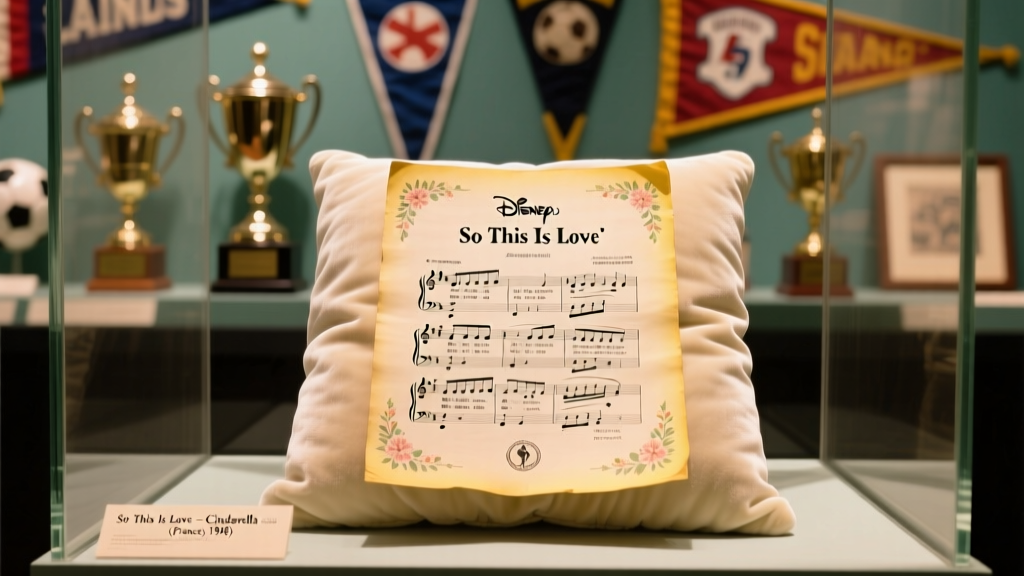
Disneyana Sheet Music: 'So This Is Love' from Cinderella — French Edition, Éditions Walt Disney, Paris, 1958
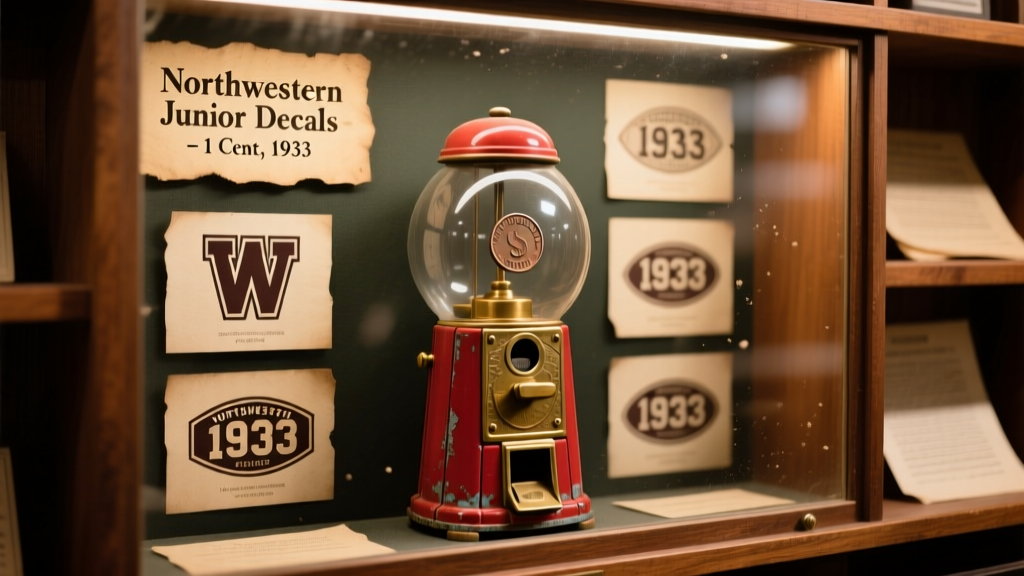
The 1933 Northwestern Junior Decal Gumball: A Rare 1-Cent Coin-Operated Artifact from the Golden Age of Vending
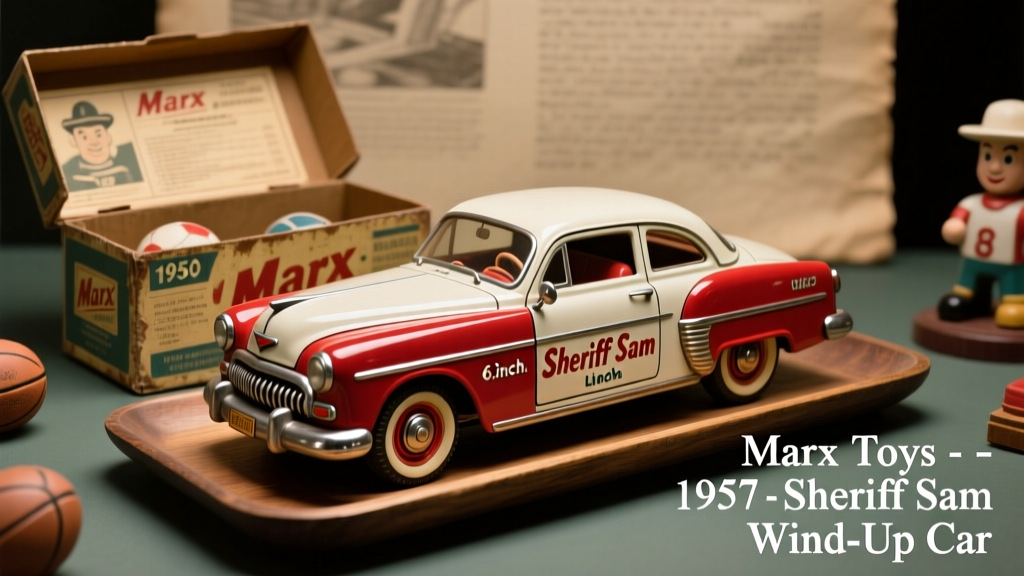
Toy Whoopee Car: Sheriff Sam Tin Litho Head, Windup Mechanism, Marx Manufacturing, Original Box (6 1/2 Inches)
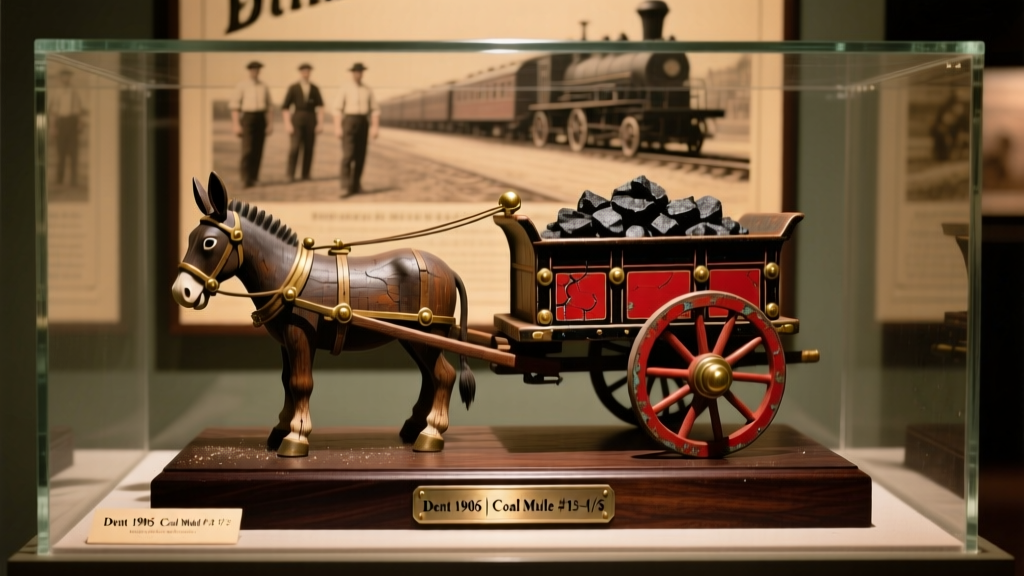
The Toy Cart Coal Mule Dent 1905: A 13½-Inch Cast-Iron Artifact from America’s Industrial Toy Golden Age
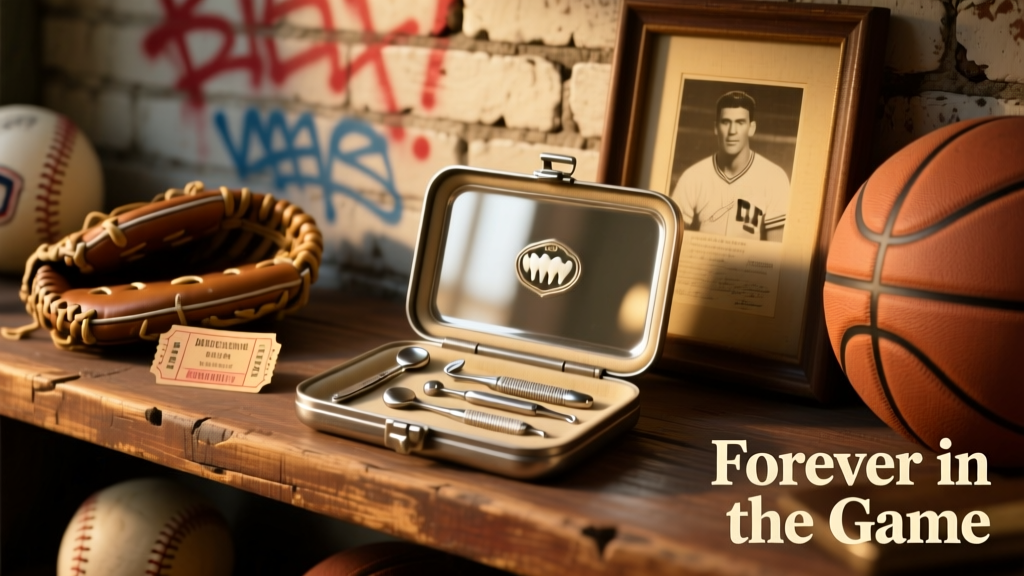
Dental Case for Teeth Instruments: Home Care Essentials with Mirrored Pocket-Sized Design
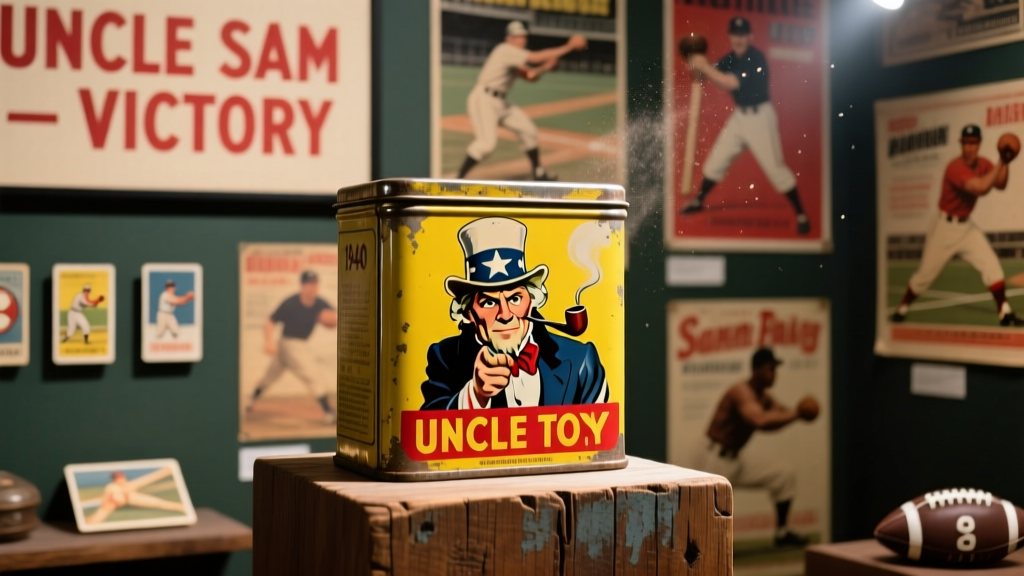
Advertising Tin: Union Leader Uncle Sam With Pipe (Yellow) — History, Authentication & Market Value

Authenticating and Valuing a 19th-Century Mahogany Banquet Table with Satinwood Banding — 90 Inches Long
Nippon Plaque: Monk in Red with Scrolled Medallions and Green Maple Leaf — Authentication, Provenance, and Market Value of the 9½-Inch Illus Example
The Top Five School Supplies That Aren’t Going To School This Year