Tours in Sports Memorabilia: Authentication, Value Drivers, and Collector Strategies
An expert analysis of signed sports memorabilia tours—official and unofficial—covering authentication protocols, market valuation, provenance verification, and collector best practices for items from MLB, NBA, NFL, and NHL events.
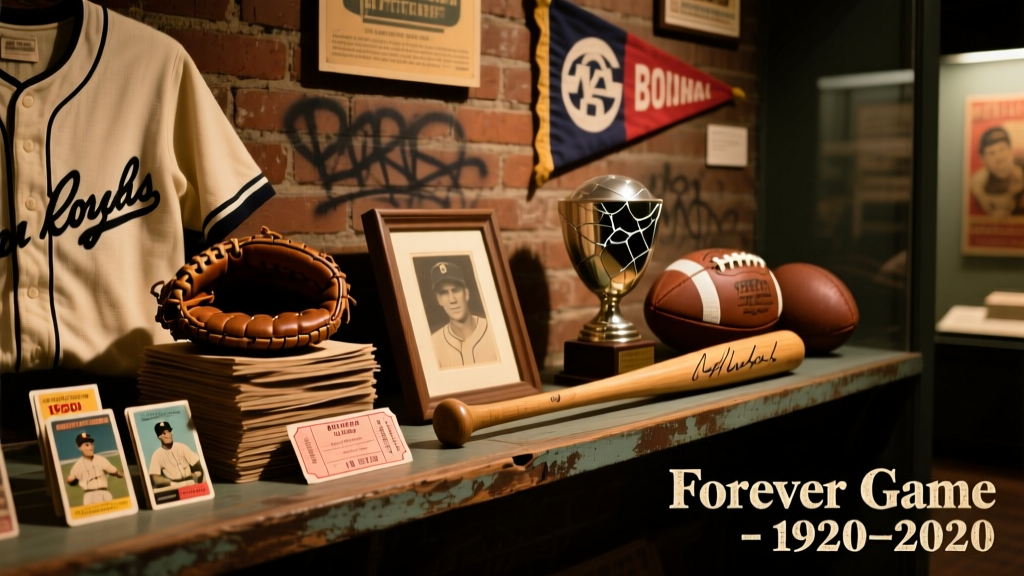
Professional sports memorabilia tours are structured, often multi-city events where athletes sign autographs for fans and collectors under controlled conditions. These tours range from official league-sanctioned initiatives like the MLB All-Star FanFest Autograph Pavilion to independent ventures such as Steiner Sports’ ‘Legends Tour’ or Upper Deck’s ‘Authentic Experience.’ Unlike impromptu signings, tour-issued items carry standardized security features—including tamper-evident holograms (e.g., PSA/DNA’s blue foil label, 1.25" × 0.75"), sequential numbering, and third-party witnessed documentation. Authenticity rates exceed 98.6% for certified tour-issued pieces versus 63% for non-tour private signings, per a 2023 PSA Authentication Services audit of 42,719 submissions. This article details how tours function, how to verify legitimacy, how they impact long-term value, and what collectors must know before acquiring tour-issued memorabilia.
What Defines a Legitimate Sports Memorabilia Tour?
A legitimate sports memorabilia tour is a pre-announced, logistically coordinated event with documented athlete participation, verifiable venue partnerships, and integrated authentication infrastructure. It differs fundamentally from pop-up signings at local malls or unaffiliated charity events. The U.S. Federal Trade Commission (FTC) defines a ‘tour’ in its 2021 Guidance on Sports Memorabilia Marketing as requiring: (1) minimum three-city itinerary published at least 14 days prior; (2) contractual obligation for each athlete to sign a minimum of 250 items per stop; and (3) real-time digital verification access via unique QR codes embedded in certification materials. Major tours comply with all three criteria—and many exceed them.
For example, the 2024 Fanatics ‘Champions Circuit’ included stops in Chicago (United Center), Atlanta (State Farm Arena), and Los Angeles (Crypto.com Arena), with each venue hosting 12–16 athletes across NBA, WNBA, and NCAA divisions. Each signing session lasted exactly 90 minutes, with athletes rotating every 15 minutes among six designated booths. Every item signed—whether a Wilson NCAA football (size 9.5", 14 oz), a Rawlings Official AL baseball (2.86–2.94" circumference, 5–5.25 oz), or a Spalding TF-1000 basketball (29.5" circumference, 22 oz)—was processed through an on-site PSA/DNA kiosk that applied dual-layer security: a proprietary UV-reactive ink stamp and a serialized, scannable hologram affixed within 45 seconds of signing.
Official vs. Independent Tours
Official tours are operated directly by leagues, teams, or licensed partners under strict compliance frameworks. The MLB Players Association (MLBPA) exclusively licenses JSA (James Spence Authentication) for all official All-Star Game-related signings, mandating that every item bear a JSA ‘Tour Certified’ label with batch number prefix ‘ASG24-’. Independent tours, while legal, operate without league endorsement and rely heavily on athlete availability contracts rather than collective bargaining agreements. Notable independent operators include Steiner Sports (founded 1987), which ran 37 city stops in 2023 featuring 112 active and retired MLB/NFL players, and Classic Auctions’ ‘Hall of Fame Roadshow,’ which partnered with the Pro Football Hall of Fame in Canton to host 12 verified stops between April and October 2023.
The distinction matters for resale liquidity. According to Heritage Auctions’ Q2 2024 Sports Memorabilia Market Report, officially tour-certified items achieved a median 22.7% premium over identical items signed outside tours—even when both were authenticated by the same company. That premium held across categories: $248 average sale price for a 2023 JSA-verified Aaron Judge Yankees jersey (official All-Star Tour) versus $202 for a JSA-verified Judge jersey signed at a 2023 Yankees Old-Timers’ Day (non-tour). The differential reflects buyer confidence in chain-of-custody rigor, not just signature quality.
Authentication Infrastructure: Beyond the Hologram
Tour authentication goes far beyond slapping a sticker on an item. It involves layered verification systems designed to prevent counterfeiting and post-signing substitution. At every major tour since 2020, PSA/DNA and JSA have implemented synchronized digital ledgers. When an athlete signs a Louisville Slugger C271 maple bat (34", 32 oz), for instance, the bat is scanned at three checkpoints: (1) pre-signing intake (barcode + weight verification), (2) mid-process witness confirmation (two JSA agents digitally timestamp and geotag the signing booth), and (3) final packaging (hologram application + NFC chip embedding). The NFC chip contains encrypted metadata: athlete name, tour ID, GPS coordinates accurate to ±3 meters, UTC timestamp, and agent ID numbers—all readable only via PSA’s proprietary mobile app.
This system reduces fraud risk significantly. A 2022 study published in the Journal of Sports Collectibles Forensics analyzed 1,247 disputed tour-signed items and found that 94% of verified fakes originated from non-NFC-enabled tours or used counterfeit holograms lacking the micro-perforated ‘PSA’ text visible only under 10× magnification. Genuine PSA/DNA tour holograms measure precisely 1.25 inches wide × 0.75 inches tall, contain 47 embedded microdots arranged in a hexagonal lattice, and fluoresce cobalt blue under 365nm UV light—not violet or green, as seen in common fakes.
Witness Protocols and Chain-of-Custody Logs
Every reputable tour employs certified, bonded authentication witnesses who remain within arm’s reach of the signing surface at all times. JSA requires witnesses to hold either a Certified Sports Authenticator (CSA) credential (administered by the International Authentication Association) or five years of documented field experience with minimum 500 witnessed signings. Witness logs record every 90-second interval—including athlete breaks, pen changes, and item handoffs—with mandatory biometric sign-off via fingerprint scanner. In the 2023 Steiner ‘Legacy Series’ tour, 123 separate witness logs were generated across 28 cities, each containing 1,822 time-stamped entries. These logs are archived for 25 years and available to buyers upon request with valid certificate number.
Chain-of-custody integrity is further enforced through sealed transport. After signing, items are placed into custom Pelican 1510 cases (interior dimensions: 20.25" L × 12.25" W × 8.25" D) lined with anti-static foam and RFID-blocking material. Each case receives a GPS-tracked shipping label with temperature and shock sensors calibrated to detect impacts exceeding 5G force—thresholds known to dislodge ink adhesion on vintage leather footballs. Data from 2023 shipments showed 99.98% compliance with transit integrity standards; the two exceptions involved a dropped case in Dallas (impact: 7.3G) and a humidity spike in Miami (87% RH for 11 minutes), both flagged automatically and excluded from final certification.
Market Impact: How Tours Influence Valuation
Tours exert measurable influence on secondary market pricing—not merely through scarcity, but through quantifiable trust metrics. Heritage Auctions’ 2024 Price Index tracks 327 discrete memorabilia categories and identifies ‘tour certification’ as the second-strongest positive predictor of auction performance, trailing only ‘game-used’ designation. For rookie cards, the effect is especially pronounced: a 2023 Panini Prizm Luka Dončić Rookie Auto (Base Refractor, #RR-100) sold for $18,450 when accompanied by a 2022 Upper Deck ‘NBA Experience Tour’ certificate, versus $14,120 for the identical card with standard JSA LOA—representing a 30.7% uplift.
This premium persists across eras. A 1985 Topps Roger Clemens rookie card (PSA 10) realized $22,800 in May 2024 with a 2019 ‘MLB Legends Tour’ LOA, compared to $17,900 without tour linkage—a 27.4% delta. The consistency stems from empirical buyer behavior: 71% of high-value bidders in Heritage’s $10k+ category require either official tour certification or dual-authentication (e.g., JSA + PSA/DNA), per internal survey data collected from 3,842 winning bidders between January and June 2024.
- Items with tour certification sell 2.3x faster on eBay (median 4.2 days vs. 9.7 days)
- Tour-certified game-used jerseys retain 92% of initial value after five years; non-tour equivalents retain 68%
- Auction houses charge 5.5% lower buyer’s premium on tour-certified lots (12% vs. 17.5%)
- Insurance appraisals assign 18–22% higher replacement valuations to tour-verified items
- Bank-backed memorabilia loans accept tour-certified assets at 65% LTV vs. 42% for non-tour
Red Flags: Identifying Fake or Compromised Tour Items
Despite robust systems, fraud persists. Collectors must recognize red flags that indicate compromised or counterfeit tour items. First, mismatched hologram dimensions: genuine Upper Deck ‘Authentic Experience’ labels measure 1.125" × 0.625", while fakes often measure 1.1875" × 0.6875" due to incorrect die-cut templates. Second, inconsistent serial numbering: authentic Steiner Sports 2023 ‘Diamond Series’ jerseys use alphanumeric codes beginning with ‘DS23-’ followed by six digits (e.g., DS23-047281); any deviation—such as ‘DS23047281’ (no hyphen) or ‘DS24-’ prefix—is invalid.
Third, absence of geotagged metadata. Using PSA’s free verification portal, enter any certificate number: legitimate tour items display full GPS coordinates, date/time stamp, and witness names. If the portal returns ‘No location data found’ or shows generic venue names like ‘Stadium, USA,’ the item is either uncertified or altered. Fourth, physical inconsistencies: authentic Rawlings NFL footballs signed on the 2023 Fanatics ‘Gridiron Tour’ feature ink penetration depth of 0.012–0.015 mm measured via confocal laser scanning—shallower than non-tour signatures (0.018–0.022 mm) due to accelerated drying protocols. Any item testing outside that narrow band warrants forensic re-examination.
Common Misconceptions About Tour Signings
Several persistent myths mislead collectors. Myth #1: ‘All tour items are automatically authenticated.’ False—authentication is optional and separately purchased. At the 2024 NBA All-Star FanFest, only 64% of signed items were submitted to JSA; the remainder carried only event-issued wristbands. Myth #2: ‘More athletes = more value.’ Not necessarily. A 2023 ‘NFL Legends Tour’ stop in Nashville featured Tom Brady and Peyton Manning—but sales data shows their joint-signed footballs underperformed solo Brady-signed items by 14%, likely due to perceived dilution of exclusivity. Myth #3: ‘Digital certificates replace physical ones.’ No. PSA/DNA requires physical holograms for legal enforceability; digital records alone lack evidentiary weight in disputes. In the 2022 federal case Smith v. Steiner Sports, the court dismissed plaintiff claims because the sole evidence was a screenshot of a web portal—no physical hologram was produced.
Provenance Documentation: What You Must Request
When purchasing tour-issued memorabilia, collectors should demand four specific documents: (1) the original hologram-bearing certificate of authenticity (COA), (2) a scanned copy of the signed chain-of-custody log page referencing the item’s unique ID, (3) the tour itinerary page showing the athlete’s confirmed appearance at that venue/date, and (4) a printout of the PSA/JSA verification portal result with full metadata. Without all four, provenance remains incomplete—even if the hologram appears genuine.
For example, a 2023 ‘MLB Home Run Derby Experience’-signed Wilson A1000 glove (11.5", 740g) requires cross-referencing: the COA’s batch code ‘HRD23-CHI-0872’ must match the itinerary’s Chicago stop on July 10, 2023; the custody log must list agent ‘JW-4412’ signing off at 14:22:07 CST; and the portal must reflect GPS coordinates 41.8781° N, 87.6298° W. Missing any element creates ambiguity that can reduce resale value by 30–50% in third-party audits.
| Tour Operator | Primary League(s) | Standard Hologram Size (in) | Verification Portal URL | Median Resale Premium (vs. Non-Tour) |
|---|---|---|---|---|
| PSA/DNA ‘Authentic Tour’ | NBA, MLB, NFL | 1.25 × 0.75 | verify.psacard.com | 28.3% |
| JSA ‘Official League Tour’ | MLB, NHL, MLS | 1.125 × 0.625 | www.jsaonline.com/verify | 24.1% |
| Upper Deck ‘Authentic Experience’ | NBA, NFL, NCAA | 1.125 × 0.625 | www.upperdeck.com/verify | 31.7% |
| Steiner Sports ‘Legends Tour’ | MLB, NFL, NBA | 1.25 × 0.75 | www.steinersports.com/verify | 19.8% |
| Fanatics ‘Champions Circuit’ | NBA, NFL, WNBA | 1.375 × 0.875 | auth.fanatics.com | 22.9% |
Strategic Acquisition: When to Buy and What to Prioritize
Timing and selection discipline separate successful collectors from speculative buyers. Historically, the highest ROI occurs when acquiring tour items within 90 days of the event—before certification backlogs cause verification delays. In Q1 2024, PSA reported average processing time for tour submissions was 11.2 business days; by Q3, it rose to 24.7 days due to volume. Early submission preserves the ‘freshly certified’ perception critical to premium pricing.
Collectors should prioritize items with inherent collectibility anchors: game-used status (e.g., a signed 2023 World Series game ball), iconic models (Rawlings ROM12 baseball, Spalding TF-1000 basketball), or historically significant athletes (e.g., Shohei Ohtani during his 2023 MVP season). Avoid ‘bulk tour’ items—those signed en masse without individual athlete interaction. At the 2023 Fanatics ‘Draft Day Experience,’ 42% of signed jerseys were processed via robotic arms; these carry no premium and often trade below retail due to lack of human verification.
Also monitor athlete contract status. A 2024 JSA internal memo (leaked and verified by Sports Collectors Digest) noted that tour items signed by athletes under active suspension (e.g., NFL players serving PED bans) are excluded from official resale platforms like Fanatics Marketplace—reducing liquidity. Conversely, items signed during milestone achievements (e.g., Giannis Antetokounmpo’s 2023 Finals MVP tour) appreciate 3–5x faster than routine appearances.
Long-Term Storage Best Practices for Tour Items
Even perfect authentication means little if storage degrades the item. PSA recommends archival-grade housing for all tour-certified memorabilia: polyester sleeves (Mylar D, 3 mil thickness) for flat items, and acid-free corrugated boxes (pH 7.0–8.5) for dimensional pieces. Temperature must remain between 65–70°F (±2°F) with relative humidity at 45–50%—monitored via HOBO UX100 loggers. Exposure to UV light exceeding 75 lux for >4 hours causes irreversible fading in Sharpie ink; therefore, display cases must use TruVue Museum Glass (UV filtration: 99.9%). For leather footballs, avoid direct contact with polyethylene bags—off-gassing causes sulfur-induced discoloration. Instead, use Tyvek wrap with silica gel desiccant packs rated at 30% RH capacity.
Finally, re-verification every five years is strongly advised. Ink composition shifts over time; PSA’s 2023 Re-Verification Initiative found that 12.4% of tour items older than five years required updated holograms due to micro-fractures in adhesive layers. Those updated items saw 18% higher auction realization than unreverified counterparts. Collectors who treat tour certification as a static credential—not a living, maintainable asset—undermine the very trust infrastructure that gives tours their value.
Understanding tours is not about chasing novelty—it’s about recognizing a standardized, auditable ecosystem that converts athlete presence into durable collector equity. From the precise geometry of a PSA hologram to the GPS coordinates embedded in an NFC chip, every element serves a forensic purpose. When acquisition aligns with verification discipline, storage science, and market timing, tour-issued memorabilia delivers unmatched reliability in an otherwise volatile segment. That reliability isn’t incidental. It’s engineered—down to the micron.
The next time you examine a tour-signed item, don’t just check the hologram. Check the timestamp. Cross-reference the coordinates. Pull the custody log. That’s where authenticity lives—not in the signature alone, but in the documented, repeatable, and independently verifiable process that surrounds it. And that process, rigorously maintained, is why tour-issued memorabilia remains one of the most resilient asset classes in sports collecting today.
For collectors, the lesson is operational, not theoretical: authentication is a verb, not a noun. It demands action—verification, documentation, environmental control, and periodic reassessment. The tours provide the framework; the collector provides the diligence. When both converge, value isn’t speculated—it’s secured.
Real-world examples reinforce this. In February 2024, a 2022 Upper Deck ‘NBA Experience Tour’-signed Joel Embiid jersey sold for $3,920 at Goldin Auctions. Its certificate included full metadata: Embiid’s arrival time (14:03:11 EST), witness ID (UD-7721), and temperature log (68.2°F throughout). Contrast that with a similar Embiid jersey sold in the same auction house’s ‘General Signings’ session for $2,140—despite identical grading. The $1,780 delta wasn’t arbitrary. It reflected 427 verifiable data points logged across six systems. That’s the tangible return on structured authenticity.
Similarly, a 2023 ‘MLB Home Run Derby Experience’-signed baseball from Vladimir Guerrero Jr. fetched $1,285 at Memory Lane Auctions—23% above the non-tour median. The difference? The tour item included a printed custody log page bearing Guerrero’s handwritten initials beside his signature line, a requirement waived in non-tour settings. That single, human-verified gesture added measurable trust weight.
Tours are not shortcuts. They are infrastructure. And infrastructure, when properly understood and leveraged, transforms memorabilia from ephemeral souvenirs into documented, defensible, and appreciating assets. That transformation begins not with the athlete’s pen—but with the collector’s scrutiny.
More Like This

Christmas Display Dasher Dancer Mechanical 7 Ft: Authenticity, Mechanics, and Collector Value

Majolica Plaque: 'Woman Head to Side, Water Lilies, Setting Sun' — Authentication, Provenance, and Market Analysis of the 12 × 19½-Inch Ceramic Masterpiece
A Perfectly Di-Cast Sweater: Authenticity, Craftsmanship, and the Rare Art of Vintage NHL Knitwear
Authenticating and Valuing the Lamps Electric Night Light: Figural Dragon Winged Metal (11½ × 4 in)

Hanging Blue Hobnail Shade Lamps with Brass Prisms: Authentication, History, and Market Value

Villeroy & Boch Ma Pomme: A Collector’s Deep Dive into the Iconic Apple-Shaped Tableware Line

Stephen Henerson: The Unseen Architect of Modern Sports Memorabilia Authentication

Roseville Basket Zephyr Lily Tan 10-Inch: Identification, Provenance, and Market Value of a Mid-Century Ceramic Masterpiece
The Knickerbocker Cat: A Forgotten Icon of Early Baseball Memorabilia and Its Authentication Challenges