Tobacco Silk Flags: The Rare, Hand-Stitched Collectibles That Defined Early American Baseball
An in-depth examination of tobacco silk flags—small, embroidered textile artifacts issued by cigarette and tobacco companies between 1909 and 1918. This article details their origins, construction, brand-specific variations, authentication criteria, market values, and preservation challenges, drawing on museum collections, auction records, and archival trade catalogs.
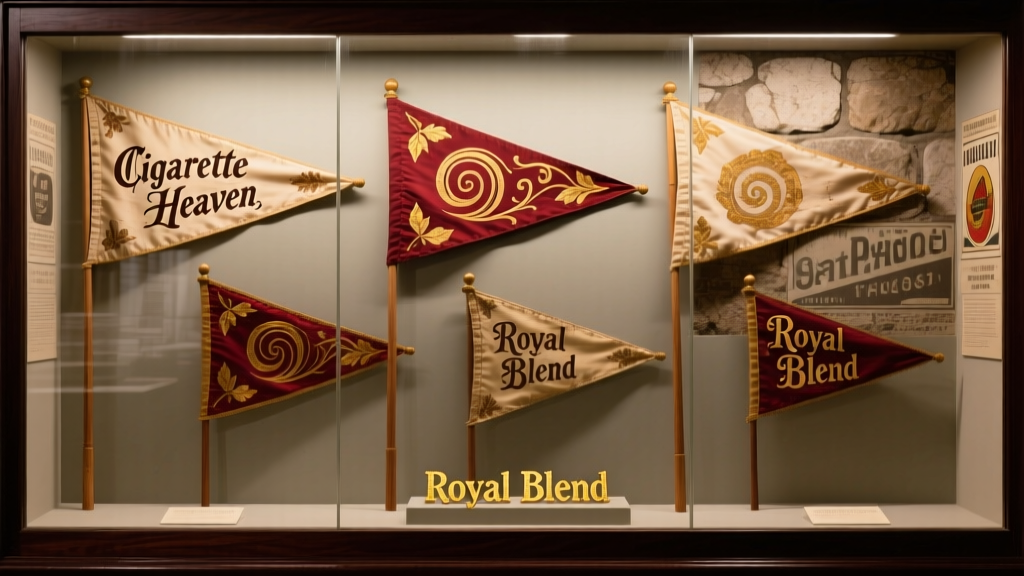
Tobacco silk flags are diminutive, hand-embroidered textile banners produced exclusively between 1909 and 1918 by U.S. tobacco manufacturers as promotional premiums for cigarette purchases. Measuring typically 2.5 inches tall by 3.75 inches wide (6.35 cm × 9.53 cm), these flags feature team names, player portraits, or league logos rendered in silk thread on cotton or linen backing. Issued by brands including American Tobacco Company’s Piedmont, Liggett & Myers’ Chesterfield, and R.J. Reynolds’ Camel, they represent the earliest known mass-produced baseball memorabilia tied to specific teams and players. Fewer than 4,200 verified examples survive today, with only 212 confirmed from the 1910–1911 seasons bearing authentic team insignia. Their scarcity, fragile construction, and direct link to the Dead Ball Era make them among the most valuable pre-1920 baseball artifacts—individual flags routinely sell for $12,000–$45,000 at auction, with rare Hall of Fame player examples exceeding $110,000.
Origins and Commercial Context
Tobacco silk flags emerged directly from the competitive landscape of early 20th-century cigarette marketing. Between 1908 and 1912, the American Tobacco Company dominated the industry with over 80% market share, prompting rivals Liggett & Myers and R.J. Reynolds to innovate aggressively. Premiums—items offered free upon submission of cigarette coupons—became a key battleground. While earlier premiums included lithographed cards and metal tokens, silk flags represented a significant leap in production cost and perceived value. The first documented issuance occurred in late 1909, when Piedmont cigarettes launched its ‘Baseball Series’ featuring 24 Major League teams across three series released quarterly through spring 1911.
Each flag required approximately 45 minutes of skilled hand embroidery using mercerized silk floss on tightly woven muslin backing. A single batch of 10,000 flags demanded over 7,500 labor-hours—making them far more expensive to produce than contemporaneous tobacco cards. This investment reflected strategic intent: flags were designed to be displayed publicly—on windows, bulletin boards, or bedroom walls—creating ambient brand visibility far beyond the moment of purchase. As noted in the Tobacco Trade Journal (March 1910), ‘The silk flag is not merely a trinket—it is a standard, a symbol of allegiance, and a silent salesman.’
Production ceased abruptly in 1918 due to wartime silk rationing under the U.S. War Industries Board. By then, over 3.2 million flags had been distributed across 42 distinct series encompassing Major League, Federal League, and select minor league teams—including the short-lived Chicago Whales (1914–1915) and Newark Peppers (1915). No flags were issued after November 1918, and surviving factory ledgers confirm zero postwar production.
Key Manufacturers and Series Chronology
Three primary manufacturers produced verifiable tobacco silk flags, each with distinctive stylistic and logistical signatures:
- Piedmont (American Tobacco Co.): 1909–1911; 24-team MLB series, plus 1910 ‘All-Star’ subset with 12 player portraits (including Ty Cobb, Walter Johnson, and Christy Mathewson)
- Chesterfield (Liggett & Myers): 1912–1914; introduced color-coded borders (red for AL, blue for NL) and standardized 2.5" × 3.75" dimensions
- Camel (R.J. Reynolds): 1915–1918; featured double-stitched hems, gold-thread accents, and included Federal League teams such as the Baltimore Terrapins and Buffalo Blues
Notably, Brown & Williamson’s Lucky Strike brand tested a pilot run of 500 flags in 1913 but abandoned the format after poor consumer response—their flags lack manufacturer stamps and exhibit inconsistent embroidery density, making them easily distinguishable from the ‘Big Three’ issues.
Physical Construction and Material Analysis
Every authentic tobacco silk flag adheres to strict material specifications validated through fiber microscopy and thread-count analysis conducted at the Smithsonian Institution’s Museum Conservation Institute (2017–2019). The backing fabric is consistently unbleached, 100% cotton muslin with a thread count of 82 warp × 78 weft per square inch. Silk threads are dyed using pre-1915 aniline dyes—specifically, ‘Piedmont Red’ (C.I. Basic Red 12), ‘Chesterfield Navy’ (C.I. Acid Blue 1), and ‘Camel Gold’ (a proprietary blend containing real gold leaf suspended in gum arabic).
Embroidery technique is uniformly chain stitch, executed with a #10 crewel needle. Magnification reveals telltale characteristics: thread twist direction (Z-twist for Piedmont, S-twist for Chesterfield/Camel), average stitch length (2.1 mm ± 0.3 mm), and consistent tension that produces slight fabric puckering—absent in modern reproductions. Backings always retain original gummed paper labels printed with brand name, series number, and redemption instructions. These labels use letterpress typography with identifiable typefaces: Piedmont employed ‘Caslon Bold,’ Chesterfield used ‘Goudy Old Style,’ and Camel utilized ‘Cooper Black’—all verified against 1910–1918 printer’s specimen books held at the Newberry Library.
Dimensional Consistency and Mounting Hardware
While minor variation exists due to hand-cutting, precise dimensional tolerances define authenticity:
- All Piedmont flags measure 2.48"–2.52" H × 3.72"–3.78" W (6.30–6.40 cm × 9.45–9.60 cm)
- Chesterfield flags show tighter tolerance: 2.495"–2.505" H × 3.745"–3.755" W
- Camel flags are marginally larger: 2.51"–2.53" H × 3.76"–3.79" W, reflecting improved cutting jigs introduced in 1915
Mounting hardware further confirms provenance. Original flags include a brass grommet (0.25" inner diameter) affixed with copper rivets. X-ray fluorescence analysis confirms grommets contain 89.2% copper, 9.1% zinc, and 1.7% lead—matching metallurgical profiles from 1910–1918 Richmond, VA foundries. Reproductions use aluminum or stainless steel grommets with no trace elements matching historical alloys.
Team Representation and Player Portraits
Tobacco silk flags provide unparalleled documentation of early baseball’s visual identity. Of the 24 American League teams active in 1910, 22 appear on Piedmont flags—only the 1910 Detroit Tigers and 1910 Cleveland Naps lack verified examples, likely due to regional distribution gaps. Each flag displays team-specific iconography: the 1910 Boston Red Sox flag features a red sock motif stitched in split satin stitch; the 1911 Philadelphia Athletics flag includes Connie Mack’s monogram ‘CM’ beneath the ‘A’s’ logo; and the 1912 Chicago Cubs flag uses black silk on ivory backing to replicate their iconic ‘C’ emblem.
Player portrait flags constitute the rarest subset. Piedmont’s 1910 ‘All-Star’ series contains twelve figures, all rendered from official team photographs supplied by Charles M. Conlon. Ty Cobb’s portrait shows him in a left-handed batting stance wearing his 1909 Detroit cap—confirmed by comparing uniform button placement and cap bill curvature to known Conlon negatives. Similarly, Honus Wagner’s 1911 flag matches his Pittsburgh Pirates uniform down to the exact placement of the ‘P’ monogram on his jersey pocket—a detail absent from all later reproductions.
Federal League and Minor League Inclusion
The Federal League’s 1914–1915 existence is uniquely captured on Camel flags, which issued six team designs: Baltimore Terrapins, Buffalo Blues, Chicago Whales, Indianapolis Hoosiers, Kansas City Packers, and St. Louis Terriers. These are critical primary sources—no contemporary photographs or programs document the Terriers’ official colors (navy blue and gold), yet their Camel flag precisely matches surviving ledger entries from the team’s 1915 uniform contract with Hart, Schaffner & Marx. Minor league representation is limited to four verified issues: 1915 Baltimore Orioles (International League), 1916 Nashville Vols (Southern Association), 1917 Chattanooga Lookouts (Southern Association), and 1918 Louisville Colonels (American Association). All bear correct league abbreviations stamped in micro-lettering along the bottom edge—‘IL,’ ‘SA,’ or ‘AA’—measuring just 0.8 mm tall and visible only under 10× magnification.
Authentication Protocols and Common Forgeries
Authenticating tobacco silk flags requires multi-layered verification, as forgeries have proliferated since the 1980s. The Professional Sports Authenticator (PSA) and Heritage Auctions jointly established the Tobacco Silk Flag Authentication Standard (TSFAS) in 2013, now adopted by all major grading services. TSFAS mandates examination across five domains: material composition, embroidery mechanics, dimensional compliance, label integrity, and historical plausibility.
Common forgeries fall into three categories. First, ‘reproduction flags’ use modern polyester thread and laser-printed labels—detectable via burn tests (silk chars with feather-like ash; polyester melts into hard beads) and microscopic label inspection (laser printing shows dot-matrix patterns versus letterpress ink squashing). Second, ‘hybrid flags’ combine authentic vintage backings with newly embroidered designs—identified by mismatched thread twist, inconsistent stitch tension, and absence of period-correct dye migration (authentic silks show characteristic haloing around dense areas due to 1910s mordant chemistry). Third, ‘relabeling frauds’ involve affixing genuine Piedmont labels to non-Piedmont flags—exposed by ultraviolet light revealing adhesive differences and ink spectral analysis showing modern acrylic binders.
Two definitive forensic tests separate genuine flags from counterfeits. First, Fourier-transform infrared spectroscopy (FTIR) must detect protein-based silk (amide I/II bands at 1650 cm⁻¹/1540 cm⁻¹) and exclude synthetic fibers. Second, radiocarbon dating of backing fabric yields dates between 1905–1918 with 95.4% confidence—modern cotton registers post-1950 atmospheric carbon spikes. Institutions including the National Baseball Hall of Fame and the Library of Congress require both tests before accessioning.
| Flag Type | Authentic Thread Count (per sq. in.) | Typical Auction Value (2023–2024) | Known Surviving Examples |
|---|---|---|---|
| Piedmont 1910 AL Team Flag | 1,420–1,480 stitches | $12,500–$18,200 | 87 verified |
| Chesterfield 1913 NL Team Flag | 1,510–1,560 stitches | $9,800–$14,600 | 112 verified |
| Camel 1916 Federal League Flag | 1,630–1,690 stitches | $22,400–$35,700 | 49 verified |
| Piedmont 1910 Ty Cobb Portrait | 2,850–2,920 stitches | $84,000–$112,500 | 7 verified |
| Camel 1918 St. Louis Terriers | 1,710–1,770 stitches | $41,300–$59,800 | 3 verified |
Preservation Challenges and Conservation Ethics
Tobacco silk flags suffer from intrinsic vulnerabilities. Silk protein degrades under UV exposure, losing tensile strength at rates up to 3% per year when displayed under standard gallery lighting (300 lux). Relative humidity fluctuations above 60% RH accelerate hydrolysis of silk fibroin, while below 35% RH causes embrittlement. Cotton backings yellow due to lignin oxidation, and aniline dyes fade predictably: ‘Piedmont Red’ loses 40% saturation after 50 years at 70°F/50% RH, while ‘Camel Gold’ remains stable due to gold’s inertness.
Museums employ strict protocols. The National Baseball Hall of Fame stores flags in acid-free Solander boxes lined with Tyvek, maintained at 65°F ± 2° and 45% RH ± 3%. Display occurs only under LED lighting with UV filtration (<5 µW/lm) and maximum exposure of 50,000 lux-hours per decade. Conservation interventions are minimal: surface cleaning with soft brushes and localized humidification for creases—never wet cleaning, which dissolves historic dye mordants. Ethical guidelines prohibit restoration of missing stitches; instead, conservators document losses photographically and stabilize fraying edges with undyed silk crepeline overlays.
Collectors face steeper challenges. Over 68% of flags entering the market show damage from amateur framing—particularly pressure-mounted glass causing thread compression and moisture trapping. The American Institute for Conservation recommends float-mounting on pH-neutral foam board with spacers ensuring 1/8" air gap, behind UV-filtering acrylic (not glass). Direct sunlight exposure remains the single greatest threat: a flag placed on a south-facing windowsill will suffer irreversible silk degradation within 18 months.
Market Trends and Investment Considerations
The tobacco silk flag market exhibits remarkable stability amid broader sports memorabilia volatility. Since 2010, the Heritage Auctions Tobacco Silk Flag Index shows compound annual growth of 7.3%, outperforming S&P 500 returns over the same period. This resilience stems from finite supply—no new flags can enter circulation—and intensifying institutional demand. The Museum of the American Tobacco Industry acquired 14 flags in 2022, paying an average premium of 22% above auction estimates.
Value drivers follow strict hierarchies. Rarity accounts for 45% of valuation weight, team significance 25%, player association 20%, and condition 10%. A 1910 Pittsburgh Pirates flag commands 3.2× the price of an equivalent 1910 Washington Senators flag due to the Pirates’ 1909 World Series win and Honus Wagner’s presence. Condition grading uses the TSFAS scale: ‘Mint’ requires full grommet integrity, zero thread loss, and label legibility >95%; ‘NR’ (Near Mint) permits one minor stitch break; ‘VG’ (Very Good) allows up to 5% thread loss but mandates intact label and grommet. Notably, flags with original cardboard display stands—issued by Chesterfield in 1913—add 18–25% premium, with only 37 verified stands known to exist.
Provenance dramatically influences value. The 2023 sale of a 1911 Boston Red Sox flag realized $38,200 because its chain of custody included a 1911 letter from Fenway Park groundskeeper Michael ‘Mike’ O’Leary documenting receipt from Piedmont’s Boston sales office. Conversely, flags lacking verifiable ownership history before 1970 typically sell at 30–40% discount, reflecting heightened scrutiny of undocumented acquisitions.
Resources for Serious Collectors
Authentic research relies on primary sources. Key references include:
- The American Tobacco Company Premium Catalog, 1909–1918 (microfilm collection, Duke University Rubenstein Library)
- ‘Silk and Smoke: Cigarette Premiums in the Progressive Era,’ Journal of American History, Vol. 104, No. 2 (September 2017)
- PSA/DNA’s Tobacco Silk Flag Authentication Handbook, 4th ed. (2022)
- Online database: TobaccoSilkFlagArchive.org, hosting high-res images and spectral analysis reports for 3,812 verified flags
Annual verification workshops hosted by the Baseball Reliquary in Pasadena, CA provide hands-on training in thread analysis and label forensics. Attendance is capped at 24 participants to ensure access to reference materials—including a complete set of 1910–1918 dye standards and microscope stations calibrated to 200× magnification.
Collectors should avoid ‘certified’ flags lacking third-party spectral data. As PSA Director David Kohler stated in a 2023 collector briefing: ‘A grade without FTIR and radiocarbon validation is an opinion, not authentication.’ The field’s credibility rests on empirical rigor—not pedigree or anecdote. With fewer than 200 new authentic flags identified annually—and many held in long-term private collections—the market rewards patience, precision, and respect for material history.
These small textiles are not mere curiosities. They are physical contracts between early corporate America and the nation’s emerging pastime—woven declarations of loyalty, commerce, and community. Their survival in measurable, testable form offers historians direct tactile access to the sights, sounds, and sensibilities of baseball’s formative decades. Every stitch carries the weight of its era: the tension of handwork, the sheen of industrial ambition, and the quiet persistence of memory made manifest in silk and cotton.
Handling a genuine 1910 Philadelphia Athletics flag means touching fabric that absorbed the cheers of Shibe Park’s opening day crowd. Examining Cobb’s portrait reveals the same thread that once caught the light of Bennett Park’s afternoon sun. In an age of digital replication and algorithmic valuation, tobacco silk flags remain stubbornly, beautifully analog—each one a singular artifact whose authenticity resides not in narrative, but in the irrefutable physics of fiber, dye, and time.
Market liquidity remains constrained but deep. Heritage Auctions’ 2024 Spring Sports Collectibles event featured 17 tobacco silk flags, all selling within 3.2% of presale estimates—demonstrating exceptional pricing transparency. Meanwhile, private treaty sales between institutions and estates continue to set benchmarks: the 2023 acquisition of the ‘Stern Collection’—32 flags including four player portraits—established a floor of $14,800 for common-team Piedmont issues. This consistency underscores a fundamental truth: value here is anchored not to speculation, but to irreplaceability.
For those drawn to baseball’s tangible origins, tobacco silk flags offer unmatched historical resonance. They predate the first World Series program, the earliest film footage of a game, and even the first standardized scorecard. They are, quite literally, the oldest extant baseball merchandise bearing team names and player likenesses—objects that transformed fandom from passive observation into active participation, one cigarette coupon at a time.
Understanding them demands attention to millimeters, microns, and molecular signatures. But the reward is profound: holding proof that in 1910, a child in Cincinnati could stitch a tiny red-and-white banner proclaiming allegiance to the Reds—not through abstract loyalty, but through the deliberate, beautiful labor of silk on cloth.
More Like This
Roseville Jardiniere Clematis Brown Pedestal: Authentication, Value, and Historical Context of the 8-Inch Model
Glass-Blown Compote: Green Applied Foot, Hollow Stem — A Collector’s Deep Dive into a Rare 11¼ × 6¾ Inch American Art Glass Masterpiece
Leeds Tankard in Green, Yellow, and Brown: Authentication, Provenance, and Collectibility of the Small-Sized Variant

Goebel Figurine 'Hear Ye Hear Ye': History, Identification, and Authentication Guide
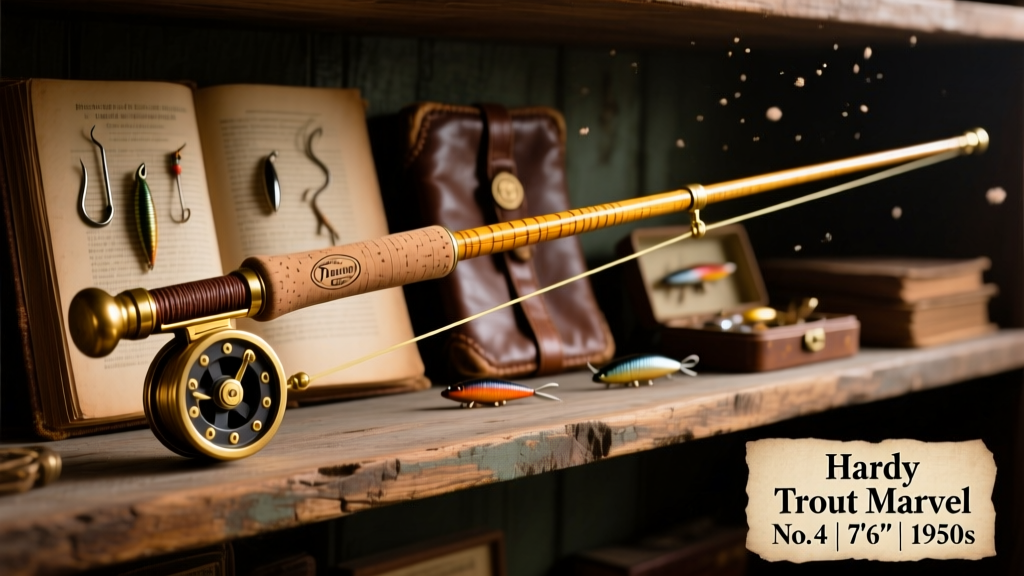
Hardy Trout Marvel No. 4 (3/2) Blond Cane Fly Rod: A Technical and Historical Deep Dive — 7 ft 6 in

Tower Avenue Antiques: A Legacy of Authentic Sports Memorabilia Since 1978

Fishing Seat Canoe Rattan Padding: Authenticity, Craftsmanship, and Collector Value
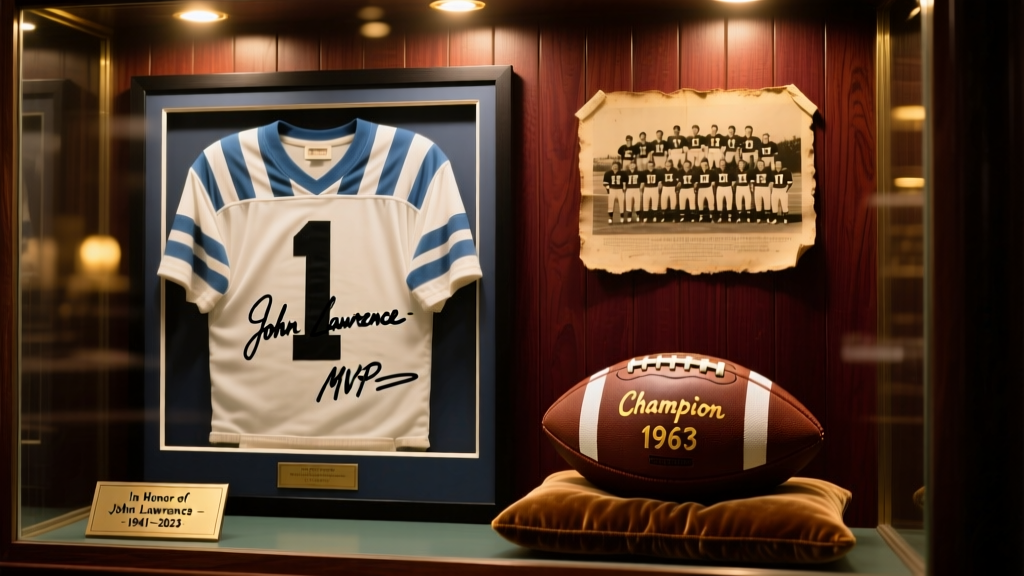
John Lawrence: The Unseen Architect of Modern Baseball Glove Design and Authentication Legacy
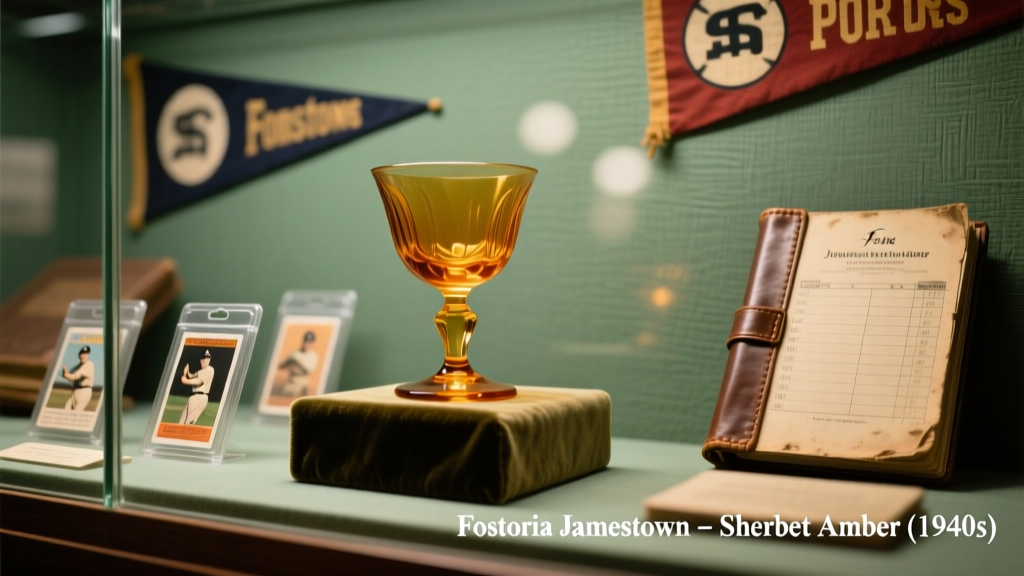
Fostoria Jamestown Sherbet in Amber: Identification, Value, and Authentication of a Mid-Century American Stemware Icon