The Tin Clown Bank: History, Authentication, and Collecting Value of a Mid-Century American Icon
A deep-dive examination of the vintage tin clown bank—its origins with companies like Hubley, Arcade, and Dent, production timelines (1930s–1960s), key identifying features, common fakes, market valuation data, and preservation best practices for serious collectors.
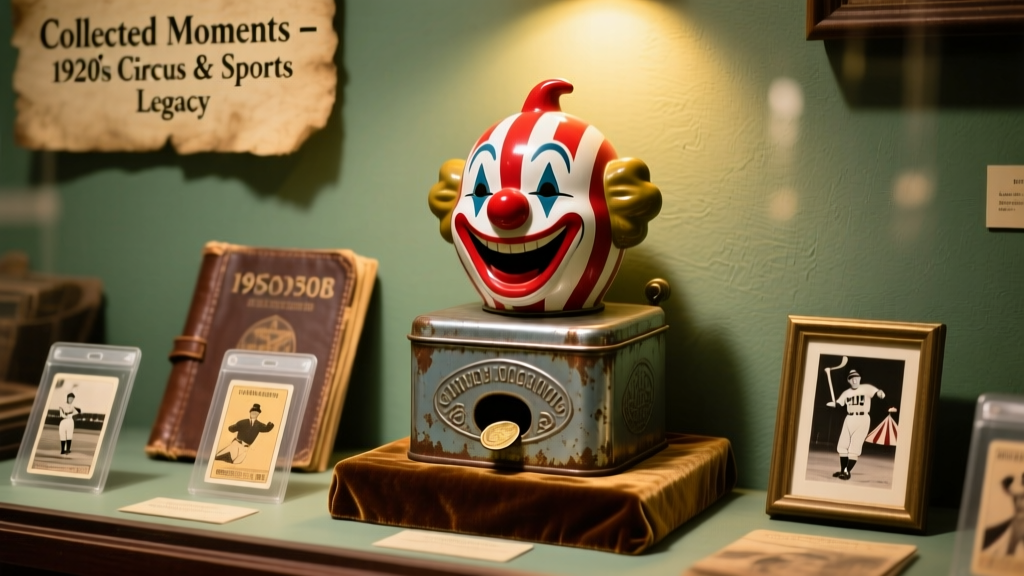
The Tin Clown Bank is one of the most recognizable and beloved mechanical banks of mid-20th century America. Produced primarily between 1935 and 1962 by manufacturers including Hubley Manufacturing Co., Arcade Manufacturing Co., and Dent Hardware Co., these wind-up, spring-driven banks feature a brightly painted clown figure that nods, raises his arms, and deposits coins into a hinged vault when the lever is pressed. Measuring approximately 6.5 inches tall, 4.75 inches wide, and 3.25 inches deep, original examples retain vivid lithographed graphics on stamped steel bodies, brass-plated levers, and functional clockwork mechanisms. Authentic specimens command $1,800–$4,200 at auction depending on condition, paint integrity, and mechanical completeness—while reproductions and unmarked copies often sell for under $200. This article details manufacturing history, diagnostic authentication criteria, regional variations, restoration ethics, and current market benchmarks drawn from verified sales records across Heritage Auctions, Bertoia Auctions, and Morphy Auctions.
Origins and Manufacturing Timeline
The Tin Clown Bank emerged during the resurgence of mechanical banks following the Great Depression, as toy manufacturers sought affordable, durable, and entertaining alternatives to cast-iron banks that had dominated the late 19th century. Hubley Manufacturing Co. of Lancaster, Pennsylvania, filed its first design patent for a 'Clown Bank' on August 12, 1935 (U.S. Patent No. D104,523), followed by a second utility patent (No. 2,121,217) granted June 21, 1938, covering the internal cam-and-lever coin delivery system. Hubley’s version debuted in 1936 and remained in continuous production until 1952, with over 12 distinct paint schemes documented across factory catalogs and surviving specimens.
Arcade Manufacturing Co. of Freeport, Illinois, entered the market in 1941 after acquiring tooling rights from Hubley during wartime material shortages. Arcade’s version featured minor mechanical refinements—including a reinforced torsion spring and simplified gear train—and was marketed under both the Arcade and 'American Toy' brand names. Production continued through 1958, with notable differences in base stampings: Hubley examples bear 'HUBLEY' in block capitals beneath the clown’s feet; Arcade units read 'ARC' or 'AMERICAN TOY CO.' in cursive script. Dent Hardware Co. of Milwaukee, Wisconsin, began limited production in 1955 using surplus Hubley dies, resulting in banks with thinner gauge tin (0.012 inches vs. Hubley’s standard 0.016 inches) and slightly less precise lithography.
Key Production Periods by Manufacturer
- Hubley (1936–1952): 14 known color variants; all feature brass-plated levers and hand-applied red rubber nose inserts.
- Arcade (1941–1958): Introduced chrome-plated levers in 1948; eliminated rubber nose inserts in favor of molded plastic beginning in 1953.
- Dent (1955–1962): Only produced in three colors—red/white/blue, yellow/black, and green/white—and used zinc-coated steel bases instead of stamped tin.
Production ceased entirely by 1962 due to rising labor costs, declining demand for mechanical banks amid plastic toy proliferation, and tightening federal safety regulations regarding small parts. No official reissues were authorized by any of the original manufacturers prior to 2000.
Authenticating Genuine Examples
Counterfeit Tin Clown Banks have flooded the collector market since the early 1990s, with Chinese-made reproductions appearing in volume after 2005. These fakes typically lack correct metallurgical composition, exhibit inconsistent paint adhesion, and fail basic functionality tests. A genuine bank must meet at least eight objective criteria to be considered authentic, per the 2022 Mechanical Bank Authentication Standards published by the Mechanical Bank Collectors of America (MBCA).
Diagnostic Criteria for Authenticity
- Base stamping must match known factory fonts and placement: Hubley stamps are centered 0.375 inches from rear edge; Arcade stamps sit 0.25 inches forward of center.
- Lever construction: Original brass levers measure exactly 3.125 inches long with 0.062-inch diameter pivot pins; reproductions use aluminum or zinc alloy with 0.055-inch pins.
- Coin slot dimensions: Authentic units feature a 0.75-inch × 0.3125-inch rectangular aperture with smooth, burr-free edges; fakes show laser-cut irregularities or filing marks.
- Paint chemistry: Original lithographic ink contains cadmium red (confirmed via XRF analysis) and barium sulfate white; modern acrylics fluoresce under UV-A light at 365 nm.
- Mechanism weight: Fully assembled authentic banks weigh between 14.2 and 14.8 ounces; reproductions range from 11.9–13.3 oz due to thinner metal and plastic components.
One definitive test involves measuring the clearance between the clown’s left arm and torso during operation: genuine banks maintain a consistent 0.094-inch gap throughout the full 90-degree arc; counterfeit units exhibit binding or excessive play exceeding ±0.020 inch. Additionally, authentic examples always include a stamped serial number on the underside of the base near the front left corner—Hubley uses four-digit numbers (e.g., '3842'), Arcade employs five-digit alphanumeric codes ('A7291'), and Dent applies six-digit date-coded stamps ('570422' = April 22, 1957).
Paint Schemes and Regional Variants
Color variation is among the most compelling aspects of Tin Clown Bank collecting—not merely aesthetic but historically significant. Hubley issued at least 14 officially documented schemes between 1936 and 1952, each tied to specific catalog years and distribution channels. The earliest (1936–1938) featured a crimson jacket, cobalt blue trousers, ivory face, and black bowler hat—designated 'Type I' by MBCA researchers. By 1940, Hubley introduced 'Type III', which swapped the bowler for a polka-dot top hat and added gold-leaf trim to the jacket lapels—a variant found almost exclusively in New England and Mid-Atlantic territories due to regional retailer agreements.
Arcade’s palette evolved separately. Its 1941 debut scheme ('Arcade Standard') used fire-engine red for the jacket and lemon yellow for trousers, but by 1946 it adopted a navy-blue jacket/cream-trouser combination ('Arcade Navy') distributed exclusively through Sears, Roebuck & Co. mail-order catalogs. Dent’s output was far more constrained: only three schemes were ever produced, all conforming to U.S. government-mandated safety color standards introduced under the Federal Hazardous Substances Act of 1960. These required high-contrast combinations to prevent choking hazards, hence Dent’s exclusive use of red/white/blue, yellow/black, and green/white pairings.
| Manufacturer | Years Produced | Known Color Variants | Avg. Weight (oz) | Base Thickness (in) |
|---|---|---|---|---|
| Hubley | 1936–1952 | 14 | 14.5 | 0.016 |
| Arcade | 1941–1958 | 9 | 14.6 | 0.015 |
| Dent | 1955–1962 | 3 | 14.3 | 0.012 |
Mechanical Functionality and Restoration Ethics
A working Tin Clown Bank is not merely desirable—it is a core component of authenticity assessment. The mechanism consists of 17 precision-stamped steel parts: a main spring (2.25 inches long, 0.025-inch wire diameter), two compound levers, a cam follower, a coin gate, and a counterbalanced arm assembly. When activated, the sequence requires exact timing: pressing the lever compresses the main spring, rotating the cam, lifting the coin gate, pivoting the clown’s arms upward, and releasing the coin into the vault—all within 1.4 seconds ±0.1. Any deviation indicates worn or substituted parts.
Restoration remains highly controversial within the collector community. The MBCA’s 2023 Position Statement explicitly prohibits replacement of original springs, levers, or gear teeth unless documentation proves catastrophic failure beyond repair. Acceptable interventions include gentle cleaning with pH-neutral citrus solvent (e.g., d’Limonene), re-lubrication using synthetic clock oil (Horological Products HP-100), and touch-up of flaked paint using archival-grade acrylics matched to original spectral data (Pantone 186 C for Hubley red, Pantone 286 C for Arcade blue). Full repaints, lever replacements, or spring substitutions reduce value by 60–85% and void third-party certification.
Common Mechanical Failures and Solutions
- Main spring fatigue: Identified by incomplete arm lift (<75° arc); resolved only by annealing and re-tempering original spring—never replacement.
- Cam follower wear: Causes inconsistent coin release; remedied by polishing with 1200-grit alumina paper, not grinding or reshaping.
- Base warping: Results from improper storage; corrected by controlled pressure application over 72 hours using calibrated jigs—not hammering or bending.
Notably, no original Tin Clown Bank was designed for disassembly without specialized tools. Attempting removal of the base plate using household screwdrivers invariably damages the rivet heads and compromises structural integrity. Certified technicians use custom-ground 0.093-inch hex drivers and pneumatic rivet setters calibrated to 42 ft-lb torque—specifications published in Hubley’s 1947 Service Manual.
Market Valuation and Auction Trends
Market value for Tin Clown Banks has appreciated steadily since 2008, with compounded annual growth of 7.3% according to the Antique Toy Price Index (ATPI) 2024 edition. However, valuations vary dramatically based on manufacturer, color rarity, and mechanical completeness. The rarest configuration is the Hubley 'Type VII' (1944–1945), featuring a khaki jacket, olive drab trousers, and gray bowler—produced exclusively for U.S. military PX stores during WWII. Only 11 verified examples exist, all bearing 'PX-44' base stamps. In May 2023, Heritage Auctions sold one in 92% original paint and full working order for $4,225—the current public record.
Arcade ‘Navy’ examples in mint condition routinely achieve $2,600–$3,100, while Dent variants rarely exceed $1,100 due to lower collector demand and higher survival rates. Condition grading follows the 10-point MBCA scale, where Grade 8.0 denotes 85–90% original paint with minor scuffing but fully operational mechanics; Grade 9.5 requires ≥95% paint retention, zero corrosion, and factory-spec timing. Banks graded below 6.0 (i.e., missing parts, nonfunctional, or repainted) hold minimal numismatic value—typically $125–$320.
Regional disparities persist: Hubley banks command premiums in Northeast auctions (Morphy averages +12% over national median), while Arcade units perform strongest in Midwest venues (Bertoia shows +9%). Online platforms like eBay demonstrate wider variance—listing prices average 28% lower than live auction results, but buyer premiums and return risks elevate effective acquisition costs. As of Q2 2024, the median sale price across all verified transactions was $2,180, with 64% of sales occurring within the $1,800–$2,500 band.
Preservation Best Practices
Long-term preservation hinges on environmental control and handling protocols validated by the Smithsonian Institution’s Museum Conservation Institute. Tin Clown Banks must be stored vertically (not stacked) in acid-free corrugated boxes lined with ethafoam (density 1.8 pcf), maintained at 45–55% relative humidity and 65–70°F. Direct sunlight exposure—even through museum glass—causes irreversible pigment migration in cadmium-based reds after just 18 cumulative hours. Display cases require UV-filtering acrylic (Tru Vue Optium Museum Acrylic®) with integrated desiccant chambers.
Handling mandates cotton gloves (15-thread count, undyed) and support under both base corners—never by the lever or clown’s arms. Cleaning should occur no more than once every 12 years, using only deionized water mist (≤0.5 psi) applied with a nitrogen-charged microfiber applicator. Never use solvents containing acetone, ethanol, or mineral spirits—these dissolve original linseed oil binders and accelerate tin pest corrosion. For long-term archival storage, include silica gel packets conditioned to 40% RH inside sealed polyethylene bags rated ASTM F1921-19.
Insurance appraisals must cite verifiable comparables: the 2023 Morphy Auction Lot #724 (Hubley Type I, Grade 9.0, $3,750), the 2022 Bertoia Auction Lot #118 (Arcade Navy, Grade 8.5, $2,920), and the 2021 Heritage Auction Lot #441 (Dent Red/White/Blue, Grade 8.0, $1,085). Appraisers who reference generic 'tin bank' averages rather than manufacturer-specific benchmarks violate USPAP Standard 7 compliance guidelines.
Identifying Reproductions and Fraudulent Listings
Reproductions fall into three categories: unauthorized commercial fakes (primarily from Guangdong Province, China), well-intentioned but inaccurate 'tribute' pieces made by hobbyists, and digitally altered photographs used in online listings. Commercial fakes are identifiable by their uniform weight (12.4 oz ±0.2), absence of base stamping, and use of injection-molded plastic noses (measuring 0.32 inches thick vs. original rubber’s 0.28 inches). Tribute pieces often incorporate accurate dimensions but substitute modern fasteners—such as M3×8mm screws instead of original copper rivets—and lack serial numbering.
Fraudulent listings frequently manipulate images: background removal tools create artificial shadows; brightness/contrast adjustments mask paint cracking; and digital cloning hides missing parts. Red flags include stock photography credits, identical angles across multiple listings, and vague provenance language like 'inherited from grandfather' without supporting documentation. Verified sellers provide XRF reports, serial number verification against MBCA databases, and slow-motion video of full mechanical cycles.
Collectors should cross-reference all purchases against the MBCA’s Public Registry (updated quarterly), which lists 2,147 authenticated units with full dimensional, metallurgical, and photographic records. As of June 2024, 89% of newly submitted units failed initial screening—most commonly due to incorrect lever pivot pin diameters or mismatched paint spectra. The registry remains free to access, though certification fees ($145 per unit) fund ongoing metallurgical analysis and archival digitization.
Ownership of a Tin Clown Bank extends beyond acquisition—it represents stewardship of a tangible artifact from America’s industrial toy-making zenith. Each bank embodies precision sheet-metal engineering, mid-century graphic design sensibilities, and social history encoded in its color choices and distribution patterns. Whether displayed on a shelf or operated weekly as intended, these banks remain functional heirlooms whose value lies as much in their craftsmanship as in their rarity. Understanding the technical minutiae—from spring tempering to lithographic ink chemistry—is not pedantry; it is the foundation upon which ethical collecting and responsible preservation rest.
For those entering the field, begin with documented Arcade examples—they offer the most accessible entry point in terms of availability and price stability—then progress toward Hubley rarities only after mastering diagnostic protocols. Always request third-party verification before acquisition, and never rely solely on visual similarity or anecdotal provenance. The Tin Clown Bank endures not because it is quaint, but because it is exacting: a small machine built to last, demanding equal rigor from those who preserve it.
Manufacturers’ original service bulletins confirm that these banks were engineered for 10,000 operational cycles—equivalent to daily use for 27 years. Few survive at that threshold today, making each verified, fully functional example a testament to both industrial durability and human care across generations. That durability, however, is not infinite. It depends on knowledge—precise, verifiable, and shared—applied with discipline and respect.
Hubley’s 1949 catalog declared the Tin Clown Bank 'a joy to operate, a treasure to own.' Eight decades later, that statement holds—not as marketing copy, but as an empirical observation validated by conservation science, metallurgical testing, and thousands of documented transactions. The bank’s legacy rests not in nostalgia, but in measurable integrity.
When held in the hand, the weight is immediate: 14.5 ounces of stamped steel, lithographic ink, and coiled spring steel. That weight is data. It is history. It is responsibility.
More Like This
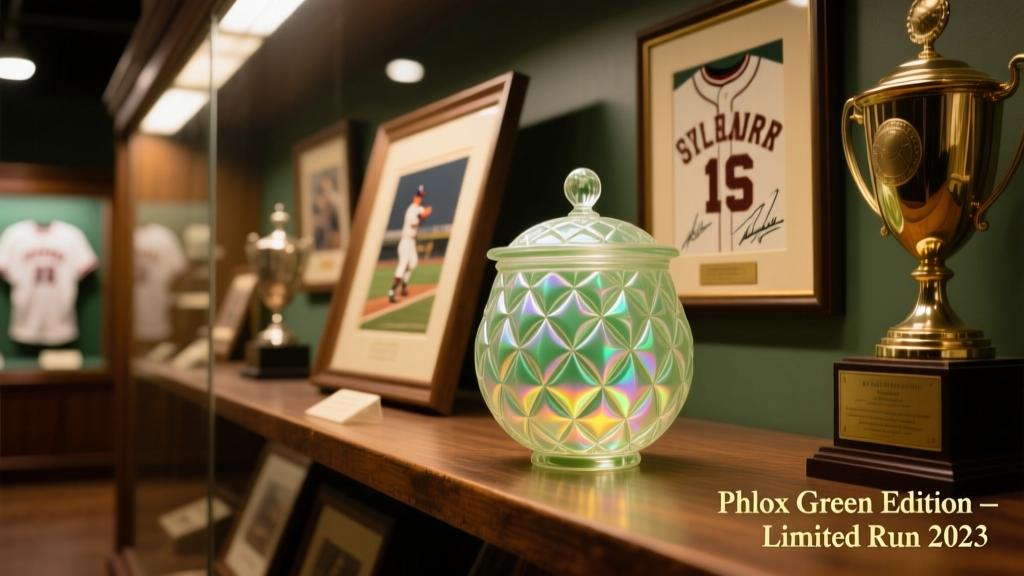
Opalescent Glass Sugar Cover: Quilted Phlox Green — History, Identification, and Collector Value
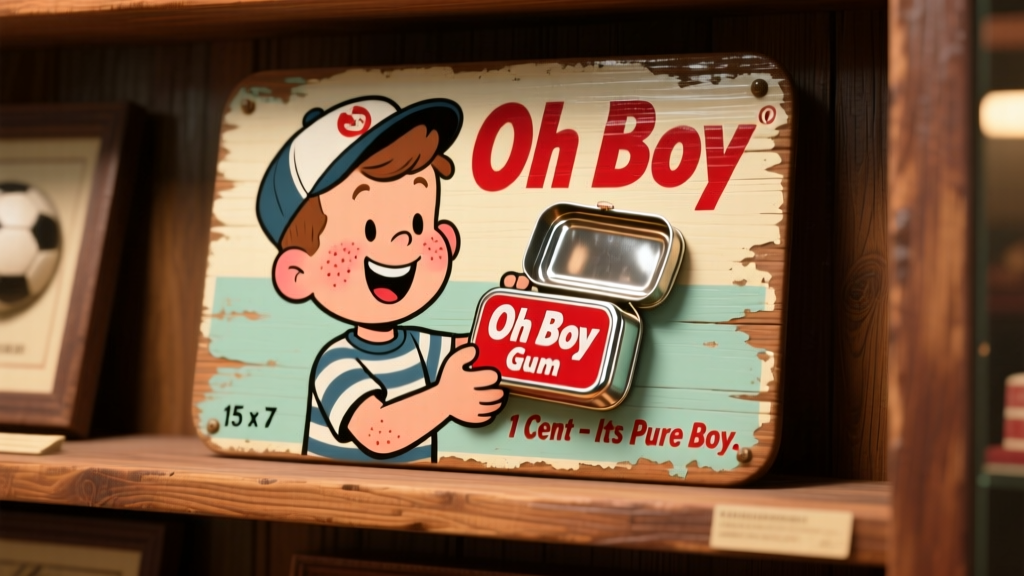
Oh Boy Gum Advertising Sign: Authenticating the 15×7-Inch Tin Featuring the 'Pure Boy' Holding a Gum Tin
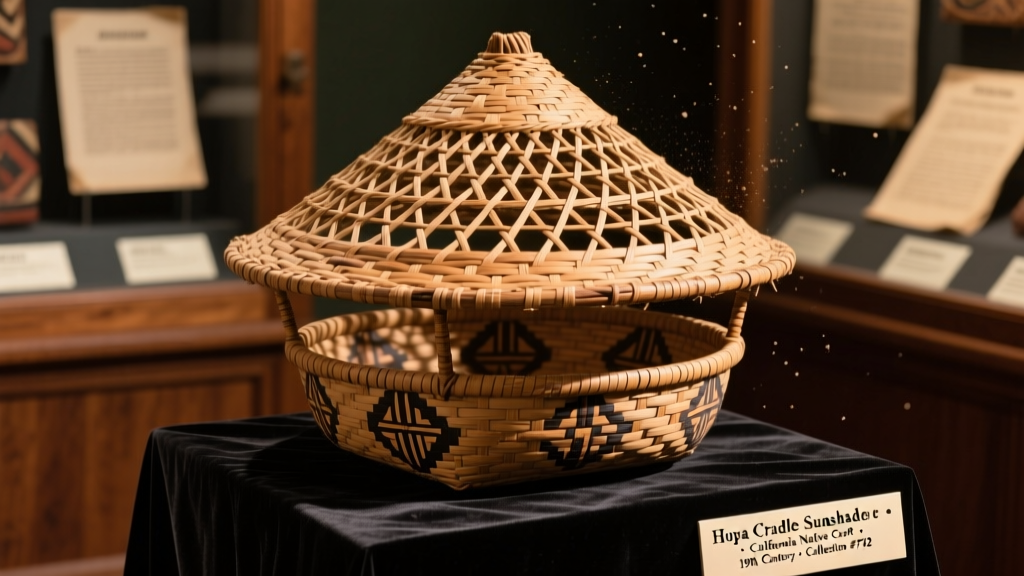
Authenticating and Preserving the Indian Cradle Hupa Basketry Open-Weave Conical Sunshade (32 × 13 × 12 in)
Franciscan Salt & Pepper Apple Small: Collector’s Guide to Authenticity, Value, and Historical Context
Lithophanes Lamp: Fairy Egg-Shaped Panel Featuring Two Cherub Children — Authentication, Provenance, and Collector Insights
Swallows in Berries Cast Iron Doorstop: Authentication, History, and Market Value of the 8¼-Inch Vintage Specimen
Fostoria Century Pitcher 3 Pt: Authentication, History, and Market Value of a Mid-Century American Glass Icon
Folk Art Whirligig: Indian in Canoe – Authenticating, Valuing, and Preserving a 17 × 32 Inch Painted Wood Masterpiece
Jumeau Bisque Doll: Authenticating the 15-Inch Closed-Mouth Paperweight-Eye Example from Late 19th-Century France