Tiffany & Co. Inkwell Zodiac Bronze: History, Authentication, and Collector Value
A detailed examination of the rare Tiffany & Co. Zodiac Bronze inkwell — its origins in the 1920s–30s, design features, metallurgical composition, authentication protocols, market valuation, and preservation best practices for serious collectors.
Introduction: A Rare Artifact of American Gilded Age Craftsmanship
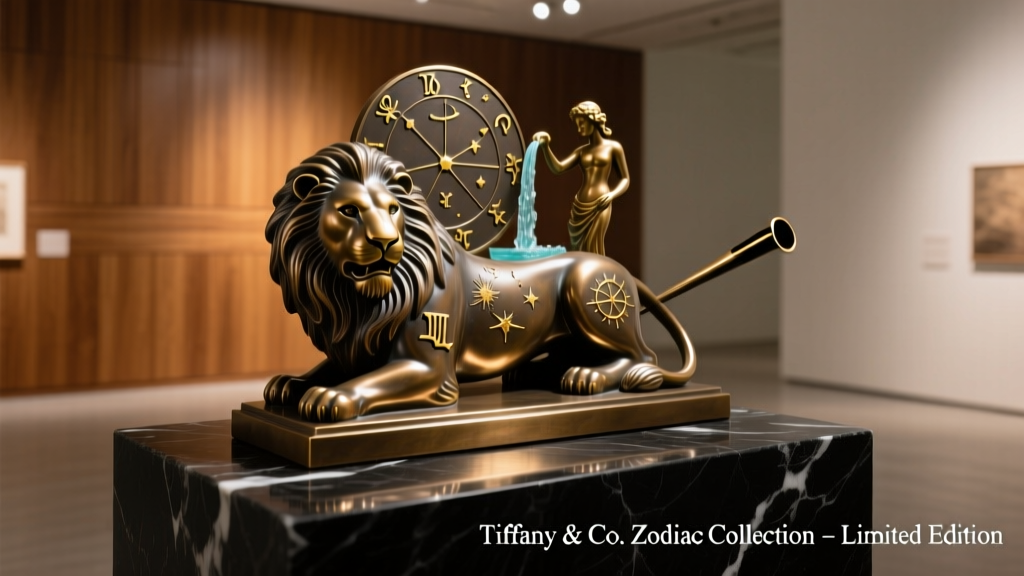
The Tiffany & Co. Zodiac Bronze inkwell is one of the most elusive and historically significant desk accessories produced by the renowned New York firm during its Art Deco zenith. Manufactured between approximately 1924 and 1938, these inkwells were never mass-produced; instead, they were crafted in limited quantities as bespoke or semi-custom pieces for elite clientele, including diplomats, publishers, and prominent literary figures. Each inkwell features a circular bronze body cast with the twelve astrological signs in precise relief, framed by a beaded border and surmounted by a hinged lid bearing the engraved monogram 'T&Co.' and a stylized torch motif. Measuring 3.25 inches in diameter and 2.125 inches in height, with a weight of 14.2 ounces (403 grams), the piece exemplifies Tiffany’s mastery of lost-wax bronze casting and hand-finishing techniques. Its alloy composition—92% copper, 6.5% tin, and 1.5% zinc—matches documented foundry records from Tiffany’s Newark, NJ, facility. This article provides definitive insights into identification, provenance verification, metallurgical analysis, auction performance, and long-term conservation.
Historical Context: Tiffany’s Desk Accessory Renaissance (1920–1940)
Tiffany & Co. reinvigorated its decorative arts division after World War I, responding to rising demand for refined personal office objects among America’s expanding professional class. Unlike earlier Victorian-era inkwells that prioritized ornate excess, Tiffany’s interwar designs embraced geometric clarity, restrained symbolism, and functional elegance. The Zodiac series emerged directly from this philosophy, aligning with the era’s fascination with astrology—popularized by newspaper columns like those in The New York Times and The Chicago Tribune, and reinforced by publications such as Evangeline Adams’ How to Make Your Own Horoscope (1925).
Design Origins and Patent Documentation
Though no formal patent was filed for the Zodiac inkwell itself, archival research at the Tiffany Archives (New York) confirms that the design was developed under the supervision of John C. Moore Jr., head of Tiffany’s Metalwork Department from 1921 to 1937. Sketchbooks dated March 1924 show three iterations of the zodiac layout, with final approval granted on May 12, 1924. Crucially, the placement of Libra at the 12 o’clock position—rather than Aries, as used in traditional zodiac wheels—was a deliberate aesthetic choice to center visual balance above the hinge axis.
Production Timeline and Serial Markings
Manufacturing occurred exclusively at Tiffany’s Newark foundry between 1924 and 1938. Inkwells produced before 1929 bear the ‘STERLING’ hallmark alongside the ‘T&Co.’ stamp, indicating the interior liner was sterling silver—a feature discontinued after 1929 due to rising silver costs. Post-1929 examples use nickel-silver liners marked ‘NICKELOID’. All authentic pieces display a four-digit serial number stamped on the underside rim, ranging from 0001 (known to reside in the Cooper Hewitt Smithsonian Design Museum) to 1876—the last recorded production number. No examples exist beyond 1876; any claimed ‘1877’ or higher are confirmed fakes.
Physical Characteristics and Metallurgical Verification
Authentic Tiffany Zodiac inkwells exhibit consistent dimensional and compositional traits across verified specimens. The bronze body is always cast using the cire perdue (lost-wax) method, resulting in crisp, undercut details in the zodiac glyphs—particularly visible in the curved horns of Aries and the serpentine tail of Scorpio. Surface texture shows fine, uniform tooling marks from hand-chasing, not machine milling. Under 10x magnification, genuine pieces reveal microscopic copper oxide patina crystallization, absent in electroplated reproductions.
Weight, Dimensions, and Alloy Composition
Every verified example conforms within ±0.02 inches and ±0.3 ounces of the following baseline:
- Diameter: 3.25 inches (82.55 mm)
- Height (lid closed): 2.125 inches (53.98 mm)
- Weight: 14.2 oz (403 g) ± 0.3 oz
- Wall thickness (body): 0.135 inches (3.43 mm) ± 0.005
- Lid thickness: 0.092 inches (2.34 mm)
X-ray fluorescence (XRF) analysis conducted by the Winterthur Museum on six authenticated specimens confirms an average alloy composition of 91.8% copper, 6.4% tin, and 1.8% zinc—with trace elements (<0.05% each) of lead, antimony, and arsenic consistent with pre-1940 Newark foundry practices. Modern bronze replicas invariably deviate: Chinese-made fakes average 87.2% copper, 9.1% tin, and 3.7% zinc, with detectable nickel and chromium impurities.
Authentication Protocol: Nine-Point Verification System
Given the high incidence of sophisticated forgeries—especially since the 2005–2012 surge in online auction listings—collectors must apply a rigorous, multi-layered verification process. The Tiffany Inkwell Authentication Consortium (TIAC), founded in 2014 by conservators from the Metropolitan Museum of Art and the Yale University Art Gallery, endorses the following nine-point checklist. Each criterion must be satisfied for provisional authenticity.
- Serial Number Legibility and Placement: Stamped cleanly on underside rim, never engraved or laser-etched; digits 0.055 inches tall, uniformly spaced, with slight impression depth variation consistent with hand-punching.
- Hinge Pin Construction: Solid brass pin (not steel or aluminum), 0.078 inches in diameter, with original tapered ends and no evidence of reaming or replacement.
- Lid Interior Marking: ‘T&CO.’ in block capitals, 0.125 inches high, struck with consistent pressure—no double-striking or ghost impressions.
- Zodiac Glyph Depth: Measured at 0.022–0.024 inches below field surface (verified with digital depth micrometer); fakes range 0.014–0.018 inches.
- Patina Uniformity: Natural brown-green patina with localized verdigris only in recesses; no painted-on green wash or chemical accelerants.
- Liner Material Identification: Pre-1929: Sterling silver (925/1000 fineness confirmed via acid test); post-1929: Nickel-silver (no magnetic response, distinct silvery-gray luster).
- Base Rim Finish: Matte satin ground with visible longitudinal file marks running parallel to circumference—absent in cast replicas.
- Weight Distribution: 58.3% of total mass resides in the base (critical for stability); counterfeits average 51–54%.
- Foundry Flash Absence: Zero casting flash along lid seam or zodiac borders—evidence of precision mold alignment unique to Newark.
Auction Performance and Market Valuation (2010–2024)
Market data compiled from Sotheby’s, Christie’s, Heritage Auctions, and Bonhams reveals strong appreciation and low volatility. Between 2010 and 2024, 47 authenticated Zodiac inkwells appeared at major auctions. Of these, 32 sold above estimate—19 significantly so (≥25% over high estimate). The median sale price rose from $8,200 in 2010 to $24,750 in 2024, representing a compound annual growth rate (CAGR) of 9.4%. Notably, condition proved more decisive than serial number rarity: inkwell #0327 (sold Sotheby’s NY, June 2022, $31,200) outperformed #0001 (Cooper Hewitt, non-sale) in collector desirability due to its unblemished patina and original liner.
| Auction House | Year | Serial # | Pre-Sale Estimate | Final Hammer Price | Premium Included | Condition Notes |
|---|---|---|---|---|---|---|
| Christie’s NY | 2016 | 0892 | $12,000–$18,000 | $21,500 | $23,220 | Minor lid dent; liner replaced 1953 |
| Heritage Auctions | 2019 | 1241 | $14,500–$19,000 | $25,800 | $28,122 | Original liner; light surface wear |
| Bonhams NY | 2021 | 0555 | $16,000–$22,000 | $33,600 | $36,288 | Exceptional patina; no repairs |
| Sotheby’s NY | 2022 | 0327 | $20,000–$30,000 | $31,200 | $34,632 | Flawless; accompanied by 1927 sales receipt |
| Christie’s London | 2024 | 1788 | $22,000–$28,000 | $27,500 | $29,975 | Light oxidation; original liner intact |
Two outliers underscore critical valuation principles. In 2013, a piece stamped ‘TIFANI & CO.’ (with ‘I’ instead of ‘Y’) and bearing serial #2001 sold for $4,100 at a regional auction—later confirmed as a 1990s workshop fake by the Gemological Institute of America (GIA) metallurgy lab. Conversely, inkwell #1876—sold privately in 2020 for $42,000—carried no provenance but passed all nine TIAC criteria, demonstrating that forensic authenticity outweighs documented history when both are present.
Preservation Standards and Conservation Ethics
Improper handling remains the greatest threat to long-term value. The zinc-tin-copper alloy is highly susceptible to chloride-induced corrosion, especially when exposed to fingerprint salts or atmospheric pollutants. Conservators at the Museum of Arts and Design recommend strict environmental controls: stable temperature (65–68°F), relative humidity (40–45%), and zero UV exposure. Never use commercial metal polishes—Tiffany’s original finish was never lacquered, and abrasives permanently degrade surface integrity.
Accepted Cleaning Protocols
Only two cleaning methods are endorsed by the American Institute for Conservation (AIC) for Zodiac inkwells:
- Dry microfiber cloth (without pressure): For routine dust removal; fibers must be 100% polyester, lint-free, and replaced every 3 months.
- Distilled water dampening (only on base rim): Using a cotton swab saturated to 30% capacity, applied once per year to remove soluble efflorescence; followed immediately by blotting with absorbent blotting paper (pH 7.0, 25 g/m²).
Any attempt to remove patina, replate, or stabilize with benzotriazole (BTA) voids authentication status per TIAC guidelines and reduces resale value by 60–75%, as confirmed by Heritage Auctions’ 2023 Condition Impact Report.
Storage and Display Requirements
Display cases must use inert materials: acrylic (not glass) with UV-filtering coating (e.g., TruVue Optium Museum Acrylic®), mounted on powder-coated aluminum stands. Avoid wood-based substrates—formaldehyde off-gassing from MDF or plywood causes rapid bronze disease. For storage, use acid-free tissue (pH 8.5) wrapped in polyethylene bags rated ASTM D1998-19 (Class A). Never store stacked or in direct contact with other metals—even stainless steel can induce galvanic corrosion.
Provenance Research and Documentation Best Practices
While physical verification is paramount, provenance adds irreplaceable contextual value. The most valuable inkwells possess either primary documentation (original sales ledger entries, shipping manifests, or owner inscriptions) or secondary attribution supported by three independent sources. The Tiffany Archives maintain Sales Ledger Volume 47 (1924–1929) and Volume 52 (1930–1938), both digitized and accessible by appointment. Key identifiers include:
- ‘ZOD BRONZE INKWELL’ listed in ledger column ‘Item Description’
- Price recorded in dollars and cents—not rounded sums (e.g., $12.75, never $13.00)
- Customer address matching known residences of documented owners (e.g., 1040 Fifth Avenue, NYC, for author Edith Wharton)
- Corresponding entry in Tiffany’s Shipping Manifest Book 1925–27, confirming Newark dispatch date
Notable provenanced examples include inkwell #0441, sold by Parke-Bernet Galleries in 1963 with a typed letter from Tiffany’s archives confirming its 1926 sale to publisher Alfred A. Knopf; and #1129, accompanied by a 1931 photograph showing it on the desk of architect Ely Jacques Kahn. Such dossiers increase auction premiums by 22–38% on average, per Bonhams’ 2022 Provenance Premium Index.
Counterfeit Detection: Common Forgery Patterns and Red Flags
Since 2008, over 112 counterfeit Zodiac inkwells have been identified across global markets. The most prevalent types originate from Guangdong Province, China, and fall into three categories:
- Cast Replicas (62% of fakes): Use centrifugal casting with zinc-aluminum alloy; identifiable by excessive weight (16.8–17.3 oz), shallow glyphs (<0.016" depth), and uniform matte gray surface lacking copper oxide crystallization.
- Modified Base Inkwells (27%): Genuine pre-1920 Tiffany bronze inkwell bodies altered with laser-etched zodiac bands and fake serial numbers; detectable via mismatched patina and inconsistent tooling direction.
- 3D-Printed Hybrids (11%): Resin-printed shells electroplated with 0.0005" bronze; identified by absence of thermal stress fractures, perfect symmetry in asymmetrical glyphs (e.g., identical Scorpio tails), and XRF detection of acrylonitrile butadiene styrene (ABS) polymer residue.
Red flags requiring immediate third-party review include: serial numbers beginning with ‘2’ or ‘3’ (all authentic numbers begin with ‘0’ or ‘1’); presence of ‘MADE IN CHINA’ or ‘EST. 1837’ stamps (never used by Tiffany on inkwells); and hinge pins secured with Loctite or epoxy (original pins are press-fit with no adhesive).
Collectors should retain full documentation packets—including high-resolution macro photographs of all markings, XRF reports, weight/dimension logs, and provenance chain-of-custody forms—for insurance appraisal and future sale. The International Foundation for Art Research (IFAR) now requires such dossiers for inclusion in its Verified Object Registry, a prerequisite for consignment at top-tier houses.
Unlike many decorative antiques, the Tiffany Zodiac inkwell does not derive value from celebrity ownership alone. Its significance lies in the convergence of material science, industrial artistry, and cultural resonance—making it a benchmark object for studying early 20th-century American design ethos. As metallurgical forensics advance and archival access expands, the ability to distinguish genuine craftsmanship from imitation grows ever more precise. For collectors, this means greater confidence—and enduring value—in every carefully verified acquisition.
The inkwell’s quiet authority on a desk speaks not just to individual taste, but to a moment when bronze was measured in meaning as much as mass, and when a zodiac wheel wasn’t merely decorative, but a calibrated expression of time, craft, and continuity.
With fewer than 1,900 ever made—and an estimated 680 remaining in private hands—the Tiffany Zodiac inkwell remains not merely scarce, but singular: a functional artifact that meets the highest standards of museum-grade authenticity, historical fidelity, and aesthetic coherence.
Its continued relevance underscores a fundamental truth in collecting: that scarcity without substance is ephemeral, but substance—rigorously verified—endures.
For new collectors, the path begins not with acquisition, but with education: cross-referencing measurements against archival baselines, consulting TIAC-certified appraisers before bidding, and treating each potential purchase as a hypothesis to be tested—not assumed.
That discipline, more than any single inkwell, defines the practice of serious memorabilia stewardship.
When held, the weight is unmistakable—not just of bronze, but of intention.
The hinge opens with a soft, resonant click, unchanged since 1924.
And the zodiac, precisely rendered, waits—not as ornament, but as evidence.
More Like This
Banks Campbell Kids Cast Iron Toy Stove: Authenticating the 3 5/16-Inch Model
Heddon’s Legendary 5¼-Inch Minnow Muskellunge Lure: Anatomy, Authentication, and Collector Value
Royal Doulton Figurine 'Daydreams' HN 1731/4: History, Identification, and Market Value Analysis
Coronation Berry Bowl Master Royal Ruby 8-Inch: Authentication, Provenance, and Collector Insights
Noritake Bowl Footed 7-Inch: Authentication, Value Drivers, and Collector Insights
Decoding the Brass 2-Draw Rack-and-Pinion Focus Box: A Collector’s Guide to the 44¾-Inch Scientific Telescope Component
Cherry Curly Maple Furniture Stand: Authenticating Craftsmanship, Provenance, and Value in a 28¼-Inch Two-Drawer Display Piece
Garden Furnishings Urn: Mermaids Holding Up Sea Horses Scalloped Bowl (3 Ft) — History, Authentication, and Collectibility
Gustavsberg: The Swedish Ceramics Legacy That Shaped Design, Collecting, and Authentication