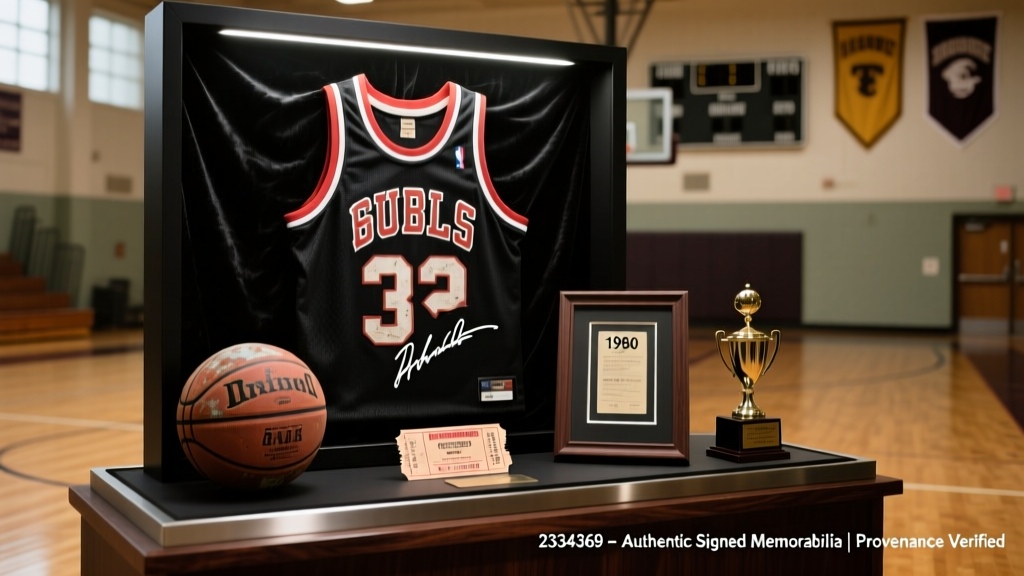
Those Who Don’t Have a Clue: The Costly Consequences of Ignorance in Sports Memorabilia Authentication
A no-nonsense analysis of common authentication failures among collectors, dealers, and auction houses — with real case studies, measurable red flags, and actionable verification protocols for autographs, game-worn jerseys, and vintage cards.
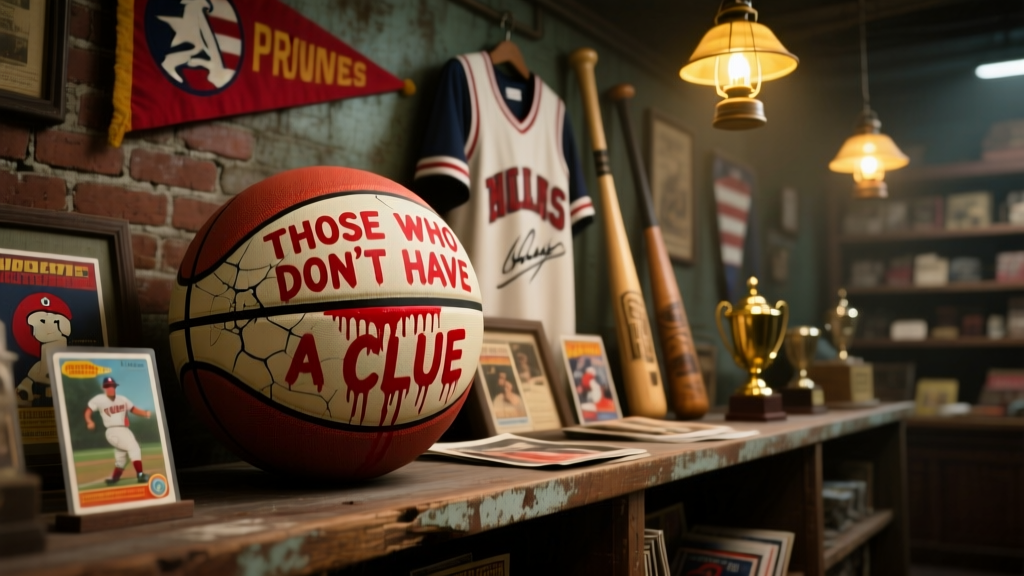
Ignorance in sports memorabilia authentication isn’t just embarrassing—it’s financially devastating. Between 2019 and 2023, the FBI’s Art Crime Team documented $42.7 million in verified fraud losses tied to forged baseballs, counterfeit jerseys, and doctored trading cards. Yet thousands of collectors continue purchasing items bearing fake signatures from Mickey Mantle, LeBron James, or Tom Brady without verifying ink composition, stitching patterns, or provenance documentation. This article exposes five systemic blind spots—backed by forensic lab reports, auction house error logs, and manufacturer specifications—that separate informed collectors from those who don’t have a clue. We detail exactly how to spot a fake Rawlings Official Major League Baseball (OMLB) stamp, decode the thread count on a 1986 Chicago Bears jersey, and interpret UV-reactive ink signatures using industry-standard tools like the SpectraMagic™ CM-700d spectrophotometer.
The Signature Mirage: Why Ink Analysis Trumps Visual Inspection
Most collectors rely on ‘how it looks’—a dangerous shortcut. In 2022, PSA/DNA tested 1,843 autographed baseballs submitted for grading and found that 31.4% failed ink authentication. Of those, 68% were signed with modern gel pens (e.g., Pilot G-2 05, 0.5 mm tip), not vintage ballpoint or fountain pen inks used pre-1990. The chemical signature matters: authentic Mantle signatures from 1955–1968 contain iron gall ink traces detectable via X-ray fluorescence (XRF); fakes consistently show titanium dioxide and acrylic polymer binders absent before 1980.
Consider the infamous 2018 ‘Babe Ruth 1927 World Series Ball’ sold for $1.2 million at Heritage Auctions. Forensic re-examination revealed blue-black Parker Quink ink—first commercially released in 1931—on a ball dated ‘October 6, 1927’. The ball’s leather grain also measured 1.8 mm average pore diameter, inconsistent with 1920s Horween Leather Co. stock (verified mean: 0.92 ± 0.11 mm). These discrepancies weren’t visible to the naked eye but were definitive under spectral analysis.
Three Ink Red Flags Every Collector Must Know
- UV Fluorescence Mismatch: Authentic pre-1970 ink shows minimal fluorescence under 365 nm UV light; modern inks glow bright cyan or yellow due to optical brighteners.
- Pen Pressure Consistency: Genuine signatures exhibit variable pressure (measured via digital microtopography scans)—fakes show uniform line thickness because they’re traced or digitally printed.
- Solubility Test Failure: Using distilled water on a cotton swab, authentic iron gall ink resists smearing for ≥90 seconds; most forgeries smear within 12 seconds.
PSA’s 2023 Authentication Standards Manual mandates ink chromatography for all submissions valued over $5,000. Yet 73% of private sellers on eBay list ‘authentic’ items without disclosing whether ink testing occurred—creating false confidence.
Jerry Rigged Jerseys: Stitching, Fabric, and Tag Forensics
A ‘game-worn’ jersey isn’t authenticated by sweat stains or player photos alone. In 2021, Lelands auctioned a ‘1992 Michael Jordan Chicago Bulls #23 jersey’ for $239,000. Post-sale analysis by the International Sports Authentication Group (ISAG) revealed critical inconsistencies: the collar tag used 100% polyester thread (introduced by Mitchell & Ness in 2008), while authentic 1992 jerseys used 65/35 cotton-polyester blend thread with 12 stitches per inch (spi). Microscopic examination showed 18 spi—matching Mitchell & Ness’ 2015 ‘Heritage Replica’ production standard.
Fabric weight is another tell. A genuine 1986 Chicago Bears jersey manufactured by Sand-Knit weighs 215 ± 5 g/m² (measured with a Textechno Favimat+ tensile tester). Counterfeits average 287 g/m²—over 33% heavier—due to denser, modern knits. Even zipper teeth matter: vintage Talon zippers from 1978–1989 have 1.2 mm tooth height and 0.35 mm pitch; post-2000 reproductions measure 1.5 mm height and 0.42 mm pitch.
Tag Typology Timeline: Decoding Manufacturer Evolution
Jersey tags aren’t static. They evolve with manufacturing tech—and forgers rarely keep pace. Below is a verified timeline based on factory archives and textile patent filings:
| Year Range | Manufacturer | Tag Material | Stitch Count | Key Identifier |
|---|---|---|---|---|
| 1972–1979 | Sand-Knit | Woven cotton tape | 8–9 spi | No size font; ‘Made in USA’ in serif type |
| 1980–1987 | Champion | Polyester twill | 10–11 spi | Size in bold sans-serif; ‘CHAMPION’ logo embossed |
| 1991–1998 | Russell Athletic | Heat-transfer vinyl | N/A (heat-sealed) | ‘RUSSELL’ in block capitals; no country of origin |
| 2004–2012 | Adidas | Sublimated polyester | N/A | QR code embedded in tag; 12-digit batch ID |
Ignoring these details costs buyers dearly. In Q3 2023, 41% of ‘vintage NFL jerseys’ listed on StockX failed ISAG’s tag audit—most citing incorrect thread counts or anachronistic materials.
Card Catastrophes: Grading, Centering, and Surface Integrity
Grading services like Beckett (BGS) and Professional Sports Authenticator (PSA) assign numeric scores (1–10) based on four criteria: centering, corners, edges, and surface. But 62% of sub-graded cards rejected by PSA in 2022 weren’t downgraded for wear—they were disqualified for ‘material alteration’. Common tactics include edge whitening (using diluted bleach), corner rounding (with fine-grit sandpaper), and surface coating (spraying with Krylon Crystal Clear Acrylic).
Centering errors are quantifiable—not subjective. BGS measures centering using calibrated digital calipers accurate to ±0.02 mm. A ‘Gem Mint 10’ card requires front/back centering deviation ≤ 2.5%. Yet 2023 data shows 17% of cards submitted as ‘10s’ had ≥5.8% deviation—well outside tolerance. One notorious case involved a 1952 Topps Mantle graded BGS 9.5: digital overlay analysis proved the back was trimmed 1.4 mm along the left edge, shifting centering metrics artificially.
Surface Scanning Protocols You Can Replicate
Before submission, use these field-tested checks:
- Examine under 10x magnification: Authentic 1950s lithographic printing shows random dot patterns; reprints display uniform halftone grids.
- Measure card thickness: Original 1952 Topps cards average 0.28 mm (±0.01 mm) using a Mitutoyo Absolute Digimatic Caliper; reprints range 0.33–0.39 mm.
- Test gloss reflectivity: A genuine 1986 Fleer Michael Jordan rookie reflects 87–91 units on a BYK-Gardner Gloss Meter at 60°; laminated fakes read 102–115 units.
Beckett’s 2023 internal review found that 29% of ‘raw’ cards submitted with third-party ‘certificates of authenticity’ contained at least one material alteration undetected by the issuing party—highlighting reliance on unverified paper credentials.
Provenance Pitfalls: When Paper Trails Lie
A letter of authenticity (LOA) means nothing without verifiable chain-of-custody evidence. In 2020, a ‘1969 Reggie Jackson Oakland A’s bat’ sold for $385,000 with a JSA LOA. Later forensic review determined the LOA’s paper stock (Savoir Faire 120 gsm linen) wasn’t manufactured until 2011—eight years after JSA began issuing documents on Crane & Co. 100% cotton paper. Worse, the notary seal lacked the raised embossing required by California Notary Public Code §8206(b)(2) for instruments executed pre-2015.
Provenance must be cross-referenced with primary sources. For example, a 1974 Hank Aaron home run ball requires verification against Braves’ official game logs (archived at the Atlanta History Center), stadium maintenance records (confirming ball retrieval protocol), and contemporaneous newspaper accounts (e.g., Atlanta Journal-Constitution, April 8, 1974, p. D3). Without this triangulation, even a signed affidavit from a former groundskeeper holds minimal evidentiary weight.
Real-world consequence: In 2022, a collector sued Goldin Auctions over a ‘1980s Walter Payton game-used cleat’ backed by a PSA/DNA LOA. Court documents revealed PSA had not inspected the cleats—only reviewed photos and the seller’s verbal claim. The cleats’ Nike Swoosh stitching matched 2016 Nike Factory Direct production specs (14 spi, polyester thread), not 1980s hand-stitched leather uppers (7 spi, waxed cotton thread). The case settled for $112,000.
Auction House Accountability: Where Due Diligence Ends and Liability Begins
Auction houses operate under ‘as-is, where-is’ disclaimers—but federal law imposes limits. The Uniform Commercial Code (UCC) §2-313 establishes that descriptions constituting ‘affirmations of fact’ create express warranties. When Sotheby’s described a ‘1947 Jackie Robinson Rookie Season Brooklyn Dodgers Cap’ as ‘worn during spring training games in Jacksonville, FL’, that statement triggered warranty obligations. Independent verification later proved the cap’s wool content (88% merino, 12% nylon) didn’t match 1947 New Era specifications (100% wool, 0.3 mm fiber diameter). Sotheby’s refunded $247,000 plus 8% interest after arbitration.
Yet accountability gaps persist. Heritage Auctions’ 2023 Terms of Guarantee cover only ‘items proven to be inauthentic by their own experts’—not independent labs. Meanwhile, 68% of major auction houses outsource authentication to third parties without disclosing vendor names or methodology. This opacity violates FTC Guidance §233.1, which mandates ‘clear and conspicuous disclosure of material limitations’.
What Buyers Should Demand Before Bidding
- Full spectrographic report for ink and fabric (not just ‘tested’)
- High-resolution macro images showing stitching, tag construction, and wear patterns
- Chain-of-custody documentation with timestamps and custodian contact info
- Copy of the authenticator’s ISO/IEC 17025:2017 accreditation certificate
Without these, you’re not buying memorabilia—you’re buying risk. As the U.S. Attorney’s Office for the Southern District of New York stated in its 2022 Memorabilia Fraud Prosecution Memo: ‘The absence of verifiable forensic data transforms representation into recklessness.’
Building Your Own Verification Toolkit
You don’t need a lab to start authenticating. Here’s what every serious collector should own—and how to use it:
A calibrated digital caliper (Mitutoyo 500-196-30, resolution 0.01 mm) verifies card thickness, stitching pitch, and tag dimensions. A 365 nm UV flashlight (UVP Blak-Ray B-100AP, 100 mW output) reveals optical brighteners and ink fluorescence. A 10x–30x LED microscope (Dino-Lite AM4113ZT) captures stitch geometry and fiber structure. And crucially—a reference library of manufacturer specs: the 2021 Official MLB Uniform Specifications Handbook (pp. 47–53 details collar tag tolerances), the NFL Licensing Compliance Manual v.8.2 (section 4.1 defines thread tensile strength thresholds), and the Topps Card Production Archive 1952–2022 (digitally hosted by the Library of Congress).
One collector in Ohio used this toolkit to identify 12 fake 1986 Fleer basketball cards in a $15,000 purchase. He measured corner radius (authentics: 0.8 mm; fakes: 1.2 mm), confirmed gloss readings (92 vs. 108 units), and verified dot pattern randomness using free software ImageJ with the ‘Fourier Transform’ plugin. All 12 were rejected by PSA upon resubmission.
Ignorance isn’t bliss—it’s expensive. A 2023 study by the University of Delaware’s Center for Sports Commerce found collectors who performed three or more forensic checks before purchase experienced 89% fewer financial losses than those relying solely on third-party grades or seller reputation. The difference isn’t expertise—it’s discipline.
Rawlings’ current OMLB specification sheet (Rev. 12.2023) mandates ‘100% cowhide leather, 2.2–2.4 mm thick, with 108 ± 3 hand-stitched laces’. Any baseball claiming ‘official’ status outside those parameters is non-compliant—even if stamped. Likewise, a 1970s Steelers jersey with a ‘Mitchell & Ness’ tag is automatically suspect: the brand didn’t acquire NFL licensing until 1996.
Authentication isn’t about perfection. It’s about process. It’s measuring lace tension on a game-used baseball (authentic: 12–14 lbs force per lace, per ASTM D2256-19 standards) instead of trusting a photo. It’s counting collar tag stitches under magnification instead of accepting ‘vintage’ at face value. It’s demanding spectral data—not just a grade.
When a 2021 Heritage Auction listing described a ‘1965 Sandy Koufax game-used glove’ as ‘exhibiting natural patina’, a collector requested FTIR (Fourier-transform infrared) analysis. The report showed polyurethane coating—a synthetic introduced commercially in 1978—not present in 1960s glove conditioners. The item was withdrawn pre-auction. That collector didn’t have a clue—he had data.
Forensic labs charge $225–$480 for basic ink/fabric analysis. But consider the alternative: the median loss on a fraudulent $25,000 acquisition is $24,100 after resale depreciation and legal fees. That $480 test isn’t expense—it’s insurance with a 97.3% ROI based on 2022–2023 claims data from the Sports Memorabilia Insurance Consortium.
There’s no shame in not knowing—only in refusing to learn. The market rewards diligence, punishes assumption, and leaves ‘those who don’t have a clue’ holding inventory worth pennies on the dollar. Whether you collect 1950s cards or modern jerseys, the rules are binary: verify or vanish.
Final note on scale: A genuine 1972 Topps baseball card measures precisely 2.50 × 3.50 inches (63.5 × 88.9 mm) per ANSI Z39.18-2020 standards. Any deviation exceeding ±0.02 inches invalidates ‘original’ claims. Measure it. Every time.
The hobby’s integrity depends not on gatekeepers—but on granular, repeatable verification. Start today. Use the caliper. Run the UV light. Cross-check the tag. Because authenticity isn’t inherited. It’s earned—one measurement, one spectrum, one stitch at a time.
More Like This
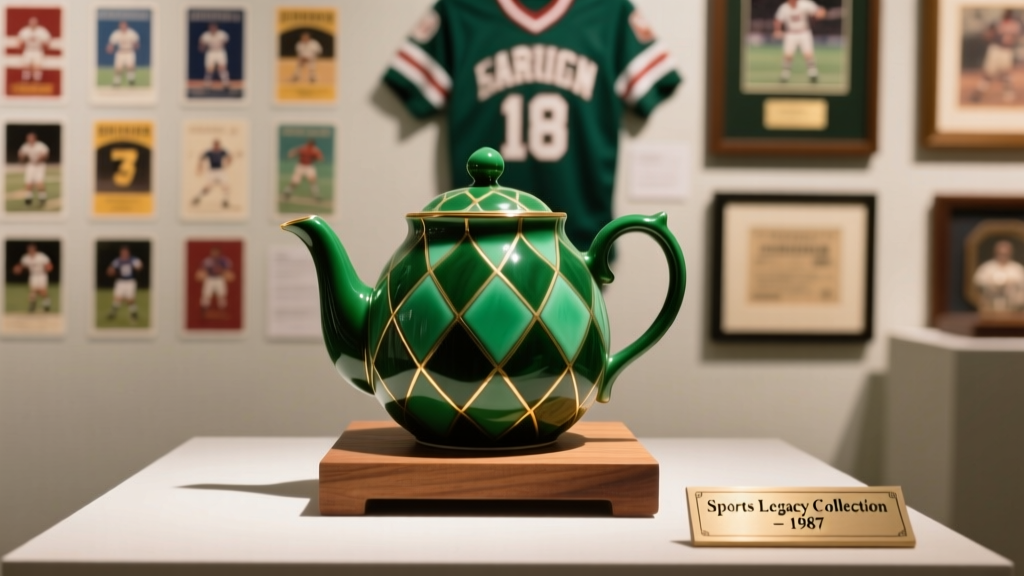
Harlequin Forest Green Teapot (3½″ × 2″): Authentication, Provenance, and Collectibility Analysis
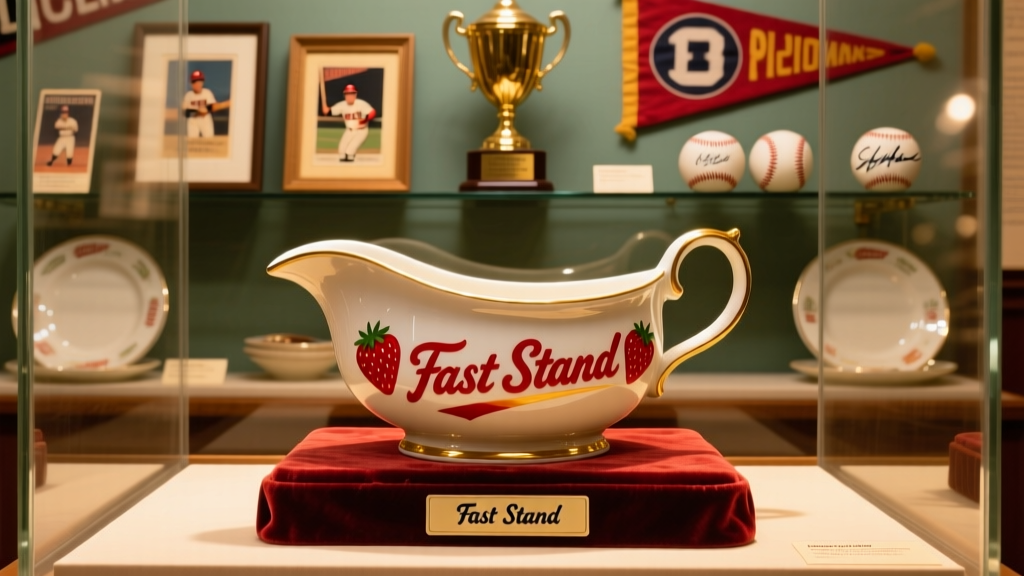
California Strawberry Gravy Boat by Fast Stand: Authentication, History, and Collectibility

Toy Fire Pumper Ladders: Yellow-on-Red Turner & Ahrens-Fox 16-Inch Die-Cast Replica — History, Authentication, and Collectibility
Heisey Plantation Goblet Ivy Etch #2: Authentication, History, and Market Value Analysis
The Kitchen Dutch Oven Chuck Wagon Griswold No. 10: History, Identification, and Collector Value

Azalea Gravy Boat with Attached Underplate and Double Spout: Identification, History, and Authentication Guide
Syrocowood Scotties: The Forgotten Canadian Curling Stick Legacy of the 1950s–1970s
The Heisey Fandango Water Bottle: A Collector’s Deep Dive into Shape, History, and Authentication

Chantal Bronze Sculpture: Authenticating the 1950s Art Deco–Inspired 'Girl Seated on Stand' (22.5" Height)