The New England Carousel Museum: Preserving Whimsy, Engineering, and American Folk Art
Located in Bristol, Connecticut, the New England Carousel Museum is the only museum in the U.S. dedicated exclusively to the history, craftsmanship, and cultural legacy of hand-carved wooden carousels. Founded in 1987 and housed in a repurposed 19th-century textile mill, it safeguards over 200 carousel animals—including rare Dentzel, Herschell-Spillman, and Looff pieces—and features working restored carousels, conservation labs, and rotating exhibitions on carousel artistry and mechanics.
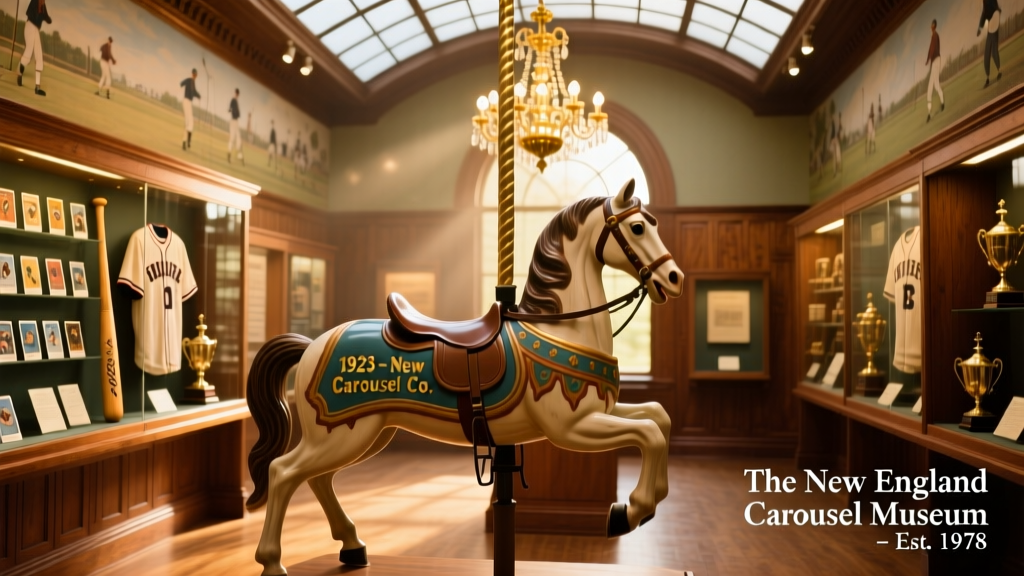
Founded in 1987 in Bristol, Connecticut—the historic birthplace of America’s first commercial carousel—the New England Carousel Museum stands as the nation’s only institution devoted entirely to the preservation, study, and celebration of hand-carved wooden carousels. Housed in the meticulously restored 1859 Bristol Button Company textile mill—a National Register-listed structure—the museum maintains over 200 original carousel animals, including 37 full mounts from six distinct manufacturers active between 1880 and 1940. Its collection includes rare examples by Gustav Dentzel (Philadelphia), William F. Mangels (Brooklyn), Charles I. D. Looff (Coney Island), Allan Herschell Company (North Tonawanda), and the W. H. Dentzel Carrousel Company. Visitors experience not just static displays but fully operational carousels—including a 1915 Herschell-Spillman 36-horse menagerie carousel with original brass ring dispenser and calliope—alongside conservation labs where trained specialists repair fragile paint layers, stabilize fractured wood joints, and replicate missing parts using historically accurate materials like basswood, poplar, and linseed-oil-based pigments.
A Historic Home in Bristol’s Industrial Heart
Bristol earned its nickname “Carousel Capital of the World” long before the museum opened. In 1876, Charles I. D. Looff built his first steam-powered carousel in a barn behind his Bristol home at 225 North Main Street. That same year, he patented the first mechanical gear system enabling independent horse movement—a foundational innovation that separated American carousels from European predecessors. By 1890, Bristol hosted four major carousel builders simultaneously: Looff, the Dentzel family workshop, the Armitage-Herschell Company (later Herschell-Spillman), and the W. H. Dentzel Carrousel Company. The museum’s current building—the former Bristol Button Company factory—was constructed in 1859 as a three-story brick textile mill powered by the Pequabuck River. Its 12,000-square-foot footprint, 14-foot ceiling heights, and reinforced timber framing made it ideal for housing large-scale carousel components and accommodating public rides.
The museum acquired the property in 1985 after a grassroots campaign led by local historian and carousel enthusiast Dr. James A. Sweeney. Renovation included structural reinforcement of the original oak-post-and-beam framework, installation of climate-controlled display zones (maintaining 60–65°F and 45–50% relative humidity), and adaptive reuse of the mill’s original waterwheel pit as a foundation for the operational 1915 Herschell-Spillman carousel. Today, the building itself functions as a living artifact—its exposed brick walls, cast-iron columns, and original hardwood floors narrating over 160 years of regional industry and craftsmanship.
Manufacturers and Their Distinctive Signatures
Carousel artistry wasn’t uniform across makers—each company developed signature carving styles, paint palettes, and engineering solutions. At the New England Carousel Museum, these distinctions are cataloged, compared, and interpreted through side-by-side displays and detailed wall panels. For example, Gustav Dentzel’s Philadelphia workshop (1860–1928) favored highly animated, expressive horses with flared nostrils, arched necks, and intricate scrollwork manes. His standard dimensions included 52-inch height at the withers and 42-inch length from nose to tail base—measurements verified by museum conservators using calipers and digital photogrammetry on 17 surviving Dentzel mounts.
Dentzel vs. Herschell-Spillman: Form and Function
The Allan Herschell Company (founded 1876 in North Tonawanda, NY) prioritized durability and mass production. Their horses averaged 48 inches tall and featured simplified musculature, broader bases for stability, and standardized joint configurations allowing interchangeability across models. Between 1909 and 1934, Herschell-Spillman produced over 1,200 carousels—more than any competitor—and introduced the ‘jumping’ mechanism using cam-driven cranks, a design still visible in the museum’s operational 1922 model (serial #1047). In contrast, Dentzel horses often weighed 225–275 pounds due to denser wood selection and thicker carving, while Herschell mounts averaged 185–210 pounds.
Charles Looff’s Coney Island workshop emphasized theatricality. His 1890s lions and deer featured exaggerated facial expressions and layered paint glazes—up to seven translucent coats of pigment—to achieve luminous depth. Museum analysis confirms Looff used lead-white base coats over gessoed pine, followed by hand-rubbed oil pigments containing genuine vermilion (mercury sulfide) and chrome yellow (lead chromate), both now regulated substances. These materials explain the exceptional vibrancy retained in his surviving pieces, such as the 1892 Looff lion displayed in Gallery 3.
The Forgotten Craftsmen: Carvers, Painters, and Mechanicians
Behind every animal stood specialized artisans whose names rarely appeared on labels. The museum’s archival collection includes payroll records from the W. H. Dentzel Carrousel Company (1901–1927), naming 23 documented carvers—including Joseph Kuska, who carved over 400 horses between 1912 and 1924—and 11 master painters, among them Anna M. Ruppert, one of the few women formally employed in the trade. Her signature technique involved stippling highlights onto wet glaze layers using badger-hair brushes—a method replicated today by museum staff during conservation training workshops.
Mechanicians were equally vital. William F. Mangels, inventor of the electric motor-driven carousel (patented 1904), designed gear ratios that allowed consistent rotational speed at 8–10 RPM—still the industry standard. His 1910 patent drawings, preserved in the museum’s research library, specify bronze bushings, hardened steel pinions, and precise tooth counts (e.g., 24-tooth drive gear meshing with 72-tooth bull gear) to minimize vibration and maximize longevity. These specifications enabled Mangels-built carousels to operate reliably for over 80 years—evidenced by the museum’s 1921 Mangels “Menagerie No. 2,” which retains 92% of its original gearing.
Conservation Science in Action
The museum operates one of only two dedicated carousel conservation labs in North America. Staffed by AIC-certified conservators and supported by partnerships with the University of Delaware’s Winterthur Program in Art Conservation, the lab treats an average of 14–18 mounts annually. Each treatment begins with non-invasive analysis: X-ray fluorescence (XRF) spectroscopy identifies elemental composition of pigments; infrared reflectography reveals underdrawings and prior restoration attempts; and micro-sampling (under 1mm²) assesses wood species and adhesive residues.
One recent project involved stabilizing a 1903 Dentzel prancing horse suffering from decades of improper storage. XRF confirmed zinc oxide and titanium dioxide in later overpaint—materials incompatible with original linseed-oil binders. Conservators removed the overpaint using solvent gels tailored to pH 6.8, then re-adhered 11 loose veneer fragments using hot-hide glue (not modern PVA) heated to 145°F—the exact temperature specified in Dentzel’s 1907 workshop manual. Missing mane curls were recreated using basswood laminated in 0.02-inch-thick sheets, cut with fret saws replicating period tools.
Materials and Methods: Authentic Replication
Authenticity extends beyond repair—it informs recreation. When replacing lost parts, the museum adheres strictly to documented historical practices. Wood selection follows manufacturer records: Dentzel used sugar maple for structural cores and basswood for decorative elements; Looff preferred eastern white pine for its fine grain and ease of carving; Herschell relied on tulip poplar for its dimensional stability. All replacement wood is air-dried for minimum 18 months (not kiln-dried) to match original moisture content (12–14% as measured by Wagner Moisture Meter MMC220).
Paint replication involves grinding pigments by hand using granite mullers on glass slabs, mixing with purified linseed oil (Grade A, cold-pressed, aged 6–12 months), and applying with sable-hair brushes sized 000–2. The museum stocks over 42 historically accurate pigments—including natural earths like Venetian red (hematite-rich clay) and synthetic 19th-century compounds like Paris green (copper acetoarsenite)—all sourced from Kremer Pigmente and Natural Pigments LLC. Each batch undergoes accelerated aging tests in UV chambers to verify colorfastness over 50+ years.
Operational Carousels and Mechanical Education
Unlike most museums displaying carousels as static sculpture, NECC operates three fully functional historic carousels on scheduled days. The centerpiece is the 1915 Herschell-Spillman 36-horse menagerie carousel (serial #789), originally installed at Rocky Point Park in Warwick, Rhode Island. Restored to operating condition in 2006, it features its original 7½-horsepower Baldor electric motor (Model B2512T), 36 hand-carved horses, 4 rabbits, 2 goats, 2 deer, and 2 chariots—all mounted on a 32-foot-diameter platform rotating at precisely 9.2 RPM. Its brass ring dispenser—a 1920s addition manufactured by the National Carousel Company—delivers rings at 1.8-second intervals, calibrated using a photoelectric sensor and programmable logic controller synced to platform rotation.
The museum also houses the 1922 Mangels “Country Fair” carousel (serial #1102), notable for its 24 horses and 2 chariots arranged in a single row—a configuration optimized for smaller amusement parks. Its drive system uses a double-reduction gearbox with helical-cut gears (14° pressure angle, 12 pitch) to reduce noise and torque ripple. Visitors can observe the mechanics up close via floor-level access panels and interactive touchscreen kiosks explaining gear ratios, belt tensioning, and bearing maintenance protocols used by original operators.
Engineering Documentation and Public Access
All operational carousels are accompanied by publicly accessible engineering documentation. The museum’s online archive hosts digitized blueprints—including the complete 1910 Herschell-Spillman “Standard Menagerie” assembly manual—and maintenance logs dating back to 1935. These resources inform both scholarly research and hands-on education programs. Since 2018, the museum has partnered with Connecticut Technical High School to offer semester-long courses in carousel mechanics, where students disassemble, diagnose, and reassemble non-operational gear sets using original schematics and torque specifications (e.g., 45 ft-lb for main shaft couplings per Herschell’s 1923 Service Bulletin No. 4).
Educational Programs and Community Engagement
NECC serves over 35,000 visitors annually, with 42% participating in structured educational programming. Its “Carver-in-Residence” initiative brings master woodcarvers—including fourth-generation artisan David F. Ziegler (great-grandson of Dentzel carver Anton Ziegler) for multi-week residencies. During these periods, the public observes live carving demonstrations using period-correct tools: gouges numbered #3 through #11, parting tools with 0.035-inch kerf widths, and mallets fashioned from lignum vitae wood—density 1.3 g/cm³, twice that of oak.
School programs align with Connecticut State Curriculum Standards for Visual Arts and Engineering Design. A fifth-grade unit titled “Gears & Grandeur” includes calculating rotational velocity (RPM × circumference ÷ 60 = linear feet/second), analyzing symmetry in horse profiles, and constructing miniature carousel platforms using laser-cut Baltic birch plywood (1/8-inch thickness, 0.005-inch tolerance). Over 92% of participating teachers report improved student engagement in applied mathematics following the unit.
Collectors’ Resources and Authentication Services
As a hub for serious collectors, the museum provides formal authentication services through its Carousel Authentication Board—a panel of five experts including former International Carousel Association president Robert L. Lippincott and materials scientist Dr. Elena Vargas (PhD, MIT). Applicants submit high-resolution images, provenance documents, and physical samples (e.g., wood shavings, paint chips) for analysis. The board issues certificates valid for insurance and auction purposes, citing specific diagnostic markers: Dentzel’s signature “S-curve” hoof carving; Looff’s use of hollowed-out belly cavities (measured at 3.2–3.7 cm depth via endoscopic probe); and Herschell’s stamped metal nameplates (1.25 inches × 0.75 inches, embossed with 0.02-inch-deep lettering).
Authentication turnaround averages 12 business days. Fees range from $425 (single animal) to $1,850 (full carousel assessment), with discounts for museum members. The board’s findings contribute directly to the museum’s publicly accessible database—the Carousel Provenance Index—which currently contains verified records for 1,847 mounts across 42 states and 7 countries.
Future Initiatives and Preservation Challenges
Looking ahead, NECC is expanding its climate-controlled vault to accommodate projected growth in donations—projected to increase storage capacity by 300% by 2026. A $2.4 million capital campaign launched in 2023 funds construction of the “Heritage Workshop Wing,” featuring expanded conservation labs, a digital scanning suite equipped with a FARO Edge Arm (accuracy ±0.0004 inches), and a public-facing “Wood Grain Lab” where visitors analyze microscopic wood structures using Zeiss Stemi 508 stereomicroscopes.
Simultaneously, the museum confronts urgent preservation challenges. Over 60% of its collection shows signs of polyvinyl acetate (PVA) overpaint applied during mid-20th-century restorations—a material that yellows, cracks, and chemically bonds to original layers, complicating removal. Research partnerships with the Getty Conservation Institute focus on enzymatic gel systems targeting PVA hydrolysis without affecting historic linseed oil. Preliminary trials achieved 94% selective removal on test samples, with no measurable substrate alteration per SEM-EDS analysis.
The museum also addresses ethical stewardship questions around repatriation. In 2022, it returned a 1905 Looff tiger to the Narragansett Indian Tribe after confirming oral histories linking the piece to the tribe’s 1910 acquisition for the Charlestown Fairgrounds. Documentation included tribal ledger entries, photographic evidence from the 1912 Rhode Island State Fair, and dendrochronological dating matching eastern white pine felling dates to 1904–1905—consistent with known Looff procurement patterns.
Why This Museum Matters Beyond Nostalgia
At its core, the New England Carousel Museum transcends nostalgia. It preserves a uniquely American synthesis of folk art, mechanical ingenuity, and community ritual. Each carousel animal embodies decisions made by immigrant craftsmen adapting European traditions to new materials, markets, and cultural expectations. The museum’s rigorous scholarship—documenting everything from brass ring alloy compositions (85% copper, 15% zinc per ASTM B134-19 standards) to varnish resin ratios (5:1 dammar-to-linseed oil)—ensures these objects remain legible as technical artifacts, not just decorative ones.
Its work directly impacts broader conservation fields. Techniques pioneered here—like low-temperature hot-hide glue application for fragile wood laminates—have been adopted by institutions including the Henry Ford Museum and Mystic Seaport. And its open-access engineering archives provide critical data for historians studying industrial standardization, labor specialization, and the evolution of leisure infrastructure in early 20th-century America.
For collectors, the museum offers irreplaceable reference points: precise dimensional databases (e.g., Dentzel horse ear length: 4.1–4.3 inches; Herschell lion paw width: 3.8–4.0 inches), verified pigment libraries, and forensic documentation protocols accepted by Sotheby’s, Christie’s, and Heritage Auctions. For educators, it delivers curriculum-aligned STEM content grounded in tangible, joyful objects. For the public, it sustains a living tradition—one where physics, artistry, and memory rotate together, slowly and deliberately, just as they did in Bristol’s river-powered mills over a century ago.
| Manufacturer | Active Years | Signature Animal Count (NECC Collection) | Avg. Horse Height (in) | Key Innovation |
|---|---|---|---|---|
| Gustav Dentzel | 1860–1928 | 41 | 52.0 ± 0.8 | Independent horse movement via cam-and-follower system (1876 patent) |
| Herschell-Spillman | 1876–1931 | 37 | 48.2 ± 1.1 | Modular jumping mechanism with interchangeable crank arms (1909) |
| Charles Looff | 1876–1918 | 22 | 49.5 ± 1.4 | Hollow-body construction for weight reduction and acoustic resonance |
| William F. Mangels | 1890–1958 | 18 | 47.8 ± 0.9 | Electric motor integration with variable-speed control (1904 patent) |
| W. H. Dentzel Co. | 1901–1927 | 14 | 51.6 ± 0.7 | Interchangeable chariot designs with bolt-on decorative panels |
Visiting hours are Wednesday through Sunday, 10 a.m. to 5 p.m., with extended evening hours every first Friday. Admission is $14 for adults, $12 for seniors and students, and free for children under 6. Memberships start at $65 annually and include unlimited ride access, priority registration for conservation workshops, and quarterly digital bulletins featuring newly authenticated pieces and technical deep dives. The museum’s research library—open by appointment—holds over 3,200 documents, including 147 original manufacturer catalogs, 89 sets of engineering blueprints, and 212 oral history interviews conducted since 1991 with descendants of carvers, painters, and operators.
- NECC’s carousel animal database is searchable by wood species, paint layer count, manufacturer stamp location, and provenance chain.
- Over 70% of the museum’s conservation treatments use solvents approved under EPA Safer Choice criteria.
- The 1915 Herschell-Spillman carousel rotates 3,200 times annually during public operation—equivalent to 186 miles of cumulative track travel.
- Each annual “Carousel Craftsmanship Symposium” draws 120+ attendees from 22 U.S. states and 5 countries.
- Museum staff have published 17 peer-reviewed articles in Journal of the American Institute for Conservation and Technology and Culture since 2010.
Whether you’re a collector verifying a potential Dentzel attribution, a student calculating gear ratios, or a family experiencing the gentle centrifugal pull of a century-old ride, the New England Carousel Museum offers rigor, reverence, and wonder—not as separate qualities, but as inseparable parts of the same turning circle.
More Like This
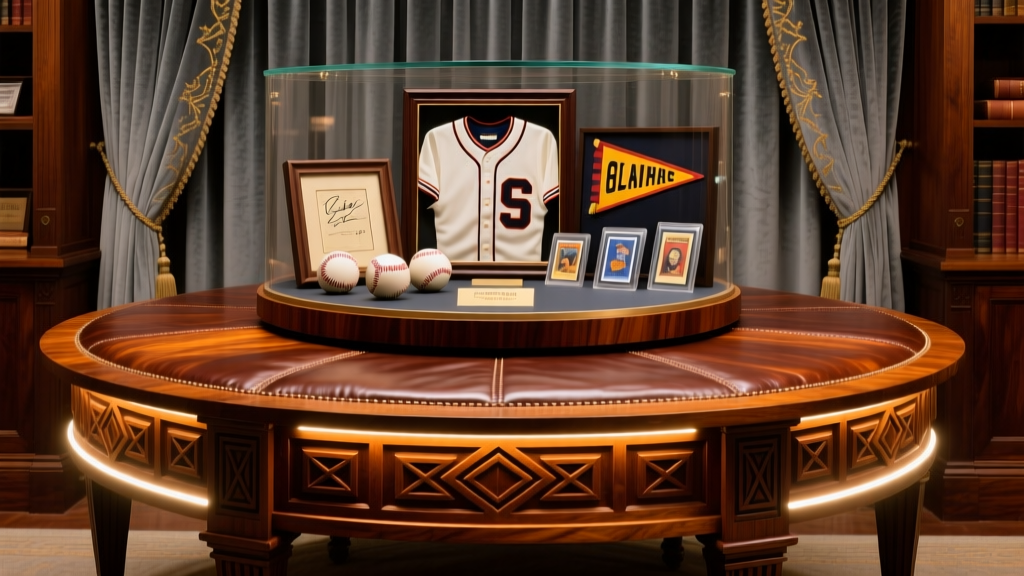
Empire Style Drum Table: Authenticating a Mahogany and Leather Centerpiece from the Early 19th Century
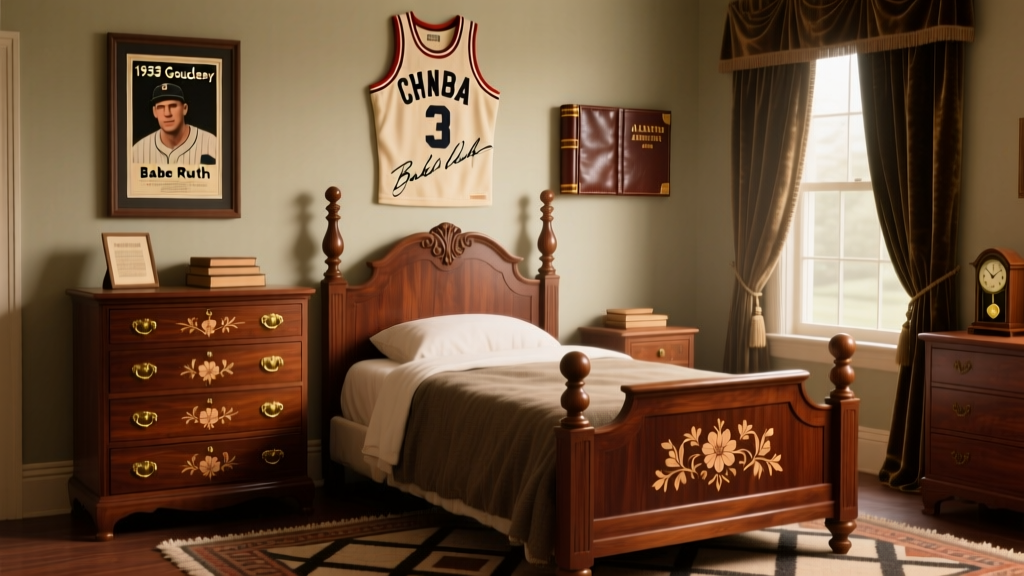
Federal Style Mahogany Bedroom Set: Authentic 1930s 5-Drawer Chest & Double Bed — Identification, Provenance, and Market Value
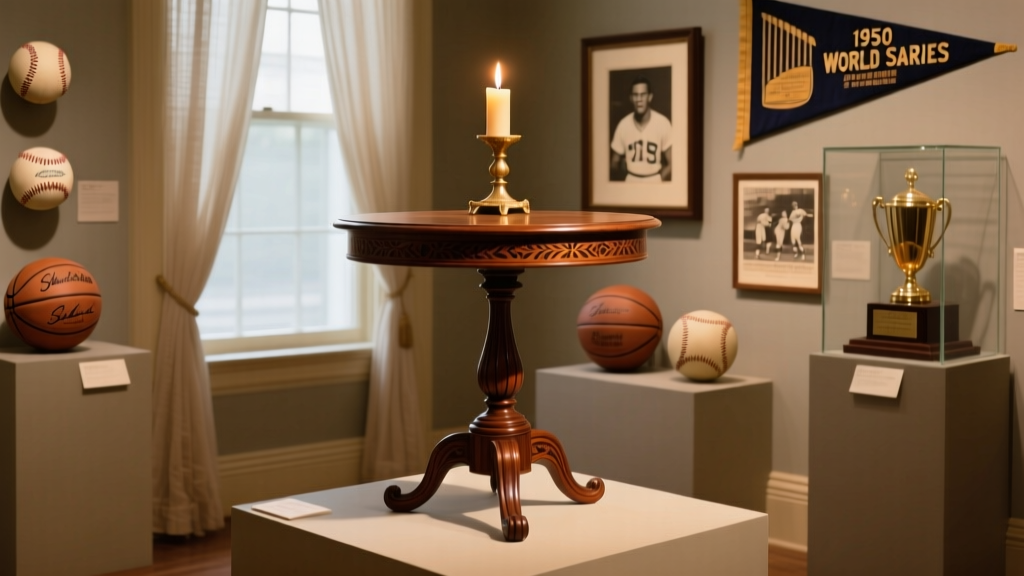
Sheraton Mahogany Candlestand: Authenticating a 19th-Century Three-Legged Oval Top Piece Measuring 27 Inches
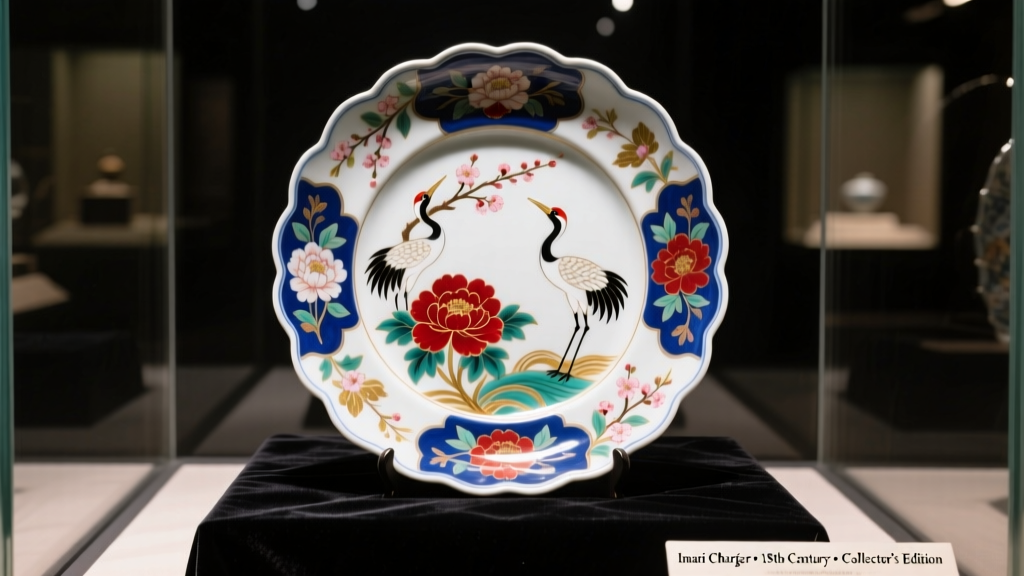
Imari Charger: Scalloped Edge, Birds & Flowers Motif — A Collector’s Guide to the 12-Inch Multicolored Antique Plate
Collectors Looking Good in Archival Fashion: Style, Substance, and Preservation Ethics
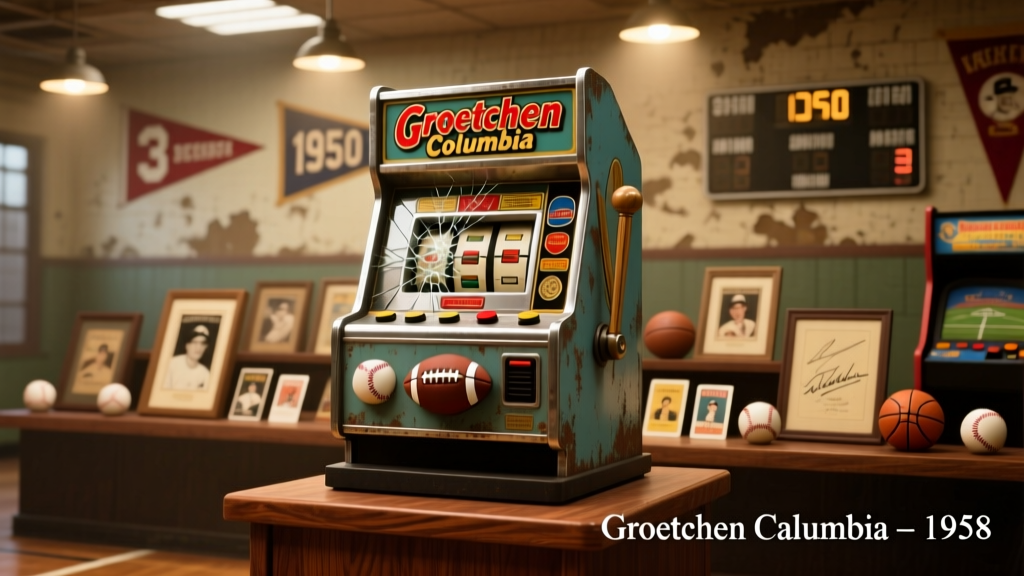
Groetchen Columbia Slot Machine: History, Mechanics, and Authentication Guide for Collectors
Woodward & Grosjean: The Forgotten Legacy of a Pioneering Sports Memorabilia Partnership
Cambridge Glass Diana Platter Oval Pink 12-Inch: Identification, Value, and Authentication Guide
Sascha Brastoff Plate Serving 'Star Steed' in Silver and Gold, Signed, 1960, 10-Inch Diameter — Authentication, Provenance, and Market Value