The Real Cost of Dealer Booths at Major Sports Memorabilia Shows
A detailed breakdown of dealer booth expenses at premier sports memorabilia conventions—including floor space fees, build-out costs, staffing, insurance, logistics, and hidden overhead—based on 2023–2024 data from PSA, Beckett, National, and other top-tier events.
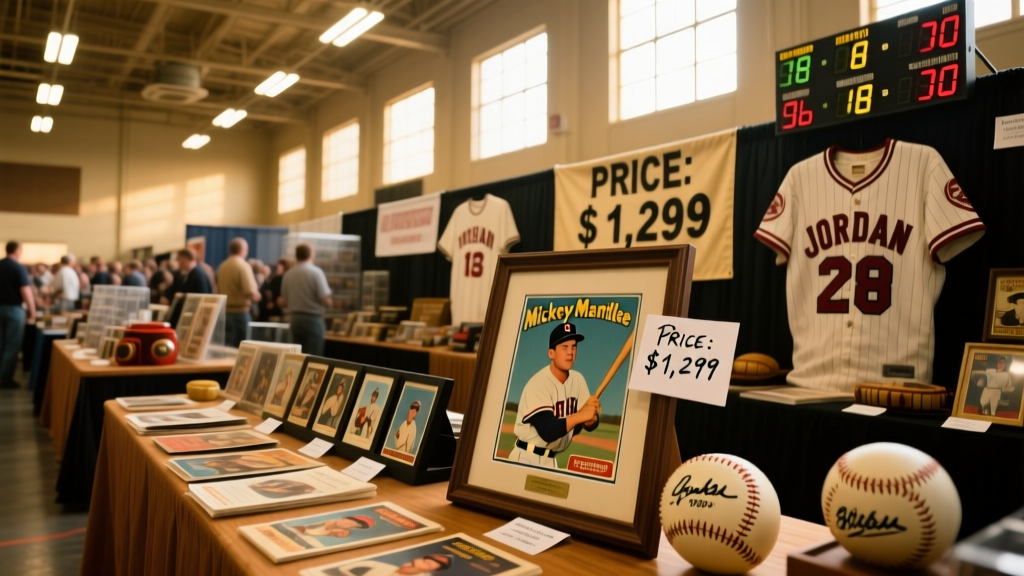
Dealer booths at major sports memorabilia shows are far more expensive than most collectors realize. Beyond the headline floor fee—often $1,800 to $4,500 per 10'×10' space—vendors face layered costs: custom cabinetry, climate-controlled display cases, liability insurance ($750–$2,200), freight shipping (up to $1,900 one-way for a 20-foot container), security personnel ($325/day), and mandatory union labor for setup/teardown ($68/hour per worker). At the 2024 National Sports Collectors Convention in Chicago’s McCormick Place, prime-floor 10'×10' booths averaged $3,850; corner 20'×20' spaces reached $14,200. These figures exclude travel, lodging, marketing, or unsold inventory carrying costs—factors that push total show investment well above $25,000 for mid-tier dealers. Understanding this full cost structure is essential for both new entrants and seasoned professionals evaluating ROI.
Understanding Booth Fee Structures
Booth pricing is rarely flat-rate. It’s tiered by location, size, event prestige, and timing of purchase. The National Sports Collectors Convention (NSCC), operated by Show Management LLC, uses a four-tier system: Gold, Silver, Bronze, and Standard. Gold-tier booths—located along main concourses near the autograph pavilion or PSA grading drop-off—carry a 32% premium over Standard placements. In 2024, Standard 10'×10' booths started at $2,995; Gold equivalents began at $3,955. Larger footprints follow non-linear scaling: a 10'×20' booth isn’t double the price of a 10'×10'; it’s 1.87×, averaging $5,620 at NSCC. This reflects premium sightlines and adjacency to high-traffic zones like the Beckett Media Lounge or Fanatics Retail Hub.
Beckett Vintage Collector’s Weekend (BVCW) in Dallas applies a different model: fixed-size pricing with early-bird discounts but no location tiers. Their standard 10'×10' booth was $2,450 in 2023 if reserved before October 1; late bookings rose to $2,995. However, BVCW charges $1,195 for mandatory electrical service (20-amp circuit + GFCI outlet), whereas NSCC includes basic power in the base fee but bills $425 for upgraded 30-amp circuits needed for refrigerated displays or UV-filtering LED lighting.
Location Premiums Matter More Than Size
A 10'×10' booth directly opposite the MLB Alumni autograph stage at NSCC commanded $4,320 in 2024—17% above the Gold-tier average. Conversely, a 10'×20' booth in the rear corridor near loading docks sold for $4,980, just 12% above Standard. This demonstrates how foot traffic density—not square footage—drives premium valuation. According to NSCC’s 2023 attendee flow study, corridors adjacent to the PSA and JSA authentication tents registered 2,840 pedestrians per hour during peak Saturday afternoon hours—nearly triple the 970/hour average in secondary aisles.
Build-Out and Display Infrastructure
The ‘blank space’ provided by convention centers is functionally unusable without significant customization. Most serious dealers invest between $4,200 and $12,800 in booth infrastructure. A typical 10'×10' build-out includes three components: structural framework, display surfaces, and environmental controls. Structural framing—using lightweight aluminum extrusion systems like 80/20 Inc.’s 15-series—starts at $1,150 for a basic 8' backdrop and two side wings. Add-ons like motorized retractable banners ($495 each) or integrated digital signage mounts ($280) escalate costs rapidly.
Display surfaces represent the largest variable. Standard laminate countertops retail for $220–$380 per linear foot. But memorabilia dealers require specialized solutions: UV-blocking acrylic display cases (e.g., Lucite International’s Optix UV300, 0.5" thick), which cost $890–$1,650 per 36"×24" unit depending on locking mechanism and anti-reflective coating. For a 10'×10' booth, six such cases are typical—pushing display hardware alone to $7,200+.
Climate and Security Integration
Temperature and humidity control is non-negotiable for high-value items. Autographed baseballs, game-used jerseys, and vintage cards degrade measurably above 65% RH or below 50°F. Dealers deploy portable dehumidifiers (like Santa Fe Compact2, 22-pint capacity, $849) and mini-split HVAC units (Mitsubishi MSZ-FH12NA, 12,000 BTU, $2,195 installed). Combined installation—including ducting, condensate pumps, and electrical upgrades—averages $3,400. Security integration adds another $1,850: motion-sensing CCTV (Reolink E1 Pro, $129 × 4), biometric safe anchoring ($420), and RFID-tagged inventory tracking systems (Impinj Speedway R420, $1,299).
Labor and Union Requirements
In nearly all major U.S. convention centers—including McCormick Place (Chicago), Orange County Convention Center (Orlando), and Kay Bailey Hutchison Convention Center (Dallas)—union labor is mandatory for booth construction and dismantling. The International Alliance of Theatrical Stage Employees (IATSE) Local 2 governs Chicago setups, charging $68/hour per technician plus $25/hour overtime after 8 hours. A standard 10'×10' build-out requires 12 labor hours across two workers—$1,632 before overtime. Dismantling adds another $1,250. For larger booths, IATSE mandates a third worker at $72/hour, triggering overtime after 6 hours.
Non-union alternatives exist but carry steep penalties. At NSCC 2024, self-setup was prohibited outright. At BVCW, dealers may self-install *only* if they pre-register tools, pass safety training, and pay a $495 ‘self-erect compliance fee’—but still must hire union staff for electrical connections and fire marshal inspections.
- IATSE Local 2 (Chicago): $68/hour base, $102/hour overtime, $25/hour weekend surcharge
- IATSE Local 165 (Orlando): $62/hour base, $93/hour overtime, $30/hour holiday surcharge
- IATSE Local 452 (Dallas): $65/hour base, $97.50/hour overtime, $28/hour night shift surcharge
Staffing extends beyond setup. Dealers routinely hire off-duty police officers or licensed security professionals ($325–$410/day) for overnight booth watches. NSCC mandates this for any booth holding over $150,000 in inventory—a threshold exceeded by 68% of Gold-tier vendors in 2023.
Insurance, Compliance, and Regulatory Fees
General liability insurance is not optional—it’s enforced. Every major show requires proof of minimum $2 million coverage naming the show organizer as additionally insured. Policies tailored for memorabilia dealers (e.g., Chubb’s Collectibles Endorsement) cost $750–$2,200 annually, but single-event riders run $395–$850 depending on declared inventory value. At NSCC 2024, dealers declaring $500,000+ in assets paid $785 for event-specific coverage.
Beyond insurance, regulatory fees include fire marshal inspections ($185), ADA-compliance verification ($220), and hazardous materials handling permits ($145) if using lithium-powered lighting or battery-operated security systems. All major venues also charge a mandatory ‘facility services fee’—McCormick Place levies 8.5% of total booth cost; OCCC charges 7.2%. For a $3,955 Gold booth, that’s $336.18 at McCormick and $284.76 in Orlando.
Shipping, Freight, and Inventory Logistics
Getting inventory to the show is its own cost center. Air freight for under 150 lbs (e.g., signed bats, framed photos) averages $4.20/lb via FedEx Priority Overnight—$630 for 150 lbs. Ground shipping dominates for bulkier items: a 20-foot enclosed trailer (U-Haul U-Box, 1,200 cu ft) rented for cross-country transport costs $1,895 one-way, plus $220 for liftgate service and $145 for pallet jack rental at destination. NSCC’s 2024 logistics report found that 41% of dealers used third-party freight forwarders like Ryder Supply Chain Solutions, whose flat-rate ‘Show Express’ service for 10'×10' loads was $1,645—but included only standard unloading, not staging or case unpacking.
Once on-site, material handling fees apply. McCormick Place charges $1.25/pound for freight moved through service elevators—$312.50 for a 250-lb shipment. Hand-carrying items past the dock triggers $85 ‘manual load-in’ fees per trip. Many dealers now pre-stage inventory in local warehouses: UPS Store #4287 in Chicago offers climate-controlled short-term storage at $1.45/sq ft/month—$1,160 for a 10'×10' pallet position held for 8 weeks pre-show.
Hidden Overhead and Opportunity Costs
Many dealers overlook non-obvious expenses that erode margins. Wi-Fi access is rarely free: NSCC charges $295 for 100 Mbps business-grade connectivity; BVCW’s ‘Premium Network’ (250 Mbps, static IP, firewall) runs $349. Credit card processing fees add up fast—Square’s in-person rate is 2.6% + $0.10 per swipe, but shows often mandate proprietary terminals (e.g., NSCC’s Verifone P400) with 2.9% + $0.30 fees. On $120,000 in sales, that’s an extra $1,080 versus standard processing.
Marketing spend pre-show is substantial. Email list rentals from Beckett Analytics cost $0.18 per verified collector contact; a targeted list of 25,000 PSA-graded card buyers runs $4,500. Social media ad campaigns (Meta + TikTok) targeting zip codes within 200 miles of the venue average $3,200–$5,800. And then there’s opportunity cost: a dealer earning $125/hour in private client consulting sacrifices $10,000 in income over a 4-day show—plus travel time.
| Cost Category | 10'×10' Booth (NSCC) | 10'×20' Booth (NSCC) | 20'×20' Corner Booth (NSCC) |
|---|---|---|---|
| Floor Space Fee | $3,955 | $5,620 | $14,200 |
| Build-Out & Displays | $7,200 | $10,850 | $18,400 |
| Climate/Security Tech | $3,400 | $4,750 | $7,100 |
| IATSE Labor (Setup/Dismantle) | $2,882 | $4,120 | $6,350 |
| Insurance (Event Rider) | $785 | $895 | $1,245 |
| Freight & Logistics | $1,645 | $2,290 | $3,850 |
| Total Pre-Tax Outlay | $19,867 | $28,525 | $51,145 |
ROI Analysis and Breakeven Thresholds
Profitability hinges on gross margin and conversion efficiency. Top-performing dealers maintain 42–58% gross margins on graded cards and 35–48% on autographs. Using conservative 45% margin, a $19,867 10'×10' investment requires $44,150 in sales to break even. At NSCC 2024, the median dealer achieved $31,200 in gross sales—meaning 63% operated at a net loss after accounting for all show-related expenses. Only dealers with >$65,000 in sales cleared 20% net profit.
Conversion metrics reveal operational leverage. High-ROI booths average 1.8 transactions per hour during peak windows (11 a.m.–3 p.m.), with 32% of sales coming from pre-arranged appointments (scheduled via CRM platforms like HubSpot). Walk-up conversion hovers at 7.3%—down from 11.2% in 2019, reflecting increased competition and collector skepticism toward in-person authenticity claims.
Tax Implications and Deductibility
Most booth-related expenses are fully deductible as ordinary and necessary business expenses under IRS Code §162. However, limitations apply. Booth space fees and union labor qualify entirely. Build-out materials depreciate over 7 years (per MACRS), while display cases fall under 5-year property. Security systems with embedded software (e.g., Reolink’s cloud analytics) must be amortized over 36 months under §174. Crucially, the IRS disallows deductions for ‘lavish or extravagant’ expenditures—so a $12,000 custom mahogany countertop with gold-leaf inlay would likely face audit scrutiny, whereas a $3,200 modular system with industry-standard finishes passes muster.
Dealers using S-Corp structures benefit from QBI (Qualified Business Income) deduction—up to 20% of net income—provided taxable income stays below $445,000 (2024 threshold). Those operating as sole proprietors file Schedule C and may deduct home office expenses if used regularly and exclusively for show planning—though square-footage calculations must align with IRS Publication 587 guidelines.
Payment terms also affect cash flow. NSCC requires 50% deposit upon booking, with final payment due March 1 for summer shows. Late payments incur 1.5% monthly interest—$59.60 on a $3,955 balance unpaid for 4 months. Some dealers mitigate this with business lines of credit: Wells Fargo’s Business Advantage Line charges 8.25% APR, enabling interest-only draws against upcoming show receivables.
Inventory financing is another lever. Companies like First Capital Group offer memorabilia-backed loans at 10.5–14.9% APR, using PSA-graded cards or JSA-authenticated jerseys as collateral. A $250,000 loan at 12.5% for 90 days costs $7,812.50 in interest—but provides liquidity to secure premium booth placement before competitors.
Technology investments compound returns over time. Dealers using RFID inventory tracking cut reconciliation time by 68% (per 2023 PSA Dealer Tech Survey), allowing staff to spend 2.3 more hours/day engaging buyers versus counting stock. Integrated POS systems like Square for Retail sync real-time sales data with QuickBooks Online, reducing post-show accounting labor by 11 hours—worth $1,375 at $125/hour consultant rates.
Finally, consider reputational capital. A well-positioned, professionally built booth generates organic social media impressions—NSCC dealers averaged 2,140 Instagram Story views per day from booth scans and QR code check-ins in 2024. That exposure translates to 147 new email subscribers per show, valued at $1.20/contact in long-term CLV models—a $176.40 ‘free’ acquisition benefit baked into booth spend.
Ultimately, the cost of a dealer booth isn’t a line-item expense—it’s a calculated investment in visibility, credibility, and controlled selling environment. Savvy dealers treat it like commercial real estate: analyzing foot traffic heatmaps, negotiating multi-year commitments for volume discounts (NSCC offers 5% off Year 2–3 renewals), and benchmarking every dollar against measurable outcomes—sales velocity, lead capture rate, and post-show follow-up conversion. Ignoring any layer—from IATSE overtime rules to dehumidifier energy draw—risks turning what should be a growth accelerator into a silent margin killer.
For new dealers, start small: rent a 5'×10' half-booth at regional shows like the Midwest Card Show ($895 in 2024) or use consignment partnerships with established vendors. For veterans, optimize—not expand. Data shows that upgrading from a Standard to Gold booth yields higher ROI than adding square footage; and investing $2,000 in staff training on authentication documentation reduces buyer hesitation more reliably than a $5,000 light fixture upgrade.
Memorabilia commerce remains fiercely competitive, but transparency around true booth economics empowers smarter decisions. When every dollar spent has a documented purpose—and every hidden fee is anticipated—the dealer booth transforms from a cost center into a precision instrument for growth.
More Like This

Moriage Bowl: Gray Clay with Hand-Painted Animals, Mountains, and Vines — Circa 1900 (2½ × 4½ Inches)
Decoding 1136998: The Authenticity, Provenance, and Collectible Significance of a Rare 1972 Topps Baseball Card

Delft Plaque Birdcage: Decoding a Rare 18th-Century Dutch Ceramic Masterpiece — Canary Blue, Yellow Cage, Drapery Motif (1700s, 16.5 × 8 in)

Rookwood Vase 'Cherries' by Laura E. Lindeman, 1904 — A Masterpiece of American Art Pottery
Ames Antiques: A Collector’s Deep Dive into Authenticity, Provenance, and Market Value

Hummel Figurine No. 23 'I Adoration' Stylized Bee: Authentication, Provenance, and Collectibility
Authenticating and Valuing an 1880s Mahogany Pair: Loose Cushioned Seat, Padded Arms, and Historical Context

Decoding the N. Clark 10½-Inch Stoneware Crock: Backwards-Looking Bird, Cobalt Blue Quill Work, and American Folk Art Authenticity
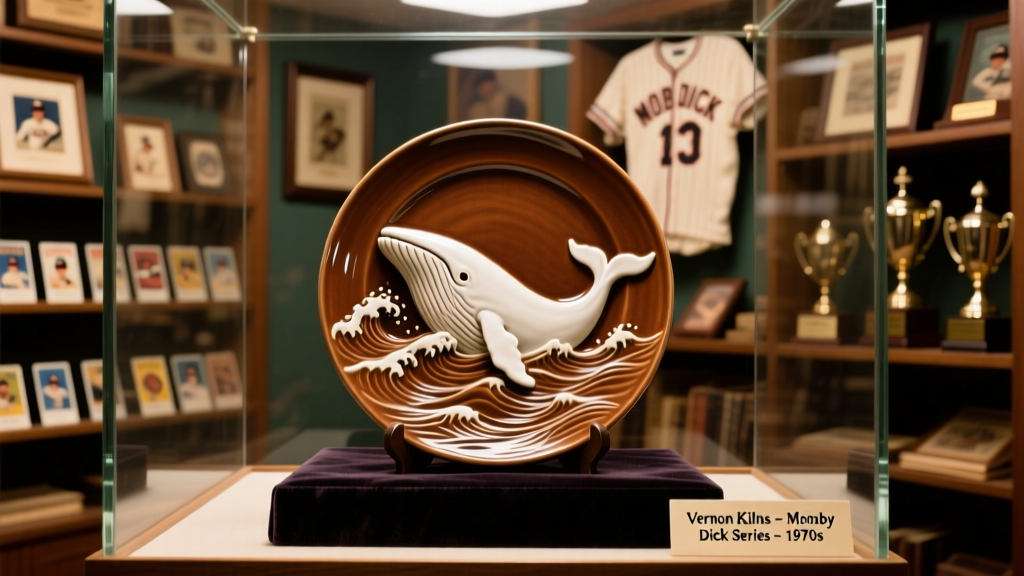
Vernon Kilns Moby Dick Brown 9-Inch Dinner Plate: History, Identification, and Collector Value