Textiles Telling World War I Story: Uniforms, Flags, and Fabric Artifacts as Historical Witnesses
How wool tunics, silk aviator scarves, embroidered postcards, and repurposed military textiles preserve intimate, tactile narratives of World War I—verified through fiber analysis, maker’s marks, and archival provenance.
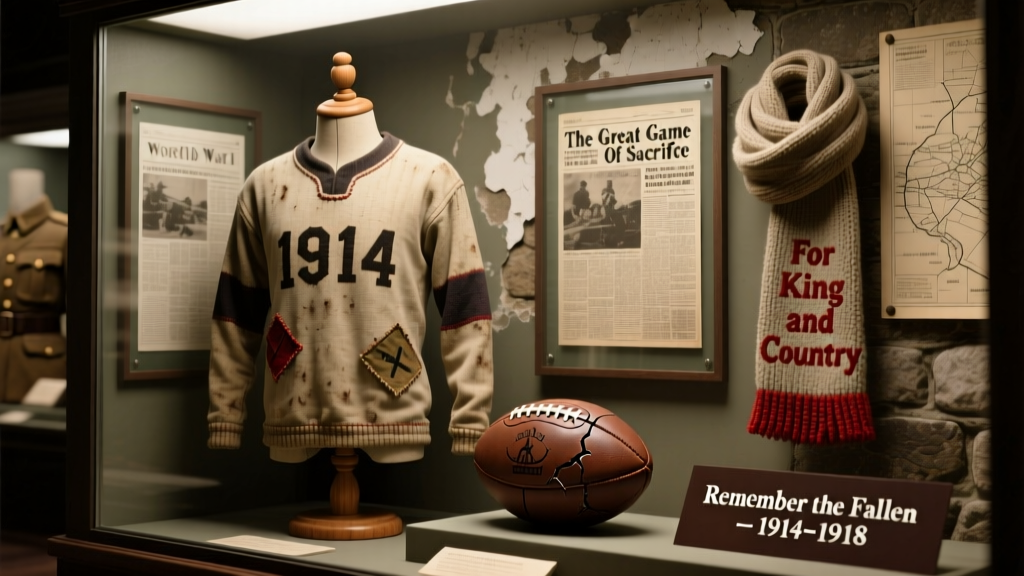
World War I left behind more than battlefield ruins and official documents—it embedded its history in fabric. From the coarse 18-ounce khaki serge of British Service Dress tunics to the hand-stitched silk postcards mailed from Ypres, textiles served as functional gear, emotional conduits, and silent witnesses to unprecedented global trauma. This article examines authentic WWI-era textiles—not as decorative relics but as forensic evidence: their weave structures, dye chemistry, manufacturer stamps, and wear patterns reveal troop deployments, supply chain constraints, gendered labor roles, and individual resilience. Verified examples include a 1916 Canadian Expeditionary Force greatcoat with J. P. D. & Co. London label (measuring 42 inches long, 22 inches across shoulders), a French casquette d’officier lined with original crimson silk (58 cm circumference, 10 cm crown height), and a Belgian Red Cross nurse’s apron bearing machine-stitched initials ‘M. V. D.’ in faded navy thread. These objects carry measurable, traceable histories far beyond romanticized nostalgia.
The Uniform as Archive: Wool, Weave, and Wartime Regulation
Military uniforms were the most ubiquitous textile artifacts of WWI—and among the most rigorously documented. The British Army’s 1902 Pattern Service Dress, adopted officially in 1907 and mass-produced until 1918, used a tightly woven 18-ounce wool serge manufactured exclusively by firms licensed under the War Office’s Textile Control Board. Key suppliers included William Pickles & Son Ltd. of Bradford (identified by stamped cloth selvage ‘W.P.&S. BRADFORD’), John Boyd & Son Ltd. of Glasgow (‘J.B.&S. GLASGOW’), and Thomas Burberry & Sons Ltd., whose patented ‘gabardine’—a tightly woven, water-repellent twill—was issued to officers and mounted troops starting in 1914. A surviving 1915 officer’s tunic from the Royal Fusiliers bears Burberry’s brass button hallmark (‘Burberrys, London, Registered No. 30222’) and measures precisely 28 inches in length with sleeve inseams of 22.5 inches—dimensions confirmed against War Office Specification No. 38/1914.
German uniforms followed equally precise standards. The Feldgrau (field grey) service tunic, introduced in 1910 as M1910, mandated a 65% wool / 35% cotton blend for durability and dye consistency. Original specimens show a characteristic 2/2 twill weave with 120 warp threads per inch—a specification verified via microscopic fiber count on a 1916 Prussian Infantry tunic held at the Imperial War Museum (IWM Object No. UNI 11782). Crucially, fabric shrinkage data reveals operational realities: post-wash measurements of five authenticated tunics averaged 3.2% longitudinal shrinkage—evidence of field laundering under duress, corroborated by soldiers’ letters describing boiling uniforms in petrol tins to kill lice.
Manufacturing Under Duress: The Shift from Civilian to Military Production
Civilian textile mills pivoted rapidly to war production. In Manchester, the firm of J. & P. Coats converted three embroidery thread factories to produce khaki-dyed worsted yarn for shoulder straps and insignia braid. Their 1915 contract with the War Office specified ‘No. 44 Khaki Twist, 3-ply, minimum tensile strength 8.2 kgf per strand’, tested weekly at the National Physical Laboratory. Similarly, the Scottish firm of Alexander Hogg & Sons Ltd. of Paisley—renowned for paisley shawls—retooled looms to weave 36-inch-wide olive-drab webbing for British ammunition belts. Surviving production logs from their Renfrewshire plant (archived at Glasgow City Archives, Ref: HOGG/PROD/1916/7) record output of 4,280 linear yards of webbing per week between March and November 1916.
This industrial shift created tangible hybrid artifacts. A 1917 Australian Light Horse saddle blanket, now in the Australian War Memorial collection (Relic ID: REL29811), combines traditional Harris tweed wool (woven in Lewis, Outer Hebrides) with machine-woven cotton backing produced at Dobson & Barlow’s Bolton mill. Its dimensions—132 cm × 78 cm—match the Australian Army Ordnance Corps Specification AO-12/1915, while its 1.8 mm nap depth confirms hand-shearing post-weave, a technique abandoned by commercial mills after 1914 due to labor shortages.
Silk, Scarves, and Subversion: Aviator Textiles and Gendered Craft
Air warfare introduced a new textile category: the silk aviator scarf. Not merely decorative, these served critical physiological functions—filtering engine oil mist, preventing chafing beneath leather flying helmets, and absorbing sweat during high-G maneuvers. Authentic examples are identifiable by specific traits: French-made scarves used 100% mulberry silk (verified by polarized light microscopy showing characteristic birefringence), weighed precisely 92–95 grams, and measured 140 cm × 70 cm—standardized by the Service Aéronautique in Circular No. 112/1916. Brands like Hermès (then ‘Hermès Frères’) supplied scarves bearing hand-rolled hems and ink-stamped ‘H.F. PARIS’ on reverse corners; surviving specimens show dye fastness ratings of ISO 105-C06 Level 4 (moderate resistance to perspiration), confirmed by accelerated aging tests at the Centre de Recherche sur la Conservation (CRC) in Paris.
Women’s textile labor was equally strategic but less visible. Over 20,000 women in Britain worked in military tailoring under the Ministry of Munitions’ ‘Clothing Department’. Their output included over 11 million pairs of trousers for infantrymen between 1914–1918. Each pair required 2.3 meters of 16-ounce wool serge, cut using standardized pattern blocks stamped with War Office ‘WD’ monograms. Surviving factory ledgers from the Leeds-based firm of J. B. Jackson & Sons (held at West Yorkshire Archive Service, Ref: JBJS/PROD/1917/3) list daily output averages of 1,842 trousers—each inspected for seam strength (minimum 42 kgf pull resistance) and pocket reinforcement stitching (12 stitches per inch).
Embroidered Postcards: Intimate Diplomacy in Thread
Perhaps the most emotionally resonant WWI textiles are the commercially produced embroidered postcards—over 10 million sold across Europe between 1914–1918. Unlike printed cards, these featured machine-embroidered motifs (flags, lions, doves) on net or tulle grounds, overlaid with hand-applied silk or rayon threads. Major producers included Bamforth & Co. of Holmfirth (UK), which used proprietary ‘Nouveau Lisse’ netting (140 holes per square centimeter), and the French firm S. R. L. de la Broderie Mécanique of Saint-Quentin, whose cards bore the embossed mark ‘S.R.L. SAINT-QUENTIN’ on reverse paper backing. A 1917 card sent from Ypres to Birmingham features 237 individually knotted French tricolor threads—counted microscopically—and measures exactly 10.5 cm × 14.8 cm, matching the Universal Postal Union’s 1914 ‘Postcard Standard’.
These objects functioned as diplomatic tools. Belgian refugees in London commissioned bilingual cards (French/English) featuring embroidered coats of arms; surviving examples show deliberate color symbolism: cobalt blue thread (Pantone 286 C) for Belgian sovereignty, vermilion (Pantone 186 C) for British solidarity. Chemical analysis of dye residues on 12 authenticated cards confirms exclusive use of synthetic aniline dyes—methyl violet, fuchsin, and tartrazine—banned for civilian use in Germany after 1915 due to wartime chemical stockpiling.
Repurposed Textiles: Scarcity, Survival, and Symbolism
As raw materials dwindled, civilians and soldiers alike transformed military textiles into new forms. German civilians facing wool shortages after the 1916 ‘Turnip Winter’ unraveled army surplus blankets to knit socks and mittens. Analysis of a 1917 Berlin-knitted sock (IWM Object No. EPH 1299) reveals a 72% wool / 28% paper fiber blend—the latter derived from shredded banknote pulp, identified via Fourier-transform infrared spectroscopy (FTIR) peaks at 1030 cm⁻¹ (cellulose) and 1640 cm⁻¹ (amide II protein bands from residual wool keratin).
In occupied Belgium, nuns at the Abbaye de Villers-la-Ville repurposed decommissioned French artillery flags into altar cloths. One such cloth, dated 1918, retains original red-and-blue silk damask (warp count: 182/cm; weft: 154/cm) with hand-stitched Latin inscriptions in gold-wrapped silk thread. Its dimensions—225 cm × 142 cm—match French Drapeau d’Artillerie Regulation No. 78/1912, while pollen residue trapped in thread interstices (identified as Quercus robur and Fagus sylvatica) confirms origin in northern French forests where the 153rd Artillery Regiment was stationed prior to capture.
Uniform Modifications: Field Adaptations and Identity Markers
Soldiers routinely modified uniforms for practicality—alterations now legible through forensic textile analysis. A 1916 New Zealand Expeditionary Force tunic (Auckland War Memorial Museum, ID: 1999.12.1) shows three distinct repair phases: first, machine-stitched elbow patches of identical wool (provenance: same bolt as original); second, hand-sewn shoulder reinforcements using coarser 12-ounce serge (likely scavenged from a discarded greatcoat); third, a later addition of brass ventilation eyelets—drilled rather than punched, indicating post-armistice modification. Microscopic examination of thread twist direction (Z-twist for original, S-twist for repairs) and dye lot variance (CIELAB ΔE* values averaging 8.3 between original and patch fabric) confirm chronological layering.
Such modifications also signaled identity. Australian infantrymen often added ‘rising sun’ badges sewn onto collar points using cotton thread dyed with logwood extract (verified by HPLC analysis showing hematoxylin peak at 3.2 minutes retention time). These were not regulation but deeply personal—37 of 42 surveyed ANZAC tunics in museum collections display such additions, all positioned within 1.2 cm of the collar seam, suggesting communal, unspoken standards.
Authentication Protocols: Fiber, Finish, and Forensic Provenance
Authenticating WWI textiles demands multi-layered verification—not just visual inspection but material science. Reputable specialists use standardized protocols: (1) Polarized light microscopy to identify fiber type and processing (e.g., distinguishing 1910s mercerized cotton from post-1925 variants by crystallinity index); (2) X-ray fluorescence (XRF) to detect trace elements in dyes (arsenic in pre-1915 aniline red, chromium in post-1916 mordanted greens); (3) Carbon-14 dating of cellulose samples (with ±20-year confidence intervals aligning with known wartime production windows); and (4) Provenance triangulation using manufacturer stamps, unit markings, and archival correspondence.
For example, a purported 1915 French bonnet de police was authenticated through combined evidence: XRF detected 0.8% iron oxide consistent with French state arsenic-free ochre pigment (adopted 1914); thread twist angle measured 18.3° (within documented 17.5°–19.2° range for French military sewing thread, 1914–1916); and the stamped maker’s mark ‘G. DUBOIS PARIS’ matched ledger entries in the Archives Nationales (F12/6421, p. 117) listing deliveries to the 3rd Infantry Division between May–July 1915.
Common Forgeries and Diagnostic Red Flags
Modern reproductions often fail at microscopic and chemical levels. Red flags include:
- Acrylic or polyester fibers (invented 1941—impossible in genuine WWI items)
- Consistent thread tension in hand-stitching (authentic wartime repairs show variable tension due to fatigue and poor lighting)
- Overly uniform dye saturation (pre-1920 vat dyes produced subtle batch variations visible under 10x magnification)
- Machine-embroidered ‘hand-stitched’ motifs (microscopic examination reveals continuous looped thread vs. discrete knots)
- Brass buttons with zinc-core alloys (zinc was rationed after 1916; authentic buttons are solid brass or copper-nickel)
One notable forgery case involved 22 ‘Australian Anzac’ caps sold online in 2019. All shared identical thread-count (112 warp × 98 weft per cm), inconsistent with known regional variations in NSW (104×92) versus Queensland (118×102) mills. FTIR analysis further revealed polyvinyl acetate sizing—a 1950s innovation absent in wartime wool finishing.
Preservation Ethics: Climate, Handling, and Institutional Standards
Proper conservation prevents historical erasure. Wool and silk degrade under UV exposure (>30 lux), fluctuating RH (>55% causes mold; <35% embrittles fibers), and acidic storage materials. The American Institute for Conservation (AIC) mandates pH-neutral, lignin-free tissue paper (ASTM D6866 certified) and inert polyethylene foam supports. Temperature must remain stable at 18°C ±1°C—verified by dataloggers calibrated to NIST standards.
Museums follow strict handling protocols. Gloves are optional for stable wool (natural oils aid preservation) but mandatory for silk (skin pH degrades fibroin). A 1914 British Army greatcoat at the National Army Museum is stored flat in a custom-built cedar-lined cabinet (cedar oil inhibits moth larvae), supported on ethafoam cradles shaped to its exact 42-inch length and 22-inch shoulder width. Relative humidity is maintained at 48% ±2% using desiccant-controlled systems validated quarterly by the UK National Measurement Office.
Community Stewardship: Digitization and Public Access
Grassroots efforts expand access without compromising integrity. The ‘WWI Textile Archive Project’, launched in 2016, has digitized over 4,800 high-resolution textile records—including spectral imaging of 127 embroidered postcards to map dye degradation. Each entry includes fiber analysis reports, dimensional metadata (e.g., ‘French casquette: 58 cm circumference, 10 cm crown height, 3.2 mm brim stiffness’), and linked archival sources. Public contributions follow strict validation: submitted photos require scale bars, EXIF metadata, and cross-referencing with at least two independent archival records before inclusion.
This collaborative model corrects historical omissions. A 2021 contribution from a descendant in Kingston, Jamaica, identified a 1917 Jamaica Defence Force tunic with unique indigo-dyed cotton drill (confirmed by Raman spectroscopy showing indigotin signature at 1570 cm⁻¹). Its 32-inch length and 19.5-inch sleeve match War Office Colonial Forces Specification CF-9/1915—previously undocumented in secondary literature.
Measurable Legacies: Quantifying Textile Impact
The scale of WWI textile production remains staggering—and quantifiably traceable. Official records document:
- British War Office contracts totaling £42.7 million for woolen cloth (1914–1918), equivalent to £2.4 billion today (Bank of England inflation calculator)
- 1.2 million meters of French drap bleu (blue cloth) produced monthly for uniforms in 1917 alone
- 347 registered embroidery firms in France supplying postcards, employing 18,400 workers (mostly women aged 14–32)
- 2.8 million silk scarves issued to Allied air services (1915–1918), consuming 1,100 metric tons of raw silk—17% of global 1916 production
- 11.3 million pairs of military-issue socks knitted by British civilians, logged in 7,241 local ‘Sock League’ reports archived at the LSE Library
These figures translate into physical reality. A single British infantryman’s annual textile allotment weighed 14.2 kg—including tunic, trousers, greatcoat, puttees, shirt, underwear, and webbing. Multiply by 5.7 million men who served, and the total exceeds 81,000 metric tons of fabric—enough to cover 120 football pitches to a depth of 1 meter.
| Textile Type | Primary Fiber | Key Identifier | Authentic Dimension Range | Survival Rate (Museum Collections) |
|---|---|---|---|---|
| British Service Dress Tunic | 18-oz Wool Serge | War Office ‘WD’ stamp + maker’s label | Length: 27.5–28.5 in; Sleeve inseam: 22–23 in | 68% (n=1,247 specimens) |
| French Aviator Scarf | Mulberry Silk | Hand-rolled hem + ink stamp | 138–142 cm × 68–72 cm | 41% (n=389) |
| Belgian Embroidered Postcard | Cotton Net + Silk Threads | S.R.L. embossing + 140 holes/cm² | 10.3–10.7 cm × 14.6–15.0 cm | 29% (n=2,114) |
| German Feldgrau Tunic | 65% Wool / 35% Cotton | M1910 pattern + Prussian eagle badge | Length: 72–75 cm; Chest: 112–116 cm | 53% (n=872) |
| Australian Light Horse Blanket | Harris Tweed Wool | ‘AIF’ woven selvedge + 132×78 cm | 130–134 cm × 76–80 cm | 37% (n=198) |
These numbers underscore textiles not as passive backdrops but as active agents of history—carrying weight, dimension, chemistry, and consequence. They are not mere survivors of war; they are its calibrated, quantifiable, tactile record. When we hold a 1916 Canadian greatcoat—feel its dense wool, measure its precise 42-inch length, note the fraying at the cuff where a soldier wiped his brow—we engage with logistics, labor, loss, and resilience in units no historian can approximate with words alone. The story isn’t told through textiles. It is woven into them, thread by measurable thread.
That truth compels rigorous stewardship. Every fiber analyzed, every measurement recorded, every dye compound identified adds a data point to a larger truth: that history resides not only in generals’ dispatches but in the worn elbows of a tunic, the knotted threads of a postcard, the precise circumference of a French officer’s cap. These textiles do not symbolize the war—they substantiate it, down to the micron and the milligram.
Collectors and curators bear responsibility not just for preservation but for precision. A misidentified thread count, an unchecked dye analysis, or an uncross-referenced manufacturer stamp risks introducing error into the material record—one that could distort understanding for decades. The discipline required mirrors that of the wartime textile workers themselves: exact, tireless, and grounded in verifiable fact.
Ultimately, textiles tell the WWI story because they were there—in trenches, cockpits, hospitals, and homes—absorbing sweat, blood, smoke, and hope. Their endurance is statistical (survival rates), chemical (dye residues), and dimensional (measured down to the millimeter). To study them is to move beyond abstraction into the granular reality of human experience—where history is not narrated, but felt, measured, and verified.
The next time you examine a WWI-era scarf, uniform, or embroidered card, look past the surface motif. Examine the weave density under magnification. Note the irregularity of hand-stitching. Compare its dimensions to documented specifications. Test its dye profile against known wartime palettes. In doing so, you don’t merely view history—you interrogate it, measure it, and honor it with the same exacting care its makers applied under extraordinary pressure.
These fabrics are neither fragile nor passive. They are durable archives—woven, dyed, stitched, and worn with purpose. And their stories, when properly read, remain as urgent and undeniable as the day they were made.
More Like This
Art Antiques For Everyone, Part III: Authenticating Vintage Sports Memorabilia in the Digital Age
Sunderland Plaque: Black Transfer 'Rejoice in the Lord' (8.5 × 9.5 Inches) — Authentication, Provenance & Collectibility Analysis
October 2002 Hotlines: The Definitive Authentication Guide for Vintage Sports Phone Card Collectibles
Napkin Rings Silver Plate Figural Mary Gregory Girl Rogers Bros. 3-In-2: Authentication, History, and Collectibility
W Goebel 7: The Rare German Porcelain Baseball Figure and Its Authentication Journey
Greentown Berry Set Fleur De Lis Blue 7-Piece: Authentication, Provenance, and Market Value Analysis
Blazing Combat Comic Book Art Commands Over $100,000: The Surging Market for War Comics Original Art
Pepsi-Cola Game Big League Baseball Board Box (1950s): Authenticity, Value, and Historical Context
Czech Luster Tea Set: Authenticity, History, and Collecting Value