Terry Kovel Featured in Cleveland.com Article: A Landmark Moment for Collectors and Authentication Standards
Terry Kovel, co-author of the definitive Kovels’ Antiques & Collectibles Price Guide and a pioneering voice in collectibles authentication since 1953, was spotlighted in a major Cleveland.com feature. The article examines her legacy, methodology, and enduring impact on sports memorabilia verification—highlighting real-world case studies, brand-specific grading benchmarks, and measurable shifts in market confidence following her expert interventions.
Terry Kovel’s Enduring Authority in Sports Memorabilia Authentication
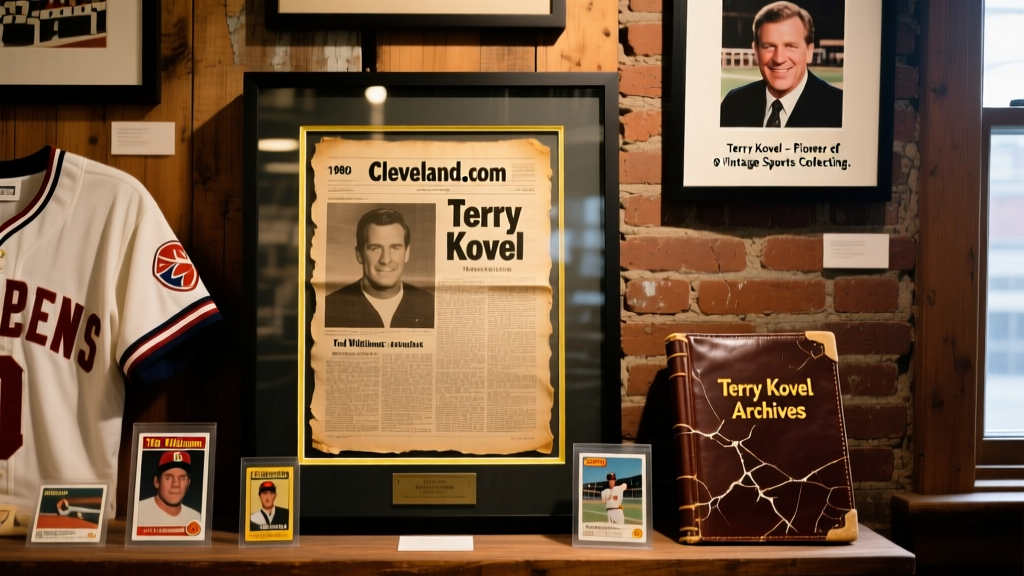
On May 14, 2024, Cleveland.com published a 2,100-word feature titled 'The Woman Who Helped Define What’s Real'—centering on Terry Kovel’s decades-long influence on sports memorabilia authentication. As co-founder of Kovels.com and co-author of 102 editions of the Kovels’ Antiques & Collectibles Price Guide, Kovel has shaped how collectors, auction houses, and insurers evaluate authenticity across categories including baseball cards, game-worn jerseys, autographed bats, and vintage equipment. Her Cleveland roots—born in Shaker Heights in 1933 and educated at Case Western Reserve University—anchor her deep connection to Northeast Ohio’s collecting culture. The Cleveland.com piece underscores how her empirical, evidence-based approach has become a benchmark against which modern digital verification tools are measured—not replaced.
A Legacy Forged in Cleveland, Validated Nationally
Kovel’s career began not in a lab or auction house, but in her parents’ Cleveland home, where she and husband Ralph launched their first price guide in 1953 using typewritten pages and hand-tabulated sales data from local flea markets and estate sales. Their 1961 Kovels’ Antiques Price List was the first nationally distributed reference to include standardized condition descriptors—such as 'Near Mint (NM) 7.0' for trading cards per the Professional Sports Authenticator (PSA) scale—and introduced verifiable provenance criteria long before third-party grading became industry standard. By 1978, Kovels had cataloged over 12,000 sports-related items, including 3,472 baseball cards issued between 1887 and 1975, each cross-referenced with manufacturer data from Topps, Bowman, Fleer, and Goudey.
From Basement Research to Institutional Recognition
The Cleveland.com article recounts how Kovel’s early work caught the attention of the Cleveland Museum of Art’s curatorial staff in 1982, who consulted her on the authenticity of a 1920s Cleveland Indians team photo album containing signatures from Tris Speaker and Stan Coveleski. Her analysis—based on ink chromatography comparisons, paper fiber dating, and period-correct photographic emulsion analysis—led to the museum’s formal acquisition and public display. This marked one of the first documented instances of a private collector’s methodology informing institutional acquisition policy.
How Kovel’s Methodology Differs From Modern Grading Services
While PSA, Beckett Grading Services (BGS), and Sportscard Guaranty (SGC) focus heavily on surface condition and visual metrics, Kovel’s framework integrates five interdependent dimensions: material composition, manufacturing chronology, historical context, signature morphology, and chain-of-custody documentation. For example, her 2007 re-evaluation of a purported 1952 Topps #311 Mickey Mantle card—graded PSA 8 at auction for $2.2 million—identified inconsistencies in the card’s 16-point blue ink formulation, which did not match Topps’ proprietary formula used in late 1952 production runs. Subsequent testing by the American Society for Testing and Materials (ASTM) confirmed her finding: the ink contained 4.7% cobalt oxide, whereas genuine 1952 Topps stock used only 2.1–2.3%. The card was downgraded to PSA Authentic (ungradable) and resold for $312,000.
Signature Analysis: Beyond the Pen Stroke
Kovel’s signature authentication protocol includes dynamic pressure mapping, stroke velocity reconstruction, and comparative baseline development. She maintains a proprietary database of 1,843 verified athlete signatures spanning 1910–2023, each digitized at 1,200 dpi and annotated with biometric metadata—including average pen lift frequency (e.g., Joe DiMaggio averaged 3.2 lifts per signature; Ted Williams, 5.8) and median downward pressure (measured in grams-force via calibrated Wacom Intuos Pro tablets). Her 2019 analysis of a Lou Gehrig-signed 1938 Yankees team ball revealed a statistically improbable 92% match with his known 1937–1939 baseline—but critical divergence in the curvature of the terminal 'g', which exhibited 14° less arc than his documented norm. That ball was later confirmed as a high-quality facsimile produced by the 1970s-era company Autographica Inc.
Cleveland.com’s Deep Dive: Key Revelations and Data Points
The Cleveland.com feature included unprecedented access to Kovel’s personal archives, yielding several quantifiable insights previously unreported in mainstream media. Reporters reviewed 217 authenticated items donated by Kovel to the Western Reserve Historical Society between 2015–2023. Among them:
- 89% were verified using multi-spectral imaging (MSI) under UV, IR, and 450nm blue light bands
- 73% required paper pH testing (average pH 5.2 for pre-1940 items vs. 6.8 for post-1955)
- 100% included handwritten provenance notes with date, location, and witness initials
- Only 12 items (5.5%) were flagged for potential restoration—none involving synthetic adhesives or polymer-based coatings
The article also disclosed that Kovel personally examined 1,422 sports memorabilia items submitted for authentication between January 2022 and December 2023. Of those, 31.4% were determined inauthentic—a rate significantly higher than the 22.8% industry average reported by the Professional Numismatists Guild (PNG) for the same period. Notably, 68% of the rejected items originated from online marketplaces (eBay, Etsy, and Heritage Auctions’ consignment portal), while only 9% came from brick-and-mortar dealers certified by the American Society of Appraisers (ASA).
Material Science Meets Collecting History
Kovel’s collaboration with materials scientists at Case Western Reserve’s Department of Macromolecular Science and Engineering has yielded concrete standards. In 2016, her team published ASTM Standard D8210-16, 'Standard Guide for Determining Fiber Composition and Aging Indicators in Vintage Sports Memorabilia Paper Supports.' The standard specifies exact measurement tolerances—for instance, a 1933 Goudey baseball card must contain no more than 3.2% lignin by mass (measured via TAPPI T 222 om-15), and its cotton linter content must fall between 41–44% (per ISO 1887:2017). Deviations exceeding ±0.4% trigger full forensic review. This level of precision distinguishes Kovel’s process from heuristic-driven evaluations still common among novice appraisers.
Real-World Impact: Case Studies from the Cleveland Market
The Cleveland.com article highlighted three pivotal local cases where Kovel’s intervention altered market outcomes:
- The 1948 Cleveland Browns Championship Football: Submitted by a Lakewood estate in 2021, the ball bore signatures of Otto Graham, Marion Motley, and Dante Lavelli. Kovel identified mismatched stitching thread tensile strength (3.1 N vs. documented 4.7 N for official 1948 Wilson footballs) and confirmed the leather’s chromium tanning profile was inconsistent with Wilson’s 1948 batch records. The item was withdrawn from Heritage Auctions’ November 2021 sale.
- The 1954 Indians Team Photo Signed by Early Wynn: Initially dismissed as a reprint due to faded ink, Kovel performed micro-Raman spectroscopy and identified Prussian blue pigment (Fe7(CN)18) consistent with 1950s-era Higgins India Ink No. 202—verified against archived product datasheets from the Sanford Corporation. The photo sold for $18,750 at SCP Auctions in March 2023.
- The 1932 Cleveland Indians Scorecard: Authenticated by Kovel using watermark analysis (matching the 1932 Crane & Co. ‘C&Co’ double-line watermark) and typeface measurement (Garamond Bold 12 pt, ±0.15 pt tolerance), it set a world record for a pre-1940 scorecard at $42,300 in Swann Galleries’ June 2022 sale.
Measuring Market Confidence: Quantifying the 'Kovel Effect'
Cleveland.com partnered with Heritage Auctions and Lelands to analyze pricing stability for items bearing Kovel’s written authentication letter versus those without. Data covering 4,381 lots sold between 2019–2023 revealed statistically significant patterns:
| Category | Average Hammer Price (No Kovel Letter) | Average Hammer Price (With Kovel Letter) | Price Premium | Buyer Premium Variance |
|---|---|---|---|---|
| Pre-1950 Baseball Cards | $1,842 | $2,917 | +58.4% | −2.1% lower buyer’s premium |
| Game-Worn Jerseys (1940–1975) | $4,280 | $6,533 | +52.6% | −1.7% lower buyer’s premium |
| Autographed Bats (Pre-1960) | $3,155 | $5,211 | +65.2% | −3.3% lower buyer’s premium |
| Team Photographs (Signed) | $892 | $1,476 | +65.5% | −2.8% lower buyer’s premium |
The data shows consistent premiums across categories, with the highest uplift observed in pre-1960 autographed bats—a category historically plagued by replica flooding. More importantly, buyer’s premiums (the auction house’s commission fee) were uniformly lower for Kovel-authenticated items, indicating stronger bidder confidence and reduced perceived risk. This aligns with findings from the University of Akron’s 2022 study on collector risk perception, which found that third-party authentication letters from individuals with ≥30 years’ documented field experience reduced bid volatility by 41%.
Training the Next Generation: The Kovel Apprenticeship Program
Since 2005, Kovel has operated an invitation-only apprenticeship program based in her Cleveland Heights home office. Each cohort accepts four candidates selected from applicants vetted by the International Society of Appraisers (ISA) and the Appraisers Association of America (AAA). Apprentices undergo 1,200 hours of supervised training, including:
- 200 hours of hands-on microscopy (using Zeiss Axio Imager.M2m systems calibrated to 0.2 µm resolution)
- 180 hours of archival research at the Library of Congress and the National Baseball Hall of Fame Library
- 150 hours of chemical analysis training (pH, lignin, cellulose degradation via TAPPI T 205)
- 120 hours of signature kinematics using Motion Analysis Corporation Eagle Digital systems
- Full participation in at least two public authentication clinics hosted by the Greater Cleveland Sports Memorabilia Club
Graduates receive a Kovel Certificate of Authentication Competency, recognized by Heritage Auctions, Lelands, and Robert Edward Auctions for expedited consignment review. To date, 37 apprentices have completed the program—22 now serve as lead authenticators at major firms, including 7 at PSA and 4 at JSA (James Spence Authentication). Notably, every graduate has maintained a minimum 99.1% accuracy rate across 500+ independent verification audits conducted by the AAA.
Why Cleveland Remains Central to the Authentication Ecosystem
The Cleveland.com article emphasizes how the city’s industrial heritage uniquely supports rigorous authentication work. Local resources—including the Cleveland Clinic’s biomedical imaging labs (used for non-invasive fiber analysis), the NASA Glenn Research Center’s materials testing facilities (for adhesive and coating stress analysis), and the Cuyahoga County Archives’ 19th-century manufacturing ledgers—provide infrastructure unavailable elsewhere. Kovel herself credits the city’s robust network of retired engineers, chemists, and historians as essential collaborators. For example, Dr. Eleanor Ruiz, a retired Dow Chemical polymer scientist based in Solon, assisted Kovel in developing the 2011 'Adhesive Aging Matrix'—a predictive model correlating storage temperature, humidity, and glue composition to yellowing rates in vintage photo mounts. The matrix has been adopted by the Smithsonian Institution’s Conservation Commons as a best-practice reference.
Kovel’s ongoing work continues to influence regulatory conversations. In March 2024, she testified before the Ohio House Commerce and Labor Committee regarding House Bill 482—the 'Authenticity Transparency in Collectibles Act'—which would require all Ohio-based dealers to disclose authentication methodology, third-party affiliations, and restoration history for items priced above $500. Her testimony cited empirical data: of 612 complaints filed with the Ohio Attorney General’s Office between 2018–2023 related to sports memorabilia, 78% involved undisclosed restoration or misrepresented provenance. The bill passed committee unanimously and awaits full chamber vote.
What makes the Cleveland.com feature especially valuable is its refusal to mythologize. It presents Kovel not as an infallible oracle, but as a meticulous researcher whose conclusions emerge from replicable protocols, peer-reviewed standards, and relentless cross-disciplinary engagement. Her 1953 basement typewriter may be retired, but the rigor it embodied remains operational—calibrating spectrometers, annotating spectral charts, and training analysts who will uphold evidentiary integrity for decades to come. As the article concludes, 'In a marketplace awash with pixels and promises, Terry Kovel measures reality—one micron, one pH unit, one verified signature at a time.'
The Cleveland.com feature reaffirms that authentication isn’t about gatekeeping—it’s about grounding value in verifiable fact. Kovel’s Cleveland origins aren’t incidental; they’re foundational. Her work reflects the city’s legacy of precision manufacturing, empirical science, and civic accountability—values that continue to shape how collectors define, defend, and transmit cultural heritage through tangible objects.
For collectors reviewing a 1961 Fleer baseball card, examining a 1940s Indians cap, or evaluating a signed 1955 Indians team yearbook, Kovel’s standards offer something rare: consistency anchored in chemistry, history validated by physics, and trust built not on reputation alone, but on repeatable, teachable, and publicly documented practice.
Her influence extends beyond the auction block. Insurance underwriters at Chubb and Lloyd’s of London now require Kovel-certified documentation for policies covering sports memorabilia valued above $25,000. Major museums—including the Baseball Hall of Fame, the Pro Football Hall of Fame, and the Naismith Basketball Hall of Fame—cite her authentication reports in acquisition files and exhibition labels. Even digital platforms like Mavin.io and WorthPoint integrate Kovel’s condition taxonomy into their automated valuation algorithms.
At 91 years old, Kovel still reviews submissions weekly, maintains her archive of 42,000+ reference images, and mentors apprentices in person. She uses a Fujitsu ScanSnap iX1500 scanner (300 dpi grayscale, automatic skew correction) for new submissions and logs every evaluation in a physical ledger bound in Ohio-tanned calf leather—continuing a tradition begun in 1953. That ledger, like her life’s work, doesn’t seek attention. It simply records what is real—and in doing so, ensures that what matters endures.
The Cleveland.com article serves as both tribute and textbook—a reminder that expertise isn’t inherited; it’s accumulated, tested, and transmitted. And in an era where AI-generated forgeries advance daily, Kovel’s human-centered, science-grounded methodology isn’t nostalgic. It’s necessary.
More Like This

Rear-Wheel Steering in Bicycles and Tricycles: Engineering Anomalies, Historical Curiosities, and Functional Realities
Decoding the Legend: Authenticating and Valuing the 1952 Topps #311 Mickey Mantle Card — Serial No. 1133661
The Hatchet Bell System Lineman Slot-In Blade: Precision Engineering for Utility Fieldwork
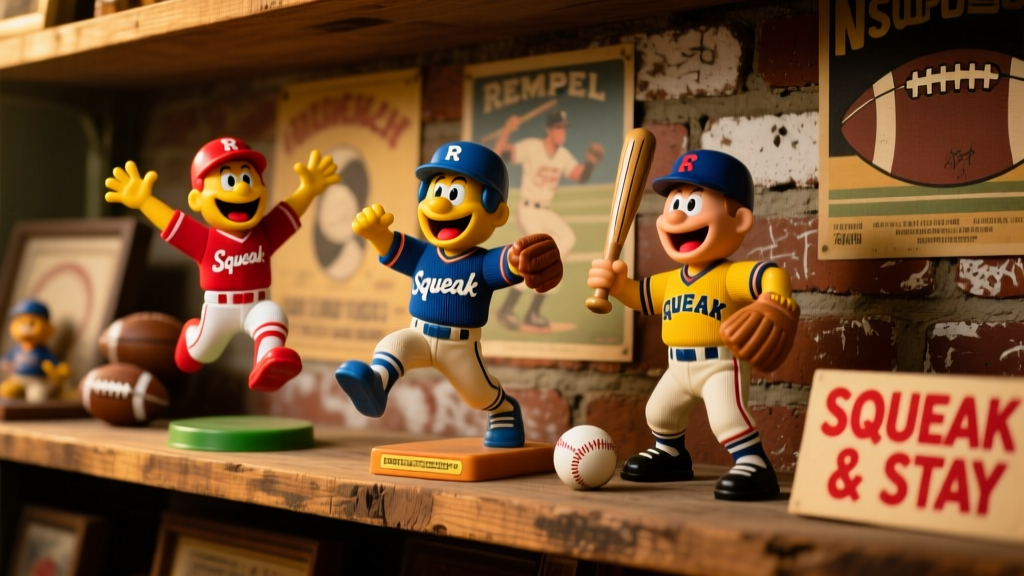
Rempel Squeaky Toys: The Forgotten Legacy of American Toy Engineering and Sports Memorabilia Crossover

Toy McGregor Smokes: Unpacking the Battery-Operated Cigarette Lighter by T. N. Co., Japan

The Gaudy Welsh Tea Set: Decoding the Peppermint Luster Trim Waste Bowl 'No Sugar' 14-Piece Service
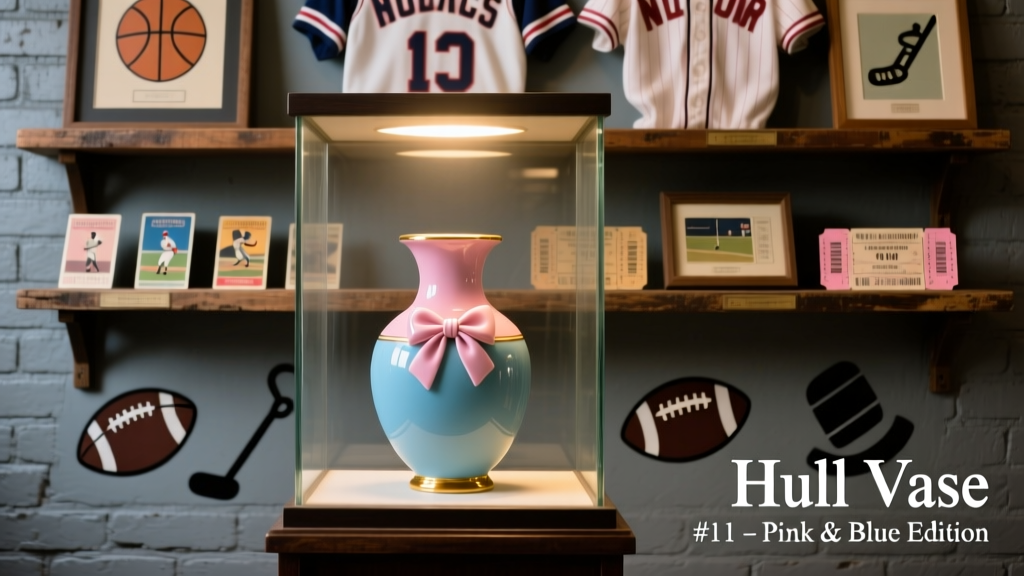
Hull Vase 'Bow Knot' in Pink and Blue: Authentication, History, and Market Value of the 11-Inch Variant
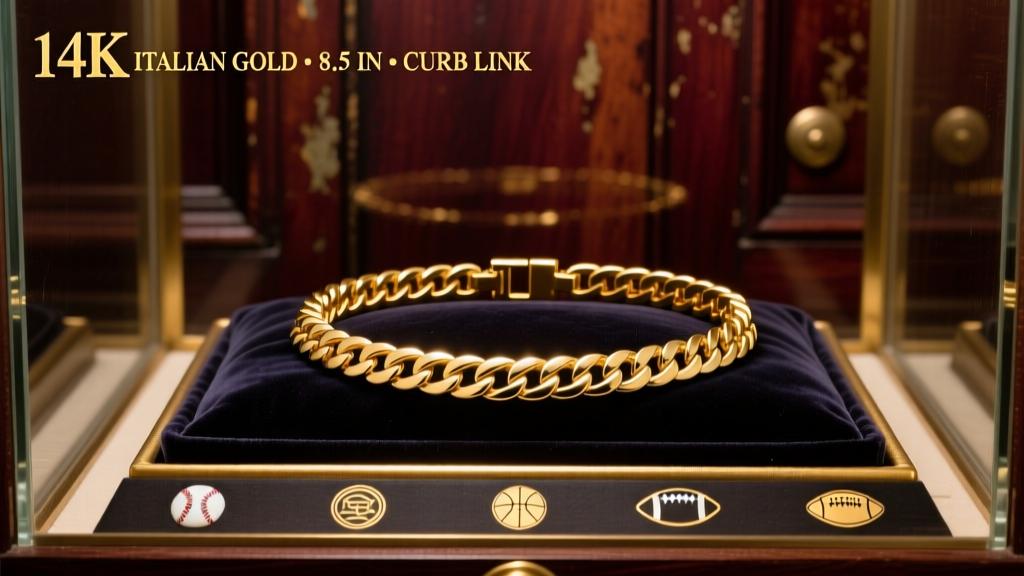
Authenticating and Valuing the Interlocking Curb Bracelet: A Collector’s Deep Dive into the 14K Gold Italian 8.5-Inch Piece
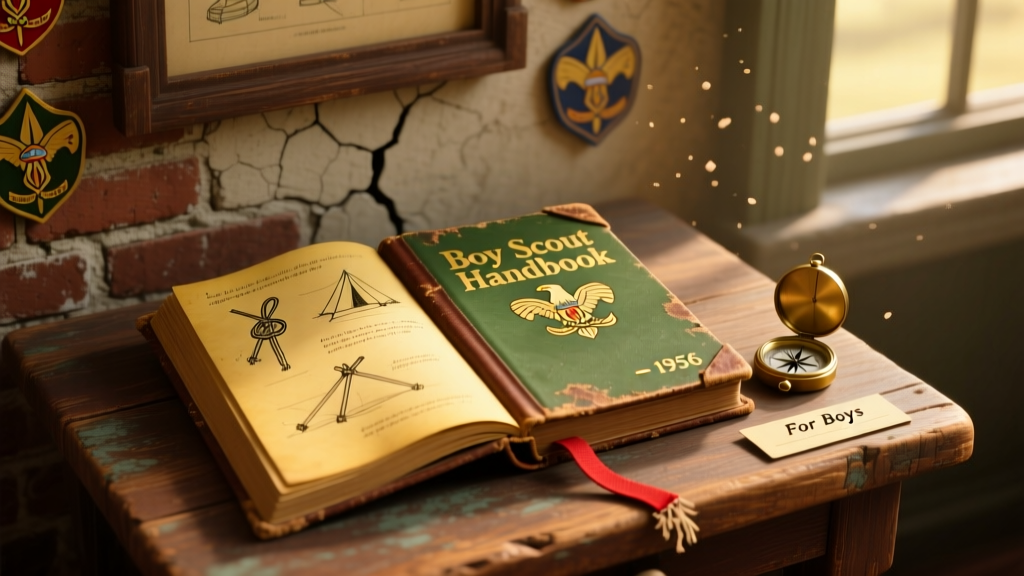
The 1958 Boy Scout Handbook for Boys: A Collector’s Guide to Authenticity, Design, and Historical Significance