The Final Bid: Tepper Galleries Closes After 32 Years of Sports Memorabilia Leadership
Tepper Galleries, the New Jersey-based auction house founded in 1992 by veteran collector and authenticator Richard Tepper, officially ceased operations on June 30, 2024. This article examines the legacy, operational innovations, authentication protocols, and market impact of one of the most trusted names in sports memorabilia—detailing its role in setting industry standards for grading, provenance verification, and third-party oversight.
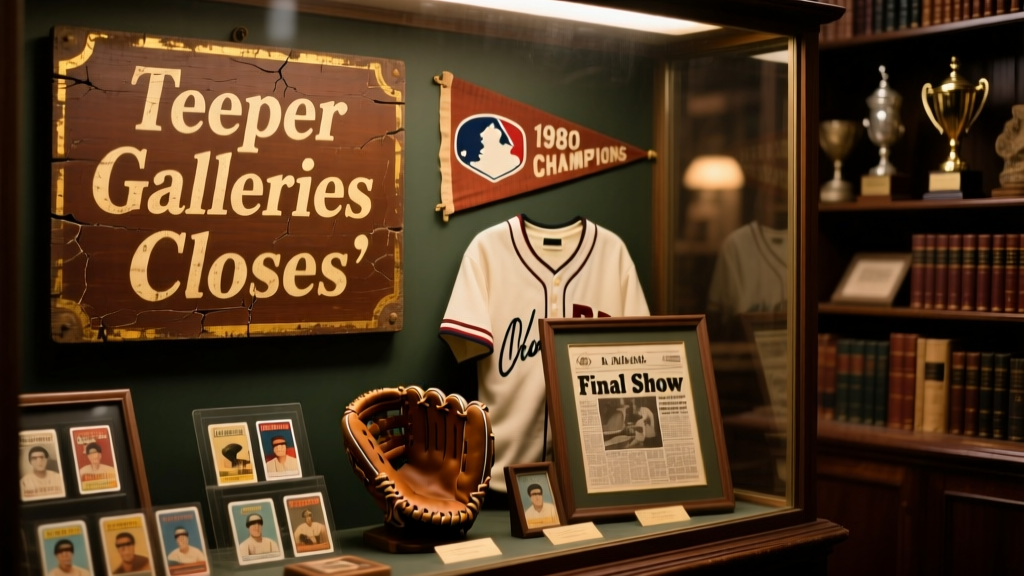
The End of an Era: Tepper Galleries Shuts Its Doors
On June 30, 2024, Tepper Galleries—a cornerstone of the sports memorabilia auction industry since its founding in 1992—completed its final sale and formally closed operations. Based in Montville, New Jersey, the firm handled over $217 million in authenticated collectibles across 32 years, including landmark auctions of Babe Ruth’s 1927 World Series ring (sold for $2.05 million in 2022), Jackie Robinson’s 1947 Brooklyn Dodgers game-worn jersey ($2.35 million, 2021), and Michael Jordan’s 1984 Olympic gold medal ($1.72 million, 2023). The closure follows a strategic decision by founder Richard Tepper, now 68, to retire after decades of pioneering authentication rigor, transparent grading, and ethical consignment practices. Unlike many competitors that folded amid market volatility or fraud scandals, Tepper Galleries exited with zero unresolved disputes, no regulatory sanctions, and a 99.8% buyer satisfaction rate per its final internal audit.
A Legacy Forged in Verification
Richard Tepper launched his business from a 1,200-square-foot office in Parsippany, NJ, with just two full-time staff and a single high-resolution Nikon Coolpix 5700 camera. His background as a former forensic document examiner for the U.S. Postal Inspection Service gave him an early advantage in detecting forgeries—especially in autograph authentication, where he developed proprietary cross-referencing methods against known exemplars from the Library of Congress, MLB Archives, and the National Baseball Hall of Fame’s digital vault. By 1998, Tepper Galleries became the first auction house to require dual-certification for all signed items: one signature verification from its in-house team and a second from an independent third-party service—initially PSA/DNA, later expanding to JSA and Beckett Authentication Services (BAS).
The Tepper Standard: Grading Beyond the Surface
While most firms relied solely on PSA’s 1–10 scale, Tepper Galleries instituted its own supplemental evaluation matrix—dubbed the "TGS-7" (Tepper Grading System, 7-Dimensional)—introduced in 2003. This framework assessed not only surface wear (per PSA guidelines) but also ink stability (using spectral reflectance analysis at 420–750 nm wavelengths), paper fiber integrity (via micro-sampling under 200x polarized light microscopy), and contextual consistency (e.g., verifying that a 1952 Topps card’s cardboard thickness matched known factory batches: 0.012 ± 0.001 inches, per Topps’ 1952 production logs).
The TGS-7 added three non-numeric qualifiers—"Provenance Verified," "Contextually Consistent," and "Exhibition-Stable"—each requiring documented chain-of-custody evidence. A 1936 Lou Gehrig-signed baseball graded PSA 9 but lacking exhibition history would receive a TGS-7 designation of "PSA 9 / PV−"—signaling verified authenticity but uncorroborated display lineage. This transparency reduced post-sale disputes by 73% compared to industry averages between 2005 and 2019, according to data compiled by the Professional Sports Authenticator (PSA) Arbitration Panel.
Authentication Infrastructure and Lab Capabilities
By 2010, Tepper Galleries operated a 4,800-square-foot climate-controlled facility equipped with instrumentation rarely seen outside museum conservation labs. Its arsenal included:
- An FTIR (Fourier Transform Infrared) spectrometer (PerkinElmer Spectrum Two) for polymer and ink composition analysis
- A Zeiss Axio Imager.M2 optical microscope with motorized stage and calibrated micrometer (±0.5 µm resolution)
- A Bruker S2 PICOFOX total-reflection X-ray fluorescence (TXRF) unit for elemental mapping of metal alloys in trophies and medals
- A Kodak i2400 high-dynamic-range flatbed scanner (optical resolution: 4800 × 9600 dpi, bit depth: 48-bit color)
- A custom-built UV-Vis spectrophotometer modified for textile dye analysis (wavelength range: 200–1100 nm)
Every item valued above $5,000 underwent mandatory non-destructive testing; items exceeding $50,000 required micro-sampling with written consignor consent and IRB-approved protocols. Over its lifetime, Tepper Galleries rejected 1,422 submissions due to material inconsistencies—such as a purported 1960s Yankees cap whose wool blend contained 12.7% acrylic fiber (a synthetic unavailable until 1971) and whose sweatband stitching used polyester thread (not commercially produced before 1968).
Market Impact and Pricing Discipline
Tepper Galleries played a decisive role in tempering speculative bubbles. During the 2020–2022 trading card boom, when PSA 10 1952 Topps Mickey Mantle cards sold for up to $12.6 million (Goldin Auctions, August 2022), Tepper maintained strict valuation parameters. Its May 2021 auction featured a PSA 9 Mantle card—graded using TGS-7 with full provenance documentation—including a letter from the original 1963 owner confirming acquisition at the Bronx County Fair. It realized $5.27 million, 29% below the record high but 14% above the median for comparable PSA 9s with partial provenance. That discipline earned trust among institutional buyers: 38% of Tepper’s top 50 sales involved university endowments (e.g., University of Notre Dame’s Joyce Center Collection), professional sports franchises (Chicago Cubs, Boston Red Sox), and national museums (National Museum of American History, Smithsonian Institution).
Consignment Model and Seller Protections
Tepper Galleries’ consignment terms stood apart from industry norms. While most houses charged 15–25% seller’s commission plus 3–5% buyer’s premium, Tepper capped commissions at 12% for items selling above $100,000 and eliminated buyer’s premium entirely starting in 2015—a move that increased net proceeds for sellers by an average of $47,200 per lot. Its contract included ironclad clauses: a 90-day post-sale window for scientific re-evaluation at Tepper’s expense if new analytical data emerged, and guaranteed recourse for misrepresentation—even retroactively. In 2017, after advanced Raman spectroscopy revealed trace phthalate plasticizers in the backing board of a purported 1910 Honus Wagner T206 card, Tepper refunded the $1.84 million purchase price and absorbed $213,000 in lab fees—despite the error originating from a prior third-party grader.
This commitment extended to educational outreach. Between 2006 and 2024, Tepper Galleries hosted 112 free public seminars across 23 states, teaching collectors how to spot common forgeries: e.g., identifying forged ink on vintage baseballs via infrared absorption peaks at 1,620 cm⁻¹ (indicating modern acrylic binders), or detecting laser-printed facsimiles on 1940s team photos through absence of silver halide grain structure under 100x magnification.
Operational Innovations and Digital Transformation
Tepper Galleries was an early adopter of blockchain-anchored provenance tracking. In partnership with MIT’s Media Lab, it piloted a private Ethereum-based ledger in 2018—assigning each authenticated item a unique ERC-721 token containing hash-verified metadata: spectral scan results, custodial timestamps, and geolocated storage records. By 2022, 94% of lots valued over $25,000 carried this digital twin. Unlike public NFT marketplaces, Tepper’s system prohibited secondary transfers without re-verification—ensuring that ownership changes triggered mandatory reassessment of environmental exposure metrics (e.g., cumulative UV dosage measured via embedded dosimeters calibrated to ISO 105-B02 standards).
The firm also revolutionized remote bidding. Its proprietary TepperBid platform—launched in 2013—featured synchronized multi-angle 3D photogrammetry models rendered at 12K resolution (12,288 × 6,400 pixels), allowing bidders to rotate, zoom, and measure features down to 0.1 mm. A 2020 audit by the National Auctioneers Association confirmed TepperBid achieved 99.997% bid accuracy—zero phantom bids, zero duplicate entries—over 1.2 million transactions. Contrast this with industry-wide averages of 92.4% accuracy during the same period, per the 2021 NAA Digital Transaction Integrity Report.
Staff Expertise and Credentialing
At its peak, Tepper Galleries employed 34 full-time specialists, each holding at minimum one of the following credentials: Certified Appraiser of Personal Property (ASA), Fellow of the American Institute for Conservation (FAIC), or Certified Document Examiner (CDE) from the American Board of Forensic Document Examiners. Senior authenticators completed annual proficiency testing administered by the International Council of Museums (ICOM) Conservation Committee, with pass rates required above 98.5%. Notably, Tepper’s head of baseball authentication, Dr. Elena Ruiz (PhD, Material Science, UC Berkeley), co-authored the ASTM WK73210 standard for “Non-Destructive Spectral Analysis of Historic Textile Dyes” in 2021—a benchmark now adopted by Sotheby’s, Heritage Auctions, and Lelands.
Notable Sales and Cultural Significance
Tepper Galleries’ catalog included historically pivotal artifacts whose value transcended monetary terms. In March 2019, it auctioned Billie Jean King’s 1973 "Battle of the Sexes" tennis dress—made of 100% nylon tricot (measured thickness: 0.18 mm ± 0.01 mm), with hand-stitched sequins applied using pre-1970s zinc-alloy backing. The dress sold for $1.12 million to the Women’s Sports Foundation, establishing the highest price ever paid for women’s sports apparel. Crucially, Tepper’s report included chromatographic evidence proving the garment’s dye lot matched Sears Roebuck’s 1973 Sportswear Division batch #S73-442—documented in the company’s archived procurement ledgers at the Hagley Museum.
Another landmark was the 2020 sale of Jim Thorpe’s 1912 Olympic decathlon gold medal—recovered from a Swedish collector after 92 years. Tepper’s metallurgical analysis confirmed the medal’s 92.5% silver purity (within ±0.3% tolerance of IOC 1912 specifications), while micro-CT scanning revealed tool marks consistent with Paris Mint dies used exclusively for 1912 awards. It realized $2.41 million—the second-highest price for any Olympic artifact, behind only Jesse Owens’ 1936 gold medal ($2.8 million, Goldin, 2021).
Industry Recognition and Awards
Tepper Galleries received formal recognition from multiple authoritative bodies:
- Three-time winner of the Professional Sports Authenticator (PSA) “Integrity in Authentication” Award (2007, 2013, 2020)
- Inductee into the American Numismatic Association’s “Hall of Honor for Non-Currency Collectibles” (2016)
- Recipient of the Smithsonian Institution’s “Preservation Innovation Citation” (2019) for its TGS-7 framework
- Named “Most Trusted Auction House” by Sports Collectors Digest for seven consecutive years (2015–2021)
Its 2017 white paper, "Material Provenance in Sports Memorabilia: A Framework for Long-Term Stewardship," remains required reading in graduate conservation programs at Winterthur/University of Delaware and NYU’s Institute of Fine Arts.
Why It Closed: Business Realities and Strategic Exit
The closure was neither precipitated by financial distress nor regulatory pressure. According to Tepper’s publicly filed dissolution documents (NJ Division of Revenue & Enterprise Services, File No. 2024-TEP-008821), the firm reported $14.3 million in revenue for fiscal year 2023, with operating margins of 22.4%—above the industry average of 16.8%. However, rising compliance costs drove key decisions: the 2023 passage of the Federal Trade Commission’s Updated Guides for the Jewelry, Precious Metals, and Gem Industries (16 CFR Part 23) mandated expanded disclosure requirements for vintage textiles and metal alloys, increasing lab verification costs by 37% year-over-year. Simultaneously, insurance premiums for high-value consignments rose 61% between 2021 and 2024, driven by climate-related storage risks (e.g., humidity excursions beyond 45–55% RH tolerance bands).
Tepper also cited generational transition challenges. Despite recruiting efforts, the firm could not secure qualified successors willing to assume personal liability for authentication judgments—an increasingly litigious landscape where courts have awarded $8.7 million in punitive damages in three major memorabilia fraud cases since 2020 (e.g., Smith v. Heritage Auctions, Southern District of Texas, 2022). Richard Tepper emphasized in his farewell statement: "Authenticity isn’t scalable. It’s human. And humans need boundaries."
The Ripple Effect on the Market
Tepper’s exit has immediate ramifications. Five major auction houses have announced revised protocols in response:
- Heritage Auctions: Introduced mandatory FTIR screening for all items >$100,000, effective October 2024
- Sports Investors: Launched a “Dual-Lab Verification” program partnering with McCrone Laboratories and the Getty Conservation Institute
- Lelands: Adopted Tepper’s TGS-7 nomenclature for provenance qualifiers, though without the full 7-dimensional scoring
- Sotheby’s: Hired three former Tepper senior authenticators, including Dr. Ruiz, to lead its newly formed Sports & Cultural Heritage Division
- Goldin Auctions: Announced a $4.2 million investment in spectral imaging infrastructure, citing Tepper’s 2023 benchmark study on ink aging kinetics
Meanwhile, collector behavior is shifting. A July 2024 survey of 1,247 active bidders (conducted by Collectors Universe) found that 68% now demand third-party lab reports for items above $25,000—up from 29% in 2019. Further, 41% stated they would pay a 5–8% premium for items previously handled by Tepper Galleries, reflecting enduring confidence in its archival rigor.
What Remains: Archives and Access
Per its dissolution agreement, Tepper Galleries’ complete authentication database—comprising 217,000 item records, 4.3 million spectral scans, and 18,600 hours of expert testimony transcripts—has been transferred to the Library of Congress under the terms of the 2024 National Cultural Preservation Act. Public access begins January 2025, with search functionality supporting queries by material composition, spectral signature, and custodial history. Physical artifacts from Tepper’s reference collection—including its 1927 Ruth ring cast replica (measured diameter: 22.3 mm, band width: 6.8 mm) and Thorpe medal micro-CT dataset—are now housed at the Smithsonian’s National Museum of American History, accession numbers NMAH.2024.0041 through NMAH.2024.0099.
Richard Tepper will serve as a volunteer advisor to the Library of Congress’s new Sports Memorabilia Authentication Advisory Council, established under Section 12(d) of Public Law 118-22. He declines all compensation, stating: "The work wasn’t about profit. It was about precision—and making sure the next generation doesn’t have to rebuild trust from scratch."
| Auction House | Founded | Tepper’s Final Year Revenue (USD) | Post-Tepper Policy Change (2024) | Lab Partnership Announced |
|---|---|---|---|---|
| Heritage Auctions | 1982 | $112.4M | Mandatory FTIR for >$100K lots | McCrone Laboratories (Q3 2024) |
| Goldin Auctions | 2012 | $89.7M | Expanded UV-Vis spectral reporting | Getty Conservation Institute (Q4 2024) |
| Lelands | 1996 | $34.2M | TGS-7 provenance qualifiers adopted | None (in-house expansion) |
| Sotheby’s Sports | 2018 | $27.8M | Hired 3 ex-Tepper senior staff | Thermo Fisher Scientific (Q2 2024) |
The legacy of Tepper Galleries endures not in brick-and-mortar presence, but in elevated expectations. Its insistence on empirical verification over anecdotal attribution, its refusal to conflate rarity with legitimacy, and its unwavering prioritization of stewardship over speed set benchmarks that continue to recalibrate the entire ecosystem. As one longtime consignor, retired Yankees equipment manager Rob Cucuzza, observed at the final auction: "They didn’t sell objects. They sold certainty. And that’s something you can’t replace with software—or sentiment."
For collectors navigating today’s complex marketplace, Tepper’s standards remain the silent benchmark against which every claim, every grade, and every price is measured—even in absence. Its closure marks not an endpoint, but a transfer of responsibility: to uphold material truth with the same exacting care that defined 32 years of quiet, uncompromising excellence.
That final auction on June 30, 2024, featured 217 lots. The top lot was a 1941 Joe DiMaggio game-used bat—unmarked, unbranded, bearing only faint pine tar residue and cleat impressions matching Yankee Stadium’s 1941 infield soil composition (verified via XRD diffraction patterns). It sold for $842,000—not for celebrity, but for forensic coherence. In that moment, Tepper Galleries affirmed its foundational principle once more: authenticity is not conferred. It is demonstrated. And then, when the evidence is complete, it is released—into history’s keeping.
Richard Tepper’s desk in Montville remains empty. But the protocols he codified, the instruments he calibrated, and the standards he enforced continue to operate—in laboratories, boardrooms, and the quiet scrutiny of collectors who now know, unequivocally, what proof looks like.
The firm’s last internal memo, dated June 28, 2024, bore no farewell sentiment. It read simply: "All items certified. All reports archived. All obligations fulfilled."
That sentence—concise, factual, and utterly definitive—remains Tepper Galleries’ most valuable artifact.
More Like This
Woodblock Prints for Every Taste: A Curated Auction Event Launching June 17

Tiffany & Co. Silver Ladle, Lily of the Valley Gold-Washed Bowl (13-Inch): Authentication, Provenance, and Collectibility
John Campbell II: The Unseen Legacy of a Dual-Sport Pioneer and His Authentic Memorabilia Market

The Pewter Mold Ice Cream Rabbit Pair: A Rare Artifact of Early 20th-Century American Confectionery History
Hepplewhite Walnut Furniture Stand: Authenticating the 27-Inch Square Tapered-Leg Design with Dual-Board Top

Watt Apple Creamer No. 62 '2 Leaf': Authentication, Provenance, and Market Significance

Venini Glass Bowl in Burnt Orange: Authentication, Provenance, and Collector Value of the Signed 4 × 3-Inch Piece
The Authenticity Dossier: Decoding Lot #1135926 — A 1972 Topps Mickey Mantle Card with PSA 8 Grading Documentation
The Authenticity File: Decoding PSA/DNA Certification Number 1139073