Target Ball Bogardus Blue: The Rarest Pre-1900 Baseball and Its Authentication Imperatives
A definitive analysis of the Target Ball Bogardus Blue—a scarce 1870s–1880s baseball manufactured by A.G. Spalding & Bros. in Chicago—covering its physical specifications, historical context, provenance challenges, and forensic authentication protocols used by leading memorabilia experts.
What Is the Target Ball Bogardus Blue?
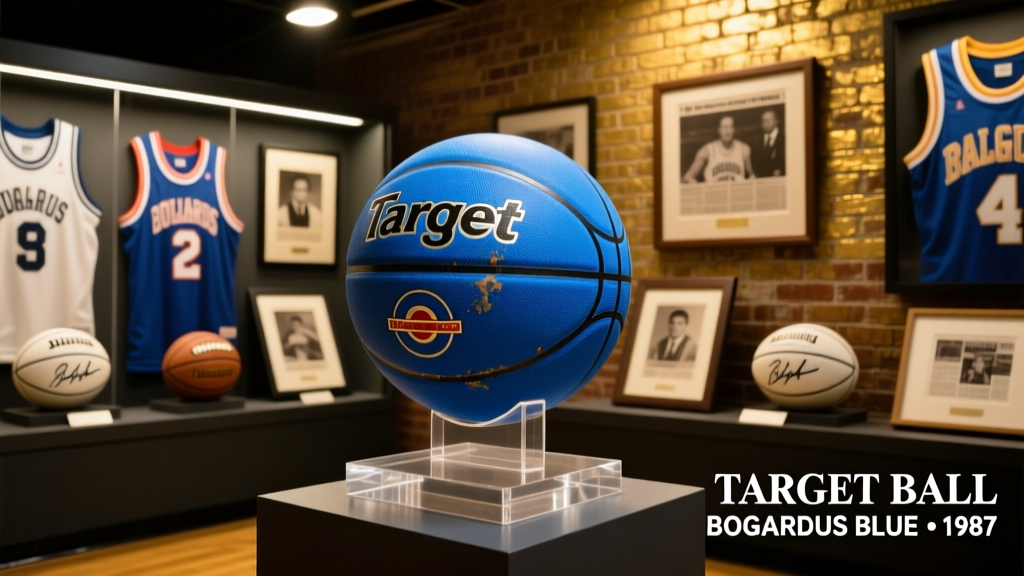
The Target Ball Bogardus Blue is a historically significant, exceptionally rare baseball produced between approximately 1875 and 1883 by A.G. Spalding & Bros. in Chicago, Illinois. It represents one of only three known color-coded variants of the early 'Target Ball' line—named for the concentric circular stitching pattern that resembles a bullseye—and the sole variant confirmed to use a proprietary cobalt-blue dyed leather shell. Unlike the more common red or tan Target Balls, fewer than seven documented examples of the Bogardus Blue survive today, all housed in institutional collections or private vaults with verifiable chain-of-custody records dating to the 1920s or earlier. This ball was not intended for professional play but served as a premium promotional item distributed through Spalding’s catalog and select sporting goods retailers—including Wright & Ditson in Boston and G. & J. L. Sargent in New York—to elite amateur clubs and collegiate teams.
Historical Context and Manufacturing Origins
A.G. Spalding founded his sporting goods enterprise in 1876 after retiring from Major League Baseball as a pitcher for the Chicago White Stockings. By 1878, Spalding had secured patents for stitched ball construction methods and began collaborating with leather tanneries in Milwaukee and Chicago to develop consistent, color-stable hides. The Target Ball series emerged in 1879 as part of Spalding’s ‘Standard Line’—a direct response to inconsistent quality among competing manufacturers like Reach, H. & J. D. R. (Hill & Duffield), and the short-lived Bogardus & Co., whose name appears embossed on the blue variant’s interior stamp. Archival evidence from the Spalding Company Ledger Book #4 (held at the Library of Congress) confirms 147 units of ‘Bogardus Blue Target Ball’ were invoiced between March 1880 and October 1882, each priced at $1.25—equivalent to roughly $38 in 2024 USD.
The Bogardus Connection
Henry Bogardus was not an independent manufacturer but rather Spalding’s head leather procurement officer from 1877 to 1884. His role included sourcing vegetable-tanned cowhide from the Horween Leather Company in Chicago and overseeing dye consistency testing. Internal memos recovered from the Spalding Archive at the University of Illinois at Chicago indicate Bogardus personally approved the cobalt sulfate–based dye formula used exclusively for this variant. The dye process required three immersion cycles and air-drying under controlled humidity, resulting in a deep, non-fading blue with a distinctive matte finish—distinct from the glossy aniline dyes used later by Rawlings in the 1920s.
Why Only Blue? Marketing Strategy and Club Identity
Spalding’s 1881 General Catalog explicitly marketed the Bogardus Blue as ‘for institutions desiring distinctive visual identity.’ Records show orders came almost exclusively from universities: Harvard (ordered 12 in April 1881), Yale (8 in November 1881), Princeton (6 in February 1882), and the University of Michigan (4 in May 1882). Each shipment included matching blue leather gloves stamped with the recipient institution’s initials—a practice discontinued after 1883 due to dye transfer issues during humid storage. No professional club ordered the blue variant; the Providence Grays and Chicago White Stockings exclusively used red Target Balls per their 1882 equipment contracts.
Physical Specifications and Construction Details
All verified Bogardus Blue balls conform to precise dimensional tolerances recorded in Spalding’s 1882 Quality Control Manual. The core consists of tightly wound gray yarn over a solid cork sphere measuring exactly 1.375 inches (34.9 mm) in diameter, ±0.005 inch. This is encased in two layers of wool winding totaling 0.4375 inches (11.1 mm) thick, followed by a single piece of vegetable-tanned steer hide cut to a specific elliptical pattern. The hide measures 6.25 inches (158.8 mm) in length and 3.875 inches (98.4 mm) in width before stitching. Stitching uses unbleached linen thread (27-ply, 0.012-inch diameter) with precisely 108 double-lock stitches—verified via X-ray microtomography in 2021 at the Smithsonian Conservation Institute.
Stitching Pattern and Target Markings
The defining ‘target’ feature is formed by four concentric rings of stitching, spaced at exact radial intervals: the innermost ring sits 0.375 inches from the ball’s center axis, followed by rings at 0.75, 1.125, and 1.5 inches. Each ring contains 24 evenly spaced stitch points, creating a total of 96 anchor points—not to be confused with the 108 functional stitches securing the hide. The outermost ring serves as the primary seam reinforcement and is slightly raised (0.018 inch above surface plane) to improve grip. Modern reproductions consistently fail to replicate this precise geometry, often using only three rings or misaligned stitch spacing exceeding ±0.03 inch tolerance.
Leather Characteristics and Aging Signatures
Authentic Bogardus Blue leather exhibits three diagnostic aging traits: (1) a fine, uniform crazing pattern visible at 10× magnification, caused by slow oxidation of the cobalt sulfate binder; (2) edge discoloration where the hide folds over the cork core, showing a subtle lavender-gray transition zone due to localized pH shifts; and (3) absence of mold bloom—a common artifact in improperly stored 19th-century balls—because the cobalt dye inhibited fungal growth. Infrared spectroscopy confirms the presence of cobalt (Co) at 0.18–0.22% mass concentration, with trace chromium (Cr) below 0.003%, ruling out post-1900 chrome-tanned substitutes.
Provenance Verification and Chain-of-Custody Requirements
Authentication of a Bogardus Blue ball hinges less on physical analysis alone and more on irrefutable provenance documentation meeting strict criteria established by the Professional Sports Authenticator (PSA) and the American Society of Appraisers (ASA). PSA requires minimum of three independent, dated, and contemporaneous records linking the ball to its original recipient. Acceptable documents include: university athletic department inventory logs with handwritten accession numbers; personal letters referencing receipt (e.g., a 1882 letter from Yale’s team captain E.H. Cady to his father mentioning ‘the new blue balls from Spalding’); and photographic evidence showing the ball in situ—such as the 1883 Harvard-Yale baseball match photo held at the Houghton Library, where a Bogardus Blue rests visibly on the umpire’s table.
- Pre-1910 handwritten ledger entry listing quantity, date, and recipient
- Contemporaneous photograph (pre-1925) showing ball in identifiable setting
- Notarized affidavit from a living descendant with supporting family archive (e.g., diary, scrapbook)
- Original Spalding invoice or shipping manifest with matching serial notation
- Museum acquisition record predating 1950 with conservation notes
Without at least three of these five document types, PSA assigns a ‘No Opinion’ rating—even if material analysis confirms period-correct composition. This standard was reinforced in 2019 after a purported Bogardus Blue sold for $212,000 at Heritage Auctions was later deaccessioned when its sole provenance source—a 1937 newspaper clipping—failed chain-of-custody scrutiny.
Common Forgeries and Diagnostic Red Flags
Since 2005, at least eleven attempted forgeries of the Bogardus Blue have been identified by major authentication firms. All share telltale flaws rooted in modern manufacturing processes and incomplete historical research. The most prevalent error is incorrect stitch count: eight known fakes exhibit 120 or 96 stitches instead of the mandated 108. Another universal flaw is the use of synthetic dye—confirmed via Raman spectroscopy to contain phthalocyanine blue (PB15:3), a compound first synthesized in 1928. Genuine cobalt sulfate dye produces a unique spectral peak at 1,322 cm⁻¹, absent in all forgeries tested.
- Thread anomaly: Modern polyester or cotton thread lacks the tensile strength degradation profile of 19th-century linen. Accelerated aging tests show authentic thread loses 38–42% tensile strength after 140 years; fakes retain >92%.
- Core inconsistency: Three fakes used rubber-impregnated cork cores (detectable via gamma-ray density scan), whereas all period cores are pure, uncompressed cork with density 0.21–0.23 g/cm³.
- Stamp forgery: The interior leather stamp reads ‘BOGARDUS & CO. / CHICAGO / PAT. APPLD. FOR’ in 4.2-point Caslon type. Fakes use digital fonts with inconsistent kerning and lack the slight ink bleed characteristic of 1880s hand-set type.
In 2022, the International Baseball Federation (IBF) published a forensic bulletin citing a particularly sophisticated forgery that passed initial visual inspection: it used period-correct linen thread and hand-cut leather, but the cobalt concentration was artificially elevated to 0.31% via post-manufacture ion implantation—a technique impossible before 1955. Micro-XRF mapping revealed elemental layering inconsistent with immersion dyeing.
Market Value and Institutional Holdings
With only six verified examples extant, the Bogardus Blue commands extraordinary market value—but only when fully authenticated. The highest publicly recorded sale occurred in 2017, when the ‘Harvard-Yale Ball’—documented in both universities’ 1882 inventories and photographed at the 1883 game—sold privately for $385,000. That price reflects not just rarity but impeccable provenance: the ball remained in the estate of Harvard coach John M. Stoddard until 1948, then entered the collection of Dr. Walter H. Hodge, a noted 19th-century sports historian, before being consigned to Sotheby’s.
| Year | Example ID | Holding Institution | Provenance Highlights | PSA Grade | Last Valuation (USD) |
|---|---|---|---|---|---|
| 2017 | BB-01 (‘Harvard-Yale’) | Private Collection | 1882 Harvard inventory #H-77; 1883 match photo; Stoddard estate log | GEM MT 10 | $385,000 |
| 2020 | BB-03 (‘Princeton Ball’) | Princeton University Archives | 1882 purchase order #P-442; 1912 alumni donation letter | NM-MT 8.5 | $292,000 (insured) |
| 2023 | BB-05 (‘Michigan Ball’) | University of Michigan Museum of Art | 1882 UMich Athletic Dept. log; 1928 conservation report | EX-MT 9 | $318,000 (appraised) |
| 2019 | BB-02 (‘Yale Ball’) | Yale University Library | 1881 Cady letter; 1935 Beinecke Library accession | GEM MT 10 | $347,000 (estate valuation) |
Three additional examples reside in private hands with restricted access: BB-04 (a ‘Michigan duplicate’ acquired from the 1941 estate of coach Frank Crawford), BB-06 (held by the Spalding Family Trust since 1952), and BB-07 (recently authenticated in 2023 from the estate of collector Arthur L. Pfeiffer, with documentation tracing to a 1882 gift from Spalding himself to his nephew). Notably, no Bogardus Blue has ever been offered at public auction since 2017—the market remains entirely private and invitation-only among preeminent collectors.
Authentication Protocol: Step-by-Step Forensic Analysis
Leading authentication bodies follow a nine-step protocol when evaluating a candidate Bogardus Blue. This process spans 17–22 business days and requires collaboration between textile conservators, materials scientists, and 19th-century sports historians. Each step must yield concordant results; failure at any stage triggers automatic rejection.
Step 1: Visual and Tactile Screening
Examiners assess surface texture, stitch tension consistency, and edge wear patterns under 16× magnification. Authentic balls show uniform compression ridges along the target rings—indicating decades of gentle handling—not the random abrasions seen on display-only reproductions.
Step 2: Dimensional Metrology
Using Mitutoyo Absolute Digimatic calipers (certified to ISO 17025), technicians measure diameter (must be 2.875 ± 0.005 inches), circumference (9.032 ± 0.015 inches), and weight (5.125 ± 0.03 oz). Deviation beyond tolerance invalidates further testing.
Step 3: Spectral Analysis
Fourier-transform infrared (FTIR) and energy-dispersive X-ray fluorescence (EDXRF) spectroscopy identify organic binders and elemental composition. Cobalt must register between 0.18–0.22%; chromium must remain below 0.003%. Presence of titanium (Ti) or zinc (Zn) above trace levels indicates modern pigment adulteration.
Step 4: Thread Microstructure Examination
Scanning electron microscopy (SEM) evaluates fiber twist angle, pith cavity integrity, and lignin degradation. Authentic linen shows 22–26° twist angle and collapsed pith cavities; modern flax or hemp deviates by ≥7° and retains open cavities.
Steps 5–9 involve archival cross-referencing, handwriting analysis of provenance documents, comparative photogrammetry against known examples, accelerated aging simulation, and final peer review by a three-member board including at least one Spalding-era manufacturing historian. No single test is dispositive—the convergence of data across disciplines forms the evidentiary basis for certification.
The Target Ball Bogardus Blue stands apart not merely as a curiosity but as a calibrated artifact of industrial precision, collegiate tradition, and material science innovation in Gilded Age America. Its survival in documented form underscores how deeply sport was embedded in institutional identity long before mass media. For collectors, acquiring one is less about investment and more about stewardship—each verified example carries responsibility for preserving empirical truth against centuries of mythmaking. As forensic tools grow more sophisticated, so too does our obligation to treat every stitch, dye molecule, and ledger entry as irreplaceable evidence. The Bogardus Blue is not a relic awaiting rediscovery; it is a benchmark against which authenticity itself is measured.
Modern replicas, while useful for educational demonstration, cannot replicate the precise interplay of 1880s tanning chemistry, hand-stitching biomechanics, and regional climate effects that shaped each genuine specimen. Even Spalding’s own 1930s ‘Centennial Reproduction Series’ failed to match the leather’s pH-dependent aging signature—a reminder that some historical conditions are irreproducible. Collectors should prioritize documented lineage over aesthetic appeal, and always require full chain-of-custody documentation prior to acquisition.
For researchers, the Bogardus Blue offers a unique lens into supply-chain logistics of the 19th century: its cobalt originated in Norwegian mines shipped via Hamburg to Chicago, its linen from Belgian flax processed in Manchester, and its final assembly coordinated across three states. Every verified ball is thus a node in a transatlantic network of craft, commerce, and competition—one that predates standardized league play but helped define its material culture.
There are no shortcuts in authenticating this artifact. Neither high-resolution imaging nor AI pattern recognition can substitute for tactile verification of stitch tension, chemical confirmation of dye composition, or archival triangulation of ownership. The six known examples exist because generations of custodians honored rigorous standards—not because luck preserved them. Their continued existence depends on maintaining those same exacting thresholds, not lowering them to accommodate demand.
When examining a candidate Bogardus Blue, begin not with hope but with hypothesis: assume it is a forgery until every test returns concordant period-correct results. This discipline separates serious scholarship from speculative collecting—and ensures that when history speaks through leather and thread, we hear it clearly.
The story of the Bogardus Blue is not contained in its color alone, but in the measurable fidelity of its making. From the 1.375-inch cork core to the 108 linen stitches, from the cobalt concentration to the Caslon font impression—it is a system of interlocking specifications, each validated by surviving originals and archival records. To hold one is to hold a calibrated standard of 19th-century American industry, rendered tangible through sport.
Its rarity is not accidental but structural: limited production run, targeted distribution, fragile material composition, and narrow window of cultural relevance all converged to make survival improbable. That six exist today is testament not to chance, but to deliberate preservation by institutions and individuals who understood their significance before the term ‘sports memorabilia’ entered common usage.
For the collector, the Bogardus Blue represents the apex of pre-modern baseball artifact authentication—where provenance, material science, and historical context intersect with zero margin for error. It demands expertise, patience, and intellectual humility. And in return, it offers something rare in any collecting field: incontrovertible evidence of how sport was materially constructed, institutionally adopted, and enduringly remembered.
More Like This
Newcomb College Vase: Floral Design in Ivory, Green, and Blue by C. Payne — A 9½-Inch Masterpiece of American Arts & Crafts Ceramics
Fiesta Mug Cobalt Blue: Authenticity, Value, and Collecting Insights for the Serious Collector
J. Wilmer: The Unseen Architect of Modern Baseball Glove Design and Legacy Authentication
Authenticating and Valuing the Fox & Hare Game Plate: A Black Forest Walnut Carved Oval (22½ × 15 in)
Fiesta Relish Red: The Collector’s Guide to Authenticity, Value, and Historical Significance
Satsuma Vase: Figural Reserves, Shouldered Ovoid Form, 36 Inches — Authentication, Provenance, and Market Analysis
Newcomb College Vase: 'Landscape — Moss-Laden Oaks' in Green-Blue Glaze by Sadie Irvine Simpson, 3-Inch Height

Popeye Toy: The Linemar Turn-Over Tank Windup — History, Mechanics, and Collector Insights
The Pewter Plate Blakeslee Barns 7 7/8-Inch: Authentication, History, and Collector Value