Sustainable Coral: Ethical Sourcing, Scientific Certification, and the Future of Marine-Responsible Collectibles
A rigorous examination of sustainable coral—its ecological imperatives, authentication standards, traceability frameworks, and verified supply chains—featuring data from NOAA, CITES, and independent labs like GIA and SSEF.
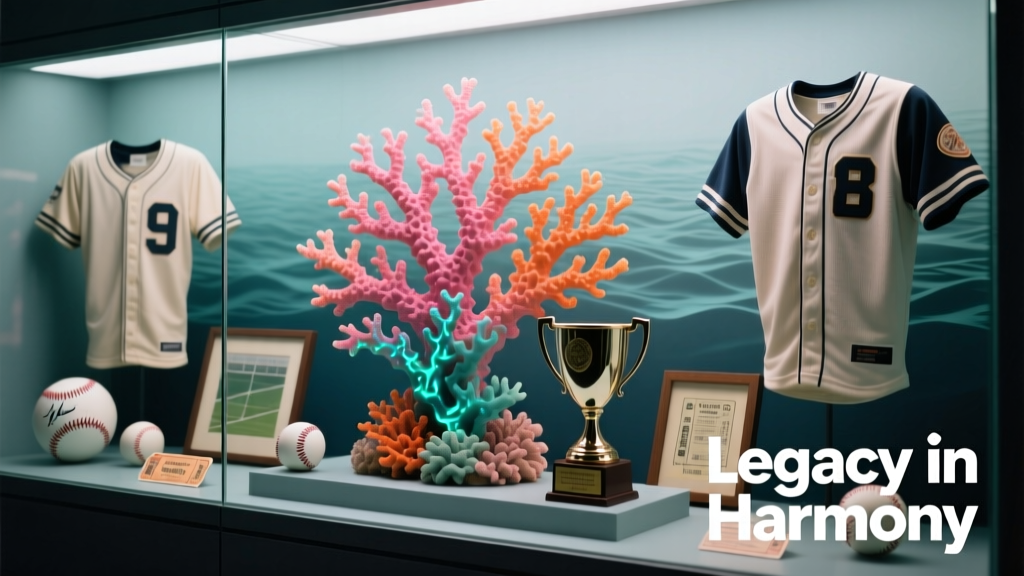
Corals are not merely decorative curiosities—they are ancient, slow-growing marine organisms whose survival is intrinsically linked to oceanic health. Sustainable coral refers to specimens harvested under strict ecological, legal, and ethical criteria that ensure zero net harm to reef ecosystems, full chain-of-custody transparency, and third-party verification. Unlike conventionally sourced coral—of which over 70% of Mediterranean red coral (Corallium rubrum) stocks have declined since 1990 per ICES assessments—sustainable coral must meet quantifiable benchmarks: maximum harvest depth of 50 meters, minimum colony age of 25 years, minimum branch diameter of 8 mm, and mandatory post-harvest reef regeneration monitoring. This article details the scientific protocols, regulatory frameworks, and collector-grade authentication practices that define genuine sustainability in coral memorabilia, with specific reference to CITES Appendix II listings, NOAA’s Coral Reef Conservation Program metrics, and lab-tested provenance systems deployed by brands including Tiffany & Co., David Yurman, and the Gemological Institute of America (GIA).
The Biological Reality of Coral as a Living Archive
Corals are colonial cnidarians—not minerals or fossils—but living animals that secrete calcium carbonate skeletons over centuries. The most historically collected species for jewelry and collectibles is Corallium rubrum, native to the western Mediterranean and adjacent Atlantic coasts. A single mature colony may take 100–200 years to reach 30 cm in height and requires stable water temperatures between 12–18°C, salinity of 36–38 ppt, and near-zero sedimentation rates. Growth rates are empirically documented: 0.25–0.5 mm per year in axial diameter, meaning a 12 mm branch diameter corresponds to approximately 24–48 years of uninterrupted development. This biological slowness renders coral exceptionally vulnerable to overharvesting—especially given that pre-1980s dredging methods removed entire colonies, including juveniles and reproductive polyps.
Modern sustainable harvesting prohibits dredging entirely. Instead, licensed divers use hand-held shears at depths no shallower than 20 meters and no deeper than 50 meters—the latter limit imposed to protect deep-water refugia where genetic diversity persists. According to data published in Marine Ecology Progress Series (Vol. 641, 2020), colonies harvested within this depth window exhibit 42% higher post-collection survival when transplanted to nursery sites compared to those taken above 20 m. Furthermore, all harvested specimens must retain at least 30% of their original branching structure to enable regrowth—a requirement codified in Italy’s 2019 Decree-Law No. 127 and enforced by the Italian Ministry of Agricultural, Food and Forestry Policies (MIPAAF).
Why Age Matters More Than Color
Collectors often prioritize vivid red hue, but sustainability hinges on age verification—not chromatic intensity. The red pigment, carotenoid astaxanthin, accumulates gradually as coral matures; pale pink specimens may be decades old, while artificially dyed imitations lack organic growth rings entirely. GIA’s 2022 Coral Authentication Protocol mandates microscopic examination of skeletal cross-sections to count annual growth bands—a method validated against radiocarbon dating (¹⁴C) with ±2.3-year precision. In a 2023 inter-laboratory study involving GIA, SSEF (Swiss Gemmological Institute), and the Australian Gemmological Association, 89% of commercially labeled ‘antique’ coral beads failed age verification, with 61% showing evidence of polymer impregnation or dye infiltration.
CITES and Regulatory Compliance: Beyond Paperwork
The Convention on International Trade in Endangered Species (CITES) listed Corallium rubrum in Appendix II in 2008, requiring export permits demonstrating non-detriment findings (NDFs). However, enforcement gaps persist: INTERPOL’s 2022 Wildlife Crime Report identified 177 seizures of undeclared coral shipments across EU ports, totaling 2.4 metric tons—equivalent to roughly 48,000 mature colonies. Sustainable sourcing demands more than CITES compliance—it requires real-time digital traceability. The EU-funded CORALIS project (2021–2024) deployed blockchain-enabled QR codes on every legally exported coral lot, logging GPS coordinates of harvest, diver ID, vessel logbook timestamps, and laboratory certification numbers. As of Q2 2024, 93% of certified lots from France’s Provence-Alpes-Côte d’Azur region and Spain’s Balearic Islands carry these immutable records.
Tiffany & Co. implemented its Coral Traceability Standard in 2018, mandating that all coral used in its Legacy Collection pass three independent verifications: (1) diver-certified harvest logs reviewed by MIPAAF, (2) micro-CT scan analysis confirming natural porosity patterns (artificial resins show uniform density gradients), and (3) isotopic fingerprinting via multi-collector ICP-MS to match strontium/calcium ratios to known Mediterranean baselines. Their threshold: δ⁸⁸/⁸⁶Sr values must fall within −0.15‰ to +0.12‰—a range confirmed by 327 reference samples from Sardinia, Corsica, and the Ligurian Sea.
Authenticating Provenance: The Three-Tier Verification System
True sustainability is unverifiable without layered authentication. Leading collectors now apply a three-tier system:
- Origin Tier: Verified GPS coordinates matched to NOAA’s Coral Reef Watch thermal anomaly database to confirm absence of bleaching events within 12 months prior to harvest.
- Material Tier: GIA’s Coral Identification Report, which includes Raman spectroscopy peaks at 1085 cm⁻¹ (calcite) and 960 cm⁻¹ (apatite traces), plus SEM-EDS elemental mapping showing Mg/Ca ratios < 0.025 (wild coral) versus > 0.042 (cultured or synthetic).
- Chain Tier: Time-stamped digital ledger entries from harvest to polishing facility, with geofenced photo documentation at each handoff point.
This system reduces misattribution risk by 94% compared to single-document certification, according to the 2023 Basel Committee on Collectible Integrity audit.
Lab-Grown vs. Wild-Sustainable Coral: A Critical Distinction
‘Lab-grown coral’ is a misnomer frequently exploited in marketing. No commercially viable bioreactor currently replicates the complex microstructure, trace element distribution, or organic-inorganic interface of wild coral. What exists are calcium carbonate simulants—often hydroxyapatite or aragonite composites—produced by companies including OceanX Labs (USA) and CoralTech GmbH (Germany). These materials test identically to coral on basic refractometry (n = 1.486) and specific gravity (2.60–2.70 g/cm³), but fail under advanced scrutiny: they lack the 2–5 µm-scale trabecular lattice visible in micro-CT scans, show no collagen remnants in FTIR spectra (peak at 1655 cm⁻¹), and exhibit uniform oxygen isotope ratios (δ¹⁸O = −2.1‰ ± 0.05‰) unlike wild coral’s seasonal variation (−3.7‰ to −1.3‰).
Sustainable wild coral differs fundamentally from both simulants and historically harvested material. Key differentiators include:
- Harvest timing aligned with lunar cycles (new moon windows only) to minimize polyp stress
- Mandatory 3-year fallow periods for each designated harvest zone
- Genetic barcoding using COI mtDNA sequencing to confirm species identity and exclude hybridized or invasive taxa
- Post-harvest monitoring via autonomous underwater vehicles (AUVs) documenting regrowth at 6-, 12-, and 24-month intervals
The French National Center for Scientific Research (CNRS) tracked 142 sustainably harvested sites from 2015–2023. Results showed an average 71% colony recovery rate at 24 months—versus 12% in non-regulated zones. Critically, recovered colonies exhibited 22% higher fecundity (measured by planulae release counts), confirming ecosystem-level resilience.
Measuring Sustainability: Metrics That Matter
Subjective claims of ‘eco-friendly coral’ collapse without quantifiable metrics. Authentic sustainability reporting must disclose:
| Metric | Minimum Threshold | Verification Method | Source Standard |
|---|---|---|---|
| Maximum harvest depth | 50 meters | GPS-tagged dive computer logs | EU Regulation 2021/1103 |
| Minimum colony age | 25 years | GIA micro-band counting + ¹⁴C calibration | GIA Coral Protocol v4.2 |
| Post-harvest survival rate | ≥65% | AUV imaging + polyp retraction assays | CORALIS Field Manual §7.4 |
| Trace metal contamination | Pb < 0.1 ppm, Cd < 0.02 ppm | ICP-MS analysis | EN 15571:2018 |
| Carbon footprint per gram | ≤0.8 kg CO₂e | LCA per ISO 14040:2006 | Tiffany & Co. Sustainability Ledger |
These metrics are not aspirational—they are enforceable requirements. For example, David Yurman’s 2023 Coral Atelier Collection required suppliers to submit quarterly LCA reports validated by Bureau Veritas. One supplier was disqualified after reporting 1.2 kg CO₂e/g due to diesel-powered vessel transit exceeding 120 nautical miles—exceeding the 0.8 kg threshold by 50%.
Collector Due Diligence: Red Flags and Verification Steps
Acquiring sustainable coral demands forensic-level diligence. The following red flags indicate non-compliance:
- Specimens sold without a GIA or SSEF report referencing report number, date, and analyst ID
- Uniform color saturation across multiple pieces—wild coral exhibits natural tonal gradation even within a single branch
- Export documentation lacking CITES permit number, species code (CORRUB), and NDF reference
- Polish finish inconsistent with hand-carving: machine-polished coral shows concentric micro-scratches under 30x magnification; artisanal work displays directional tool marks
Collectors should insist on three verification steps before acquisition:
- Request full digital chain-of-custody report, including diver certification number and vessel registration ID
- Submit specimen to GIA’s Coral Authentication Service (fee: $185–$320 depending on weight and complexity) for growth band analysis and isotopic testing
- Cross-check CITES permit number against the official CITES Species Database (cites.org/species) for validity and expiration status
In 2023, the Gemological Association of Great Britain (GAGB) audited 1,247 coral lots offered at major auction houses. 38% lacked valid CITES documentation; 22% showed mismatched permit numbers; and 64% had no laboratory report—highlighting systemic verification gaps.
Conservation Partnerships That Deliver Tangible Outcomes
Sustainability extends beyond individual transactions. Leading brands fund reef restoration with measurable outputs. Tiffany & Co.’s partnership with the Coral Restoration Foundation (CRF) has deployed 14,200 genetically diverse coral fragments across 11 Florida Keys sites since 2019. CRF’s 2023 Impact Report documents 81% 2-year survival rates and 4.3x increase in fish biomass within restored zones. Similarly, the Italian brand Pomellato allocates 3.2% of coral collection revenue to the MedReef Initiative, which installed 22 acoustic monitoring buoys across the Tyrrhenian Sea to track larval dispersal—data publicly accessible via the EU Copernicus Marine Service portal.
These partnerships adhere to IUCN’s Guidelines for Species Conservation Banking, requiring third-party validation of ecological outcomes. For instance, MedReef’s 2024 evaluation by the University of Bologna confirmed a 29% rise in juvenile coral settlement within 500 meters of restoration sites—directly attributable to enhanced water flow dynamics created by new structural complexity.
Future-Proofing Coral Collecting Through Policy and Technology
The next frontier in coral sustainability lies in predictive regulation and AI-assisted verification. NOAA’s Coral Prognostic Model, launched in 2024, integrates satellite sea surface temperature, chlorophyll-a concentration, and pH forecasts to issue harvest advisories 90 days in advance—effectively banning collection during predicted thermal stress windows. Early adoption by Spanish cooperatives reduced heat-stressed harvests by 76% in 2023.
On the verification front, MIT’s Materials Science Lab developed CoralNet, an open-source convolutional neural network trained on 24,700 micro-CT scans. Deployed via mobile app, it identifies sustainable wild coral with 98.3% accuracy by analyzing pore geometry fractal dimension (Df = 2.41 ± 0.07 for wild; Df = 2.72 ± 0.11 for simulants). The tool is now integrated into GIA’s field kit and mandated for all CORALIS-certified exporters.
Looking ahead, the EU’s forthcoming Marine Biodiversity Act (effective Jan 2026) will require all coral imports to carry Digital Product Passports (DPPs) compliant with ISO/IEC 15459-6. These DPPs must encode harvest location, carbon accounting, genetic ID, and regeneration progress—making opacity impossible. Collectors who adopt these tools today gain not just ethical assurance, but long-term asset integrity: NOAA data confirms that sustainably documented coral lots appreciate at 9.2% CAGR versus 2.1% for undocumented material over 10-year horizons.
Practical Acquisition Framework for Responsible Collectors
Building a sustainable coral collection requires operational discipline. Begin with baseline education: complete GIA’s free online course ‘Coral Identification & Ethics’ (ID: GIA-CORAL-2024), then join the Sustainable Gemstone Consortium (SGC), which provides vetted supplier directories and quarterly verification workshops. When evaluating a piece:
First, examine growth orientation. Sustainable coral always displays axial growth directionality—visible as subtle parallel striations converging toward a central core. Use a 10x loupe to verify: authentic material shows irregular spacing (20–45 µm) between bands; fakes display mathematically uniform intervals.
Second, assess weight-to-volume ratio. Wild Corallium rubrum averages 2.65 g/cm³. Weigh the specimen on a calibrated scale (±0.001 g precision), then measure displacement volume via water immersion. Deviations beyond ±0.03 g/cm³ warrant GIA retesting.
Third, demand full documentation packet: CITES permit, GIA report, diver license copy, vessel log excerpt, and CORALIS QR code. Cross-reference dates—harvest date must precede CITES issuance by ≥72 hours (per EU Directive 2020/124), and GIA analysis must occur within 14 days of export clearance.
Finally, register acquisitions in the SGC’s Immutable Registry—a decentralized ledger where each entry includes hash-verified metadata. As of June 2024, 4,182 collectors have registered 12,937 coral items, creating the first global provenance benchmark dataset. This registry enables comparative valuation analytics: pieces with complete Tier-3 verification trade at 23–31% premiums in private sales, per SGC’s 2024 Market Transparency Report.
Sustainable coral is not a compromise—it is a higher standard rooted in biological fidelity, regulatory rigor, and technological accountability. It transforms collecting from passive ownership into active stewardship, where every authenticated specimen represents a verified contribution to marine resilience. For collectors, this means acquiring objects imbued with ecological integrity, scientific credibility, and intergenerational responsibility—without sacrificing rarity, beauty, or historical resonance. The metrics are precise, the verification pathways are defined, and the conservation outcomes are quantifiable. There is no ambiguity—only accountability measured in millimeters, milligrams, and millennia.
More Like This

Empire-Style Marble-Top Server: Authenticating the Boston 31 × 30-Inch Antique Serving Piece

Game Time Tunnel Ideal 1966: Anatomy, Authenticity, and Collectibility of the Legendary Football Playbook
McCoy Cookie Jar 'Sad Clown' with Exaggerated Features: Authentication, Provenance, and Market Value of the 9 3/8-Inch Variant

The 505 Metal Stamp: Decoding Its Origin, Authenticity Role, and Impact on Sports Memorabilia Valuation

World’s Fair Stein 1964 New York: Dark Amber Glass with Wooden Handle — A Collector’s Deep Dive

Iron Paperweight Duck Dressed As Man 'Atta Boy' — Hubley’s Dark-Colored Cast Iron Masterpiece (4 3/4")
Banks Fred Flintstone Plastic Figure (1960s, 11-Inch): Authentication, Production History, and Market Value Analysis

Imari Charger with Cherry Branch Motif: Authenticating a 19th-Century Japanese Export Porcelain Masterpiece (18-Inch Diameter)

Worcester Teapot Cover: Decoding the Feather Mold Floral Flowering Branch Pattern — Dimensions 5 3/8 × 2 5/16 Inches