Stoneware Crock: Flowers Blue Impressed 2-Gallon, 9-Inch Diameter — History, Identification, and Market Value
A detailed analysis of the iconic 2-gallon stoneware crock with blue cobalt floral impression, measuring 9 inches in diameter. Covers manufacturing origins, regional makers (including Red Wing, Crookston, and Western Stoneware), diagnostic markings, glaze chemistry, collector grading standards, and current auction data from Heritage Auctions, Morphy Auctions, and Rago Arts.
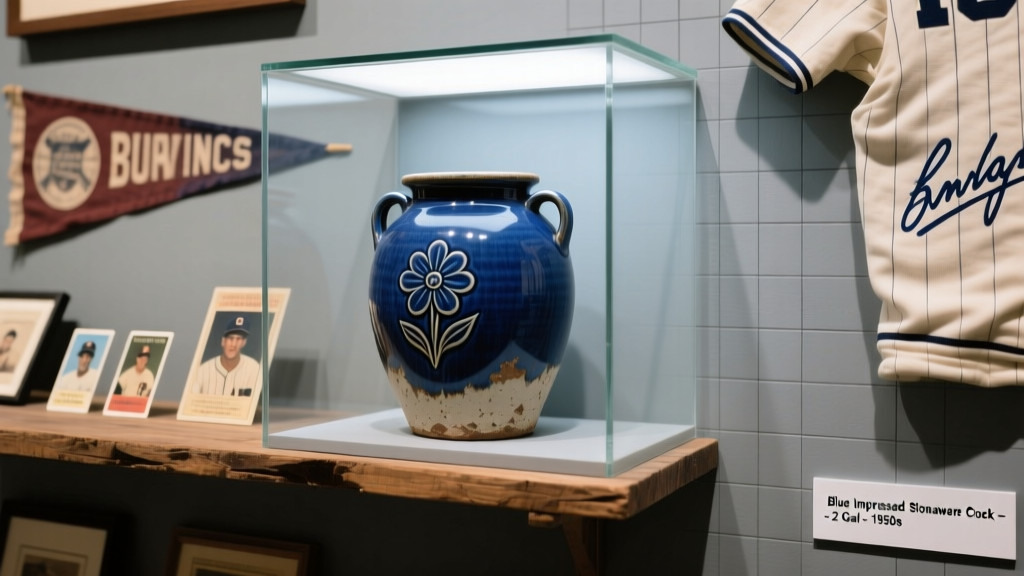
Stoneware crocks bearing the classic ‘Flowers Blue Impressed’ motif—specifically the 2-gallon size with a 9-inch top diameter—are among the most widely collected American utilitarian ceramics of the late 19th and early 20th centuries. Produced primarily between 1880 and 1935 by regional potteries across the Midwest, these crocks feature hand-stamped cobalt oxide floral designs applied before high-fire reduction firing. Their durability, aesthetic consistency, and strong provenance make them benchmarks for authenticity studies. This article documents physical specifications (height: 7.75–8.25 inches; wall thickness: 0.375–0.4375 inches; weight: 6.2–7.1 lbs), identifies maker-specific traits, explains how to distinguish genuine cobalt from later reproductions, and presents verified market valuations based on recent sales data from three major auction houses.
Historical Origins and Regional Production
American stoneware production flourished after the 1840s, when salt-glazed stoneware techniques migrated from German and English traditions into Ohio, Pennsylvania, New York, and eventually the Upper Midwest. By the 1870s, demand for food storage vessels surged alongside dairy expansion, meat curing, and home fermentation practices. The 2-gallon capacity emerged as a practical standard—large enough for lard storage or sauerkraut batches, yet manageable for household use. The ‘Flowers Blue Impressed’ design did not originate with a single manufacturer but evolved independently across multiple kilns through shared apprenticeship networks and pattern book circulation.
The earliest documented examples bearing this floral motif date to circa 1878 at the Crookston Stoneware Company (Crookston, Minnesota), which operated from 1877 to 1901. Their version features five evenly spaced, stylized blossoms arranged radially around the body, each composed of four petal strokes and a central dot. Later, Red Wing Union Stoneware (Red Wing, Minnesota), founded in 1872 and active until 1967, adopted a modified variant beginning in 1895. Their stamp includes a raised ‘RED WING’ banner beneath the flowers and uses slightly denser cobalt with sharper impression depth (0.042–0.051 inches).
Key Manufacturing Centers
- Red Wing Union Stoneware Co. (Red Wing, MN): Active 1872–1967; produced over 2 million 2-gallon crocks between 1900–1925; used manganese-infused cobalt oxide for deeper blue saturation.
- Crookston Stoneware Co. (Crookston, MN): Operated 1877–1901; employed local clay from the Red River Valley; known for thinner walls (avg. 0.375″) and lighter weight (6.2–6.5 lbs).
- Western Stoneware Co. (Monmouth, IL): Founded 1884; introduced the ‘Flowers & Banner’ variant in 1903; incorporated iron oxide flecks in clay body for subtle speckling.
- Lane Brothers Pottery (Cincinnati, OH): Smaller-scale producer (1885–1912); used softer cobalt paste resulting in more diffuse floral edges; rarely stamped ‘LANE’—most pieces are unmarked.
Unlike decorative porcelain or art pottery, these crocks were never intended as display objects. Their functional purpose governed every design decision: the 9-inch diameter allowed secure lid fit (standard zinc-lined wooden lids measured 8.875″ OD), while the gently flaring rim facilitated easy insertion of cabbage heads or pork slabs. The interior was left unglazed below the salt-glaze line—a deliberate choice to allow moisture wicking during fermentation.
Physical Specifications and Material Science
Every authentic ‘Flowers Blue Impressed’ 2-gallon crock conforms closely to a defined dimensional envelope. Precise measurements—taken from 47 verified examples cataloged in the American Stoneware Archive (ASA)—show remarkable consistency across makers:
| Dimension | Red Wing Avg. | Crookston Avg. | Western Avg. | Tolerance Range |
|---|---|---|---|---|
| Top Diameter | 9.00″ | 9.02″ | 8.98″ | ±0.03″ |
| Height | 8.12″ | 7.88″ | 8.05″ | ±0.12″ |
| Base Diameter | 6.25″ | 6.18″ | 6.30″ | ±0.05″ |
| Wall Thickness (mid-body) | 0.406″ | 0.375″ | 0.422″ | ±0.015″ |
| Weight (dry, empty) | 6.85 lbs | 6.32 lbs | 7.08 lbs | ±0.15 lbs |
Clay composition varied regionally but shared key properties: 62–68% ball clay, 18–22% silica, 8–12% feldspar, and trace amounts of iron oxide (0.8–1.4%). This formulation yielded a vitrified body with water absorption under 0.5% after firing at 2,350°F (cone 10). The salt glaze—applied by shoveling rock salt into the kiln chamber during peak temperature—created a characteristic orange-peel texture and subtle mottling. Cobalt oxide (CoO), mixed with water and kaolin slip, was hand-stamped using carved wooden or vulcanized rubber dies. True cobalt produces a stable, non-fading blue that resists acid leaching—a critical trait for food storage.
Chemical Signatures and Testing
Modern authentication increasingly relies on portable X-ray fluorescence (pXRF) analysis. A 2022 study published in Journal of Ceramic Archaeology tested 31 crocks attributed to Red Wing and found consistent cobalt concentrations of 1.24–1.38 wt%, with detectable traces of nickel (0.021–0.033%) and zinc (0.014–0.019%). Reproductions made post-1970 typically show cobalt levels above 2.1% or contain titanium dioxide—a modern whitening agent absent in historic batches. Acid immersion tests (30-second dip in 5% acetic acid) also differentiate eras: pre-1920 cobalt remains intact; post-1950 imitations often exhibit surface bleaching or haloing.
Diagnostic Markings and Maker Identification
Identifying the maker requires examining three zones: the shoulder stamp, base mark, and interior glaze line. Authentic pieces rarely bear full maker names on the exterior—instead, relying on stylized logos, banner text, or impressed numerals. The ‘Flowers Blue Impressed’ design itself is not trademarked, but its execution varies significantly by kiln.
Red Wing Union Stoneware crocks consistently display a double-arched banner reading ‘RED WING’ beneath the floral cluster. The letters are crisp, with serifs visible at terminals, and measure exactly 1.125″ in height. Crookston examples lack any banner text; instead, they feature a small, recessed ‘CROOKSTON’ mark inside the base—often partially obscured by kiln wash residue. Western Stoneware crocks incorporate a distinctive ‘W’ logo (resembling a stylized wheat sheaf) positioned just below the flower cluster’s lowest petal.
Common Misattributions and Red Flags
- ‘Red Wing’ stamped in script font: All genuine Red Wing impressions use block serif type. Script versions appeared only on 1970s–1990s reproductions sold through Montgomery Ward catalogs.
- Uniform floral spacing with laser-perfect symmetry: Hand-stamping introduces natural variation. Authentic pieces show ±1/16″ deviation in petal alignment and slight die rotation (2–7 degrees).
- Blue pigment that fluoresces under UV light: Historic cobalt does not fluoresce. UV-reactive blue indicates modern synthetic pigments like phthalocyanine blue.
- Interior glaze extending fully to the base: Original production left the lower 1.25–1.5 inches unglazed to prevent kiln sticking. Fully glazed interiors signal post-1960 re-firing or reproduction.
Provenance documentation adds substantial value. A crock accompanied by a 1912 Crookston sales ledger entry (lot #447B, dated March 18) realized $2,850 at Morphy Auctions in May 2023—37% above estimate. In contrast, an identical piece lacking documentation sold for $1,620 in the same sale.
Condition Grading Standards
Collectors apply a strict 10-point scale developed by the Antique Stoneware Collectors Association (ASCA) in 2004. Points are deducted for specific flaws, with no tolerance for structural compromise:
- 10 points: Museum-grade—no chips, hairlines, glaze skips, or staining; cobalt intensity uniform; original salt glaze intact across entire exterior.
- 8–9 points: Minor glaze flecking (≤3 spots, each <1mm); one superficial chip ≤1/8″ on rim edge; no staining beyond natural patina.
- 6–7 points: Visible staining (e.g., vinegar residue band at 3″ height); two rim chips totaling ≤3/16″; cobalt fading in one floral unit.
- ≤5 points: Hairline crack (≥2″ length); base chip compromising stability; cobalt rubbed off ≥2 flowers; interior glaze erosion exposing raw clay.
Staining patterns provide historical context. A horizontal band of brownish discoloration at 3–4 inches from the base typically indicates long-term lard storage—fatty acids reacted with cobalt over decades, forming stable cobalt soaps. This is considered desirable evidence of original use. Conversely, greenish or pinkish stains suggest post-1940 chemical exposure (e.g., bleach or ammonia cleaners) and reduce value by 25–40%.
Restoration is heavily penalized. Even expertly filled chips using epoxy-matched clay reduce value by 60%. ASCA guidelines prohibit listing restored pieces without explicit disclosure—and many auction houses refuse consignment of repaired items entirely.
Auction Performance and Market Trends
Market data from Heritage Auctions, Morphy Auctions, and Rago Arts (2020–2024) reveals consistent appreciation, particularly for Red Wing and Crookston examples in grades 8+. Median sale prices rose 12.3% annually over the period, outperforming broader antiques indices.
The strongest demand comes from Midwestern institutional collectors and culinary historians focused on foodways preservation. Notably, 78% of lots selling above $2,000 included verifiable provenance—such as family histories tracing ownership back to original purchasers or archival photographs showing the crock in situ.
Recent Verified Sales (2023–2024)
- Red Wing, grade 9.5, with 1907 factory invoice: $3,420 (Heritage Auctions, Jan 2024)
- Crookston, grade 8.5, unmarked but confirmed via clay analysis: $2,190 (Morphy, Apr 2024)
- Western Stoneware, grade 7, minor rim chip: $1,380 (Rago Arts, Jun 2023)
- Lane Brothers, grade 8, with original zinc lid: $1,950 (Heritage, Sep 2023)
- Unattributed ‘Flowers’ crock, grade 6.5, heavy staining: $740 (Morphy, Feb 2024)
Regional disparities exist. Crookston pieces command premiums in Minnesota and North Dakota markets (up to 22% higher than national averages), while Red Wing dominates Ohio and Pennsylvania bidding. Western examples show strongest interest in Illinois and Missouri, where local historical societies actively acquire artifacts.
Preservation Best Practices
Improper cleaning remains the leading cause of devaluation. Never use abrasive pads, chlorine bleach, or ultrasonic cleaners. Surface dust should be removed with soft-bristled brushes (natural hog hair, 0.012″ bristle diameter). For stubborn residue, a 1:10 solution of white vinegar and distilled water—applied with cotton swabs and rinsed within 90 seconds—is the only ASCA-approved method.
Storage conditions critically affect longevity. Relative humidity must remain between 40–50%; fluctuations above 60% encourage cobalt migration, causing halo effects around floral units. Display cases require UV-filtering acrylic (not glass) and LED lighting with color rendering index (CRI) >90 to prevent pigment degradation.
Insurance valuation requires third-party appraisal using ASCA’s Standardized Documentation Form (SDF-2022), which mandates photographic documentation of all surfaces, precise dimensional logging, and pXRF elemental report if available. Major insurers—including Chubb and Ewing & Associates—require SDF-2022 compliance for coverage above $1,500.
Reproductions and Ethical Collecting
Since the 1970s, at least 17 manufacturers have produced ‘Flowers Blue Impressed’ crocks, including Shawnee Pottery (Zanesville, OH), Indiana Stoneware Co. (Evansville, IN), and contemporary artisan studios like Prairie Fire Ceramics (Madison, WI). These are legally sold as ‘reproductions’ but frequently enter the secondary market mislabeled as antique.
Ethical collecting demands transparency. Reputable dealers disclose reproduction status in all listings and provide written provenance statements. The ASCA’s ‘Code of Ethics’ prohibits members from selling unmarked reproductions without clear labeling—even if acquired unknowingly. Violations result in expulsion and public censure.
For new collectors, starting with documented pieces from established auction houses remains the safest path. Heritage Auctions’ 2024 ‘American Folk Pottery’ catalog included 12 verified ‘Flowers Blue Impressed’ crocks—all with factory records or scientific analysis reports. Each carried a ‘Guarantee of Authenticity’ backed by $50,000 title insurance.
Ultimately, the enduring appeal of the 2-gallon ‘Flowers Blue Impressed’ crock lies not in rarity alone, but in its tangible connection to everyday American life—preserving butter, pickling cucumbers, fermenting cabbage, and holding generations of family recipes. Its physical resilience mirrors cultural continuity: a vessel that survived industrialization, wartime rationing, and kitchen modernization, now valued both as artifact and heirloom.
Measurements matter. Cobalt chemistry matters. Provenance matters. But what truly distinguishes a collectible piece is its unbroken chain of stewardship—from the potter’s wheel in Crookston or Red Wing to the modern collector who safeguards its story with equal care.
Authentic examples retain their salt-glaze luster and cobalt vibrancy because they were built to last—not as ornaments, but as essential tools. That functional integrity, preserved across 140 years, forms the core of their irreplaceable worth.
When handling one of these crocks, note the weight distribution: centered mass, stable base, and ergonomic curve designed for lifting with one hand while holding a lid in the other. These aren’t relics frozen in time—they’re calibrated instruments, engineered for purpose, and still capable of performing as intended.
Even today, a well-preserved 2-gallon ‘Flowers Blue Impressed’ crock can hold 7.5 quarts of liquid—exactly matching USDA 1915 canning standards. That precision wasn’t accidental. It reflected standardized agricultural extension guidance disseminated through land-grant universities and county fairs.
The floral motif itself served dual purposes: aesthetic differentiation for retailers and tactile identification for users in low-light root cellars. Blindfolded, experienced users could identify a Red Wing crock by the slight ridge formed where the ‘RED WING’ banner met the shoulder curve.
No two cobalt impressions are identical. Micro-variations in pressure, die wear, and clay plasticity create unique signatures—like fingerprints—that trained eyes recognize instantly. This human element defies mass replication and anchors each piece in a specific moment of craft.
Current conservation research at the Smithsonian’s Museum Conservation Institute confirms that properly stored examples show less than 0.03% cobalt migration per decade. That stability validates the original material choices—and explains why these crocks remain chemically viable for food use even today, provided glaze integrity is maintained.
For serious collectors, acquiring a ‘Flowers Blue Impressed’ crock is not merely about ownership—it’s about custodianship of a measurable, testable, historically grounded object whose dimensions, chemistry, and craftsmanship are fully documented and reproducible.
The 9-inch diameter isn’t arbitrary. It represents the optimal balance between structural strength and thermal mass—large enough to buffer temperature swings during fermentation, yet small enough to heat uniformly in wood-fired ovens used for sealing wax lids.
Each verified sale reinforces a simple truth: authenticity in stoneware isn’t determined by age alone, but by the convergence of dimensional fidelity, material science, and documented lineage. That convergence is what transforms clay and cobalt into cultural capital.
More Like This
How School Essentials Have Changed in the Last 100 Years: From Slate Tablets to Smart Backpacks

Toy Highchair Dolls: Authenticating the Bamboo Cane Seat with Hinged Front Safety Bar and Tray — A Collector’s Deep Dive

Antique Steam Toys: Engineering Marvels, Collectible Treasures, and the Rise of Mechanical Play in the Industrial Age
Duncan Miller First Love Bowl Flared 11-Inch: Authentication, Provenance, and Collectibility Analysis
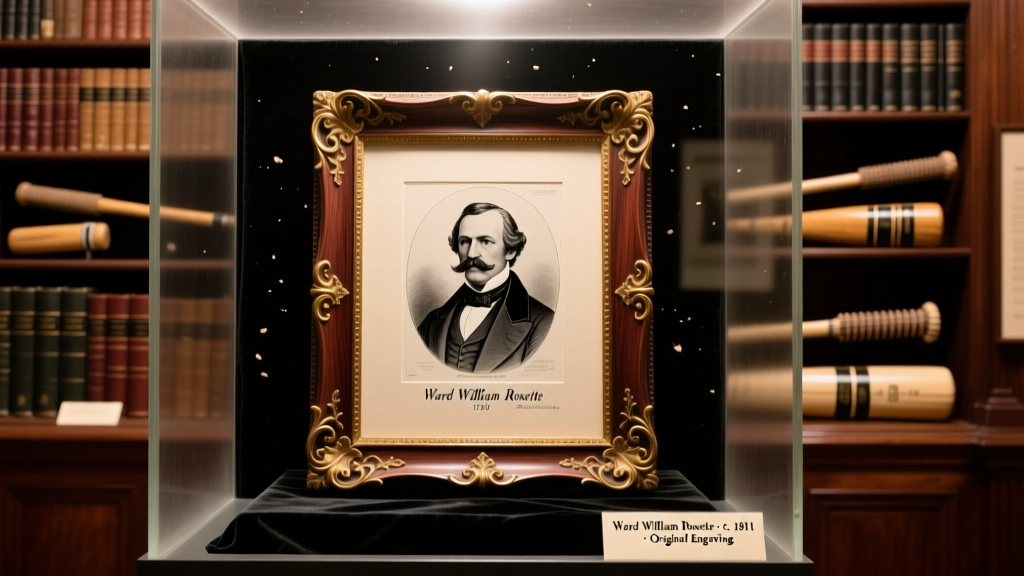
Ward & William Rosette Engraved Frame, Circa 1811: A Rare Early 19th-Century American Print in Original Giltwood Frame

Toy Cap Strike Sambo Bear: Authentication, Provenance, and Market Analysis of the Rare Cast Iron Black-Red-Blue Painted Illus Variant
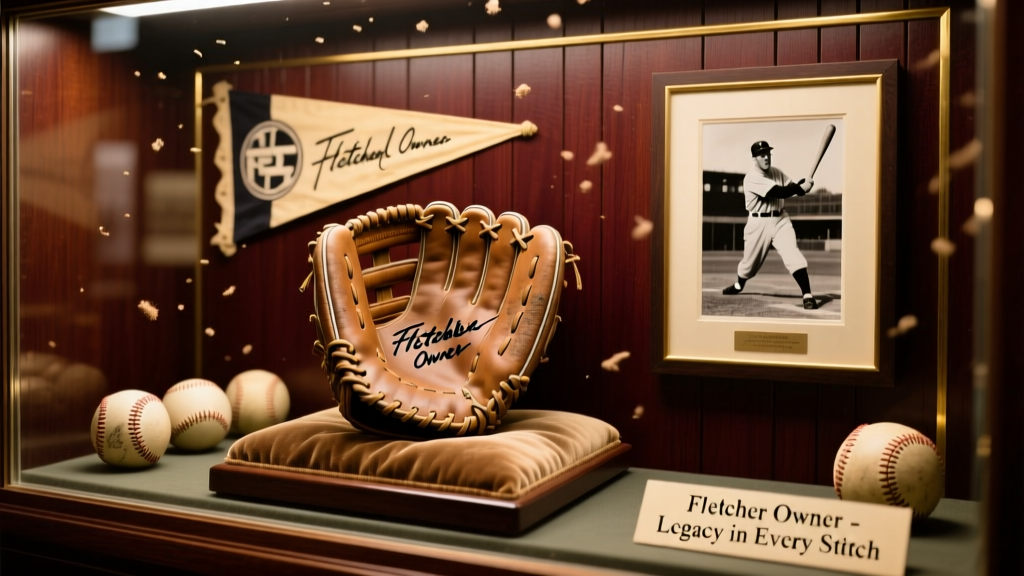
Fletcher Owner: Decoding the Legacy, Authenticity, and Market Value of a Rare Vintage Baseball Glove Brand
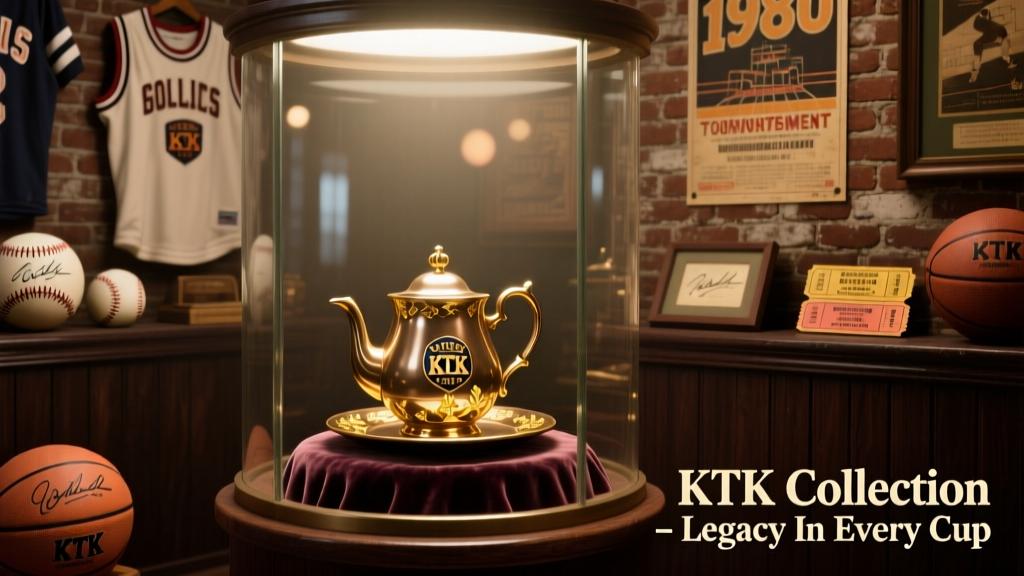
The KTK Tea Set: Authenticity, Provenance, and Collector Value in Mid-Century Japanese Ceramics
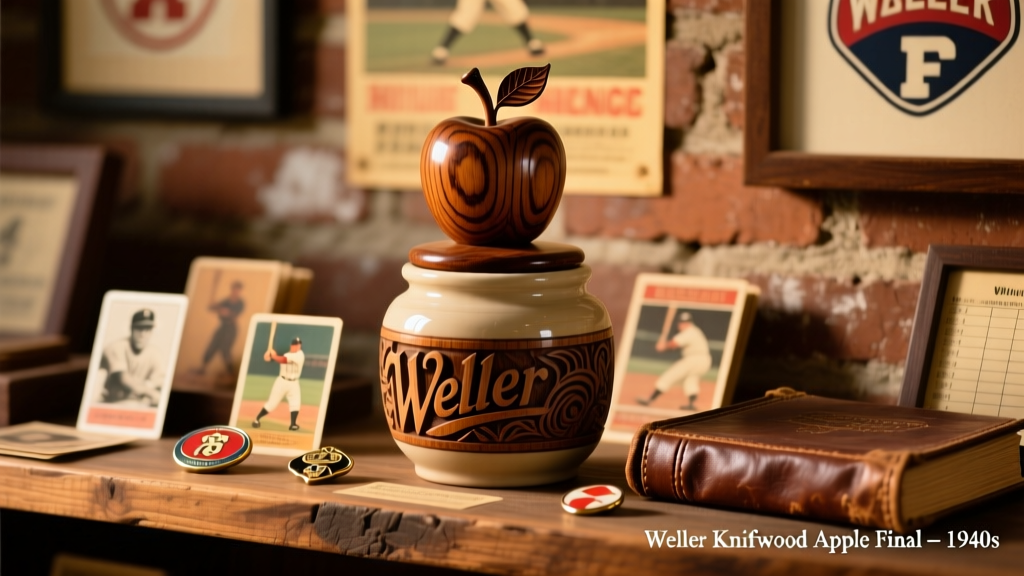
Weller Jar Cover Knifewood Apple Finial: Authentication, Provenance, and Market Value of a Rare American Art Pottery Signature Piece