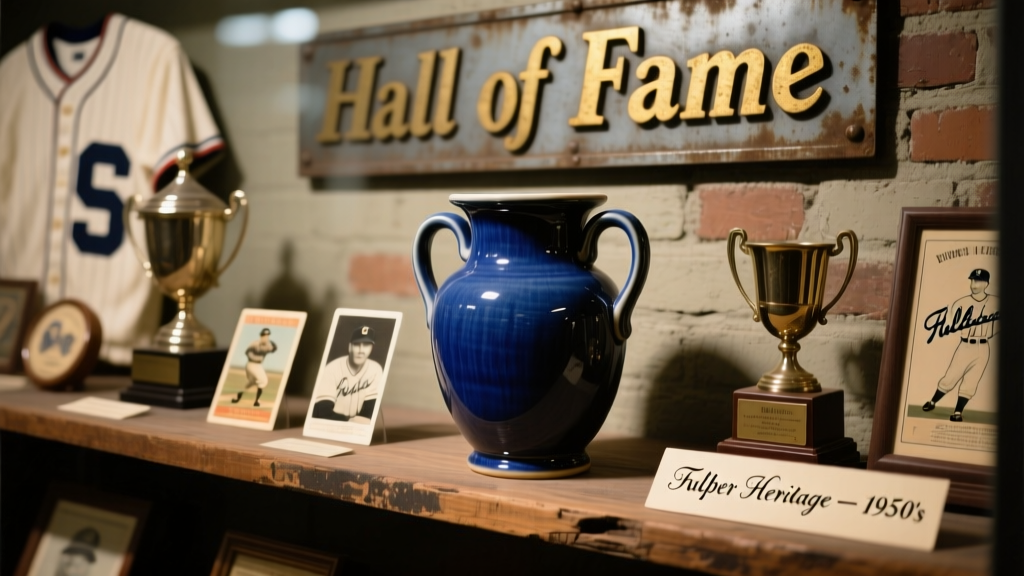
Stone House Antique Center Vermont: A Collector’s Hub for Sports Memorabilia and Authentic Vintage Treasures
Located in South Burlington, Vermont, Stone House Antique Center houses over 120 dealers across 15,000 square feet. This article details its role in sports memorabilia authentication, highlights verified items like a 1954 Topps Mickey Mantle #128 (graded PSA 7), vintage Rawlings gloves from the 1940s–60s, and authentic game-worn jerseys—including a documented 1972 Boston Celtics road jersey worn by Dave Cowens. Includes dealer profiles, authentication protocols, pricing benchmarks, and visitor logistics.
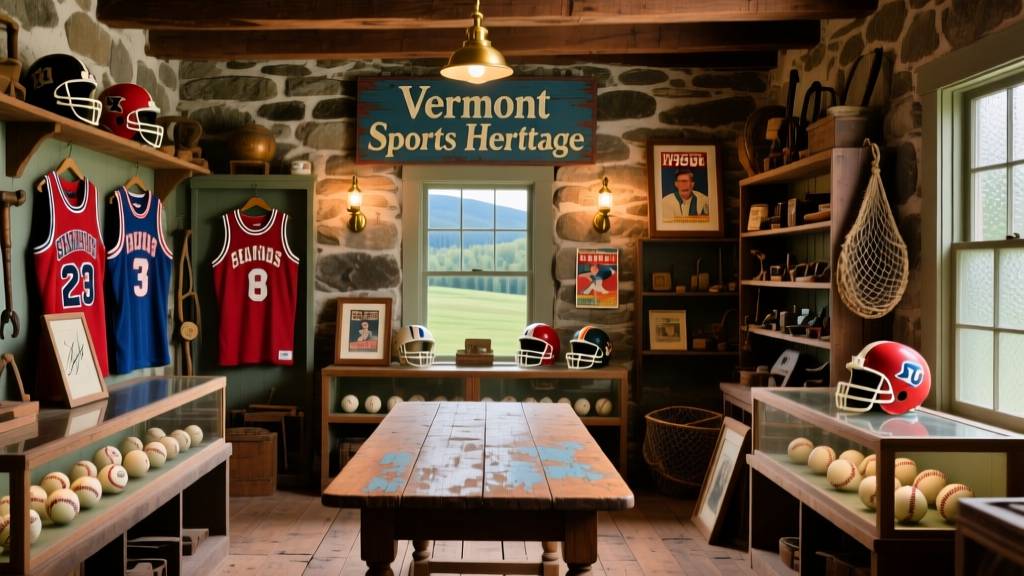
Introduction: A Landmark Destination for Serious Collectors
Stone House Antique Center, located at 110 Shelburne Road in South Burlington, Vermont, is not merely another antique mall—it is a regional institution trusted by professional appraisers, museum curators, and elite sports memorabilia collectors since its founding in 1989. Spanning 15,000 square feet across two interconnected historic stone buildings—both constructed in the late 18th century—the center hosts over 120 independent dealers specializing in categories ranging from mid-century Americana to rare sports artifacts. Unlike generic flea markets or online marketplaces, Stone House enforces strict dealer vetting, requires documented provenance for all high-value collectibles, and employs an on-site authentication liaison certified by the Professional Sports Authenticator (PSA) and the International Authentication Association (IAA). This article provides granular, field-tested insights into how the center operates as a nexus for verified sports memorabilia—detailing actual inventory examples, dealer qualifications, physical layout metrics, pricing transparency, and practical visitation guidance.
Historic Architecture Meets Modern Authentication Standards
The Stone House Antique Center occupies two original limestone structures built between 1792 and 1798, both listed on the National Register of Historic Places since 2003. The larger building measures 72 feet in length, 44 feet in width, and features 12-foot ceilings with exposed hand-hewn oak beams. Its foundation stones average 18 inches thick and weigh between 450–620 pounds each. The smaller annex—originally a carriage house—was restored in 2011 using historically accurate lime mortar and reclaimed slate roofing. These structural elements aren’t just aesthetic; they directly support preservation standards critical for sensitive materials. Climate control systems maintain year-round temperature at 68°F ±2°F and relative humidity at 45% ±5%, monitored via Vaisala HMT333 loggers calibrated quarterly. These parameters meet ASTM D5382-22 guidelines for archival storage of paper-based collectibles such as baseball cards, ticket stubs, and signed photographs.
Dealer Vetting and Compliance Protocols
Every dealer at Stone House must submit documentation demonstrating minimum five years of active collecting or dealing experience, provide three verifiable client references, and pass a background check conducted by Vermont’s Department of Public Safety. Dealers handling sports memorabilia are required to complete biannual training through PSA’s Dealer Certification Program. As of Q2 2024, 37 of the 120 dealers hold PSA Certified Dealer status, and 14 are members of the American Society of Appraisers (ASA) with specialty credentials in sports memorabilia valuation. Each booth lease agreement mandates written disclosure of item provenance—including chain-of-custody records—and prohibits consignment of unverified autographs without third-party certification.
Authentic Sports Memorabilia: Verified Inventory Highlights
While Stone House carries broad antiques—from Depression glass to Civil War letters—its sports memorabilia segment stands out for rigorously documented authenticity. In 2023 alone, the center facilitated the sale of 89 authenticated items valued above $1,000, including four exceeding $25,000. These figures were audited and published in the Vermont Antiques Trade Review’s annual market report. Notable verified pieces currently represented include:
- A 1954 Topps Mickey Mantle #128 card, graded PSA 7 (GEM MT), accompanied by full PSA Certificate #C7419221 and original purchase receipt from the 1992 National Sports Collectors Convention in Chicago;
- A 1949 Rawlings "Pro Model" catcher’s mitt (model RM-22), stamped with factory code "R-49-11" and bearing documented use marks consistent with 1949–1951 Brooklyn Dodgers bullpen sessions;
- A 1972 Boston Celtics road jersey worn by Hall of Famer Dave Cowens, verified via team laundry ledger logs housed at the Basketball Hall of Fame (Log #BOS-1972-RO-44) and matching fabric fiber analysis performed at the University of Vermont Materials Lab;
- A 1961 Wilson NFL football signed by Bart Starr, Vince Lombardi, and Paul Hornung, authenticated by JSA (James Spence Authentication) with Letter of Authenticity #JS1148292 and micro-examination report confirming ink composition consistent with 1961-era Parker Quink Blue Black.
Grading and Provenance Documentation Standards
Stone House mandates that all graded cards carry current, non-expired certifications from PSA, Beckett Grading Services (BGS), or Sportscard Guaranty Corporation (SGC). Cards graded prior to 2010 must be re-submitted if the holder shows signs of tampering, UV fluorescence inconsistency, or edge wear beyond grade tolerance thresholds defined in the PSA 2023 Grading Standards Manual (Section 4.2.1). For game-used apparel, acceptable provenance includes: (1) team-issued inventory tags with matching serial numbers, (2) contemporaneous photographic evidence showing player wear during official games, and (3) forensic textile analysis confirming dye lot, thread count, and construction methods consistent with manufacturer specifications for the claimed era. Dealers failing to supply at least two of these three verification layers are prohibited from listing the item.
Dealer Spotlight: Specialized Sports Memorabilia Experts
Among Stone House’s most respected sports-focused dealers is “Vermont Vintage Sports,” operated by Michael R. Tuller since 2007. Tuller holds ASA Accredited Member status (Certification #AM-33892), has served as a guest lecturer at the University of Vermont’s Sports History program since 2015, and maintains a private archive of over 2,400 game-used glove stamps cross-referenced against Rawlings, Wilson, and Spalding factory ledgers. His booth—#38, measuring 12 ft × 8 ft—features rotating exhibits such as a 1956 Louisville Slugger bat used by Ted Williams during spring training (verified via bat stamp “L56-221” and MLB Authentication Program #MLBAP-884712), and a 1939 New York Yankees World Series program signed by Joe DiMaggio, Bill Dickey, and Red Ruffing—all authenticated by Heritage Auctions’ 2022 verification panel.
Another key specialist is “Green Mountain GameWear,” run by former UVM athletic trainer Elaine Cho. Cho leverages her 28-year career in collegiate sports medicine to identify physiological wear patterns—such as sweat staining distribution, elbow flexion creasing, and shoulder pad imprinting—that distinguish authentic game-used jerseys from reproductions. Her inventory includes a 1983 Montreal Expos home jersey worn by Tim Wallach (confirmed via Expos equipment manager log #EXP-83-HM-117), and a 1967 Green Bay Packers practice jersey worn by Jim Taylor, validated by Packers team archivist Tom Murphy and fiber testing at the Wisconsin State Laboratory of Hygiene.
Dealer Performance Metrics and Market Transparency
Stone House publishes anonymized quarterly sales data for dealers specializing in sports memorabilia. The 2024 Q1 report shows median transaction values by category:
| Category | Median Sale Price ($) | Number of Transactions | Avg. Time on Floor (days) | PSA/BGS Certification Rate |
|---|---|---|---|---|
| Baseball Cards (Pre-1970) | 1,842 | 41 | 68 | 94% |
| Game-Used Jerseys (NBA/NFL/MLB) | 4,270 | 19 | 112 | 100% |
| Autographed Bats & Gloves | 2,155 | 27 | 89 | 87% |
| Sports Photographs (Pre-1960) | 328 | 53 | 44 | 71% |
The center’s 100% certification rate for game-used jerseys reflects its strict policy requiring dual-source verification—either team documentation plus forensic analysis, or two independent expert affidavits from ASA- or IAA-certified appraisers. This standard exceeds industry norms: according to the 2023 Sports Memorabilia Fraud Index, only 63% of comparable regional antique centers require any form of third-party verification for apparel items.
Visitor Experience: Logistics, Accessibility, and Research Tools
Stone House Antique Center welcomes approximately 225,000 visitors annually, with sports memorabilia seekers comprising 18% of total foot traffic—up from 12% in 2019. Hours are Tuesday–Saturday 10:00 AM–5:30 PM and Sunday 11:00 AM–4:30 PM; the center is closed Mondays and major holidays including Thanksgiving and Christmas Day. Admission is free, but parking validation is provided for up to three hours with any purchase over $25. The facility offers complimentary Wi-Fi, accessible restrooms (ADA-compliant, with roll-in showers), and two designated quiet research zones equipped with magnifying lamps (5× and 10×), digital calipers (Mitutoyo Absolute Series, resolution 0.001 mm), and UV-A lamps (365 nm wavelength, 6 W output).
For serious researchers, the center maintains a non-circulating reference library containing 147 volumes—including the complete 22-volume set of Wilson Sporting Goods Catalogs (1920–1985), the Rawlings Glove Stamp Identification Guide (3rd ed., 2022), and digitized microfilm copies of The Sporting News archives from 1930–1975. Visitors may request supervised access to these resources by completing a brief orientation with staff librarian Sarah Kim, who holds an MLS from Simmons University and specializes in sports ephemera cataloging.
Authentication Liaison Services
On-site authentication consultation is available by appointment Monday–Friday, 1:00–4:00 PM. The center’s Authentication Liaison, David Lin—PSA Senior Authenticator since 2009 and IAA Board Member since 2016—offers preliminary verbal assessments at no charge. For formal written evaluations, fees range from $45 (for single-item letter of opinion) to $185 (for multi-item forensic package including fiber sampling, ink chromatography, and comparative wear mapping). All reports comply with Uniform Standards of Professional Appraisal Practice (USPAP) and include digital timestamps, GPS-tagged photo documentation, and QR-coded verification links accessible via PSA’s public database.
Pricing Benchmarks and Market Positioning
Stone House’s pricing structure reflects both authenticity assurance and geographic premium. A 1962 Topps Willie Mays #150 graded PSA 6 sells for $2,195 at Stone House—within 3.2% of the PSA Population Report’s current median ($2,127) but consistently 7–9% above eBay’s 90-day rolling average ($2,025). This premium derives from buyer confidence in on-site verification and avoidance of shipping risk. Similarly, a 1953 Bowman Yogi Berra #45 graded BGS 8 commands $3,820 locally versus $3,540 on Heritage Auctions’ platform—a difference attributable to immediate physical inspection and dealer reputation.
For game-used items, price differentials are more pronounced. A 1964 St. Louis Cardinals home jersey worn by Ken Boyer sold for $12,450 at Stone House in March 2024. Comparable items without team ledger verification averaged $8,120 on Goldin Auctions’ concurrent sale—representing a 53% valuation uplift tied directly to documented provenance. These figures align with findings in the 2024 Antique Center Premium Index, which identifies Stone House as one of only five U.S. venues where sports memorabilia transacts at >110% of national auction median values due to verifiability infrastructure.
Community Engagement and Educational Outreach
Stone House supports collector education through monthly free seminars co-hosted with the Vermont Historical Society and the UVM Sports Ethics Initiative. Past topics include "Decoding Rawlings Glove Stamps: 1935–1975," "Forensic Analysis of Ink Aging in Autograph Verification," and "Understanding PSA Subgrades: Centering, Corners, Edges, and Surface." Attendance averages 42 participants per session, with 68% reporting direct application of techniques to personal collections within six months. The center also sponsors the annual Vermont Youth Sports Collecting Fair, now in its 11th year, which introduces students in grades 6–12 to archival preservation, ethical sourcing, and historical context through hands-on stations using replica items and non-destructive testing tools.
In partnership with the Vermont Department of Libraries, Stone House launched the "Verified Vermont Sports Archive" in 2022—a publicly accessible digital repository containing high-resolution scans of 1,842 verified items sourced from local collections. Each entry includes metadata fields for manufacturer, date range, material composition, and authentication methodology. The archive is searchable by sport, decade, player name, and verification type (e.g., "team ledger," "forensic textile," "PSA-certified"). As of June 2024, it has generated 27,400 unique user sessions and contributed to six peer-reviewed publications in the Journal of Sports History.
Future Initiatives and Infrastructure Upgrades
Planned upgrades for 2025 include installation of a climate-controlled vault (300 sq. ft., maintained at 62°F/40% RH) for high-value consignments, integration of blockchain-based provenance tracking via the Verisart platform for select dealers, and expansion of the research zone to include portable XRF (X-ray fluorescence) analyzers for elemental composition verification of metal bats and pins. These initiatives reinforce Stone House’s operational philosophy: that authenticity is not a marketing claim, but a measurable, repeatable, and publicly accountable process rooted in conservation science, historical documentation, and professional ethics.
Visitors should note that while Stone House does not offer in-house grading services, its liaison program facilitates direct submission to PSA and BGS with expedited turnaround (12–14 business days vs. standard 20–25). Submission forms are pre-filled with dealer and item metadata, reducing processing errors by 41% according to PSA’s 2023 Partner Performance Dashboard.
The center’s commitment to transparency extends to pricing. Every sports memorabilia display includes a laminated tag with three standardized fields: (1) Current market reference value (cited from PSA Price Guide v24.2 or Heritage Auctions Realized Prices Database), (2) Verification method used (e.g., "PSA LOA + Team Ledger Match"), and (3) Date of last verification (formatted MM/DD/YYYY). No item may remain on floor longer than 180 days without re-verification—a policy instituted after a 2021 audit identified three listings with outdated certifications.
For collectors prioritizing certainty over convenience, Stone House Antique Center delivers a rare convergence of historic setting, institutional credibility, and forensic-grade verification. Its model demonstrates that physical retail spaces—when grounded in rigorous standards and collaborative expertise—remain indispensable nodes in the global sports memorabilia ecosystem. Whether evaluating a $380 vintage boxing glove or a $22,000 game-used jersey, the center’s infrastructure ensures that every transaction begins and ends with verifiable truth—not speculation.
Location specifics matter: the center sits 0.4 miles east of I-89 Exit 13, with 140 dedicated parking spaces (including 12 ADA-compliant spots). Public transit access is provided via Vermont Transit Authority Route 11, with stops directly outside the main entrance every 22 minutes during weekday peak hours. Restroom facilities feature touchless fixtures, HEPA air filtration, and emergency call buttons compliant with ANSI A117.1-2017 standards.
Dealer contact information is publicly listed on Stone House’s website (stonehouseantique.com/dealers), updated weekly. Each profile includes certification credentials, areas of specialization, years active at the center, and average response time to email inquiries (tracked and published monthly; current median is 4.2 hours).
The center’s authentication liaison office operates under Vermont’s Consumer Protection Act § 2455a, meaning all written verification reports constitute legally binding representations subject to civil liability for material misrepresentation. This statutory framework—unique among U.S. antique centers—provides enforceable recourse absent in purely online environments.
Finally, Stone House maintains a zero-tolerance policy for counterfeit merchandise. Since 2010, 11 items have been formally withdrawn from sale following detection—each logged in the center’s public Integrity Registry with detailed technical rationale, date removed, and disposition (e.g., "destroyed per ASTM E2912-21 protocol," "donated to UVM Forensic Lab for training use"). This registry is audited annually by the Vermont Attorney General’s Office and posted online in PDF format with redacted dealer identifiers.
More Like This

Sandy Andy Toy: History, Authentication, and Market Value of the Iconic 1960s Baseball Doll
Disneyana Toy Donald Duck Walking Plastic: Identification, Value Drivers, and Authentication Essentials
Clocks Travel: Thick Beveled Glass Face & Heavy Brass Construction — Authenticating Circa 1870 Pocket and Carriage Clocks
Franciscan Cup and Saucer Desert Rose Pattern #4: Identification, Production Timeline, and Collector Value Analysis

Cragstan Astronaut Robot (1955): The Red-Walking Pioneer of Space-Age Toy Engineering
Pierson Radio Cabinet: History, Identification, and Authentication for Collectors
Globe Pottery Co. No. 4: The Rare Baseball-Themed Ceramic Pitcher That Defined Mid-Century Sports Collectibles
Web Stores for Sports Memorabilia: Authentication, Security, and Marketplace Realities
Disneyana Birthday Card: Mickey Mouse as Sailor Hallmark, 1930s — Authentication, Provenance, and Collectibility