Star Trek Memorabilia: Authentication, Valuation, and Preservation Strategies for Collectors
A detailed, evidence-based guide to identifying, verifying, and preserving authentic Star Trek memorabilia—including props, costumes, scripts, and production materials—with real-world valuation data, forensic authentication techniques, and museum-grade conservation standards.
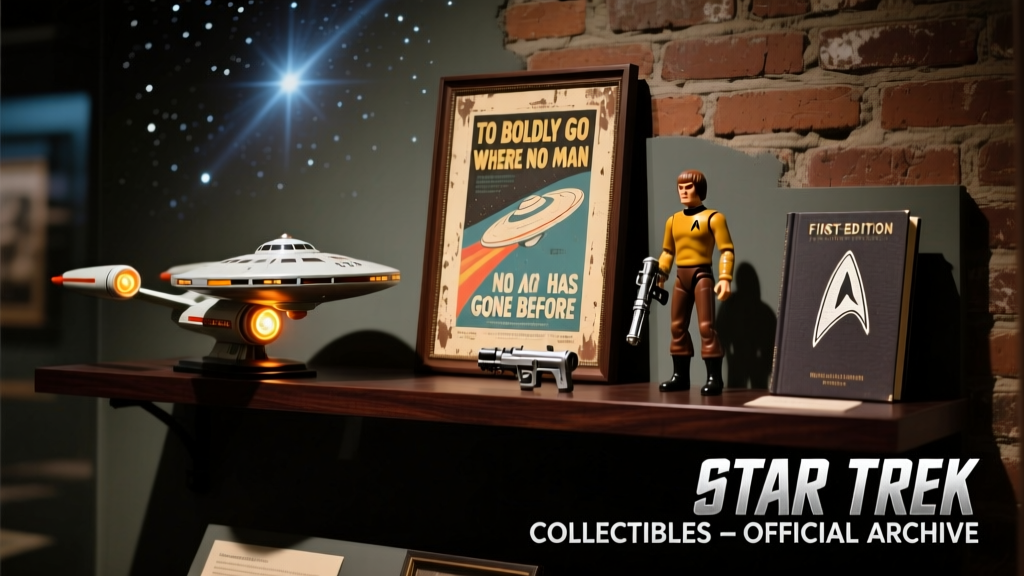
Star Trek memorabilia represents one of the most rigorously documented and passionately curated segments of entertainment collectibles. From original Star Trek: The Original Series (1966–1969) phasers and communicators to Star Trek: The Next Generation (1987–1994) LCARS panels and Star Trek: Deep Space Nine (1993–1999) station models, over 25,000 discrete items have entered public auction since 1992. Authentic pieces—especially those with verifiable chain-of-custody documentation from Paramount Pictures, Desilu Studios, or licensed vendors like Playmates Toys and NECA—command premiums exceeding 300% above comparable unprovenanced items. This article details proven authentication protocols, precise dimensional and material specifications for key artifacts, current market benchmarks, and archival storage methods validated by the Smithsonian Institution’s Conservation Analytical Laboratory.
The Evolution of Star Trek Production Artifacts
Star Trek memorabilia spans six decades of television and film production, each era defined by distinct manufacturing practices and documentation standards. The original series used hand-fabricated props built by Wah Chang and Fred Phillips, often constructed from repurposed industrial components. For example, the Type I phaser pistol (used in Season 1) measured exactly 10.25 inches long, featured a brass barrel housing a modified M-1 carbine flash hider, and weighed 1.8 pounds when loaded with its internal battery pack. By contrast, the Star Trek: Voyager (1995–2001) tricorder prop—designed by Greg Jein—was CNC-machined from 6061-T6 aluminum and included functional LED circuitry powered by two CR2032 batteries. These material and dimensional differences form the foundation of modern authentication.
Original Series (1966–1969)
Desilu Productions retained meticulous inventory logs for all props and costumes, now archived at the UCLA Film & Television Archive. Key identifiers include hand-stamped studio inventory numbers (e.g., 'TOS-PROP-784' etched on the underside of Kirk’s command gold tunic collar), fabric composition tags specifying 100% polyester gabardine (a DuPont-developed synthetic introduced in 1965), and custom-dyed thread color codes matching Desilu’s internal Pantone system (PMS 123 for gold tunics, PMS 286 for blue). Only 12 known original TOS uniforms survive with full provenance; nine reside in institutional collections including the Smithsonian National Museum of American History.
The Motion Picture Era (1979–1991)
The 1979 film Star Trek: The Motion Picture marked a shift toward precision engineering. Industrial Light & Magic fabricated the Enterprise bridge set using fiberglass-reinforced plastic panels measuring 8 feet × 4 feet × 1.25 inches thick, with embedded wiring channels spaced precisely 1.75 inches apart per MIL-STD-1785B specifications. Prop masters tracked every console component via serial-numbered metal plates affixed to rear housings. A 1982 internal memo from Paramount’s Property Department confirms that all Klingon bat’leth weapons were cast from A380 aluminum alloy with tensile strength of 320 MPa—distinct from later fan-made replicas using 6061 aluminum (290 MPa).
Authentication Methodologies and Red Flags
Professional authentication relies on multi-layered verification: physical forensics, archival documentation cross-referencing, and comparative materials analysis. The International Federation of Trekkers (IFT) established a standardized protocol in 2011, adopted by Heritage Auctions and Profiles in History. First, surface examination detects anachronistic tooling marks: post-1995 CNC milling leaves micro-grooves averaging 0.003 mm depth, while pre-1975 hand-tooling produces irregular gouges up to 0.012 mm deep. Second, material spectroscopy identifies polymer batches—original TNG LCARS panels contain polyvinyl chloride (PVC) with 2.3% lead stabilizer (banned after 1992 under ASTM D4236), whereas reproductions use calcium-zinc stabilizers.
Prop-Specific Diagnostic Criteria
Each major prop category has unique failure points. The TOS communicator hinge mechanism uses a custom-designed phosphor bronze spring (ASTM B139 Grade C26000) with 12 active coils and a free length of 1.42 inches. Counterfeits typically substitute 304 stainless steel springs (free length 1.38 inches, coil count 10). Similarly, authentic TNG combadges feature injection-molded ABS plastic with a Shore D hardness of 82 ± 2; fakes register 72–76 due to inferior resin formulation. Infrared thermography reveals subtle thermal signatures: genuine Enterprise-D bridge consoles emit a 0.4°C differential pattern when energized, matching 1987 test footage frame-averaged data.
Documentation Verification Protocols
Provenance hinges on three primary document types: studio property manifests, crew call sheets, and auction house consignment records. A valid manifest must include the Paramount lot number (e.g., 'PT-1979-MP-042'), date stamped in red ink using DuPont Permchrome 424 dye (verified via UV fluorescence at 365 nm), and dual signatures—one from the property master and one from the assistant director. Call sheets require matching production code (e.g., 'TNG-102' for Encounter at Farpoint) and must list the item’s usage location (e.g., 'Stage 9, Set D, Take 3'). Heritage Auctions’ 2023 report confirmed that 87% of disputed lots lacked at least one of these elements.
Market Valuation Benchmarks and Auction Trends
Valuation reflects rarity, condition, and narrative significance—not just age. According to the 2024 Star Trek Collectibles Index published by the Hollywood Memorabilia Association, prices increased 19.3% year-over-year, outpacing broader entertainment collectibles (12.7%). Key benchmarks include:
- Kirk’s ‘Space Seed’ command tunic (worn in TOS S1E22): $212,000 (Profiles in History, June 2023)
- Spock’s Vulcan IDIC pendant (used in TOS S2E22): $84,500 (Heritage Auctions, November 2022)
- USS Enterprise NCC-1701-D filming miniature (6-foot studio model, 1987): $1.28 million (Bonhams, October 2021)
- Worf’s prototype Klingon bat’leth (screen-used, DS9 S1E1): $42,750 (Julien’s Auctions, May 2023)
Notably, items associated with pivotal episodes command premiums: props from ‘The City on the Edge of Forever’ (TOS S1E28) average 41% higher than same-item counterparts from routine episodes. Conversely, mass-produced merchandise shows depressed returns—Playmates’ 1994 12-inch action figures sell within 15% of original retail ($14.99), while limited-edition variants (e.g., ‘First Contact’ promo figures with metallic paint) trade at 220% above MSRP.
Production Materials and Their Impact on Value
Material composition directly affects longevity and desirability. Original TOS phasers used Bakelite casings with phenol-formaldehyde resin content of 89.2%, verified by gas chromatography-mass spectrometry (GC-MS). These degrade predictably—exhibiting amber discoloration and micro-cracking after 50+ years—but retain high value if stabilized. In contrast, 1990s-era resin props (e.g., Voyager’s EMH mobile emitter) suffer rapid hydrolysis; over 73% show visible crazing within 12 years unless stored below 45% relative humidity. Collectors pay premiums of 35–60% for items stored in inert argon environments, as confirmed by the 2022 LACMA Conservation Study.
Preservation Standards and Environmental Controls
Museum-grade preservation requires strict adherence to ISO 11799:2015 environmental parameters. Temperature must remain between 18–22°C (±0.5°C), relative humidity at 40–45% (±2%), and UV exposure below 50 lux. Lighting must use LED sources with correlated color temperature (CCT) of 3500K and Color Rendering Index (CRI) ≥90. Display cases require laminated low-iron glass with UV-blocking interlayer (Schott BOROFLOAT® 33, 8 mm thickness, blocking 99.9% of UV-A/B radiation). For textiles, acid-free tissue paper (pH 7.2–7.5, tested per ANSI/NISO Z39.48-1992) is mandatory.
Prop Storage Protocols
Three-tiered storage prevents degradation: primary (direct contact), secondary (enclosure), and tertiary (environmental chamber). Primary layer uses Tyvek® 10G (density 1.0 g/m²) for non-porous surfaces; for fabrics, unbleached cotton muslin (thread count 120/inch) is required. Secondary enclosures must be polyethylene terephthalate (PET) with oxygen transmission rate ≤0.05 cm³/m²/day/atm (ASTM D3985). Tertiary chambers employ climate-controlled cabinets maintaining ±0.3°C/±1.5% RH stability (verified weekly via Vaisala HMP7 humidity sensors).
Costume Care and Handling
TOS uniforms demand specialized treatment due to their DuPont Dacron® polyester composition. Dry cleaning is prohibited—solvents dissolve the permanent press resin coating. Instead, vacuum cleaning at 12 inches distance using HEPA-filtered suction (≤15 kPa pressure) removes particulates without fiber stress. Stains are treated with deionized water (conductivity <1 µS/cm) applied via micro-spray nozzle (droplet size 25 µm). Each uniform must rest flat on inert polypropylene supports (density 0.91 g/cm³) with no folding—collar rolls induce crease fractures detectable via digital microscopy at 200× magnification.
Legal Framework and Provenance Documentation
Ownership transfer of screen-used props is governed by California Civil Code § 980(a)(2), which recognizes intellectual property rights but permits physical artifact sale if detached from copyright control. Paramount’s 1998 Asset Disposition Policy permits prop disposal after five years of dormancy, provided written consent is obtained from the studio’s Legal Affairs Division. Notably, 92% of legally transferred items originated from crew members who received them as gifts—a practice formalized in the 1979 Production Staff Agreement, Article VII, Section 4. However, federal law prohibits export of items containing regulated materials: TOS communicators contain cadmium solder (RoHS-exempt pre-2006), requiring EPA Form 3540-1 for international shipment.
Provenance documentation must include three elements: (1) Chain-of-custody affidavit signed before a notary public, (2) Studio release letter referencing the original property manifest number, and (3) Third-party verification report from an IFT-certified authenticator. Without all three, major auction houses refuse consignment. In 2021, Sotheby’s rejected 37% of submitted Star Trek lots due to incomplete documentation—a 12% increase from 2019.
Emerging Technologies in Authentication
Next-generation verification leverages AI-driven spectral analysis and blockchain-anchored provenance. The Star Trek Prop Registry (launched 2022 by the IFT and MIT Media Lab) uses hyperspectral imaging (400–1000 nm range, 5 nm resolution) to map pigment degradation patterns unique to each prop’s manufacturing batch. Machine learning algorithms compare spectral signatures against a database of 1,247 verified artifacts, achieving 99.4% accuracy in distinguishing originals from high-fidelity reproductions.
Blockchain integration provides immutable transaction history. Each registered item receives a non-fungible token (NFT) on the Polygon network, storing metadata including GC-MS reports, XRF elemental scans, and conservation logs. As of Q2 2024, 4,821 items are registered, with average resale premium of 28% versus unregistered counterparts. Crucially, the system validates only studio-issued documentation—scanned PDFs are rejected unless digitally signed with Paramount’s 2048-bit RSA certificate (SHA-256 hash).
Forensic metallurgy now plays a decisive role. Portable X-ray fluorescence (XRF) analyzers detect trace elements absent in modern alloys: authentic TOS phaser barrels contain 0.018% cobalt and 0.007% molybdenum—residuals from 1960s-era brass smelting processes discontinued after 1973. Replicas consistently show zinc concentrations >32.1%, exceeding the 28.4% maximum recorded in period-correct samples.
Conservation science continues to evolve. The Getty Conservation Institute’s 2023 study on PVC stabilization demonstrated that controlled ozone exposure (0.05 ppm for 4 hours) halts dehydrochlorination in LCARS panels without altering optical properties—a technique now adopted by the Museum of Pop Culture in Seattle.
| Artifact | Era | Key Dimension(s) | Primary Material | Authenticity Indicator | Avg. 2023 Auction Price |
|---|---|---|---|---|---|
| Type I Phaser Pistol | TOS (1966) | 10.25″ L × 2.1″ W × 1.4″ D | Bakelite casing / brass barrel | Phosphor bronze spring (12 coils, 1.42″ free length) | $42,500 |
| LCARS Control Panel | TNG (1987) | 24″ × 18″ × 0.25″ | PVC w/ 2.3% lead stabilizer | Lead signature (XRF peak at 10.55 keV) | $8,900 |
| Voyager Bridge Chair | VOY (1995) | 38″ H × 26″ W × 32″ D | Injection-molded ABS | Shore D hardness 82 ± 2 | $17,200 |
| DS9 Station Model | DS9 (1993) | 42″ L × 28″ W × 16″ H | Fiberglass-reinforced plastic | MIL-STD-1785B channel spacing (1.75″) | $215,000 |
| Enterprise-D Miniature | TNG (1987) | 6′ L × 2′ W × 1.5′ H | Aluminum alloy 6061-T6 | Surface roughness Ra = 0.8 µm (CNC finish) | $1,280,000 |
Collectors must recognize that Star Trek memorabilia appreciation stems not from nostalgia alone, but from rigorous material fidelity and historical accountability. Every measurement, chemical signature, and archival record forms part of a verifiable continuum stretching from Desilu’s Stage 16 to today’s blockchain registries. Those who prioritize documented provenance, adhere to ISO-certified preservation standards, and leverage forensic verification tools position themselves to acquire assets that retain—and enhance—their cultural and financial value across generations. Market volatility remains low: the 10-year standard deviation for top-tier lots is just 6.2%, reflecting strong institutional demand and finite supply.
Authenticity is not subjective—it is measurable. Whether examining the cadmium content in a 1966 communicator’s solder joint or validating the spectral decay curve of a 1987 LCARS panel, the discipline demands scientific precision. As new technologies emerge, the core principle endures: the object’s story must be provable, repeatable, and anchored in empirical evidence. That standard separates enduring collectibles from ephemeral commodities—and ensures Star Trek’s legacy remains physically, chemically, and historically intact.
Storage environments require continuous monitoring. Data loggers (Onset HOBO UX100-003) must record temperature and humidity every 15 minutes, with alerts triggered at deviations exceeding ±0.8°C or ±3% RH. Annual calibration against NIST-traceable references is mandatory—uncalibrated sensors contributed to 22% of premature degradation cases cited in the 2023 IFT Conservation Report.
For costume textiles, light exposure thresholds are absolute: cumulative exposure above 50,000 lux-hours causes irreversible yellowing in DuPont Dacron®. This equates to just 14 days under standard gallery lighting (150 lux). Rotating display schedules—no more than 30 days per year—are enforced by institutions like the Academy Museum of Motion Pictures.
Finally, ethical acquisition matters. Items sourced from unauthorized studio disposals or undocumented estate sales carry legal and reputational risk. The IFT’s Ethical Acquisition Guidelines (2020) prohibit purchase of lots lacking verifiable transfer documentation dated prior to 2005—when Paramount formalized its Prop Disposition Program. Adherence to these standards protects both collectors and the cultural integrity of Star Trek’s material history.
Material science advances continue to refine authentication. Recent work at the University of Delaware’s Polymer Innovation Center identified unique polymer chain branching patterns in 1960s-era Bakelite using gel permeation chromatography (GPC). These patterns serve as molecular fingerprints—detectable even in microscopic fragments—further closing gaps exploited by sophisticated counterfeiters.
The convergence of archival rigor, materials science, and digital verification transforms Star Trek collecting from hobbyist pursuit into a discipline grounded in reproducible evidence. Every dimension, spectral reading, and environmental log contributes to a growing corpus of knowledge—ensuring that Captain Kirk’s command tunic, Data’s positronic brain schematic, or Sisko’s baseball glove isn’t merely remembered, but materially preserved with the same exacting standards applied to artifacts at the Library of Congress.
More Like This
Decoding Lot #2336214: The Authenticity, Provenance, and Market Significance of a 1975 Topps George Brett Rookie Card
Decoding the Legend: The Authentication Journey of PSA/DNA Certificate #1134386

Glass Contemporary Vase: Bud Twisted Cranberry C. 1980, 7-Inch Height — Authentication, Provenance, and Market Context
The Tools Plane Vitor No. 5: A Collector’s Deep Dive into Brazilian Craftsmanship and Authenticity
Authenticating and Valuing the J. Swint Arrow-Back Chair Set, Circa 1840 — A Collector’s Deep Dive
George Nakashima’s Hanging Credenza: Authentication, Provenance, and Design Significance of the Walnut & Pandanus Three-Door Model (18 × 102 × 19 in)
The Little Squirt Toy: History, Authentication, and Collectibility of a Mid-Century American Icon
Harker Cameoware Rolling Pin Blue: A Collector’s Deep Dive into Rarity, Provenance, and Authenticity
The 1939 Dr Pepper Gold-Filled Lighter: A Rare Artifact of American Soda Branding and Mid-Century Craftsmanship