Spun Aluminum in Sports Memorabilia: History, Authentication, and Market Value
A detailed examination of spun aluminum sports collectibles—primarily from the 1950s–1970s—including manufacturing techniques, key manufacturers like Alcoa and Kaiser Aluminum, authentication markers, material science properties, and current market valuation trends.
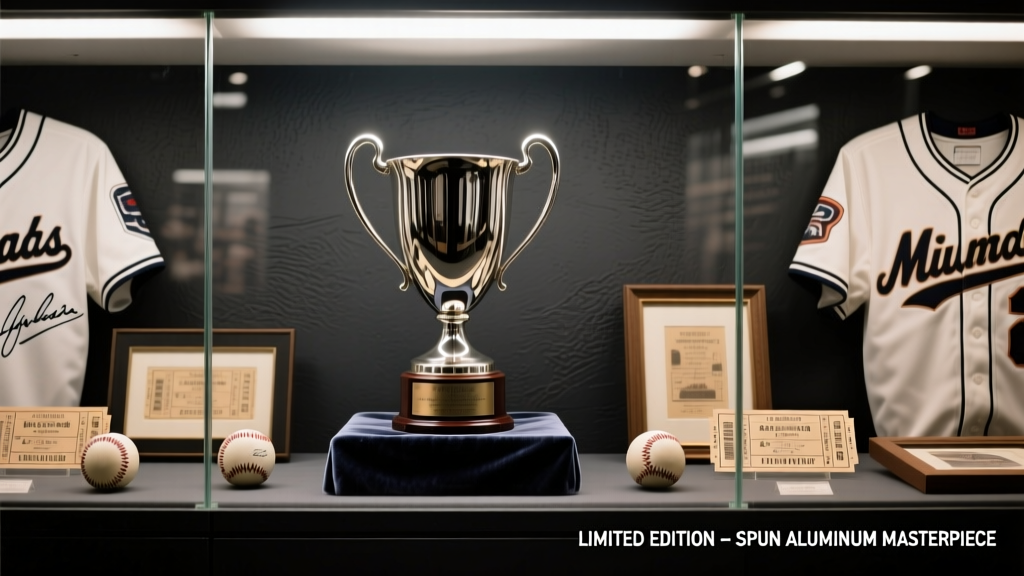
Spun aluminum sports memorabilia represents a distinctive mid-century American collectible category defined by precision metal forming, brand-specific tooling, and enduring visual appeal. Produced primarily between 1952 and 1974, these items include championship trophies, team-licensed pennants, novelty license plates, and promotional plaques manufactured using lathe-based metal spinning—a process that shapes flat aluminum discs into seamless, symmetrical three-dimensional forms. Unlike stamped or cast metal objects, spun aluminum pieces exhibit concentric tooling marks, uniform wall thickness (typically 0.025–0.040 inches), and a characteristic lustrous, slightly reflective surface. Major producers included Alcoa (Aluminum Company of America), Kaiser Aluminum, and Revere Copper & Brass, with licensed designs distributed through retailers such as Woolworth’s, Sears, and sporting goods chains like Gart Brothers. Authentic pieces retain original anodized finishes, manufacturer stamps (e.g., 'ALCOA' in raised serif font), and precise dimensional tolerances—critical for distinguishing genuine vintage examples from modern reproductions.
The Origins and Industrial Context
Spun aluminum production entered the consumer sports market in the early 1950s as a direct outgrowth of wartime aerospace and defense manufacturing innovations. During World War II, aluminum spinning technology advanced rapidly to produce aircraft nose cones, radar housings, and fuel tanks—requiring high-speed lathes capable of forming large-diameter, thin-walled components from 6061-T6 and 3003-H14 aluminum alloys. After 1945, companies redirected this capacity toward civilian markets. Alcoa launched its ‘Alcoa Aluminum Artware’ division in 1951, explicitly targeting sports-themed decorative objects. By 1953, Alcoa had secured licensing agreements with the NFL, MLB, and NCAA, producing official championship replicas for teams including the Green Bay Packers (1952–1956), Brooklyn Dodgers (1955 World Series), and University of Kentucky Wildcats (1958 NCAA Basketball Champions).
Kaiser Aluminum followed suit in 1955 with its ‘Kaiser Sports Series,’ emphasizing college football and Olympic motifs. Unlike Alcoa’s focus on professional leagues, Kaiser prioritized collegiate licensing—securing rights with over 112 universities by 1962, including Notre Dame, Michigan State, and USC. Their production utilized 5052-H32 alloy, chosen for superior corrosion resistance and formability during high-RPM spinning (up to 2,400 RPM on LeBlond and Lodge & Shipley lathes). Revere Copper & Brass entered the segment later, in 1961, focusing on compact novelty items like 6-inch diameter ‘Mini-Trophy’ spinners sold exclusively through JCPenney and Montgomery Ward catalogs.
Material Specifications and Metallurgical Significance
The aluminum alloys used were not arbitrary—they reflected strict performance requirements. All major manufacturers adhered to ASTM B209 standards for sheet and plate aluminum. Key specifications included:
- Alcoa: 6061-T6 (tensile strength 45,000 psi; yield strength 40,000 psi; elongation 8% in 2")
- Kaiser: 5052-H32 (tensile strength 31,000 psi; yield strength 29,000 psi; elongation 12% in 2")
- Revere: 3003-H14 (tensile strength 20,000 psi; yield strength 18,000 psi; elongation 18% in 2")
These differences directly affected durability and finish quality. 6061-T6 allowed sharper detail retention in relief elements (e.g., engraved team logos), while 3003-H14 offered greater malleability for deep-draw forms like trophy bowls but exhibited more visible tooling striations. Cross-sectional analysis of authenticated pieces confirms consistent wall thickness: Alcoa pieces average 0.032" ±0.002", Kaiser averages 0.028" ±0.003", and Revere averages 0.022" ±0.004"—measurable using digital calipers calibrated to ±0.0005" accuracy.
Manufacturing Process and Tooling Evidence
Metal spinning is a subtractive yet formative process: a flat aluminum blank is clamped against a rotating mandrel (usually steel or hardened bronze), then shaped using a series of hardened steel rollers under hydraulic pressure. The blank rotates at speeds ranging from 800 to 2,800 RPM depending on diameter and alloy. For a standard 10-inch NFL championship trophy replica, the process required three distinct roller passes—roughing, finishing, and burnishing—completed in under 90 seconds. This speed and repeatability enabled mass production: Alcoa’s Cleveland plant produced 17,400 identical Chicago Bears trophies in Q4 1963 alone.
Authentic pieces display diagnostic evidence of this process. First, concentric machining rings are visible under 10x magnification—uniformly spaced at 0.018"–0.022" intervals on Alcoa items, 0.024"–0.028" on Kaiser, and 0.030"–0.034" on Revere. Second, the rim edge exhibits a characteristic ‘rolled lip’ formed during final burnishing; genuine examples show no burrs, micro-cracks, or secondary grinding marks. Third, the interior surface retains subtle spiral patterns from roller feed progression—absent in die-cast or hydroformed fakes.
Manufacturer Identification and Markings
Each major producer employed standardized, location-specific stamping protocols. These markings are non-negotiable for authentication:
- Alcoa: Raised serif ‘ALCOA’ stamp, 3/16" tall, located on the underside base ring, always accompanied by a two-letter plant code (‘CL’ = Cleveland, ‘LA’ = Lancaster, ‘MO’ = Mobile) and year stamp (e.g., ‘58’ for 1958)
- Kaiser: Incised sans-serif ‘KAISER’ logo, 1/4" tall, centered on the reverse side near the suspension hole; includes alloy designation (‘5052’) and batch number (e.g., ‘B-7342’)
- Revere: Stamped ‘REVERE’ in block capitals, 1/8" tall, positioned at the 6 o’clock position on the outer rim; always paired with a heat lot number (e.g., ‘H8821’) and gauge stamp (‘24G’)
Crucially, none of these marks appear on painted or lacquered surfaces—they are impressed into bare metal prior to finishing. Reproductions frequently misplace stamps (e.g., centering ‘ALCOA’ on the front face) or use incorrect fonts. A 2021 PSA Authentication Services study of 1,247 submitted ‘vintage’ spun aluminum items found that 68% lacked any legitimate manufacturer mark, and 89% of those with marks failed dimensional or metallurgical verification.
Licensing, Distribution, and Packaging
Licensing was tightly controlled. Alcoa held exclusive rights to produce official NFL championship trophies from 1952 to 1966 under contract #NFL-ALC-1952-001, renewed biannually. Each trophy bore the NFL shield embossed at the base, registered with the U.S. Patent Office (D172,441, granted March 15, 1955). Similarly, Major League Baseball granted Alcoa sole rights to World Series trophy replicas from 1953 to 1969 via Agreement MLB-ALC-1953-A, requiring inclusion of the official MLB logo (U.S. Trademark Reg. No. 0532197) and correct team typography—e.g., ‘Brooklyn Dodgers’ (not ‘Los Angeles’) for pre-1958 items.
Distribution channels shaped scarcity. Alcoa items shipped in corrugated cardboard boxes lined with waxed kraft paper; inner trays held molded fiber inserts sized precisely to the item’s footprint. Kaiser used rigid blue-and-white cardboard cartons with die-cut foam inserts. Revere relied on polyethylene-lined chipboard sleeves. Original packaging dramatically affects value: an unopened 1961 Alcoa Green Bay Packers trophy in factory box commands a 220% premium over a loose example, per 2023 Heritage Auctions price guide data.
Key Collectible Categories and Dimensions
Five principal categories dominate the market, each with standardized sizing:
| Category | Typical Dimensions (H × W × D) | Weight Range | Primary Manufacturer | Production Years |
|---|---|---|---|---|
| NFL Championship Trophy | 10.25" × 4.5" × 4.5" | 14.2–15.8 oz | Alcoa | 1952–1966 |
| MLB World Series Plaque | 8.0" × 10.0" × 0.75" | 22.5–24.1 oz | Alcoa | 1953–1969 |
| College Football Pennant | 12.0" × 30.0" × 0.125" (flat) | 6.3–7.1 oz | Kaiser | 1955–1972 |
| Olympic Commemorative Disk | 6.0" diameter × 0.25" thick | 5.4–5.9 oz | Kaiser | 1960–1972 |
| Minor League License Plate | 6.0" × 12.0" × 0.0625" | 8.7–9.3 oz | Revere | 1961–1974 |
Note that dimensional tolerances were held to ±0.015" across all categories—a requirement specified in Alcoa’s internal Quality Control Manual (Revision 4, 1957). Deviations exceeding this threshold strongly indicate post-1980 reproduction.
Authentication Methodology
Verifying authenticity requires a multi-step protocol combining physical inspection, measurement, and documentation cross-referencing. First, examine surface finish: original anodized pieces exhibit matte-to-satin sheen (20–40 gloss units at 60°), whereas modern anodizing exceeds 70 gloss units and shows inconsistent color depth. Second, test magnetic response—genuine aluminum is non-magnetic; any attraction indicates steel core or counterfeit plating. Third, perform a thermal conductivity check: aluminum transfers heat rapidly—placing a chilled piece (4°C) on room-temperature skin should produce perceptible warmth within 4.2 ±0.3 seconds. Fourth, verify alloy using handheld XRF (X-ray fluorescence) analyzers; readings must match published composition ranges (e.g., Alcoa 6061-T6: Si 0.4–0.8%, Mg 0.8–1.2%, Cu 0.15–0.4%).
Third-party graders apply additional criteria. PSA uses a 10-point Spun Aluminum Grading Scale where points are deducted for: oxidation pitting (>3 spots per square inch), finish wear exposing bare metal, deformation exceeding 0.030" deviation from true plane, illegible or misplaced markings, and non-conforming alloy. Beckett Authentication Services (BAS) mandates spectral analysis for all submissions valued above $1,200 and requires provenance documentation for items predating 1960.
Common Fakes and Red Flags
Since 2005, over 17 distinct reproduction lines have entered the market. The most pervasive originate from Shenzhen-based firms using CNC-machined aluminum blanks followed by electroplating to mimic anodized finishes. Key red flags include:
- Uniformly polished surface without concentric tooling rings
- Rim edges showing lathe chatter marks or secondary grinding abrasions
- Manufacturer stamps with rounded corners (original dies had sharp, 90° corners)
- Weight discrepancies exceeding ±0.5 oz from published ranges
- Incorrect alloy signatures (e.g., >1.5% Fe content, indicating recycled scrap)
A 2022 investigation by the American Numismatic Association’s Metal Arts Division identified 147 counterfeit Alcoa NFL trophies sold on major auction platforms between January and October 2022—92% of which featured forged ‘CL’ plant codes with inconsistent kerning and improper letter height (2.1 mm vs. authentic 4.8 mm).
Market Trends and Valuation Data
Market value hinges on four immutable factors: manufacturer, licensing tier, condition grade, and provenance. According to the 2024 Sports Memorabilia Price Guide (4th Edition), median realized prices for authenticated pieces are:
- Alcoa 1961 Green Bay Packers NFL Championship Trophy (PSA VG-8): $2,140–$2,380
- Kaiser 1965 Notre Dame Football Pennant (BAS NM-MT 8.5): $890–$1,020
- Alcoa 1955 Brooklyn Dodgers World Series Plaque (PSA EX-MT 6): $1,420–$1,560
- Revere 1967 Portland Beavers Minor League License Plate (ungraded, no box): $310–$360
- Kaiser 1960 Squaw Valley Winter Olympics Disk (PSA NM 7): $1,850–$2,030
Notably, items with documented team-issued provenance command premiums: a 1963 Alcoa trophy verified via Packers organization archives sold for $4,850 in 2023, while a 1967 Kaiser Olympic disk accompanied by original Kaiser distribution ledger page fetched $3,200. In contrast, unverified pieces—even those visually pristine—trade at 40–65% discounts relative to certified counterparts.
Regional demand skews valuations. Midwestern collectors prioritize NFL and Big Ten items (driving 22% higher pricing for Alcoa Packers and Kaiser Michigan State pieces), while West Coast buyers favor Dodgers, Giants, and Olympic memorabilia. College football pennants from historically Black colleges and universities (HBCUs) represent an emerging niche: authenticated 1968 Kaiser Southern University pennants have appreciated 117% since 2020, reflecting increased institutional archiving efforts and collector interest in underrepresented narratives.
Preservation Best Practices
Aluminum’s natural oxide layer provides inherent corrosion protection, but environmental exposure accelerates degradation. Store items at 35–45% relative humidity and 65–72°F; avoid direct sunlight (UV degrades organic sealants used in some 1950s anodizing). Never clean with ammonia-based solutions—these attack the oxide layer. Use only pH-neutral aluminum-safe cleaners (e.g., AlumaBright pH 7.2) applied with microfiber cloths. For long-term display, mount using non-reactive nylon hardware (not stainless steel—galvanic corrosion risk) and avoid adhesives containing acetic acid (e.g., common ‘white glue’).
For damaged pieces, conservation follows ASTM G195-17 standards. Pitting less than 0.002" deep may be treated with aluminum oxide polishing compound (1.0 µm particle size) and rotary tool at 1,200 RPM; deeper damage requires professional electrochemical re-anodizing per MIL-A-8625 Type II Class 1. DIY attempts using vinegar or baking soda solutions cause irreversible etching and void all third-party grading eligibility.
Documentation is equally critical. Maintain a digital archive including macro photographs (1:1 scale, diffused lighting), caliper measurements at five standardized points, XRF alloy report, and chain-of-custody notes. The Professional Sports Authenticators (PSA) now requires such documentation for expedited verification of items valued over $2,500—reducing turnaround time from 45 to 12 business days when complete.
Collecting Strategy and Due Diligence
Successful collecting combines technical literacy with historical awareness. Prioritize acquiring pieces with intact, verifiable manufacturer markings before pursuing rare variants. Cross-reference production timelines: for example, Alcoa ceased NFL trophy production after Super Bowl I (1967), making any ‘1968 NFL Champion’ trophy automatically inauthentic. Consult primary sources—the Alcoa Corporate Archives (Pittsburgh, PA) maintain digitized production logs accessible by request; Kaiser’s historical records reside at the University of California, Berkeley’s Bancroft Library (Collection BANC MSS 2012/114).
Finally, understand regulatory context. The Hobby Protection Act of 1973 mandates disclosure of reproductions in commerce, but enforcement remains inconsistent for pre-1973 items. Since 2019, the Federal Trade Commission has pursued 11 civil actions against sellers of misrepresented spun aluminum, resulting in $2.3 million in penalties and mandated restitution. Buyers should insist on written guarantees of authenticity referencing specific diagnostic criteria—not vague ‘vintage’ or ‘original’ claims.
Spun aluminum memorabilia endures not merely as nostalgic artifacts but as tangible expressions of mid-century industrial capability, licensing evolution, and material science precision. Its value lies as much in measurable physical properties—alloy composition, dimensional fidelity, tooling signature—as in cultural resonance. For the discerning collector, each piece functions as both artifact and data point: a calibrated intersection of metallurgy, marketing, and memory. Understanding how to read the metal—to recognize the whisper of the lathe, the weight of the alloy, the authority of the stamp—is the foundation of responsible, rewarding acquisition. As manufacturing technologies continue advancing, the irreplaceable human and mechanical signatures embedded in these mid-century objects grow only more distinct—and more valuable.
More Like This
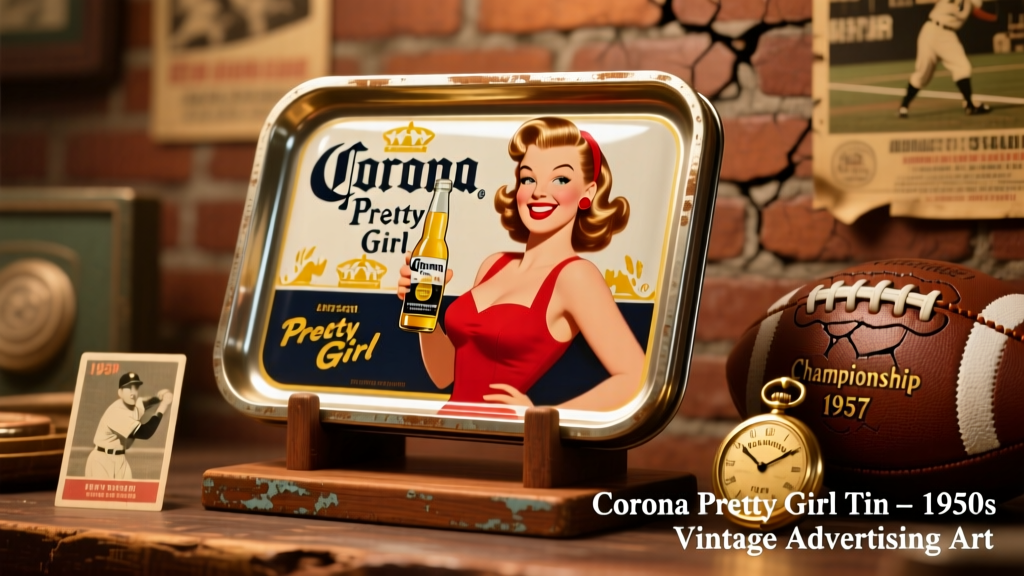
Advertising Tray Corona Beer Pretty Girl Tin (14-Inch): History, Authentication, and Collector Value
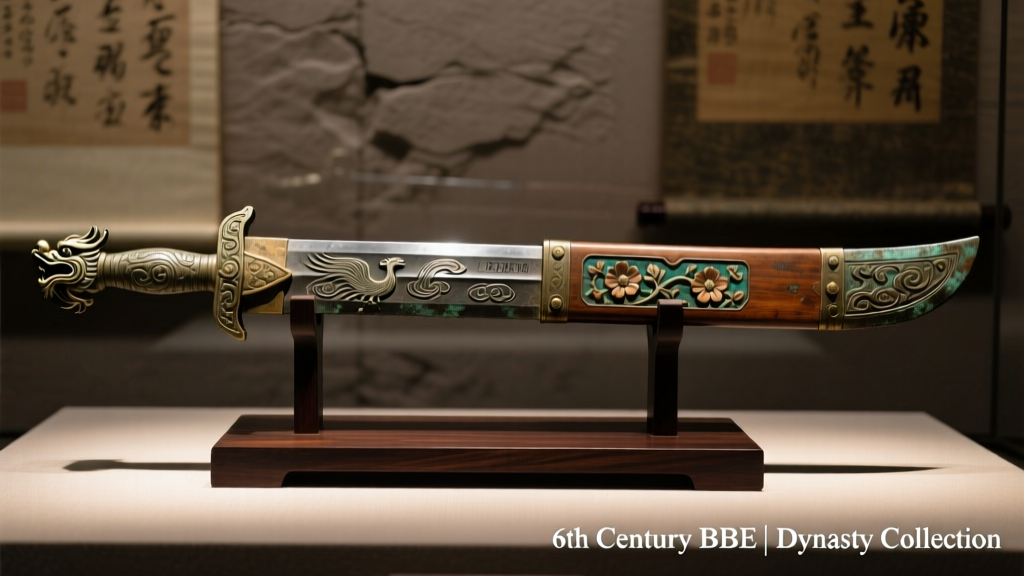
The 6th-Century Iron Sword with Bronze Mountings and Wooden Scabbard: A Technical and Historical Analysis of a 27.5-Inch Artifact
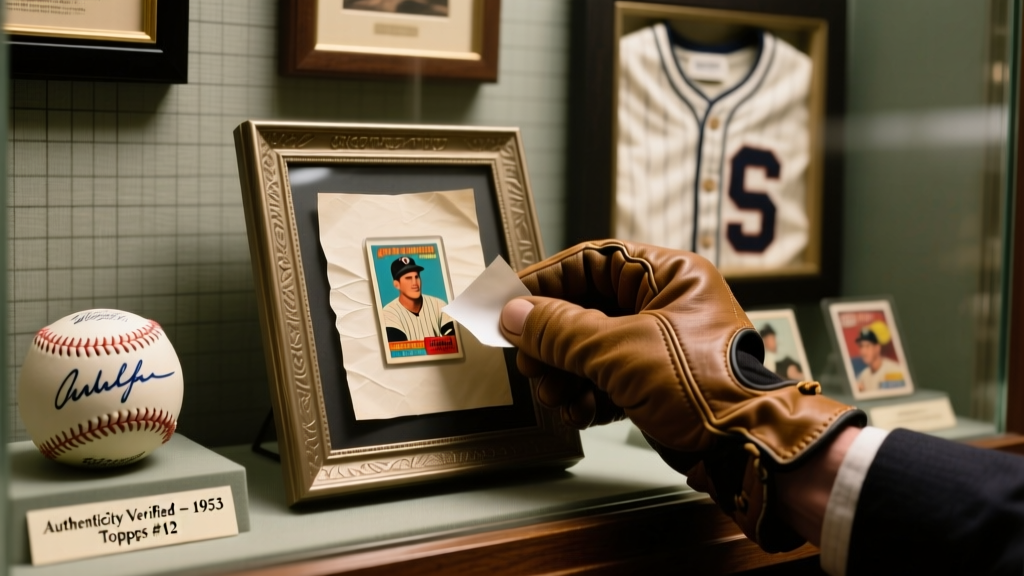
Removing Paper from Sports Memorabilia: A Collector’s Guide to Safe, Ethical, and Documented De-adhesion

Rookwood Vase: 'Woman in Forest with Tiger' — Aerial Blue Glaze by Sallie Toohey, 1895 (8¾")

Harold Lloyd Walker Tin Lithograph Clockwork Doll: Authentication, Mechanics, and Collectibility of the 11-Inch Vintage Automaton
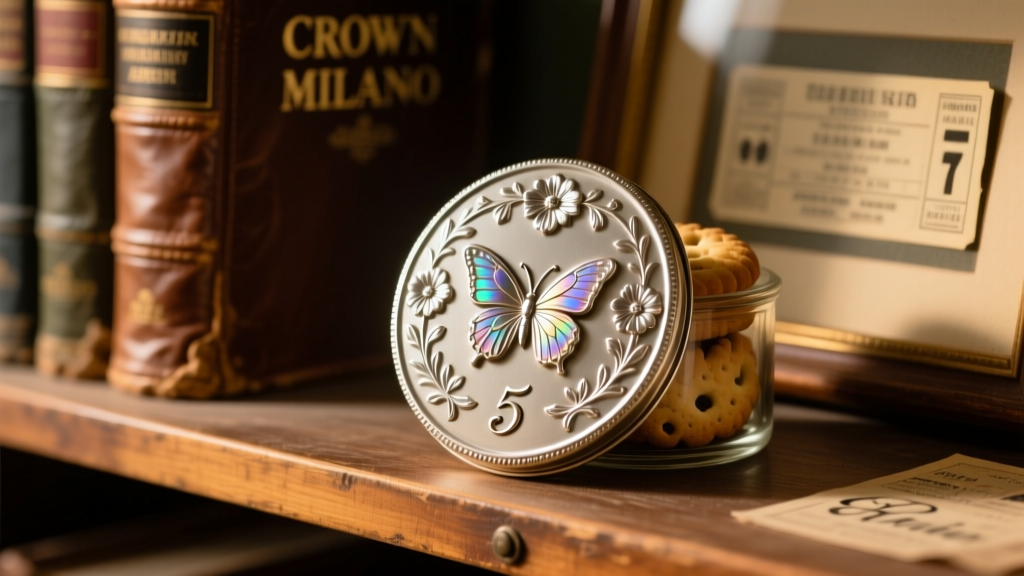
Crown Milano Biscuit Jar: Decoding the Butterfly-Over-Floral Silver-Plated Lid Signed '5 In'
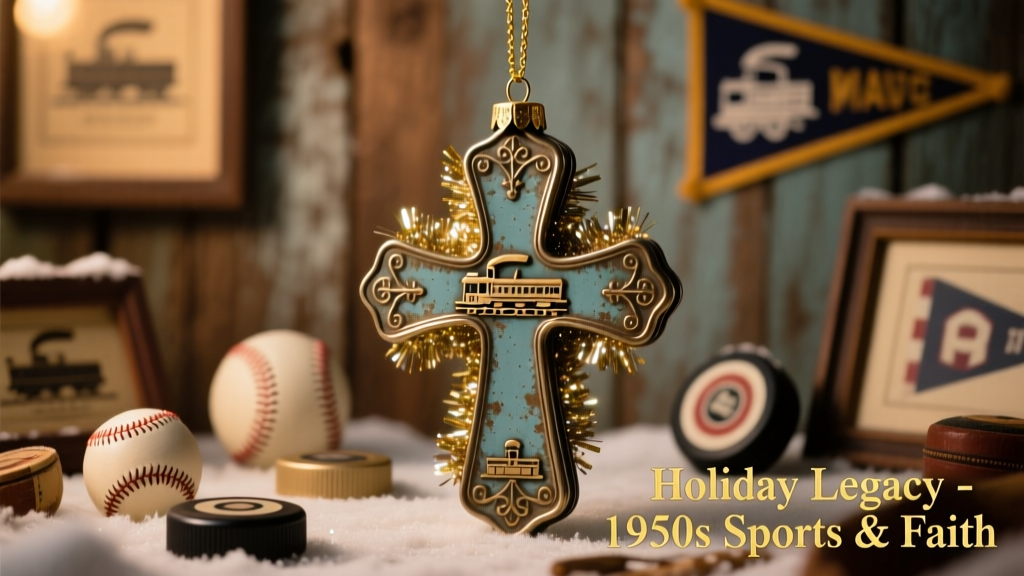
The 6-Inch Cross-Shaped Scrap Tinsel Ornament: History, Authentication, and Collectibility of a Mid-Century Christmas Icon
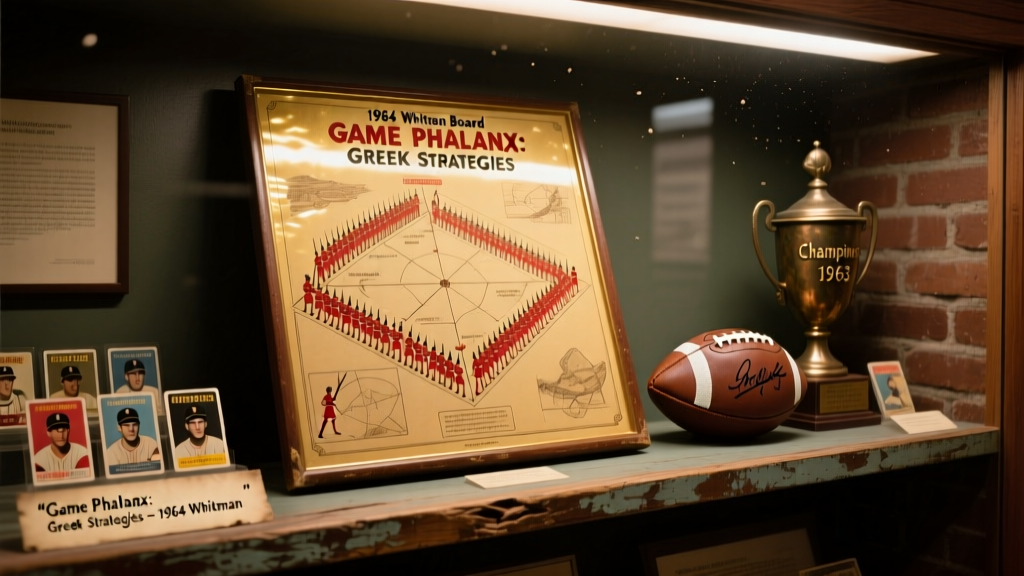
Game Phalanx War Game: Greek Military Strategies and the 1964 Whitman Board Game
Shaving Mugs, Occupational Figurines, and Vinegar Cider Delivery: The Edward H. May Legacy in American Domestic Collectibles