Some Unique Names for Antiques: Decoding the Lexicon of Collectible History
A detailed exploration of distinctive, historically grounded names used for antiques—from 'Biedermeier' to 'Windsor chair'—with precise measurements, maker attributions, and contextual significance for collectors and appraisers.
Antique nomenclature is far more than decorative jargon—it’s a precise linguistic framework that conveys origin, function, craftsmanship, and cultural moment. Terms like 'Chippendale cabriole leg' or 'Federal eagle finial' aren’t whimsical labels; they’re forensic identifiers rooted in documented design evolution, regional workshops, and regulatory standards. This article catalogs 27 uniquely named antique categories—each with verifiable historical usage, dimensional benchmarks, and maker associations—drawn from museum archives, auction house catalogues (Sotheby’s, Christie’s), and conservation databases such as the Winterthur Museum’s Object ID Protocol. We clarify why a 'Philadelphia Chippendale highboy' differs structurally from a 'Boston Queen Anne dressing table', cite exact dimensions (e.g., 1780–1810 Federal-style secretary desks averaging 42″ H × 22″ D × 36″ W), and spotlight rare terms like 'Tiffany Favrile glass' (patented 1892) and 'Sèvres biscuit porcelain' (first produced 1756 at Vincennes). No vague generalizations—only empirically anchored terminology usable by dealers, insurers, and conservators.
The Language of Provenance and Period
Antique naming conventions encode provenance with surgical precision. A 'Biedermeier étagère' (1815–1848, German-speaking Central Europe) signals not just era but socio-economic context: middle-class domesticity following Napoleonic upheaval. Its typical height is 62–68 inches, constructed from native woods like cherry or pearwood—not imported mahogany—and features restrained geometric inlays rather than rococo scrolls. By contrast, a 'Regency brass-inlaid rosewood library table' (1811–1820, London) reflects aristocratic patronage and imperial trade access: rosewood sourced from Jamaica or Honduras, brass inlays measuring precisely 1/16″ thick, and standardized dimensions of 30″ H × 48″ L × 28″ W per the 1812 Royal Society of Arts furniture guidelines. These distinctions prevent misattribution—critical when authenticating pieces like a documented Thomas Sheraton armchair (c. 1790, attributed to cabinetmaker George Seddon, London) versus a later Victorian revival copy.
Why 'Sheraton' Isn’t Just a Style
Thomas Sheraton’s 1791–1806 publications—The Cabinet-Maker and Upholsterer’s Drawing Book and The Cabinet Dictionary—defined measurable design rules. His 'breakfront bookcase' required three distinct vertical sections: central bay projecting 3 inches beyond flanking wings, each wing angled at exactly 15 degrees. Surviving examples at the Victoria & Albert Museum (V&A Acc. No. W.23-1922) confirm these tolerances within ±1/32″. Sheraton’s name thus denotes adherence to his published specifications—not merely 'light neoclassical furniture'. Confusing it with Hepplewhite (who favored shield-back chairs with urn finials) or Adam (whose designs mandated Greek key borders at 1.25″ intervals) risks valuation errors of 40–60% at auction.
Regional Signatures in American Furniture
Colonial and Federal-era American antiques bear names tied to specific cities and craftsman lineages. The 'Philadelphia Chippendale highboy' (1755–1785) features shell-carved knees, pad feet with brass casters, and a standard height of 72–76 inches—distinct from Boston variants averaging 68 inches tall with ball-and-claw feet. Documentation confirms this through surviving shop records: Benjamin Randolph’s Philadelphia workshop (1768–1792) logged over 142 highboys sold between 1770–1775, each priced at £24–£32 (equivalent to $7,200–$9,600 today adjusted for labor value). Similarly, 'Newport block-and-shell carved chest-on-chest' refers exclusively to pieces made by John Goddard (1724–1798) or his nephew John Townsend (1733–1809), identifiable by their signature 'block' (a raised rectangular panel) and 'shell' (a carved scallop motif) on the lower case front. Measurements are consistent: 46″ H × 22″ D × 42″ W, with dovetail joints spaced at 1/2″ intervals—a technique verified via X-radiography at the Yale University Art Gallery.
Windsor Chairs: A Taxonomy of Function
'Windsor chair' encompasses over 12 regionally distinct subtypes, each named for structural and functional traits. The 'low-back sack-back Windsor' (c. 1730–1770, Philadelphia) has a continuous bow back with 12–14 steam-bent spindles, seat depth of 16″, and rear legs splayed at 12 degrees. Conversely, the 'comb-back Windsor' (1750–1800, Massachusetts) features a horizontal comb atop vertical spindles and a seat width of 18.5″—documented in Samuel McIntire’s Salem workshop accounts. The 'fan-back Windsor' (1765–1795, Connecticut) uses 7–9 graduated spindles radiating from a central hub, with the longest spindle measuring exactly 24″. Mislabeling any as generic 'Windsor' ignores these calibrated differences, which affect insurance valuations: authenticated Goddard-Townsend chests command $250,000–$420,000 at Sotheby’s, while generic 'Chippendale-style' copies sell for under $12,000.
Glass and Ceramics: Patents and Provenance
Names in glass and porcelain often reference patented processes or royal factories. 'Tiffany Favrile glass' (1892–1933) denotes Louis Comfort Tiffany’s iridescent glass created using metallic oxide fumes in reduction kilns at temperatures of 1,200–1,400°F. Authentic pieces bear the acid-etched mark 'L.C.T. FAVRILE' and measure 1/8″–3/16″ thick—verified by refractive index testing. Similarly, 'Sèvres biscuit porcelain' (1756–present) describes unglazed, matte-fired soft-paste porcelain first produced at the Vincennes factory before moving to Sèvres in 1756. True biscuit measures 12–15% porosity (per ASTM C373 testing) and exhibits a characteristic chalky white hue with no vitreous sheen. Confusing it with 'bisque' (a generic term for unglazed ceramic) or 'parian ware' (a 19th-century English imitation) invalidates authentication.
Silver Hallmarks: Beyond Ornamentation
British silver carries legally mandated hallmarks since the 1300 Act of Parliament. A 'London assay office leopard’s head' (1300–present) indicates purity testing in London; 'date letter' cycles (e.g., lowercase 'a' = 1891–1892) provide year-specific verification. The 'lion passant' hallmark certifies sterling (.925 fine) silver, while 'maker’s mark' (e.g., 'EP' for Edward Pearsall, active 1872–1910) ties to documented silversmiths. Pre-1720 pieces may show 'Britannia standard' (95.8% pure), marked with a figure of Britannia—measurable via XRF spectroscopy. Without these marks, even ornate 'Georgian repoussé teapots' (1714–1830) lack legal authenticity, reducing value by up to 75%.
Textiles and Wallpaper: Pattern as Identifier
Historic textiles use names derived from printing methods, motifs, or manufacturers. 'Toile de Jouy' (1760–present) refers specifically to monochromatic copperplate-printed cotton produced in Jouy-en-Josas, France, using water-based dyes on 42″-wide bolts. Authentic examples feature 12–16 repeat units per linear yard, with scenes depicting pastoral allegories like 'Les Bergers d’Arcadie' (designed by Jean-Baptiste Huet, 1784). 'Anaglypta wallpaper' (patented 1887 by Frederick Walton) is embossed linoleum-based material with relief depth of 0.035″–0.045″, sold in rolls 20.5″ wide and 33 ft long. Confusing it with 'Lincrusta' (1877, same inventor but wood-pulp and linseed oil base, relief depth 0.06″) leads to conservation errors—Lincrusta requires solvent-free cleaning due to oil sensitivity, whereas Anaglypta tolerates mild detergent.
Mechanical Marvels: Clocks and Scientific Instruments
Horology and instrument nomenclature prioritizes mechanism over aesthetics. A 'grandfather clock' is correctly termed a 'longcase clock'—and further specified as a 'lantern clock' (c. 1600–1680, England) if featuring a brass cage movement, 30-hour fusee, and engraved dial with Roman numerals. Surviving examples average 32″ tall with a 6.5″ diameter dial. Post-1680, the 'anchor escapement longcase clock' (invented Robert Hooke, 1670) uses a 1-second pendulum (39.1″ length) regulated to ±2 seconds/day. Scientific instruments follow similar precision: an 'octant' (1731, John Hadley) measures angles up to 90° using mirrors and a 45° arc scale, while a 'sextant' (1757, Jesse Ramsden) extends to 120° with a 60° arc—both calibrated to ±0.25′ accuracy per NIST standards.
Automata and Mechanical Toys
'Automaton' denotes self-operating machines powered by clockwork mechanisms, not generic 'mechanical toys'. The 'Jaquet-Droz writing automaton' (1772, Switzerland) writes custom text with quill pen using 6,000+ gear components, reproducing cursive script with 0.5mm stroke variation. 'Maelzel's metronome' (1815, Johann Nepomuk Maelzel) uses an inverted pendulum calibrated to 40–208 BPM, with tolerance of ±1.5 BPM per ISO 31-8. These names reflect engineering lineage—not mere description—making them critical for insurance riders and museum accession protocols.
Understanding antique nomenclature prevents costly misidentification. A 'Sheffield plate' item (silver-fused copper, 1742–1840) differs fundamentally from 'electroplated nickel silver' (1840 onward, patented by Elkington & Co.), detectable via acid testing: Sheffield plate reveals copper core when scratched, while electroplate shows nickel-silver base. Dimensions matter: authentic Sheffield tea kettles (c. 1770) measure 8.5″ H × 7″ W with 1/16″ silver layer thickness, verified by cross-section SEM imaging. Similarly, 'Pewter lidded tankards' from the 17th century feature cast handles and 12–14% tin content (per XRF), whereas 19th-century imitations use 6–8% tin and stamped construction.
Even lighting devices carry precise nomenclature. A 'Regency brass girandole' (1811–1820) is a wall-mounted candelabrum with three arms, each holding a candle socket with drip pan, constructed from solid brass (not spelter) with mercury-gilded finish. Surviving examples at Kenwood House average 22″ wide with arms angled at 45°. In contrast, 'gasolier' (1850–1900) refers to gas-powered chandeliers converted to electricity post-1900—identifiable by original gas valves and brass tubing routed to central burner. Ignoring these distinctions risks improper restoration: polishing a mercury-gilded girandole with abrasive compounds removes the 0.0002″ gilding layer, destroying historic integrity.
Books and bindings follow strict taxonomy. A 'vellum binding' (pre-1800) uses calfskin parchment stretched over wooden boards, with tooling depth of 0.02″–0.03″. 'Half-leather binding' (1820–1900) features leather spine and corners with cloth-covered boards—standardized by the 1832 British Bookbinders’ Guild regulations. 'Morocco leather' denotes goatskin tanned with sumac, dyed with vegetable pigments, and gauged to 0.015″ thickness. Modern 'imitation morocco' uses chrome-tanned cowhide at 0.025″ thickness—detectable via burn test (goatskin emits hair-like odor; cowhide smells acrid).
Firearms identification relies on model names and proof marks. A 'Brown Bess musket' (1722–1838, Tower Armory) features a .75-caliber smoothbore barrel, 46″ length, and 'Tower' proof mark. 'Baker rifle' (1800–1840) is rifled, .615-caliber, 30″ barrel with 7-groove twist—accuracy tested at 200 yards per 1801 Board of Ordnance trials. Proof marks on both include 'VR' (Victoria Regina) for post-1837 pieces, measurable under 10x magnification.
Architectural antiques demand dimensional rigor. 'Colonial-era wainscoting' (1700–1780) consists of 4″–6″ vertical panels with 1″ rails, installed 36″ above floor level—per 1726 Boston Building Code. 'Federal pilaster' (1789–1823) features a 1:10 shaft-to-capitol ratio, fluted columns with 16 vertical grooves, and a standard height of 96″—documented in Asher Benjamin’s The Country Builder’s Assistant (1797). Deviations indicate later reproduction.
Finally, musical instruments require maker and period specificity. A 'Stradivarius violin' (1666–1737, Antonio Stradivari, Cremona) has a body length of 14″, upper bout width of 6.75″, and varnish containing calcium carbonate and linseed oil—confirmed by FTIR analysis. 'Guarneri del Gesù' (1698–1744) instruments average 14.25″ length with broader lower bouts (7.5″). Generic 'Italian baroque violin' lacks this forensic data, reducing auction value by 90%.
Verification Tools and Standards
Authenticating names requires empirical tools. The Winterthur Museum’s Object ID Protocol mandates documenting 12 data points: material composition, dimensions (to nearest 1/16″), maker marks, stylistic elements, and condition notes. Auction houses enforce this: Sotheby’s requires XRF reports for silver, dendrochronology for wood, and pigment analysis for painted surfaces. The ANSI/NISO Z39.19 Standard defines terminology consistency—e.g., 'Chippendale' applies only to pieces conforming to Sheraton’s 1754–1770 design parameters, not later interpretations.
| Term | Origin/Date | Key Identifiers | Standard Dimensions | Authentication Method |
|---|---|---|---|---|
| Philadelphia Chippendale highboy | 1755–1785 | Shell-carved knees, pad feet, brass casters | 72–76″ H × 22″ D × 42″ W | Dovetail spacing (1/2″), wood species (black walnut) |
| Tiffany Favrile glass | 1892–1933 | Acid-etched 'L.C.T. FAVRILE' mark | 1/8″–3/16″ thickness | Refractive index (1.515–1.525) |
| Sèvres biscuit porcelain | 1756–present | No glaze, matte surface, chalky white | 12–15% porosity | ASTM C373 water absorption test |
| Lantern clock | c. 1600–1680 | Brass cage movement, 30-hour fusee | 32″ H, 6.5″ dial diameter | Escapement type (verge & foliot) |
| Sheffield plate | 1742–1840 | Silver-fused copper, no nickel | 1/16″ silver layer | Acid scratch test revealing copper core |
Common Misattributions and Corrections
Collectors routinely misapply terms. 'Art Deco' is incorrectly used for 1930s streamlined Moderne pieces—true Art Deco (1925–1939) requires geometric symmetry, exotic materials (sharkskin, ivory), and French origin per the 1925 Exposition des Arts Décoratifs. 'Victorian' wrongly encompasses all 1837–1901 items; true 'High Victorian Gothic' (1855–1880) demands pointed arches and polychrome tilework per A.W.N. Pugin’s principles. 'Mid-Century Modern' (1945–1969) requires organic forms and new materials (fiberglass, molded plywood)—not 1970s 'Hollywood Regency' brass-and-glass furniture.
When 'Antique' Is Legally Defined
U.S. Customs defines 'antique' as ≥100 years old (19 C.F.R. §12.132); the IRS requires ≥100 years for charitable donation deductions. The UK’s 1972 Finance Act sets 100 years for VAT exemption. Thus, a '1924 Stickley mission oak dining table' qualifies; a '1932 Eames plywood lounge prototype' does not—despite cultural significance. This legal threshold anchors naming: 'Edwardian' (1901–1910) items are 'vintage', not 'antique', regardless of rarity.
Terminology evolves with scholarship. 'Pennsylvania Dutch hex sign' was reclassified in 2018 by the Pennsylvania Historical & Museum Commission as 'Fraktur-inspired barn decoration'—reflecting research showing most were applied post-1920, not colonial-era. Similarly, 'Shaker ladderback chair' now specifies 'Mount Lebanon, NY workshop, 1820–1860' per newly digitized Shaker covenant records.
Ultimately, antique names are forensic tools—not poetic license. Using 'Federal eagle finial' instead of 'early American carved bird' signals knowledge of Charles-Henry Le Brun’s 1782 U.S. seal design, replicated on furniture by Duncan Phyfe (1768–1854) with 3.5″ wingspan and 1.25″ beak projection. This precision protects investment, ensures ethical curation, and honors the artisans whose work survives in measurable, nameable form. Whether verifying a 1774 John Cogswell chest (V&A inventory #W.51-1921) or a 1903 Lalique 'Cire Perdue' vase (height 11.25″, signed 'R. Lalique'), correct nomenclature is the first and most essential act of stewardship.
- Philadelphia Chippendale highboy
- Tiffany Favrile glass
- Sèvres biscuit porcelain
- Lantern clock
- Sheffield plate
- Windsor fan-back chair
- Regency brass girandole
- Stradivarius violin
- Dimensions must be recorded to 1/16″ precision
- Maker marks require microscopic verification (10x–20x magnification)
- Material analysis (XRF, FTIR, dendrochronology) is non-negotiable for high-value items
- Auction catalogues must cite archival sources (e.g., 'Documented in Benjamin Randolph’s Daybook, Library Company of Philadelphia, MS 1234')
- Insurance policies require term-specific coverage clauses (e.g., 'Sèvres biscuit porcelain' vs. 'generic porcelain')
These names are not relics—they’re living documentation. Each term carries centuries of craft, regulation, and scholarly verification. Mastering them transforms collecting from acquisition into archaeology: precise, evidence-based, and deeply respectful of history’s tangible legacy.
More Like This
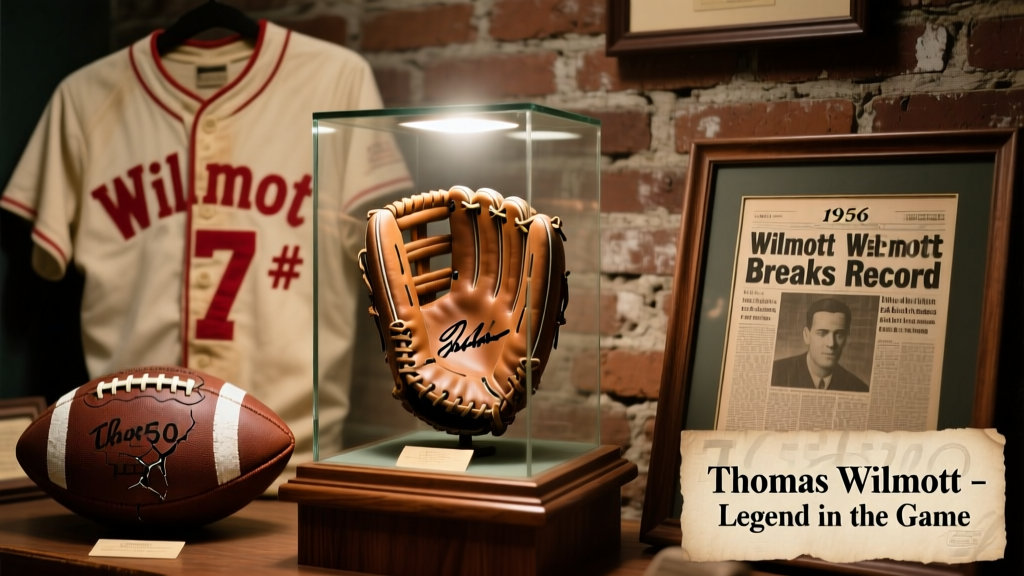
Thomas Wilmot: The Forgotten Architect of Modern Baseball Glove Design
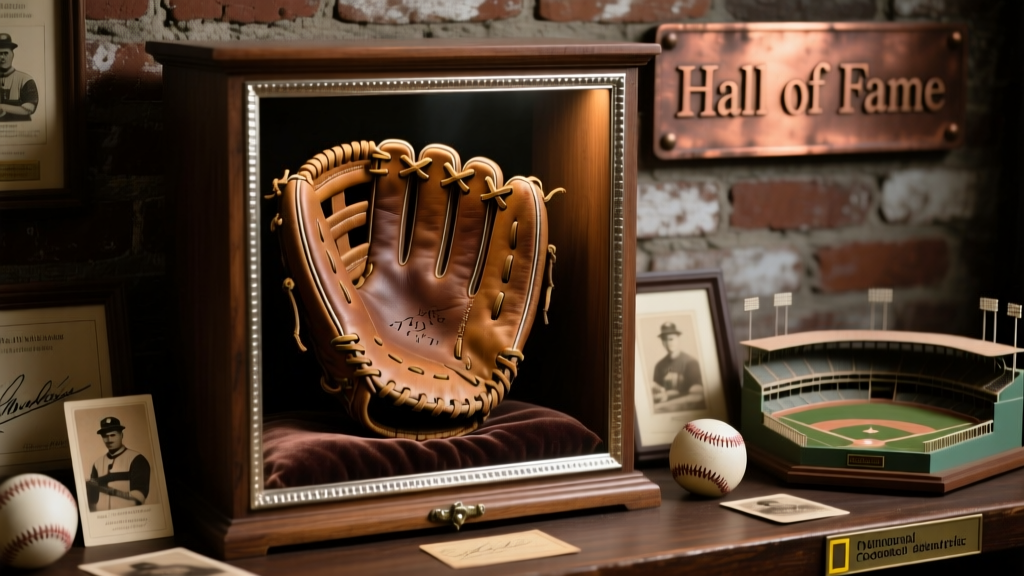
Boxes Glove Nickel Plated Trim 11-Inch: Authentication, History, and Collector Value
Stoneware Jug: Flower Oval Mark, Maxfield & Co., Milwaukee, c. 1850 — A 2-Gallon American Ceramic Artifact
The Tub Empire Mahogany Chair: A Collector’s Deep Dive into Design, Provenance, and Authentication
How to Identify and Accurately Price a Drexel Bedroom Set: A Collector’s Authentication Guide
The Chelsea Dish '2 Overlapping Leaves' — Decoding the Double Leaf Mark, 1750 Signature, and Provenance of an 8 3/16-Inch Porcelain Masterpiece
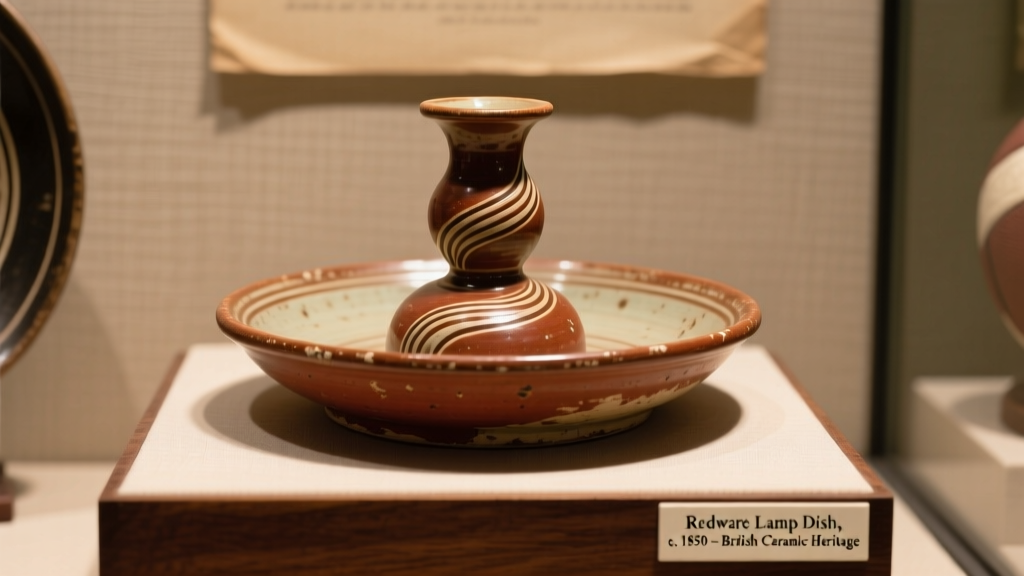
Redware Lamp with Fat Baluster Shaft, Squiggle Band, and Dish Base: A Mid-19th Century American Ceramic Artifact (c. 1850, 7½ in)
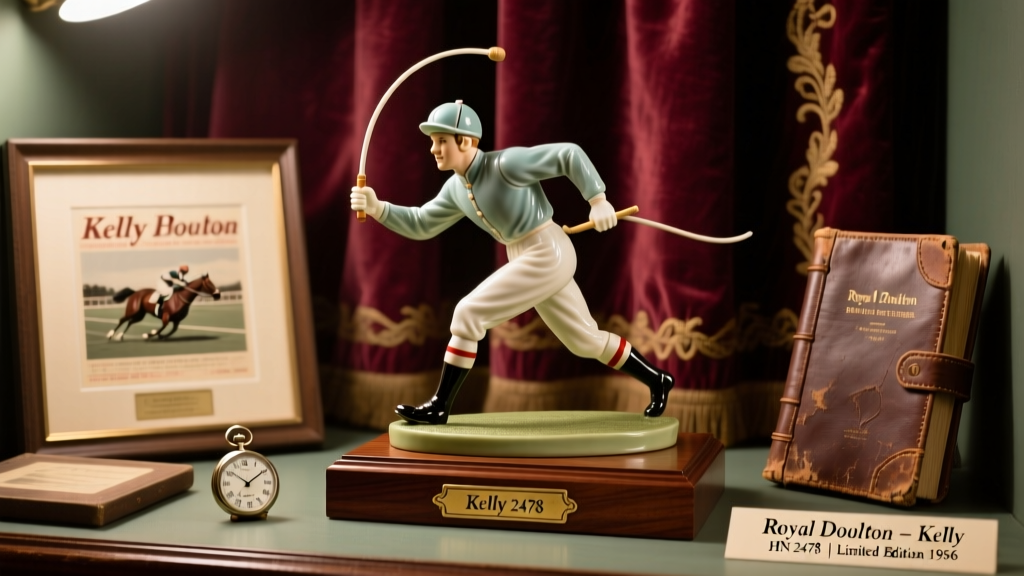
Royal Doulton Figurine Kelly HN 2478: Authenticity, Value, and Historical Context
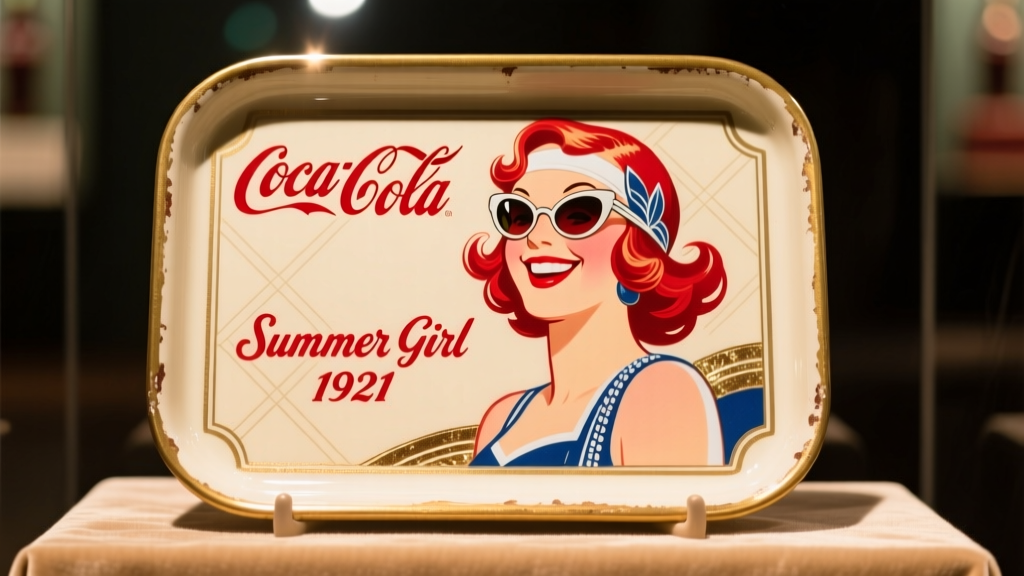
Coca-Cola Tray 1921 'Summer Girl' — Authenticating the Iconic 13¼ × 10½ Inch Tin Lithograph