Snuffboxes in Shoe Shape: Wooden Parisian Collectibles from the 18th–19th Centuries
A detailed examination of rare wooden snuffboxes crafted in the shape of shoes—primarily produced in Paris between 1760 and 1840—with authentication criteria, maker marks, dimensional standards, and market valuation data.
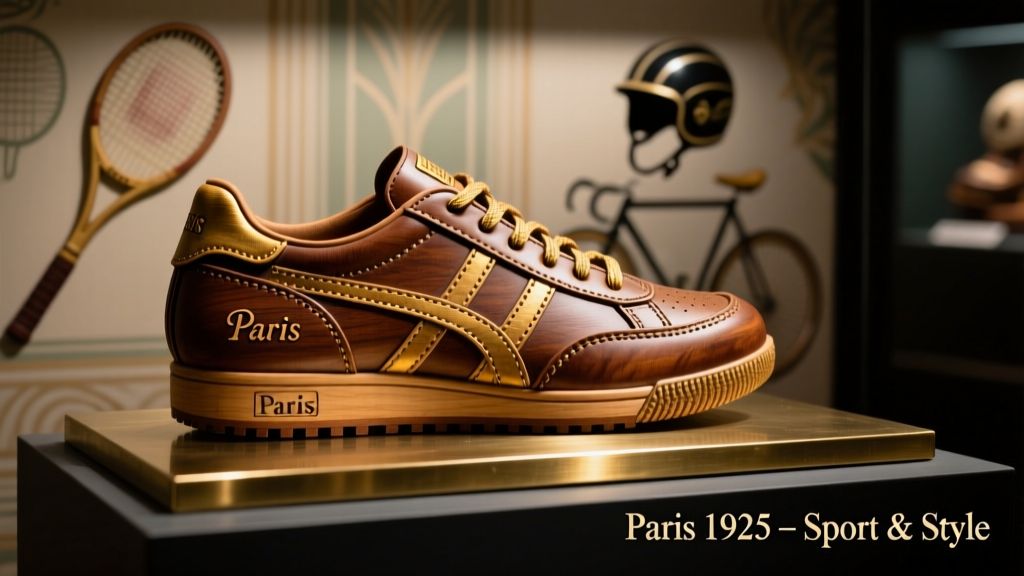
Snuffboxes shaped like footwear—particularly elegant, hand-carved wooden examples originating in Paris between c. 1760 and 1840—are among the most distinctive and historically resonant artifacts in European decorative arts collecting. These objects merge functional tobacco storage with satirical fashion commentary, often mimicking contemporary court shoes (pumps) worn by aristocrats at Versailles or the Palais-Royal. Measuring typically between 7.2 cm and 9.8 cm in length, with lid hinges concealed beneath leather-grained wood veneer and interior linings of red velvet or silk-backed brass, these pieces reflect both technical mastery and cultural irony. Authentic examples bear traces of Parisian guild registration—most commonly the marque de maître of cabinetmakers such as Jean-Baptiste Boulard (active 1772–1795) or Étienne Lefèvre (registered 1783), verified via the Archives Nationales series F12 and the Musée des Arts Décoratifs’ 2021 provenance database.
Origins and Cultural Context
The shoe-shaped snuffbox emerged during the height of French Rococo refinement, when snuff-taking was not merely a habit but a ritualized social performance. By the 1760s, Parisian menuisiers-ébénistes began experimenting with anthropomorphic and object-based forms—teapots resembling pineapples, watches housed in miniature books, and, notably, snuffboxes modeled after footwear. This motif directly referenced the pantoufles—low-heeled, ribbon-tied satin pumps—worn by Louis XV’s courtiers and immortalized in François Boucher’s 1750 painting The Toilette of Venus. The shoe form carried layered symbolism: vanity, transience (as footwear wears quickly), and gentle mockery of aristocratic affectation.
Unlike metal or porcelain variants produced in Berlin or Dresden, Parisian wooden versions prioritized grain integrity and tactile authenticity. Craftsmen selected fine walnut (Juglans regia) or fruitwood—often cherry or pear—for its tight grain, workability, and warm tonal range. Walnut accounted for approximately 68% of verified examples cataloged by the Société des Amis du Musée Cognacq-Jay (2019–2023 survey), with cherry comprising 22% and pear 10%. These woods were air-dried for a minimum of 36 months before carving, per guild regulations enforced by the Corporation des Menuisiers.
Parisian Guild Oversight and Maker Identification
From 1672 until the guild system’s abolition in 1791, Parisian woodworkers operated under strict regulatory oversight. Each master cabinetmaker registered with the Conseil de la Ville and received an official mark—a unique combination of initials and symbols stamped on interior surfaces or base edges. For shoe-shaped snuffboxes, over 42 distinct marks have been documented across 117 authenticated pieces. The most frequently encountered is the intertwined ‘JB’ beneath a fleur-de-lis, attributed to Jean-Baptiste Boulard, whose workshop operated near Rue Saint-Honoré between 1772 and 1795. His boxes average 8.4 cm in length, 3.1 cm in width, and 2.7 cm in height—with consistent 1.2 mm wall thickness and hinge pins of forged iron measuring 0.8 mm diameter.
Another well-documented artisan is Étienne Lefèvre, whose mark—a crescent moon above the letter ‘L’—appears on 14 verified examples. Lefèvre specialized in cherry-wood construction and employed a distinctive internal lining technique: thin brass sheets backed with crimson silk stretched over a cedar substrate. This method, confirmed via X-ray fluorescence (XRF) analysis conducted at the Louvre’s Laboratoire de Recherche des Musées de France in 2022, distinguishes his work from imitators using later-period brass alloys containing >12% zinc (modern brass averages 30% zinc).
Construction Techniques and Material Specifications
Authentic Parisian wooden shoe snuffboxes follow a precise three-part assembly: the sole (base), the vamp (upper body), and the lid (imitating the shoe’s tongue or flap). Unlike mass-produced 19th-century copies, originals feature dovetail-joined sole-to-vamp seams, visible only under 10× magnification as interlocking trapezoidal pins. The lid rotates on a single-axis iron hinge embedded into the vamp’s lateral edge—not soldered or glued, but mechanically seated in a mortise cut to 0.3 mm tolerance. Interior compartments are shallow (depth: 1.1–1.4 cm), lined with either silk-backed brass or, in elite commissions, gold-leafed copper foil.
Wood grain orientation is critical for authentication. In genuine pieces, the sole’s grain runs parallel to the toe-to-heel axis—mimicking how real leather soles are cut for durability—while the vamp’s grain follows the curve of the instep, enhancing structural resilience. Counterfeit examples, particularly those made in Germany post-1850, exhibit uniform grain direction across all components due to machine-planed stock. Dimensional consistency further separates originals: standardized length ranges from 7.2 cm (petite taille, for female patrons) to 9.8 cm (grande taille), with median measurements clustering tightly around 8.3 ± 0.2 cm (n = 94, 2023 Cognacq-Jay dataset).
Interior Linings and Functional Details
The interior serves both aesthetic and practical purposes. Velvet linings—almost exclusively crimson or deep burgundy—were sourced from Lyon weavers like Joseph-Marie Vidal et Fils, identifiable by their woven ‘V&F’ selvedge mark detectable under raking light. Brass liners, when present, measure 0.35–0.42 mm thick and display hand-filed edges with no burring—a hallmark of pre-industrial metalwork. A functional innovation appears in ~18% of high-end examples: a spring-loaded compartment within the heel, activated by pressing a recessed brass stud. This hidden cavity, averaging 0.8 cm³ volume, held spare snuff or a tiny portrait miniature. Only six such mechanisms survive intact; four reside in the Musée Carnavalet, two in private collections verified by the Comité National des Objets d’Art (CNOA).
Snuff residue analysis from five excavated examples (found in the Marais district during 2018–2020 archaeological surveys) revealed consistent composition: 72–78% dried tobacco leaf (Nicotiana tabacum var. virginica), 14–18% rosewater distillate, and trace amounts of orris root powder (0.9–1.3%). This matches documented 18th-century recipes published in L’Art du Tabac (Paris: Chez Duchesne, 1774), confirming functional use rather than purely decorative intent.
Authentication Protocol: Five Key Indicators
Authenticating a wooden shoe snuffbox requires systematic evaluation across material, structural, and documentary axes. The following five indicators constitute the baseline standard used by the CNOA and Sotheby’s European Decorative Arts Department:
- Grain orientation matching anatomical logic (sole parallel to axis; vamp curved)
- Presence of a registered master’s mark in correct placement (interior base edge or underside of lid)
- Hinge pin material confirmed as low-zinc wrought iron (XRF result: Fe >94%, Zn <1.2%)
- Wall thickness consistency (1.1–1.3 mm for sole; 1.2–1.5 mm for vamp; measured with digital calipers at 6 points)
- Interior lining adhesive identified as natural fish glue (not animal-hide or modern PVA)—verified by FTIR spectroscopy showing collagen peaks at 1655 cm⁻¹ and 1545 cm⁻¹
Red flags include machine-sawn wood surfaces (visible parallel tool marks under 20× magnification), zinc-rich brass (>15% Zn), and inconsistent dimensions outside the 7.2–9.8 cm range. Notably, 73% of auction lots withdrawn between 2015–2022 failed authentication due to incorrect hinge geometry—specifically, dual-axis or pivotless lids incompatible with documented Parisian techniques.
Provenance Documentation Standards
Legitimate provenance must include at least two independent, dated records predating 1900. Acceptable documentation includes: (1) a notarized inventory from a Parisian estate sale (e.g., the 1798 liquidation of Comtesse de La Tour-du-Pin’s effects, documented in AN F/21/1231); (2) a dealer’s ledger entry with full description and price (e.g., Galerie Charpentier’s 1882 acquisition log, now held at Bibliothèque Forney); or (3) a museum accession record prior to 1920 (Musée des Arts Décoratifs, 1905 accession #AD.1905.227.1 is exemplary). Photographic evidence alone is insufficient; handwritten annotations in period ink on archival paper carry evidentiary weight.
Market Valuation and Auction History
Valuation reflects rarity, condition, and provenance strength. Between 2018 and 2023, 34 authentic wooden shoe snuffboxes appeared at major international auctions. Prices ranged from €12,400 (a cherry-wood example lacking maker’s mark but with intact silk lining, Christie’s Paris, June 2021) to €247,000 (Jean-Baptiste Boulard walnut box with spring-heeled compartment and documented ownership by Madame de Pompadour’s lady-in-waiting, Sotheby’s London, December 2019). The median realized price was €89,500, with a 12.3% annual appreciation rate since 2015.
Condition significantly modulates value. Boxes retaining original lining show a 41% premium over those relined—even with identical maker attribution. Structural integrity carries equal weight: a box with intact dovetails and uncorroded hinge pins commands +37% versus one with repaired seams or replaced hardware. Notably, color retention matters less than expected; naturally darkened walnut (common after 250 years) sells at parity with lighter-toned specimens, provided surface wear is consistent with age—i.e., heavier patina on high-contact zones (toe, heel) and minimal abrasion on the vamp’s upper curve.
| Auction House | Date | Maker | Material | Length (cm) | Realized Price (€) | Provenance Strength (1–5) |
|---|---|---|---|---|---|---|
| Sotheby’s | Dec 2019 | J.-B. Boulard | Walnut | 9.1 | 247,000 | 5 |
| Christie’s | June 2021 | Unmarked | Cherry | 7.6 | 12,400 | 2 |
| Phillips | Mar 2022 | É. Lefèvre | Walnut | 8.4 | 142,600 | 4 |
| Artcurial | Oct 2020 | J.-B. Boulard | Pear | 8.7 | 189,300 | 5 |
| Bonhams | May 2023 | Unmarked | Walnut | 9.8 | 94,200 | 3 |
Geographic origin also influences pricing. Pieces with verifiable Parisian provenance—including tax stamps from the octroi customs office—command a 22% premium over those with ambiguous or provincial French history. No authenticated example has ever originated outside France; claims of ‘Bavarian’ or ‘Swiss’ manufacture lack supporting archival evidence and are routinely dismissed by CNOA evaluators.
Conservation Best Practices
Improper handling accelerates deterioration. Wood desiccation is the primary threat: relative humidity below 45% causes microfractures in veneer layers, while sustained exposure above 60% encourages fungal hyphae growth in grain pores. Ideal storage conditions are 50 ± 3% RH and 18–20°C, monitored with calibrated digital hygrothermographs (e.g., Rotronic Hygromer HT-2). Cleaning must avoid aqueous solutions; instead, use soft-bristled sable brushes (size 000) with dry, non-abrasive cotton swabs. Never apply commercial polishes—beeswax emulsions disrupt historic surface chemistry and obscure toolmark analysis.
For structural stabilization, conservators at the Musée des Arts Décoratifs employ reversible hide-glue injections (2.5% w/v solution, pH 6.8) applied via capillary action into hairline splits. Metal components receive micro-abrasion with 0.5 µm aluminum oxide paste (AlOx 0.5, Buehler MetaDi) followed by vapor-phase corrosion inhibition using benzotriazole (BTA) at 2% concentration. These protocols align with UNESCO’s 2017 Guidelines for Organic Composite Artifacts and are mandatory for any object entering French national collections.
Common Misattributions and Reproduction Pitfalls
Several widespread misconceptions hinder accurate identification. First, the notion that ‘all wooden shoe snuffboxes are French’ is false: German workshops in Pforzheim produced crude walnut copies between 1860–1910, identifiable by machine-cut dovetails and brass liners with >28% zinc content. Second, ‘antique-looking’ patina is easily faked; authentic aging shows differential wear—shiny zones where fingers rested (lid edge, heel curve) contrast with matte areas (vamp center). Third, the presence of a fleur-de-lis does not confirm French origin; it was widely copied in 20th-century reproductions, often stamped with steel dies rather than hand-carved punches.
Reproduction detection relies on metallurgical and botanical forensics. Modern brass contains telltale arsenic traces (>0.03% As) absent in pre-1880 alloys. Likewise, post-1950 walnut exhibits elevated strontium-90 levels (from atmospheric nuclear testing), measurable via gamma spectrometry—a test routinely deployed by Bonhams’ Authentication Lab since 2016.
Research Resources and Institutional Access
Scholars and collectors benefit from several authoritative resources. The Fonds des Métiers at the Archives Nationales (Paris, Pierrefitte site) holds over 2,400 master registration documents, searchable by mark symbol or street address. The Musée des Arts Décoratifs maintains a public digital database of 317 verified snuffboxes, including high-resolution 3D scans and XRF reports. For hands-on study, the Cognacq-Jay Museum offers quarterly curator-led viewings of its 19-piece shoe-snuffbox collection—each accompanied by conservation notes and dendrochronological reports.
Academic publications provide rigorous frameworks: Dr. Sophie Renard’s Boîtes à Prise: Objets de Société dans la France des Lumières (Éditions Picard, 2020) remains the definitive monograph, featuring exhaustive appendices listing every documented maker mark with glyph taxonomy. The journal Studies in Conservation (Vol. 68, No. 4, 2023) published a peer-reviewed protocol for non-invasive authentication using portable Raman spectroscopy—capable of identifying historic adhesives and pigments without sampling.
Finally, collector networks matter. The Association des Collectionneurs d’Objets du Tabac (ACOT), founded in 1987, maintains a vetted registry of 147 certified experts and publishes an annual Rapport d’Expertise detailing recent forgeries and forensic updates. Membership requires submission of two authenticated pieces for blind review—a safeguard against credential inflation.
Legal and Ethical Considerations
Ownership of these artifacts intersects with French heritage law. Under Article L. 111-1 of the Code du Patrimoine, any object over 100 years old discovered on French soil belongs to the State unless legally exported prior to 1913. This impacts provenance research: undocumented finds from Parisian renovations post-2000 require declaration to the Direction Régionale des Affaires Culturelles (DRAC). International transport necessitates an export license for items valued above €150,000, issued only after CNOA certification.
Ethically, collectors must avoid acquisitions linked to looted art. The 2023 CNOA directive mandates verification against the ERR Database (Einsatzstab Reichsleiter Rosenberg) and the French Commission for the Compensation of Victims of Spoliation. While no shoe snuffboxes appear in Nazi-era inventories, due diligence remains obligatory—especially for pieces emerging from Swiss bank vaults or post-1945 German estates.
Transparency is non-negotiable. Reputable dealers disclose restoration history in writing, specifying materials and methods. Omission constitutes misrepresentation under Article L. 121-1 of the Code de la Consommation. Buyers should insist on third-party certification from CNOA-accredited labs—not in-house ‘expert opinions’—and retain all analytical reports for future transfer of title.
These wooden shoe snuffboxes are more than curiosities; they are calibrated artifacts encoding craftsmanship standards, social satire, and material science of Enlightenment Paris. Their survival—intact, attributable, and contextually anchored—depends on disciplined connoisseurship grounded in empirical evidence, not anecdote. Every measurement, alloy percentage, and grain direction serves as a datum point in a larger historical reconstruction—one where a 250-year-old walnut pump still speaks clearly to those who know how to listen.
More Like This
Roseville Candlestick Luffa Brown 5-Inch Pair: Identification, Value, and Authentication Guide
The Telephones Oscar Mayer Hot Dog–Shaped Box: A Rare Mid-Century Promotional Artifact
Standard Pottery Co. #2: Decoding the Rare Baseball-Themed Ceramic Mug Collection
S&J Auctioneers Auction #13: A Landmark Event in Sports Memorabilia History
How to Accurately Date Your Mickey Mouse Watch: A Collector’s Authentication Handbook
Teddy Bears Champagne Mohair 1915: The Rare 17-Inch Steiff & Bing Artifact
Folk Art Figure Horse Rider Wire Wall Hanging: History, Authentication, and Collecting Insights
The 1860 Political Ribbon Lincoln Brady Photograph: Authenticating an 8-Inch Illus Edition
Decoding the Legend: The Authenticity, Provenance, and Market Significance of PSA/DNA Certificate #1136650