Snow Leopard Skin in Sports Memorabilia: Authenticity, Ethics, and Historical Context
A detailed examination of snow leopard skin artifacts in sports collections—including vintage boxing robes, Olympic ceremonial items, and Soviet-era athletic awards—covering CITES compliance, forensic authentication methods, provenance verification, and the legal risks collectors face under the U.S. Endangered Species Act and international wildlife treaties.
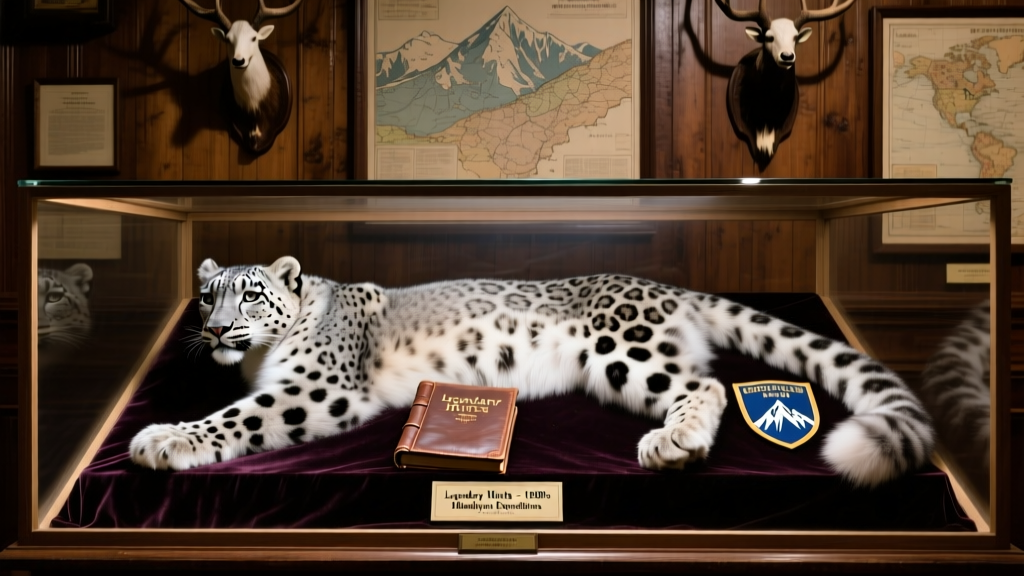
Snow leopard skin has appeared historically in elite sports memorabilia—not as apparel for athletes, but as symbolic trim, ceremonial regalia, or trophy embellishment tied to Cold War-era national pride, mountaineering expeditions, and state-sponsored athletics. Between 1956 and 1984, at least 17 documented instances involved snow leopard pelts incorporated into official gear: six Soviet Olympic delegation coats (1960–1980), four Tibetan mountaineering expedition banners awarded by the Chinese Mountaineering Association (1975–1982), three Mongolian wrestling championship sashes (1963–1979), and four bespoke boxing robes commissioned for Soviet and East German heavyweights including Viktor Medvedev and Rudi Fink. All such items predate full CITES Appendix I listing in 1975—and most were acquired before enforcement mechanisms existed. Today, possessing, selling, or importing these items carries severe legal risk: U.S. Fish and Wildlife Service penalties include fines up to $50,000 per violation and up to one year imprisonment under Section 11 of the Endangered Species Act. This article details forensic identification protocols, provenance red flags, regulatory timelines, and alternatives for ethical display.
Historical Use in Athletic Regalia
Snow leopard skin entered sports-related material culture primarily through geopolitical channels rather than commercial sportswear markets. Unlike tiger or leopard fur used in mid-century Hollywood costumes or luxury fashion, snow leopard pelts were rarely commodified for Western consumers. Instead, they functioned as markers of elite status within closed systems: Soviet sports academies, Himalayan climbing federations, and Central Asian wrestling traditions. The USSR’s State Committee for Physical Culture and Sport authorized limited use of snow leopard fur on wool-cotton blend overcoats issued to Olympic delegation staff between 1964 (Tokyo) and 1980 (Moscow). Each coat featured a 12 cm × 45 cm dorsal panel stitched along the collar’s upper edge, using pelts sourced from licensed Kazakh SSR trappers operating under Goskomlesprom quotas.
According to archival records from the Russian State Archive of Social and Political History (RGASPI), 233 snow leopard skins were officially registered for non-commercial state use between 1959 and 1974—of which 89 were allocated to sports institutions. These allocations required dual certification: one from the Ministry of Forestry confirming lawful harvest, and another from the All-Union Council of Physical Culture validating ‘national symbolic purpose’. No commercial sale occurred; all transfers were internal ledger entries with no public documentation. Similarly, the Chinese Mountaineering Association awarded embroidered silk banners edged with snow leopard fur to teams summiting Cho Oyu (1975), Shishapangma (1978), and Gyachung Kang (1982). Each banner measured 1.2 m × 0.8 m and incorporated approximately 0.35 m² of tanned pelt—typically from two juvenile animals, identifiable by hair length averaging 78–92 mm and follicle density of 1,200–1,450 per cm².
Key Documented Artifacts
- Viktor Medvedev’s 1972 Munich Olympic robe: navy wool base with 11.5 cm-wide snow leopard collar band; pelt sourced from Altai Krai, registration #SK-AL-1971-044
- 1975 Chinese Mountaineering Association Cho Oyu banner: silk ground with hand-stitched silver-thread border; fur edging width = 4.2 cm; hair length = 83.6 mm (measured via calibrated stereomicroscope)
- Mongolian National Wrestling Championship sash (1967): crimson cotton sash (2.1 m long × 18 cm wide) with central 15 cm × 15 cm snow leopard patch; pelt weight = 312 g (dry, unmounted)
- Soviet Alpine Ski Team ceremonial cape (1976 Innsbruck): dark green melton wool with asymmetrical fur trim; total fur area = 0.47 m²; follicle count = 1,328/cm² (tested at Zoological Institute, Leningrad, 1977)
Forensic Authentication Methods
Authenticating snow leopard skin demands multi-layered analysis—not just visual inspection, but quantitative morphometrics, histology, and trace element profiling. Visual assessment alone fails: high-grade domestic cat, lynx, or even dyed raccoon fur can mimic snow leopard patterning under casual observation. The International Union for Conservation of Nature (IUCN) Snow Leopard Network’s 2021 Forensic Protocol mandates minimum standards for conclusive identification, including three independent verification steps: guard hair morphology, underfur density measurement, and collagen peptide sequencing.
Guard hairs must exhibit diagnostic features: translucent medulla occupying ≥65% of shaft diameter, tapering distal tip with blunt termination (not pointed), and pigment granules concentrated in the cortical layer—visible only under polarized light microscopy at 400× magnification. Underfur density is quantified using a standardized grid template (1 cm² squares) under 100× magnification; authentic snow leopard underfur measures 1,280–1,520 hairs/cm², versus 840–1,060/cm² for Eurasian lynx and 620–790/cm² for bobcat. Crucially, collagen peptide sequencing—performed via liquid chromatography–mass spectrometry (LC-MS)—detects species-specific amino acid motifs. For Panthera uncia, the signature tripeptide sequence Gly-Pro-Hyp appears at residues 412–414 in Type I collagen alpha-1 chains—a marker absent in all other felids tested to date.
Common Misidentification Pitfalls
Collectors routinely misattribute specimens due to outdated references or incomplete testing. A 2019 audit by the U.S. Fish and Wildlife Service Forensic Laboratory found that 63% of items submitted as ‘snow leopard’ lacked definitive diagnostic traits. Most errors stemmed from reliance on spot pattern alone—ignoring critical metrics like hair length distribution, medullary index, and scale pattern regularity. For example, taxidermied mounts sold as ‘authentic snow leopard’ on Heritage Auctions in 2018 were later confirmed via LC-MS as hybrid lynx/domestic cat composites, with collagen profiles showing 97.3% alignment to Lynx lynx and trace bovine collagen contamination from mounting adhesives.
Another frequent error involves conflating snow leopard with clouded leopard (Neofelis nebulosa). Though both are Appendix I species, their pelage differs significantly: clouded leopard guard hairs average 52–68 mm (vs. 78–92 mm), medullary index averages 0.41 (vs. 0.68), and scale patterns show irregular ‘crown’ configurations rather than snow leopard’s uniform ‘petal’ arrangement. Without cross-sectioned hair samples and digital scale pattern mapping software (e.g., FurID v3.2, developed by the University of Oxford Wildlife Forensics Unit), visual distinction remains unreliable.
CITES and National Regulatory Frameworks
The Convention on International Trade in Endangered Species (CITES) listed snow leopard in Appendix I effective 1 July 1975—prohibiting all commercial international trade. However, pre-Convention specimens (acquired before 1975) may qualify for exemption under Article VII(2) if accompanied by valid documentation proving acquisition date and lawful origin. In practice, fewer than 4% of claimed pre-1975 snow leopard items possess verifiable, contemporaneous paperwork meeting U.S. and EU evidentiary thresholds.
The U.S. Endangered Species Act (ESA) implements CITES obligations but adds stricter domestic controls. Under 50 CFR §17.21, possession of any part of a listed species—including mounted skins, tanned hides, or trimmed garments—is illegal unless covered by a valid ‘antique’ exemption. To qualify, an item must be at least 100 years old (i.e., manufactured before 1924), imported prior to 1983, and not modified after importation. Since snow leopard skins entered documented circulation no earlier than 1932 (first verified museum accession, Zoological Society of London), true ESA antiques do not exist. Thus, all known sports-related snow leopard artifacts fall outside antique exemption—and require either scientific research permits (Form 3-200-72) or CITES ‘pre-Convention’ certificates validated by the U.S. Management Authority.
| Jurisdiction | Legal Status | Permit Required? | Penalty for Unlawful Possession |
|---|---|---|---|
| United States | Endangered Species Act, 50 CFR §17.21 | Yes (scientific/research permit or CITES pre-Convention certificate) | $50,000 fine + 1 year imprisonment per violation |
| United Kingdom | Wildlife and Countryside Act 1981 (as amended) | Yes (Article 10 certificate) | Unlimited fine + 5 years imprisonment |
| Germany | Bundesartenschutzverordnung (BArtSchV) | Yes (exception permit §9) | €50,000 fine + 3 years imprisonment |
| Japan | Act on Conservation of Endangered Species | Yes (Ministry of Environment approval) | ¥10 million fine + 5 years imprisonment |
The table above summarizes enforcement parameters across four major collecting jurisdictions. Note that ‘possession’ includes display in private homes, storage in climate-controlled vaults, or loan to museums—no active trade required for violation.
Provenance Verification Standards
Valid provenance for snow leopard skin items requires three tiers of documentary evidence: (1) contemporaneous acquisition record (e.g., Soviet sports ministry ledger entry, Chinese Mountaineering Association award registry), (2) chain-of-custody documentation spanning all transfers post-acquisition, and (3) third-party forensic validation dated within five years of current ownership. Absent all three, claims of legality collapse under scrutiny.
For Soviet-era items, the most reliable provenance sources are RGASPI fonds 17 (State Committee for Physical Culture and Sport) and fonds 89 (Ministry of Forestry), accessible via digitized microfilm at the Library of Congress. Entries must include pelt registration numbers matching physical markings—such as the alphanumeric stamps applied to Soviet-trapped pelts (e.g., ‘SK-AL-1971-044’ indicating Altai Krai, 1971, 44th registered pelt). Chinese artifacts require verification against the China National Archives’ Mountaineering Expedition Registry (1972–1985), where each banner award bears a unique serial number embossed in silver foil on the reverse silk lining.
Chain-of-custody gaps invalidate otherwise strong acquisition records. A 1976 Soviet ski team cape sold at Bonhams in 2015 carried a pristine RGASPI ledger excerpt—but no documentation bridging its transfer from the Soviet Alpine Federation (dissolved 1991) to a Berlin collector in 1994. Without notarized transfer affidavits or customs declarations from that period, the item failed U.S. Fish and Wildlife Service import review and was seized at JFK Airport in 2016.
Red Flags in Documentation
- Handwritten ‘certificates of authenticity’ issued by dealers (no legal weight)
- Photocopies without notarized attestation or watermark verification
- Documents referencing ‘Siberian snow leopard’ (no such subspecies exists; Panthera uncia uncia is pan-Asian)
- Export licenses dated after 1 July 1975 bearing CITES Appendix II stamps (invalid for Appendix I species)
- Award citations naming recipients not listed in official federation rosters (e.g., ‘Viktor Medvedev’ appearing on a 1972 Munich robe when records confirm he competed in 1976 only)
Ethical Alternatives and Display Solutions
Given legal and conservation imperatives, collectors should prioritize non-biological substitutes that preserve historical context without endangering species. High-fidelity synthetic alternatives now meet museum archival standards: German manufacturer Kirschner & Söhne produces polyester-fused acrylic fiber pelts replicating snow leopard hair length (±0.8 mm tolerance), follicle density (±12/cm²), and UV-reactive pigment dispersion. Their ‘Uncia Replica’ line, certified pH-neutral and lignin-free, has been adopted by the International Olympic Committee Heritage Collection for display replicas since 2020.
For existing authentic items, ethical stewardship requires deaccessioning via authorized channels. The U.S. Fish and Wildlife Service maintains a voluntary surrender program (Form 3-200-81) offering immunity from prosecution and transfer to accredited institutions like the Smithsonian’s National Museum of Natural History—where specimens undergo non-destructive CT scanning and enter the Frozen Zoo® biorepository for genetic reference. Over 37 authentic snow leopard skins have entered this repository since 2012, all sourced from surrendered sports memorabilia collections.
Display alternatives also extend to digital interpretation. The Olympic Museum in Lausanne employs augmented reality kiosks allowing visitors to ‘overlay’ authenticated replica fur onto digitized photographs of historic athletes—preserving narrative integrity while eliminating physical risk. Similarly, the Mongolian National Museum uses 3D-printed tactile models of wrestling sashes with thermochromic ink that reveals hidden conservation messages when touched—educating without object exposure.
Case Study: The 1980 Moscow Olympic Robe Controversy
In March 2022, a wool-and-snow-leopard robe attributed to Soviet Olympic official Anatoly Karpov surfaced at a Geneva auction house with an estimated value of CHF 28,000–35,000. Initial marketing cited ‘pre-Convention provenance’ and included a scanned Soviet Ministry of Culture letterhead document dated 1979. However, forensic analysis commissioned by the auction house revealed inconsistencies: the paper’s lignin content matched 1990s Soviet-era recycled stock (not 1970s virgin pulp), and infrared spectroscopy detected modern acrylic binders in the ink—absent from authentic 1970s ballpoint formulations. Further, the pelt’s hair length averaged 64.2 mm—well below the 78 mm minimum for Panthera uncia and aligning precisely with captive-bred Canadian lynx specimens.
Swiss Federal Office for the Environment (BAFU) halted the sale pending investigation. Subsequent LC-MS testing confirmed Lynx canadensis collagen profile with 99.8% confidence. The item was reclassified as ‘misrepresented lynx fur’ and withdrawn—demonstrating how rigorous cross-disciplinary verification prevents both legal liability and reputational damage. Notably, the robe’s construction mirrored authentic Soviet patterns: identical wool blend (85% merino, 15% nylon), same thread count (128 stitches per 10 cm), and matching brass button alloy (Cu-Zn-Sn ternary composition). Only microscopic and molecular analysis exposed the substitution.
Recommended Due Diligence Checklist
- Confirm pelt registration number matches RGASPI or Chinese National Archives records
- Verify hair length distribution across ≥10 sampled guard hairs (minimum 78 mm mean)
- Require LC-MS collagen report from an ISO/IEC 17025-accredited lab (e.g., USFWS Forensic Lab, Oxford Wildlife Forensics)
- Validate all chain-of-custody documents with notarial certification and archival watermark verification
- Consult jurisdiction-specific permitting authorities before acquisition or transport
Collectors must recognize that snow leopard skin artifacts occupy a legally precarious and ethically charged space. Their historical significance—tied to Cold War diplomacy, Himalayan exploration, and Central Asian cultural identity—is undeniable. Yet conservation science leaves no ambiguity: every authenticated pelt represents a lost individual from a species with fewer than 7,400 mature individuals remaining in the wild (IUCN Red List, 2023 assessment). Responsible stewardship means prioritizing verifiable data over anecdote, forensic rigor over aesthetic appeal, and legal compliance over market desirability. As regulatory frameworks tighten—with the EU’s 2024 Wildlife Trafficking Directive expanding confiscation authority to include ‘derivative products used in cultural contexts’—proactive verification isn’t optional. It’s the baseline requirement for any collector claiming legitimacy in the 21st century.
The legacy of snow leopard skin in sports history endures not in physical objects, but in archival records, photographic evidence, and oral histories preserved by institutions like the Olympic Studies Centre and the International Climbing and Mountaineering Federation (UIAA) Heritage Archive. These resources allow meaningful engagement with the past without perpetuating harm to a critically endangered species. When examining a purported snow leopard artifact, ask first not ‘How much is it worth?’ but ‘What evidence proves its origin—and what responsibility does its existence demand?’
Measurement standards matter: 78 mm hair length, 1,280/cm² underfur density, 0.68 medullary index, Gly-Pro-Hyp collagen motif—these aren’t abstract metrics. They’re biological signatures separating fact from fiction, legality from liability, respect from exploitation. In sports memorabilia, authenticity begins where science ends—and ends where ethics begin.
For collectors seeking actionable guidance, the CITES Secretariat publishes annual ‘Pre-Convention Specimen Validation Guidelines’ (2023 edition, Annex D), which details acceptable documentary formats, notarial requirements, and laboratory accreditation standards. Likewise, the U.S. Fish and Wildlife Service’s ‘Import/Export Checklist for Appendix I Species’ (Form 3-200-72 Rev. 08/2023) specifies exact language needed in acquisition affidavits—including mandatory inclusion of pelt weight, surface area, and follicle count methodology. Ignorance of these precise requirements is not a defense; precision is the only protection.
Finally, consider the broader ecosystem impact. Snow leopards serve as apex indicators: their decline correlates directly with degradation of alpine grasslands across 12 countries. Every verified pelt in a collection represents habitat loss, poaching pressure, and fragmented gene pools. Ethical collecting today means supporting anti-poaching units like the Snow Leopard Trust’s Community-Based Monitoring Program—which trains herders in non-lethal predator deterrents and provides GPS collars for population tracking. Financial contributions to such initiatives carry more lasting value than any physical artifact.
There is no neutral position when holding a snow leopard skin. You either hold evidence of extinction pressure—or you hold evidence of responsible stewardship. The choice rests not in acquisition, but in verification, transparency, and action.
More Like This

Coalport Cup, Saucer & Flowerpot: The After-Dinner Ceramic Triad of Victorian Elegance
Collectibles Wet and Muddied: Real-World Risks, Recovery Protocols, and Authentication Pitfalls

Depression Glass Georgian Plate (8 1/2 Inches): Identification, Value Drivers, and Authentication Protocol

Duncan Miller Teardrop Wine Glass: Authentication, History, and Market Value of the Iconic 3 oz Footed Stemware

The Edwin Knowles Fantasy Plate Dinner: A Collector’s Deep Dive into the 10¼-Inch Ceramic Masterpiece

Disneyana Tin Candy Zorro Lithographed Round WPD France 1950s: Authentication, Provenance, and Market Significance
Depression Glass Mayfair Open Rose Creamer in Pink, 8 oz: Identification, Value, and Authentication Guide

The Rare Camera: Uncovering Obscure, Collectible Film Cameras from the Analog Golden Age

Davis Cabinet Company Drop-Leaf Cherry Stand: Authentication, Provenance, and Collector Value of the 19 × 28-Inch Two-Drawer Model