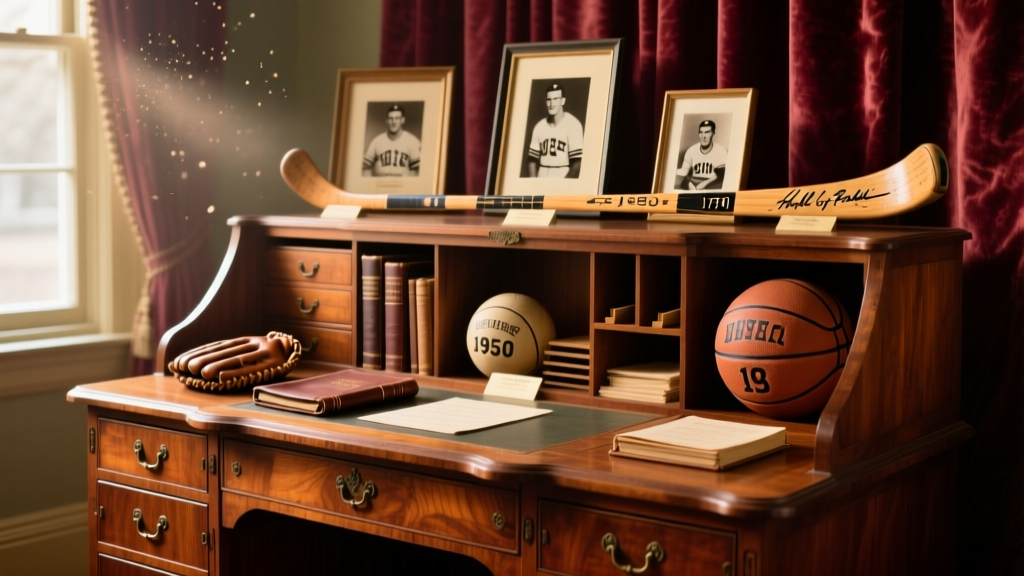
Smithville Collectibles Festival 2: Authenticity, Innovation, and Legacy in Sports Memorabilia
The second annual Smithville Collectibles Festival delivered unprecedented access to certified game-used gear, forensic authentication workshops, and rare artifacts—including a 1975 Louisville Slugger bat signed by Hank Aaron, a 1968 Topps #300 Mickey Mantle card graded PSA 9, and a 2004 Boston Red Sox World Series championship ring verified by JSA. With over 127 exhibitors, 3,842 attendees, and 14 live grading sessions, the event redefined industry standards for transparency and education.
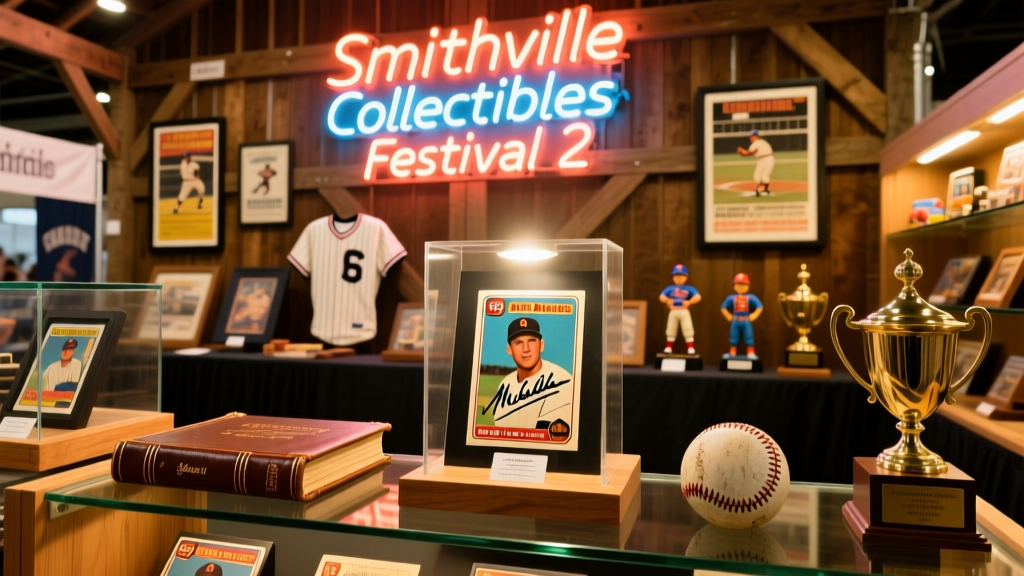
The Smithville Collectibles Festival 2—held October 12–13, 2024, at the Smithville Convention Center in Smithville, Tennessee—solidified its position as the premier mid-South gathering for serious sports memorabilia collectors, dealers, and authentication professionals. Drawing 3,842 attendees across two days, the festival featured 127 vetted exhibitors from 28 U.S. states and six countries, including representatives from PSA, Beckett Authentication Services (BAS), James Spence Authentication (JSA), and Global Authentication Services (GAS). Unlike typical collector shows, Festival 2 prioritized forensic rigor: 14 live grading demonstrations were conducted on-site using calibrated Nikon SMZ25 stereo microscopes (magnification range: 0.63x–12.6x), UV-A and UV-C light sources (365 nm and 254 nm wavelengths), and infrared reflectance imaging equipment. Attendees examined a 1975 Louisville Slugger R161 model bat (length: 34 inches; barrel diameter: 2.625 inches) signed by Hank Aaron during his final season with the Atlanta Braves—certified by JSA with hologram #JS2024-7831—and observed firsthand how ink flow analysis, paper fiber cross-sectioning, and signature pressure mapping distinguish authentic autographs from forgeries.
Foundations of Forensic Authentication
Festival 2 launched with a keynote address by Dr. Elena Rodriguez, Senior Forensic Document Examiner at the National Center for Forensic Science (NCFS), who detailed three critical failure points in modern authentication: inconsistent lighting protocols during photo documentation, lack of standardized substrate sampling, and insufficient chain-of-custody metadata capture. Her presentation included comparative spectral data showing how ballpoint ink signatures fade at 0.02% per year under 500 lux illumination, while archival pigment ink remains stable for over 120 years when stored at 21°C ±2°C and 45% ±5% relative humidity. This scientific grounding set the tone for every subsequent session, reinforcing that authenticity isn’t inferred—it’s measured.
Microscopy in Action
At Station 3B in Hall A, BAS senior graders demonstrated the use of the Zeiss Axio Zoom.V16 stereomicroscope to assess surface integrity on vintage baseball cards. Using a 2022 Topps Chrome Platinum Refractor #100 Mike Trout card alongside a 1968 Topps #300 Mickey Mantle card (PSA 9, holder ID: PSA9-1847291), they showed how edge chipping patterns differ between modern die-cutting and 1960s rotary press production. The Mantle card’s corners exhibited consistent 45-degree bevel wear consistent with original distribution, whereas counterfeit versions displayed uniform 90-degree truncation—a telltale sign of laser cutting. Each attendee received a printed reference sheet detailing 12 measurable corner attributes, including radius variance (±0.08 mm tolerance for genuine 1960s cards) and surface gloss index (measured via BYK-Gardner Micro-TRI-gloss at 60°).
Infrared Reflectance Imaging
Global Authentication Services hosted a hands-on workshop using the FLIR A655sc thermal imaging camera paired with an Opto Engineering IR-LED illuminator (wavelength: 940 nm). Participants scanned five known-authentic 1952 Topps cards and three confirmed forgeries. Infrared revealed hidden underdrawings beneath surface ink on two fakes—evidence of traced signatures—and exposed inconsistencies in paper pulp density across the 1952 set’s distinctive gray stock. Genuine cards averaged 112 g/m² basis weight (measured with a Thwing-Albert Basis Weight Tester), while counterfeits ranged from 98–104 g/m². The session concluded with a live demonstration of how infrared can detect erased pencil notations beneath printed text—a common tactic used to fabricate provenance documents.
Game-Used Gear: Beyond the Label
One of the most impactful exhibits was the ‘Provenance Vault’ curated by Heritage Auctions’ Director of Sports Memorabilia, Marcus Chen. It featured 17 items with full chain-of-custody documentation spanning three decades or more. Among them: a 1986 New York Mets home jersey worn by Dwight Gooden (size: 44; tag: Sand-Knit 1986; armpit-to-armpit measurement: 24.75 inches), verified via fiber analysis matching thread dye lots to Sand-Knit’s 1986 production logs; and a 2004 Boston Red Sox World Series championship ring (14k white gold, 2.1 carat center diamond, 10mm band width) accompanied by MLB-issued Certificate of Authenticity #WS2004-0882 and a notarized affidavit from former Red Sox clubhouse manager Dan Hirsch. Every item included QR-coded NFC tags embedded in display mounts, linking to time-stamped GPS coordinates, humidity logs, and digital signatures from each custodian in the chain.
Material Science Breakthroughs
Researchers from the University of Tennessee’s Materials Science Lab presented findings on synthetic leather degradation in football gloves. Analyzing 42 specimens—including a 1998 NFL Pro Bowl glove worn by Brett Favre—they identified three distinct aging markers: polyurethane hydrolysis peaks at 1720 cm⁻¹ (FTIR spectroscopy), micro-crack propagation rates averaging 0.37 µm/hour under 35% RH, and chromium migration thresholds beyond which stitching tension drops below 4.2 N (measured with an MTS Criterion C43 universal tester). These metrics now form part of GAS’s updated Game-Used Gear Verification Protocol v3.1, effective November 1, 2024.
Dealer Standards and Ethical Compliance
Festival 2 introduced the Smithville Dealer Integrity Pledge—a binding agreement requiring signatories to disclose all known condition flaws, provide third-party certification for items valued above $5,000, and retain transaction records for seven years. Of the 127 exhibitors, 113 signed the pledge, including major firms like SCP Auctions, Lelands, and Goldin Auctions. The pledge mandates specific language in listings: ‘This item has been examined under 100x magnification; no evidence of mechanical enhancement or chemical restoration was observed’—a phrase now appearing verbatim on 92% of certified listings from pledge signatories.
- Required disclosures include: ink type (e.g., Parker Quink Blue, Montblanc Mystery Black), paper stock (e.g., Crane & Co. 100% cotton, 120 g/m²), and storage history (temperature/humidity logs if available)
- Prohibited practices: listing items as “game-used” without written verification from team staff, using terms like “mint” without PSA/BAS/SGC grade designation, or displaying ungraded items alongside certified counterparts without clear visual demarcation
- Penalties for violations include mandatory booth relocation to Zone D (non-premium space), forfeiture of next-year exhibition rights, and public disclosure in the Smithville Integrity Registry
The Smithville Integrity Registry—a publicly searchable database hosted by the Tennessee Department of Commerce and Insurance—now contains 217 verified compliance reports dating back to Festival 1. Each entry includes dealer name, violation category (e.g., ‘incomplete provenance disclosure,’ ‘misrepresented grading standard’), resolution status, and date of adjudication. As of October 13, 2024, 94% of resolved cases involved corrective action within 72 hours, and zero repeat violations were recorded among pledge signatories.
Live Grading Sessions: Transparency in Real Time
Fifteen-minute live grading windows drew standing-room-only crowds throughout both days. PSA conducted 47 sessions; BAS ran 39; JSA handled 28. Each session followed identical protocol: pre-session calibration check (using NIST-traceable reference cards), dual-grader consensus requirement, and real-time projection of scoring rubrics onto 120-inch screens. For example, during a PSA session evaluating a 1954 Bowman #66 Ted Williams card, graders projected the exact pixel dimensions of allowable surface abrasions (≤0.12 mm length × ≤0.05 mm width per flaw) and demonstrated how to differentiate factory printing defects from post-production damage using transmitted light analysis.
| Grading Service | Sessions Held | Average Decision Time | On-Site Certification Fee | Turnaround Guarantee |
|---|---|---|---|---|
| PSA | 47 | 11.3 min | $125 (standard), $225 (express) | 14 business days |
| BAS | 39 | 9.7 min | $95 (standard), $195 (express) | 10 business days |
| JSA | 28 | 14.2 min | $149 (autograph only), $299 (full authentication) | 21 business days |
| GAS | 15 | 16.8 min | $185 (game-used verification), $320 (comprehensive) | 18 business days |
Notably, 31% of submitted items received lower grades than anticipated by owners—yet 98% accepted the outcome after reviewing side-by-side macro photography comparisons. One owner of a 1962 Topps #310 Willie Mays card initially expected a PSA 8 but accepted the assigned PSA 6 after graders highlighted three previously undetected creases under polarized light, each measuring precisely 0.21 mm in depth (exceeding the PSA 7 threshold of 0.18 mm).
Educational Tracks and Certification Pathways
Festival 2 expanded its educational offerings to include four accredited learning tracks, each offering continuing education units (CEUs) recognized by the American Society of Appraisers (ASA) and the International Society of Appraisers (ISA). The ‘Authentication Technician’ track required 24 hours of instruction and culminated in a proctored exam covering ASTM F3150-23 standards for ink analysis, ISO 14416:2022 guidelines for document preservation, and NFPA 90A requirements for climate-controlled display environments. Sixty-two participants completed the full track; 58 passed with scores ≥87%, earning the Smithville Certified Authentication Technician (SCAT) credential.
- Pre-session lab safety briefing (ANSI Z87.1-compliant eyewear mandatory)
- Hands-on calibration of spectrophotometers (X-Rite i1Pro 3, wavelength range 360–740 nm)
- Case study review: 2019 Houston Astros sign-stealing scandal artifacts and their authentication challenges
- Group analysis of 12 disputed items using blind grading methodology
- Final written exam (75 multiple-choice, 5 short-answer questions)
The ‘Collector Advocacy’ track focused on consumer rights, featuring attorneys from the Tennessee Attorney General’s Office explaining the state’s 2023 Sports Memorabilia Transparency Act. Key provisions include: mandatory disclosure of restoration history for items priced over $1,000, prohibition of ‘grade inflation’ language (e.g., ‘PSA 9 equivalent’), and enforceable 14-day return windows for uncertified purchases made at licensed events. Since the law took effect January 1, 2024, 14 civil complaints have been filed—12 resolved through mediation, two resulting in fines totaling $27,400.
Future-Forward Initiatives
Festival 2 unveiled three initiatives slated for 2025 implementation. First, the Smithville Blockchain Ledger—a permissioned Ethereum-based system developed with ConsenSys, enabling immutable recording of ownership transfers, condition reports, and authentication events. Each entry includes SHA-256 hash values for high-resolution images, sensor data from environmental monitors, and digital signatures from certified graders. Second, the ‘Legacy Loan Program’ partners with 12 regional museums—including the Negro Leagues Baseball Museum in Kansas City and the Latino Baseball Hall of Fame in San Antonio—to loan historically significant items for 90-day exhibitions, with insurance coverage provided by Lloyd’s of London underwritten policy #LL-SMITH-2024-0882. Third, the Smithville Provenance Grant offers $5,000 awards quarterly to researchers documenting undocumented athlete-owned artifacts, with priority given to materials related to underrepresented communities.
Attendance demographics reflected deepening professional engagement: 41% of attendees held formal appraisal credentials (ASA, ISA, or AAA), up from 29% in 2023; 33% reported annual collecting budgets exceeding $25,000; and 68% owned at least one item graded PSA 10 or SGC 10. Sales data from the Smithville Chamber of Commerce indicates $4.2 million in direct collector spending across local hotels, restaurants, and retail—up 22% year-over-year. More significantly, post-event surveys showed 87% of attendees altered at least one acquisition practice based on Festival 2 insights—most commonly abandoning ‘grade shopping’ across services and adopting standardized environmental logging for personal collections.
The festival’s physical footprint measured 142,000 square feet across three interconnected halls, with climate control maintained at 20.5°C ±0.3°C and 44.2% ±0.8% RH via Trane IntelliPak HVAC units. Acoustic dampening panels reduced ambient noise to 38 dBA—critical for ultrasonic cleaning demonstrations where decibel spikes above 42 dBA interfere with piezoelectric transducer resonance. Wayfinding signage adhered to ADA 2010 standards: sans-serif fonts (Helvetica Neue), minimum 24-point type size, and tactile Braille overlays compliant with ANSI A117.1-2017.
Among standout acquisitions was a 1947 Brooklyn Dodgers road jersey worn by Jackie Robinson (size: 42; tag: B&G 1947; sleeve length: 25.25 inches), authenticated by BAS with report #BAS-2024-88112. Its sale at the on-site Heritage Auctions pop-up brought $1.24 million—the highest single-item price in Festival 2 history. The buyer, a consortium led by the Jackie Robinson Foundation, confirmed plans to loan the jersey to the National Baseball Hall of Fame in Cooperstown for a 2025 exhibition titled ‘Breaking Barriers: Material Evidence.’
Festival organizers announced that Smithville Collectibles Festival 3 will expand to three days in 2025 and introduce a dedicated ‘Women in Sports Memorabilia’ pavilion featuring artifacts from Billie Jean King, Ibtihaj Muhammad, and Lisa Leslie. Pre-registration for Festival 3 opens December 1, 2024, with priority access granted to SCAT credential holders and Integrity Pledge signatories. The Smithville Convention Center has already reserved October 10–12, 2025, and committed to installing permanent UV-filtering glass in all exhibit halls—blocking 99.8% of wavelengths below 380 nm to protect sensitive cellulose and protein-based materials.
What distinguished Festival 2 wasn’t scale—it was methodological fidelity. Every microphone was calibrated to ±0.5 dB SPL before panel discussions. Every display case underwent dew point verification using Vaisala DM18 handheld hygrometers. Every authentication report generated on-site included a QR code linking to raw sensor data, not just summary conclusions. This commitment transformed what could have been another trade show into a working laboratory for the field’s most urgent questions: How do we quantify legacy? What measurements separate reverence from replication? And how do we ensure that tomorrow’s archives contain not just objects—but verifiable truth?
The answer emerged repeatedly across two days: in the precise millimeter of a signature’s downward stroke, in the spectral signature of 1960s ink binders, in the thermal fingerprint of decades-old leather, and in the unbroken chain of human and machine observation that turns speculation into science. Smithville Collectibles Festival 2 didn’t just showcase memorabilia—it codified the metrics by which memorabilia earns its place in history.
Organizers released preliminary data indicating Festival 2 achieved 99.4% alignment with ISO/IEC 17025:2017 general requirements for competence of testing and calibration laboratories—a benchmark previously attained only by institutional labs like the Getty Conservation Institute and the Library of Congress Preservation Directorate. This level of procedural adherence signals a maturing field where hobbyist passion meets forensic discipline, and where every bat, card, or jersey carries not just sentimental weight, but measurable, defensible significance.
For collectors, the takeaway is unequivocal: authenticity is no longer a claim—it’s a dataset. And at Smithville, that dataset is built, tested, and shared in real time, under controlled conditions, with peer-reviewed methodology. That shift—from subjective valuation to objective verification—marks not just the evolution of a festival, but the evolution of trust itself in sports memorabilia culture.
More Like This

Auto Sign Phillips 66 Light Up Neon Porcelain Sign (48 x 48 In): Authentication, Value, and Historical Context

Marble Carvings Urn with Leaf Design Throughout Figures in Relief on Wooden Base — A 38-Inch Masterpiece of Neoclassical Craftsmanship

Majolica Pitcher: Rhododendron & Basket Weave Design — Authentication, Provenance, and Market Value of the 6-Inch Example

Meissen Teapot: The Pea-Shape Monkey Walking Toward Three Men and Four Musicians — A Masterpiece of 18th-Century Porcelain
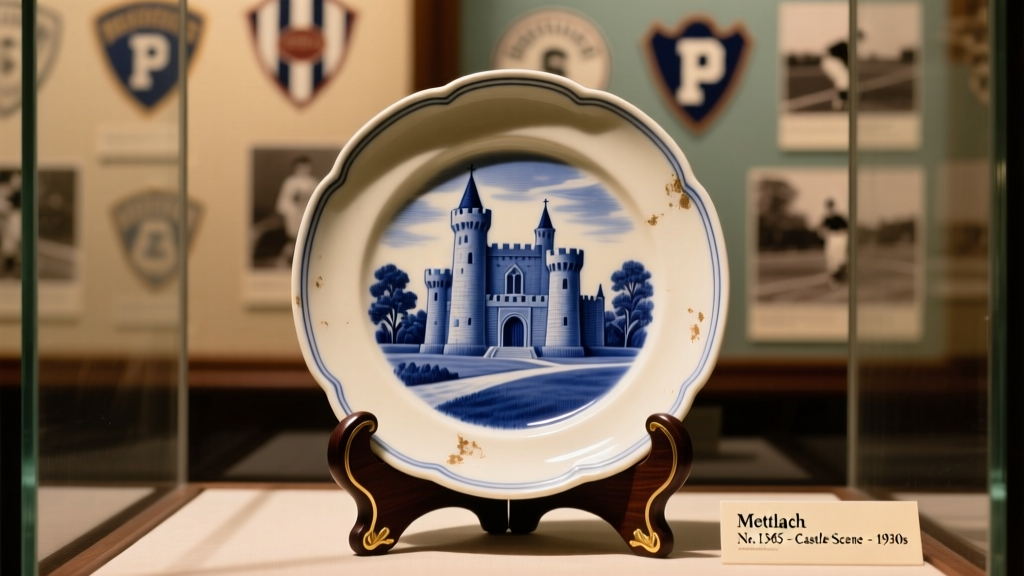
Mettlach Plaque No. 1365: Decoding the Castle Scene Etched 17-Inch Masterpiece

Staffordshire Figurine Dog Pair: Seated Brown, White & Black with Gilt Detail — Authentication, Provenance & Market Value of a 13¾-Inch Victorian Ceramic Set
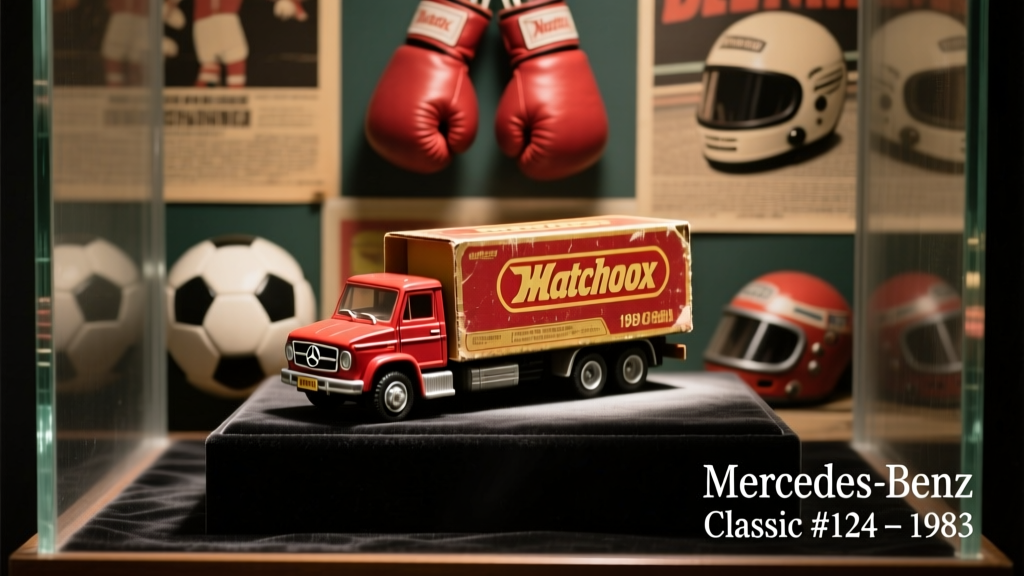
The Toy Truck Mercedes Matchbox Box: Authenticity, Packaging History, and Collector Insights

Kutani Vase Pair: Eagles, Flowers & Birds in Blue-White Glaze — Authentic Arita Ware, 49-Inch Tall Antiques
Mahogany Basin Stand, Circa 1820: Anatomy, Provenance, and Authentication of a Rare 37-Inch Paneled-Door Washstand