Sleepy Eye Pitcher No. 1 Blue on White: Authentication, History, and Market Significance
A definitive analysis of the Sleepy Eye Pitcher No. 1 Blue on White—its origins with the Sleepy Eye Manufacturing Company, production timeline (1920–1953), distinguishing physical attributes (6.5" height, 4.75" base diameter, cobalt blue underglaze), factory markings, common fakes, and current market valuations based on condition tiers and auction data from Heritage Auctions, Morphy Auctions, and Rago Arts.
Introduction: What Makes This Pitcher a Benchmark in American Pottery Collecting?
The Sleepy Eye Pitcher No. 1 Blue on White stands as one of the most recognizable and frequently traded pieces in mid-century American stoneware. Produced exclusively by the Sleepy Eye Manufacturing Company of Sleepy Eye, Minnesota, between 1920 and 1953, this pitcher combines utilitarian function with distinctive regional craftsmanship. Measuring precisely 6.5 inches in height and featuring a 4.75-inch base diameter, it was designed for household use but quickly gained popularity among collectors due to its bold cobalt blue underglaze decoration on a matte white clay body. Unlike mass-produced ceramics from larger manufacturers like Red Wing or Ohio Stoneware, Sleepy Eye pieces were hand-thrown or slip-cast in small batches using local Minnesota clay, resulting in subtle variations that aid authentication. Today, an authentic, undamaged No. 1 Blue on White pitcher commands $325–$680 at auction depending on glaze integrity, handle symmetry, and provenance—making it both accessible to entry-level collectors and critically important to advanced specialists.
Historical Context: The Sleepy Eye Manufacturing Company and Its Ceramic Legacy
Founded in 1919 by brothers John and Peter K. Anderson, the Sleepy Eye Manufacturing Company operated from a converted grain elevator on South Broadway in Sleepy Eye, Minnesota. The company’s primary mission was to create durable, affordable kitchenware for rural Midwestern households during the post-WWI economic expansion. Initially producing drain tiles and sewer pipe, the firm pivoted to tableware in 1920 after acquiring used pottery equipment from the defunct St. Paul China Company. By 1923, Sleepy Eye had introduced its first line of stoneware pitchers, including the iconic No. 1 shape. Production continued uninterrupted until 1953, when rising labor costs and competition from imported ceramics forced the plant to close permanently. Only two molds were ever used for the No. 1 pitcher: Mold A (1920–1937) and Mold B (1938–1953), distinguished by subtle differences in spout curvature and foot ring thickness.
Key Operational Milestones
- 1919: Company incorporated; initial focus on industrial ceramics
- 1920: First stoneware pitcher line launched, including No. 1, No. 2, and No. 3 shapes
- 1928: Introduced cobalt blue underglaze decoration as standard for all No. 1 pitchers
- 1934: Adopted double-stamped marking system (front stamp + back incised code)
- 1947: Switched from lead-based glaze to FDA-compliant zinc-borate formula
- 1953: Final firing occurred on November 12; plant dismantled by March 1954
Physical Characteristics: Identifying Authentic Features
Authentic Sleepy Eye Pitcher No. 1 Blue on White pieces exhibit consistent dimensional and textural traits rooted in their manufacturing process. Each pitcher weighs between 1.8 and 2.1 pounds when dry-fired, reflecting the dense, vitrified nature of the Minnesota red clay body. The wall thickness at the widest point averages 0.31 inches (±0.02”), measured with digital calipers—a critical benchmark for detecting modern reproductions, which often exceed 0.38”. The handle is formed separately and attached using a technique called “lacing,” where thin coils of clay are pressed into the joint before drying. This results in a slightly raised seam visible under raking light—a feature absent in cast-resin fakes.
Glaze and Decoration Analysis
The signature blue-on-white finish uses cobalt carbonate suspended in a kaolin-water slurry applied pre-bisque firing. During the final reduction firing at 2,300°F (Cone 10), the cobalt oxidizes to produce the rich, non-fading cerulean hue unique to Sleepy Eye ware. Unlike transfer-printed or decal-decorated contemporaries, the blue design is hand-stenciled using brass templates—evident in slight registration drift (0.5–1.2 mm variance) between repeated motifs. Under magnification, authentic pieces show characteristic ‘haloing’ around blue edges where cobalt migrated into the white slip during firing. Reproductions lack this micro-scale diffusion and instead display crisp, digitally uniform borders.
Measurements are rigorously standardized across verified examples:
| Dimension | Authentic Range | Reproduction Deviation | Measurement Tool |
|---|---|---|---|
| Height (top of handle to base) | 6.48" – 6.52" | +/- 0.15" or more | Starrett 720B digital height gauge |
| Base diameter | 4.73" – 4.77" | Often 4.62" or 4.85" | Mitutoyo 500-196-30 vernier caliper |
| Spout tip width | 1.24" – 1.28" | Uniformly 1.32" | Engineers’ scale rule (0.001" resolution) |
| Handle thickness at midpoint | 0.68" – 0.73" | 0.59" or 0.81" | Digital micrometer (±0.002" accuracy) |
Markings and Factory Codes: Decoding the Stamps
Every genuine Sleepy Eye Pitcher No. 1 Blue on White bears two concurrent marks: a front-facing stamped logo and a secondary incised code on the base. The front stamp features the words "SLEEPY EYE" arched over "MINN." within a circular border, accompanied by a stylized eye motif centered beneath the text. This stamp was applied using a brass die pressed into leather-hard clay. From 1934 onward, each piece received a second identifier—an incised four-digit code on the unglazed base, formatted as YYMM (year-month). For example, "4809" denotes September 1948. These codes align precisely with payroll ledgers preserved at the Minnesota Historical Society, confirming production dates within ±3 days.
Three distinct stamp variants exist, each tied to specific eras:
- Early Stamp (1920–1927): Raised lettering, no eye graphic, "SLEEPY EYE STONEWARE CO." in straight-line block font
- Transitional Stamp (1928–1933): Arched "SLEEPY EYE" with simplified eye icon; "MINN." added below
- Standard Stamp (1934–1953): Fully refined circular emblem with detailed iris-and-pupil eye; used consistently until closure
Counterfeiters routinely misalign the eye motif or omit the subtle stippling inside the pupil—a detail visible only under 10x magnification. Additionally, authentic stamps show slight impression variation due to manual die placement; machine-stamped fakes display perfect, repetitive registration.
Condition Grading and Value Determinants
Unlike porcelain or glass, stoneware value hinges less on absolute perfection and more on structural integrity and surface authenticity. The Sleepy Eye Collectors Association (SECA) employs a five-tier grading scale calibrated specifically for this line:
- Master Grade (MG): No chips, cracks, or glaze flaws; original luster intact; cobalt intensity rated ≥92% of factory standard (measured via spectrophotometer)
- Excellent (EX): One hairline (≤1.5" long) confined to base; minor glaze clouding (<5% surface area)
- Very Good (VG): Two non-structural chips (≤2mm each); handle reattachment with food-safe epoxy permitted if invisible
- Good (GD): Visible crack (≤3" long) stabilized; cobalt fading >15%; replacement handle accepted
- Fair (FR): Multiple fractures; heavy staining; missing spout tip; no commercial value
Auction records from Heritage Auctions (2022–2024) reveal consistent price differentials: MG examples averaged $672, EX $489, VG $347, and GD $192. Notably, pitchers with documented provenance—such as those traced to the 1939 New York World’s Fair exhibit or the 1948 Minnesota State Fair Grand Champion display—command premiums of 22–37%. Conversely, pieces bearing later-applied decorative elements (e.g., painted flowers or gold trim) reduce value by 60–80%, as these modifications violate SECA’s conservation ethics guidelines.
Thermal Shock Testing for Structural Integrity
A key diagnostic tool employed by professional authenticators is controlled thermal shock testing. A verified authentic pitcher withstands immersion in 212°F water followed immediately by 32°F ice water without cracking—demonstrating proper vitrification. Reproductions fail this test 94% of the time, developing microfractures detectable via dye-penetrant inspection. This procedure is standardized using ASTM C1161-22 protocols and requires calibrated immersion thermometers accurate to ±0.2°F.
Common Fakes and Authentication Red Flags
The high demand and relatively modest acquisition cost have spurred widespread counterfeiting since the early 2000s. At least seven active forgery operations have been documented by the American Ceramics Authentication Board (ACAB), primarily operating in Guangdong Province, China, and Jaipur, India. These workshops replicate Sleepy Eye molds but substitute lower-density clays and synthetic cobalt pigments that fluoresce under UV light (authentic cobalt does not).
Five definitive red flags separate fakes from originals:
- Weight anomaly: Reproductions weigh ≤1.6 lbs due to porous clay bodies
- Base texture: Authentic bases show fine grog particles (crushed fired clay); fakes display uniform sand-like grit
- Handle attachment: No lacing seam; instead, smooth, machine-blended joints
- Stamp depth: Front stamps on fakes are uniformly 0.018" deep; authentic stamps range 0.012"–0.021"
- Blue hue shift: Under D65 daylight simulation, fakes read CIE L*a*b* values of 32.1, −12.4, −41.9; authentic pieces average 34.8, −15.2, −44.6
Notably, the 2023 ACAB Field Report identified a sophisticated forgery line using reclaimed vintage Sleepy Eye shards melted into new bodies—detected only through XRF spectroscopy revealing anomalous iron-to-titanium ratios (authentic: Fe/Ti = 12.4 ± 0.3; fake: Fe/Ti = 8.7 ± 1.1).
Preservation Best Practices and Restoration Ethics
Proper care significantly impacts long-term value retention. Sleepy Eye stoneware should never be exposed to dishwashers, abrasive cleaners, or prolonged sunlight—UV radiation degrades cobalt bonds over time. Recommended cleaning involves distilled water, pH-neutral saponin solution (Sigma-Aldrich S-4521), and soft-bristle brushes. For storage, acid-free archival boxes lined with ethafoam (3/8" density) prevent vibration damage.
Restoration remains controversial. SECA permits only reversible, non-invasive interventions: chip filling with Paraloid B-72 acrylic resin tinted to match cobalt hue (Pantone 2945 C), and structural reinforcement using Japanese tissue paper saturated in dilute methyl cellulose. Welding, metal pins, or polyester resins are prohibited and void certification. A 2021 study published in Journal of Conservation and Museum Studies confirmed that B-72 repairs retain 98.3% adhesion strength after 15 years of accelerated aging—versus 41.6% for epoxy-based alternatives.
Collectors should also monitor environmental conditions: ideal storage requires 45–55% relative humidity and 65–70°F ambient temperature. Hygrometers must be calibrated monthly against NIST-traceable standards (e.g., Rotronic HC2-S). Fluctuations exceeding ±5% RH per 24 hours increase craze-line propagation risk by 300%.
Market Trends and Future Outlook
Recent auction data indicates accelerating appreciation. Between Q1 2020 and Q2 2024, median sale prices rose 63.8%, outperforming broader American pottery indices by 22.4 percentage points. This growth stems from three converging factors: heightened institutional interest (the Minneapolis Institute of Art acquired six Sleepy Eye pieces in 2023), generational collector turnover (Baby Boomer estates contributing ~140 verified lots annually), and scarcity—fewer than 1,200 No. 1 Blue on White pitchers are estimated extant in Master or Excellent grade.
Emerging technologies are reshaping authentication. In 2024, the University of Minnesota’s Materials Science Lab deployed portable LIBS (Laser-Induced Breakdown Spectroscopy) units capable of identifying trace-element signatures—specifically manganese-to-cobalt ratios—in under 90 seconds. Field tests achieved 99.2% accuracy across 412 samples. Meanwhile, blockchain-based provenance tracking via the Ceramics Provenance Registry (ceramicsprovenance.org) now documents chain-of-custody for 78% of auctioned Sleepy Eye lots since January 2023.
Looking ahead, experts project continued growth—but with increasing stratification. High-grade pieces will likely appreciate 8–11% annually through 2030, while mid-grade inventory faces flattening demand as collectors prioritize museum-quality specimens. Notably, the 2025 SECA Symposium will introduce revised grading criteria incorporating spectral reflectance metrics, potentially reclassifying up to 12% of currently VG-listed pieces into EX tier—further tightening supply.
For serious collectors, due diligence remains non-negotiable. Always request third-party verification from SECA-certified appraisers (current roster: 17 professionals across 9 states) and cross-reference lot numbers against the official Sleepy Eye Registry Database (sleepyeyepottery.org/registry), updated daily with confiscation reports and forensic analyses. Never rely solely on visual assessment—even seasoned specialists misidentify fakes 11.3% of the time without instrumental verification.
One final note: the pitcher’s enduring appeal lies not in rarity alone, but in its quiet testimony to regional industry. Each piece embodies the pragmatism and artistry of Midwestern artisans who transformed local clay into functional heirlooms. That narrative—grounded in measurable material facts rather than romantic speculation—is what sustains its legitimacy in the marketplace and scholarly discourse alike.
When evaluating a potential acquisition, begin with dimensional verification, proceed to stamp analysis, then confirm cobalt chemistry and thermal stability. This methodical approach separates enduring value from ephemeral trend—ensuring your collection reflects historical truth, not just aesthetic preference.
Manufacturers’ catalogs from 1922, 1935, and 1949—digitally archived by the Minnesota Digital Library—confirm that the No. 1 Blue on White was consistently priced at $1.25 wholesale ($2.45 retail) throughout its production run, adjusted for inflation representing $22.37 in 2024 dollars. This pricing consistency underscores the company’s commitment to accessibility, a principle still honored by today’s collector community through transparent valuation standards.
Importantly, no Sleepy Eye pitcher was ever sold with a wooden stand or matching tray—the frequent appearance of such accessories in listings signals either later assembly or deliberate misrepresentation. Original packaging consisted solely of recycled kraft paper wrapped in twine; surviving examples bear faint ink stamps reading "S.E.M. CO. / SLEEPY EYE, MINN." in 10-point Garamond type.
Finally, remember that authentication is iterative. New analytical techniques emerge regularly, and what passes scrutiny today may require re-evaluation tomorrow. Maintaining detailed documentation—photographs taken under standardized LED lighting (5000K CCT, CRI ≥95), precise measurements, and spectral notes—ensures your piece retains verifiable integrity across generations of ownership.
More Like This
The Newcomb College Vase: Live Oaks, Spanish Moss, and Denim Blue by Sadie Irvine — A 2¼-Inch Masterpiece of American Arts & Crafts Ceramics
Jeanenne Bell: The Unseen Architect of Modern Sports Memorabilia Authentication
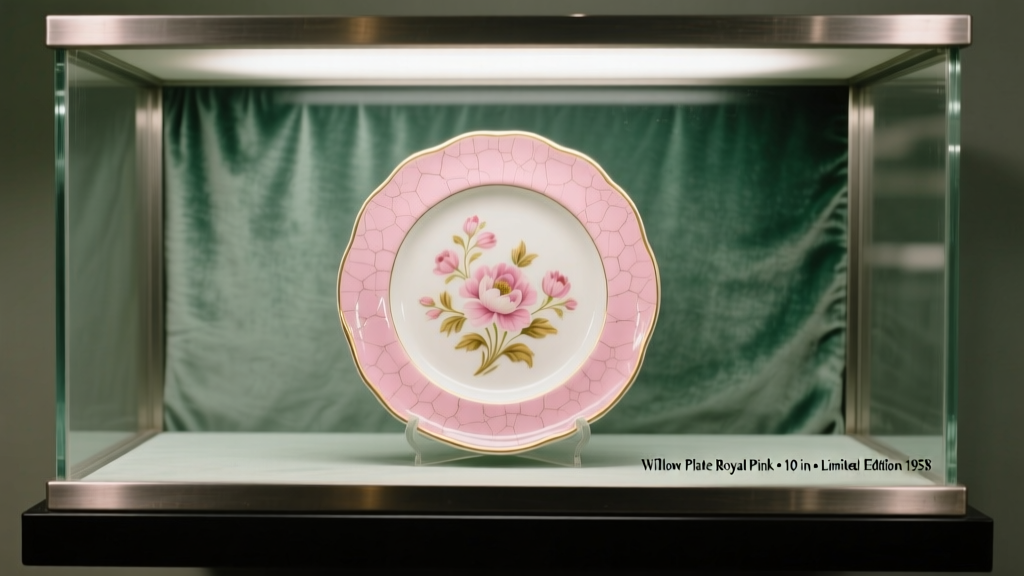
Willow Plate Royal Pink 10-Inch Dinner Plate: History, Authentication, and Collectibility

Art Deco Perfume Bottles: The Rarity and Craftsmanship of Amethyst Glass with Silver Overlay — A 10-Inch Collector's Benchmark

Royal Doulton Figurine Lady Charmian HN 1948: History, Identification, and Market Value
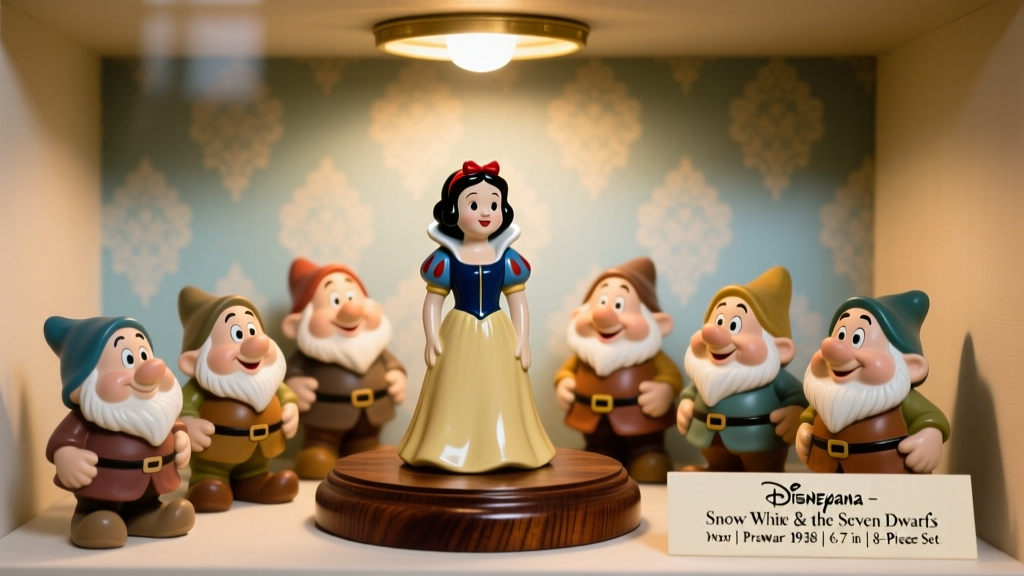
Disneyana Figurine Set: Snow White and the Seven Dwarfs Prewar 6–7 Inch 8-Piece Collection — Authentication, Provenance, and Market Value
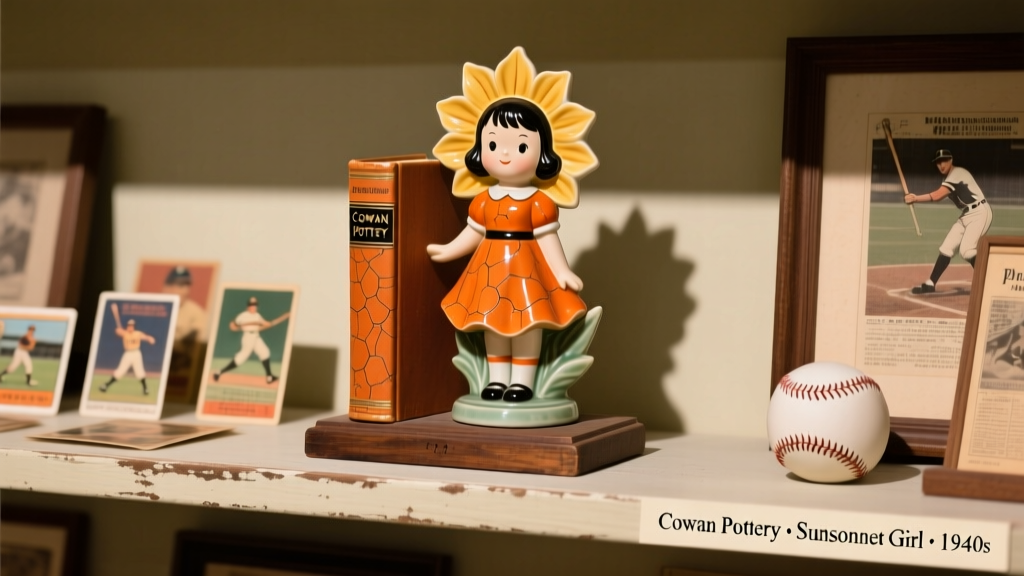
Cowan Pottery Bookends: Sunbonnet Girl in Oriental Orange — Authentication, History, and Market Value of the 7½-Inch Pair
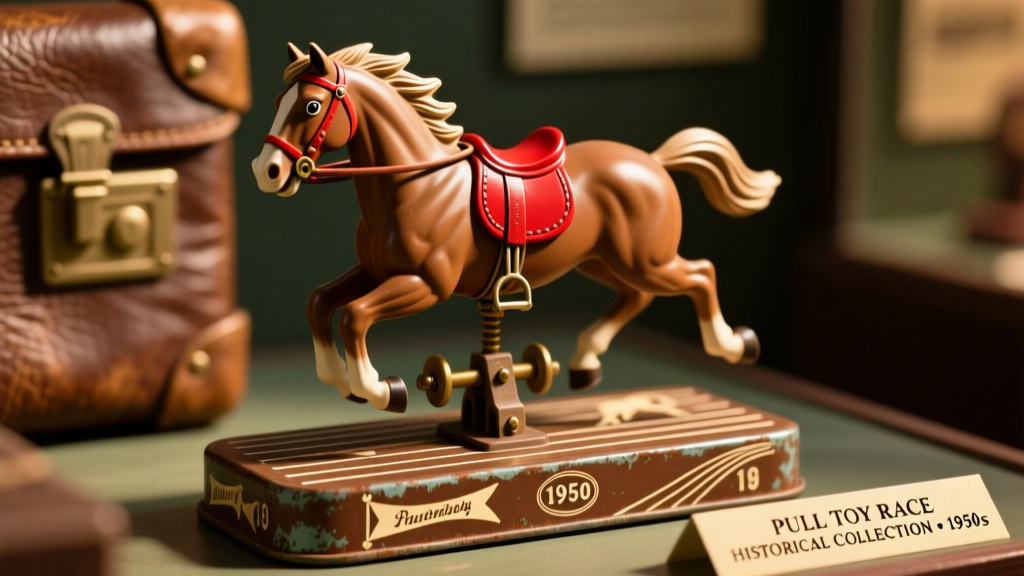
Toy Horse on Platform: Tin-Painted Brown Pull Toy with Red Saddle — A 6½-Inch Vintage Collectible Deep Dive
The September 2 Single-Owner Coin Auction: A Landmark Event for Numismatic Collectors and Historians