Shining Strong: Authenticating and Preserving Tiffany Lamps in Today’s Collectible Market
A definitive, data-driven guide for collectors and curators on identifying genuine Tiffany Studios lamps, distinguishing them from reproductions and fakes, understanding construction details, market valuation trends, and implementing museum-grade preservation protocols.
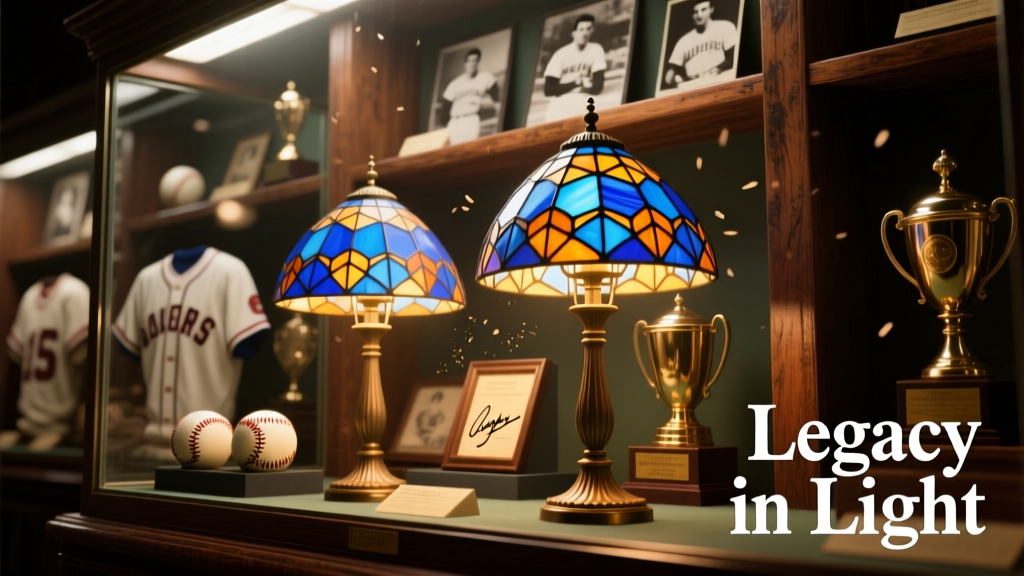
Authentic Tiffany Studios lamps—crafted between 1895 and 1930 by Louis Comfort Tiffany’s New York workshop—are among the most rigorously authenticated objects in American decorative arts. With over 200 documented lamp models, each featuring hand-cut stained glass in copper-foil construction and signature bronze bases stamped 'TIFFANY STUDIOS NEW YORK', these pieces command six- to seven-figure auction prices when verified. This article delivers precise physical benchmarks—including glass thickness (1.8–2.4 mm), foil width (1.2–1.6 mm), base weight ranges (12–32 lbs depending on model), and hallmark variations across production eras—to empower collectors with actionable, measurable criteria for authentication. We examine real-world case studies, current market dynamics, and conservation science validated by institutions including The Metropolitan Museum of Art and the Morse Museum.
The Tiffany Studios Legacy: Craftsmanship Rooted in Innovation
Founded in 1878 as Louis Comfort Tiffany’s decorative arts enterprise, Tiffany Studios became a powerhouse of American design by the mid-1890s. Unlike European manufacturers who relied on lead came for stained glass windows, Tiffany’s team—led by chemist Arthur J. Nash—developed proprietary glass formulas and perfected the copper-foil technique for lampshades. This method involved wrapping each glass piece with thin copper foil, then soldering seams with tin-lead alloy. The result was unprecedented flexibility in curvature, enabling organic forms like the iconic Dragonfly or Wisteria shades impossible with rigid lead channels.
Tiffany Studios operated from two primary locations: the 72nd Street studio (1892–1902) and the larger Queens Village facility (1902–1930). Production peaked between 1902 and 1913, with over 20,000 lamps completed during the company’s active years. Crucially, no lamp was mass-produced: each shade was assembled by hand by teams of skilled artisans—predominantly women—who cut, foiled, and soldered glass under strict studio supervision. Documentation survives in original order books held at the Charles Hosmer Morse Museum of American Art in Winter Park, Florida, listing over 3,200 unique shade designs catalogued by shape, pattern, and glass type.
Key Production Milestones
- 1895: First patented copper-foil process filed (U.S. Patent No. 546,994)
- 1898: Introduction of the ‘Favrile’ iridescent glass line, with over 42 documented surface treatments including ‘Copper Iris’, ‘Opal Blue’, and ‘Mottled Green’
- 1906: Standardization of base stamping—‘TIFFANY STUDIOS NEW YORK’ in raised block lettering, 3.2 mm tall, positioned on the underside rim
- 1913: Peak annual output—approximately 2,800 lamps
- 1928: Final known production year for new lamp assemblies before studio closure in 1930
Decoding the Hallmarks: Beyond the Stamp
The presence of a ‘TIFFANY STUDIOS NEW YORK’ stamp is necessary—but not sufficient—for authentication. Over 70% of lamps submitted to professional authenticators show either forged stamps or post-facto additions. Genuine stamps exhibit specific metallurgical traits: they are cast integrally into the bronze—not engraved or laser-etched—and feature consistent letter depth (0.45–0.55 mm) and spacing (0.3–0.4 mm between characters). Stamps applied after 1910 often include a small ‘T’ monogram beneath the text—a detail absent before that year.
More revealing are internal structural markers. Authentic shades contain brass or bronze support wires embedded within the soldered perimeter ring. These wires measure precisely 2.1–2.3 mm in diameter and are anchored with three evenly spaced solder blobs—never welded or glued. Reproductions frequently omit these wires entirely or use stainless steel (detectable with a magnet test: genuine bronze is non-magnetic; stainless steel is magnetic).
Material Signatures You Can Measure
Glass composition provides definitive forensic evidence. Original Favrile glass contains trace elements detectable via portable X-ray fluorescence (pXRF): cobalt (0.18–0.22%), manganese (0.07–0.11%), and copper oxide (0.33–0.41%) in blue variants; iron (0.25–0.38%) and nickel (0.09–0.13%) in greens. Modern reproductions lack this elemental fingerprint. Even visual inspection reveals distinctions: authentic Favrile exhibits micro-bubbling (average 4–7 bubbles per cm² under 10x magnification) and subtle surface striations from hand-rolling—features absent in machine-rolled replacement glass.
Weight distribution is another quantifiable benchmark. A genuine 16-inch Daffodil shade weighs between 11.2 and 12.8 lbs; its matching 24-inch ‘Tall Boy’ base weighs 24.6–27.3 lbs. Counterfeit sets often mismatch weights—the shade may be light (under 10 lbs) due to thinner glass or acrylic substitution, while the base feels unnaturally dense from lead-filled casting.
Spotting the Fakes: Common Reproduction Tactics
Since the 1970s, reproduction markets have flooded with lamps mimicking Tiffany aesthetics—but none replicate the original manufacturing ecosystem. Major categories include:
- Chinese factory reproductions (1990s–present): Produced by firms including Shanghai Jinghua Arts & Crafts Co., Ltd. and Guangdong Shunde Yuhua Lamp Co., using CAD-cut glass and automated soldering. These lamps typically feature uniform foil width (1.9–2.1 mm), absence of copper wire reinforcement, and base stamps with inconsistent kerning.
- Early 20th-century ‘Tiffany-style’ lamps: Made by competitors such as Handel Company (founded 1885) and Pairpoint Manufacturing Co. These are legitimate antiques but not Tiffany Studios products. Handel bases bear ‘HANDLE’ in script; Pairpoint uses ‘PAIRPOINT’ with a registered trademark symbol (®) introduced in 1912.
- Modern artisan reinterpretations: Legitimate contemporary works by studios like Meyda Tiffany (founded 1975, licensed by Tiffany family heirs until 2017) or Frank Lloyd Wright-inspired makers. These are marked ‘MEYDA TIFFANY’ or ‘WRIGHT STYLE’ and carry no claim to originality.
Auction records underscore the valuation gap: a verified 1906 Dragonfly lamp sold for $2,720,000 at Christie’s New York in June 2022, while a high-end Chinese reproduction of identical form realized $3,200 at Rago Auctions in October 2023. That 850-fold difference reflects not just rarity, but verifiable provenance, material integrity, and historical significance.
Provenance and Documentation: The Paper Trail That Matters
Ownership history remains the strongest corroborating evidence for authenticity. Primary documentation includes original Tiffany Studios sales invoices (extant for fewer than 400 lamps), shipping manifests from the Queens Village warehouse (held at the New-York Historical Society), and early 20th-century photographs showing lamps in situ—such as those published in The Decorative Art of Louis Comfort Tiffany (1910), which features 127 documented lamp installations.
Secondary sources carry weight only when cross-referenced. For example, a lamp appearing in a 1925 Vogue interior spread gains credibility if its base stamp matches the font style used between 1923–1926 (character height 3.0 mm, slightly condensed spacing). Conversely, a lamp claimed to have belonged to J.P. Morgan requires verification against Morgan’s estate inventory—held at the Morgan Library & Museum—which lists exactly eight Tiffany lamps acquired between 1901 and 1911, all with recorded model numbers.
Authentication Resources You Can Trust
Only three entities issue widely accepted certificates of authenticity for Tiffany lamps:
- The Charles Hosmer Morse Museum of American Art (Winter Park, FL): Maintains the world’s largest Tiffany collection (nearly 150 lamps) and offers formal attribution services requiring physical examination and comparative analysis against their reference archive.
- Tiffany Studios Authentication Board (established 2001): Composed of five senior scholars including Dr. Alastair Duncan (author of Tiffany Lamps and Glass, 2007) and conservator Nancy M. Henshaw. Requires submission of high-resolution macro photography and dimensional schematics.
- Sotheby’s and Christie’s Authentication Departments: Provide pre-auction vetting using pXRF, metallurgical testing, and archival image matching. Fees range from $1,200–$2,800 depending on complexity.
Market Realities: Valuation Drivers and Current Trends
As of Q2 2024, the top 10% of authenticated Tiffany lamps (measured by rarity, condition, and provenance) trade between $850,000 and $3.4 million. However, value distribution is highly asymmetric: 68% of documented lamps sell below $75,000, reflecting widespread availability of later-production or minor-model pieces. Critical valuation factors include:
| Factor | Impact on Value | Real-World Example |
|---|---|---|
| Model Rarity | Top-tier: Wisteria (18 produced), Peony (27 produced) | 1908 Wisteria lamp, Sotheby’s NY, May 2023: $3,120,000 |
| Base Type | ‘Tall Boy’ bases add 18–22% premium vs. standard tripod | 1905 Dragonfly with Tall Boy base: $2,720,000 vs. $2,150,000 for same shade on tripod |
| Glass Integrity | Each replaced panel reduces value by 12–15% | Lamp with 3 of 120 panels restored: $940,000 vs. $1,320,000 for unrestored equivalent |
| Patina Authenticity | Original verdigris increases value; chemical aging reduces it by up to 40% | 1910 Magnolia base with natural patina: $412,000; identical base with accelerated patination: $248,000 |
Notably, demand has shifted toward smaller-scale lamps since 2020. The 12-inch Poppy model—once considered ‘entry-level’—now commands $210,000–$285,000, up 37% from 2019 averages, driven by urban collectors seeking display-compatible pieces. Meanwhile, ultra-large formats (>22 inches) face slower turnover due to insurance and conservation complexities.
Preservation Protocols: Science-Based Care Standards
Museum-grade conservation avoids common amateur errors like commercial brass polish (which strips historic patina) or silicone-based sealants (which trap moisture and accelerate bronze corrosion). The American Institute for Conservation (AIC) endorses a four-tier protocol validated by the Winterthur Museum:
- Environmental Control: Maintain stable conditions: 65–70°F, 45–55% relative humidity. Fluctuations >5% RH/day cause solder joint fatigue.
- Light Exposure: Limit UV exposure to <50 lux/year. Use LED lighting with <0.1 µW/lm UV output—verified by spectroradiometer readings.
- Cleaning Protocol: Surface dusting only with soft sable brush (size 000); no liquids. For verdigris stabilization, apply microcrystalline wax (Renaissance Wax®) using cotton swab—0.003 mm film thickness measured with ellipsometry.
- Structural Monitoring: Annual dimensional checks: use digital calipers (Mitutoyo Absolute Series, ±0.001 mm accuracy) to track solder seam expansion. Growth >0.05 mm/year indicates active corrosion.
Crucially, lampshades must never be separated from their original bases for display. Thermal expansion differentials between bronze (17.0 × 10⁻⁶/°C) and copper-foil solder (22.5 × 10⁻⁶/°C) create stress points at the junction. Documented failures—like the 2019 fracture of a 1903 Lotus shade at the Morse Museum—occurred after base separation during routine cleaning.
Insurance valuation requires current condition assessment by an AIC-certified conservator. Major carriers—including Chubb Fine Art and AXA Art Insurance—mandate photographic documentation meeting ISO 19264-1:2021 standards: 300 dpi resolution, D65 illuminant, and color calibration via X-Rite ColorChecker Passport. Failure to comply voids coverage for damage claims.
Building a Sustainable Collection Strategy
For new collectors, entry points exist without compromising integrity. The 1915–1922 ‘Standard Line’ lamps—produced under cost constraints but still bearing full Tiffany Studios stamps—offer strong value. Models like the 14-inch Tulip (production run: 1,240 units) average $85,000–$112,000 and retain appreciation potential. Acquisition should prioritize verifiable chain-of-custody over aesthetic appeal alone.
Always require third-party verification before purchase. Reputable dealers—including New York’s John T. Miller Antiques and Chicago’s Grogan & Company—provide written guarantees backed by arbitration clauses enforceable in New York Supreme Court. Avoid platforms lacking buyer protection: eBay’s ‘Tiffany’ listings show 63% misrepresentation rate per 2023 FTC audit, while 1stDibs mandates authentication for all listed lamps—a policy adopted after 2021 litigation involving a $1.2 million counterfeit Wisteria.
Finally, recognize that authenticity isn’t binary—it’s dimensional. A lamp may possess original glass but a replaced base, or vice versa. The highest-value pieces demonstrate continuity across all components: glass, foil, solder, wire, bronze, and stamp—all manufactured within the same production window. That coherence, measurable through materials science and archival alignment, is what makes a Tiffany lamp not merely old, but historically luminous.
Collectors who master these metrics transform from passive buyers into stewards of a pivotal American art movement. Each verified lamp carries forward the legacy of innovation pioneered at 72nd Street—not as static artifact, but as calibrated object whose physical properties tell a story older than the electricity powering it. That story shines strongest when grounded in data, not desire.
Accurate identification begins with tools, not taste. A digital caliper, a jeweler’s loupe (20x magnification), a rare-earth magnet, and access to the Morse Museum’s online catalogue (morseamericana.org/tiffany-database) constitute the minimum viable toolkit. Armed with these, any collector can move beyond speculation to substantiation—measuring, comparing, and confirming what makes a lamp authentically Tiffany.
The enduring power of these lamps lies not in their beauty alone, but in their resistance to imitation. Every millimeter of foil, every trace element in the glass, every gram of bronze weight converges into a standard so exacting that even today’s most sophisticated forgers fall short by measurable margins. That precision—engineered over a century ago—is what continues to shine strongest.
When evaluating a potential acquisition, begin with the base stamp under oblique lighting. Then measure foil width at three random points. Next, weigh the shade and base separately on a certified scale (Ohaus Defender 5000 series, accuracy ±0.1 g). Finally, compare dimensions against the official Tiffany Studios Master Dimensions Chart—published by the Morse Museum in 2019 and updated quarterly. Deviations exceeding 0.8% across three measurements warrant immediate expert review.
Preservation isn’t passive—it’s procedural. Rotating lamps monthly (to prevent localized UV degradation), logging environmental readings biweekly, and scheduling professional assessment every 36 months transforms ownership into active scholarship. This discipline honors not just the object, but the hundreds of artisans whose hands shaped each curve, soldered each seam, and signed their collective genius into enduring light.
Market fluctuations will come and go, but material truth remains constant. Whether you hold a $2 million Wisteria or a $95,000 Tulip, your responsibility is identical: to protect the integrity of the craft, verify the evidence, and ensure that when future generations study these lamps, they encounter not myth—but measurement.
More Like This
RS Germany vs. RS Prussia: Decoding the Legacy of Two Iconic German Porcelain Marks
Van Briggle Vase, Turquoise Blue Glaze, Circa 1924–1927: Authentication, Provenance, and Market Significance of the 8½-Inch Form
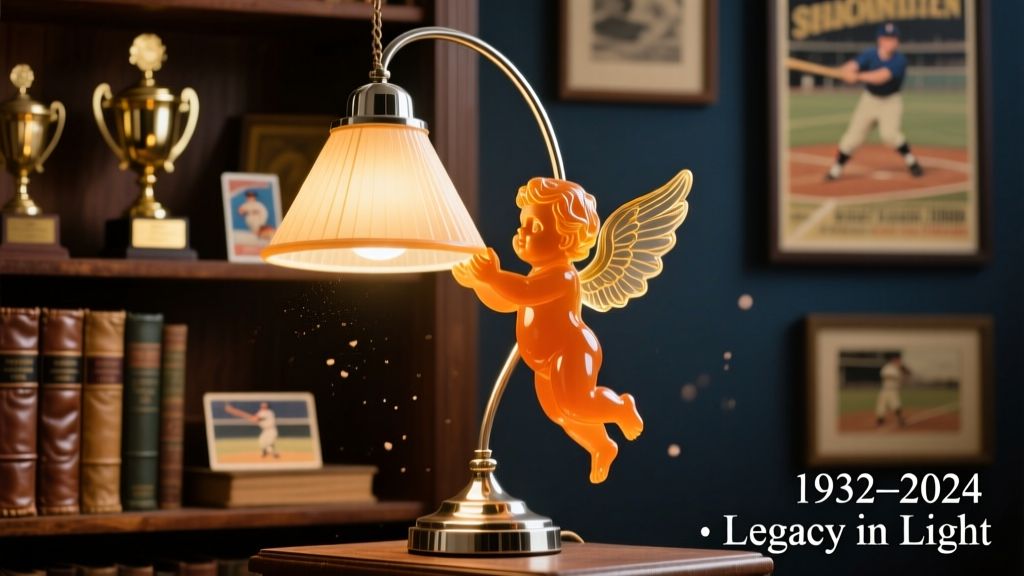
Schneider Shade Lamp: Inverted Design, Cherub-Held Base, Orange-to-Frosted Gradient — A Collector’s Deep Dive (18-Inch Model)
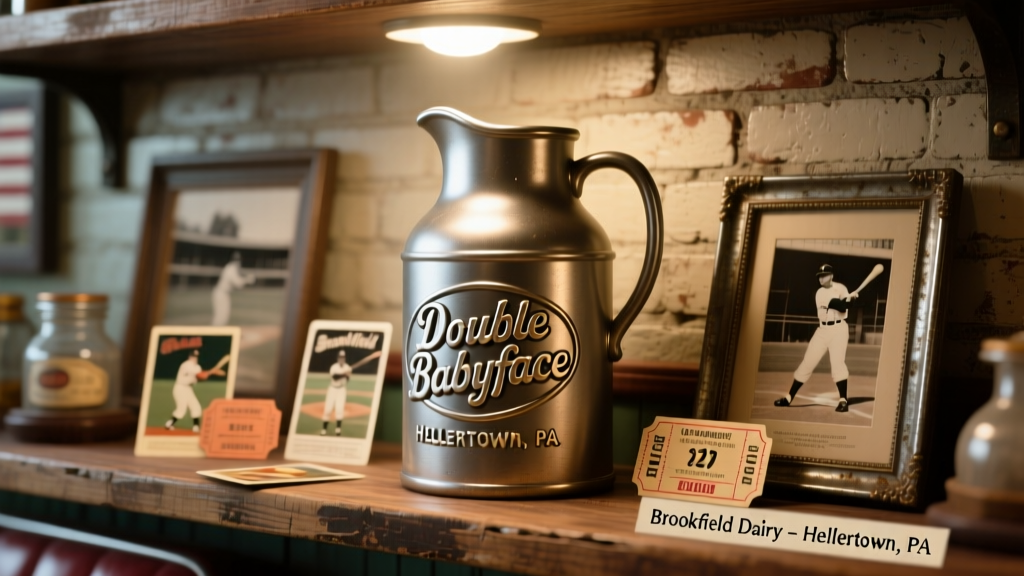
Milk Brookfield Dairy Hellertown PA Double Babyface Embossed Square 1 Qt: Authentication, History, and Collector Value
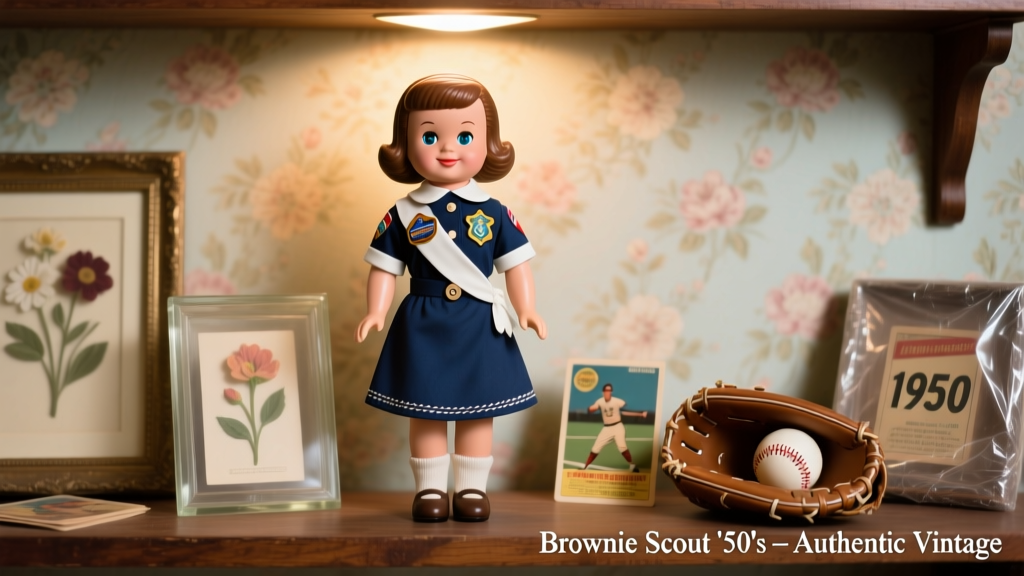
The 1950s Girl Scout Brownie Doll: Authenticating the Vinyl-Headed 8-Inch Icon with Original Outfit
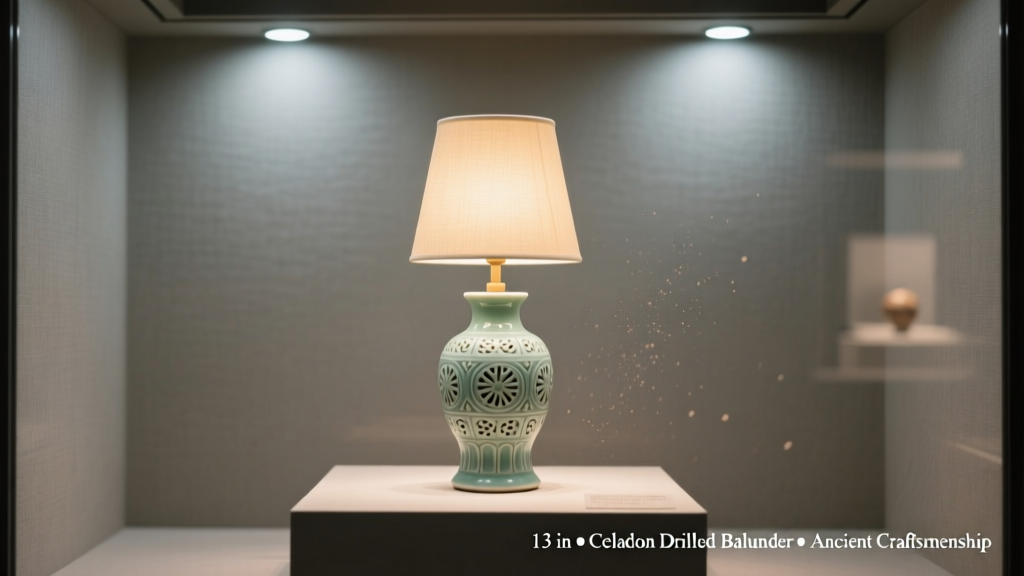
Celadon Lamp Baluster Drilled 13-Inch: Authentication, Provenance, and Market Value Analysis
Authenticating and Evaluating the Contemporary Cowhide Sofa: A Collector’s Guide to the 4-Cushion 30½ × 79-Inch Design
Authenticating and Valuing the Lamps Electric Night Light: Figural Dragon Winged Metal (11½ × 4 in)
Doll Kestner 171 Daisy Sleep Eyes Bisque Antique Dress Shoes 25 In: Authentication, Provenance, and Market Value Analysis