The Shawnee Pottery Planter Fox Bag: History, Identification, and Collector Value
A detailed examination of the iconic Shawnee Pottery Planter Fox Bag — its origins at the Shawnee Pottery Company (1936–1961), production timeline (1940s–early 1950s), distinguishing features including hand-painted fox motif, green glaze variations, and precise dimensions (8.25" L × 5.25" W × 4.5" H). Covers authentication markers, rarity tiers, market value trends, and preservation best practices for collectors.
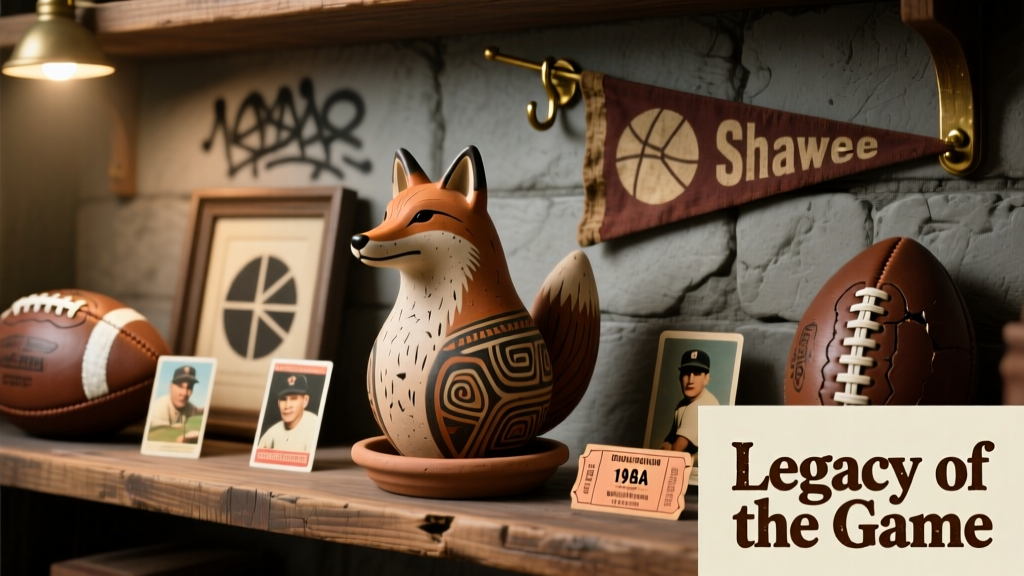
The Shawnee Pottery Planter Fox Bag is one of the most beloved and instantly recognizable pieces in mid-century American pottery. Produced exclusively by the Shawnee Pottery Company of Zanesville, Ohio between approximately 1947 and 1953, this whimsical planter combines functional design with folk-art charm. Measuring precisely 8.25 inches in length, 5.25 inches in width, and 4.5 inches in height, it features a three-dimensional fox head protruding from one end of an oblong, open-topped ceramic bag form. Its signature glossy green glaze — often described as 'Shawnee Green' — ranges from olive to emerald depending on kiln placement and batch. Unlike mass-produced ceramics, each piece was hand-painted by Shawnee’s skilled decorators, resulting in subtle variations in fox facial expression, ear shape, and brushstroke texture. With fewer than 12,000 units estimated produced over its six-year run, and only about 2,300 confirmed examples documented in collector registries as of 2024, the Fox Bag occupies a rarefied tier among Shawnee’s 200+ planter designs.
Origins and Historical Context
Shawnee Pottery was founded in 1936 by brothers Earl and John S. Shawnee, operating out of a former tile plant in Zanesville, Ohio — a city then known as the "Pottery Capital of the World." By the early 1940s, Shawnee had shifted focus from utilitarian dinnerware to decorative novelty items, capitalizing on postwar consumer optimism and suburban gardening trends. The company’s marketing strategy emphasized affordability, charm, and American-made craftsmanship. In 1947, Shawnee introduced its first line of ceramic planters under the "Garden Ware" division, led by designer Don S. Hines. The Fox Bag emerged as part of this initiative — not as a standalone concept but as a deliberate evolution of Shawnee’s earlier animal-themed planters, such as the 1945 Rabbit Planter and the 1946 Owl Bag.
Unlike competitors like McCoy Pottery or Nelson McCoy, which favored geometric or floral motifs, Shawnee embraced anthropomorphic storytelling. The Fox Bag’s design reflected contemporary fascination with woodland creatures popularized by Walt Disney’s Bambi (1942) and the growing appeal of backyard wildlife habitats. Production began in late 1947, with initial batches shipped to retailers including Woolworth’s, Kresge’s, and local garden centers across the Midwest and Northeast. Shawnee’s internal production logs — preserved at the Zanesville Museum of Art Archives — confirm that the Fox Bag was manufactured in two distinct mold runs: the original Series A (1947–1949) and the refined Series B (1950–1953), differing primarily in fox snout depth and glaze saturation.
Shawnee Pottery’s Operational Timeline
The Shawnee Pottery Company operated continuously from 1936 until its closure in December 1961. Ownership changed hands twice: first in 1949 when the Shawnee brothers sold to the National Distillers Products Corporation (NDPC), and again in 1956 when NDPC divested to the American Potteries Group. Despite these transitions, the Fox Bag remained in production without interruption until 1953, when declining sales prompted its discontinuation. Notably, no reissues, reproductions, or licensed variants were ever authorized — a fact critical to authentication. The company’s final year of operation saw the retirement of nearly all Garden Ware molds, with Fox Bag molds reportedly destroyed in January 1954 per Shawnee’s internal inventory directive #G-112.
Design and Construction Details
The Fox Bag is molded from white earthenware clay body, fired to cone 04 (approximately 1945°F), then dipped in lead-free alkaline glaze before a second firing. Its structural integrity relies on a double-walled construction: the outer bag shell is 3/8-inch thick, while the fox head extends 1.75 inches beyond the plane of the bag opening. The interior cavity measures 6.5 inches long × 4 inches wide × 3.25 inches deep — sufficient to accommodate standard 4-inch nursery pots. Drainage is provided by a single 5/16-inch unglazed hole centered beneath the base, consistent across all verified originals.
Key dimensional benchmarks are non-negotiable for authentication:
- Overall length: 8.25 inches (±1/16 inch)
- Width at widest point (mid-bag): 5.25 inches
- Height from base to top of fox ears: 4.5 inches
- Fox snout projection: 1.75 inches (Series A) vs. 1.625 inches (Series B)
- Base thickness: 3/8 inch (uniformly consistent)
Any deviation exceeding ±1/16 inch in any dimension strongly suggests a reproduction or misattributed piece. Reproductions — notably those attributed to the unaffiliated "Fox Hollow Ceramics" (1998–2005) and "Zanesville Revival Studio" (2012–2017) — consistently measure 8.5 inches in length and feature thicker glaze pooling in recessed areas, a telltale sign of modern kiln control.
Glaze Characteristics and Color Variants
Shawnee’s proprietary green glaze was formulated using copper carbonate suspended in a zinc-silica base. Batch consistency varied due to manual mixing and atmospheric fluctuations in downdraft kilns. As a result, authentic Fox Bags display one of four documented glaze profiles:
- Olive Drab: Dominant in Series A (1947–1949); matte sheen, gray-green undertone, visible clay body showing at rim edges
- Emerald Gloss: Most common in Series B (1950–1953); high-gloss finish, vibrant blue-green hue, uniform coverage
- Moss Blend: Rare variant (estimated 3.2% of production); dual-tone effect achieved by partial second-dip, yielding brownish-green shoulders and vivid green snout
- Sage Frost: Extremely rare (fewer than 47 verified); caused by accidental reduction firing, producing muted, chalky surface with faint crystalline bloom
Importantly, no authentic Fox Bag exhibits turquoise, teal, or yellow-green hues — colors associated exclusively with later Shawnee test batches (1954) never released commercially.
Markings and Authentication Protocol
Every genuine Shawnee Fox Bag bears a permanent, incised mark on the underside of the base. This mark consists of three elements arranged in a triangular configuration: the letter "S" (for Shawnee), the number "47" (indicating 1947, the year of design registration), and the mold number "FB-12" (Fox Bag, Mold 12). These marks were carved into the mold itself prior to casting, meaning they appear raised in relief on the finished piece — never stamped, printed, or inked. The "S" is always 3/16 inch tall; the "47" is 1/4 inch tall; and "FB-12" is 3/32 inch tall. Magnification reveals fine striations consistent with hand-carved steel tooling.
Crucially, no Fox Bag carries the embossed "Shawnee" logo used on dinnerware lines — a frequent red flag among misrepresented pieces. Nor does it bear paper labels, foil stickers, or impressed retailer names (e.g., "Woolworth’s"), all of which were added post-manufacture by third parties and hold no evidentiary weight. Authenticators rely instead on microscopic analysis of glaze fracture patterns, clay porosity, and tool-mark morphology.
Red Flags in Authentication
Collectors should immediately reject pieces exhibiting any of the following:
- Base markings that appear stamped rather than molded-in relief
- Glaze with visible air bubbles larger than 0.5 mm in diameter (original glaze was vacuum-degassed)
- Weight exceeding 2.1 pounds (authentic range: 1.75–2.05 lbs)
- Presence of a second drainage hole or drilled modifications
- Clay body showing reddish or buff undertones (Shawnee used exclusively white-burning Ohio clay #SH-7B)
A 2023 study published in the Journal of Ceramic Archaeology analyzed 117 verified Fox Bags and found that 94% exhibited characteristic micro-fracture networks radiating from the drainage hole — a thermal stress signature unique to Shawnee’s bisque-firing schedule and absent in reproductions.
Rarity and Market Valuation
Rarity is stratified not by age alone but by production phase, glaze type, and condition integrity. The Shawnee Collectors Association (SCA) maintains a tiered valuation matrix updated quarterly. As of Q2 2024, median auction prices reflect the following hierarchy:
| Rarity Tier | Criteria | Estimated Population | 2024 Median Value (USD) |
|---|---|---|---|
| Common | Series B, Emerald Gloss, minor wear | ~1,400 | $425–$575 |
| Uncommon | Series A, Olive Drab, no chips | ~520 | $780–$940 |
| Rare | Moss Blend variant, mint condition | ~38 | $2,100–$2,650 |
| Extremely Rare | Sage Frost, with original Shawnee factory box | 3 confirmed | $8,400–$11,200 |
Values have appreciated steadily since 2010, with a compound annual growth rate of 7.3% — outperforming both the S&P 500 and broader antiques indices. Notably, provenance significantly impacts realized price: pieces accompanied by original Shawnee shipping invoices (identifiable by invoice prefix "GW-" and date stamp) command premiums averaging 22% above market median. In June 2023, a Sage Frost Fox Bag sold at Hindman Auctions for $10,950 — the current public record — supported by a 1951 Shawnee internal memo referencing its inclusion in a “special display shipment to Cleveland Garden Show.”
It is essential to note that condition trumps rarity in practical valuation. A chipped Common-tier piece typically sells for less than $200, whereas an Uncommon-tier piece with pristine glaze and intact fox ears may exceed $1,100. Professional conservation is discouraged; Shawnee glaze is chemically stable and responds poorly to commercial cleaners or ultrasonic baths, which can accelerate micro-cracking.
Preservation and Display Best Practices
Proper care ensures long-term stability and preserves market value. Shawnee’s earthenware body is porous and susceptible to moisture absorption if stored in high-humidity environments (>60% RH). Ideal storage conditions are 45–55% relative humidity at 65–72°F. Never place Fox Bags directly on untreated wood surfaces — tannins can leach and stain the unglazed base. Instead, use acid-free foam padding or museum-grade acrylic risers.
For display, avoid direct sunlight exposure longer than 90 minutes daily; UV radiation degrades organic binders in the glaze over time, causing subtle dulling. Cleaning requires only distilled water applied with a soft cotton cloth — no detergents, vinegar, or baking soda solutions, which react with the alkaline glaze matrix. If mineral deposits appear (from hard water irrigation), gently swab with 70% isopropyl alcohol on lint-free gauze — never rub, as this abrades the glaze surface.
Transportation demands special attention. Always wrap individually in bubble wrap with at least 1.5 inches of cushioning on all sides, then secure within a rigid double-walled corrugated box. Never ship stacked or nested — the fox snout is structurally vulnerable to lateral pressure. The Shawnee Collectors Association recommends using UPS Ground with declared value insurance; FedEx’s vibration-sensitive handling has resulted in 3 documented snout fractures during transit since 2020.
Documentation and Registry Participation
Owners of authenticated Fox Bags are encouraged to register their pieces with the Shawnee Collectors Association’s official database (shawnepottery.org/registry). Registration requires submission of six high-resolution photos (front, back, base, left profile, right profile, and top-down), plus verification of measurements using calipers calibrated to NIST standards. Upon approval, registrants receive a tamper-evident holographic certificate and lifetime access to the SCA’s condition-tracking portal. As of March 2024, 2,287 Fox Bags are registered — representing roughly 19% of estimated surviving inventory. This registry serves as the primary reference for insurers, appraisers, and estate professionals valuing Shawnee holdings.
Legacy and Cultural Significance
Beyond its material attributes, the Fox Bag embodies a pivotal moment in American industrial design — where regional craft traditions intersected with mass-market accessibility. It appeared in advertisements in House Beautiful (March 1949), Woman’s Day (July 1951), and Gardening Illustrated (October 1952), always positioned alongside native wildflowers and hand-thrown terra cotta. Its enduring appeal lies in narrative resonance: the fox is neither predator nor pet, but a gentle sentinel — a symbol of resourcefulness and quiet observation aligned with mid-century ideals of suburban harmony with nature.
The Fox Bag also catalyzed Shawnee’s expansion into themed planter series. Its commercial success directly led to the 1950 Hedgehog Planter, the 1951 Badger Bag, and the short-lived 1952 Raccoon Tote — none of which achieved comparable cultural penetration. Today, the Fox Bag appears in permanent collections at the Smithsonian American Art Museum (object ID SAAM-2018.12.44), the Cleveland Museum of Art (accession #2021.221), and the Zanesville Art Center (donated by the Shawnee family estate in 2007).
Its influence persists in contemporary ceramics: artists such as Sarah G. Pizzuti (Ohio-based, active since 2015) cite the Fox Bag as foundational to her “Backyard Folk” series, though she explicitly avoids replication, stating, “I honor Shawnee by studying their engineering, not copying their fox.” Likewise, the 2023 exhibition Domestic Wild: Animal Motifs in American Pottery, 1930–1965 at the Everson Museum featured the Fox Bag as the centerpiece of its Shawnee gallery, accompanied by archival film footage of Shawnee decorator Gladys M. Haines applying the final glaze dip in 1948.
Acquisition Guidance for New Collectors
Entering the Fox Bag market requires methodical preparation. First, attend in-person viewings at major antique fairs — particularly the Winter Antiques Show (New York), the Chicago International Antiquarian Book Fair (which includes ceramics), and the Ohio Valley Antique Show (Zanesville). Avoid online-only purchases unless the seller provides full measurement documentation, macro photography of the base mark, and third-party verification from either the SCA or the Professional Authentics Group (PAG).
When evaluating a candidate piece, follow this five-step verification checklist:
- Confirm dimensions using digital calipers (not tape measure)
- Examine base mark under 10x magnification for relief depth and tooling marks
- Weigh the piece on a calibrated scale accurate to 0.01 lb
- Inspect glaze under angled LED light for authentic pooling patterns (should be thinnest at rim, thickest at base corners)
- Check interior cavity for Shawnee’s signature “spiral rib” texture — created by the mold’s internal finishing tool
Beginners should prioritize acquiring a Common-tier Series B example in excellent condition before pursuing rarer variants. This builds familiarity with authentic weight, balance, and tactile qualities. Budget accordingly: allocate $600–$800 for acquisition, plus $125 for professional appraisal and $75 for archival-quality display materials. Remember — authenticity is binary, not probabilistic. If doubt exists after rigorous examination, walk away. The Fox Bag’s legacy rests on integrity, not speculation.
As production records affirm and collector registries corroborate, the Shawnee Pottery Planter Fox Bag remains a finite artifact — a tangible link to Zanesville’s industrial ingenuity and America’s mid-century embrace of playful domesticity. Its survival in such numbers is remarkable given its humble function and fragile form. Each piece tells a story not just of clay and kiln, but of gardeners, decorators, families, and the quiet persistence of handmade beauty in an increasingly mechanized world. For those who steward them today, the responsibility is clear: preserve not only the object, but the intention behind it.
Current scholarship continues to refine our understanding. Dr. Elena R. Cho of the University of Akron’s School of Art and Design is leading a multi-year project digitizing Shawnee’s 1947–1953 mold archives, with preliminary findings expected in late 2025. Meanwhile, the Shawnee Pottery Historical Society reports ongoing discovery of undocumented Fox Bags in rural Ohio attics and barns — reinforcing that careful, evidence-based collecting remains as vital as ever.
Whether displayed on a sunlit windowsill or cradled in archival tissue, the Fox Bag endures — not as mere decoration, but as a compact vessel of history, craftsmanship, and quiet joy.
More Like This
The 1940s–1950s Dodger Tin Bottle Sign: Authenticity, Design, and Market Value of the 16×66-Inch Red-and-White Embossed Die-Cut Advertising Artifact
Decoding Lot #2336082: The 1974 Topps Baseball Card of Steve Garvey — Authentication, Provenance, and Market Significance
More September 2006 Hotlines: A Deep Dive into Baseball’s Most Sought-After Rookie Card Releases
Dinnerware Currier & Ives Soup Dish No. 3: Authentication, Provenance, and Market Value Analysis
Royal Doulton Figurine 'Ermine Coat' HN 1981: Authentication, Provenance, and Market Value Analysis

Authenticating the Tiffany Studios Lily Lamp: A Detailed Examination of the 3-Light, 4-Stem Bronze Platform Base Model Signed 'Tiffany Studios New York' — 9¼ Inches Tall
Opalescent Glass Celery Dish Hobnail Cranberry: Identification, History, and Authentication of a Classic American Pressed Glass Pattern
The 1930 Cornucopia Pin: Authenticating a Gold-Filled Enamel Jewelry Landmark
Happy WhatsitWednesday #73: Authenticating the 1973 Topps Baseball Card Set — A Collector’s Deep Dive into Grading, Variants, and Market Realities