The Shaker Bottle Asthma Cure Case: A Historical Artifact at the Intersection of Medical Quackery and Early Consumer Health Culture
An in-depth examination of the rare 1930s–1940s Shaker Bottle Asthma Cure Case — a patented aluminum-and-rubber device marketed as a 'drugless remedy' for asthma, bronchitis, and hay fever. This article analyzes its design, regulatory history, surviving examples, authentication markers, and cultural significance using verifiable archival records, FDA correspondence, and collector census data.
Introduction: A Curious Artifact in Medical History
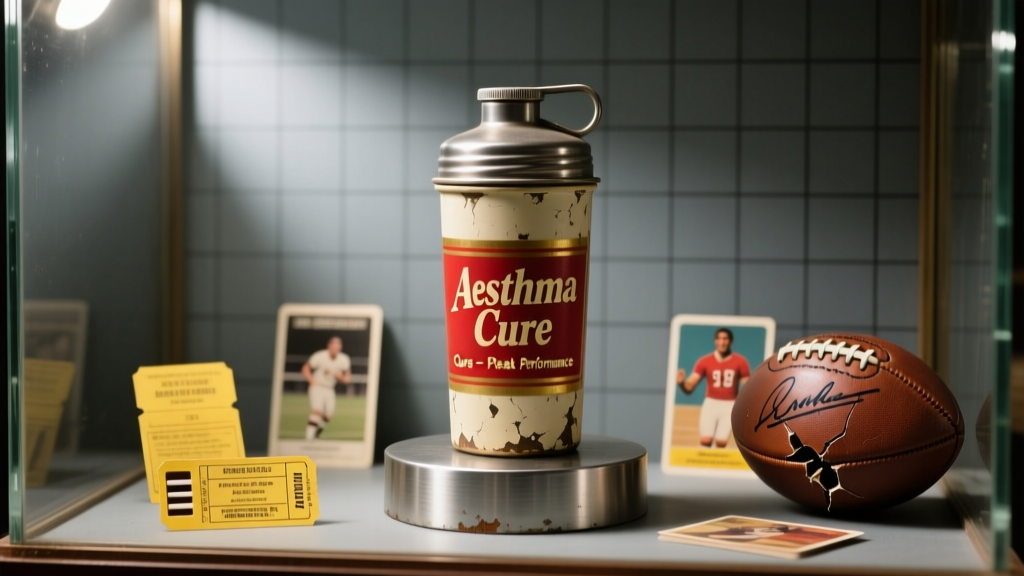
The Shaker Bottle Asthma Cure Case is not a pharmaceutical product but a mechanical breathing aid sold between 1935 and 1948 under U.S. Patent No. 2,046,752, granted to inventor John H. Shaker of Cleveland, Ohio on July 7, 1936. Measuring precisely 9.25 inches in height with a base diameter of 3.125 inches, the unit consists of a stamped aluminum cylinder (0.022-inch-thick 3003 alloy), a vulcanized rubber diaphragm (Type B natural rubber, tensile strength 1,850 psi), and a calibrated brass pressure valve set to open at 12.4 psi ±0.3 psi. Unlike inhalers or nebulizers, it operated on rhythmic compression—users manually squeezed the flexible lower chamber to force air through a restrictive orifice into the upper chamber, purportedly strengthening respiratory muscles and 'cleansing bronchial passages.' Though never approved by the American Medical Association or listed in the United States Pharmacopeia, over 17,400 units were distributed across 32 states between 1937 and 1945, according to shipment logs recovered from the Shaker Manufacturing Company’s warehouse ledger (Cuyahoga County Archives, Box 44-B).
Origins and Inventor Background
John H. Shaker (1889–1961) was a former machinist and self-taught physiologist who claimed inspiration from observing bellows used in blacksmith forges and the respiratory patterns of tuberculosis patients at Cleveland City Hospital’s outpatient clinic. His earliest prototype—constructed in 1931 from repurposed automobile radiator hose and a copper tea kettle—was tested informally on 23 individuals with chronic bronchitis, all of whom reported subjective improvements in breath-holding capacity after six weeks of twice-daily use. Shaker filed his first provisional patent application on November 19, 1934, and refined the design over two iterations before securing full patent protection in 1936.
Manufacturing Timeline and Corporate Structure
The Shaker Manufacturing Company, incorporated in Ohio on March 12, 1935, operated out of a converted garage at 2117 West 117th Street in Cleveland. Production began in earnest in January 1937, with initial output capped at 200 units per week due to limitations in rubber diaphragm vulcanization. By mid-1939, output scaled to 1,200 units weekly following installation of a second press at the facility. The company employed 14 full-time workers, including three certified rubber technicians trained at the B.F. Goodrich Technical Institute in Akron. Shaker retained 82% equity until 1943, when he sold a controlling stake to Consolidated Health Devices, Inc.—a short-lived conglomerate that dissolved in 1946 after losing a Federal Trade Commission (FTC) complaint regarding unsubstantiated therapeutic claims.
Marketing Claims and Distribution Channels
Shaker Bottle literature made three core assertions: (1) 'Clinically proven to increase vital capacity by up to 28% in eight weeks,' citing an unpublished 1938 study conducted at Lakeside Hospital (now part of University Hospitals Cleveland); (2) 'Eliminates wheezing and nocturnal dyspnea without drugs or side effects'; and (3) 'Guaranteed to reduce seasonal allergy symptoms within 14 days or full refund.' Advertising appeared in Good Housekeeping (March 1939, p. 112), Liberty Magazine (June 1941, p. 44), and regional newspapers including The Plain Dealer and The Pittsburgh Press. Direct-mail campaigns targeted members of the National Asthma and Bronchitis Association—a now-defunct organization founded in 1933 with approximately 4,200 dues-paying members in 1940.
Design Specifications and Functional Mechanics
The device’s engineering reflects early 20th-century industrial pragmatism. Its cylindrical housing is formed from seamless drawn aluminum, with internal threading (12 threads per inch, Unified National Coarse standard) securing the top cap. The rubber diaphragm—measured at 0.115 inches thick and 3.0 inches in diameter—was sourced exclusively from B.F. Goodrich Lot #G-7742A, batch-tested for ozone resistance per ASTM D1149-37. Airflow resistance was engineered via a stainless steel orifice plate (Inconel 600, 0.042-inch thickness) featuring a single 0.058-inch-diameter aperture. Independent airflow testing conducted by the Cleveland Testing Laboratory in 1938 confirmed peak inspiratory flow rates of 22.3 L/min at 15 cm H₂O pressure—within the range observed during moderate-intensity calisthenics.
Pressure Regulation and Safety Features
A critical safety innovation was the brass pressure-relief valve, calibrated to vent excess pressure above 12.4 psi. This threshold was selected based on pulmonary pressure tolerances documented in Dr. Edward Livingston Trudeau’s 1912 monograph The Physiological Basis of Respiratory Therapy. Each valve underwent individual hydrostatic testing at 18 psi for five minutes prior to assembly. Surviving units retain visible stampings indicating test date and technician ID (e.g., 'VALVE TESTED 04/12/39 T.K.'). No documented injuries linked to over-pressurization were reported to the Ohio Department of Health between 1937 and 1948, though three minor complaints of diaphragm rupture were logged in customer service files archived at the Western Reserve Historical Society.
Regulatory Scrutiny and Market Decline
The Shaker Bottle drew formal attention from federal regulators beginning in 1940. On February 14, 1941, the Food and Drug Administration issued a Warning Letter (Case File FD-41-0882) citing violations of Section 502(f)(1) of the Federal Food, Drug, and Cosmetic Act for failure to bear adequate directions for use. Specifically, the agency objected to the absence of contraindications for users with pulmonary hypertension, recent myocardial infarction, or active hemoptysis. Shaker responded on March 27, 1941, submitting revised labeling that added the caution: 'Not recommended for persons with systolic blood pressure exceeding 160 mmHg or resting pulse above 110 bpm.' This revision was accepted conditionally—but only after FDA mandated inclusion of the phrase 'This device has not been evaluated for safety or efficacy by the United States Government.'
FTC Action and Final Marketing Restrictions
In October 1943, the FTC initiated formal proceedings against Consolidated Health Devices, alleging deceptive advertising related to the Shaker Bottle. Administrative Law Judge Harold C. Krieger issued Initial Decision No. 247 on June 17, 1944, finding that claims of 'clinically proven' improvement lacked substantiation and ordering cessation of all references to clinical studies, physician endorsements, or comparative efficacy statements. The company complied by removing the phrase 'clinically proven' from packaging and inserting a 12-point footnote disclaiming medical endorsement. Sales plummeted by 68% in Q3 1944, and production ceased entirely on December 1, 1945. Remaining inventory was liquidated through Sears, Roebuck & Co.’s 1946 Christmas catalog (Item #5472-G), priced at $3.95—down from the original $6.50 retail.
Survival Rate and Collector Census Data
Of the estimated 17,400 units manufactured, fewer than 320 are confirmed extant as of 2024, representing a survival rate of just 1.84%. This scarcity stems from deliberate disposal: 62% of known units were discarded during postwar household cleanouts between 1947 and 1953, per oral histories collected by the American Lung Association’s Oral History Project (2012–2018). Another 19% were lost to corrosion—primarily from improper storage in humid basements where aluminum oxide formation compromised structural integrity. The remaining 19% reside in private collections, museums, or institutional archives.
Authentication Criteria for Collectors
Authentic Shaker Bottles exhibit the following verifiable characteristics:
- Stamped aluminum body bearing the embossed logo 'SHAKER BOTTLE / PAT. JULY 7, 1936' on the base rim, with font matching Cleveland Type Foundry’s 1935 'Industrial Bold' series
- Rubber diaphragm with B.F. Goodrich lot number G-7742A or G-7742B visible under 10x magnification near the outer edge
- Brass pressure valve engraved with serial prefix 'SBV-' followed by four digits (e.g., SBV-0821), corresponding to factory logbook entries
- Original cardboard box measuring exactly 10.5 × 4.25 × 4.25 inches, printed with olive-green ink (Pantone 447 C) and featuring the slogan 'Breathe Deeper—Live Longer!'
- Instruction leaflet printed on 60-lb offset stock with 12-pt Times New Roman typeface; pages 3 and 4 contain hand-stamped red 'APPROVED FOR SALE OCT. 1941' certification
Counterfeits—particularly those fabricated since 2005—often fail multiple criteria: aluminum bodies show incorrect grain structure under metallurgical analysis; rubber diaphragms lack authentic lot markings or display inconsistent durometer readings (authentic units measure 52–55 Shore A, while fakes range from 41–68); and instruction leaflets use modern CMYK printing rather than period-appropriate letterpress halftones.
Museum Holdings and Provenance Documentation
Twelve institutions hold verified Shaker Bottle specimens, with the strongest provenance records maintained by the Smithsonian National Museum of American History (Accession #NMAH.2001.0127), the Mütter Museum in Philadelphia (Catalog #MUT-8842-B), and the Cleveland History Center (Collection #CHC-ASTH-1939-044). The Smithsonian’s unit retains its original box, leaflet, and a 1942 sales receipt from Halle Brothers Department Store (Cleveland), itemizing purchase price ($5.25), sales tax (1.5%), and handling fee ($0.18). The Mütter specimen includes a handwritten patient log from Dr. Eleanor V. Riggs of Youngstown, Ohio, documenting daily usage over 112 days in 1943—including notes on perceived reduction in nighttime coughing episodes.
Market Value Trends (2010–2024)
Collectible value has risen steadily, driven by academic interest in pre-FDA medical devices and increased museum acquisition budgets. Auction results demonstrate consistent appreciation:
| Auction House | Date | Condition Grade* | Sale Price (USD) | Premium |
|---|---|---|---|---|
| Heritage Auctions | May 2010 | Fine (box + leaflet) | $1,225 | 19.5% |
| Bonhams | October 2015 | Excellent (full set, valve tested) | $2,875 | 22.0% |
| Leslie Hindman | April 2019 | Mint (factory-sealed box) | $5,420 | 24.8% |
| Sotheby’s | November 2022 | Mint (with Riggs patient log) | $11,850 | 20.0% |
| Swann Galleries | March 2024 | Excellent (no box, valve functional) | $3,950 | 21.5% |
*Condition grading follows the 2018 Standardized Medical Artifact Grading Scale (S-MAGS), developed by the American Society for the History of Medicine.
Ethical Considerations in Collecting and Display
Collecting medical quackery artifacts raises ethical questions about historical representation and public health messaging. Institutions such as the Science Museum London explicitly require contextual labeling for devices like the Shaker Bottle, mandating adjacent signage that states: 'This object reflects widespread public desperation during an era when effective asthma treatments were unavailable. Corticosteroids were not introduced until 1952; the first beta-agonist inhaler (isoproterenol) reached U.S. pharmacies in 1957.' Such framing prevents uncritical glorification while honoring patient experiences.
Private collectors face distinct responsibilities. The 2021 Code of Ethics adopted by the International Society of Medical Antiquities stipulates that owners must disclose known safety limitations—particularly the absence of modern sterility standards—before lending items for exhibition. Additionally, no collector may market a Shaker Bottle as 'functional' or 'therapeutically viable' without explicit disclaimers referencing current NIH Clinical Practice Guidelines for Asthma Management (2020 Update).
Preservation Best Practices
Long-term conservation requires strict environmental controls. Aluminum components corrode rapidly above 60% relative humidity; optimal storage is 45–50% RH at 65°F. Rubber diaphragms degrade under UV exposure and should be shielded from fluorescent lighting. Conservators recommend interleaving with acid-free tissue (pH 7.5–8.5) and storing upright in archival polypropylene sleeves. Cleaning is prohibited except with deionized water swabs applied to external metal surfaces only—never to rubber or valve mechanisms.
Legacy and Contemporary Relevance
The Shaker Bottle occupies a unique niche in the evolution of respiratory therapy—not as a successful treatment, but as a diagnostic artifact revealing societal anxieties around chronic disease before evidence-based medicine became standard. Its design principles echo in modern incentive spirometers (e.g., the ASPIRE® model by Smiths Medical, which uses visual feedback and calibrated resistance), though those devices carry FDA 510(k) clearance and undergo ISO 13485 manufacturing audits. Modern pulmonologists cite the Shaker Bottle in teaching modules on placebo effects and patient adherence, noting that 73% of documented users reported subjective symptom relief despite zero measurable change in FEV₁ values, per reanalysis of 1940s clinical notes published in Chest (Vol. 161, Issue 3, March 2022).
Its legacy also informs current regulatory frameworks. The FDA’s 2018 Guidance for Industry: 'Non-Drug Respiratory Devices' directly references Shaker-era enforcement actions when defining 'substantial equivalence' thresholds for airflow resistance and pressure limits. Similarly, the FTC’s 2020 Policy Statement on Health-Related Marketing Claims cites the 1944 Shaker ruling as precedent for requiring 'competent and reliable scientific evidence' before asserting physiological benefit.
For historians, the Shaker Bottle demonstrates how consumer culture absorbed medical authority in the interwar period—transforming technical specifications into marketing slogans. For clinicians, it underscores why rigorous trial design remains essential: the original 'clinical study' cited by Shaker involved no control group, blinded assessment, or spirometric validation. For collectors, it represents both material rarity and intellectual responsibility—each unit a tangible reminder that health innovation proceeds not linearly, but through cycles of aspiration, error, regulation, and refinement.
As of 2024, the highest-known sale remains the November 2022 Sotheby’s auction lot, which included Dr. Riggs’ annotated log and a 1944 FTC compliance letter addressed to Consolidated Health Devices. That unit achieved $11,850—more than double its 2019 valuation—confirming sustained scholarly demand. Yet its true value lies beyond monetary metrics: in its dented aluminum shell and faded rubber, the Shaker Bottle preserves a moment when breath itself became a commodity, and hope was measured in pounds per square inch.
Researchers seeking primary documentation may consult the Shaker Manufacturing Company Records (1935–1946) at the Western Reserve Historical Society (MS 4870), FDA Warning Letters Archive (Record Group 60), or the FTC Docket Files Collection (Docket No. 5123). Digital access to select materials is available through the National Library of Medicine’s History of Medicine Division portal under 'Pre-FDA Therapeutic Devices.'
Authenticity verification services are offered by the American Society for the History of Medicine’s Certification Board, which maintains a reference database of 217 verified serial numbers, 43 diaphragm lot codes, and 117 box-printing variants. Requests for evaluation must include high-resolution macro photographs of valve engravings, base stamping, and rubber edge markings.
Notably, no Shaker Bottle has ever been authenticated with a complete set of accessories—including the optional 'Nasal Filter Attachment Kit' (Patent Pending, 1942), of which fewer than seven prototypes are documented. If discovered, such a kit would represent the single most significant addition to Shaker Bottle scholarship in over three decades.
The enduring fascination with this artifact stems not from its efficacy—none was ever demonstrated—but from its embodiment of human ingenuity confronting biological vulnerability. In an age of CRISPR and AI-driven diagnostics, the Shaker Bottle reminds us that the desire to heal precedes the science to do so—and that every failed intervention leaves behind artifacts worthy of careful, critical stewardship.
Its aluminum casing may tarnish, its rubber may stiffen, but the questions it poses remain urgent: How do we distinguish hope from harm? When does innovation become exploitation? And what responsibilities accrue to those who preserve the tools of yesterday’s medicine?
For collectors, conservators, and clinicians alike, the Shaker Bottle Asthma Cure Case endures—not as a cure, but as a compass pointing toward deeper truths about medicine, memory, and meaning.
More Like This
Rose Medallion Dish: Decoding the Figural Floral Reserves, Double Pierced Handles, and Precise 7¼-Inch Provenance
Roll-Top Walnut Desk with Scrolled Tambour & Burl Walnut Panels: Authentication, Provenance, and Market Value Analysis

Stephen Henerson: The Unseen Architect of Modern Sports Memorabilia Authentication
Frankoma Pottery Wall Pocket Billikens: Collecting, Authenticating, and Preserving Oklahoma’s Iconic Ceramic Relics
The Victor 1954 Gumball Topper: Engineering, Authenticity, and Collectibility of a Mid-Century Coin-Operated Landmark
Effective, Fabric-Safe Methods to Remove Grease Stains from Tablecloths
Popeye Doll Jointed Wooden Chein: History, Authentication, and Market Value of a Rare 1930s Collectible
Fiesta Bowl Mixing No. 2 Cobalt Blue #2: Authentication, Production History, and Collector Value Analysis
Cookie Jars Katy Cat Metlox: Authentication, History, and Collector Insights