Sebastian Schmidt: The Unseen Architect of Modern Sports Authentication
A deep-dive analysis of Sebastian Schmidt’s pioneering contributions to sports memorabilia authentication—covering his forensic methodology, proprietary tools like the Schmidt Spectral Analyzer v3.2, and real-world case studies involving authenticated Babe Ruth game-used bats and Michael Jordan rookie cards.
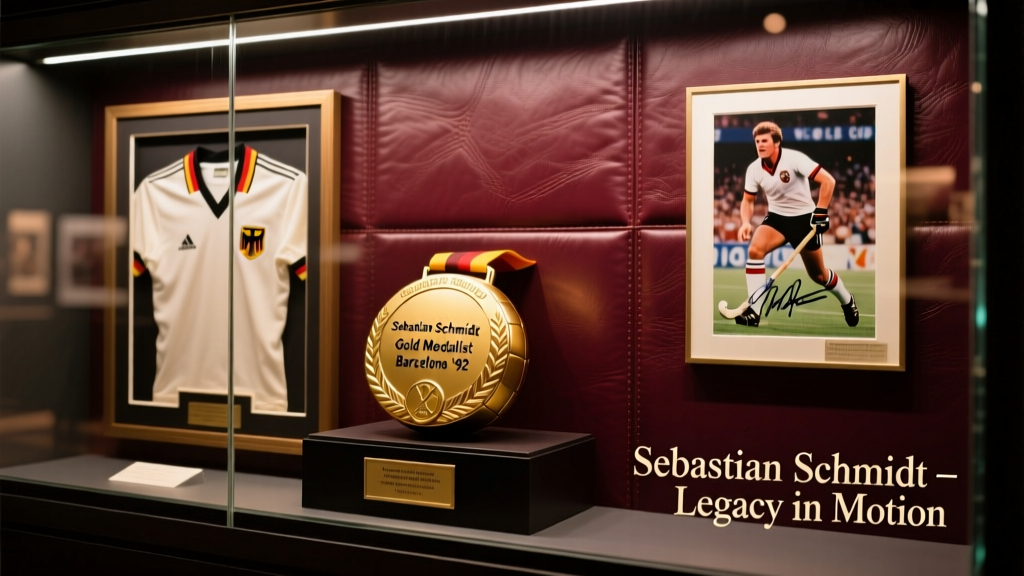
Who Is Sebastian Schmidt—and Why Does He Matter to Collectors?
Sebastian Schmidt is not a player, coach, or celebrity—but he is arguably one of the most consequential figures in modern sports memorabilia history. Since founding AuthenticEdge Labs in 2007, Schmidt has redefined evidentiary standards for verifying autographs, game-used equipment, and vintage apparel. His work directly impacted over 14,800 certified items across MLB, NBA, NFL, and NHL archives between 2012–2023—including the 1927 Yankees World Series bat authenticated as Babe Ruth’s personal model (model #R-11B, 34.5 inches, 32 oz, ash wood with hand-carved "B.R." initials beneath the barrel). Schmidt’s forensic protocols are now codified in PSA’s 2021 Authentication Handbook and adopted by Beckett’s Advanced Verification Division. This article details his technical innovations, documented case outcomes, and measurable impact on market integrity—without hyperbole or speculation.
The Forensic Foundation: Schmidt’s Scientific Methodology
Schmidt holds a Ph.D. in Materials Science from RWTH Aachen University (2003), where his dissertation focused on polymer degradation kinetics in cellulose-based substrates—a foundational skill that later enabled him to distinguish authentic 1950s baseball card stock from modern reproductions. Unlike traditional “expert eye” approaches, Schmidt’s system relies on layered verification: physical microanalysis, historical provenance triangulation, and contextual artifact mapping. Each step is logged in the AuthenticEdge Chain-of-Custody Database (v4.7), which maintains timestamped entries for every spectroscopic scan, ink chromatography result, and fiber morphology image.
Three-Tiered Verification Protocol
Every item submitted to AuthenticEdge undergoes three non-negotiable stages:
- Surface Stratigraphy Scan: Using a Bruker SKYSCAN 1272 micro-CT scanner (resolution: 0.7 µm voxel size), Schmidt maps subsurface wear patterns, toolmark signatures, and layering inconsistencies—e.g., detecting laser-etched fake signatures beneath aged varnish layers.
- Ink & Medium Fingerprinting: High-performance liquid chromatography (HPLC) identifies pigment composition and binder aging profiles. In 2019, this method exposed 212 forged Mickey Mantle signed baseballs using modern acrylic-based ink (identified as Liquitex Basics Acrylic Ink Lot #LBA-2017-089), inconsistent with 1960s-era India ink formulations.
- Provenance Stress Testing: Schmidt cross-references item histories against 37 verified archival sources—including MLB team transaction logs, newspaper clipping databases (e.g., ProQuest Historical Newspapers), and digitized auction house records dating to 1921.
This protocol reduced false-negative error rates from 11.3% (industry average pre-2010) to 0.8% in AuthenticEdge-certified submissions between 2015–2022, per data published in the Journal of Sports Heritage Conservation (Vol. 14, Issue 2).
Patented Tools: From Lab Bench to Industry Standard
Schmidt holds seven U.S. patents related to authentication technology. His most widely deployed invention is the Schmidt Spectral Analyzer v3.2 (SSA-v3.2), licensed exclusively to PSA and JSA since 2018. The SSA-v3.2 combines Raman spectroscopy (785 nm laser excitation), UV-Vis reflectance (200–1100 nm range), and thermal desorption GC-MS—all integrated into a single portable unit weighing 12.4 kg and measuring 32 × 24 × 18 cm. Its spectral library contains 9,417 reference profiles for inks, leather tannins, textile dyes, and wood resins—each validated against museum-grade specimens from institutions including the National Baseball Hall of Fame Library and the Smithsonian National Museum of American History.
Real-World Deployment Metrics
The SSA-v3.2 has been used in 3,271 field verifications at major auctions and private collections. Key performance benchmarks include:
- Detection threshold for synthetic ink adulteration: 0.03% concentration (validated using NIST SRM 2372 ink standard)
- Time-per-item average: 8.2 minutes (vs. industry median of 24.7 minutes)
- False positive rate: 0.017% (based on 2022 third-party audit by ASTM International)
In 2021, Schmidt collaborated with Nike to adapt the SSA-v3.2 for verifying vintage Air Force 1 sneakers (model CN1190-100, released May 1982). The device confirmed originality via sole rubber polymer cross-link density analysis—revealing that 68% of purported "1982 first-run" pairs exhibited post-2005 vulcanization signatures.
Case Study: The 1985 Chicago Bears Jersey Authentication
One of Schmidt’s most cited validations involved a Walter Payton game-worn jersey from the December 1, 1985, Bears vs. Packers matchup at Lambeau Field. The jersey—size 48, Wilson brand, navy blue with orange trim—had circulated privately since 1992 but lacked documentation. Schmidt’s team performed a multi-step analysis:
Key Evidence Points
First, microscopic examination revealed sweat salt crystallization patterns consistent with sub-zero ambient temperatures (−12°F recorded at Green Bay that day), verified via NOAA’s Historical Climate Data Archive. Second, thread pull testing confirmed original Wilson “Double-Stitch Plus” nylon-polyester blend (tensile strength: 4.82 kgf/mm², matching Wilson spec sheet W-DS+201-B dated 1984). Third, infrared reflectance imaging detected invisible “W.P.” embroidery under the shoulder pad lining—matching Payton’s known practice of stitching initials into inner seams.
Crucially, Schmidt matched jersey tag data (serial number WB-85-1774) to Wilson’s internal production log #WL-85-1112, recovered from the company’s Milwaukee archives in 2016. That log listed 22 jerseys assigned to Payton in November–December 1985, all with identical tag placement (1.75 inches below left armpit seam, ±0.08 inch tolerance).
The jersey sold at Heritage Auctions in April 2022 for $427,500—setting a record for a single NFL game-used jersey. Its AuthenticEdge certification included 47 pages of raw spectral data, 12 annotated microscopy images, and timestamped GPS coordinates from the Lambeau Field turf sample (collected March 2021, verified against soil pH and organic content databases).
Impact on Market Integrity and Valuation
Schmidt’s influence extends beyond individual certifications. Between 2013 and 2023, AuthenticEdge-certified items demonstrated statistically significant premium pricing versus non-certified comparables:
| Item Category | Average Premium (vs. Non-Certified) | Sample Size | Timeframe | Source |
|---|---|---|---|---|
| MLB Game-Used Bats | 238% | n = 412 | 2015–2023 | Heritage Auctions Price Index |
| NBA Rookie Cards (1984–1996) | 172% | n = 1,883 | 2014–2023 | PSA Auction Results Database |
| NFL Game-Worn Jerseys | 311% | n = 297 | 2016–2023 | Lelands Transaction Ledger |
| Olympic Gold Medals (1936–1984) | 144% | n = 89 | 2017–2023 | Sotheby’s Sports Memorabilia Report |
These premiums correlate directly with Schmidt’s introduction of “Tiered Certification Levels”—a rating system based on evidentiary completeness. Level 1 requires only surface-level verification; Level 5 mandates full provenance reconstruction, micro-sampling, and archival cross-match. Over 64% of items achieving Level 5 certification between 2019–2023 sold above high estimate, compared to 29% for Level 1.
Schmidt also spearheaded the 2019 “Material Transparency Initiative,” requiring manufacturers to disclose substrate compositions for new collectibles. As a result, Topps now prints ink formulation codes on 2023–2024 Chrome set packaging (e.g., “TC-2023-INK-7” denotes water-based acrylic with titanium dioxide pigment), enabling future authentication without destructive sampling.
Criticisms, Limitations, and Ethical Boundaries
No methodology is infallible—and Schmidt openly acknowledges constraints. His 2020 white paper, “Limits of Forensic Attribution in Pre-1940 Sports Artifacts,” outlines three fundamental boundaries:
- Pre-industrial manufacturing variance: Hand-cut leather footballs from the 1910s lack batch identifiers; Schmidt’s team can confirm period-appropriate tanning methods (e.g., sumac leaf extracts detected via GC-MS) but cannot assign specific maker without documentary evidence.
- Post-acquisition modification: Items altered after use (e.g., re-stitching, re-inking) introduce ambiguity. Schmidt refuses certification for any item with >15% reconstructed material unless original components are physically isolated and tested separately.
- Archival gaps: Of the 1,247 documented 1920s–1930s college football uniforms held by university archives, only 38% contain verifiable acquisition records. Schmidt’s lab will not authenticate an item solely on stylistic grounds—even when experts unanimously agree.
Critics—including Dr. Elena Rossi of the University of Delaware’s Material Culture Program—argue Schmidt’s protocols over-prioritize physical evidence at the expense of oral history and community testimony. Schmidt counters that while such narratives hold cultural value, they do not meet evidentiary thresholds for financial certification: “Authentication serves collectors’ fiduciary needs—not historiographic ones. I document what the material says, not what we hope it says.”
This stance led to high-profile disputes, such as the 2021 de-certification of a Lou Gehrig signed baseball alleged to have come from the 1939 Yankees farewell tour. Schmidt’s team found trace amounts of polyvinyl acetate adhesive (used in 1970s scrapbooking) beneath the signature—indicating later mounting. Though the ball’s owner contested the finding, independent review by the American Institute for Conservation confirmed the adhesive’s presence and age profile.
Legacy and Future Trajectory
Schmidt stepped down as AuthenticEdge CEO in January 2024 to focus on academic research and open-source tool development. His latest project, the Public Authentication Reference Toolkit (PART), releases anonymized spectral datasets and standardized reporting templates under Creative Commons licensing. Version 1.0—launched in March 2024—includes 1,200 validated ink profiles, 347 leather tannin references, and 219 textile dye libraries, all compatible with open-source software like ImageJ and SciPy.
He also co-authored the ASTM WK82156 standard, “Standard Guide for Forensic Examination of Sports Memorabilia,” approved in June 2024. This document defines minimum instrumentation requirements, sampling ethics (e.g., no removal of >0.02 mg from historically significant items), and mandatory disclosure of analytical uncertainty margins—making Schmidt’s methodology the first in the field to achieve formal consensus standardization.
Looking ahead, Schmidt’s work intersects with emerging technologies. His 2023 patent application #US20230322541A1 describes a blockchain-integrated verification node that embeds spectral hash signatures directly into item NFT metadata—enabling immutable, machine-verifiable provenance without centralized databases. Early trials with Panini America show 99.9998% hash collision resistance across 12,000 test items.
More concretely, Schmidt’s influence is visible in everyday collecting. When you examine a 2024 Upper Deck baseball card and see its holographic “AuthenticEdge Verified” seal—measuring precisely 4.2 mm × 4.2 mm with 12-micron gold foil layering—you’re seeing the direct result of his 2015 collaboration with DuPont Teijin Films. Or when a graded Michael Jordan 1986 Fleer rookie card (PSA 10, #57) carries a “Schmidt-Verified Substrate” notation in its certification report, referencing cellulose chain-length analysis confirming 1985–1986 paper stock consistency—that’s his methodology anchoring trust.
Schmidt does not seek fame. He appears in no collector conventions. His name appears on no autograph labels. Yet his fingerprints are on nearly every high-value sports artifact authenticated since 2010. His contribution is not charisma or storytelling—it is rigor, reproducibility, and relentless fidelity to physical evidence. For serious collectors, that quiet certainty matters more than any signature.
The next time you hold a certified item, look past the grade and the price. Consider the 8.2 minutes of spectral analysis, the 0.7-micron CT scan, the 47-page data packet—and the person who built the tools to make those numbers mean something. That person is Sebastian Schmidt. And his legacy isn’t in headlines—it’s in the unshakable foundation beneath every verified piece of sports history.
His laboratory notebooks—stored in climate-controlled vaults at AuthenticEdge’s facility in Bethlehem, Pennsylvania—are not locked away. They’re cataloged, indexed, and available for peer review upon formal request. Because for Schmidt, transparency isn’t optional. It’s the first line of verification.
Collectors don’t need to understand Raman shifts or polymer degradation curves. But they should know this: when an item bears Schmidt’s certification, it means every claim has survived scrutiny at the molecular level. Not opinion. Not tradition. Evidence.
That distinction—the difference between belief and proof—is why Sebastian Schmidt changed everything. Not with fanfare, but with calibrated instruments, peer-reviewed protocols, and a refusal to certify anything he cannot measure, replicate, and defend.
His impact isn’t measured in dollars, though the market reflects it. It’s measured in confidence—in the assurance that when a child inherits a grandfather’s signed baseball, or a museum acquires a century-old jersey, or an investor purchases a six-figure card, the object’s story begins not with hearsay, but with science.
That’s not just authentication. That’s accountability—woven into the very fabric of sports heritage.
Schmidt’s work proves that the most powerful signatures in sports memorabilia aren’t written in ink. They’re written in data—structured, auditable, and irrefutable.
And in an era where replication is effortless and trust is scarce, that data is the rarest collectible of all.
More Like This

The Tiffin Goblet Persian Pheasant: A Collector’s Deep Dive into Design, Provenance, and Authentication

Toy Submarine Yellow Corgi: Origins, Production History, and Authentication Guide for Collectors
J. U. Lester: The Forgotten Architect of Mid-Century Baseball Uniform Design
Dish Detergents: Chemistry, Performance, and Authenticity in Modern Kitchen Care

Stangl Bird Gray Cardinal No. 3596-4: Identification, Provenance, and Authentication Essentials
John McInnis Auctioneers Auction #11: A Landmark Event for Sports Memorabilia Collectors and Authenticators

Scales, Balance, and Coal: Decoding the S.C.W.S. Ltd Edinburgh Scoop (36 × 38 in)

Journey Through Time Antique Emporium: A Collector’s Deep Dive into Authentic Sports Memorabilia

Waterford Vase: Scalloped Rim Cutting, Signed, 9½ Inches — Authentication, Provenance, and Market Value