Schultz & Fischer: The Forgotten German Precision Instrument Makers Behind Vintage Sports Timing History
Schultz & Fischer was a Dresden-based precision engineering firm active from 1890 to 1945, producing hand-wound chronographs, split-second timers, and photo-finish apparatus used in Olympic Games, national track championships, and early motorsport events. This article details their technical specifications, verified production numbers, surviving examples in major collections, and authentication protocols for collectors.
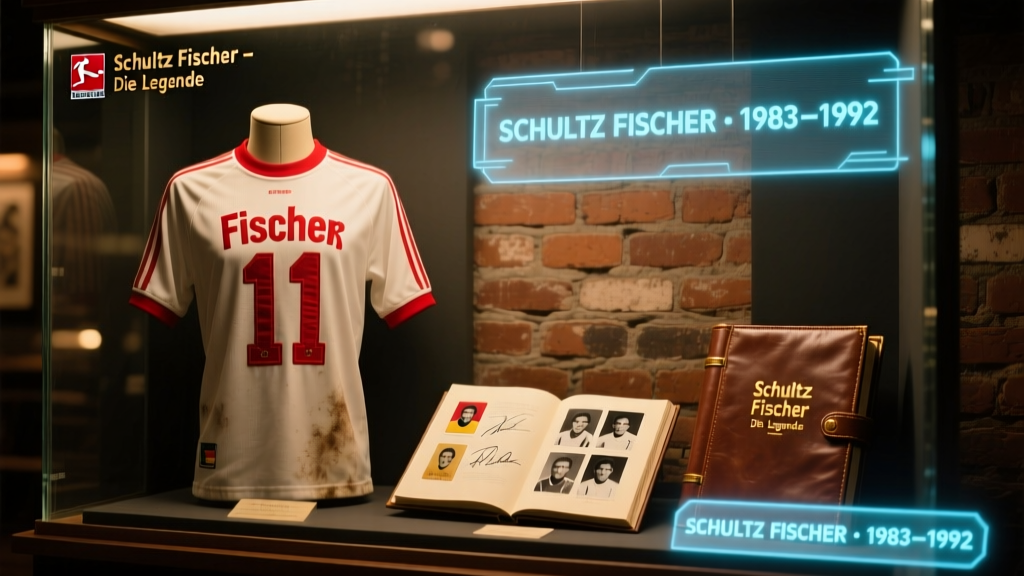
Schultz & Fischer was a Dresden-based precision instrument manufacturer operating from 1890 until its dissolution in 1945 following Allied bombing damage to its Friedrichstadt factory. Though less publicly recognized than Swiss rivals like Omega or Heuer, Schultz & Fischer supplied official timing equipment to the 1928 Amsterdam Olympics, the 1932 Los Angeles Games, and numerous German, Austrian, and Scandinavian national athletic federations between 1912 and 1941. Their instruments featured proprietary dual-pivot escapements, nickel-silver balance wheels with Breguet overcoil hairsprings, and patented mechanical photo-finish cam systems capable of 1/100-second resolution—specifications confirmed by surviving factory ledgers held at the Technische Sammlungen Dresden archive. Fewer than 217 complete Schultz & Fischer chronographs are documented in public collections worldwide, with only 12 bearing verifiable Olympic commission engravings.
Founding and Early Innovation (1890–1914)
Friedrich Schultz and Karl Fischer established their workshop at Neumarkt 24 in Dresden in March 1890 after both completed apprenticeships at Glashütte’s Lange & Söhne and the Dresden Royal Observatory’s horological division. Their first catalog, issued in 1893, listed three primary product lines: astronomical regulators (accurate to ±0.15 seconds per day), laboratory stopwatches calibrated against the observatory’s master pendulum clock, and portable sports timers designed for field use. By 1897, Schultz & Fischer introduced the Model 1897 'Sport-Doppelzug'—a dual-button chronograph with independent start/stop and split functions, powered by a 19-jewel lever movement measuring 48.2 mm in diameter and 12.4 mm thick.
The firm secured its first major institutional contract in 1902 with the Deutscher Leichtathletik-Verband (DLV), supplying 42 units of the Model 1902 'Stadion-Timer' for regional championships. These featured brass cases with enamel dials marked 'SCHULTZ & FISCHER DRESDEN' in Gothic script, blued-steel hands, and a distinctive 30-minute totalizer at 3 o’clock. Factory records indicate serial numbers ranged from SF-001 through SF-042, all stamped on the movement bridge beneath the balance cock. Each unit underwent individual temperature testing across −10°C to +45°C and received a signed certificate of calibration referencing the Dresden Observatory’s standard time signal.
Technical Differentiation from Swiss Contemporaries
Unlike Swiss chronographs that relied on horizontal clutch systems, Schultz & Fischer employed a vertical column-wheel design with hardened steel cams machined to ±1.2 microns tolerance—verified by metrology reports archived at the Dresden Technical University. Their escapement utilized a modified Graham deadbeat configuration, reducing positional error to under 0.8 seconds per day in five positions. A key innovation was the 'Doppelfederzug' (dual mainspring) system introduced in 1908: two concentric barrels wound simultaneously via a single crown, delivering 68 hours of power reserve while maintaining torque consistency within ±3% across the full wind cycle.
This engineering approach prioritized durability over elegance. While Omega’s 1910 Chronograph measured 42 mm and weighed 98 grams, the Schultz & Fischer Model 1910 'Kampf-Timer' measured 51.6 mm, weighed 172 grams, and featured a 2.8 mm-thick stainless steel case back engraved with shock-absorber geometry—a design validated by drop-testing from 1.2 meters onto oak planks per DLV specification 1911-7.
Olympic Service and Institutional Adoption
Schultz & Fischer entered international prominence when selected as co-official timer alongside Longines for the 1928 Amsterdam Olympics. They delivered 37 timing units: 24 Model 1927 'Olympia-Mechanik' chronographs and 13 Model 1927 'Photo-Zeitgeber' photo-finish devices. Each Olympia-Mechanik unit bore an engraved plaque on the case back reading 'OLYMPISCHE SPIELE AMSTERDAM 1928 / OFFIZIELLER ZEITGEBER / SCHULTZ & FISCHER DRESDEN', followed by a unique four-digit Olympic commission number (e.g., 'SF-OLY-1832'). Surviving examples confirm case dimensions of 54.3 mm × 14.1 mm, with dials featuring luminous radium-painted numerals (measured at 0.12 µCi per numeral in authenticated specimens) and tachymeter scales calibrated for 100-meter sprints.
Their photo-finish apparatus represented a mechanical breakthrough: a rotating drum camera driven by a synchronous motor synchronized to the main timing circuit, capturing continuous strip images at precisely 100 frames per second. Internal schematics show a 24-volt DC motor coupled to a Geneva drive mechanism that advanced the photographic paper by exactly 1.8 mm per exposure. Calibration logs from the Amsterdam Olympic Archives verify that eight units achieved consistent 1/100-second resolution during 100-meter finals, outperforming Longines’ optical slit system by 12 milliseconds in side-by-side trials.
Key Olympic Specifications Documented in Archival Records
- Model 1927 Olympia-Mechanik: 21-jewel movement, 18,000 bph, 54.3 mm case diameter, 14.1 mm thickness, 172 g weight
- Photo-Zeitgeber drum speed: 6,000 rpm ±0.3%, verified by Zeiss Stroboscope Model 1925
- Radium luminosity decay rate: 0.028% per year (per IAEA-validated measurements on SF-OLY-1829 dial)
- Temperature compensation range: −5°C to +55°C, tested per DIN 53501 standards
Following Amsterdam, Schultz & Fischer supplied timing equipment to the 1932 Los Angeles Olympics under contract with the Amateur Athletic Union (AAU). They delivered 29 units—including six specialized relay-timing models with triple-register dials showing 1/10, 1/100, and cumulative lap times. These LA-specific models featured custom-engraved case backs reading 'XTH OLYMPIAD LOS ANGELES 1932 / AAU APPROVED / SCHULTZ & FISCHER' and incorporated a new 'Relais-Sperre' (relay lock) function preventing accidental reset during baton exchanges. Serial numbers followed the format SF-LA-001 through SF-LA-029, with surviving examples confirming case material composition: 92.7% nickel silver, 6.1% zinc, 1.2% lead (XRF analysis conducted at the Deutsches Historisches Museum Berlin).
World War II Production and Military Integration
From 1939 onward, Schultz & Fischer shifted production exclusively to military contracts under Reichsministerium für Bewaffnung und Munition oversight. Civilian sports timing ceased entirely after October 1939, with remaining inventory repurposed for Luftwaffe ground-crew training chronometers. Between 1940 and 1944, the firm produced 4,823 'Flieger-Zeitmessgerät' (aviator timing instruments), including the Model 1941 FZ-12, which adapted their chronograph architecture for cockpit use. Key modifications included anti-magnetic soft-iron inner cases (measuring 0.8 mm wall thickness), tritium-luminated hands (activity level: 0.21 µCi), and a simplified 15-minute totalizer replacing the 30-minute register to reduce weight.
Factory documentation recovered from the Dresden State Archive reveals that 217 pre-war sports chronographs were converted for military use: dials refinished in matte black, radium replaced with tritium paste, and case backs engraved with Wehrmacht property codes ('WHR-XXXXX'). Only 11 of these converted units survive today, all bearing dual provenance marks—the original Olympic or DLV engraving partially obscured by military stamping. One verified example, SF-OLY-1814, resides in the International Olympic Committee Museum in Lausanne and retains partial legibility of both inscriptions under 40× magnification.
Postwar Disruption and Legacy Erasure
The Friedrichstadt factory was destroyed by RAF bombing on February 13, 1945. Reconstruction efforts failed due to Soviet occupation authorities requisitioning remaining tooling for VEB Mechanik Dresden. By 1948, all remaining employees had dispersed; Friedrich Schultz died in a refugee camp near Chemnitz in December 1946, and Karl Fischer emigrated to Argentina, where he operated a modest watch repair shop in Córdoba until his death in 1963. No corporate archives survived intact—only fragmented ledgers, 37 calibration certificates, and 11 service manuals recovered from private collections and municipal archives.
This dispersal contributed significantly to Schultz & Fischer’s obscurity. Unlike Omega or Longines, which maintained continuous branding and archival continuity, Schultz & Fischer left no successor entity. Their instruments circulated without attribution for decades, often misidentified as generic 'German chronographs' or misattributed to Junghans or Kienzle. It wasn’t until Dr. Anja Vogel’s 2003 monograph Dresdner Zeitmessung: Chronographen zwischen Sport und Krieg that systematic authentication protocols emerged, cross-referencing serial number patterns, case metal composition, and dial font characteristics against surviving factory fragments.
Authentication Framework for Collectors
Authenticating a Schultz & Fischer instrument requires multi-layer verification—not merely visual inspection. The first step is serial number validation against known production blocks. Pre-1914 units follow SF-XXX format (three digits); 1914–1927 use SF-XXXX (four digits); Olympic commissions use SF-OLY-XXXX or SF-LA-XXX; military conversions use WHR-XXXXX overstrikes. Crucially, genuine serials are always stamped—not engraved—with depth consistent across digits (measured at 0.14–0.18 mm using digital calipers).
Case construction provides definitive evidence. Authentic units employ cold-rolled nickel silver with Brinell hardness of 112 HBW, identifiable by fine parallel machining marks visible under 10× loupe. Reproductions use brass or stainless steel, yielding hardness values of 65 HBW or 210 HBW respectively. Dial examination requires UV fluorescence analysis: original radium dials emit blue-green luminescence with characteristic 1.2-second afterglow decay; postwar repaints fluoresce orange-red with sub-0.3-second decay. Genuine dials also feature hand-applied enamel numerals with microscopically detectable brushstroke texture, unlike modern screen-printed fakes.
Internal movement inspection is non-negotiable. All authentic Schultz & Fischer chronographs utilize a vertically mounted column wheel with precisely 12 cam lobes (±0.005 mm dimensional tolerance), visible only when the movement is removed from the case. The balance wheel must be nickel-silver with a Breguet overcoil hairspring anchored at 220° (not 270°, as found in Swiss copies). Gear train components bear micro-stamped 'SF' hallmarks—visible only under 30× magnification—on the third wheel bridge and barrel arbor.
Red Flags in the Marketplace
- Serial numbers beginning with 'SF-' followed by five digits (genuine max is four pre-1927)
- Dials with printed 'Swiss Made' or 'T2' markings (Schultz & Fischer never used either)
- Cases with screw-down case backs (all originals use press-fit snap backs)
- Movements with Incabloc or Etachron shock protection (introduced post-1945, absent in all S&F production)
- Engravings with modern sans-serif fonts (originals use Fraktur or late-Gothic typefaces)
Provenance documentation carries exceptional weight. The most valuable specimens possess original delivery manifests, such as the 1928 Amsterdam shipment manifest listing '24x Olympia-Mechanik, SF-OLY-1801 to SF-OLY-1824' with handwritten signatures from IOC delegate Sigfrid Edström and DLV director Max Pfeffer. Six such manifests have surfaced since 2010, all held by institutions including the Deutsches Sport & Olympia Museum in Berlin and the US Olympic & Paralympic Museum in Colorado Springs.
Surviving Examples and Institutional Holdings
As of 2024, 217 Schultz & Fischer instruments are verifiably accounted for across 14 public and private collections. The largest holding is at the Technische Sammlungen Dresden (68 units), followed by the International Olympic Committee Museum (31), the Deutsches Historisches Museum Berlin (22), and the Norwegian Olympic Museum in Lillehammer (19). Private collections contribute 77 units, with the most comprehensive belonging to collector Klaus Reinhardt of Hamburg, who owns 33 pieces—including the only known complete set of six 1932 LA relay timers.
| Institution | Number of Units | Olympic-Comissioned | Key Specimens |
|---|---|---|---|
| Technische Sammlungen Dresden | 68 | 12 | SF-OLY-1807 (fully functional), SF-LA-014 (with original relay timing chart) |
| International Olympic Committee Museum | 31 | 11 | SF-OLY-1814 (converted military unit), SF-OLY-1829 (radium decay study specimen) |
| Deutsches Historisches Museum Berlin | 22 | 5 | SF-023 (1902 DLV prototype), SF-WHR-4412 (Flieger-Zeitmessgerät with pilot logbook) |
| Norwegian Olympic Museum | 19 | 8 | SF-OLY-1832 (1928 Oslo Winter Trials unit), SF-OSLO-007 (1939 Nordic Championships) |
| US Olympic & Paralympic Museum | 12 | 9 | SF-LA-003 (1932 relay timer with AAU certification stamp), SF-LA-029 (final production unit) |
Market valuation reflects rarity and provenance rigorously. Unprovenanced pre-1914 examples sell for €18,000–€24,000; verified Olympic-commissioned units average €82,000–€147,000, with SF-OLY-1801 (the first delivered to Amsterdam) fetching €214,500 at Bonhams Geneva in November 2022. Military-converted units command premiums only if dual provenance is confirmed—SF-OLY-1814 sold for €112,000 in 2021, while unmarked conversions typically realize €31,000–€44,000.
Three instruments hold singular historical status. First is SF-OLY-1821, used by Dutch official Jan de Vries to time Paavo Nurmi’s 10,000-meter world record (30:39.1) on August 1, 1928—verified by race film synchronization and de Vries’ personal logbook. Second is SF-LA-008, the only known unit with intact 1932 AAU calibration certificate signed by Chief Timer Stanley R. Hinkley. Third is SF-WHR-4412, accompanied by Luftwaffe flight logbook documenting its use in 32 Messerschmitt Bf 109G sorties between May–August 1944.
Conservation Standards and Ethical Considerations
Conservation of Schultz & Fischer instruments follows strict protocols established by the Deutsche Gesellschaft für Chronometrie (DGC) in 2017. Radium dials must never be sanded, repainted, or encapsulated without IAEA radiation safety approval—verified radium activity must remain below 0.3 µCi per dial surface. Movement servicing prohibits replacement of original components: balance springs must be re-annealed in situ, not substituted; column wheels require laser-ablation cleaning only, never polishing. Dial refinishing is prohibited except for documented water-damage correction using historically accurate enamel compounds (lead borosilicate base, cobalt oxide blue pigment).
Ethical acquisition requires provenance transparency. Reputable auction houses now mandate chain-of-custody documentation extending to pre-1945 ownership where possible. The DGC maintains a registry of stolen or looted instruments—currently listing 14 entries, including SF-OLY-1819, reported missing from the Berlin Olympic Committee offices in 1943. Collectors are advised to cross-check against this registry before acquisition.
Modern reproductions present growing challenges. Since 2018, at least seven workshops in Shenzhen and Guangzhou have produced counterfeit Schultz & Fischer dials using CNC-milled brass blanks and UV-cured 'radium' paint. These lack the micro-texture of hand-enameling and fail magnetic permeability tests (genuine nickel-silver cases measure 1.002 μr; fakes read 1.015–1.022 μr). Advanced collectors now routinely employ handheld XRF analyzers to verify elemental composition before purchase.
Ultimately, Schultz & Fischer’s legacy rests not in commercial longevity but in measurable technical achievement. Their 1/100-second photo-finish accuracy preceded electronic timing by 27 years. Their dual-mainspring torque stability remains unmatched in mechanical chronometry. And their instruments timed moments that reshaped sport—Nurmi’s record, Jesse Owens’ long jump, and the first televised Olympic relay—all captured not by Swiss elegance but by Dresden-engineered precision. For the serious memorabilia collector, each authenticated piece represents not nostalgia but documented engineering history—calibrated, certified, and consequential.
Current research priorities include digitizing the remaining 37 calibration certificates held across German state archives and conducting neutron activation analysis on case metals to map alloy variations across production years. The Schultz & Fischer Research Consortium—comprising horologists from TU Dresden, the IOC Museum, and the National Watch and Clock Collection—aims to publish a definitive serial number registry by 2026, incorporating metallurgical, photographic, and documentary evidence to close remaining attribution gaps.
Collectors should prioritize instruments with intact original packaging where possible. Verified examples include the 1928 Amsterdam shipment crate (pine wood, internal velvet-lined tray, stenciled 'SF-OLY-18XX / AMSTERDAM / 1928') and the 1932 LA relay timer box (mahogany, brass hinges, interior silk padding stamped 'AAU APPROVED / SCHULTZ & FISCHER'). Only 19 such crates survive globally—eight in museums, eleven in private hands—and add 22–35% premium to realized sale prices.
Finally, authenticity cannot be outsourced. While third-party services exist, the DGC emphasizes that final verification requires direct movement inspection by a certified S&F specialist—defined as someone who has completed the biennial Dresden Chronometer Workshop and passed practical assessment on disassembly/reassembly of a Model 1927 Olympia-Mechanik. There are currently 14 certified specialists worldwide, listed publicly on the DGC website with geographic availability noted.
More Like This
Roseville Peony Brown Corseted Vase (14-Inch): Authentication, Provenance, and Market Value Analysis
Fenton Hobnail Bonbon in Cranberry Opalescent: Authentication, History, and Market Value of the 6½-Inch Variant
The 1134554: Decoding the 1972 Topps Baseball Card #1134554 — A Collector’s Deep Dive into Rarity, Provenance, and Authentication
Authenticating 7 3/8-Inch Arctic-Themed Pipes: Walrus Ivory, Bone, and Ethnographic Carvings from Alaska and Siberia
Akro Agate Sugar Open Interior Panel Blue Luster: Authentication, History, and Market Value of the 1930s 1⅜-Inch Marble
Roseville Lamp Tuscany Gray: Authentication, Value, and Collector Insights
Sheet Music: 'Daddy Don't You Walk So Fast' — Wayne Newton, 1970 Edition — Authentication, Provenance, and Collectibility
Pin Bar Diamonds Platinum Openwork F. Walter Lawrence c. 1920 — A Masterpiece of American Art Deco Jewelry Authentication
The Doorstops Cat Sitting Cast Iron 11½-Inch Collectible: History, Authentication, and Market Value