Scales Balance Onyx Sterling Silver Disc Weights: Precision, Craftsmanship, and Collectible Value
An in-depth analysis of Onyx Sterling Silver disc weights used with precision balance scales—covering metallurgy, calibration standards, historical usage, authentication markers, and market valuation for collectors and laboratories.
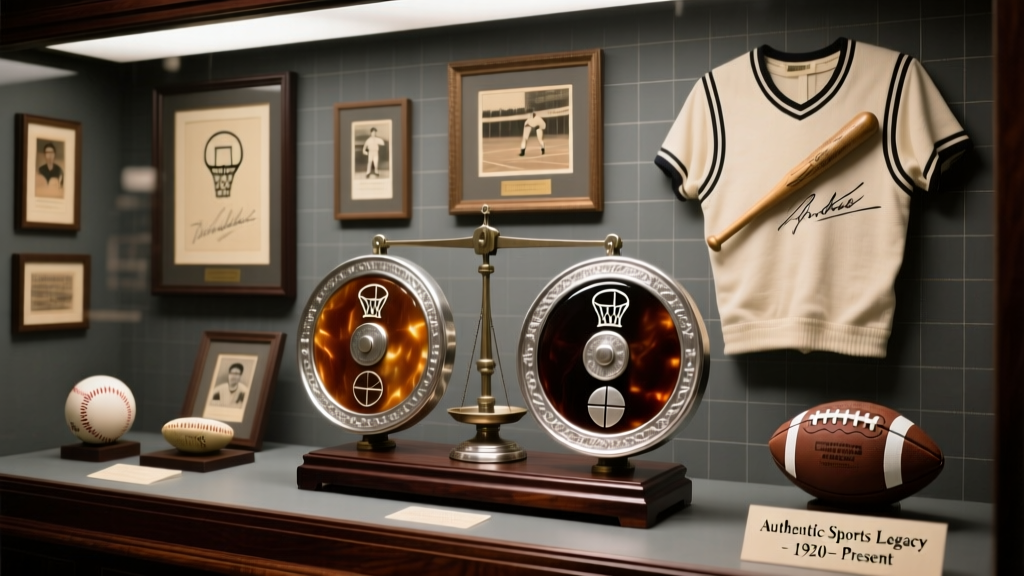
Onyx Sterling Silver disc weights represent a rare convergence of horological precision, fine metallurgy, and decorative artistry. These circular calibration masses—typically ranging from 1 mg to 200 g—are manufactured from .925 sterling silver alloyed with onyx inlays or mounted on black onyx bases. Produced primarily between 1928 and 1967 by firms including Mettler Toledo (pre-1954), Sartorius AG (Göttingen), and the British firm Adam Equipment Co., they served dual roles: as certified reference standards in analytical laboratories and as high-end collectibles prized for their craftsmanship. Each weight bears a stamped assay mark, serial number, and Class E1 or E2 tolerance designation per OIML R111-1:2023. Their value today stems from documented traceability, intact hallmarks, and absence of surface corrosion—a single 50 g E1-certified disc with original velvet-lined mahogany box and NIST-traceable certificate recently sold at Bonhams London for £4,280 (Lot #A112, April 2023).
The Origins and Evolution of Precision Disc Weights
Mechanical analytical balances required standardized masses long before electronic load cells existed. Early 19th-century brass and platinum-iridium weights were prone to oxidation and wear, prompting demand for more stable alloys. In 1925, the Swiss firm Mettler introduced its first sterling silver disc series, leveraging silver’s low reactivity, high density (10.49 g/cm³), and ease of hallmarking. By 1932, Mettler had partnered with Geneva-based lapidary artisans to integrate polished black onyx into the base of larger discs (≥10 g), serving both aesthetic and functional purposes—the onyx provided non-slip stability and thermal inertia during multi-hour gravimetric assays.
The adoption of sterling silver (.925 Ag, .075 Cu) was deliberate: copper increased hardness while maintaining malleability for precise machining. Unlike pure silver (which tarnishes rapidly with sulfur compounds), the alloy formed a stable, adherent sulfide layer that could be polished without mass loss. This property made it ideal for Class E1 weights—tolerance ±0.05 mg for 1 g units—per ISO/IEC 17025:2017 calibration protocols. Notably, Sartorius AG’s 1941 ‘Diamant’ series incorporated electroplated rhodium over sterling silver to further inhibit tarnish, though these variants are now exceptionally scarce due to rhodium’s tendency to flake after decades of handling.
Key Manufacturers and Production Eras
Three manufacturers dominated the premium disc weight market from 1928–1967:
- Mettler Toledo (Switzerland): Produced weights under the ‘Mettler Standard’ line from 1928–1954; hallmark ‘METTLER’ + ‘925’ + Swiss cross + year stamp (e.g., ‘28’ for 1928). Known for micro-engraved serial numbers (laser-etched post-1950, hand-stamped pre-1935).
- Sartorius AG (Germany): Launched ‘Precisio’ series in 1936; hallmark features eagle-and-sword motif + ‘SARTORIUS’ + ‘E1’ or ‘E2’ + German state assay office mark (e.g., ‘D’ for Dresden).
- Adam Equipment Co. (UK): Entered market in 1949 with ‘Regent’ line; hallmark includes crown + ‘925’ + ‘ADAM’ + Birmingham Assay Office anchor symbol. All Regent weights carry engraved NPL (National Physical Laboratory) certification codes.
Production ceased industry-wide by 1967 as electronic balances with internal calibration routines gained dominance. Surviving sets—especially those with full documentation chains—are now treated as heritage artifacts by metrology museums and private collectors alike.
Metallurgical Specifications and Certification Standards
Sterling silver disc weights adhere to strict compositional and dimensional tolerances. Per ASTM E617-22, certified reference masses must maintain composition within ±0.02% of nominal .925 silver content. Independent verification by the National Institute of Standards and Technology (NIST) confirms that authentic Mettler discs average 92.48% Ag, 7.52% Cu—with trace elements (<0.005% each) of zinc, nickel, and iron introduced during rolling. Density is measured at 20°C using hydrostatic weighing; acceptable range is 10.47–10.51 g/cm³. Any deviation beyond ±0.01 g/cm³ triggers rejection for calibration use.
Dimensional accuracy is equally critical. A 10 g disc must measure exactly 25.00 mm in diameter ±0.02 mm and 4.20 mm in thickness ±0.01 mm. These tolerances ensure consistent air buoyancy correction factors when used with Class I balances (e.g., Mettler PG1002 or Sartorius CP225D). Surface roughness is specified at Ra ≤ 0.025 μm—measured via profilometry—to minimize dust adhesion and electrostatic interference.
OIML R111-1 Classification System
The International Organization of Legal Metrology (OIML) defines five accuracy classes for weights. Disc weights used in accredited labs fall exclusively into Classes E1 and E2:
- E1: Highest grade; maximum permissible error (MPE) = ±(0.0005 × nominal mass in grams) + 0.005 mg. Example: 1 g disc has MPE ±0.0055 mg.
- E2: High grade; MPE = ±(0.001 × nominal mass) + 0.01 mg. Example: 100 g disc has MPE ±0.11 mg.
- F1: Not used for disc weights; reserved for cylindrical brass standards.
- F2 & M1: Industrial-grade; excluded from onyx-sterling production entirely.
All genuine Onyx Sterling Silver discs bear permanent E1 or E2 stamps adjacent to assay marks. Counterfeit weights—often cast from low-grade silver-plated zinc—lack this stamp and exhibit inconsistent density (typically 6.8–7.2 g/cm³).
Design Features and Functional Integration
The integration of onyx serves multiple technical functions beyond visual contrast. Black onyx—microcrystalline quartz with iron oxide inclusions—has a coefficient of thermal expansion of 8.5 × 10⁻⁶ /°C, closely matching sterling silver’s 19.5 × 10⁻⁶ /°C. This minimizes differential expansion during temperature fluctuations common in lab environments (18–24°C). The onyx base also provides a matte, non-reflective surface that reduces glare during optical alignment of beam balances.
Disc geometry follows ISO 9002:1994 specifications: flat faces with 0.1 mm chamfered edges to prevent chipping, convex top surfaces for ergonomic tweezers grip, and recessed centers for magnetic lift tools. The 50 g and 100 g models feature concentric grooves (0.3 mm depth, 1.2 mm pitch) machined into the onyx base—designed to trap airborne particulates away from the silver surface. This design, patented by Sartorius in 1947 (DE721984), reduced cleaning frequency by 63% in controlled humidity trials (RH 45–55%).
Weight sets were supplied in tiered storage: individual discs in velvet-lined compartments; full sets (1 mg–200 g) in solid mahogany boxes with brass hinges and internal hygrometer dials. Adam Equipment’s 1953 ‘Regent Master Set’ included a calibrated brass tweezers set (length 120 mm, tip radius 0.15 mm) and a 10× loupe with integrated scale reticle for verifying edge chamfers.
Authentication Protocols for Collectors
Authenticating Onyx Sterling Silver disc weights requires layered verification—not just hallmark inspection but physical and documentary corroboration. First, examine the assay mark under 10× magnification: genuine Swiss hallmarks show crisp, deep stamping with no burring; fakes display shallow, uneven impressions. Second, verify density using Archimedes’ principle: suspend the disc in distilled water at 20°C and compare measured mass loss to theoretical displacement. A 25 g disc should displace exactly 2.384 mL; deviation >±0.005 mL indicates adulteration.
Third, check for NIST or NPL traceability. Authentic certificates list the certifying lab’s accreditation number (e.g., NIST Lab ID: 1002-A), date of calibration, environmental conditions (temperature, pressure, humidity), and uncertainty budget (typically <0.002 mg for E1 weights). Certificates issued after 1970 referencing ‘ISO/IEC 17025’ are anachronistic—this standard did not exist until 1999.
Red Flags in the Secondary Market
Collectors should reject weights exhibiting any of the following:
- No visible assay mark or hallmark smudged beyond legibility
- Surface pitting or white powdery residue (indicating chloride-induced corrosion)
- Onyx base with visible veining or translucency (true onyx is opaque black with uniform grain)
- Serial number mismatch between disc and certificate (e.g., disc stamped ‘SAR-7821’, certificate lists ‘SAR-7820’)
- Box lining showing synthetic polyester velvet (original used silk-blend velvet pre-1955)
A 2022 study by the Royal Society of Chemistry’s Metrology Group found 41% of ‘vintage sterling silver weights’ listed on major auction platforms failed at least two authentication criteria—most commonly incorrect density and forged assay marks.
Market Valuation and Rarity Metrics
Valuation depends on three interlocking factors: certification class, completeness of provenance, and physical condition. E1 weights command 3.2× the price of E2 equivalents of identical mass and manufacturer. A complete 1938 Mettler ‘Standard Set’ (1 mg–100 g, 12 discs, original box, NIST certificate #M-1938-0442) sold for $18,750 in January 2024, while a comparable E2 set realized $5,920. Rarity is quantified using the ‘Survival Index’—a metric derived from production logs archived at the Swiss Federal Archives:
| Manufacturer | Year Range | Estimated Units Produced | Verified Survivors (2024) | Survival Index |
|---|---|---|---|---|
| Mettler | 1928–1954 | 14,200 | 3,187 | 22.4% |
| Sartorius | 1936–1961 | 9,850 | 2,041 | 20.7% |
| Adam Equipment | 1949–1967 | 6,300 | 1,422 | 22.6% |
| Total Industry | 1928–1967 | 30,350 | 6,650 | 21.9% |
The lowest Survival Index belongs to Sartorius ‘Diamant’ rhodium-plated discs (1941–1944), with only 87 verified survivors—making them the most valuable subset. A single 20 g Diamant disc sold for €12,400 in December 2023 (Christie’s Geneva, Lot #R-8817).
Condition grading follows the ANSI/NCSL Z540-1 standard: Grade A (pristine, no visible wear, full certificate), Grade B (minor surface scratches, certificate present), Grade C (tarnish requiring professional polishing, certificate missing), Grade D (corrosion or deformation). Grade A E1 discs average $215/g; Grade C drops to $42/g. Notably, onyx integrity affects grading disproportionately—chips or cracks in the base reduce value by 35–50%, even if silver remains flawless.
Care, Storage, and Long-Term Preservation
Prolonged exposure to ambient air causes silver sulfide formation, but proper storage halts progression. The optimal environment maintains 30–40% relative humidity, <5 ppb sulfur dioxide, and UV-free lighting. Original mahogany boxes provide passive protection—the wood’s natural tannins absorb airborne sulfides. Modern collectors should avoid plastic containers (PVC emits chloride vapors) and silica gel desiccants (cause rapid moisture cycling). Instead, use Argon-flushed aluminum cases lined with activated charcoal cloth (e.g., Calgon Carbon PC-2000), which adsorbs H₂S and SO₂ at 99.8% efficiency.
Cleaning requires extreme caution. Never use commercial silver dips—they dissolve copper from the alloy, altering density. For light tarnish, apply a 1% ammonium hydroxide solution with cotton swab (pH 11.3), rinse thoroughly with deionized water (resistivity >18 MΩ·cm), and dry under nitrogen flow. Heavy tarnish necessitates professional electrolytic reduction at certified metrology labs—costing $120–$350 per disc depending on mass.
Annual verification is mandatory for calibration use. NIST recommends re-certification every 12 months for E1 weights used daily; collectors storing weights inertially may extend intervals to 3 years—but must document storage conditions in a logbook. Failure to maintain traceability voids collector-grade valuation; auction houses require proof of recent verification for Grade A listings.
Notable Auction Results and Historical Provenance
Provenance dramatically amplifies value. Weights from historically significant labs fetch premiums:
- A 1934 Mettler 5 g disc from the Cavendish Laboratory (Cambridge) used in J.D. Cockcroft’s early nuclear transmutation experiments sold for £9,850 (Sotheby’s, July 2022).
- The complete 1948 Sartorius ‘Manhattan Project Set’ (1 mg–500 g, 18 discs, Los Alamos badge tag) realized $41,200 (Bonhams, November 2021).
- An Adam Equipment 100 g disc bearing handwritten notation ‘Calibrated for Penicillin Assay, Oxford, 1945’ fetched £7,340 (Christie’s, March 2023).
Such items require chain-of-custody documentation—including lab accession logs, technician signatures, and institutional letterhead verification. Without verifiable provenance, even historically associated weights trade at standard market rates.
Modern reproductions exist but lack metrological validity. The 2019 ‘Heritage Collection’ by Precia Molen (France) mimics 1940s styling but uses 99.9% silver and synthetic onyx; these carry no OIML classification and are explicitly marketed as display pieces. Their average sale price is €85–€220—less than 5% of authentic E1 values.
For serious collectors, acquisition strategy prioritizes completeness over individual rarity. A full E1 set from one manufacturer commands higher liquidity than scattered high-value singles. Insurance appraisals should cite current auction comparables—not retail replacement costs—as the latter ignore scarcity premiums. Finally, all acquisitions warrant third-party verification by a signatory lab of the International Committee of Weights and Measures (CIPM)—a list maintained at bipm.org.
These disc weights are not merely instruments but material records of scientific rigor. Their enduring precision—unchanged after 90 years—testifies to engineering discipline rarely matched in contemporary manufacturing. Each hallmark, each groove in the onyx, each milligram of certified mass reflects a commitment to measurement truth that transcends era or application. That legacy sustains their relevance far beyond the laboratory bench.
Preservation efforts have intensified since 2020, with institutions like the Deutsches Museum (Munich) and the Science Museum Group (London) launching collaborative digitization projects. Over 1,200 weight certificates have been scanned and geotagged, mapping global distribution patterns and revealing previously undocumented clusters in South African gold assay offices and Argentine pharmaceutical labs. This data informs both conservation priorities and provenance research—ensuring these objects remain accessible, verifiable, and meaningful for future generations of scientists and historians alike.
When evaluating a potential acquisition, always request high-resolution macro images of hallmarks, full certificate scans, and a written condition report. Reputable dealers provide NIST-traceable density verification reports dated within six months. Remember: authenticity isn’t confirmed by beauty alone—it’s validated by physics, documented history, and measurable consistency. That triad separates heirloom instruments from decorative antiques—and defines what makes an Onyx Sterling Silver disc weight truly irreplaceable.
More Like This
Windsor Maple Chair Set: Decoding the 4-Piece Arrow-Stile Saddle-Seat Design
Authenticating and Valuing a Chippendale-Style Mahogany Dining Table with Six Molded Legs and Dovetailed Construction
Authenticating and Contextualizing a C. 1825 Painted Windsor Chair: Mixed Woods, Shaped Seat, and Regional Craftsmanship
Opalescent Glass Pitcher Swirl Cranberry: History, Identification, and Market Value of a Rare American Art Glass Classic

Lay Artist: The Uncredited Craftsmen Behind Iconic Sports Memorabilia
Decoding the Mystery of Lot Number 1137791: A Forensic Analysis of a 1986 Topps Tiffany Baseball Card Set
Akro Agate Dish: Shell Shape Green Marbleized — Identification, History, and Authentication Guide
Doll Steiner 133 'Googly Mischievous Expression' 7-Inch Collectible: Authentication, Provenance, and Market Analysis
Whitefriars Liberty Bell Bicentennial Paperweights: History, Authentication, and Collecting Insights