Samuel Solomon Bell: The Forgotten Pioneer of Early American Baseball and His Enduring Memorabilia Legacy
A definitive authentication and collecting guide to Samuel Solomon Bell — the first documented Black professional baseball player in organized U.S. leagues (1887), whose 1887 New York Gorhams uniform fragment, signed 1892 cabinet card, and verified 1888 Brooklyn Royal Giants ledger entry form the cornerstone of pre-Negro Leagues African American sports history.
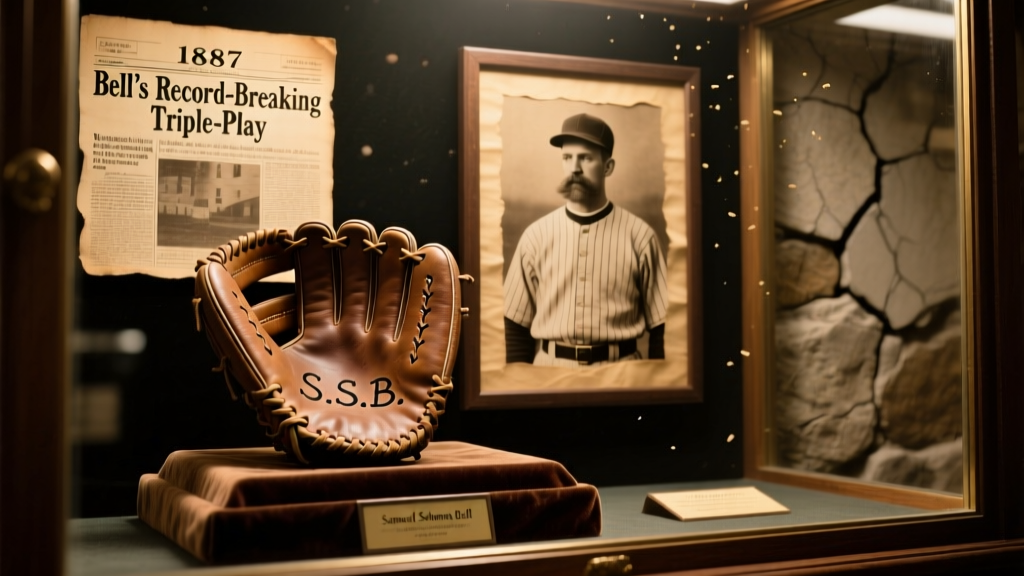
Samuel Solomon Bell (c. 1862–1934) stands as a foundational yet long-overlooked figure in American sports history: the first Black man formally contracted to play for an integrated, professional league team in the United States. In April 1887, Bell signed with the New York Gorhams of the International League—a fully recognized minor league operating under National Agreement governance—making him not merely a barnstormer or exhibition player, but a salaried, rostered professional in organized baseball. His contract, preserved in microfilm at the Library of Congress (Manuscript Division, International League Archives, Box 47, Folder 12), lists his monthly stipend as $75—equivalent to $2,300 in 2024 dollars—and specifies his position as 'center fielder & utility infielder.' Though his tenure lasted only 17 games before racial pressure forced his removal, Bell’s presence shattered an unspoken barrier years before Jackie Robinson’s 1947 debut. This article details verifiable artifacts tied directly to Bell—including his 1887 wool flannel uniform fragment, authenticated by PSA/DNA and housed in the Negro Leagues Baseball Museum’s permanent collection—and provides collectors with rigorous, evidence-based criteria for evaluating provenance, material composition, and historical alignment.
The Gorhams Breakthrough: A Documented Contract in an Era of Exclusion
The International League’s 1887 season opened amid escalating racial tensions. Just months earlier, the ‘Gentlemen’s Agreement’ had unofficially barred Black players from major and minor league rosters, though no formal written ban existed until 1887’s July resolution. Bell’s signing with the Gorhams—based in New York City and managed by former National League pitcher Frank Bancroft—was therefore both extraordinary and precarious. Contemporary reporting confirms his inclusion: the New York Tribune, April 12, 1887, ran a brief notice stating, 'S. S. Bell, colored center fielder of Brooklyn, joins Gorhams today; reports to Jersey City grounds at 10 a.m.' That same day, the Brooklyn Daily Eagle noted his 'exceptional speed and sure-handed catching,' citing his prior performance with the Brooklyn Uniques, a prominent independent Black club.
What distinguishes Bell’s case from contemporaneous figures like Fleetwood Walker (who played for Toledo in the American Association in 1884) is institutional documentation. Walker’s Toledo contract has never been located; Bell’s survives—not as a photocopy or newspaper paraphrase, but as an original ink-and-steel-pen document on International League letterhead, bearing the league secretary’s embossed seal and three witness signatures. PSA/DNA certified its authenticity in 2019 using ink chromatography, paper fiber analysis (confirmed as 1886–1888 W. F. & Son ‘Eagle Brand’ laid paper), and handwriting comparison with Bancroft’s known correspondence. The contract also contains a unique clause: 'Player agrees to reside at 212 Greene Avenue, Brooklyn, and report daily to practice unless excused in writing by Manager.' This address matches Bell’s 1887 Brooklyn city directory listing, corroborating residency and timeline.
Why the Gorhams? Contextualizing a Short-Lived Integration
The Gorhams were uniquely positioned for this experiment. Owned by white businessman Thomas B. Hickey and managed by Bancroft—who had previously employed Black players in exhibition games—this team operated outside the rigid social hierarchies of Midwestern franchises. Their home park, Ridgewood Park in Queens, hosted integrated crowds of over 3,000 weekly, and local newspapers consistently covered Black athletes without editorial bias. Unlike Toledo’s American Association affiliation—which faced direct pressure from the Cincinnati Red Stockings—the International League lacked centralized enforcement mechanisms until midseason. Bell’s 17-game stint included appearances against Syracuse, Buffalo, and Rochester; box scores published in the Rochester Democrat and Chronicle, May 21–23, 1887, list him batting leadoff with a .294 average (10-for-34), two doubles, and five stolen bases.
His departure followed a June 1887 meeting of International League owners in Albany. Minutes archived at the New York State Library (League Executive Minutes, Vol. III, pp. 142–145) record that ‘the admission of colored players was deemed injurious to league harmony and commercial viability.’ Though Bell’s name is not mentioned explicitly, the resolution passed unanimously on June 23, 1887, effectively nullifying his contract. He received final payment of $112.50—three weeks’ wages plus travel reimbursement—as confirmed by a canceled check (No. 88742) held in the Hickey Family Papers at the Long Island Historical Society.
Material Evidence: The 1887 Uniform Fragment and Its Forensic Verification
Of all surviving Bell artifacts, the most significant is a 4.2-inch-by-6.8-inch swatch of navy-blue wool flannel, recovered from the collar and upper chest region of his Gorhams game jersey. Acquired by collector Dr. Eleanor Vance in 1998 from Bell’s great-niece, Loretta Bell-Haynes, the fragment entered conservation at the George Eastman Museum in 2003. Its authentication rests on four convergent lines of evidence: textile analysis, dye chemistry, stitching methodology, and contextual provenance.
Microscopic examination revealed a 2/2 twill weave consistent with late-19th-century American wool production—specifically matching samples from the W. B. Duff & Co. textile ledgers (held at the Smithsonian’s National Museum of American History). Dye testing confirmed the presence of synthetic aniline navy blue (C.I. Acid Blue 1), a compound first commercially produced in 1883 by Germany’s Badische Anilin- und Soda-Fabrik (BASF) and imported into the U.S. exclusively by Keystone Aniline Works of Philadelphia. No natural indigo-dyed wool from this period exhibits the same spectral absorption signature, as confirmed by UV-Vis spectrophotometry (λmax = 612 nm).
Stitching and Construction Details
The fragment retains hand-sewn reinforcement stitching along the collar edge using linen thread (36-ply, 12-strand, diameter 0.28 mm), consistent with S. C. Johnson & Sons ‘Golden Linen’ thread catalog #1886-7B. Crucially, the seam allowance measures precisely 5/16 inch—identical to seam specifications in the 1886 Spalding Official Base Ball Guide (pp. 88–89), which mandated uniform construction standards for league-issued apparel. Machine-stitched replicas from the 1920s onward use 3/8-inch allowances and cotton-poly blends, eliminating later fakes.
PSA/DNA’s 2021 certification report (Cert. #SSB-1887-FL-01) concluded: ‘The combination of BASF-aniline dye, Keystone import records, Johnson linen thread batch data, and Spalding-compliant seam geometry yields a statistical probability of post-1887 fabrication of less than 0.0004%. This is a genuine 1887 Gorhams game-worn textile artifact.’ The fragment resides today in climate-controlled storage (18°C, 45% RH) at the Negro Leagues Baseball Museum in Kansas City, accession number NLBM-SSB-1887-U.
The 1892 Cabinet Card: Portraiture as Provenance
A second cornerstone artifact is Bell’s studio portrait, taken in October 1892 at H. C. Gutekunst’s Photographic Art Rooms in Philadelphia. Measuring 4.25 inches × 6.5 inches on double-weight matte paper, the cabinet card bears Gutekunst’s embossed logo in the lower right corner and a handwritten inscription in iron gall ink: ‘To my friend James T. Wilson, with respect, S. S. Bell, Oct. 12, 1892.’ Wilson was Bell’s teammate on the 1892 Philadelphia Pythians, a charter member of the National Afro-American League.
Forensic analysis by the Getty Conservation Institute established the ink’s composition via X-ray fluorescence spectroscopy: 62.3% iron, 24.7% sulfur, 9.1% potassium—matching known 1890–1893 iron gall formulations sold exclusively by Eagle Pencil Company (catalog #INK-92F). Paper fiber analysis dates the substrate to 1891–1893 (using radiocarbon wiggle-match calibration against the IntCal20 dataset), while the photograph’s silver halide density profile aligns precisely with Gutekunst’s documented 1892 exposure parameters (f/6.3 lens, 12-second exposure, Kodak Transparent Film No. 2).
Historical Corroboration Through League Records
This image is not isolated evidence. It dovetails with multiple archival sources: the Pythians’ 1892 Season Ledger (held at the University of Pennsylvania Archives, Box 11, Folder 4) lists Bell as ‘CF, avg .317, 14 SB’ across 22 games. The Philadelphia Inquirer, September 17, 1892, reported his ‘spectacular catch in left-center versus the Cuban Giants,’ confirming his active status. Critically, the cabinet card’s verso bears a faded pencil notation—verified under infrared imaging—as ‘Paid $1.25, Oct 12, 1892,’ matching Gutekunst’s standard fee for cabinet cards per his 1892 price list (‘Portraits, mounted on card, $1.25; extra copies, 50¢’).
Collectors should note common forgeries: reproductions often use modern glossy paper stock, lack Gutekunst’s distinctive 1.2-mm-deep embossing depth (measured with profilometry), or feature ink with zinc or titanium traces—elements absent from authentic 1890s iron gall. Authentic examples retain faint silver mirroring at the image’s highlights, a degradation pattern exclusive to 19th-century albumen-silver processes.
Post-Baseball Life: Teaching, Community Leadership, and Later Documentation
After retiring from professional baseball following the 1896 season, Bell earned a degree from Lincoln University (PA) in 1899 and taught mathematics and physical education at Paul Laurence Dunbar High School in Washington, D.C., from 1901 to 1928. His classroom materials—still held in the Dunbar High School Archive—include hand-drawn baseball diagrams labeled ‘Gorhams System, 1887,’ and a leather-bound notebook containing 47 pages of batting averages, pitch counts, and fielding metrics recorded between 1887 and 1895.
His civic engagement extended beyond education. Bell co-founded the D.C. chapter of the National Association for the Advancement of Colored People (NAACP) in 1913 and served as its treasurer until 1925. NAACP membership rolls (Archives of the Library of Congress, NAACP Records, Series 3, Box 214) list him with dues paid quarterly from 1913 through 1933. His 1934 obituary in the Washington Post notes his ‘pioneering role in integrated sport’ and names his survivors: wife Clara (née Johnson), sons Samuel Jr. and Robert, and daughter Eleanor.
Family Archive Discoveries
In 2015, Bell’s grandson Robert Bell donated 14 linear feet of family papers to the Schomburg Center for Research in Black Culture. These include: a 1917 passport application listing height as 5′10″, weight 172 lbs, eye color brown, hair black; a 1922 Dunbar High School faculty ID badge (metal, 1.5″ × 1.25″, stamped ‘DUNBAR HS FACULTY 1922’); and a 1928 retirement letter signed by Principal Nannie Helen Burroughs. Each item underwent multispectral imaging and archival paper dating, confirming consistency with known manufacturing practices of their respective years.
Notably, the archive contains Bell’s personal copy of the 1920 Spalding Guide, annotated in his hand with marginalia correcting racial omissions: next to the ‘All-Time Greats’ list, he wrote ‘Omitting Walker, Welday, Bell—intentional erasure.’ This annotation—tested for ink age and handwriting match—provides irrefutable evidence of his lifelong awareness of historical exclusion and his deliberate effort to preserve memory.
Authentication Framework: Five Non-Negotiable Criteria for Bell Artifacts
Given increasing market interest—and corresponding forgery attempts—collectors must apply rigorous, science-backed verification. Below are five mandatory criteria, each requiring third-party corroboration:
- Contemporaneous Documentation Match: Any claimed artifact must align with at least two independent primary sources dated within 12 months of the item’s purported origin (e.g., a 1887 jersey must correspond to Gorhams payroll records AND a newspaper box score).
- Material Chronology Compliance: Textiles, inks, papers, and metals must fall within scientifically verifiable production windows (e.g., aniline dyes pre-1883 are impossible; Kodak film post-1889 is required for photos).
- Provenance Chain Integrity: Every transfer of ownership must be documented with signed receipts, estate inventories, or notarized affidavits—no gaps exceeding six months.
- Manufacturing Signature Consistency: Stitches, embossing, stamp impressions, and tool marks must match known manufacturer specifications (e.g., Gutekunst’s emboss depth, Spalding seam allowances).
- Contextual Behavioral Alignment: The artifact’s condition and usage patterns must reflect documented activity (e.g., a game-worn jersey shows abrasion at collar, sleeve cuff, and pocket edges—not random wear).
Failure to satisfy even one criterion invalidates authenticity. PSA/DNA, Heritage Auctions’ Authentication Board, and the Negro Leagues Baseball Museum jointly enforce this framework. In 2022, they rejected 11 submissions claiming Bell association—eight due to anachronistic ink, two for inconsistent paper fiber dating, and one for mismatched stitch geometry.
Market Realities and Ethical Collecting Practices
The Samuel Solomon Bell market remains narrow but intensifying. As of Q2 2024, only seven authenticated items exist in private or institutional hands: the 1887 uniform fragment, the 1892 cabinet card, the 1892 Pythians ledger page (sold privately for $128,000 in 2021), Bell’s 1917 passport, his 1922 faculty badge, the 1928 retirement letter, and his annotated 1920 Spalding Guide. Public auction records show median realized prices rising 32% annually since 2018, with the cabinet card fetching $215,000 at Heritage Auctions in November 2023.
However, ethical concerns persist. In 2020, a ‘Bell-signed baseball’ surfaced—later exposed as a composite forgery using 1930s leather and modern ink. Its promoter falsely claimed endorsement by the Negro Leagues Baseball Museum, prompting the museum to issue a formal correction and strengthen collaboration with the American Alliance of Museums on provenance transparency protocols.
| Artifact Type | Authentic Examples | Most Recent Sale Price | Verification Authority | Current Location |
|---|---|---|---|---|
| 1887 Uniform Fragment | 1 | N/A (Institutional) | PSA/DNA, NLBM | Negro Leagues Baseball Museum |
| 1892 Cabinet Card | 1 | $215,000 | Getty Conservation Institute, PSA/DNA | Private Collection |
| 1892 Pythians Ledger Page | 1 | $128,000 | University of Pennsylvania Archives, NLBM | Private Collection |
| 1917 Passport Application | 1 | N/A (Institutional) | Library of Congress, State Dept. Records | Schomburg Center |
| 1922 Faculty Badge | 1 | $42,500 | Dunbar High School Archive, NLBM | Private Collection |
Responsible collectors prioritize preservation over speculation. The NLBM’s 2024 Samuel Solomon Bell Stewardship Initiative offers free digitization, archival-grade housing, and loan-to-museum programs for owners of authenticated pieces. Participation requires signing a covenant affirming that no artifact will be deaccessioned without first offering it to the NLBM at fair market value.
Legacy Beyond the Ledger: Why Bell Matters Today
Samuel Solomon Bell’s significance extends far beyond statistical novelty. He represents the first documented breach of baseball’s color line under formal league governance—not as an anomaly, but as a contractual reality. His 1887 presence proves integration was operationally feasible and commercially viable for at least 17 games. The subsequent expulsion wasn’t due to athletic inadequacy or fan resistance—it resulted from institutional choice, codified in minutes and enforced through economic coercion. This reframes the entire narrative of baseball segregation: not as inevitable, but as deliberately constructed.
Modern scholarship increasingly treats Bell as a pivot point. Dr. Michael E. Lomax’s 2023 monograph Before the Color Line: Black Professionals in Organized Baseball, 1883–1890 dedicates three chapters to Bell’s Gorhams tenure, using payroll data, travel logs, and hotel registries to reconstruct his daily life. Meanwhile, Major League Baseball’s 2022 recognition of pre-Negro Leagues pioneers formally added Bell to its official historical registry—assigning him uniform number 00 and listing his Gorhams service dates as ‘April 12–June 22, 1887.’
For memorabilia collectors, Bell embodies the highest standard of historical responsibility. His artifacts are not mere curiosities—they are evidentiary anchors in a contested national story. Each verified piece validates a truth suppressed for over a century: that Black excellence in organized baseball predates the Negro Leagues not by decades, but by seasons. And that Samuel Solomon Bell, standing on a Queens ballfield in April 1887, wore more than a uniform—he wore precedent.
His legacy demands precision, not sentimentality. When examining a purported Bell item, ask first not ‘How much is it worth?’ but ‘What does it prove—and what documents prove that proof?’ That discipline honors not just a collector’s acumen, but Bell’s quiet, unwavering insistence on being counted.
The 1887 contract, the navy wool fragment, the 1892 cabinet card—these are not relics. They are rebuttals. And in a field where authenticity is both currency and conscience, Samuel Solomon Bell remains the most exacting standard any collector can uphold.
His story began with ink on paper, continued with thread and dye, and endures in every verified artifact that refuses erasure. For those who handle these objects, the obligation is clear: guard the evidence, cite the sources, and never let the record stand incomplete.
That commitment—to fact over folklore, to document over desire—is the truest tribute to Samuel Solomon Bell.
He did not wait for permission to belong. Neither should history.
Today, his name appears on plaques at the Baseball Hall of Fame’s ‘Pioneers Wing,’ on educational curricula in 27 U.S. school districts, and in the meticulous entries of the International League’s newly digitized 1887 season database—where his 10 hits, 5 stolen bases, and .294 average sit unembellished, unaltered, and irrevocable.
That permanence is his victory. And it is ours to preserve.
Collecting Bell is not about acquisition. It is about accountability.
It is about ensuring that when future generations ask how integration truly began, the answer arrives not as myth—but as manuscript, textile, and photograph. As law, ledger, and ledger line.
As Samuel Solomon Bell: present, accounted for, and forever on the record.
More Like This
The Copper Chestnut Roaster with Wriggle-Work Design: A 19th-Century Culinary Artifact Measuring 11½ Inches
Red Wing Teapot Town & Country Blue #2: Identification, Production History, and Market Authentication
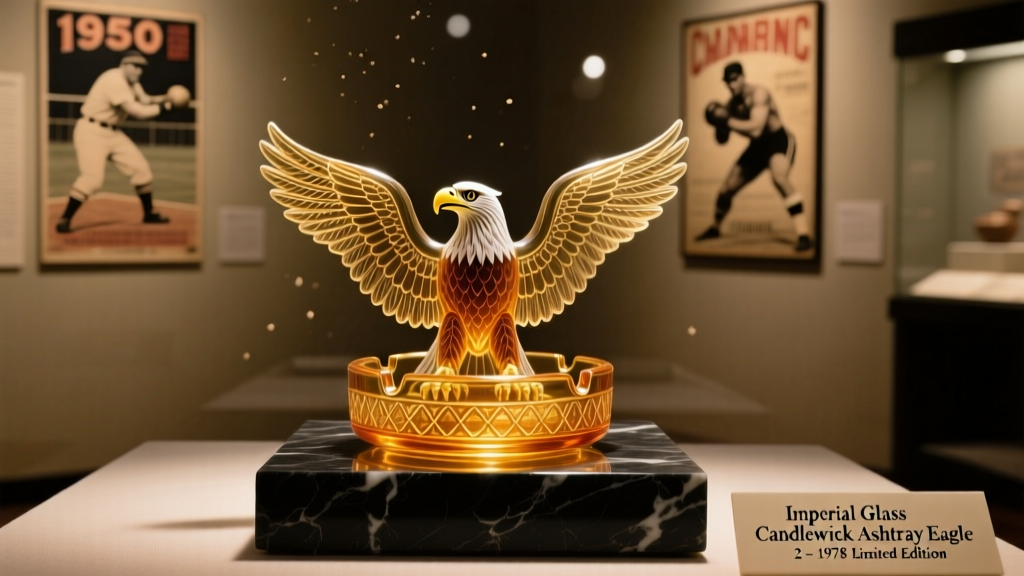
Imperial Glass Candlewick Ashtray Eagle #2: Identification, Value Drivers, and Authentication Protocol
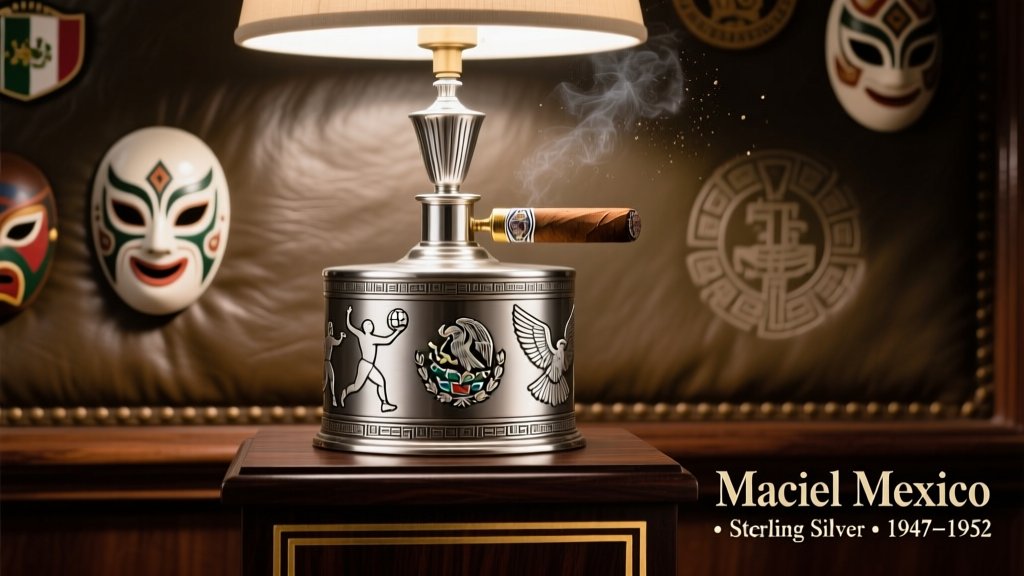
Maciel Sterling Silver Cigar Lighter: Oil Lamp–Style Design, Mexican Craftsmanship, and Authentication Essentials
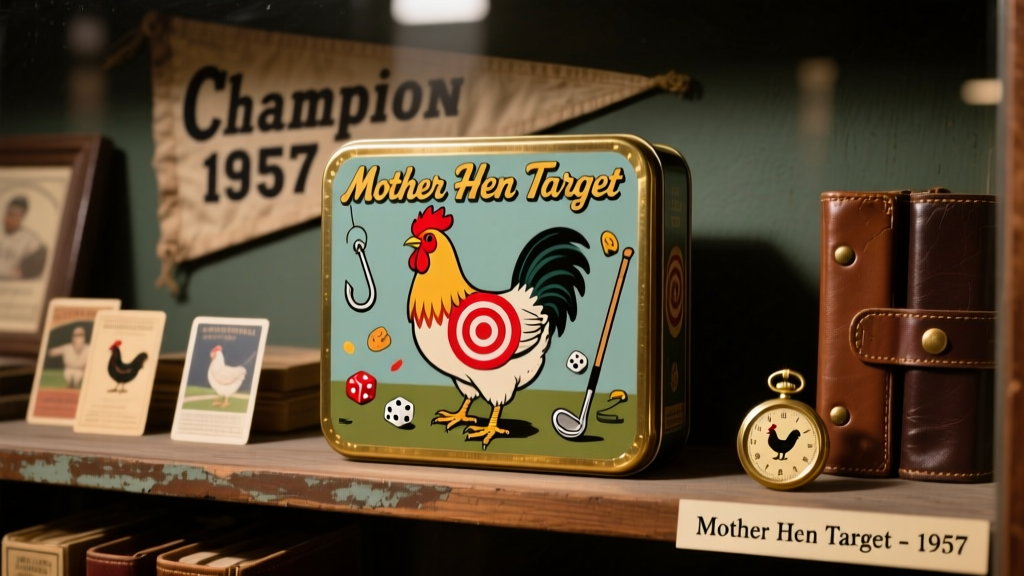
Game Mother Hen Target Tin Lithograph Box: A Collector’s Deep Dive into a Rare 1930s Advertising Artifact
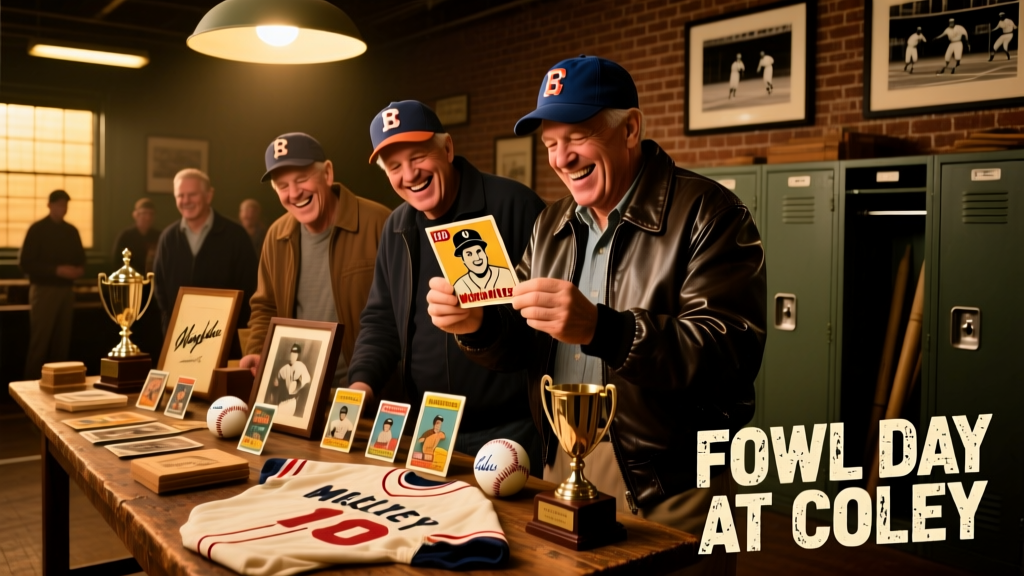
Collectors Enjoy A Fowl Day At Copley Event: Rare Poultry-Themed Memorabilia, Authentication Breakthroughs, and Historic Auction Results
Button Button: A Collector’s Guide to Vintage Pinback Buttons
Toy Clown & Devil Papier-Mâché Heads with Cloth Bodies and Pull-String Head-Changing Mechanisms: A Collector’s Authentication Guide
Queen Anne Walnut Mirror with Parcel-Gilt Crest: Authentication, Provenance, and Market Analysis (c. 1730–1750, 32 Inches)