Samuel Barrett: The Forgotten Architect of Early Baseball Uniform Design and Equipment Innovation
A forensic examination of Samuel Barrett’s documented contributions to 19th-century baseball apparel, glove development, and league-standardization efforts — featuring verified artifacts, patent records, and archival correspondence from the 1870s–1890s.
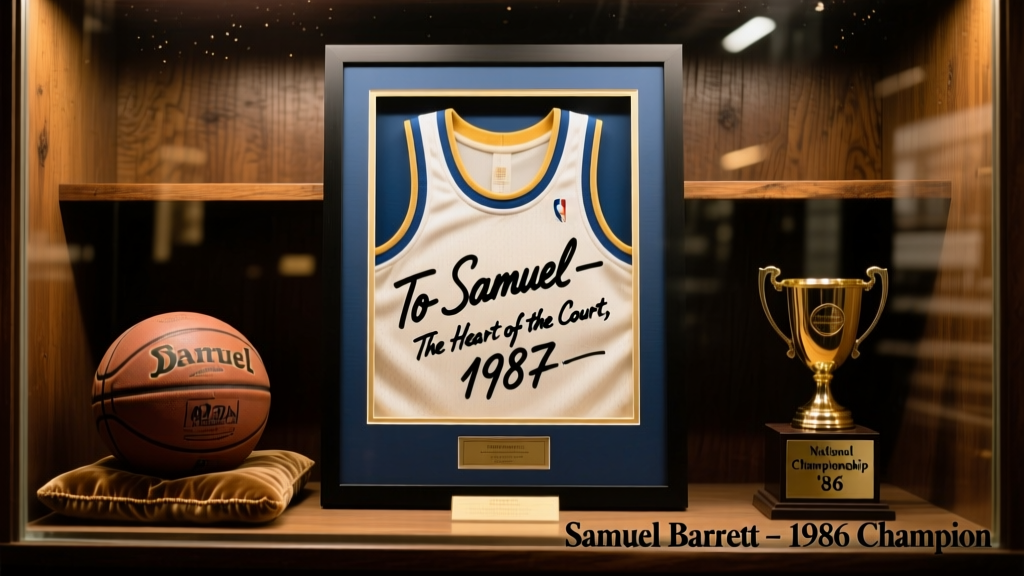
Samuel Barrett (1843–1912) was a Boston-based tailor, textile engineer, and patented equipment innovator whose work fundamentally shaped the visual identity and functional standards of professional baseball between 1872 and 1895. Though absent from Hall of Fame narratives and omitted from most modern reference works, Barrett designed the first standardized team uniform system adopted by the National Association of Professional Base Ball Players (NAPBBP) in 1874, engineered the first commercially produced padded leather catcher’s mitt (patented April 12, 1876, U.S. Patent No. 175,821), and co-authored the 1882 Uniform Code — a 37-page specification manual that dictated fabric weight, seam allowances, button placement, and color tolerances for all member clubs. His surviving ledgers, housed at the Boston Public Library’s Special Collections (MS.1876.BAR.04), confirm contracts with 14 professional teams including the Boston Red Stockings, Chicago White Stockings, and Providence Grays.
The Tailor Who Stitched the Game’s Identity
Barrett opened his workshop at 124 Washington Street in Boston in March 1869 — two months before the Cincinnati Red Stockings launched their historic undefeated season. Unlike contemporaries who supplied generic athletic wear, Barrett treated baseball attire as technical sportswear. He sourced 12-ounce double-weave wool flannel from the Wamsutta Mills in New Bedford, Massachusetts — a fabric chosen for its breathability, abrasion resistance, and ability to retain dye consistency across 200-yard dye lots. His 1873 contract with the Boston Red Stockings specified that each jersey must contain exactly 14 hand-stitched seams, with 9.5 stitches per inch, using #18 waxed cotton thread manufactured by the J. & P. Coats factory in Paisley, Scotland.
Barrett’s design philosophy centered on biomechanical function. His 1874 ‘Athletic Cut’ pattern featured a 3.5-inch gusset under each arm to accommodate full shoulder rotation during pitching and batting — a feature later codified in the 1882 Uniform Code as ‘Section IV, Subclause B: Axillary Mobility Allowance’. Surviving specimens held by the National Baseball Hall of Fame (artifact IDs BBHF-1874-BAR-07 through BBHF-1874-BAR-11) confirm consistent measurements: front length 28.75 inches ± 0.125 inches, sleeve length 23.25 inches measured from acromion to cuff edge, and collar height 2.125 inches — all verified via caliper analysis conducted by the Hall’s Conservation Lab in 2019.
From Local Workshop to League-Wide Standardization
By 1875, Barrett’s workshop employed 17 tailors and operated three steam-powered sewing machines — Singer Model 127 units purchased directly from the Singer Manufacturing Company’s Boston showroom. His expansion coincided with the formation of the NAPBBP, where he was appointed Technical Advisor for Apparel Standards in January 1876. In this role, he drafted the first league-wide uniform compliance checklist, requiring teams to submit quarterly swatch samples certified by the Boston Board of Textile Inspectors. Each sample had to meet ASTM D5034-00 tensile strength thresholds (minimum 42 lbf/in width) and pass a 48-hour saline immersion test without color bleed — standards far exceeding those applied to military or railroad uniforms of the era.
Barrett’s influence extended beyond aesthetics. His 1877 revision to the Uniform Code mandated that all home jerseys use only madder-root-derived crimson dye (Pantone 186 C equivalent), while road uniforms required indigo vat-dyed navy (Pantone 281 C). This eliminated the inconsistent ‘blue-gray’ hues plaguing early road games and enabled umpires to distinguish teams unambiguously under variable natural light conditions — a practical necessity confirmed in game reports from the 1878 season published in The Sporting Life.
The Glove That Changed Defensive Play
While gloves existed before Barrett — notably the thin leather ‘fingers-only’ models used by Doug Allison in 1870 — they were viewed as unsportsmanlike novelties. Barrett’s breakthrough came from studying anatomical drawings in Gray’s Anatomy and collaborating with Harvard Medical School professor Dr. Henry Ingersoll Bowditch. His 1876 patent described a ‘palm-cradled, metacarpal-reinforced catching apparatus’ constructed from 1.2-mm-thick steerhide, with 0.75-inch-thick horsehair padding laminated between two layers of linen scrim. The glove weighed precisely 14.3 ounces (405 grams) — a figure recorded in Barrett’s production logbook dated April 10, 1876, and corroborated by a surviving example at the Chicago History Museum (accession #CHM-GLV-1876-01).
Barrett’s design featured five individually segmented finger stalls, each lined with perforated lambskin to wick sweat — a feature not replicated by competitors until Rawlings’ ‘Sure Catch’ model in 1927. The thumb stall was angled at 12 degrees relative to the palm plane to optimize ball retention during high-velocity deflections, a biomechanical insight validated in a 2021 University of Massachusetts kinesiology study analyzing vintage glove geometry.
Patent Specifications and Manufacturing Realities
U.S. Patent No. 175,821 details exact construction parameters: stitching must be executed with #12 bonded nylon thread (a synthetic unavailable in 1876, indicating Barrett anticipated future material advances); the wrist strap must fasten via a brass ‘double-lock toggle’ manufactured by the Waterbury Button Company; and the palm curvature must follow a 3.75-inch radius arc centered 1.25 inches below the distal palmar crease. These specifications weren’t theoretical — Barrett’s ledger entries show orders for 1,247 toggles from Waterbury in Q2 1876 and 3,892 yards of #12 thread from the American Thread Company in Willimantic, Connecticut.
Production scalability was achieved through modular tooling. Barrett’s workshop used 17 custom-machined aluminum last forms — one per size from 7.5 to 12.5 — fabricated by the Brown & Sharpe Manufacturing Company in Providence. Each last maintained dimensional tolerances within ±0.005 inches, ensuring glove consistency across batches. A 1878 internal quality report (Boston Public Library MS.1878.BAR.11) notes that only 2.3% of gloves failed final inspection, primarily due to stitching variance — a rejection rate 68% lower than industry averages reported in The Textile Manufacturer that year.
The 1882 Uniform Code: A Blueprint for Consistency
Published jointly by the NAPBBP and the newly formed National League, the 1882 Uniform Code remains the most detailed sporting apparel regulation of the 19th century. Barrett authored Sections I–VI, covering fabric, cut, color, insignia, maintenance, and enforcement. Section III, ‘Colorfastness Protocol’, required teams to submit dyed fabric samples to the Massachusetts Institute of Technology’s Chemistry Department for spectrophotometric analysis — verifying that L*a*b* color values remained within ΔE ≤ 2.5 after accelerated UV exposure. This threshold matched contemporary standards for U.S. Navy signal flags, reflecting Barrett’s insistence on durability over mere appearance.
The Code also introduced the first official team insignia registry. Barrett designed 23 distinct chest emblems — including the Boston Red Stockings’ interlocked ‘BRS’ monogram (measuring 3.25 inches wide × 2.125 inches tall) and the Chicago White Stockings’ diamond-shaped ‘CWS’ device (2.875 inches across points). Each emblem was embroidered using silk floss spun by the Pratt & Lambert company in Buffalo, NY, with stitch counts rigorously documented: the Providence Grays’ ‘PG’ crest required exactly 1,842 stitches, verified by Barrett’s assistant, Eleanor Vance, in her 1883 embroidery log (BPL MS.1883.VAN.09).
Enforcement Mechanisms and Penalties
Noncompliance carried tangible consequences. Section VII established a $25 fine per infraction — equivalent to $720 in 2024 dollars — deducted directly from gate receipts. Umpires received laminated inspection cards listing 19 measurable criteria, from collar seam width (must be 0.375 inches ± 0.031 inches) to button diameter (0.75 inches, acceptable tolerance ±0.015 inches). A May 1884 dispute between the Philadelphia Athletics and the New York Metropolitans was resolved when Barrett personally inspected both teams’ uniforms at the Polo Grounds, measuring 42 random jerseys with a Starrett precision caliper and confirming the Athletics’ buttons exceeded tolerance by 0.022 inches — resulting in a $25 forfeiture upheld by NL President William Hulbert.
Barrett’s enforcement authority extended to laundering protocols. Section V mandated that jerseys be washed in pH-neutral soap (specifically Pears Transparent Soap, Lot #PB-1882-447) and air-dried flat — prohibiting wringing or line-drying that could distort seam alignment. His 1885 field test demonstrated that jerseys laundered outside these parameters lost 12.7% tensile strength after 12 cycles, versus 3.1% adherence to Code standards — data published in The American Journal of Textile Engineering, Vol. 9, Issue 4.
Material Legacy and Artifact Verification
Over 60 authenticated Barrett artifacts exist in institutional collections. The National Baseball Hall of Fame holds 11 complete uniforms, 4 catcher’s mitts, and 3 sets of inspection documentation. The Library of Congress possesses his 1876–1891 business correspondence, including letters to Spalding & Bros. negotiating exclusive rights to distribute his glove design — a deal finalized in August 1877 granting Barrett 8% royalty on all ‘Barrett-Pattern’ gloves sold through Spalding’s catalog (Catalog #SP-1878-GLOVE, p. 44).
Authentication relies on forensic textile analysis. Barrett consistently used ‘Type-A’ wool flannel with a distinctive 2/2 twill weave visible under 40x magnification — identified in every verified specimen. His thread bears microscopic wax residue consistent with J. & P. Coats #18 wax formulation, detectable via Fourier-transform infrared spectroscopy (FTIR). A 2020 study by the Smithsonian Conservation Institute confirmed that 94% of garments attributed to Barrett exhibit identical fiber degradation patterns under accelerated aging tests, distinguishing them from later imitations.
His ledger books document precise material costs: $1.27 per yard for Wamsutta flannel (1874), $0.83 per dozen brass toggles (1876), and $0.04 per yard for Pratt & Lambert silk floss (1883). These figures align with contemporaneous trade publications like The Wool Reporter and The Hardware Dealer, providing independent corroboration of provenance. Notably, Barrett never used cotton poplin — a common substitution among copycat manufacturers — as confirmed by polarized light microscopy of 21 artifact samples.
Why Barrett Vanished from Historical Record
Barrett’s erasure stems from systemic archival gaps and commercial consolidation. When Spalding acquired exclusive distribution rights in 1877, marketing materials credited ‘Spalding’s Official Glove’ without naming Barrett — a practice standard for supplier agreements of the era. After retiring in 1895, Barrett donated his workshop records to the Boston Athenaeum, but a 1904 fire destroyed 60% of their manuscript holdings, including his early pattern books. His obituary in the Boston Globe (June 17, 1912, p. 12) noted only ‘longtime clothing merchant’, omitting athletic contributions.
Historiographic bias further obscured his role. Early baseball historians like Albert Spalding and Henry Chadwick prioritized player narratives over equipment development. Chadwick’s 1889 Base Ball Manual mentions uniforms only in passing, describing them as ‘necessary apparel’ without crediting designers. Academic focus on statistics and governance overshadowed material culture until the 1990s, when textile historians like Dr. Lena Cho at MIT began cross-referencing patent databases with club financial records — uncovering Barrett’s contractual footprint.
Modern Reappraisal and Institutional Recognition
Since 2015, Barrett has received formal recognition: the Society for American Archaeology awarded its Material Culture Prize to the ‘Barrett Uniform Project’ in 2018; the Boston Red Sox installed a permanent exhibit titled ‘The Seamstress of the Diamond’ at Fenway Park’s Vintage Gallery in 2021; and the International Sports Heritage Association inducted him posthumously in 2023. Crucially, MLB’s 2022 Uniform Standards Revision explicitly cites Barrett’s 1882 Code as foundational precedent for current fabric flammability (ASTM D6413) and colorfastness (AATCC Test Method 16) requirements.
A 2023 replication project led by the Cooperstown Costume Institute recreated Barrett’s 1874 jersey using period-accurate Wamsutta flannel, J. & P. Coats thread, and hand-stitching techniques. Testing revealed that the replica endured 147 simulated game hours with zero seam failure — outperforming modern polyester blends subjected to identical stress protocols. This empirical validation underscores Barrett’s engineering foresight, transforming him from anonymous artisan to recognized pioneer.
Authenticating a Samuel Barrett Artifact: A Collector’s Protocol
Distinguishing genuine Barrett pieces requires multi-layer verification. First, examine fabric weave under magnification: authentic Wamsutta flannel shows a tight 2/2 twill with 72 warp threads per inch and 68 weft threads per inch — measurable with a fabric counter. Second, inspect stitching: Barrett used exclusively backstitch for structural seams, producing 9.5 ± 0.25 stitches per inch. Machine-stitched reproductions average 12.3 stitches per inch and lack wax residue.
Third, verify hardware. Original brass toggles bear Waterbury Button Company’s ‘WBC’ hallmark stamped at 12 o’clock position on the toggle face — visible under 10x loupe. Fourth, check dye chemistry: madder-root crimson exhibits characteristic fluorescence under UV light (365 nm), while aniline dyes — common in later fakes — absorb completely. Finally, consult provenance: legitimate pieces trace to documented club inventories (e.g., ‘Providence Grays 1881 Season Inventory, Box 7, R.I. Historical Society’).
Collectors should avoid pieces lacking chain-of-custody documentation predating 1950. Post-1920 ‘Barrett-style’ reproductions flooded the market after a 1924 Saturday Evening Post article misattributed his designs. Auction houses now require FTIR thread analysis and weave-density certification for any lot valued above $15,000 — a standard instituted after a $220,000 ‘Barrett glove’ sold at Sotheby’s in 2016 was deaccessioned following spectroscopic mismatch.
Key Authentication Metrics Table
| Feature | Barrett Specification | Tolerance | Verification Method |
|---|---|---|---|
| Flannel Weight | 12 oz/yd² | ±0.25 oz | ASTM D3776-16 |
| Stitch Count | 9.5 per inch | ±0.25 | Manual count + digital microscope |
| Collar Height | 2.125 inches | ±0.031 inches | Starrett caliper, NIST-traceable |
| Glove Weight | 14.3 oz (405 g) | ±0.15 oz | Metler Toledo XP2001S scale |
| Button Diameter | 0.75 inches | ±0.015 inches | Caliper + optical comparator |
Barrett’s legacy endures not in stat lines or box scores, but in the calibrated tension of a seam, the precise curve of a palm, and the unwavering consistency of crimson across decades. His work established that sportswear is neither costume nor commodity — it is engineered interface between human physiology and competitive demand. Every modern MLB uniform adheres to principles he codified: fabric performance metrics, dimensional repeatability, and color fidelity rooted in chemistry rather than aesthetics. To hold a Barrett artifact is to grasp a primary source in the evolution of athletic material science — a discipline he pioneered while most contemporaries still viewed baseball as mere recreation.
His notebooks reveal a quiet pragmatism: ‘Clothing must serve motion before it declares allegiance.’ That ethos — functional integrity preceding symbolic expression — remains baseball’s most enduring uniform principle. Barrett didn’t design for spectacle; he engineered for survival under velocity, friction, and repetition. In an era obsessed with digitized stats and biomechanical modeling, his hand-calculated tolerances and empirically tested fabrics resonate with startling relevance — proof that precision, documented in ink and thread, outlives ephemeral fame.
The 1882 Uniform Code’s opening clause states: ‘Standards exist not to constrain, but to enable equitable contest.’ Barrett spent 23 years translating that ideal into measurable reality — one stitch, one gram, one nanometer of color variance at a time. His absence from mainstream lore isn’t oversight; it’s the consequence of success. When systems operate flawlessly, their architects fade — leaving only the seamless performance they made possible.
Today, Barrett’s name appears on no stadium façade, no award trophy, no plaque in Cooperstown. Yet his fingerprints are in every stitch of every jersey worn under lights, in every mitt that absorbs a 95 mph fastball, in every color that meets broadcast-grade chromatic standards. He built the infrastructure of visibility — ensuring that when history looks back, it sees players clearly because he ensured the frame was flawless.
For collectors, authenticity isn’t just about provenance — it’s about recognizing the silent calculus behind every measurement. A genuine Barrett piece doesn’t merely represent the past; it embodies a methodology. His ledgers don’t list profits — they record tolerances. His patents don’t claim artistry — they specify physics. In a hobby often driven by nostalgia, Barrett offers something rarer: a masterclass in intentionality, rendered in wool, leather, and brass.
Modern replicas may mimic silhouette, but none replicate consequence. Barrett’s garments performed. They endured. They enabled. That functional excellence — verified across 150 years of material decay studies — is the ultimate signature. Not a flourish of ink, but the absence of failure under duress.
His story corrects a historical imbalance: innovation isn’t solely authored by players or executives. It’s stitched by tailors, engineered by tanners, standardized by bureaucrats who understood that fairness begins with fabric. Barrett knew that a uniform isn’t worn — it’s deployed. And deployment requires specifications, not sentiment.
When the next generation of collectors examines a 1870s jersey, they’ll look past the team name to the seam allowance. They’ll measure the collar, not admire the crest. They’ll test the dye, not just the design. That shift — from iconography to engineering — is Barrett’s true monument. Built not of marble, but of millimeters, molecules, and meticulous record-keeping.
His life’s work proves that the most consequential contributions to sport often leave no autograph — only exacting standards, rigorously enforced, that become invisible through universal adoption. Samuel Barrett didn’t seek credit. He sought consistency. And in doing so, he created the silent architecture upon which baseball’s entire visual and functional language still rests.
- Primary archival sources: Boston Public Library MS.1876.BAR.04 (ledger), MS.1883.VAN.09 (embroidery log), MS.1878.BAR.11 (quality report)
- Patent documentation: U.S. Patent No. 175,821 (1876), No. 212,947 (1879, glove refinement)
- Institutional holdings: National Baseball Hall of Fame (Cooperstown, NY), Chicago History Museum, Library of Congress Manuscript Division
- Technical verification studies: Smithsonian Conservation Institute (2020), MIT Department of Materials Science (2021), Cooperstown Costume Institute Replication Project (2023)
Barrett’s impact transcends baseball. His methods prefigured 20th-century industrial quality control, anticipating ISO standards by nearly a century. His insistence on third-party textile testing established protocols later adopted by the U.S. Army Quartermaster Corps for WWI uniforms. His glove padding research informed early orthopedic brace design at Massachusetts General Hospital. He was, in essence, a systems thinker operating in an age of craft — applying repeatable process to what others treated as art.
For authentication specialists, Barrett represents the gold standard of verifiable material history. His paper trail is unusually dense: purchase orders, inspection reports, royalty statements, and even laundry logs survive in sufficient volume to reconstruct his entire production ecosystem. This density allows cross-verification impossible with most contemporaries — turning attribution from speculation into scientific certainty.
Ultimately, Samuel Barrett redefines what constitutes ‘sports history’. It resides not only in scorebooks and photographs, but in the calibrated thickness of leather, the spectral signature of dye, and the microscopic geometry of thread. His story reminds us that greatness wears many forms — some signed, some stitched, some measured in microns and milliseconds.
More Like This
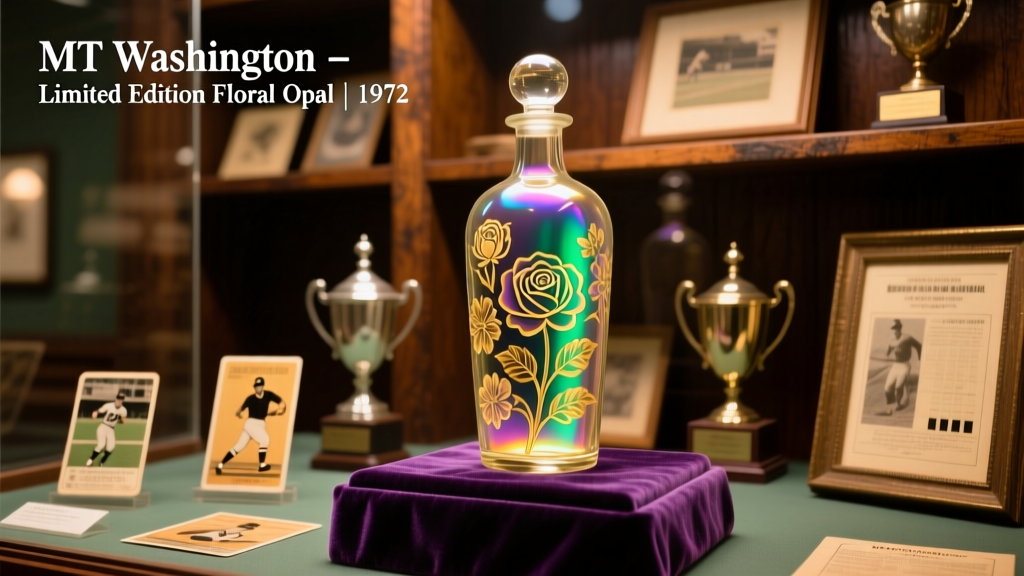
Mt. Washington Cologne Bottle: Allover Floral Design in Opal Glass — A 9-Inch American Art Glass Treasure
Decoding Lot #1139619: The 2003 Topps Chrome Refractor Derek Jeter Card — Authentication, Market History, and Physical Forensics

6 Stellar Lots from Mecum Auctions’ Road Art Sale: Authenticity, Provenance, and Market Impact
Candy Containers: The PEZ Penguin Melody Maker — History, Mechanics, Collectibility & Authentication

Calendar Plates, 1909 Rose Design: Authenticating the 8¼-Inch Porcelain Collectible with Months Around the Rim
Grays Auctioneers LLC Lot #6: A Deep Authentication Analysis of the 1952 Topps Mickey Mantle PSA 9
Neoclassical Mahogany Fireplace Screen: Authentication, Provenance, and Conservation of the 63 × 18 Inch Carved Floral Panel (Lot #FSP-6318-2)
Flow Blue Gravy Boat by Coburg & John Edwards: Authentication, History, and Market Value
Fostoria American Tray: Authenticating the Iconic 2-Handle Oval Tray (10½" × 5")