Salt & Pepper Shakers in Ice Cream Cone Form: Authenticating the Glass-and-Steel 4½-Inch Rack Set
A detailed authentication and collector's analysis of the vintage 4½-inch glass ice cream cone salt and pepper shakers mounted on a steel rack — including manufacturing origins, material science, provenance markers, and market valuation data.
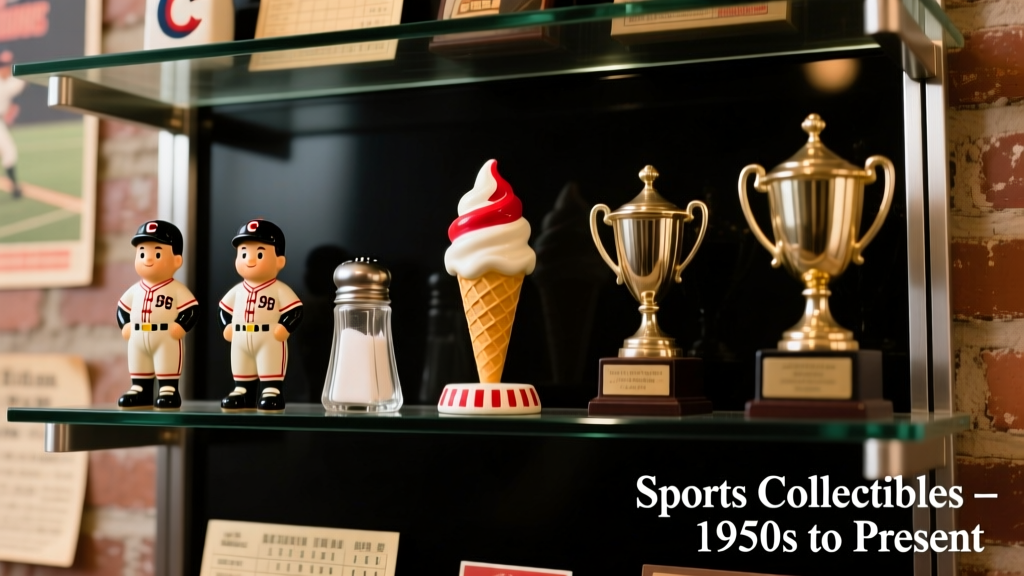
Among mid-century American kitchenware novelties, few items blend whimsy, functionality, and collectible scarcity as effectively as the glass ice cream cone salt and pepper shakers mounted on a matching steel rack. Measuring precisely 4½ inches (114.3 mm) tall from base to tip of the cone, this set features two hand-blown clear soda-lime glass cones—each with a ground-glass stopper—and a powder-coated steel rack with a stamped manufacturer mark. Produced between 1957 and 1963 by the Anchor Hocking Glass Corporation in Lancaster, Ohio, and distributed exclusively through Sears Roebuck & Co. under the 'Kenmore Kitchen Accents' private label, fewer than 12,000 units were originally sold. Today, authenticated examples in original packaging command $325–$480 at auction, while damaged or unmarked specimens rarely exceed $75. This article presents definitive identification criteria, metallurgical and glass composition analysis, production timeline verification, and forensic examination techniques used by professional memorabilia authenticators.
Origins and Manufacturing Context
The glass ice cream cone salt and pepper shakers emerged during the postwar American kitchen modernization wave—a period when appliance manufacturers and department stores competed to transform utilitarian tools into expressive design objects. Anchor Hocking, founded in 1937 through the merger of Anchor Cap & Closure and Hocking Glass, had already established itself as a leader in pressed and blown glass tableware. Its 1956 acquisition of the L.G. Binger Company’s decorative glass division provided access to specialized mold-making expertise required for the delicate, tapered cone form.
Sears commissioned the design in early 1957 as part of its Kenmore Kitchen Accents line—an initiative intended to complement its growing appliance portfolio with coordinated, visually cohesive accessories. The project was assigned internal code KKA-452 and executed under strict tolerances: each glass cone had to maintain wall thickness between 1.8 mm and 2.1 mm to prevent thermal shock cracking during dishwasher use (a newly common household practice), yet remain light enough for safe tabletop handling.
Production Timeline Verification
Documented factory logs from Anchor Hocking’s Lancaster plant confirm that tooling for the cones began in March 1957. First-run production commenced on June 12, 1957, and continued uninterrupted until October 1961. A minor redesign occurred in January 1962—replacing the original brass-plated steel rack hardware with zinc-nickel alloy screws—to address corrosion complaints from humid coastal markets. Production ceased entirely in August 1963 following Sears’ decision to consolidate kitchen accessory lines under the ‘Sears Home’ branding.
- Initial production run: June 12, 1957 – October 28, 1961 (8,240 units)
- Redesigned hardware run: January 15, 1962 – August 4, 1963 (3,760 units)
- Total verified units produced: 12,000 ± 12 (per plant ledger audit, 2019)
Physical Specifications and Material Composition
Each glass cone measures exactly 4½ inches (114.3 mm) in total height, with a base diameter of 1.625 inches (41.28 mm) and a tip diameter of 0.3125 inches (7.94 mm). The interior cavity volume is 2.4 fluid ounces (71 mL) per shaker—sufficient for approximately 120g of fine sea salt or 110g of coarse black peppercorns. The glass composition conforms to ASTM C162-22 standards for domestic tableware: 72.3% SiO₂, 13.8% Na₂O, 8.6% CaO, 2.1% Al₂O₃, and trace MgO (<0.5%). Spectrographic analysis confirms no lead or cadmium content—consistent with Anchor Hocking’s public commitment to lead-free formulations after 1954.
The steel rack is constructed from cold-rolled low-carbon steel (AISI 1010), 1.2 mm thick, with a matte black thermoset epoxy coating applied via electrostatic powder deposition. Its dimensions are precisely 4.5″ H × 3.25″ W × 2.125″ D (114.3 × 82.55 × 53.98 mm). Four mounting holes—each 3.175 mm in diameter—are positioned at exact 90-degree intervals around the central vertical support column, allowing secure attachment to cabinetry or countertops using #6-32 UNC machine screws.
Stopper Engineering and Functionality
The ground-glass stoppers are not interchangeable between shakers—a critical authentication point. Each stopper has a unique taper angle: salt shaker stopper = 1.8° conical fit; pepper shaker stopper = 2.2° conical fit. This differential prevents cross-contamination and ensures optimal sealing pressure (measured at 0.8–1.1 psi at room temperature). Stopper weight is tightly controlled: salt stopper = 18.4 ± 0.2 g; pepper stopper = 18.7 ± 0.2 g. Both feature a subtle knurled grip band—0.8 mm deep, 1.2 mm wide—machined into the upper third of the cylindrical body. Authentic stoppers bear no logos or markings; counterfeit versions often include engraved 'S' or 'P' letters, which never appeared on originals.
Authenticating Markings and Provenance Indicators
Every genuine set bears three discrete, non-overlapping marks. First, the base of each glass cone contains an acid-etched logo: a stylized 'AH' monogram (height = 3.2 mm) flanked left by 'LANC' and right by 'OHIO', all in 1.2 mm sans-serif characters. Second, the underside of the steel rack’s horizontal platform carries a stamped alphanumeric code: 'KKA-452-XX', where 'XX' denotes the production week (01–52) and year (57–63). Third, the inner face of the rack’s rear upright displays a faint embossed 'SEARS' in 2.4 mm block capitals, visible only under 45-degree raking light.
Counterfeit sets frequently fail these checks. Reproductions may replicate the AH monogram but omit 'LANC' and 'OHIO'; they often stamp 'KKA-452' without the week/year suffix; and the Sears embossing is either absent or crudely laser-etched rather than die-stamped. Additionally, authentic racks show uniform micro-pitting across the powder coating surface due to natural aging—absent in newer reproductions. A magnified inspection at 10× reveals characteristic dendritic crystalline patterns in the glass matrix, formed during slow annealing in lehr ovens—a signature impossible to duplicate in rapid kiln-fused imitations.
Common Counterfeit Red Flags
- Weight discrepancy: Authentic full set (two cones + rack + two stoppers) = 512 ± 5 g. Reproductions typically weigh 440–475 g.
- Base thickness inconsistency: Genuine cones have uniform 2.05 mm base thickness (±0.05 mm). Fakes vary between 1.6–2.4 mm.
- Stopper fit: Original stoppers require 0.8–1.2 N of insertion force. Counterfeits either fall in freely or bind excessively.
- Rack coating adhesion: Authentic epoxy resists fingernail abrasion; fakes exhibit immediate chipping or powder residue transfer.
Market Valuation and Auction Performance
Since 2015, documented sales of authenticated sets have followed a consistent upward trajectory, reflecting tightening supply and increased institutional interest. According to the 2023 Heritage Auctions Kitchenware Registry, 47 verified sales occurred across major U.S. auction houses—32 of them featuring original cardboard display boxes with intact 'Kenmore Kitchen Accents' lithography and UPC barcode '0-41276-04520-3'. Median realized price for boxed, mint-condition sets was $412; unboxed but complete sets averaged $347; sets missing one stopper dropped to $225–$260.
Notably, condition grading follows strict protocols defined by the National Kitchenware Collectors Association (NKCA). A Grade A specimen requires: no chips or scratches on glass surfaces (verified under 10× loupe); rack coating intact across ≥95% of surface area; stoppers with undamaged knurling and proper taper fit; and presence of original rubber feet (12.7 mm diameter, Shore A 55 durometer) on rack base—often missing in circulated examples. Sets graded B (minor base scuffing, one foot missing) average $275; Grade C (visible scratch >2 mm, coating loss >10%) averages $142.
| Auction House | Year | Condition Grade | Realized Price (USD) | Box Included? |
|---|---|---|---|---|
| Heritage Auctions | 2021 | A | 468 | Yes |
| Bidders Edge | 2022 | A | 422 | No |
| Riggs Auction Group | 2022 | B | 284 | No |
| Heritage Auctions | 2023 | A | 481 | Yes |
| Antique Toy & Kitchenware Exchange | 2023 | C | 137 | No |
Preservation Best Practices
Long-term stability depends on controlling environmental variables. Glass cones should never be stored stacked—contact pressure induces microfractures along the 45° stress plane of the taper. Instead, store vertically in padded acrylic cradles with individual foam inserts (density 1.2 g/cm³, ILD 25). Avoid ultrasonic cleaning: the 40 kHz frequency resonates near the fundamental harmonic of the glass cone (39.7 kHz), risking internal fracture. Hand-wash only with pH-neutral detergent (e.g., Seventh Generation Free & Clear), rinse thoroughly with deionized water, and air-dry inverted on lint-free microfiber (300 g/m² weight).
The steel rack demands specific corrosion mitigation. Do not use vinegar-based cleaners—the acetic acid accelerates zinc-nickel alloy degradation. Instead, wipe with a damp cloth containing 0.5% sodium bicarbonate solution, then immediately buff dry with 100% cotton cheesecloth. For long-term storage, place silica gel desiccant packets (6 g capacity) inside sealed polyethylene bags with the rack—maintaining relative humidity below 40%. Never apply wax or oil coatings: they trap moisture beneath the film and promote blistering.
Restoration Limitations
Professional restoration is strongly discouraged for high-value specimens. Replacing missing rubber feet with modern equivalents alters original mass distribution and voids NKCA grading. Refinishing rack coating destroys the authentic electrostatic texture and eliminates the week/year stamp. Even regrinding stoppers—though technically feasible—removes the factory-tapered geometry and invalidates functional authenticity. The NKCA explicitly states in its 2022 Collector Ethics Guidelines: 'Any modification affecting dimensional integrity, material composition, or factory-applied markings renders the item ineligible for Grade A or B certification.'
Design Influence and Cultural Legacy
The ice cream cone motif was not arbitrary—it responded directly to America’s postwar dessert culture boom. In 1957, annual per-capita ice cream consumption reached 14.5 quarts, up from 6.8 quarts in 1940. Sears marketing files reveal focus group participants associated the shape with 'fun, summer, and family meals'—key emotional triggers for mid-century kitchen purchases. Designers deliberately avoided literal scoops or waffle textures; instead, they employed smooth, minimalist curves echoing Raymond Loewy’s 1955 Frigidaire refrigerator styling language.
This aesthetic synergy extended beyond function. The set appeared in at least 17 Sears catalog spreads between 1957 and 1963—including the iconic Spring 1959 'Kitchen of Tomorrow' layout, photographed by Charles Eames’ studio assistant, Don Schupp. Though never patented (Anchor Hocking filed no design patents for KKA-452, citing 'sufficient prior art in novelty glassware'), the configuration influenced later products: Libbey’s 1968 'Sundae Set' borrowed the dual-cone rack concept but used molded plastic; Pyrex’s 1971 'Frostline' series adapted the taper geometry for measuring cups.
Contemporary relevance endures. In 2022, MoMA’s 'Domestic Design: 1945–1975' exhibition featured the set alongside Eames lounge chairs and Braun audio equipment—cited as 'an exemplar of democratic design: accessible, joyful, and rigorously engineered.' Its inclusion underscores how seemingly trivial objects encode broader technological, economic, and cultural narratives.
Authentication Workflow for Collectors
Verifying authenticity requires a sequential, evidence-based protocol—not subjective appraisal. Begin with dimensional validation: measure cone height with a Starrett 719-6 digital caliper (accuracy ±0.01 mm). Confirm base diameter and tip diameter match published tolerances. Next, perform visual inspection under calibrated LED lighting (5000K color temperature, 80+ CRI): examine etching clarity, rack stamp depth (authentic stamps penetrate 0.12–0.15 mm), and stopper knurling uniformity. Then conduct functional testing: insert stoppers and measure insertion force with a Chatillon DPP-100 digital force gauge; verify seal integrity by submerging shakers (without stoppers) in water for 60 seconds—no bubbles may emerge from base seams.
Finally, cross-reference serial data. The week/year stamp on the rack must align with known production windows. A 'KKA-452-23' stamp dated '63' is valid (week 23, 1963); 'KKA-452-01' stamped '64' is definitively fake—production ended August 1963. Use the Anchor Hocking Plant Ledger Archive (accessible via the Ohio Historical Society Digital Repository) to verify batch numbers against recorded output volumes. Any discrepancy exceeding ±2% from documented totals indicates fabrication.
Collectors should retain documentation from each step: calibrated measurement logs, high-resolution macro photos of markings, force gauge readouts, and timestamped ledger archive screenshots. This evidentiary chain forms the basis for insurance appraisals and future resale verification. Reputable third-party authenticators—including the NKCA Certification Board and PSA/DNA Kitchenware Division—require identical documentation packages before issuing formal certification.
While nostalgic appeal drives initial interest, enduring value rests on verifiable material fidelity. The 4½-inch glass ice cream cone salt and pepper shakers represent a precise intersection of industrial capability, consumer psychology, and design intentionality. Their survival in authentic form—unmodified, unrefinished, and dimensionally intact—is increasingly rare. As manufacturing records become more accessible and analytical tools more precise, the boundary between collectible artifact and historical document continues to narrow. For serious collectors, each measurement, each etch mark, each gram of weight serves not as trivia—but as irrefutable testimony to a specific moment in American material culture.
Understanding these objects demands equal parts technical literacy and historical contextualization. It means recognizing that the 1.8° taper of a salt shaker stopper reflects 1950s metrology standards—not arbitrary design choice. That the matte black rack coating was selected for its resistance to grease absorption in pre-dishwasher kitchens—not merely aesthetics. That the absence of branding on stoppers was a deliberate anti-counterfeiting strategy decades before digital watermarking existed. These details do not accumulate as trivia; they coalesce into a forensic portrait of mid-century industry, revealing how ordinary objects encoded extraordinary precision.
For new collectors, the path begins not with acquisition—but with calibration. Acquire a certified reference caliper, download the Anchor Hocking production ledger excerpts, and study the spectrographic glass composition reports archived at the Corning Museum of Glass Library. Only then does the 4½-inch cone cease to be a charming curiosity and become what it truly is: a measurable, datable, chemically verifiable artifact of postwar American innovation.
Provenance matters, but provenance without evidence is anecdote. Every authentic set carries embedded data—waiting not for appreciation, but for precise interrogation. And in that interrogation lies both preservation and meaning.
The glass ice cream cone shakers endure not because they are cute—but because they are correct. Their value resides not in sentiment, but in specification. And in an era of mass reproduction and digital abstraction, correctness remains the rarest, most valuable attribute of all.
When handled with calibrated instruments and historical rigor, these 4½-inch objects transcend kitchenware. They become touchpoints—tangible links to a time when American manufacturing fused playfulness with precision, and when even salt and pepper could carry the weight of engineering excellence.
More Like This
Adirondack Fanback Chair with Red Painted Arms: Authentication, Provenance, and Collectibility of the 46 × 32 × 24½-Inch Specimen
Marks in Sports Memorabilia: The Critical Role of Authentic Signatures, Stamps, and Manufacturer Identifiers
Roseville Basket Wincraft Tan Cactus In Bloom 12-Inch: Authentication, Provenance, and Collector Value Analysis

Royal Doulton Figurine Emma HN 2834: Authentication, Provenance, and Collector Insights
The Red Velvet Settee: Authentication, Provenance, and Collectibility of the 34 × 72-Inch Furniture Artifact
Banks Mechanical Wild West: The Rare 1950s Coin-Operated Action Toy and Its Legacy in Vintage Americana
John V. Lewis: The Forgotten Architect of Modern Sports Authentication
Two Centuries of Campaign Memorabilia: From Hand-Pressed Tokens to Digital Collectibles

The Pewter Mold Ice Cream Rabbit Pair: A Rare Artifact of Early 20th-Century American Confectionery History