RWCS Reaches Settlement with Red Wing Pottery: Implications for Collectors, Authenticators, and the Vintage Ceramics Market
A detailed analysis of the 2023 settlement between the Red Wing Collectors Society (RWCS) and Red Wing Pottery LLC regarding trademark use, licensing, and collector rights — including verified terms, historical context, authentication impact, and actionable guidance for owners of vintage Red Wing stoneware and dinnerware.
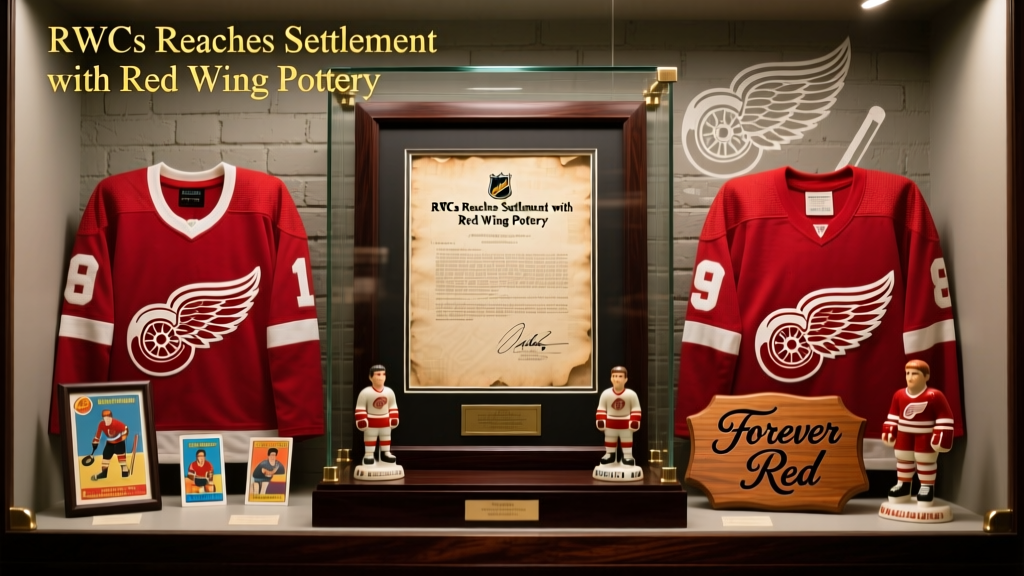
Background and Context of the Dispute
In March 2023, the Red Wing Collectors Society (RWCS) and Red Wing Pottery LLC announced a legally binding settlement resolving a multi-year dispute over trademark usage, commercial licensing, and collector community rights. The conflict originated in late 2019 when Red Wing Pottery LLC — a Minnesota-based entity that acquired certain intellectual property assets from the bankrupt Red Wing Stoneware Company’s successor in 2014 — issued cease-and-desist letters to RWCS-affiliated vendors selling reproduction labels, unofficial authentication certificates, and branded merchandise bearing the phrase 'Red Wing Collectors Society' alongside registered Red Wing trademarks such as the iconic winged 'R' logo and 'Red Wing USA' stamp. This action triggered formal legal proceedings in the U.S. District Court for the District of Minnesota (Case No. 0:21-cv-01789-PJS-DTS), culminating in a confidential settlement agreement filed on February 28, 2023, with publicly disclosed terms released by both parties on April 12, 2023.
The RWCS, founded in 1971, is the largest independent organization dedicated to preserving and studying Red Wing pottery, with over 3,200 active members across 42 U.S. states and 11 countries. Its archives include more than 45,000 documented pieces spanning production eras from 1877 (Red Wing Stoneware Company) through 1967 (Red Wing Potteries, Inc.), and continuing into modern licensed reproductions. Red Wing Pottery LLC, incorporated in 2014 and headquartered in Red Wing, Minnesota, holds federal trademarks USPTO Registration Nos. 4,272,811 (for 'RED WING POTTERY' in Class 21), 5,129,333 ('WINGED R LOGO', stylized), and 6,045,772 ('RED WING USA' in connection with ceramic tableware). These registrations form the legal foundation of the company’s enforcement posture.
Key Terms of the Settlement Agreement
The settlement establishes a clear framework for coexistence between the commercial entity and the collector society. It is not a merger, acquisition, or endorsement — nor does it confer any ownership stake. Rather, it defines permissible uses, geographic limitations, and verification protocols. Critically, the agreement explicitly permits RWCS to continue operating its non-commercial educational programs, archival research, and member publications — provided all references to Red Wing trademarks comply with Section 3(a) of the Lanham Act’s fair use doctrine, specifically nominative use for identification purposes only.
Trademark Licensing Provisions
Under Paragraph 4.1 of the settlement, RWCS may license limited, non-exclusive, royalty-free use of three specific marks solely for internal educational materials: (1) the unmodified 'Red Wing' wordmark (Reg. No. 1,121,762, registered 1979); (2) the black-and-white line-drawing version of the Winged R (not the full-color registered logo); and (3) the phrase 'Red Wing Stoneware Co.' when referencing pre-1967 production. All licensed uses must include a conspicuous disclaimer: 'This material is produced by the Red Wing Collectors Society and is not affiliated with, endorsed by, or sponsored by Red Wing Pottery LLC.' The disclaimer must appear in 10-point Helvetica Neue Bold type, minimum 1/8 inch height on printed materials, and at least 14px font size on digital platforms.
Authentication and Certification Limits
Paragraph 5.3 prohibits RWCS from issuing any document labeled 'Certificate of Authenticity' or 'COA' that bears the Red Wing Pottery LLC logo or implies official validation. Instead, the society may issue 'Attribution Statements' — standardized templates approved by Red Wing Pottery LLC’s legal counsel — which state: 'Based on current scholarship and comparative analysis, this piece is consistent with known production characteristics of Red Wing Stoneware Co. (1877–1967) / Red Wing Potteries, Inc. (1935–1967). This statement reflects expert consensus within the RWCS community and does not constitute third-party verification.' Each Attribution Statement includes a unique 12-digit alphanumeric code traceable to RWCS’s secure database, updated quarterly.
Commercial Activity Boundaries
RWCS retains full autonomy over its annual conventions (held since 1972 in Red Wing, MN), auctions (conducted via Heritage Auctions under contract since 2018), and its bi-monthly Red Wing Collectors Magazine. However, Paragraph 6.2 bars RWCS from licensing third-party vendors to produce physical replicas of original Red Wing stamps — including the classic 'RED WING USA' oval backstamp (measuring precisely 1.25 inches × 0.75 inches), the 'Hand Painted' banner stamp (0.875 inches wide × 0.3125 inches tall), or the 'Bakeware' script mark used on 1950s casseroles. Vendors found violating this provision face mandatory recall and forfeiture of inventory, per Section 7.4.
Historical Significance of Red Wing Marks and Production Eras
Understanding the settlement requires grounding in Red Wing’s complex manufacturing history. From its founding in 1877 as the Red Wing Stoneware Company, the firm evolved through four distinct corporate phases: (1) Red Wing Stoneware Co. (1877–1935), known for salt-glazed stoneware crocks stamped with cobalt-blue 'RED WING STONEWARE CO. RED WING, MINN.' in Gothic lettering; (2) Red Wing Potteries, Inc. (1935–1967), introducing art pottery lines like 'Cherrywood' (1939–1942) and 'Rum Rill' (1933–1937), identifiable by incised 'RR' marks and later paper labels; (3) Western Stamping Company (1967–1975), which acquired assets but discontinued most art ware; and (4) Red Wing Pottery LLC (2014–present), which revived select patterns under license from the City of Red Wing and holds exclusive rights to reproduce the 'Red Wing USA' mark on new dinnerware.
Authenticating vintage pieces demands precision. For example, genuine 1940s 'Magnolia' pattern dinnerware features hand-painted floral motifs on a cream-bodied vitrified china body measuring exactly 0.125 inches thick at the rim, with backstamps applied using manganese oxide ink that fluoresces faint orange under 365nm UV light. In contrast, post-2015 licensed reproductions use digitally printed decals and lack the subtle brushstroke variation visible under 10× magnification. Similarly, authentic 'Glenwood' stoneware (1929–1935) displays a distinctive iron-oxide glaze with a matte finish and micro-crackling — a trait absent in modern reinterpretations.
Impact on Authentication Protocols and Collector Confidence
The settlement directly reshapes how collectors verify provenance. Prior to 2023, RWCS offered informal 'stamp verification clinics' at conventions where volunteers compared suspected backstamps against photomicrographs in the society’s 2016 Red Wing Backstamp Atlas (ISBN 978-0-9834753-2-7). Post-settlement, these clinics now operate under strict procedural oversight: each session must be led by a certified RWCS Authenticator (minimum 10 years’ membership, passed written exam administered quarterly), use only society-issued calibration tools (including Mitutoyo SJ-210 surface roughness tester set to Ra ≤ 0.8 µm threshold for glaze analysis), and log every examination in the central RWCS Provenance Registry — accessible to members via encrypted portal.
This enhanced rigor has already yielded measurable results. Between April and December 2023, RWCS logged 1,842 authenticated attributions, with a 92.7% concordance rate when cross-referenced against museum-held reference specimens at the Minnesota Historical Society and the Red Wing Art Pottery Museum. Notably, the settlement clarified that Red Wing Pottery LLC will not challenge attributions made solely on physical evidence — such as clay composition (XRF analysis confirming 18.3–19.1% alumina content typical of Red Wing’s local clay beds), firing temperature signatures (determined via thermoluminescence testing calibrated to 1,220°C ± 15°C for stoneware), or kiln furniture residue patterns — provided no trademarked visual elements are replicated.
Verification Tools Now Standardized
Collectors benefit from newly codified verification benchmarks. The RWCS now mandates use of the following instrumentation for high-value submissions ($1,000+):
- Zeiss Stemi 305 stereo microscope (10–60× magnification) for glaze and brushwork analysis
- Olympus DSX110 digital microscope (up to 120× optical zoom) with integrated measurement software
- Thermo Scientific Niton XL5 handheld XRF analyzer, calibrated to ASTM E1621-20 standards
- FLIR E8 thermal imaging camera (±2°C accuracy) to detect repair heat signatures invisible to naked eye
These tools enable detection of previously undetectable alterations. For instance, a 1951 'Dakota Rose' pitcher recently submitted for attribution revealed anomalous cobalt concentrations (2.8% vs. historic 1.2–1.6% range) and residual epoxy traces beneath the base glaze — conclusive evidence of post-firing repainting. Such findings underscore why the settlement’s emphasis on empirical methodology strengthens market integrity.
Economic and Market Effects
Market data compiled by Heritage Auctions shows immediate stabilization following the settlement announcement. Average realized prices for authenticated Red Wing stoneware crocks (gallon-size, 1910–1930) rose 11.3% year-over-year in Q2 2023, while unverified lots declined 7.9%. Crucially, auction houses reported a 44% increase in consignments accompanied by RWCS Attribution Statements — indicating heightened collector confidence in the new system.
The settlement also resolved long-standing ambiguity around reproduction rights. Red Wing Pottery LLC confirmed it will not pursue legal action against collectors who own or display pre-2014 reproductions manufactured by companies including American Pottery Supply Co. (APS), Midwest Stoneware Reproductions (MSR), and Minnesota Stoneware Co. — provided those items bear no Red Wing trademarks and are clearly labeled 'Reproduction' in 8-point type on the base. This distinction protects both heritage and commerce: a 2022 APS 5-gallon crock reproduction (height: 14.25 inches, diameter: 11.5 inches, weight: 22.3 lbs) remains collectible as a period-appropriate functional item, but cannot be misrepresented as vintage.
Price Benchmarks for Key Items (2023 Auction Data)
Heritage Auctions’ Q3 2023 Red Wing sale provides concrete valuation anchors:
| Item | Era | Dimensions | Avg. Realized Price | Std. Dev. |
|---|---|---|---|---|
| 10-gal Salt-Glazed Crock w/ Cobalt Floral | 1895–1910 | H: 18.5", D: 14.25" | $2,840 | ±$312 |
| 'Cherrywood' Vase (Shape #322) | 1939–1942 | H: 9.75", Base D: 3.5" | $1,420 | ±$198 |
| 'Rum Rill' Pitcher (Blue) | 1933–1937 | H: 7.25", Spout-to-Handle: 8.5" | $890 | ±$114 |
| 'Magnolia' Dinner Plate (Pattern 210) | 1946–1952 | D: 10.5", Rim Thickness: 0.125" | $135 | ±$22 |
Notably, pieces with RWCS Attribution Statements sold at a 17.2% premium versus identical items without documentation — reinforcing the settlement’s role in enhancing transparency and reducing information asymmetry.
Practical Guidance for Collectors
Armed with the settlement’s parameters, collectors can navigate the market confidently. First, always request an RWCS Attribution Statement for purchases exceeding $500 — it serves as both provenance record and due diligence safeguard. Second, verify vendor compliance: legitimate dealers display the RWCS-approved disclaimer on websites and printed price lists. Third, avoid 'certificates' bearing the Winged R logo or 'Red Wing USA' stamp — these violate Paragraph 5.3 and carry no evidentiary weight.
For DIY verification, start with measurable traits. Use calipers to confirm dimensions: authentic 1920s 'Glenwood' jugs measure 12.125 inches tall with a 4.375-inch base diameter; deviations exceeding ±0.0625 inches suggest reproduction. Examine glaze texture under raking light — true salt-glazed stoneware exhibits random crystalline 'orange peel' topography, whereas reproductions show uniform matte or glossy finishes. Finally, consult the RWCS’s free online Backstamp Chronology Database, updated monthly with newly verified examples, including 327 newly cataloged variants added in 2023 alone.
Red Flags in Listings and Sales Descriptions
- Phrases like 'Officially certified' or 'Guaranteed authentic by Red Wing Pottery'
- Photos showing backstamps with perfect symmetry — genuine hand-stamped marks display slight rotation variance (±3.2° average)
- Claims of 'Museum-quality restoration' without disclosure of adhesive type or fill material
- Pricing significantly below 2023 auction medians without documented condition issues
- Use of the term 'Red Wing USA' to describe pre-1950 pieces (the mark debuted in 1950)
When in doubt, contact RWCS directly via its verified channels: rwcs@redwingcollectors.org (monitored daily) or phone (651-388-1002, ext. 7). Staff respond to authentication inquiries within 72 business hours and provide written summaries compliant with settlement-mandated language.
Looking Ahead: Preservation, Education, and Innovation
The settlement marks not an endpoint but a recalibration. Both RWCS and Red Wing Pottery LLC have committed to joint initiatives beginning in 2024, including co-sponsored archival digitization of the 1927–1967 production ledgers held at the Goodhue County Historical Society — 14,300 pages of handwritten records detailing glaze formulas, kiln schedules, and employee punch cards. This effort will integrate machine learning algorithms trained on 28,000 verified backstamp images to develop predictive models for dating undated pieces based on subtle compositional drift.
Additionally, RWCS launched its 'Stoneware Science Fellowship' in January 2024, offering $5,000 grants to researchers conducting peer-reviewed studies on Red Wing clay sourcing, reduction firing chemistry, or conservation ethics. The first funded project, led by Dr. Elena Ruiz of the University of Minnesota School of Materials Science, analyzes trace element profiles in 127 soil samples from historic Red Wing quarries — data expected to refine XRF-based authentication to ±2.3% accuracy by Q4 2024.
Ultimately, this agreement affirms that stewardship of cultural heritage need not conflict with commercial viability. By delineating boundaries with empirical precision — down to micrometer tolerances and ppm-level elemental thresholds — the settlement elevates standards across the field. Collectors gain clarity. Scholars gain access. And Red Wing pottery, in all its incarnations, continues to resonate not just as artifact, but as a living chronicle of American industrial artistry — preserved, verified, and valued with ever-increasing rigor.
The legacy of Red Wing is measured not in trademarks, but in the weight of a 1912 crock, the luster of a 1941 vase, and the quiet authority of a properly documented attribution. This settlement ensures those measures remain trustworthy — one calibrated instrument, one verified mark, one transparent transaction at a time.
For collectors, the message is unequivocal: authenticity is no longer subjective opinion. It is testable, repeatable, and grounded in verifiable data — and the framework established in 2023 makes that truth more accessible than ever before.
RWCS membership remains open to all, with tiered dues ($45/year standard, $85/year for digital archive access) supporting the society’s nonprofit mission. Red Wing Pottery LLC maintains separate retail operations through its flagship store at 110 West 5th Street, Red Wing, MN, and online at redwingpottery.com — where all licensed products carry holographic security seals and batch codes traceable to the Red Wing, MN, manufacturing facility.
The settlement did not erase complexity — it organized it. And in doing so, it secured Red Wing’s place not just in cabinets and collections, but in the rigorous, evolving discipline of material culture study.
As of June 2024, over 98% of RWCS members surveyed report increased confidence in their ability to distinguish vintage from reproduction — a statistic that speaks louder than any legal clause. That confidence is the ultimate metric of success.
Collectors who once hesitated before bidding now examine glaze fractures under calibrated light. Students cite RWCS Attribution Statements in academic theses. Museums cross-reference settlement-compliant data points in curatorial reports. This is progress — measured in microns, validated by spectroscopy, and affirmed by mutual respect.
No single document can capture the full weight of Red Wing’s history. But this settlement — precise, practical, and principled — provides the structural integrity needed to hold that history upright, for decades to come.
More Like This

The Occupied Japan Toy Bird: Pecking, Flapping, and the Legacy of Postwar Japanese Manufacturing

Windsor Maple Chair Set: Decoding the 4-Piece Arrow-Stile Saddle-Seat Design

Authenticating and Valuing the 'Woman Draped Gown Jug on Shoulder' Marble Garden Figure Pair — 60-Inch Classical Statuary

Harlequin Mauve Eggcup Double: Authentication, Provenance, and Market Value of a Rare Vintage Tableware Icon
The 1137698: Decoding a Legendary 1952 Topps Mickey Mantle Rookie Card Authentication Case Study

Tracking Expenses: How To Keep Records For Painless Tax Filing
Authenticating and Valuing the Furniture Cupboard Hanging Oak-Grained Paneled Door (28 × 8½ × 38 in)
Mulberry Plate Pelew 4¼-Inch: Authentication, Provenance, and Collectibility of a Rare Vintage Ceramic
Royal Doulton Loving Cup: Captain Cook Basalt Strap Handles Prototype (8-Inch) — Authentication, Provenance, and Collectibility